
Reviewed · TEA CEREMONIES
Kyoto near Fushimiinari Wagashi making&Small Group Tea Ceremony
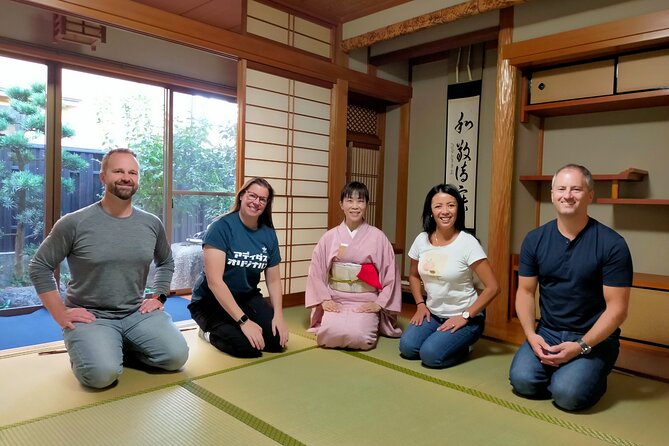
A quiet Kyoto ritual awaits. This 75-minute experience combines hands-on wagashi making with a small-group tea ceremony in a local home near Fushimi Inari Shrine. I like the intimate group size, capped at eight, and the fact that you make the sweet yourself before eating it with matcha. The English-speaking instructors are licensed guide interpreters, so the cultural explanations should be clear rather than reduced to a few polite gestures.
I also like the setting: a Japanese-style room reached through a tiny garden when the weather allows. The main consideration is comfort. You may sit on tatami flooring, bare feet are not permitted, and the experience is not recommended if you avoid caffeine. Chairs can be prepared if requested in advance.
In This Review
- Key Points at a Glance
- Why This Kyoto Experience Feels More Personal
- Starting in the Kitchen With Wagashi
- Learning the Rules Before Entering the Tea Room
- Watching Matcha Prepared, Then Making It Yourself
- A Calm Setting Near Fushimi Inari
- What the 75 Minutes Are Worth
- Tatami, Socks, and Chair Requests
- The Best Fit for This Experience
- Planning Your Morning in Fushimi Ward
- Should You Book the Wagashi and Tea Ceremony?
- FAQ
- Where does the wagashi and tea ceremony take place?
- What time does the experience start?
- How long does the activity last?
- How many people can join the group?
- Is the activity suitable for children?
- Do I need to sit on the tatami floor?
- What is included in the price?
Key Points at a Glance
- Make your own wagashi: This is a hands-on Japanese sweets class, not a demonstration from the sidelines.
- Tea ceremony in a local home: You enter an authentic Japanese-style room rather than a large performance venue.
- Small group, maximum eight: The size allows room for questions and personal instruction.
- Near Fushimi Inari Shrine: The meeting point is about a 10-minute walk from the famous orange torii gates.
- Two bowls of matcha included: You watch the ceremonial preparation, then prepare a bowl yourself.
- Tatami comfort matters: Bring socks and request a chair when booking if floor sitting is difficult.
Why This Kyoto Experience Feels More Personal
Kyoto offers plenty of formal cultural activities, but this one keeps the scale modest. You meet at a local house at 9:45 a.m., then move through a short sweets lesson and tea ceremony with no more than seven other people. That matters because the ceremony depends on small actions: how you enter the room, how you handle the bowl, and how you observe the host.
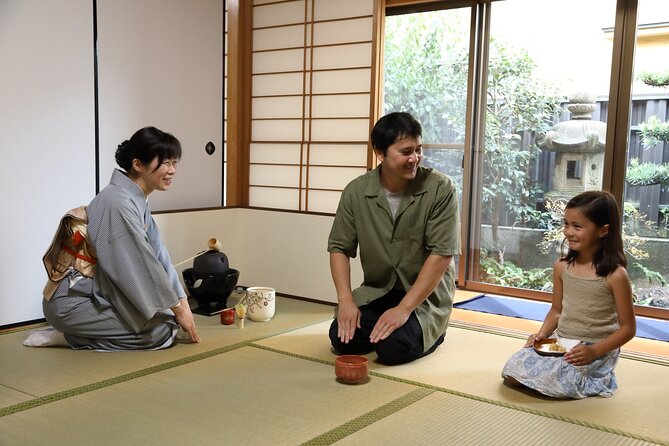
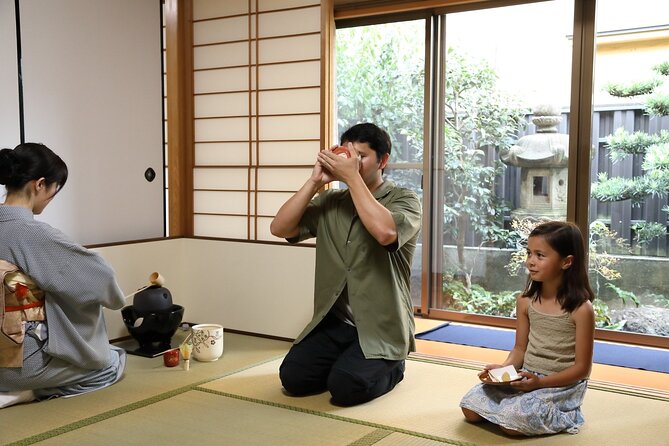
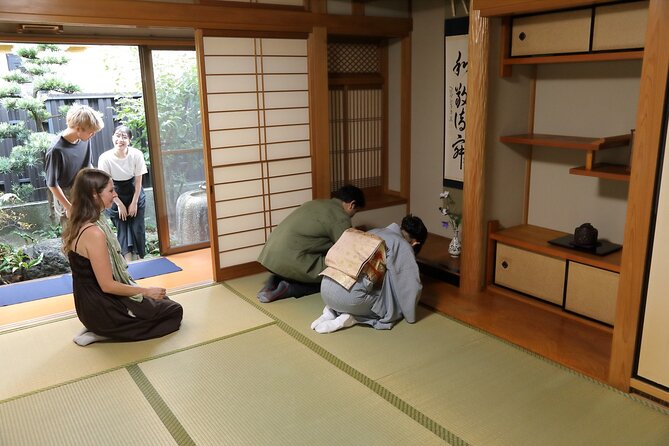
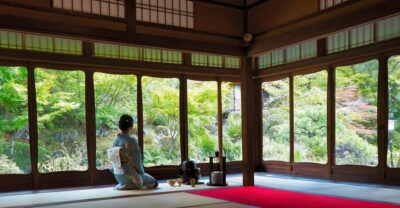
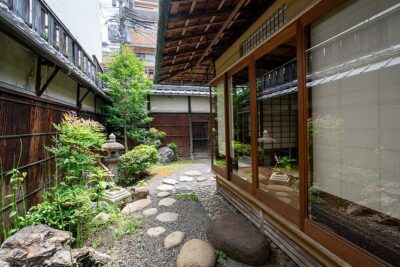
The setting also changes the mood. You are not seated in a theater watching a polished cultural show. You walk through a small garden, when it is not raining, and enter a Japanese-style room with tatami flooring, a hanging scroll, and the quiet formality of a tea gathering.
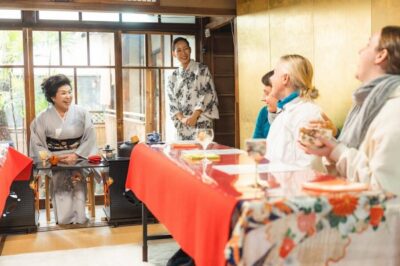
The hosts aim to make the session feel like being invited to a friend’s home for tea. The ceremony remains formal, but the atmosphere is intended to be welcoming rather than stiff. That balance is useful for first-time visitors who want a real introduction without needing prior knowledge of tea etiquette.
More Cooking Classes in Kyoto
- Ramen Cooking Class at Ramen Factory in Kyoto
★ 5.0 · 1,937 reviews - Sushi Making in Kyoto! Same-day bookings welcome!
★ 5.0 · 713 reviews - Kyoto: Ramen Cooking Class at a Ramen Factory with Souvenir
★ 4.9 · 532 reviews
Starting in the Kitchen With Wagashi
When you arrive, an English-speaking host takes you to the kitchen. The first activity is making one type of wagashi, a traditional Japanese confection. You take part in the preparation yourself, so expect a practical lesson rather than a short explanation followed by a ready-made sweet.
The class can get a little sticky. That is part of the fun, especially for families with older children or anyone who enjoys making food with their hands. The reward comes later, when you eat the sweet during the tea ceremony. You are not simply sampling an unfamiliar dessert. You have made the item that accompanies your matcha.
The activity teaches an important part of tea ceremony practice. Japanese sweets are served before bitter matcha because their sweetness prepares your palate for the tea. Making the wagashi first helps you understand that pairing in a direct way.
The information does not specify the exact shape or flavor of the wagashi, so do not book this expecting a particular confection. You can expect one kind of traditional sweet and enough guidance to make it during the session.
Learning the Rules Before Entering the Tea Room
After making the wagashi, the host explains how to attend a tea ceremony. This introduction is valuable because the customs can feel mysterious if you have never encountered them. Instead of guessing when to bow, where to look, or how to handle the bowl, you receive context before the ceremony begins.
When weather permits, you then walk outside through the small garden and enter the tea room. If it rains, the outdoor walk may not take place, but the activity is designed around the Japanese-style room itself.
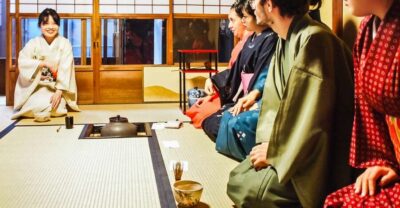
Once seated on the tatami, the instructor explains the background of tea ceremony and discusses the meaning of the hanging scroll on the wall. That detail gives the room a sense of purpose. The scroll is not just decoration, and the garden is not merely a pretty route into the house. Both are part of the setting used to focus attention before the tea is served.
The instructors are English-speaking licensed guide interpreters. I consider that one of the strongest practical features here. Tea ceremony has enough unfamiliar terms and gestures that a language barrier could turn the event into a pleasant but shallow performance. Clear explanations help you understand why each step matters.
Watching Matcha Prepared, Then Making It Yourself
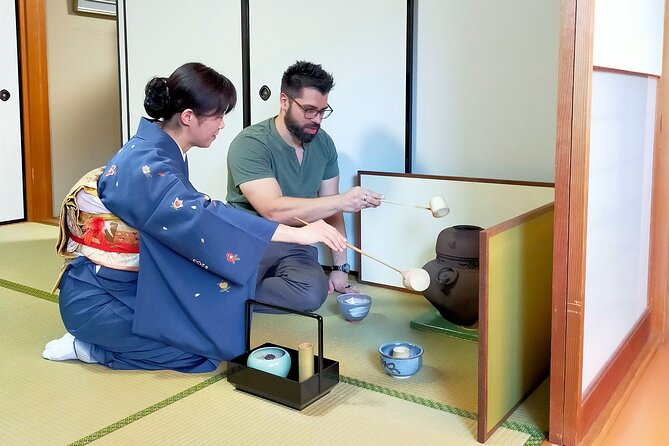
The tea portion begins with the wagashi you have just prepared. You eat it while the instructor demonstrates how to drink a bowl of matcha. This is a guided lesson, so you learn the basic etiquette before trying the drink yourself.
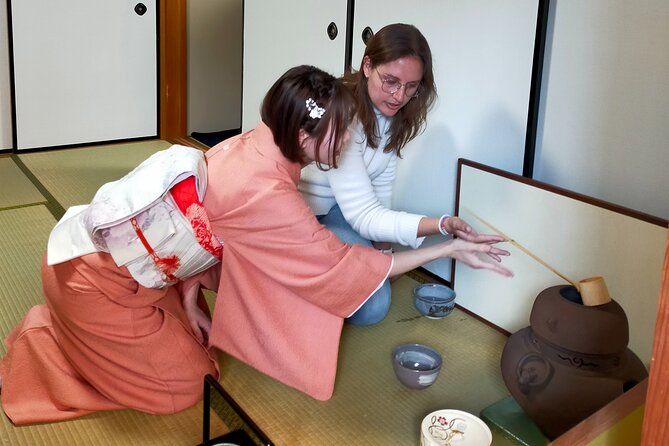
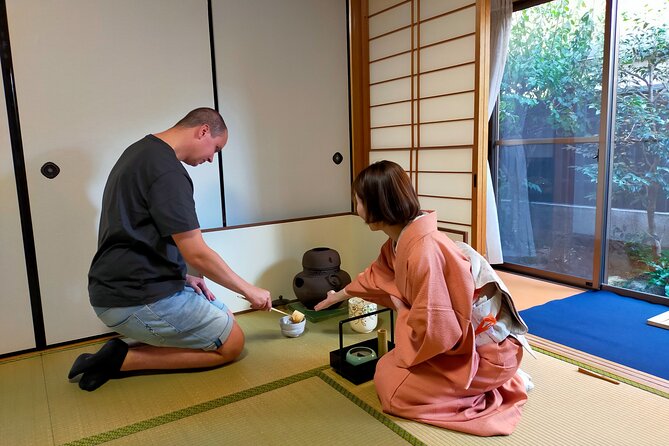
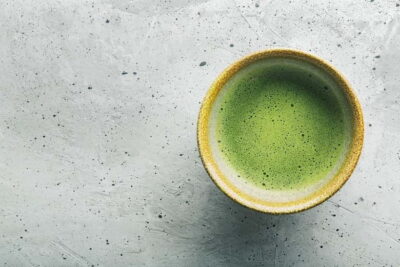
The host then demonstrates the ceremonial preparation of matcha. You watch the measured movements and the care given to the bowl before receiving your own serving. Afterward, you have the opportunity to prepare matcha yourself.
That hands-on finale gives the experience a practical souvenir. You leave knowing how to prepare wagashi and serve matcha to friends at home. The equipment and ingredients used in Kyoto do not come with you, but the skill and sequence can become a memorable reminder of the visit.
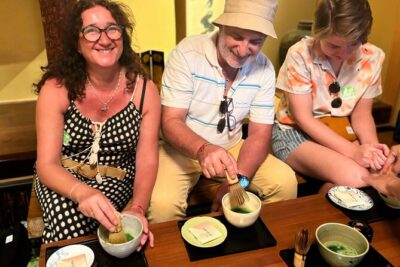
Two bowls of matcha and traditional Japanese confectionaries are included. For a short activity, that gives you more than a single taste and a quick photo. You see the preparation, drink matcha, and then take part in the process.
Still, matcha contains caffeine. The experience specifically advises against booking if you do not take caffeine, so this is not the best choice for someone seeking a tea activity without drinking tea. The available information does not mention a caffeine-free substitute.
More Tea Ceremonies in Kyoto
- Kyoto: Tea Ceremony in a Traditional Tea House in Kiyomizu
★ 4.9 · 3,519 reviews - Kyoto: Tea Ceremony Ju-An at Jotokuji Temple
★ 4.9 · 3,207 reviews - Kyoto: 45-Minute Tea Ceremony Lesson Experience
★ 4.3 · 2,378 reviews - Kyoto: Table-Style Tea Ceremony at a Kyo-Machiya
★ 4.9 · 1,211 reviews
A Calm Setting Near Fushimi Inari
The meeting point is at 38-4 Fukakusa Watamoricho in Fushimi Ward. The house is near public transportation and about a 10-minute walk from Fushimi Inari Taisha, known for its long rows of orange torii gates.
That location makes the timing useful. You can schedule the 9:45 a.m. session before or after visiting the shrine, depending on your plans. The activity itself ends back at the meeting point, so you are not left at another part of Kyoto trying to find your way back.
Do not confuse proximity with a combined shrine tour. The tea experience does not include a guided visit to Fushimi Inari. You will need to plan the shrine separately. Its location simply makes it easy to pair the two activities in one morning.
Fushimi Inari can become crowded, while this tea session offers a quieter contrast nearby. I like that change of pace. After walking among the torii gates, a small room, garden path, and bowl of matcha can feel restorative without requiring a full afternoon.
What the 75 Minutes Are Worth
The listed price is $52.26 per person. That is not the cheapest way to drink matcha in Kyoto, but the comparison is not quite fair if you count only the tea. You are paying for a guided wagashi lesson, two bowls of matcha, traditional sweets, cultural explanations, the host’s demonstration, and your own chance to prepare the tea.
The small group also affects the value. With a maximum of eight people, the session should feel more attentive than a large group presentation. The instructors can explain the steps clearly, and you have a reasonable chance to ask questions or receive help during the sweets and tea portions.
The duration is about one hour and 15 minutes. That makes the activity easy to fit into a Kyoto itinerary. It is long enough to include both food preparation and ceremony, but short enough to leave time for Fushimi Inari, lunch, or another nearby plan.
I would consider the price fair for someone who values participation and cultural context. If you only want to taste matcha, a tea shop may cost less. If you want to make something, learn the etiquette, and take part in the preparation, the added cost has a clear purpose.
Tatami, Socks, and Chair Requests
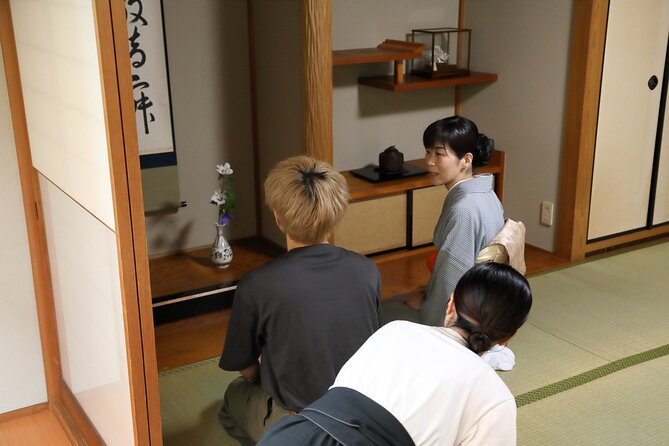
The tea room uses tatami flooring, and you must wear socks. Bare feet are not allowed in the room, so check your clothing before leaving for the meeting point. Easy-to-remove shoes are recommended because you will need to take them off.
You can request a chair instead of sitting directly on the tatami. The host asks you to state how many chairs you need when making the reservation. Do not wait until arrival if sitting on the floor may be uncomfortable.
This point is especially important for anyone with knee, hip, or back concerns. The experience information does not provide further accessibility details, so a chair request is the practical accommodation specifically offered. Ask about it in advance.
Children aged eight to 12 must participate with at least one adult. Children aged seven or younger cannot join. The hands-on sweets making may appeal to older children, while the formal tea setting requires enough patience to follow instructions and respect the room.
The Best Fit for This Experience
I would recommend this session to first-time visitors who want a manageable introduction to Japanese tea ceremony. You do not need to know the customs beforehand. The host explains how to participate, and the English-speaking instructors guide you through the process.
It also suits couples, small families with children aged eight and older, and friends who enjoy food activities. The wagashi lesson gives the experience a playful start, while the tea ceremony brings a quieter, more reflective second half.
The setting works well for anyone tired of large sightseeing groups. Eight people is still a group, but it is small enough to keep the focus on the host and instructor. The experience has received a five-star rating from 14 reviews, with 100 percent recommending it. The strongest praise centers on the peaceful setting, clear instruction, friendly host, and sense of cultural authenticity.
Miho, the hostess named in one especially positive account, is described as friendly and very comfortable speaking English. That personal welcome is important here because the activity depends on feeling at ease while trying unfamiliar customs.
I would think twice if you dislike caffeine, cannot sit comfortably even with a chair, or prefer a fast-paced sightseeing tour. This is a quiet lesson with formal moments. It asks you to slow down, listen, and follow a sequence.
Planning Your Morning in Fushimi Ward
The experience starts at 9:45 a.m. and requires your own transportation to the house. Hotel pickup and drop-off are not included. Since the meeting point is near public transportation, allow enough time to reach Fukakusa Watamoricho without rushing.
The activity is booked, on average, 10 days ahead. That does not guarantee a particular availability pattern, but it is a useful sign that you should not leave this until the last morning of your trip. The reservation requires at least two people, although solo participants can contact the provider to see if an arrangement is possible.
The ticket is mobile, which keeps the arrival process simple. Bring the booking information on your phone, wear socks, and choose shoes that come off easily.
Free cancellation is available until 24 hours before the start time for a full refund. Changes or cancellations made inside that window are not accepted and are not refunded. The experience depends on good weather, and if poor weather causes cancellation, you are offered another date or a full refund.
Should You Book the Wagashi and Tea Ceremony?
Book it if you want more than a photo of a matcha bowl. You will make a Japanese sweet, learn how to behave during a tea ceremony, watch the ceremonial preparation, and prepare matcha yourself. The local-home setting and small group give the experience a personal feel, while the licensed English-speaking instructors provide the context needed to understand what you are doing.
The $52.26 price is reasonable for the amount of participation packed into 75 minutes. Pair it with a visit to Fushimi Inari, but keep in mind that the shrine is not part of the guided activity.
Skip it if you avoid caffeine, dislike floor-based cultural activities, or want a broad sightseeing tour instead of one focused ritual. For everyone else, especially first-time visitors looking for a calm and hands-on Kyoto experience, this is a thoughtful way to spend a morning near the torii gates.
FAQ
Where does the wagashi and tea ceremony take place?
It takes place at a local house at 38-4 Fukakusa Watamoricho, Fushimi Ward, Kyoto, 612-0022, Japan.
What time does the experience start?
The scheduled start time is 9:45 a.m.
How long does the activity last?
The experience lasts approximately one hour and 15 minutes.
How many people can join the group?
The maximum group size is eight participants.
Is the activity suitable for children?
Children aged eight to 12 can participate with at least one adult. Children aged seven or younger cannot participate.
Do I need to sit on the tatami floor?
The ceremony is held in a Japanese-style room with tatami flooring, but a chair can be prepared if you request one when booking.
What is included in the price?
The price includes an English-speaking instructor, all fees and taxes, two bowls of matcha, and traditional Japanese confectionaries. Gratuity and hotel pickup or drop-off are not included.
Just added in Kyoto
- The “Golden Route” and Ancient Japan by DIAMIR Erlebnisreisen – 14-Day Tour★ 2.0 · 2 reviews
- Japan: Castles & Cuisine by G Adventures – 6-Day Kyoto to Osaka Tour★ 4.5 · 4 reviews
- Cycle Japan by Explore! – 13-Day Kyoto to Tokyo Tour★ 4.7 · 12 reviews
- Cycle Japan by Intrepid Travel – 11-Day Kyoto to Tokyo Tour★ 4.8 · 2 reviews
- Classic Japan by Intrepid Travel – 11-Day Kyoto to Tokyo Tour★ 4.4 · 14 reviews
- Ancient & Modern Japan 14-Day Tour by Exodus Adventure Travels★ 4.4 · 40 reviews
- 5 Day Cultural Adventure of Kyoto, Nara & Osaka by Tourist Journey★ 2.5 · 2 reviews
- 12 Days Kinosaki Onsen Escape: A Journey Through Japan’s Timeless Towns by UME Travel★ 4.8 · 5 reviews
Tea Ceremonies, compared.
Tea Ceremony in a Traditional Tea House in Kiyomizu
Read our review →
World Heritage Kyoto & Nara Uji Authentic Matcha Experience
Read our review →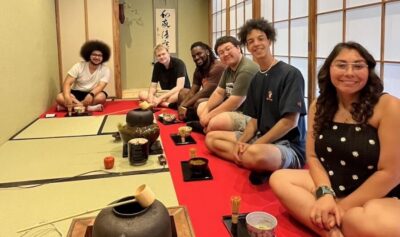
Browse the lists this tour appears in