
Reviewed · TEA CEREMONIES
Kyoto: Newly Opened Tea Ceremony – Sanjo Chasuian
Slow down in central Kyoto. Sanjo Chasuian gives you a calm, hands-on introduction to matcha, with two bowls of tea, seasonal sweets, and a traditional tea room just five minutes from Karasuma Oike Station. I like the balance between watching the host perform the ceremony and making your own tea. I also like the small cultural details, especially the nijiriguchi, a crawl-in doorway that marks the shift from ordinary life to the tea room.
The main consideration is that this is a short, shared session, not a long private ceremony. The group can include up to 10 people, and the English instruction may vary slightly by host. One visitor had trouble with an instructor’s pronunciation, though the session itself remained well organized. You must also arrive on time, since the door is locked once the ceremony begins.
In This Review
- Key points at a glance
- Finding Sanjo Chasuian near Karasuma Oike
- The opening explanation gives the ritual a purpose
- The first bowl shows the grace of matcha preparation
- The second bowl puts the whisk in your hands
- The nijiriguchi changes how the room feels
- One hour is enough for an introduction
- Shared groups keep the price reasonable
- Practical details that make the session smoother
- Who will enjoy Sanjo Chasuian most
- Should you book this Kyoto tea ceremony?
- FAQ
- How long does the Sanjo Chasuian tea ceremony last?
- How much matcha is included?
- Is the tea ceremony taught in English?
- Where is Sanjo Chasuian located?
- Do I need to bring anything?
- Can children take part in the shared plan?
Key points at a glance
- Two bowls of matcha: One is prepared for you by the host, and the second is whisked by you or your companion.
- A rare crawl-in doorway: The nijiriguchi gives the tea room a traditional entrance and a clear sense of occasion.
- Five minutes from the subway: Sanjo Chasuian is easy to reach from Karasuma Oike Station.
- Seasonal Kyoto sweets: You receive a traditional confection from a Kyoto shop with more than 100 years of history.
- English instruction in a small group: Explanations are designed for international visitors, with no more than 10 people in the shared plan.
- A quiet break in your sightseeing day: The one-hour format works well before dinner, after visiting nearby sights, or when Kyoto begins to feel like one long march.
Finding Sanjo Chasuian near Karasuma Oike
The location is one of the experience’s strongest practical points. Sanjo Chasuian is about a five-minute walk from Subway Karasuma Oike Station, making it much easier to fit into a Kyoto day than a tea house far out in the hills.
At the address, look for the large plate showing the Sanjo Chasuian logo and name. Open the door, and staff will be waiting to welcome you. That detail matters because small Kyoto venues can be easy to miss when you are watching traffic, checking a map, and trying not to block the pavement.
You are allowed to enter from five minutes before the starting time. Do not cut this close. Once the session begins, the door is locked, and even arriving one minute late means you cannot join or receive a refund. Kyoto public transport is reliable, but give yourself extra time to leave the station, find the correct exit, and walk to the venue.
The central location also pairs well with other sightseeing. One person found it convenient for a hotel and another noted that it was not far from the castle. The exact walking time from your own plans will vary, but Karasuma Oike is a useful base for moving around central Kyoto.
More Tea Ceremonies in Kyoto
- Kyoto: Tea Ceremony in a Traditional Tea House in Kiyomizu
★ 4.9 · 3,519 reviews - Kyoto: Tea Ceremony Ju-An at Jotokuji Temple
★ 4.9 · 3,207 reviews - Kyoto: 45-Minute Tea Ceremony Lesson Experience
★ 4.3 · 2,378 reviews
The opening explanation gives the ritual a purpose
The session begins with an explanation of matcha and the history of the Japanese tea ceremony. This is not filler before the main event. Without some background, the formal movements can look like a careful way to prepare a small bowl of green tea. With the explanation, you begin to see the ceremony as a practice built around attention, respect, simplicity, and the passing nature of a single moment.
The hosts explain what will happen before the quiet part begins. That is a smart choice for an international audience. You can ask questions early, understand the role of the utensils, and follow the ceremony without needing constant conversation.
Hosts named in the feedback include Yuko and Reina, with several visitors praising their calm teaching and friendly manner. Other sessions have been led by Renna. The exact instructor depends on the date, but the teaching style is clear: explain first, demonstrate carefully, then let you try.
I especially like this structure for first-time visitors. You are not expected to know how to sit, where to look, or what each movement means. The instruction helps you take part respectfully rather than treating the ceremony as a photo opportunity.
The first bowl shows the grace of matcha preparation
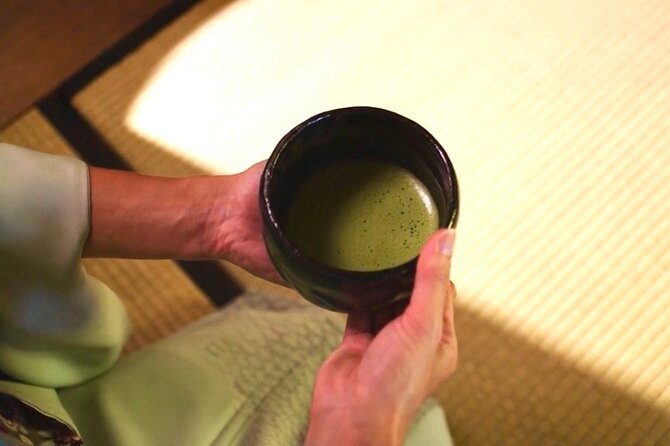
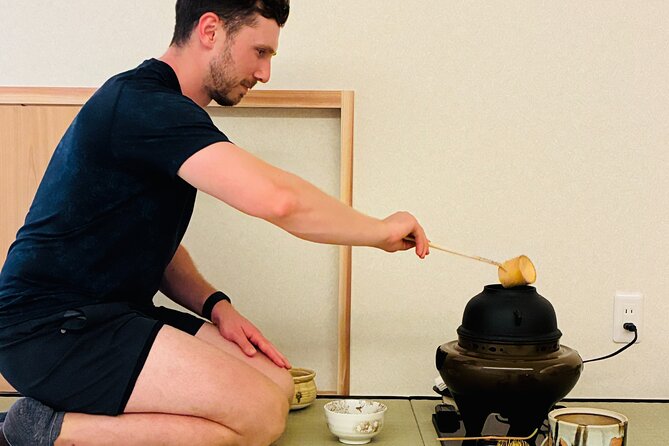
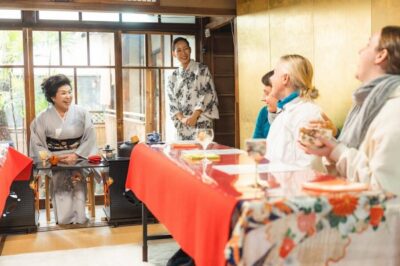
After the introduction, the host prepares a bowl of matcha for you. This is the polished part of the session, where you watch the practiced movements and the quiet order of the ceremony.
The host handles the bowl, whisk, and other items with care. The ceremony is often compared to an elegant dance, and that description fits the measured rhythm. Each movement has a place, and the pauses matter as much as the actions.
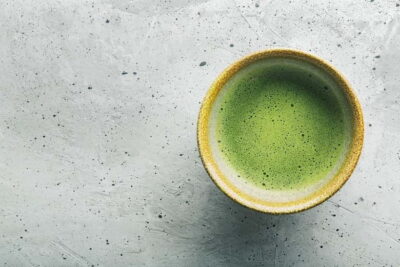
You also receive a seasonal Japanese sweet at this stage. It comes from a Kyoto confectioner with more than 100 years of history. The sweet is not simply a snack placed beside the tea. In the ceremony, the sweetness prepares your palate for the bitter, grassy flavor of matcha.
The confection changes with the season, so the visual design and flavor may differ from one visit to another. Expect something small and carefully made rather than a large dessert. For many people, the sweet makes matcha easier to appreciate, especially if this is your first taste of properly whisked tea.
The first bowl lets you sit back and watch. You can focus on the host’s technique, the arrangement of the tea room, and the meaning behind the gestures. It is also the most peaceful part of the experience, since the earlier explanations have prepared you for a period with less conversation.
The second bowl puts the whisk in your hands
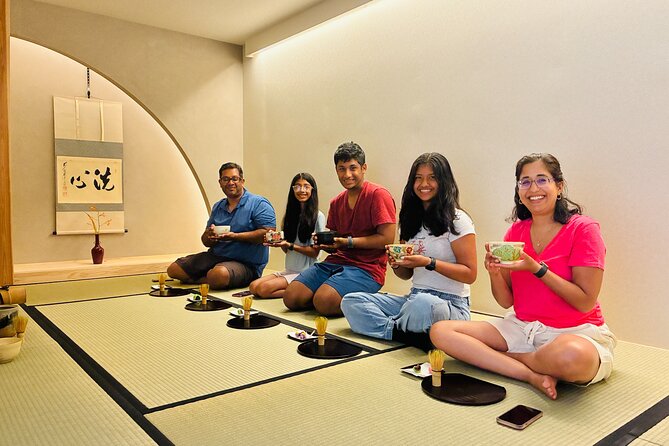
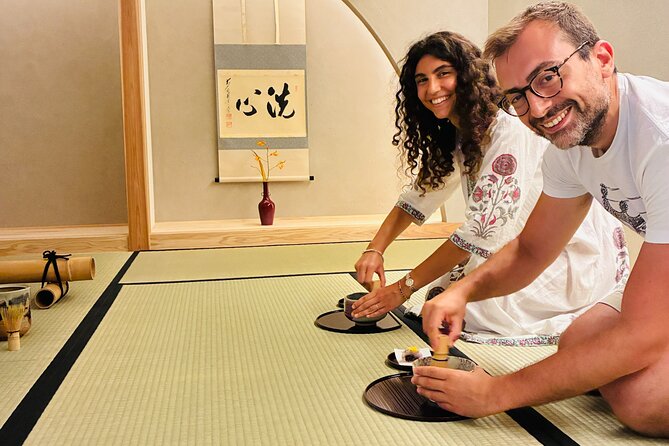
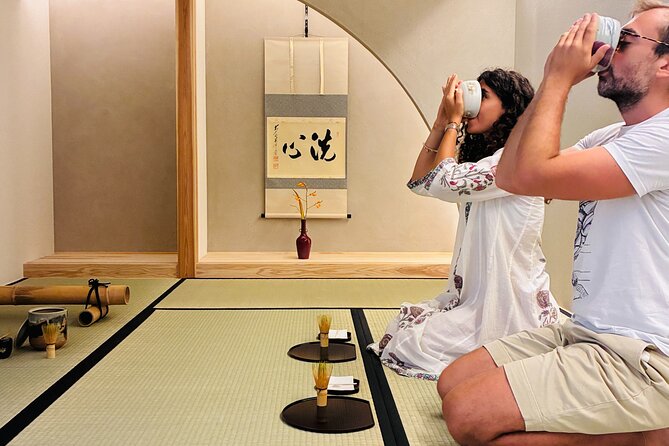
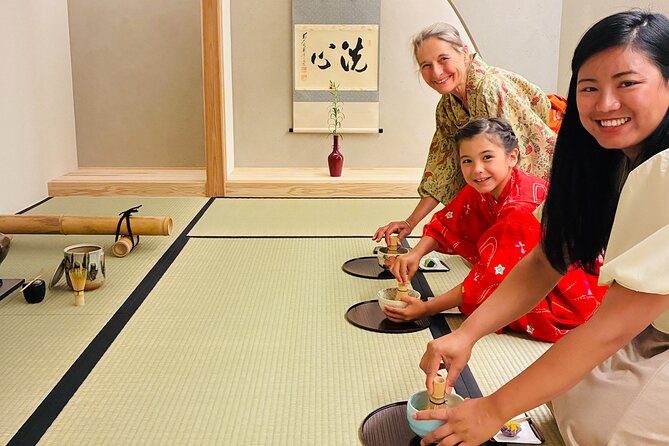
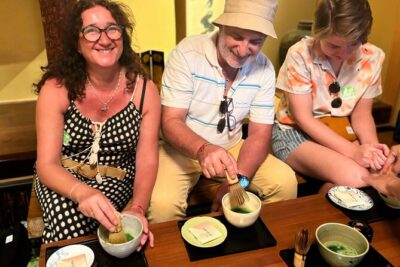
The hands-on portion is the reason this experience offers more than a simple demonstration. After tasting the host’s matcha, you choose a tea bowl and prepare your own serving with a bamboo whisk.
You can make the second bowl yourself or prepare it with a companion. The host demonstrates the motion, then guides you through the process. The instructions are detailed enough for complete beginners, and several people appreciated being shown how much focus goes into producing a smooth bowl.
Your first attempt may not look as neat as the host’s. That is part of the fun. You quickly see that matcha preparation is not just stirring powder into hot water. The angle of the whisk, the speed of your hand, and the consistency of the tea all require attention.
This is also where the ceremony becomes personal. Watching a tea master is beautiful, but making the tea yourself gives you a practical link to the tradition. You understand why the movements are deliberate and why the preparation calls for concentration.
Hosts may take photographs and videos while you make your matcha. That is useful because your hands are occupied, and it lets you keep a record without interrupting the process. Still, I would treat the camera as a bonus. The quiet focus of the activity is more valuable than trying to stage every moment.
A completely different kind of day out:
- PERFECT KYOTO 1-Day Bus Tour
★ 5.0 · 13,518 reviews - [Kyoto & Nara Day Tour] Sagano Scenic Railway & Nara Park & Fushimi Inari Taisha Thousand Torii Gates & Togetsukyo Bridge & Bamboo Grove & Kimono Forest (Departing from Osaka)
★ 4.9 · 10,942 reviews - Kyoto: Fushimi Inari, Kinkakuji, Bamboo Grove 1 Day Bus Tour
★ 4.8 · 4,316 reviews - Kyoto: Gion Make Your Own Chopsticks with Engraving Option
★ 5.0 · 3,465 reviews
The nijiriguchi changes how the room feels
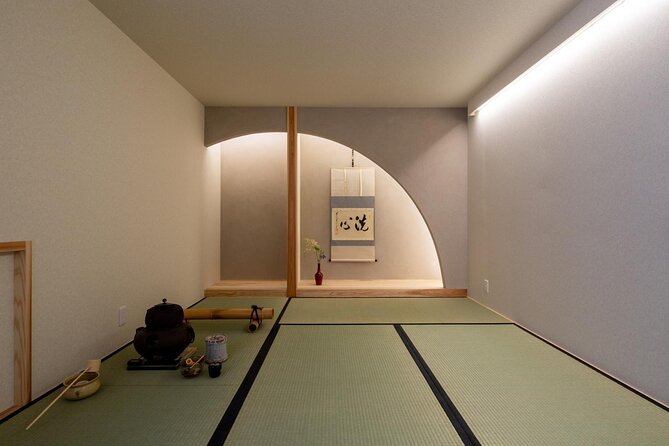
Sanjo Chasuian includes a nijiriguchi, the low crawl-in entrance traditionally associated with a tea room. You enter by lowering yourself rather than walking through a normal doorway.
This small architectural feature carries a clear message. Everyone entering the room must bow or crouch, leaving status and outside concerns at the threshold. The doorway is narrow and low by design, encouraging humility before the ceremony begins.
For an international visitor, the nijiriguchi also makes the experience feel more connected to traditional tea-room design. You are not just sitting in a modern classroom while someone explains matcha. The room itself helps shape the ritual.
The entrance may be awkward for some people. It requires bending down and is one reason the activity is not suitable for wheelchair users. Chairs are available inside for people who prefer to sit on a chair rather than on the floor, but the crawl-in doorway remains part of the setting.
If mobility is a concern, read the restrictions carefully before booking. The experience is not suitable for wheelchair users or children under six. Children under five, or anyone who requires an interpreter, must book the private plan rather than the shared plan.
One hour is enough for an introduction
The full activity lasts one hour. That is long enough to cover the background, watch the host prepare matcha, enjoy the sweet, and make your own bowl without turning the ceremony into an all-day commitment.
I like this length for a busy Kyoto itinerary. You can schedule it before dinner, after a morning visit to nearby sights, or during a slower afternoon. One person described it as a welcome pause during a trip filled with constant movement, and that is exactly how I would use it.
The short format does limit what you can learn. You will receive an introduction rather than advanced instruction in tea ceremony schools, utensils, or seasonal etiquette. If you already study tea ceremony, you may want a longer or more specialized private session.
For a first encounter, though, one hour keeps the activity approachable. You get the essential ideas, two servings of matcha, a sweet, and enough practice to remember the experience after you leave.
Shared groups keep the price reasonable
The listed price is $31 per person. That is a fair cost for a central Kyoto activity that includes two bowls of matcha, a traditional seasonal sweet, instruction in English, and a small group limited to 10 participants.
The shared plan is a group session with other people, so you will not have the room entirely to yourself. A group can add energy and make the practical part less intimidating, but it can also mean less individual attention if all 10 places are filled.
If you want a quieter setting, need an interpreter, or are traveling with a child under five, choose the private plan. The shared plan is not suitable for those needs, and an incorrect booking can mean no participation and no refund.
The facility also sells matcha, tea bowls, and selected tea items. Several people bought matcha or tea sets afterward, while others simply enjoyed the activity without feeling pressured to shop. You can ask about purchases at the end, but the retail side is optional.
A grand opening discount was offered through September 15. Since that date is tied to the opening period, check the current price when you book rather than assuming the discount still applies.
Practical details that make the session smoother
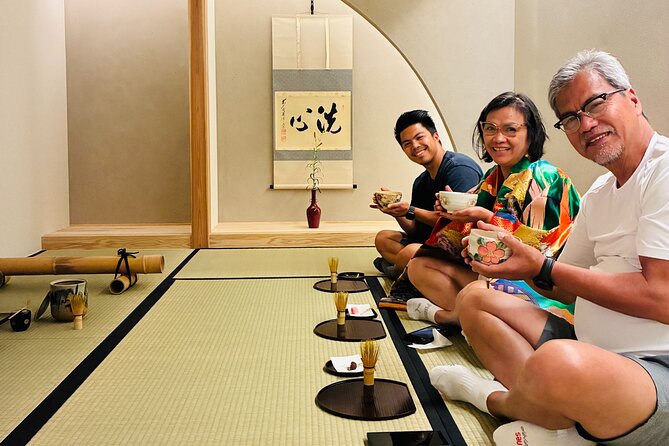
Wear or bring socks. This is required, and bare feet are not appropriate for the tea room.
Standard kimono rental and dressing are not included. An optional uchikake, a coat-style kimono, may be available for ¥1,500 including tax. You ask about it on the day, and advance reservations are not accepted. Quantities are limited, so do not book this activity expecting a full kimono dressing service.
The venue provides guidance in English. The hosts are praised for explaining the history, answering questions, and helping people understand the ceremony before the quiet portion begins. English ability can differ slightly between instructors, so listen closely and ask questions during the introduction if anything is unclear.
I would also avoid scheduling the tea ceremony immediately after a distant sightseeing stop. The late-entry rule is strict, and rushing into a quiet ceremony defeats part of its purpose. Arrive a few minutes early, settle yourself, and let the experience begin without a sprint through central Kyoto.
Free cancellation is available up to 24 hours before the start time for a full refund. You can also reserve and pay later, which helps if your Kyoto schedule is still shifting.
Who will enjoy Sanjo Chasuian most
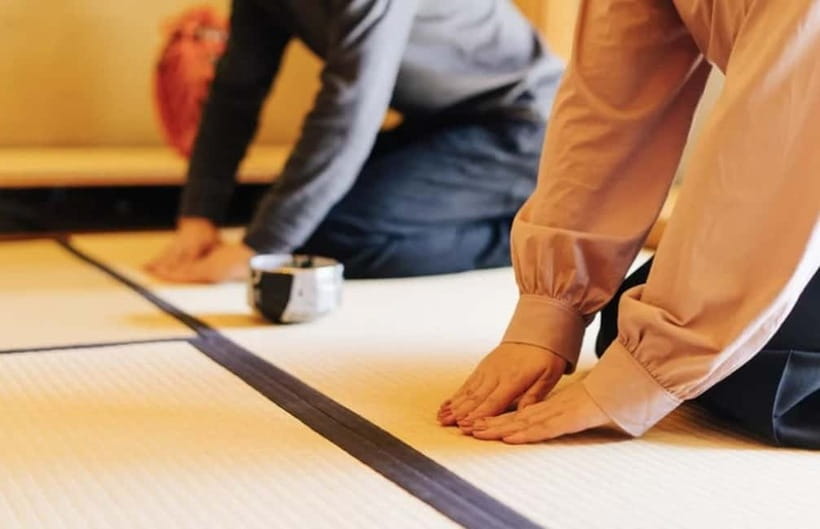
This is a strong choice for first-time visitors to Japan who want a cultural activity with clear English instruction. You do not need prior knowledge of matcha, Japanese etiquette, or tea ceremony customs.
It also suits couples, friends, and solo visitors. The option to prepare the second bowl with a companion adds a shared activity, while a solo visitor can still take part fully in the small group.
You will likely enjoy it if you:
- Want an authentic cultural introduction without committing half a day.
- Prefer to learn by doing instead of only watching.
- Appreciate calm settings after busy sightseeing.
- Like food traditions and seasonal sweets.
- Want an activity near central Kyoto transport.
- Are comfortable sitting in a tea room and bending through the nijiriguchi.
You may want another option if you need wheelchair access, dislike strict start times, or want a full kimono rental. It is also not designed for very young children. The ceremony depends on a quiet atmosphere, so the age rules are firm rather than casual suggestions.
Should you book this Kyoto tea ceremony?
I would book Sanjo Chasuian if you want a well-paced first taste of Japanese tea ceremony at a reasonable price. The best features are the two-part format, the seasonal Kyoto sweet, the hands-on whisking, and the nijiriguchi, which gives the room a real sense of tradition.
The hosts, including Yuko and Reina on some sessions, are praised for warmth, patience, and careful explanations. The experience is not completely private, and one instructor’s English pronunciation was harder for one person to follow, but the overall teaching approach is clear and welcoming.
Book it for an hour when you can slow down. Wear socks, arrive early, and do not expect a full kimono makeover or an advanced tea-school lesson. For a compact, thoughtful introduction to matcha near Karasuma Oike, this is a very good use of $31.
FAQ
How long does the Sanjo Chasuian tea ceremony last?
The experience lasts one hour. It includes an introduction to tea ceremony history, matcha prepared by the host, a traditional sweet, and a hands-on bowl that you whisk yourself or with a companion.
How much matcha is included?
Two bowls of matcha are included. The host prepares one, and you prepare the second one yourself or with a companion.
Is the tea ceremony taught in English?
Yes. Sanjo Chasuian provides guidance and explanations in English for international visitors.
Where is Sanjo Chasuian located?
The facility is about a five-minute walk from Subway Karasuma Oike Station. Look for the large plate showing the Sanjo Chasuian logo and name.
Do I need to bring anything?
You must bring or wear socks. Chairs are available for people who prefer them, but the venue is not suitable for wheelchair users.
Can children take part in the shared plan?
Children under six are not suitable for this activity. Children under five, or anyone who requires an interpreter, must book the private plan. The shared plan is not appropriate for those needs.
Just added in Kyoto
- The “Golden Route” and Ancient Japan by DIAMIR Erlebnisreisen – 14-Day Tour★ 2.0 · 2 reviews
- Japan: Castles & Cuisine by G Adventures – 6-Day Kyoto to Osaka Tour★ 4.5 · 4 reviews
- Cycle Japan by Explore! – 13-Day Kyoto to Tokyo Tour★ 4.7 · 12 reviews
- Cycle Japan by Intrepid Travel – 11-Day Kyoto to Tokyo Tour★ 4.8 · 2 reviews
- Classic Japan by Intrepid Travel – 11-Day Kyoto to Tokyo Tour★ 4.4 · 14 reviews
- Ancient & Modern Japan 14-Day Tour by Exodus Adventure Travels★ 4.4 · 40 reviews
- 5 Day Cultural Adventure of Kyoto, Nara & Osaka by Tourist Journey★ 2.5 · 2 reviews
- 12 Days Kinosaki Onsen Escape: A Journey Through Japan’s Timeless Towns by UME Travel★ 4.8 · 5 reviews
Tea Ceremonies, compared.
Tea Ceremony in a Traditional Tea House in Kiyomizu
Read our review →
World Heritage Kyoto & Nara Uji Authentic Matcha Experience
Read our review →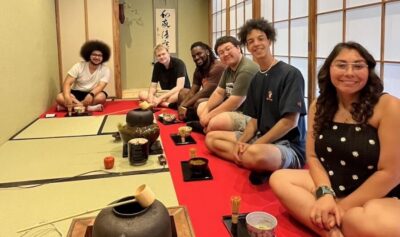
Browse the lists this tour appears in