
Reviewed · WALKING TOURS
Kyoto night walk tour (Gion district)
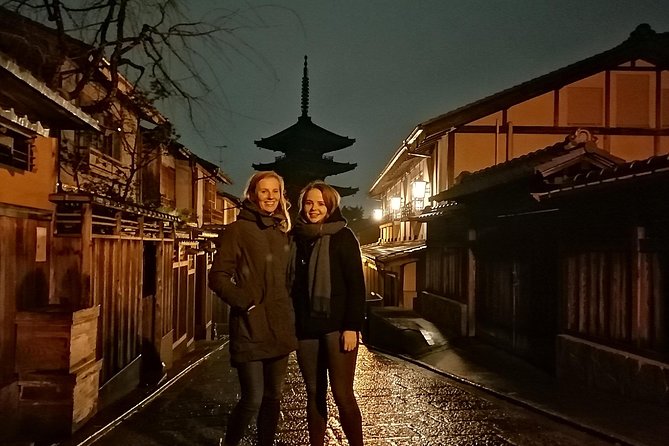
Quiet streets tell Kyoto’s story. This 90-minute private walk begins by Minamiza Kabuki Theatre and threads through Gion and the Yasaka area after dark. I like the small private format, which lets you ask questions and set a comfortable pace. I also like the guide’s habit of taking family and solo portraits at attractive spots.
The main drawback is that the tour is short and mostly outdoors. You will see several important places, but the experience is more about evening atmosphere, local context, and finding the right lanes than entering major buildings. Kiyomizu-dera admission is not included, and seasonal illumination is not guaranteed.
In This Review
- Key points to know before booking
- Starting by Minamiza Kabuki Theatre
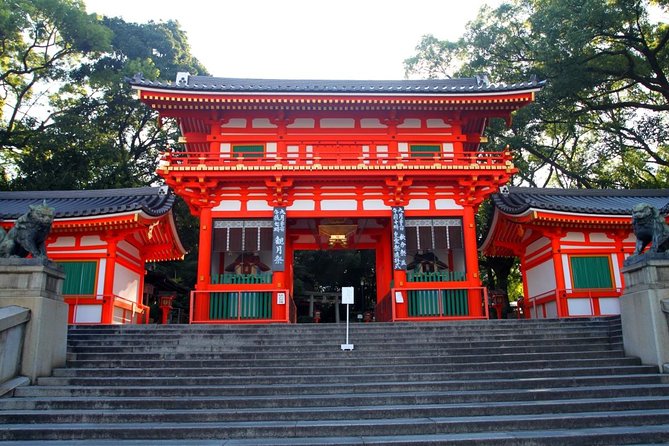
- Yasaka Shrine after dark
- The stone-wall district and the value of silence
- Yasakanoto pagoda and the best photo stop
- Walking the famous Yasaka slope
- Kiyomizu-dera and seasonal illumination
- Why the private format matters
- Is $35 a fair price?
- Who should choose this Kyoto night walk?
- Should you book it?
- FAQ
- Where does the Kyoto night walk begin?
- Where does the tour finish?
- How long does the tour last?
- Is admission to Kiyomizu-dera included?
- Is this a private tour?
- Can I cancel for a full refund?
Key points to know before booking
- Private evening walk: Only your own group participates, making this a relaxed choice for families, couples, or solo visitors.
- Meeting at Minamiza: The walk starts in front of the Minamiza Kabuki Theatre at 194 Kawabatacho.
- Yasaka-area highlights: The route includes Yasaka Shrine, the stone-wall district, Yasakanoto pagoda, a famous slope, and an exterior look toward Kiyomizu-dera.
- Photography is part of the appeal: Guide Hiro is frequently praised for taking thoughtful night photographs and sending them promptly.
- Good value at $35: The price is reasonable for a private 90-minute orientation, especially if you also use the guide’s restaurant suggestions.
- Bring comfortable shoes: The route includes narrow lanes, slopes, and plenty of walking, with no promise of indoor rest stops.
Starting by Minamiza Kabuki Theatre
Your evening begins at 194 Kawabatacho, in front of the Minamiza Kabuki Theatre. This is a useful meeting point because it places you beside the Kamo River and close to Gion’s southern approach. With a mobile ticket and a confirmed meeting arrangement, you can get there without carrying paper documents.
The location is near public transportation, though the information provided does not specify which station or bus stop to use. I would still allow a little extra time. Kyoto’s narrow streets and busy evening traffic can make a short distance take longer than expected.
The tour ends back at the meeting point. That is convenient if you want to continue dinner or drinks nearby, but it also means you should not treat the walk as a one-way transfer to your hotel. In some cases, Hiro has helped people find a restaurant or walk them farther afterward, but that is a personal kindness rather than a promised part of the tour.
The guide most often associated with this experience is Hiro, also referred to as Hero in some customer comments. Nako is mentioned as another friendly guide. The strongest praise centers on easy conversation, clear English, local perspective, and a warm manner. One important caution: a single poor experience involved a late arrival and a substitute guide who lacked basic answers. The operator apologized directly and promised to prevent a repeat. That isolated warning is worth keeping in mind when you receive your confirmation.
More Walking Tours in Kyoto
- Kyoto Geisha Walking Tour: Gion District & Hidden Gems
★ 4.7 · 3,273 reviews - Kyoto: Gion Magical Night Walking Tour with Geisha Trivia
★ 4.9 · 2,393 reviews - Kyoto: Gion Geisha District Walking Tour – Stories of Geisha
★ 4.7 · 2,187 reviews
Yasaka Shrine after dark
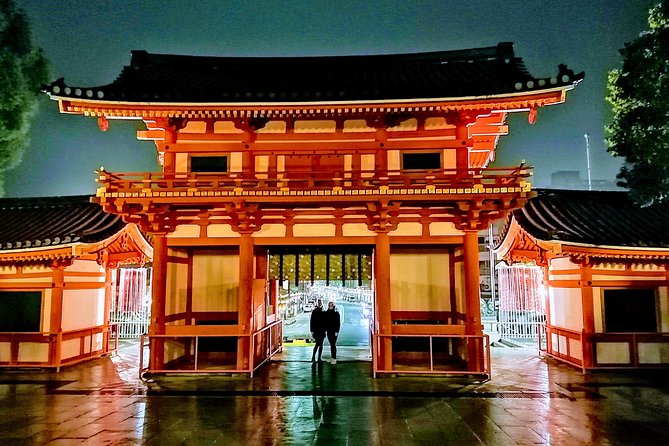
The first formal stop is Yasaka Shrine, with about 15 minutes set aside for an introduction. Admission is free, so the tour can focus on the shrine’s setting and meaning rather than rushing through a ticket line.
Yasaka Shrine is especially suitable for an evening introduction to Kyoto. It links the modern entertainment streets around Gion with older religious customs. The guide can explain its history using local knowledge, which gives you more than a quick photograph at the gate.
Fifteen minutes is not long enough for a full religious or architectural study. You should think of this stop as a useful orientation. You get the basic story, learn what you are looking at, and begin to understand how the shrine fits into the surrounding neighborhood.
At night, the mood changes. Light, shadows, and quieter paths make the shrine feel different from a daytime visit. The tour does not promise a special ceremony or a private access area, so the value comes from the guide’s explanation and the way the stop fits into the walk.
If you are visiting Kyoto for the first time, this early stop helps you get your bearings fast. It also gives you a reference point for returning later on your own.
The stone-wall district and the value of silence
The route then passes through a stone-wall district. Here, the guide deliberately keeps explanations brief because the area calls for quiet.
That silence is not a weakness. In a city where many tours fill every pause with facts, knowing when not to talk can be respectful and useful. You get a chance to notice the walls, narrow lanes, traditional buildings, and subdued night sound without turning the neighborhood into a stage.
At the same time, you should understand what you are paying for. This section is not presented as a long lecture. If you want detailed architectural commentary at every doorway, you may find this part too restrained.
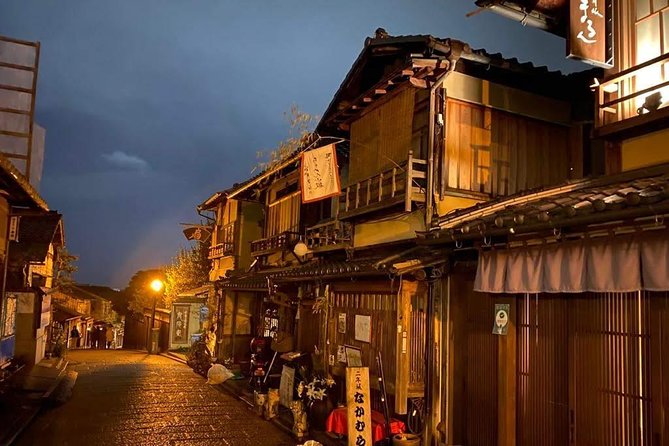
I see it as one of the more authentic parts of the walk. Gion is a lived-in district, not a theme park. Moving quietly helps preserve its character and reminds you that people still live and work along these lanes. Stay close to the guide, keep your voice low, and avoid photographing people without permission.
The route may take you slightly away from the most obvious streets. Several people praised Hiro for showing them corners they would have struggled to find alone. That is a real benefit in Gion, where a turn into a narrow lane can change the scene completely.
Yasakanoto pagoda and the best photo stop
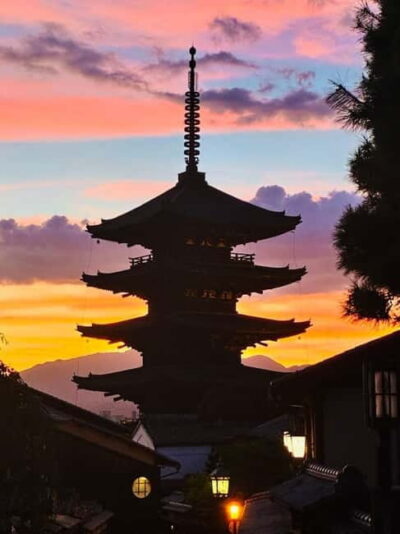
Yasakanoto is the next major stop, with about 20 minutes devoted to the pagoda’s history and photographs. This is likely the visual centerpiece of the walk.
The guide explains the pagoda’s background, then helps you take photographs in front of it. Hiro is repeatedly praised as a skilled and attentive photographer. He has taken pictures of families, couples, and solo visitors, which is particularly useful if you are tired of collecting beautiful Kyoto scenery without appearing in any of it.
The night setting works well here. Artificial light can give the pagoda and nearby streets a softer appearance, while the surrounding lanes provide a traditional Kyoto backdrop. Exact lighting conditions depend on the evening, weather, and season, so you should not expect a professional photo session with studio equipment. The appeal is personal and practical: someone who knows where to position you can capture a better memory than a hurried self-timer.
Twenty minutes gives the guide enough time to explain the site without making the stop feel rushed. It also gives you space for several pictures. If photography matters to you, this stop alone may justify much of the $35 price.
The photography is not formally listed as a separate included service with a stated number of images. Still, the repeated reports of prompt photo delivery make it a strong part of the experience. Ask the guide how and when the images will be sent so expectations are clear.
A completely different kind of day out:
- PERFECT KYOTO 1-Day Bus Tour
★ 5.0 · 13,518 reviews - [Kyoto & Nara Day Tour] Sagano Scenic Railway & Nara Park & Fushimi Inari Taisha Thousand Torii Gates & Togetsukyo Bridge & Bamboo Grove & Kimono Forest (Departing from Osaka)
★ 4.9 · 10,942 reviews - Kyoto: Fushimi Inari, Kinkakuji, Bamboo Grove 1 Day Bus Tour
★ 4.8 · 4,316 reviews - Kyoto: Tea Ceremony in a Traditional Tea House in Kiyomizu
★ 4.9 · 3,519 reviews
Walking the famous Yasaka slope
After Yasakanoto, you walk through a well-known slope in the Yasaka area. This portion connects the pagoda with the wider historic district and gives the tour its sense of movement.
Slopes are easy to underestimate. You may be walking for only 90 minutes, but the route includes inclines, uneven pavement, narrow passages, and stairs or steps may appear along the way. Wear comfortable shoes. That is more important than dressing for photographs, although you will probably want both comfort and a layer suitable for a cool Kyoto evening.
The slope is also a good place to see how Kyoto’s old streets function after dark. You might find shuttered shops, softly lit entrances, restaurant signs, and people moving between dinner reservations. The tour is not designed as a shopping outing, so you should not expect time to browse every storefront.
Hiro’s strength here seems to be his ability to add small cultural details along the way. People have enjoyed his humor, food knowledge, and willingness to answer questions. That personal exchange can turn a simple walk into a better introduction to Kyoto’s customs.
Kiyomizu-dera and seasonal illumination
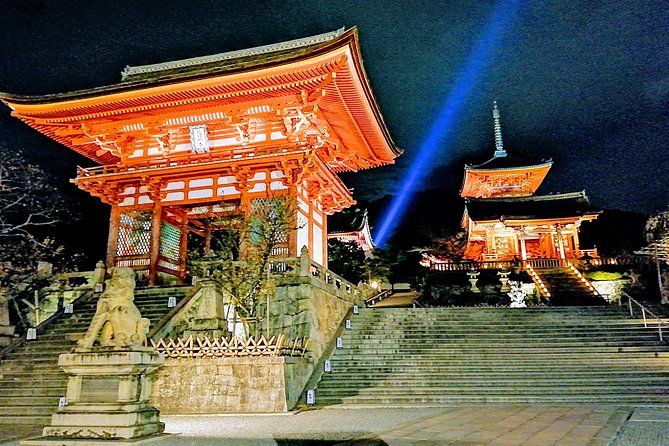
The final named stop is Kiyomizu-dera Temple, where you spend roughly 10 minutes. Admission is not included, so this is best understood as an outside view or a brief look at the temple area rather than a full temple visit.
The route may offer a chance to see illumination, depending on the season. That qualification matters. Kyoto’s temples do not all light up every night, and this tour does not promise a special nighttime admission. If you have your heart set on entering Kiyomizu-dera after dark, check the temple’s own schedule separately and budget for the entrance fee.
Ten minutes is enough to point out the temple and explain its place in the Yasaka and Higashiyama area. It is not enough for a complete visit to the grounds, architecture, or famous wooden stage. I would plan a separate daytime visit if Kiyomizu-dera is high on your Kyoto list.
As a closing stop, it works well. You finish with one of Kyoto’s best-known sights in mind, then return toward the starting point. The tour gives you a compact route through several major landmarks without asking you to spend an entire evening on formal temple visits.
Why the private format matters
This is a private activity, so only your group participates. That changes the feel of the walk. You can ask about food, customs, photography, or the neighborhood without worrying that a large group is waiting for you to catch up.
Families seem especially well suited to this format. The guide has taken photos of children and parents, adjusted the pace when a group was tired, and helped families find dinner afterward. Solo visitors can also benefit because the walk offers company without the social pressure of joining a large group.
The private setup may also help if you want a shorter or more flexible outing. One person asked for a quicker version after a long day, and Hiro accommodated the request while still providing photographs and cultural information. This suggests some flexibility, but do not assume every timing change is guaranteed.
The tradeoff is that the tour depends heavily on the individual guide. With Hiro, the experience appears personal and conversational. If a substitute guide is assigned, the quality may be less consistent. Read your confirmation carefully, and contact the provider promptly if the guide or meeting details are unclear.
Is $35 a fair price?
At $35 per person, this is not the cheapest way to walk around Gion, because you can explore much of the district without paying. The price makes more sense when you count the private guide, the planned route, local explanations, photography, and food recommendations.
For a couple or family, the cost buys convenience and company. You do not need to map the quiet lanes yourself, identify the pagoda, or figure out the best place for a family photograph. You may also save time by receiving restaurant suggestions, including ramen, gyoza, Japanese barbecue, and Kobe beef recommendations mentioned by people who spent time with Hiro.
The tour is less valuable if you already know Gion well or want a long, detailed temple tour. It also may not satisfy you if your main goal is entering Kiyomizu-dera or Yasaka Shrine buildings. Those are better handled as separate visits.
Bookings average about 32 days ahead, which suggests you should reserve early if your Kyoto dates are fixed. Confirmation arrives within 48 hours, subject to availability. Free cancellation is available until 24 hours before the start time. If bad weather cancels the walk, you are offered another date or a full refund.
Who should choose this Kyoto night walk?
I would recommend it for a first evening in Kyoto. The route introduces Gion, Yasaka, and Higashiyama without consuming half a day. It can help you decide where to return in daylight and where to eat afterward.
It is also a good match if you value personal contact over a large amount of formal commentary. Hiro’s appeal is his friendly conversation, local suggestions, photography, and ability to make a solo visitor or family feel at ease.
You should think twice if you need wheelchair-friendly details, extensive indoor access, or a guaranteed temple illumination. The information confirms that service animals are allowed and that most people can participate, but it does not provide a full accessibility assessment for slopes, narrow lanes, or pavement.
Rain is another consideration. The experience requires good weather, and an evening walk through old streets is less enjoyable when conditions are poor. Bring suitable clothing, but remember that a cancellation may still occur if the provider considers the weather unsafe or unsuitable.
Should you book it?
Book this walk if you want a friendly, private introduction to Gion, especially on your first night in Kyoto. The strongest reasons are the quiet lanes, the compact Yasaka route, and Hiro’s much-praised photography. At $35, it is a solid value for people who want local orientation and help creating good holiday photographs.
Skip it if you prefer to explore independently, want a full Kiyomizu-dera visit, or need a tour packed with detailed commentary at every stop. Before you go, confirm the meeting details and assigned guide. Then wear good shoes, respect the quiet residential areas, and leave room afterward for dinner based on the guide’s suggestions.
FAQ
Where does the Kyoto night walk begin?
The tour begins in front of the Minamiza Kabuki Theatre at 194 Kawabatacho, Higashiyama Ward, Kyoto, 605-0075, Japan.
Where does the tour finish?
The activity ends back at the meeting point.
How long does the tour last?
The walk lasts approximately 1 hour and 30 minutes.
Is admission to Kiyomizu-dera included?
No. Admission to Kiyomizu-dera is not included.
Is this a private tour?
Yes. Only your group participates in the activity.
Can I cancel for a full refund?
Yes. You can cancel at least 24 hours before the local start time for a full refund. If poor weather cancels the tour, you will be offered another date or a full refund.
Just added in Kyoto
- The “Golden Route” and Ancient Japan by DIAMIR Erlebnisreisen – 14-Day Tour★ 2.0 · 2 reviews
- Japan: Castles & Cuisine by G Adventures – 6-Day Kyoto to Osaka Tour★ 4.5 · 4 reviews
- Cycle Japan by Explore! – 13-Day Kyoto to Tokyo Tour★ 4.7 · 12 reviews
- Cycle Japan by Intrepid Travel – 11-Day Kyoto to Tokyo Tour★ 4.8 · 2 reviews
- Classic Japan by Intrepid Travel – 11-Day Kyoto to Tokyo Tour★ 4.4 · 14 reviews
- Ancient & Modern Japan 14-Day Tour by Exodus Adventure Travels★ 4.4 · 40 reviews
- 5 Day Cultural Adventure of Kyoto, Nara & Osaka by Tourist Journey★ 2.5 · 2 reviews
- 12 Days Kinosaki Onsen Escape: A Journey Through Japan’s Timeless Towns by UME Travel★ 4.8 · 5 reviews
Walking Tours, compared.
Kyoto Geisha Walking Tour: Gion District & Hidden Gems
Read our review →
Tokyo Tsukiji Fish Market Food and Culture Walking Tour
Read our review →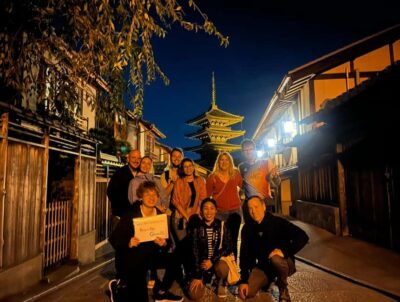
Gion Magical Night Walking Tour with Geisha Trivia
Read our review →
Imperial Palace and Shogun Historical Walking Tour
Read our review →
Gion Geisha District Walking Tour – Stories of Geisha
Read our review →
Shinjuku Local Bar and Izakaya Guided Walking Tour
Read our review →
Browse the lists this tour appears in