
Reviewed · CASTLES AND HISTORIC SITES
Kyoto: Nijo Castle and Kyoto Imperial Palace Guided Tour
Kyoto’s past comes alive on foot. This three-hour tour links Nijo Castle and the Kyoto Imperial Palace, two sites that tell very different stories about power in Japan. One reflects the authority of the shoguns, while the other recalls the long imperial court tradition.
I especially like the small groups of nine or fewer, which make it easier to ask questions and hear the guide. I also like the strong focus on history, architecture, politics, and garden design rather than simply pointing out pretty buildings. The main drawback is that the Imperial Palace portion may feel limited if you expect to enter every building. One review specifically notes that the interiors were not available and the visit focused on exteriors.
In This Review
- Key points to know before booking
- Meeting Your Guide at the Imperial Palace
- Kyoto Imperial Palace: Court Life, Gardens, and Exterior Views
- The Walk Between the Two Sites
- Entering Nijo Castle and Ninomaru Palace
- The Guides Are the Main Reason to Book
- Is Three Hours Enough?
- What the $63 Price Includes
- Who Will Enjoy This Tour Most?
- Practical Tips for a Better Visit
- Should You Book the Nijo Castle and Imperial Palace Tour?
- FAQ
- Where does the tour begin?
- How long does the tour last?
- Which sites are included?
- Is the tour available in languages besides English?
- How large is the group?
- What should I bring and wear?
Key points to know before booking
- Two major sights in three hours: You visit Nijo Castle and the Kyoto Imperial Palace on one guided walking experience.
- A guide makes the difference: Guides including Goku, Kayo, Nene, and Taku receive especially warm praise for clear explanations, humor, patience, and local tips.
- Small group format: The tour is limited to nine participants, allowing for a more personal pace and easier questions.
- Nijo Castle admission is included: Your ticket covers Nijo Castle, Ninomaru Palace, and the Art Gallery.
- The Imperial Palace is mainly an outdoor visit: Expect gardens, courtyards, and exterior views rather than a full tour of every interior.
- Plan for walking and weather: Bring a camera and cash, avoid shorts, and remember that the tour is not considered suitable for pregnant women.
Meeting Your Guide at the Imperial Palace
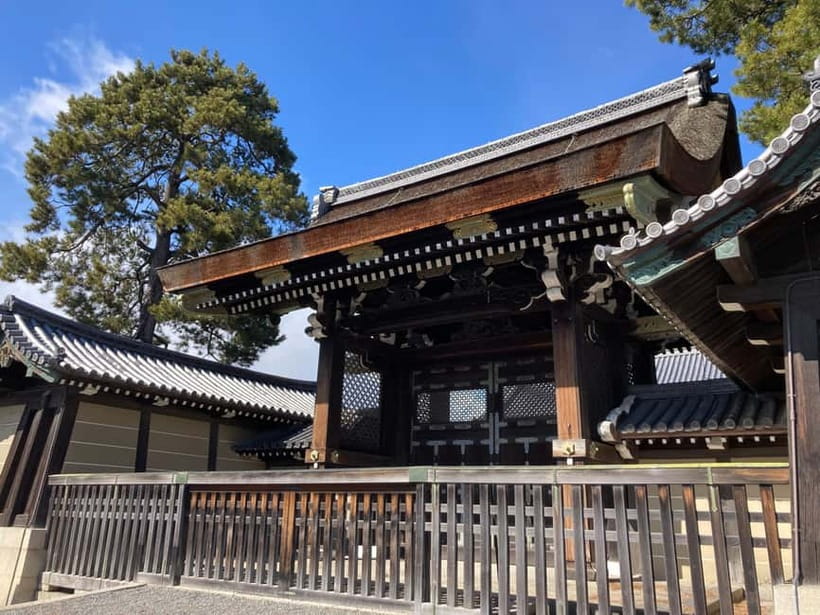
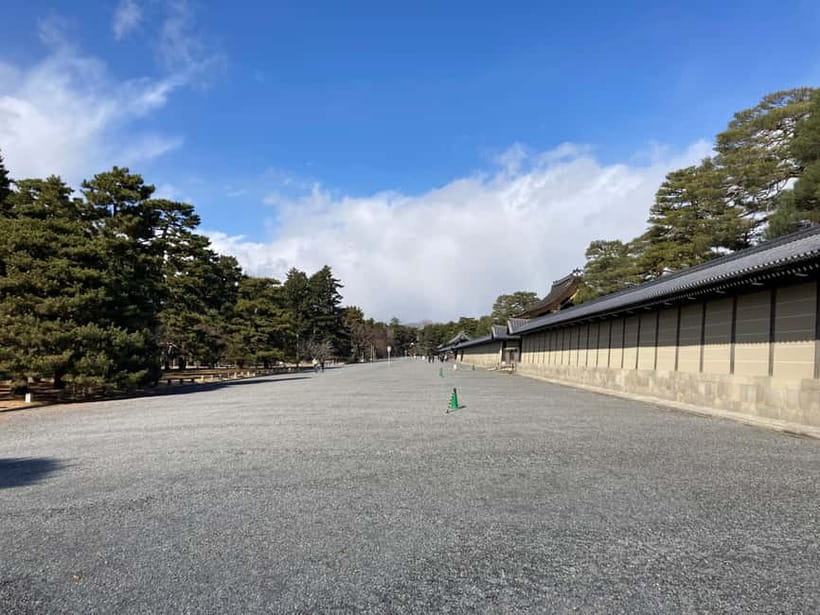
The tour begins at the Nakadachiuri Gate of the Kyoto Imperial Palace. That detail matters. The palace grounds are large, so you do not want to wander around searching for a guide after arriving in Kyoto.
You receive information in advance about what your guide looks like and what they will be wearing. Still, I would arrive early and keep your phone available in case the meeting instructions require an update.
The activity is offered in English, French, Spanish, Japanese, Portuguese, and Russian. Since the tour depends heavily on explanation, choose a language in which you can comfortably follow details about Japanese political history and architecture.
The group size is capped at nine. That is a useful middle ground. You get more conversation than on a large bus tour, but you are not paying for a fully private guide. Several participants received answers to detailed questions, including some about Japan’s relationship with the United States after World War II. That suggests the guides are willing to move beyond a fixed script when time allows.
More Castles and Historic Sites in Kyoto
- Kyoto Samurai Experience
★ 5.0 · 1,294 reviews - Kyoto: Nijo-jo Castle and Ninomaru Palace Guided Tour
★ 4.7 · 1,020 reviews - Kyoto: Kendo and Samurai Experience with Uniform and Gear
★ 4.9 · 815 reviews
Kyoto Imperial Palace: Court Life, Gardens, and Exterior Views
Beginning at the Imperial Palace gives the tour a useful sense of place. Kyoto served as Japan’s imperial capital for centuries, and the palace area recalls a world shaped by court ceremony, refined design, and seasonal change.
The gardens are an important part of the visit. They were designed to display the beauty of the seasons, so your experience can change with the time of year. Spring brings particular appeal, with cherry blossoms adding color to the grounds. Other seasons offer their own atmosphere, though no exact garden display can be guaranteed on a particular date.
I like this part of the tour because the guide can explain why the gardens are arranged as they are, rather than leaving you with a series of attractive but disconnected views. You learn to look at paths, trees, open spaces, and buildings as part of a traditional Japanese design approach.
The palace architecture is more restrained than the decorated interiors at Nijo Castle. That contrast is one of the strongest reasons to visit both sites together. At the Imperial Palace, you see the formal world of the emperor and court. At Nijo Castle, you see the authority of the military government and the shogun.
You should set your expectations carefully. The palace portion may focus on courtyards, gardens, and the outside of the buildings. One participant found this disappointing because the interiors were not accessible. If entering palace rooms is your main goal, this tour may not meet it. If you want the setting, architecture, and historical context, the visit remains worthwhile.
The Walk Between the Two Sites
The route includes a walk of about 20 minutes between the Imperial Palace and Nijo Castle. This is not just dead time between attractions. It gives the guide room to connect the two places and explain how emperors, shoguns, politics, and foreign influence shaped Kyoto.
One participant particularly enjoyed discussing Western and Japanese culture during this walk. That kind of informal conversation can make the tour feel less like a lecture and more like a shared exploration of the city.
You also pass through Kyoto streets and may see traditional townhouses. The tour includes a spot known for cherry blossoms, adding a small seasonal pleasure beyond the headline attractions.
The walk is manageable for many people, but the experience is still an active walking tour. Wear comfortable shoes and plan for changing weather. Much of the palace visit takes place outdoors, and the information provided does not indicate that indoor transport is part of the experience.
Entering Nijo Castle and Ninomaru Palace
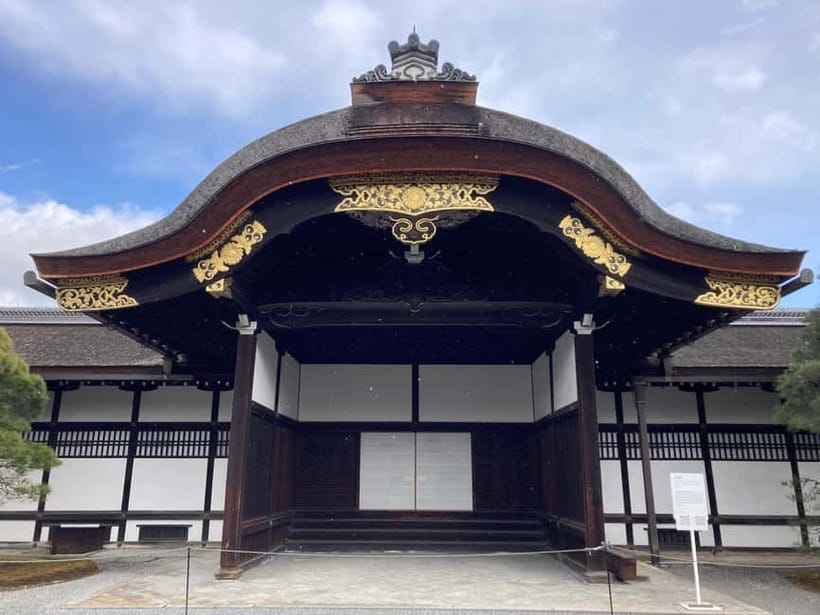
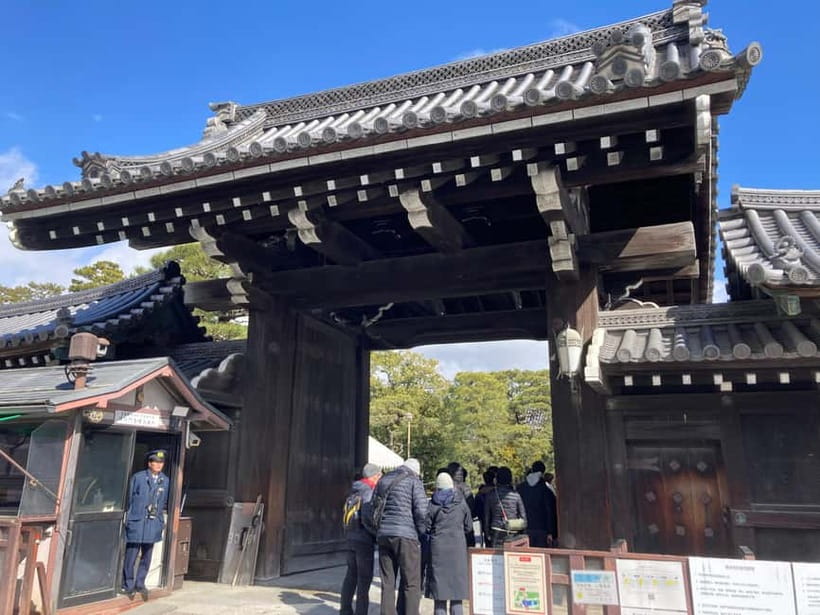
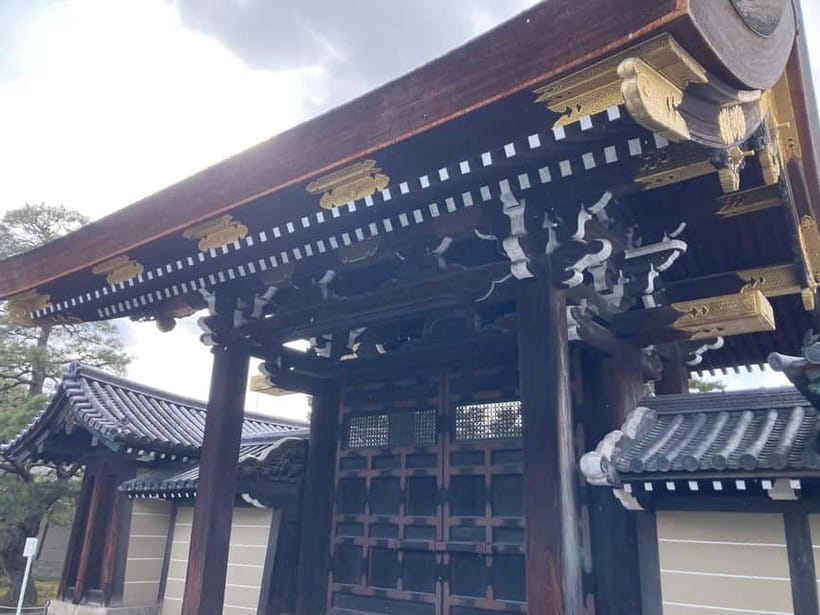
Nijo Castle was built by Tokugawa Ieyasu and represents the power of the Tokugawa shogunate. The castle is not simply a defensive site. Its scale, decorative details, and formal rooms were designed to communicate authority.
The included admission covers Nijo Castle, Ninomaru Palace, and the Art Gallery. That makes the second half of the tour more substantial than a quick look at the castle walls.
Ninomaru Palace is where the political story becomes easier to picture. The architecture and decoration reflect the authority of the shogun, and your guide explains how the design communicated rank and control. Rather than seeing ornament as decoration alone, you learn to read it as part of the political message.
This is where a strong guide adds real value. Without context, you may notice beautiful details but miss why they mattered. Guides such as Goku have been praised for explaining events involving shoguns and emperors in detail, while also keeping the visit enjoyable for families and teenagers.
The castle also provides a useful contrast with the Imperial Palace. The imperial residence represents the continuity and ceremony of the court. Nijo Castle reflects the military government that exercised political power for much of Japan’s early modern period. Seeing both in one morning or afternoon helps you understand that these were not interchangeable centers of authority.
A completely different kind of day out:
- PERFECT KYOTO 1-Day Bus Tour
★ 5.0 · 13,518 reviews - [Kyoto & Nara Day Tour] Sagano Scenic Railway & Nara Park & Fushimi Inari Taisha Thousand Torii Gates & Togetsukyo Bridge & Bamboo Grove & Kimono Forest (Departing from Osaka)
★ 4.9 · 10,942 reviews - Kyoto: Fushimi Inari, Kinkakuji, Bamboo Grove 1 Day Bus Tour
★ 4.8 · 4,316 reviews - Kyoto: Tea Ceremony in a Traditional Tea House in Kiyomizu
★ 4.9 · 3,519 reviews
The Guides Are the Main Reason to Book
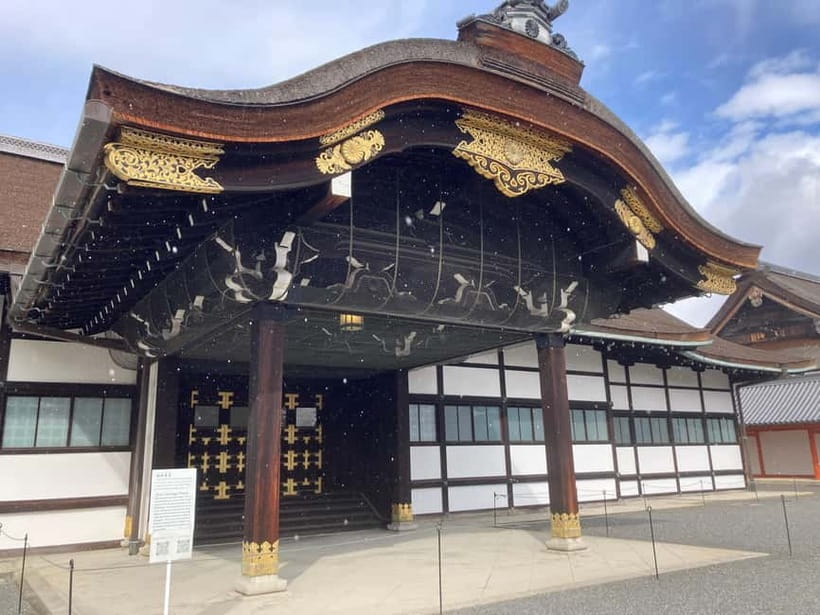
The sites are important, but this experience depends heavily on the person leading it. The strongest praise goes to Goku, Kayo, Nene, and Taku.
Goku receives repeated praise for his command of Japanese history, clear English, energy, and ability to answer difficult questions. Several people describe him as friendly and flexible. One family appreciated that he adjusted the balance between historical explanation and time for photographs, while another said he tailored the visit toward shoguns and emperors for two teenagers.
Kayo is praised for combining information with humor. One participant felt that three hours passed quickly because the tour mixed learning and laughter. Another valued her explanations of Japan in general as well as the two main sights.
Nene is described as kind, patient, and clear. She also stepped in when another guide became ill, helping the tour continue at short notice. Taku receives praise for historical detail, local suggestions, and his willingness to take photographs for a solo participant.
These comments point to a practical advantage: the experience is not only about facts. A good guide can help you ask better questions, make sense of unfamiliar customs, and get suggestions for the rest of your Kyoto visit. One person even received ramen recommendations for the neighborhood around their hotel.
Guide quality can vary from one departure to another, as it does with any guided activity. The consistently positive comments about several different guides are encouraging, but you should still understand that the exact personality and teaching style are not guaranteed.
Is Three Hours Enough?
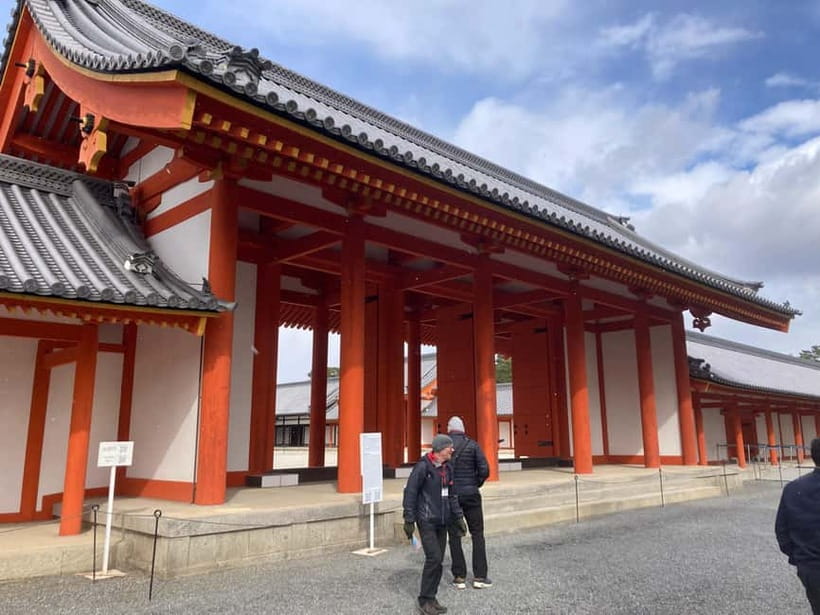
Three hours is a sensible length for these two locations. It gives you time to see the main areas and receive historical explanation without taking over your entire day.
The schedule does require movement. You begin at the Imperial Palace, walk through Kyoto streets, and then continue at Nijo Castle. If you prefer a slow, unstructured visit with long periods for photography, the guided pace may feel brisk.
On the other hand, three hours can save you from spending half a day trying to understand two large historical sites on your own. The guides help you focus on the features that matter, while the small group allows some flexibility when questions come up.
The tour suits people who want a clear introduction to Kyoto’s political and cultural past. It is also a good first-day activity because the guides may offer local advice afterward. Several participants valued recommendations for food and other parts of the city.
What the $63 Price Includes
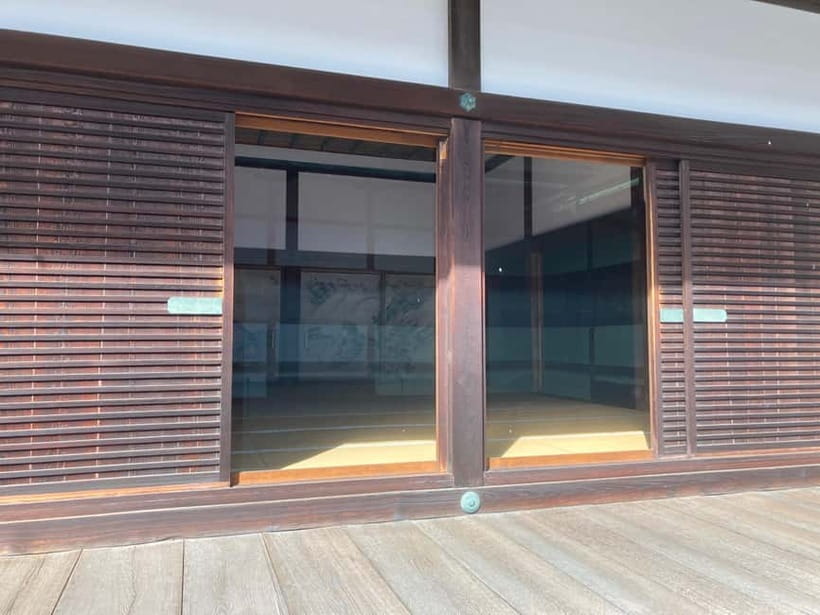
At $63 per person, the tour costs more than visiting the sites without a guide. The value depends on how much you want interpretation.
Your fee includes an English-speaking professional guide, walking tour service, and admission to Nijo Castle, Ninomaru Palace, and the Art Gallery. The price does not simply buy entry tickets. It buys three hours of structure and explanation across two major sites.
I consider the price reasonable for a small group, especially if you care about history or architecture. A group limited to nine gives you a better chance to ask about details than a large sightseeing group. Solo visitors also gain a practical benefit: guides may help with photographs, as Taku did for one participant.
The value is weaker if you mainly want to stroll through gardens or take pictures at your own pace. It is also weaker if you expect extensive access inside the Imperial Palace. The palace experience is centered on gardens and exterior views, so keep that in mind before paying for a guided visit.
Free cancellation is available up to 24 hours before the start time, and you can reserve now and pay later. Those options help if your Kyoto schedule is still shifting.
Who Will Enjoy This Tour Most?
I would choose this experience if you:
- Want historical context instead of only sightseeing
- Prefer a small group to a large organized tour
- Are curious about shoguns, emperors, politics, and architecture
- Want to combine two important Kyoto sites in three hours
- Appreciate having a local guide for questions and city suggestions
- Are comfortable walking between attractions
- Want help taking photographs as a solo visitor
Families can benefit from the flexible teaching style. One family found that the guide kept two teenagers interested while still giving detailed history.
It is less suitable if you need a slow pace, dislike outdoor walking, or want broad interior access at the Imperial Palace. The activity information also says it is not suitable for pregnant women.
Wear something appropriate for the stated dress rules, since shorts are not allowed. Bring a camera and cash. The tour information does not list a meal, so plan food separately around the three-hour schedule.
Practical Tips for a Better Visit
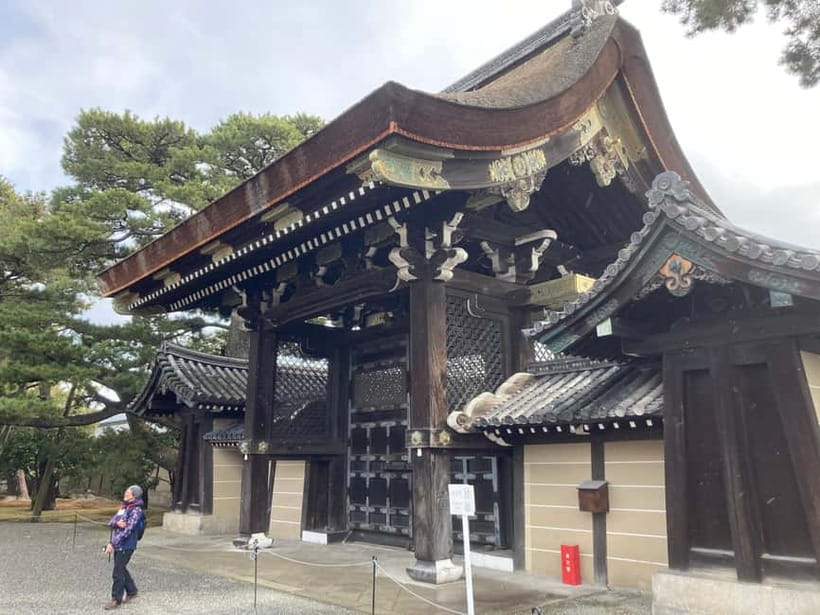
Arrive at the Nakadachiuri Gate with time to spare. The meeting point is specific, and the Imperial Palace grounds are extensive.
Keep your phone available before the tour. You will receive a description of the guide’s appearance and clothing, which should make the meeting easier.
Think of the two sites as a pair. At the Imperial Palace, pay attention to court ceremony, seasonal gardens, and refined design. At Nijo Castle, look for displays of shogunal power and the connection between architecture and politics.
Ask questions. The guides have been praised for handling subjects ranging from Japanese culture to postwar international relations. You will get more from the tour if you treat the walk as a conversation rather than waiting for a list of facts.
Allow extra time for photographs if spring blossoms are important to you. The tour includes a cherry blossom location, but seasonal conditions vary and the guide cannot control the timing of flowers.
Should You Book the Nijo Castle and Imperial Palace Tour?
I would book this tour if you want Kyoto’s major sights explained in human terms. The strongest feature is not simply access to Nijo Castle and the Imperial Palace. It is the connection between them: the emperor’s court, the shogun’s government, their architecture, and the political tension between those worlds.
The $63 price is fair for a small group with admission and a three-hour guide, especially when you value clear historical explanation. Goku, Kayo, Nene, and Taku have each been praised for warmth, detail, humor, and useful local advice.
I would skip it if your priority is entering every Imperial Palace building or wandering alone without a timetable. For most first-time Kyoto visitors who want a focused introduction, though, this is a smart way to spend three hours. Just arrive ready to walk, dress within the rules, and expect the palace to be primarily an outdoor experience.
FAQ
Where does the tour begin?
The meeting point is the Nakadachiuri Gate of the Kyoto Imperial Palace. The guide’s appearance and clothing will be shared with you in advance.
How long does the tour last?
The tour lasts three hours. Starting times vary, so you need to check availability for the date you want.
Which sites are included?
The tour visits Kyoto Imperial Palace and Nijo Castle. Admission includes Nijo Castle, Ninomaru Palace, and the Art Gallery.
Is the tour available in languages besides English?
Yes. Live guiding is offered in English, French, Spanish, Japanese, Portuguese, and Russian.
How large is the group?
The group is limited to nine participants, making this a small-group walking tour.
What should I bring and wear?
Bring a camera and cash. Shorts are not allowed. The activity is not considered suitable for pregnant women.
Just added in Kyoto
- The “Golden Route” and Ancient Japan by DIAMIR Erlebnisreisen – 14-Day Tour★ 2.0 · 2 reviews
- Japan: Castles & Cuisine by G Adventures – 6-Day Kyoto to Osaka Tour★ 4.5 · 4 reviews
- Cycle Japan by Explore! – 13-Day Kyoto to Tokyo Tour★ 4.7 · 12 reviews
- Cycle Japan by Intrepid Travel – 11-Day Kyoto to Tokyo Tour★ 4.8 · 2 reviews
- Classic Japan by Intrepid Travel – 11-Day Kyoto to Tokyo Tour★ 4.4 · 14 reviews
- Ancient & Modern Japan 14-Day Tour by Exodus Adventure Travels★ 4.4 · 40 reviews
- 5 Day Cultural Adventure of Kyoto, Nara & Osaka by Tourist Journey★ 2.5 · 2 reviews
- 12 Days Kinosaki Onsen Escape: A Journey Through Japan’s Timeless Towns by UME Travel★ 4.8 · 5 reviews
Castles and Historic Sites, compared.

Imperial Palace and Shogun Historical Walking Tour
Read our review →
Tokyo Castle & Imperial PalaceーShogun Walking Tour
Read our review →
Nijo-jo Castle and Ninomaru Palace Guided Tour
Read our review →
Samurai Ninja Museum Guided tour and Experience
Read our review →Browse the lists this tour appears in