
Reviewed · TEA CEREMONIES
Kyoto Private Tea Ceremony at a Japanese Inns
Kyoto changes after dark. This private tea ceremony brings you into a normally closed 20-tatami banquet room at a long-established ryokan, where candlelight, quiet ritual, and matcha create a very different side of the city. I like the intimate group size of two to six people, and I like that the experience continues even after Kyoto’s famous temples have closed for the evening.
The kimono photo session gives the hour a playful start, while the translator devices make it easy for families and mixed-language groups to ask questions. The main consideration is pace: at about 59 minutes, this is a carefully arranged introduction rather than a long, formal tea-school lesson.
The hosts, Matsuda and Mayumi, are praised for their warmth and good humor. You will get tea, sweets, costumes, props, meditation, a demonstration, and hands-on matcha making in one compact visit. At $97.98 per person, it makes the most sense if you value personal attention, photos, and a polished cultural activity more than a low-cost cup of tea.
In This Review
- Key points to know before booking
- Entering the Kyoto ryokan after dark
- The 15-minute kimono and photo session
- Four minutes of Zen meditation
- Watching the tea ceremony demonstration
- Making your own matcha for 20 minutes
- What the private format means for you
- The hosts and the human side of the visit
- Is 59 minutes enough?
- Who will enjoy this most
- Timing, weather, and cancellation details
- Should you book ZEN Tea Ceremony Experience?
- FAQ
- Where does the tea ceremony take place?
- How long does the experience last?
- Is the activity private?
- How many people can join one booking?
- What activities are included?
- Are costumes provided?
- Is matcha included?
- Do I need to speak Japanese?
- Can I take photographs?
- What happens if I need to cancel?
- Can the activity be canceled because of weather?
Key points to know before booking
- Candlelit Kyoto setting: The ceremony takes place at night in a private 20-tatami room inside a traditional inn.
- Four-part format: Expect kimono dressing and photos, four minutes of Zen meditation, a 20-minute demonstration, and 20 minutes of matcha whisking.
- Private for your group: Only two to six people take part, so you are not sharing the room with a large class.
- Easy across language barriers: Translation devices are provided, and children can ask questions in their own language.
- More than a tea tasting: You wear traditional clothing, handle utensils, make matcha, and receive Japanese sweets.
- Short but full evening activity: The experience lasts about 59 minutes and ends where it begins in Kyoto’s Shimogyo Ward.
Entering the Kyoto ryokan after dark
The meeting point is ZEN: Tea Ceremony Experience in Kyoto, at 490 Kanayacho, Ryokufu-so 4F, Kyoto 600-8323. The activity begins and ends at this location, which is near public transportation.
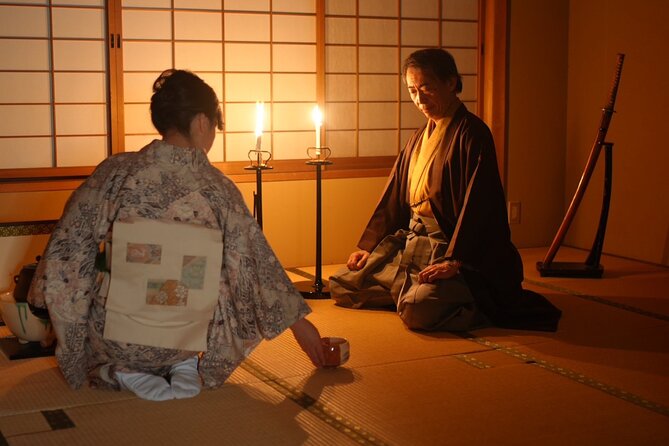
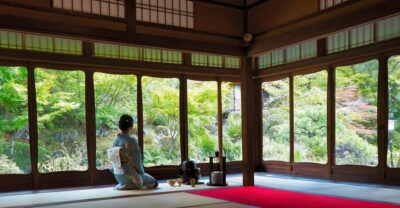
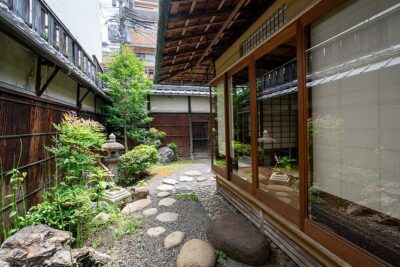
The setting matters here. You are not sitting at a modern café or watching a staged performance in a busy theater. The activity uses a banquet room inside a traditional Kyoto inn, a space normally closed to the public. With 20 tatami mats underfoot and candles providing the light, the room is designed to feel separate from the city outside.
I like this nighttime timing for practical reasons. Kyoto’s major sights, including Kinkaku-ji, Ginkaku-ji, and Kiyomizu-dera, are not open for ordinary sightseeing late at night. This gives you a useful evening plan after temple visits, shopping, or dinner.
The low light also changes the mood. Candlelight makes the room feel quiet and theatrical, though you should understand that the activity is not simply silent meditation. It moves through several planned sections, each with its own purpose.
More Tea Ceremonies in Kyoto
- Kyoto: Tea Ceremony in a Traditional Tea House in Kiyomizu
★ 4.9 · 3,519 reviews - Kyoto: Tea Ceremony Ju-An at Jotokuji Temple
★ 4.9 · 3,207 reviews - Kyoto: 45-Minute Tea Ceremony Lesson Experience
★ 4.3 · 2,378 reviews
The 15-minute kimono and photo session
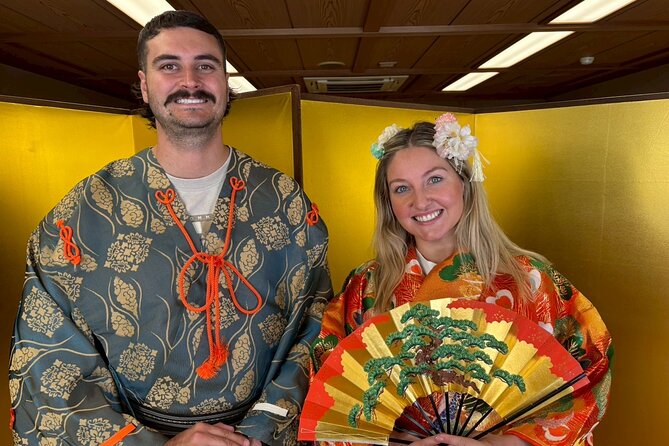
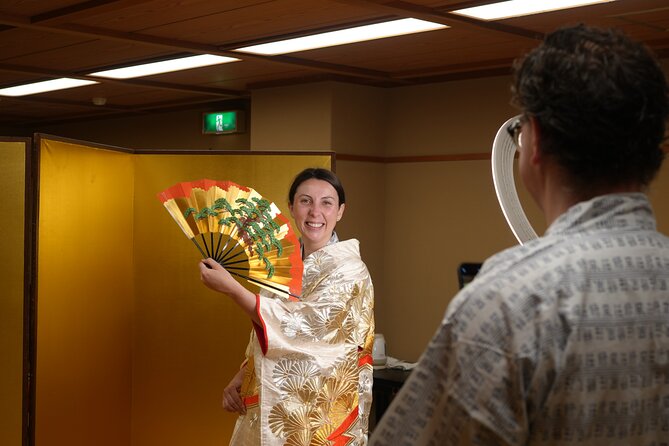
The first part takes about 15 minutes. You are dressed in either a bridal uchikake or, for men, a haori. Props include folding fans and swords, and staff help with photography using professional lighting.
This is a strong feature for families and couples. You receive something tangible from the evening: photographs in traditional clothing, not just a memory of watching someone prepare tea. The props also make the session more relaxed, especially for children who may find a formal tea ritual hard to follow at first.
Staff assist with taking photos, and photographs are welcome throughout the experience. That means you do not need to wait for a single official picture at the end. Still, I would keep your phone ready and ask before moving around the room, since the candlelit atmosphere depends on keeping the space calm.
The costume session does make this experience less purely traditional than a quiet tea-school visit. The bridal uchikake, folding fans, and swords add a photo-friendly performance element. That is not a flaw, but it helps you choose correctly. If your priority is family fun and cultural photos, this is a plus. If you want a long study of tea etiquette, the short costume section reduces the time available for that.
Four minutes of Zen meditation
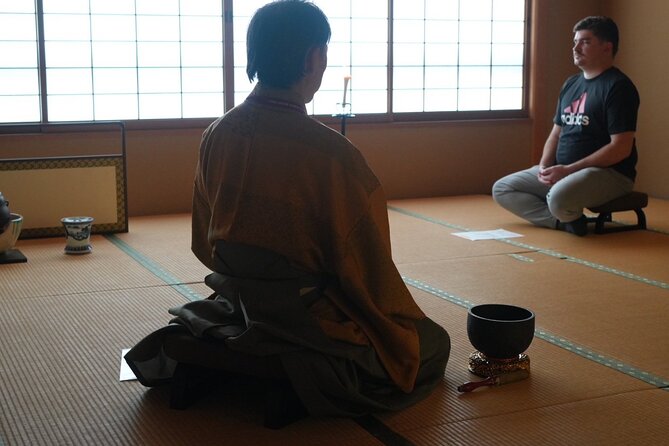
After the photos, the activity shifts into a quieter mode with about four minutes of Zen meditation. It is brief, but the placement is sensible. You move from the lively costume session into a calmer state before the tea ceremony begins.
I would not book this expecting an extended meditation class. Four minutes is enough to pause, settle yourself, and notice the room, but not enough for detailed instruction in Zen practice. Its value is mainly atmospheric and transitional.
For children, this short length may be ideal. A longer silent period could be difficult after the photo session. For adults hoping for serious meditation training, it will feel more like a short moment of stillness within a broader cultural program.
Watching the tea ceremony demonstration
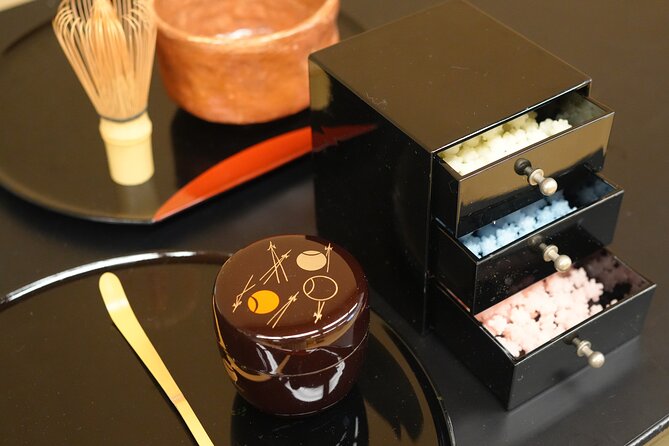
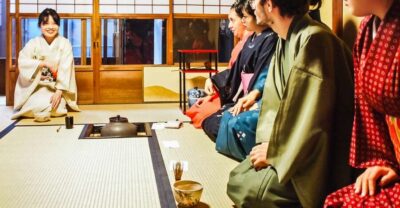
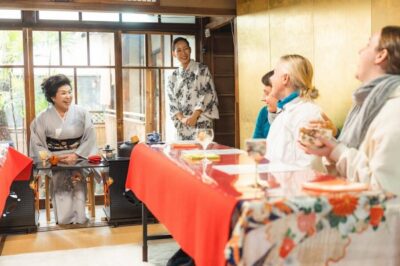
The tea ceremony demonstration lasts about 20 minutes. You are welcomed as a participant in the gathering, receive a bowl of matcha, and watch the flow of a traditional tea service.
This is where the experience gives you useful cultural context. Tea ceremony is not simply pouring hot water over powder. The movements, utensils, presentation, and order of service all help create a respectful setting. A demonstration lets you watch that rhythm before you try making matcha yourself.
The candlelit room should make this section especially memorable. The setting encourages you to pay attention to small actions: the handling of tea utensils, the preparation of the bowl, and the way tea and sweets are presented. Translation devices are available, so the hosts can explain what is happening without requiring you to know Japanese.
The device-based translation is a practical strength. It removes much of the worry that can come with booking a cultural activity in another language. Families with children who do not speak English can ask questions in their own language, according to the information provided about the experience.
At the same time, a translated explanation may feel less natural than a fully fluent conversation. You might notice a pause while the device processes speech. That is a minor tradeoff for being able to communicate clearly across languages, especially in a private setting.
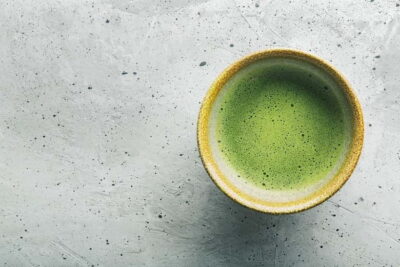
You receive matcha and Japanese sweets as part of the tea experience. The tea is not an optional extra purchase, and the sweets give you the traditional pairing that helps balance matcha’s strong, slightly bitter taste.
A completely different kind of day out:
- PERFECT KYOTO 1-Day Bus Tour
★ 5.0 · 13,518 reviews - [Kyoto & Nara Day Tour] Sagano Scenic Railway & Nara Park & Fushimi Inari Taisha Thousand Torii Gates & Togetsukyo Bridge & Bamboo Grove & Kimono Forest (Departing from Osaka)
★ 4.9 · 10,942 reviews - Kyoto: Fushimi Inari, Kinkakuji, Bamboo Grove 1 Day Bus Tour
★ 4.8 · 4,316 reviews - Kyoto: Gion Make Your Own Chopsticks with Engraving Option
★ 5.0 · 3,465 reviews
Making your own matcha for 20 minutes

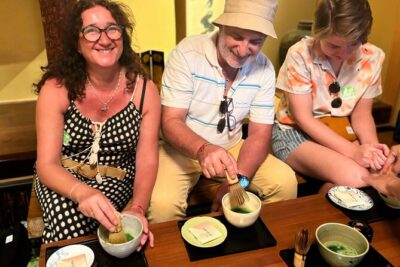
The hands-on matcha session takes about 20 minutes, making it the longest single part of the itinerary. You use the tea utensils and whisk your own bowl of matcha under staff guidance.
This is the section I value most for a first introduction. Watching a ceremony can be beautiful, but doing the work yourself helps you understand the care involved. You handle the utensils, learn the basic whisking motion, and taste the tea you prepared.
Do not worry about producing a perfect bowl on your first attempt. The point is to take part in the process, not pass a tea-school examination. The hosts can guide you through the steps, and the small group size should allow more room for questions than a large workshop.
The 20-minute length gives you time to try the technique rather than rush through one quick demonstration. It also gives children something active to do after the more formal ceremony section. If you are booking for a family, this practical part may be what keeps the younger members interested.
There is also a nice contrast between the ceremony and the whisking. First you watch the host control every movement. Then you take over and discover that making a smooth bowl requires more coordination than it appears.
What the private format means for you
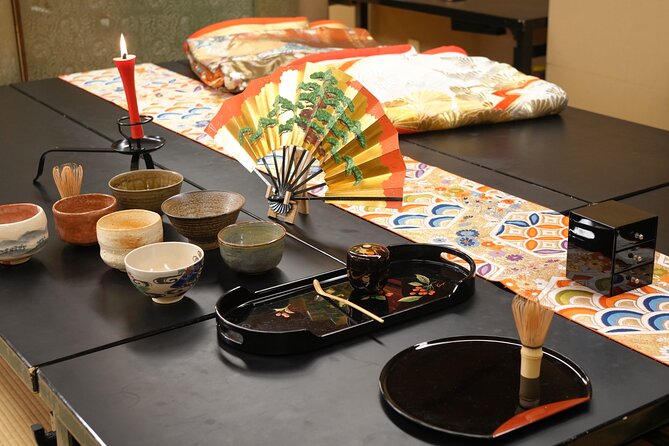
The activity is limited to your own group of two to six people. That makes a real difference in a room built around quiet attention. You can ask questions without speaking over a crowd, and staff can help with costumes, photographs, translation, and matcha preparation.
For a couple, the private format creates a calm evening date. For a family, it keeps the experience manageable and lets children participate without worrying about disturbing a large class. A small group also makes the photo session more practical.
The private structure is one reason the price is higher than a basic tea tasting. You are paying for the room, staffing, costumes, photography assistance, translation support, and several activities in one visit. At the listed price of $97.98 per person, I would compare it with the cost of separate kimono photography and a tea workshop in Kyoto, rather than with the price of a drink in a café.
The supplied pricing also lists adults at ¥15,000 and children under 15 at ¥3,000. Since the dollar amount can change with exchange rates and booking conditions, check the final price shown at the time you reserve. The low child price makes this more appealing for families than the adult rate alone might suggest.
The hosts and the human side of the visit
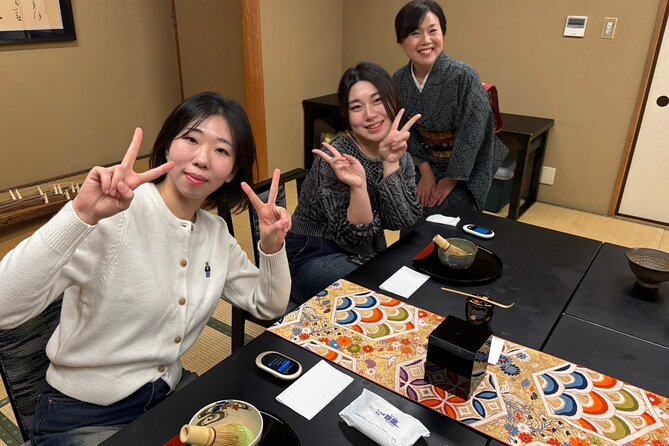
The hosts, Matsuda and Mayumi, receive repeated praise for being friendly, kind, and full of joy. That personal welcome is important in an activity that could otherwise feel stiff or overly staged.
A tea ceremony has formal rules, but good hosts help you understand the meaning without making you feel nervous about breaking something. The translation devices support that approach by allowing questions and explanations throughout the visit.
I also like that the hosts assist with photography rather than leaving you to manage everything yourself. You can focus on the costume, the ceremony, and the matcha instead of trying to balance a phone while wearing unfamiliar clothing.
The provider has a perfect five-star rating from 12 reviews and a 100 percent recommendation rate. That is a small sample, so I would not treat it as proof that every person will feel the same. Still, the consistency of the praise for the hosts and the atmosphere points to the experience’s main strength: warm personal service.
Is 59 minutes enough?
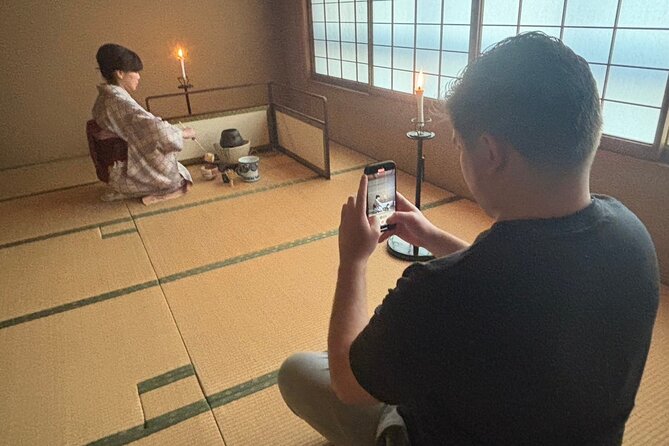
The duration is approximately 59 minutes. That is short for a major cultural activity, but the schedule is packed:
- 15 minutes for kimono dressing and photographs
- 4 minutes for Zen meditation
- 20 minutes for the tea ceremony demonstration
- 20 minutes for making matcha
The sections add up to 59 minutes, so you can expect a fairly exact program. This is useful if you have dinner reservations or evening plans nearby. It also means you should arrive ready to begin rather than expecting a loose, open-ended visit.
I see the short duration as both a benefit and a limitation. It fits neatly into a Kyoto evening and gives first-time visitors a clear introduction. But if you want to learn advanced tea etiquette, study the philosophy behind every utensil, or spend a long time in meditation, you will need a more specialized class.
Who will enjoy this most
I would recommend this activity to couples, families, and first-time visitors who want several Japanese cultural experiences in one place. It works particularly well for anyone who wants photographs in traditional clothing and a hands-on activity rather than a lecture.
Children under 15 are charged ¥3,000, compared with the listed adult price of ¥15,000. The short meditation, props, photo session, and matcha whisking give younger participants several ways to stay involved.
You should also consider it if language is a concern. The translator devices mean you do not need Japanese to take part or ask questions. The private group format adds another layer of comfort for families or couples who would rather not perform in front of strangers.
I would be more cautious about booking if your main goal is an austere, highly formal tea ceremony with no photo session. The costumes, swords, professional lighting, and family-friendly structure make this a welcoming cultural presentation, but not a full-length training session in the tea arts.
Timing, weather, and cancellation details
Advance reservation is required, and the experience is commonly booked about eight days ahead. I would reserve early if you need a particular evening, especially since each session accepts only two to six people.
The activity has free cancellation if you cancel at least 24 hours before the local start time. Cancellations made within 24 hours are not refunded, and changes during that period are not accepted.
The stated policy also says the activity requires good weather. If poor weather causes a cancellation, you are offered another date or a full refund. The same applies if the minimum number of participants is not met, although the activity is normally private for your group. Keep your booking details handy and check the final local-time cutoff.
Should you book ZEN Tea Ceremony Experience?
Book it if you want a polished, friendly introduction to Japanese tea culture after dark. The candlelit ryokan room, kimono photographs, private group setting, translation support, and hands-on matcha preparation give you much more than a simple tea tasting.
I think the strongest value comes from the combination of activities. You can dress up, take photos, pause in meditation, watch a ceremony, taste matcha and sweets, and prepare your own bowl, all within one hour.
Skip it if you want a long, quiet lesson devoted only to tea ceremony technique. At $97.98 per person, the experience is worthwhile for personal attention and variety, but less compelling for someone seeking a low-cost cultural stop.
For most couples and families with one free evening in Kyoto, I would book it. The format is short enough to fit around dinner, easy enough across language barriers, and personal enough to feel like more than a group demonstration.
FAQ
Where does the tea ceremony take place?
It takes place at ZEN: Tea Ceremony Experience in Kyoto, located at 490 Kanayacho, Ryokufu-so 4F, Kyoto 600-8323, in Kyoto’s Shimogyo Ward.
How long does the experience last?
The experience lasts approximately 59 minutes.
Is the activity private?
Yes. Only your group participates, with a group size of two to six people.
How many people can join one booking?
The stated group size is two to six people.
What activities are included?
The experience includes kimono dressing and photographs, Zen meditation, a tea ceremony demonstration, and hands-on matcha whisking.
Are costumes provided?
Yes. Costume options include a bridal uchikake or a men’s haori. Folding fans, swords, and other props are also provided.
Is matcha included?
Yes. The tea ceremony includes matcha green tea and Japanese sweets.
Do I need to speak Japanese?
No. Translator devices are available to support communication regardless of language.
Can I take photographs?
Yes. Photos are welcome throughout, and staff assist with photography.
What happens if I need to cancel?
You receive a full refund if you cancel at least 24 hours before the local start time. Cancellations within 24 hours are not refunded.
Can the activity be canceled because of weather?
Yes. The experience requires good weather. If it is canceled because of poor weather, you are offered a different date or a full refund.
Just added in Kyoto
- The “Golden Route” and Ancient Japan by DIAMIR Erlebnisreisen – 14-Day Tour★ 2.0 · 2 reviews
- Japan: Castles & Cuisine by G Adventures – 6-Day Kyoto to Osaka Tour★ 4.5 · 4 reviews
- Cycle Japan by Explore! – 13-Day Kyoto to Tokyo Tour★ 4.7 · 12 reviews
- Cycle Japan by Intrepid Travel – 11-Day Kyoto to Tokyo Tour★ 4.8 · 2 reviews
- Classic Japan by Intrepid Travel – 11-Day Kyoto to Tokyo Tour★ 4.4 · 14 reviews
- Ancient & Modern Japan 14-Day Tour by Exodus Adventure Travels★ 4.4 · 40 reviews
- 5 Day Cultural Adventure of Kyoto, Nara & Osaka by Tourist Journey★ 2.5 · 2 reviews
- 12 Days Kinosaki Onsen Escape: A Journey Through Japan’s Timeless Towns by UME Travel★ 4.8 · 5 reviews
Tea Ceremonies, compared.
Tea Ceremony in a Traditional Tea House in Kiyomizu
Read our review →
World Heritage Kyoto & Nara Uji Authentic Matcha Experience
Read our review →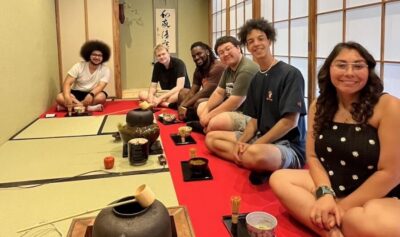
Browse the lists this tour appears in