
Reviewed · TEA CEREMONIES
Kyoto: Private Tea Ceremony at local home with tea master
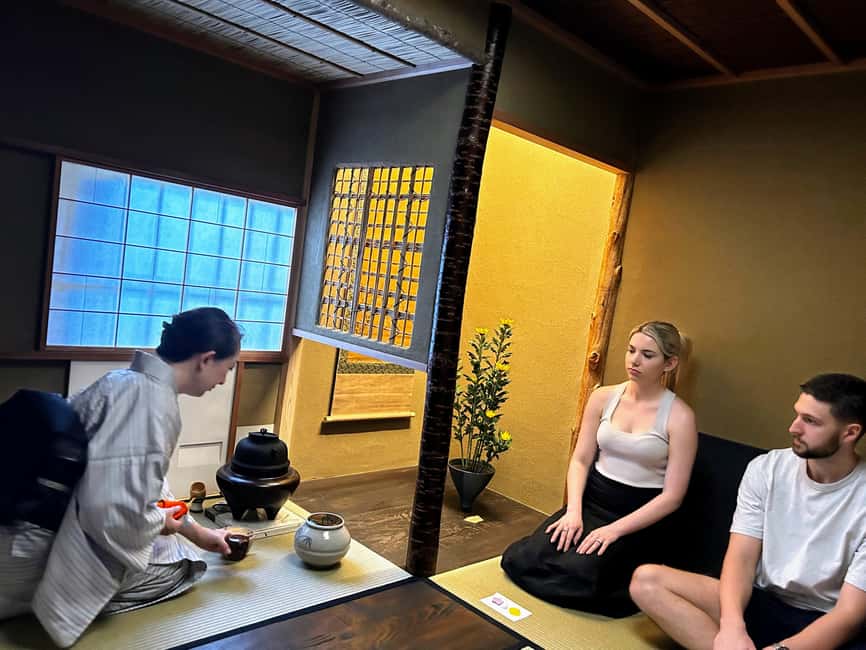
Quiet tea, clear lessons, Kyoto charm. This one-hour experience takes place in a local home near Nijo Castle, where a certified tea master explains the customs behind each graceful movement. I especially like the private setting and the chance to prepare matcha yourself. The only concern is timing: one hour passes quickly, and one visitor found the ending a little rushed when another group was due.
I also like the careful attention to seasonal sweets and different dietary needs. You receive two cups of Uji matcha, two kinds of traditional dried sweets, and a certificate from the tea master. The room has a calm, formal character, so you should arrive ready to remove your shoes, wear socks, and leave perfume and casual beach clothes behind.
In This Review
- Key points at a glance
- Why this Kyoto tea ceremony feels personal
- Arriving near Nijo Castle and the Imperial Palace
- The first lesson: history, manners, and meaning
- Watching the tea master’s demonstration
- Making your own matcha
- Seasonal sweets and special dietary needs
- The one-hour schedule and its limits
- What the private format adds
- Is $101 a fair price?
- Who should book this experience?
- Should you book the Kyoto tea ceremony?
- FAQ
- Where does the tea ceremony take place?
- How long does the experience last?
- How far is the meeting point from Nijo Castle?
- How much matcha is included?
- Are Japanese sweets included?
- Is the experience taught in English?
- Can children join the tea ceremony?
- What should I wear?
Key points at a glance
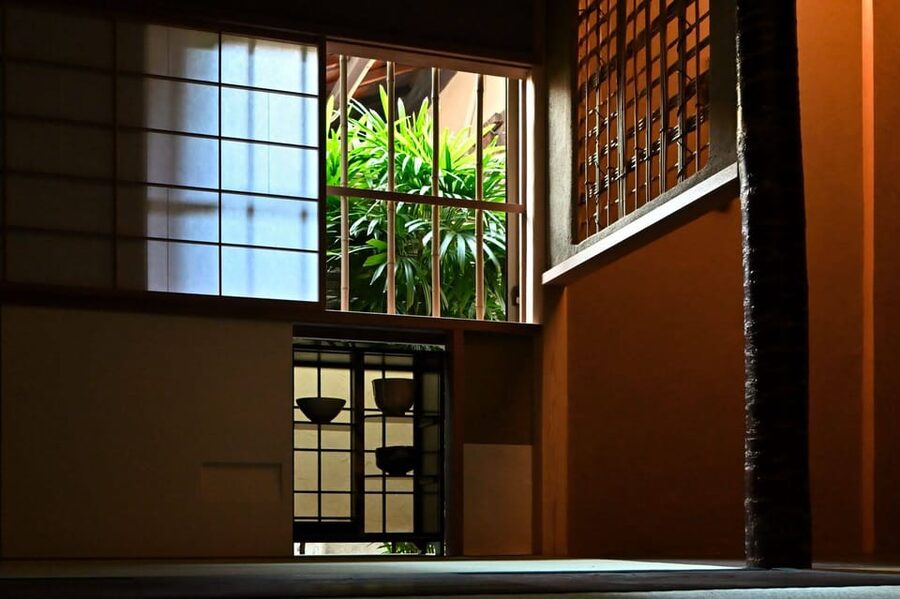
- A local home near Nijo Castle: The tea room is only about three minutes on foot from Nijo Castle and Nijojo-mae subway station.
- A certified Kyoto tea master: You learn from an instructor born and raised in Kyoto, with explanations available in English and Japanese.
- Two cups of Uji matcha: You watch the preparation, then make matcha yourself and enjoy a second cup.
- Seasonal Japanese sweets: Two kinds of made-to-order traditional dried sweets balance the bitterness of the tea.
- A private one-hour class: Your group receives focused attention rather than joining a large public demonstration.
- Clear clothing rules: Wear long trousers or a long skirt with socks. Shorts, bare feet, hats, strong fragrances, and indoor shoes are not permitted.
Why this Kyoto tea ceremony feels personal
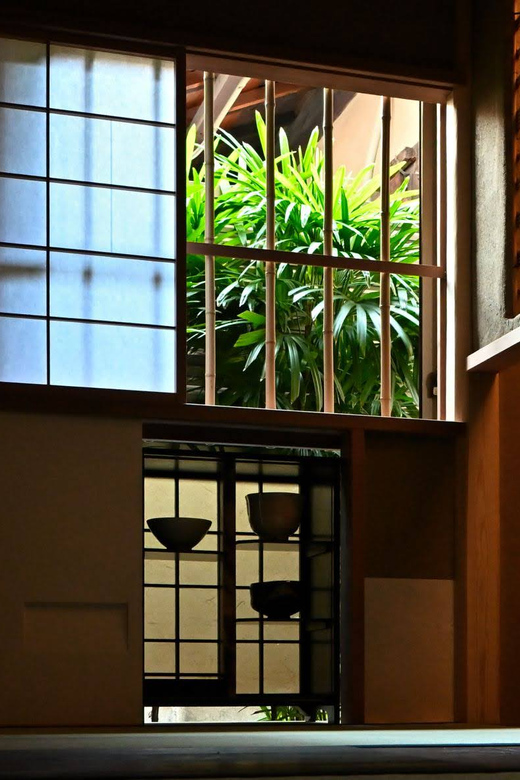
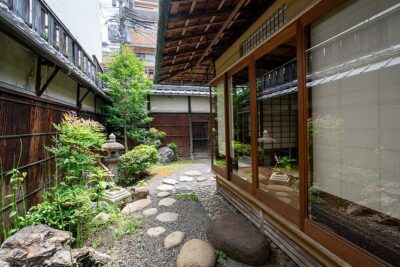
Kyoto offers plenty of polished cultural activities, but this one works because it takes place in a local home rather than a large attraction hall. You enter a tea room close to the city center, yet the mood changes quickly from ordinary sightseeing to quiet observation.
The tea master begins with an introduction to the history and purpose of tea ceremony. This matters because the movements can seem mysterious if you only watch them from a distance. Here, you learn why the cloth is folded, why the bowl is handled with care, and why guests follow certain manners before drinking.
I like that the lesson is designed for beginners. You do not need to know the difference between every tea school or arrive with any prior experience. The instructor explains the terms and actions in simple language, then shows you how the pieces fit together.
The tea master Aya-san has received particular praise for her warm welcome and careful explanations. Her Kyoto background adds useful local context, especially when she explains how the practice developed and why hospitality, respect, and quiet attention remain central to it.
This is not a performance built around spectacle. The appeal comes from small details: the sound and motion of the whisk, the shape of the tea bowl, the placement of the utensils, and the pause before you take your first sip.
More Tea Ceremonies in Kyoto
- Kyoto: Tea Ceremony in a Traditional Tea House in Kiyomizu
★ 4.9 · 3,519 reviews - Kyoto: Tea Ceremony Ju-An at Jotokuji Temple
★ 4.9 · 3,207 reviews - Kyoto: 45-Minute Tea Ceremony Lesson Experience
★ 4.3 · 2,378 reviews
Arriving near Nijo Castle and the Imperial Palace
The meeting point, さくら 日本文化体験, is in a handy part of central Kyoto. It is about three minutes from Nijo Castle and Nijojo-mae subway station, and about three minutes from the Kyoto City Bus stop of the same name.
You can also walk from Shijo Station on the Hankyu line in about 15 minutes. From Kyoto Station, a taxi takes about 10 minutes according to the provided directions. That makes this a practical activity to pair with Nijo Castle, the Kyoto Imperial Palace, or nearby central Kyoto sights.
I would not schedule the ceremony at the far end of a packed sightseeing day. The tea room asks for calm attention, and you will get more from it if you are not rushing in from another appointment. Give yourself enough time to find the meeting point and arrive ready to settle down.
The location is convenient, but the experience itself has formal rules. You remove your shoes indoors, and bare feet are not allowed. Wear clean socks and long trousers or a long skirt. If you arrive without socks, they are available for purchase, but bringing your own is simpler.
Avoid perfume, strong fragrances, jewelry, hats, sleeveless shirts, shorts, and short skirts. These rules are not minor technicalities. Clothing and scent can affect the comfort of everyone in a compact tea room, while long clothing protects your knees and helps you sit more comfortably.
The first lesson: history, manners, and meaning
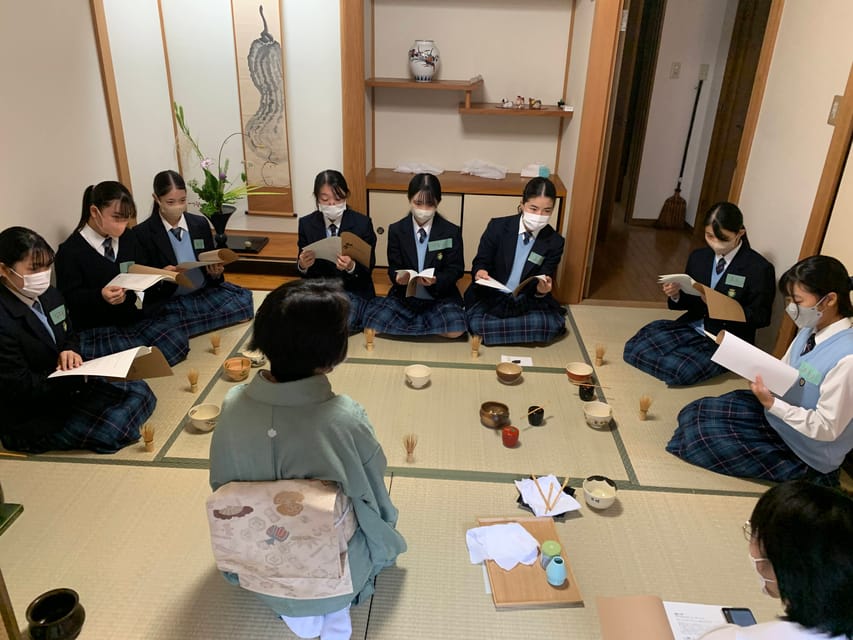
The ceremony begins with an explanation of Japanese tea ceremony and its place in Japanese culture. The instructor discusses how the tradition developed and passed through generations, along with the ideas that guide the host and guest.
This introduction gives the rest of the hour a clear purpose. Instead of seeing the ceremony as a collection of elegant hand movements, you start to understand it as a shared act of hospitality. The host prepares carefully, and the guest responds with attention and respect.
You also learn about the main utensils. These include the chawan, or tea bowl; the chasen, or bamboo whisk; and the chashaku, or tea scoop. The lesson covers each tool’s role and significance, as well as basic advice on how to handle and care for the utensils.
For me, this practical focus is valuable. You are not just looking at beautiful objects in a glass case. You learn how they are used and why their design matters. The bowl is not merely a container, and the whisk is not just a kitchen tool. Their shape, handling, and place in the ritual all support the ceremony’s quiet rhythm.
The instructor also explains etiquette for holding the bowl and drinking the tea. These customs can feel intimidating when you first encounter them, but the teaching is intended to be relaxed and accessible. You are guided through the steps rather than expected to perform perfectly from the start.
Watching the tea master’s demonstration
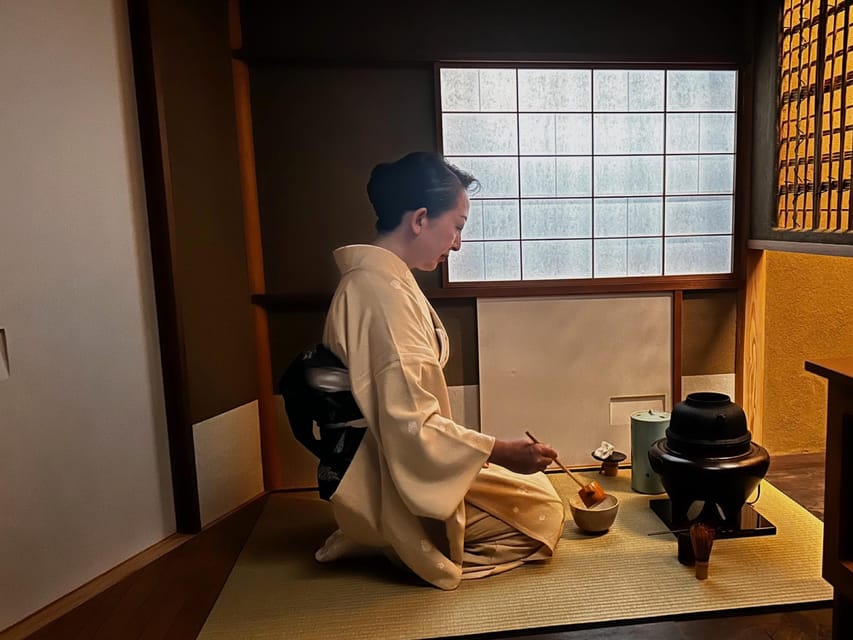
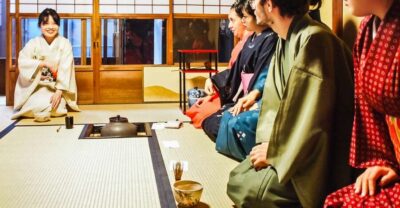
After the introduction, the tea master demonstrates the preparation. This is the moment when the room’s calm atmosphere becomes most noticeable.
The process includes folding the ceremonial cloth, arranging the utensils, measuring the tea, adding hot water, and whisking the matcha. Each action is deliberate. The tea master explains what is happening, so you do not have to guess why a movement is repeated or why an object is placed in a particular position.
The demonstration also shows how seasonal hospitality enters the ceremony. The setting, bowls, sweets, and method of presentation work together to create a sense of occasion. The details may be understated, but they give the hour its character.
The bowls receive specific praise for their beauty, and you should pay attention to them. A tea bowl is one of the most immediate ways to see how Japanese aesthetics value texture, shape, and restraint. The ceremony gives you time to look at objects that you might otherwise hurry past in a shop or museum.
One useful point to remember: this is a teaching session, not a silent formal ceremony where you must remain uncertain and motionless. Questions are welcome, and the class ends with time for questions and reflection. That makes it a good choice if you want cultural context along with the ritual.
A completely different kind of day out:
- PERFECT KYOTO 1-Day Bus Tour
★ 5.0 · 13,518 reviews - [Kyoto & Nara Day Tour] Sagano Scenic Railway & Nara Park & Fushimi Inari Taisha Thousand Torii Gates & Togetsukyo Bridge & Bamboo Grove & Kimono Forest (Departing from Osaka)
★ 4.9 · 10,942 reviews - Kyoto: Fushimi Inari, Kinkakuji, Bamboo Grove 1 Day Bus Tour
★ 4.8 · 4,316 reviews - Kyoto: Gion Make Your Own Chopsticks with Engraving Option
★ 5.0 · 3,465 reviews
Making your own matcha
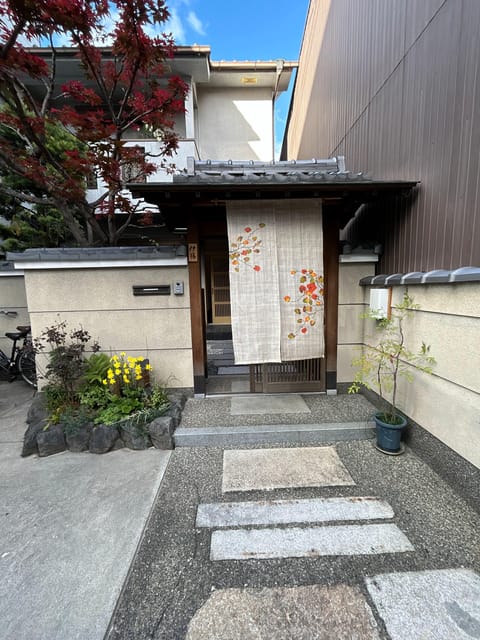
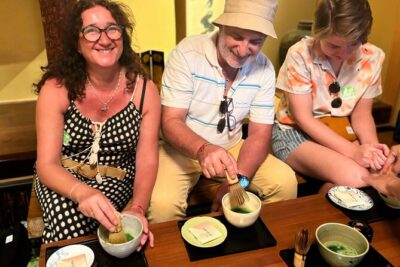
The hands-on portion is the heart of the experience. You prepare matcha yourself using the traditional whisk, following the tea master’s instructions.
This may sound simple, but whisking matcha requires a little coordination. You learn how to handle the bowl, use the scoop, add the tea and water, and create the proper texture. The point is not to produce a flawless bowl on your first attempt. The point is to feel the rhythm of the process and understand the care involved.
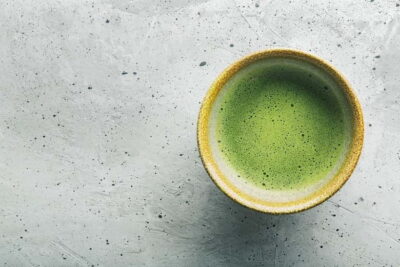
You receive two cups of matcha in total. The first cup allows you to appreciate the tea prepared for you. The second gives you a chance to take part in the preparation. That combination offers a useful comparison between watching the master and trying the work yourself.
The matcha is sourced from Uji in Kyoto, one of Japan’s best-known tea-producing areas. Uji tea is a fitting choice for a Kyoto ceremony because it connects the drink in your bowl with the surrounding region rather than treating matcha as a generic green beverage.
Matcha has a strong, grassy bitterness that may surprise you if you normally drink sweetened tea. The traditional sweets are served to balance it. You eat the sweet before drinking the tea, which softens the bitterness and lets the tea’s flavor come through more clearly.
Seasonal sweets and special dietary needs
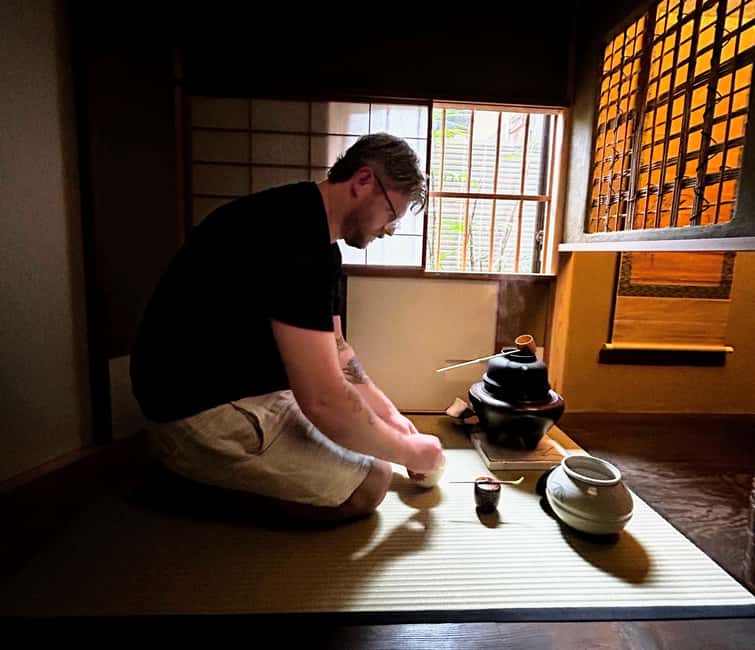
The experience includes two kinds of traditional Japanese dried sweets. They are made to order and selected with the season in mind, giving the food a decorative role as well as a culinary one.
These sweets are not a large snack or dessert course. They are small accompaniments designed to prepare your palate for the tea. Their shape and presentation are part of the lesson, showing how Japanese hospitality pays attention to proportion and timing.
The provider says it can accommodate LGBTQ visitors, halal requirements, vegan diets, and various allergies. If you have a dietary restriction, tell the provider when booking or before the activity so the sweets can be prepared appropriately. The available information does not specify every ingredient or guarantee that every request can be handled on the day without advance notice.
I value this flexibility, particularly because traditional sweets can contain ingredients that are not obvious at first glance. Still, you should communicate clearly rather than assume. Ask about your specific allergy or dietary need before arriving.
The one-hour schedule and its limits
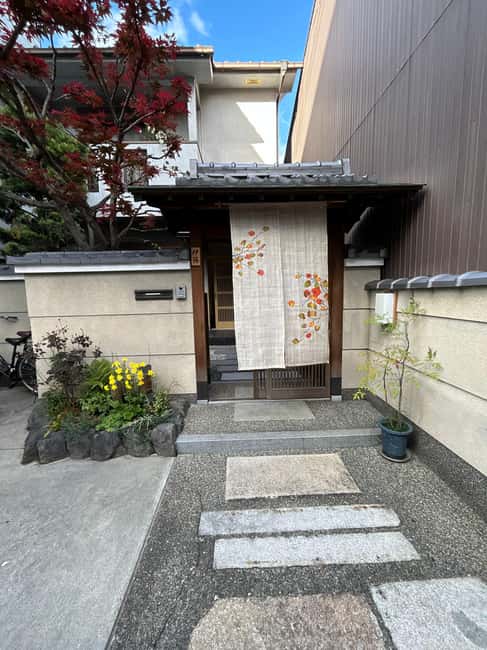
The complete activity lasts one hour and returns you to the same meeting point. That makes it easy to add to a Kyoto day without losing half the afternoon.
The short length is both an advantage and a limitation. You can fit it between major sights, and you do not need to commit to a half-day cultural class. At the same time, the ceremony, historical introduction, utensil lesson, demonstration, hands-on preparation, and questions all need to fit into 60 minutes.
I would arrive prepared to focus. If you want a long conversation about tea schools, utensils, or Japanese religion, this may feel brief. The session gives you a well-shaped introduction, not an extended apprenticeship.
One visitor found the final part slightly rushed because other participants were arriving. That is worth keeping in mind. A private booking gives your group personal attention, but the schedule still operates within a fixed one-hour window. Save your most important questions for the middle or early part of the session rather than waiting until the last minute.
What the private format adds
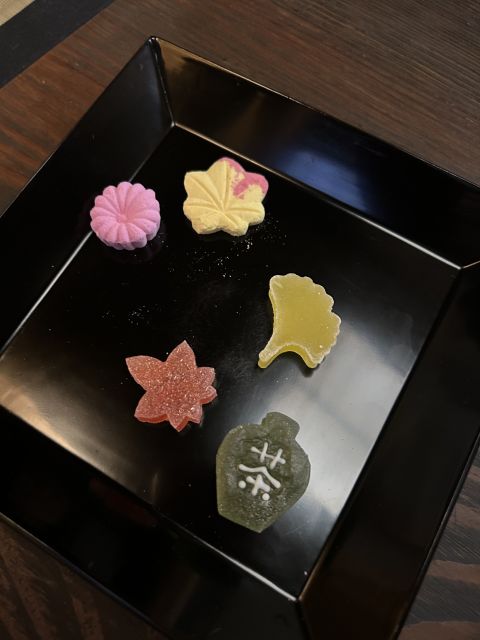
The activity is offered for private groups, which changes the tone considerably. You can ask questions without interrupting a large class, and the tea master can adjust explanations for your group’s level and interests.
Private does not mean informal in the sense of ignoring etiquette. You still follow the clothing and behavior rules, and the tea room retains its traditional structure. The advantage is that the teaching can feel more direct and less crowded.
This format suits couples, families with older teenagers, and small groups of friends who want to share a cultural activity. Children under 13 are not accepted, so families with younger children will need another plan.
The experience is wheelchair accessible, which is helpful for visitors who need step-free access. However, the supplied information does not explain the exact seating arrangement or whether every part of the tea room is suitable for every mobility need. If you use a wheelchair, confirm the details before booking.
Is $101 a fair price?
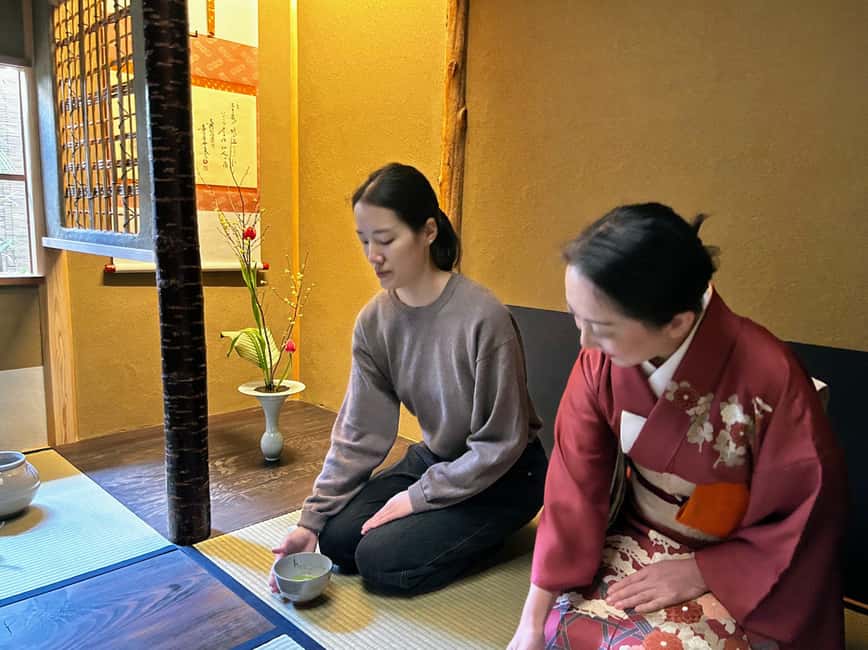
At $101 per person, this is not the cheapest way to taste matcha in Kyoto. You can find casual tea and sweets for far less. The price makes more sense if you want instruction, a private setting, cultural background, and the chance to prepare the tea yourself.
You receive two cups of matcha, two kinds of traditional sweets, direct guidance from a certified tea master, and a certificate. The certificate is a pleasant souvenir, though I would not book the experience for that item alone. The real value lies in the explanation and the hands-on lesson.
The location also saves time. Being three minutes from Nijo Castle means you can combine the ceremony with one of Kyoto’s major sights without a long trip across town. For a first visit to Japan, the class provides a clear introduction to customs that can otherwise seem formal or difficult to read.
I would consider the price worthwhile for someone who values personal instruction and wants more than a photo opportunity. If your main goal is simply to drink matcha in a traditional room, a shorter and cheaper tea stop may suit you better.
Who should book this experience?
I would recommend it most strongly to first-time visitors who want a friendly introduction to Japanese culture. The teacher explains terms and gestures in a way that does not assume prior knowledge, and the class combines background, demonstration, practice, and questions.
It also suits returning visitors who want a slower cultural activity after several busy sightseeing days. The calm atmosphere and deliberate movements offer a useful change of pace.
This is a good pick for:
- Couples seeking a quiet shared activity
- Small private groups
- Visitors interested in Japanese manners and traditional arts
- Matcha drinkers who want to learn the preparation method
- People who prefer a local home setting to a large commercial venue
- Visitors who need vegan, halal, LGBTQ-friendly, or allergy-conscious arrangements
I would hesitate if you dislike formal clothing rules, cannot wear socks, want to record everything, or prefer a fast-moving activity. Video and audio recording are not allowed, and shoes, smoking, vaping, alcohol, and drugs are prohibited. You should also avoid jewelry and strong fragrances.
Should you book the Kyoto tea ceremony?
Book it if you want to understand what you are seeing, not just watch someone make tea. The best parts are the private local setting, Aya-san’s clear welcome, the beautiful utensils, the two-cup format, and the chance to prepare Uji matcha yourself.
Do not expect a long ceremony or a full course in tea studies. One hour gives you a thoughtful introduction, but the schedule can feel tight near the end. Arrive on time, wear long clothing and socks, leave your perfume and recording equipment behind, and keep your questions ready.
For $101, I see this as a focused cultural lesson rather than a simple refreshment stop. Near Nijo Castle, with a certified tea master and seasonal sweets included, it is a worthwhile choice for visitors who want a quiet, personal look at one of Kyoto’s most graceful traditions.
FAQ
Where does the tea ceremony take place?
It takes place at さくら 日本文化体験, a local home and tea room near Nijo Castle in central Kyoto.
How long does the experience last?
The tea ceremony lasts one hour and returns you to the same meeting point.
How far is the meeting point from Nijo Castle?
The meeting point is about three minutes on foot from Nijo Castle.
How much matcha is included?
The experience includes two cups of matcha made with tea sourced from Uji in Kyoto.
Are Japanese sweets included?
Yes. You receive two kinds of traditional Japanese dried sweets, prepared with seasonal attention.
Is the experience taught in English?
Yes. Instruction is available in English and Japanese.
Can children join the tea ceremony?
Children under 13 are not permitted to participate.
What should I wear?
Wear comfortable clothing with long trousers or a long skirt and socks. Shorts, short skirts, sleeveless shirts, hats, jewelry, strong fragrances, and bare feet are not permitted. You also remove your shoes indoors.
Just added in Kyoto
- The “Golden Route” and Ancient Japan by DIAMIR Erlebnisreisen – 14-Day Tour★ 2.0 · 2 reviews
- Japan: Castles & Cuisine by G Adventures – 6-Day Kyoto to Osaka Tour★ 4.5 · 4 reviews
- Cycle Japan by Explore! – 13-Day Kyoto to Tokyo Tour★ 4.7 · 12 reviews
- Cycle Japan by Intrepid Travel – 11-Day Kyoto to Tokyo Tour★ 4.8 · 2 reviews
- Classic Japan by Intrepid Travel – 11-Day Kyoto to Tokyo Tour★ 4.4 · 14 reviews
- Ancient & Modern Japan 14-Day Tour by Exodus Adventure Travels★ 4.4 · 40 reviews
- 5 Day Cultural Adventure of Kyoto, Nara & Osaka by Tourist Journey★ 2.5 · 2 reviews
- 12 Days Kinosaki Onsen Escape: A Journey Through Japan’s Timeless Towns by UME Travel★ 4.8 · 5 reviews
Tea Ceremonies, compared.
Tea Ceremony in a Traditional Tea House in Kiyomizu
Read our review →
World Heritage Kyoto & Nara Uji Authentic Matcha Experience
Read our review →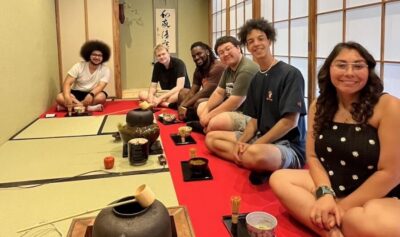
Browse the lists this tour appears in