
Reviewed · CASTLES AND HISTORIC SITES
Kyoto: Samurai Sword Class by Experts in Traditional Arts
Put on a samurai outfit, then learn to move like one. I like the hands-on sword practice and the chance to see Kenbu performed by skilled instructors, rather than just hearing a lecture about old Japan. The costume photos are another strong point. The main consideration is that this is stylized sword art, not a combat lesson or free-sparring session.
This Kyoto activity lasts about 90 minutes to two hours and costs $64 per person. I also like the small group limit of 10, which gives the instructor room to correct your movements. Still, you need to take part rather than watch from the side, and the class may feel demanding for very young children or anyone uncomfortable with exercise and costume changes.
In This Review
- Key points to know before booking
- A Kyoto sword class with more discipline than drama
- Choosing your samurai costume
- Learning to bow, draw, and return the sword
- Why Kenbu is different from sword fighting
- The photo session is not an afterthought
- The Kenbu performance puts the lesson in context
- How much value do you get for $64?
- Who will enjoy this most?
- Practical details for a smooth visit
- Should you book the Kyoto Samurai Sword Class?
- FAQ
- Where does the samurai sword class take place?
- How long does the experience last?
- How much does the class cost?
- Is the class taught in English?
- How many people are in each group?
- What do you learn during the lesson?
- Is a performance included?
- What is included in the price?
Key points to know before booking
- You learn real Kenbu movements: Practice bowing, drawing a sword, replacing it in its scabbard, and performing set strikes.
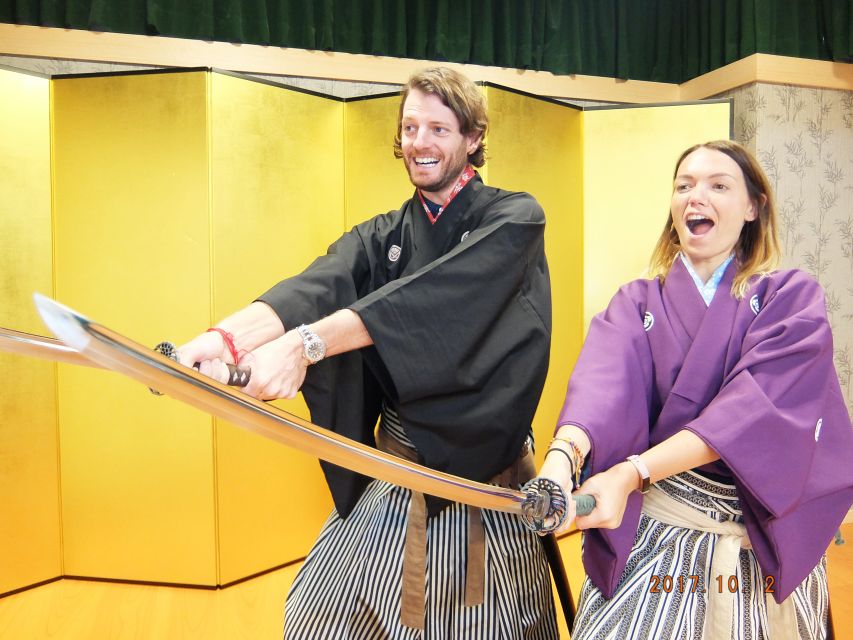
- The costume is part of the fun: Dress in traditional samurai clothing before your lesson and photo session.
- The performance adds meaning: A 10-minute or 30-minute Kenbu show demonstrates the art at a far higher level than a beginner class.
- Small groups help: No more than 10 people attend, and some time slots may result in a very personal lesson.
- You receive useful keepsakes: The experience includes a traditional tenugui towel and a completion certificate.
- Pack light and dress sensibly: Large bags are not allowed, and you need clothes that make changing and movement easy.
A Kyoto sword class with more discipline than drama
The Samurai Kembu Theater sits in Kyoto’s Higashiyama area, at 35-7 Sanchome, Higashiyama-ku, in the basement of the Gozan Building. The location is near Sanjo-hanamikoji, so it fits neatly into a day spent exploring central Higashiyama, though you should check the exact route before setting out.
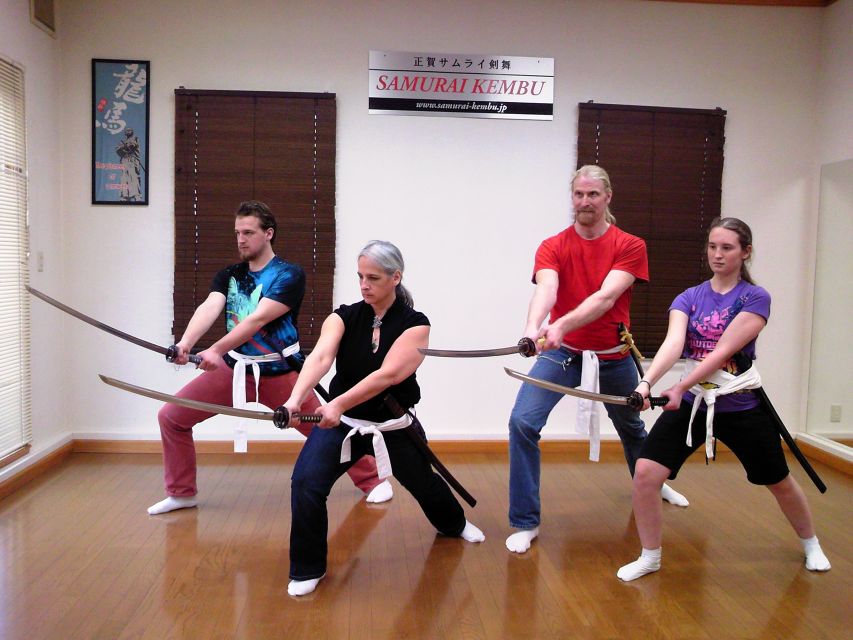
This is not a stage prop experience where you simply hold a sword for a photograph. The instructor first explains how to behave around the sword, including the proper bow before training begins. That detail matters. Kenbu is built around control, respect, and formal movement, so the lesson has a clear structure from the start.
You first watch a short four-minute film explaining the basic idea of samurai culture and the activity. It is brief enough not to slow the pace, but it gives you a little context before you begin handling the sword.
The teaching is available in English and Japanese. Instructors named in the sessions include Kazu, Hoga, Hisyo, Rui, and Sensei Kashin. The teaching style can vary by instructor, but the strongest pattern is clear instruction mixed with humor and patience. That combination helps, especially when your hands and feet do not quite agree with each other.
More Castles and Historic Sites in Kyoto
- Kyoto Samurai Experience
★ 5.0 · 1,294 reviews - Kyoto: Nijo-jo Castle and Ninomaru Palace Guided Tour
★ 4.7 · 1,020 reviews - Kyoto: Kendo and Samurai Experience with Uniform and Gear
★ 4.9 · 815 reviews
Choosing your samurai costume
After the introduction, you change into traditional clothing for the training session. You should wear clothes that allow movement and make changing simple. A single hoodie or tights are specifically unsuitable for the costume change, and there is no room for large luggage or travel bags.
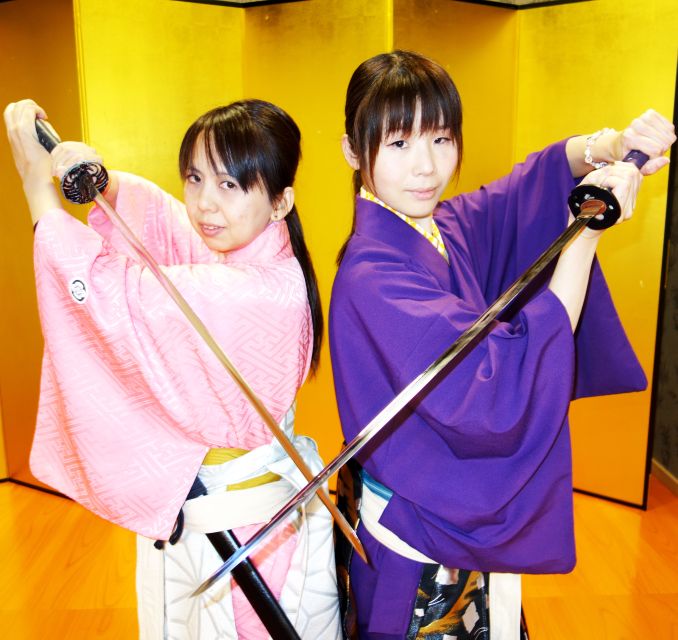
The costume is not just a photo prop. It changes how the lesson feels. Once you are dressed, you have to pay more attention to posture, hand position, and the clean lines of each movement. The clothing also makes the later photographs much more memorable than a quick snapshot with a rental sword.
Do not expect a private changing suite or a place to wait around before your appointment. There is no waiting room, and people without appointments cannot remain in the room. Arrive ready to follow the staff’s directions and keep your belongings to a minimum.
The included tenugui, a traditional Japanese towel, gives you a practical souvenir. You also receive a certificate of completion at the end. Neither item replaces the experience itself, but both are pleasant reminders of an activity that is easy to remember long after the sightseeing details begin to blur.
Learning to bow, draw, and return the sword
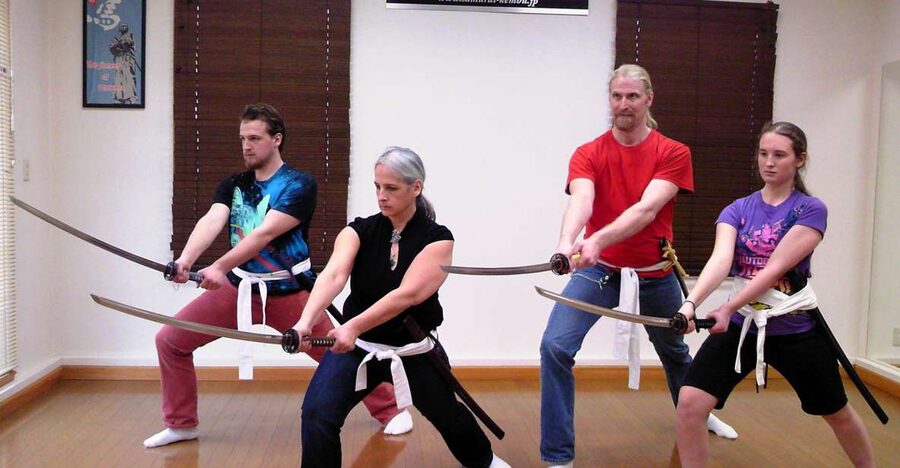
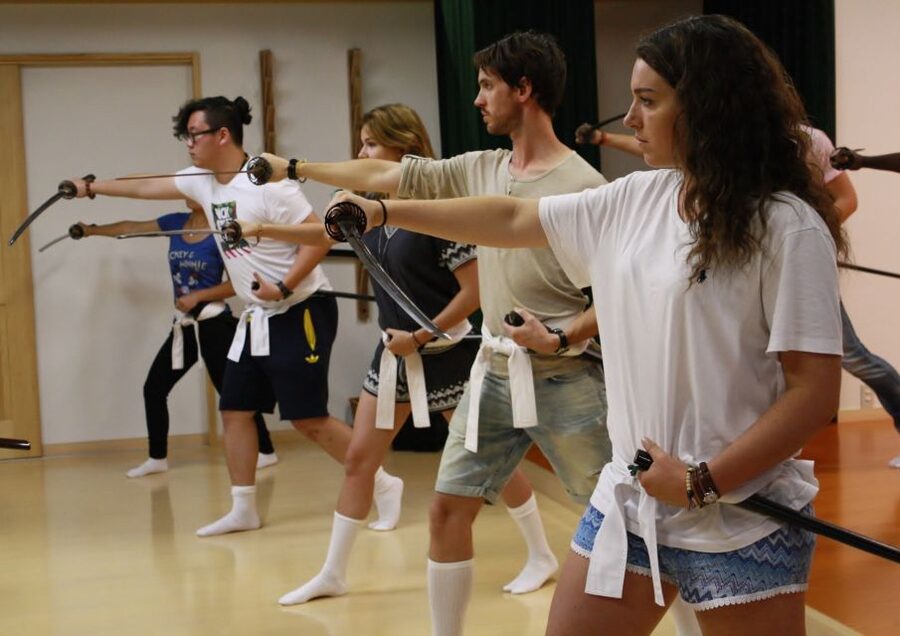
The practical lesson begins with the basics. You learn how to bow to the sword, how to hold it, and how to draw it in a controlled way. You also practice placing it back into its protective scabbard.
These steps may sound simple, but they are where the class shows its value. The instructor is not asking you to swing wildly. You must coordinate your stance, arms, gaze, and timing. A small group makes a real difference here because the teacher can watch each participant and offer corrections.
The sword used in the class is handled under strict instructions. Sharp objects and weapons cannot be brought into the venue, and you must follow the instructor’s safety directions throughout. Alcohol is also off limits before the activity. This is sensible: even a stylized lesson needs attention and self-control.
You then learn several set movements and strikes. The pattern is closer to choreography than a fight scene. You repeat the movements until they become a short sequence, with the instructor demonstrating first and then leading you through the form.
For many people, the appeal is the surprising physical challenge. You are not simply moving your arms. The sword has to travel on a clean path, and your body must finish each action with control. The lesson can feel almost meditative once you stop worrying about looking perfect.
Why Kenbu is different from sword fighting
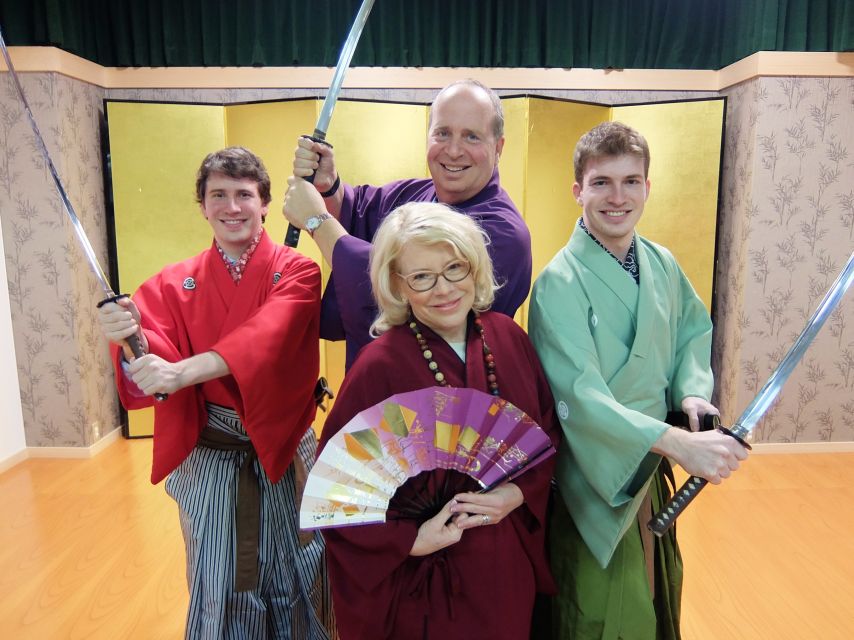
Kenbu is a traditional sword dance built from stylized movements. It draws on the image and discipline of the samurai, but the goal of this class is artistic practice rather than combat training.
That distinction is important when you decide if the experience suits you. If you want sparring, protective gear, or a lesson in fighting another person, this is not the right choice. If you want to understand how Japanese sword movement can combine precision, posture, ceremony, and performance, it is a much better fit.
The instructor also teaches how to show respect to an opponent with the sword. Even in a beginner class, the formal bow and controlled finish are treated as part of the art, not as decoration.
One especially useful feature is the contrast between your beginner movements and the professional demonstration. You first feel how difficult it is to keep a basic sequence smooth. Then you see the same principles performed with speed, balance, and confidence. That comparison gives the final show more meaning.
A completely different kind of day out:
- PERFECT KYOTO 1-Day Bus Tour
★ 5.0 · 13,518 reviews - [Kyoto & Nara Day Tour] Sagano Scenic Railway & Nara Park & Fushimi Inari Taisha Thousand Torii Gates & Togetsukyo Bridge & Bamboo Grove & Kimono Forest (Departing from Osaka)
★ 4.9 · 10,942 reviews - Kyoto: Fushimi Inari, Kinkakuji, Bamboo Grove 1 Day Bus Tour
★ 4.8 · 4,316 reviews - Kyoto: Tea Ceremony in a Traditional Tea House in Kiyomizu
★ 4.9 · 3,519 reviews
The photo session is not an afterthought
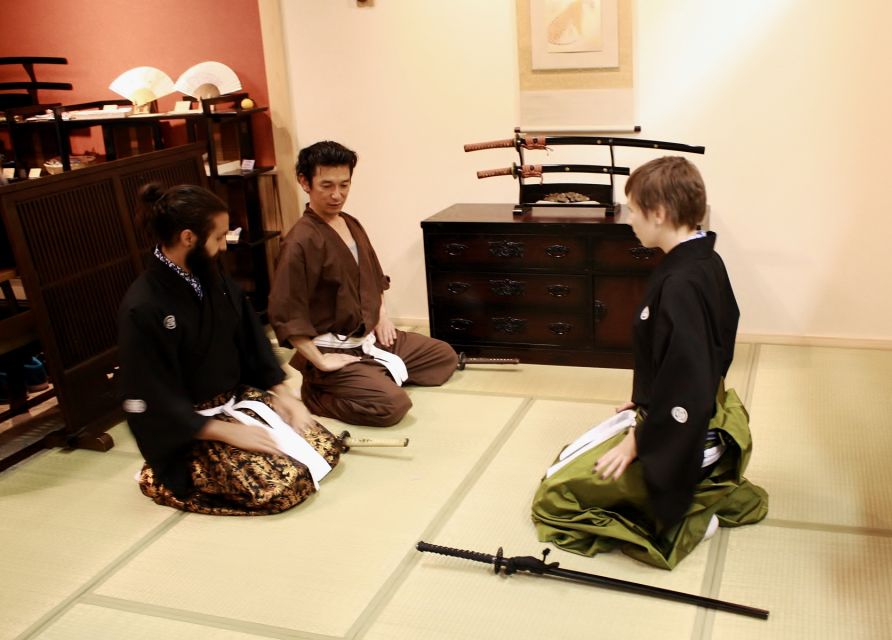
The costume photo session comes after you have learned enough movement to pose with some confidence. Staff help organize the photographs, and you have time for both pictures and short videos.
This is one of the activity’s strongest family features. Children and teenagers can enjoy the visual side, while adults who are less interested in swords still get a memorable portrait and a cultural lesson. The photographs also record the clothing, stance, and sword handling in a way that a certificate cannot.
You should still keep expectations realistic. It is a short photo session, not a professional studio shoot. The exact amount of time may depend on the size of your group and the schedule. A small group of 10 or fewer helps, and quieter time slots may provide extra individual attention. One participant even received a one-to-one lesson because of the chosen time, though you should not count on that happening.
The staff’s role here is useful. They make sure each participant gets a chance to pose, rather than allowing the most confident person in the group to take over. If photographs matter to you, listen carefully during the movement practice. The better you understand the poses, the more natural your pictures will look.
The Kenbu performance puts the lesson in context
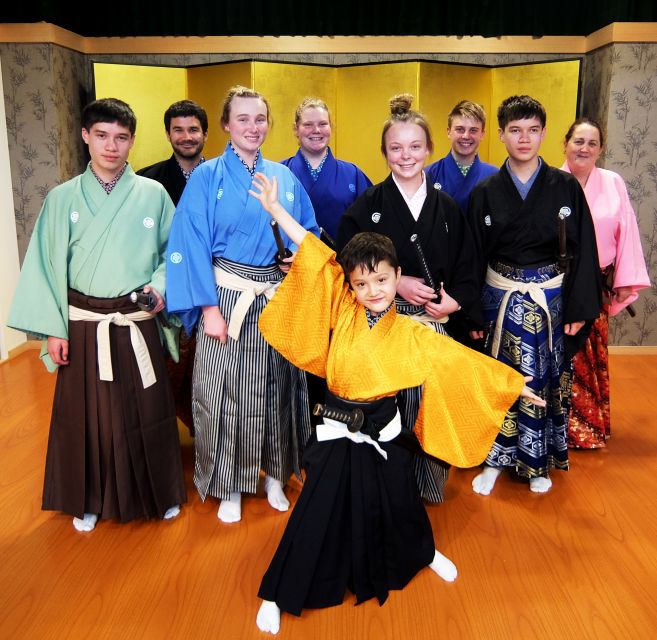
Depending on the option you select, you watch either a 10-minute or 30-minute performance. It may take place before or after the lesson, and a sword dance instructor provides commentary.
The shorter performance works well if you have a packed Kyoto schedule. It gives you a compact introduction to the finished art without turning the activity into a full theater visit. The longer option is better if you want more explanation and a fuller sense of how Kenbu is presented.
The show is the artistic heart of the experience. The class teaches you the building blocks, but the performance shows what those movements can become. Sword work, fan movements, costume, music, and formal gestures combine into something more expressive than a simple demonstration of strikes.
The commentary also matters. Without explanation, a short sword dance might look like a dramatic display with no clear purpose. The instructor helps you notice the difference between combat imagery and performance, and explains how the technique has passed through generations.
If you are unsure about the class because you do not consider yourself interested in fighting, the performance may change your mind. The focus is art, body control, and tradition. The sword is central, but the lesson is not about aggression.
How much value do you get for $64?
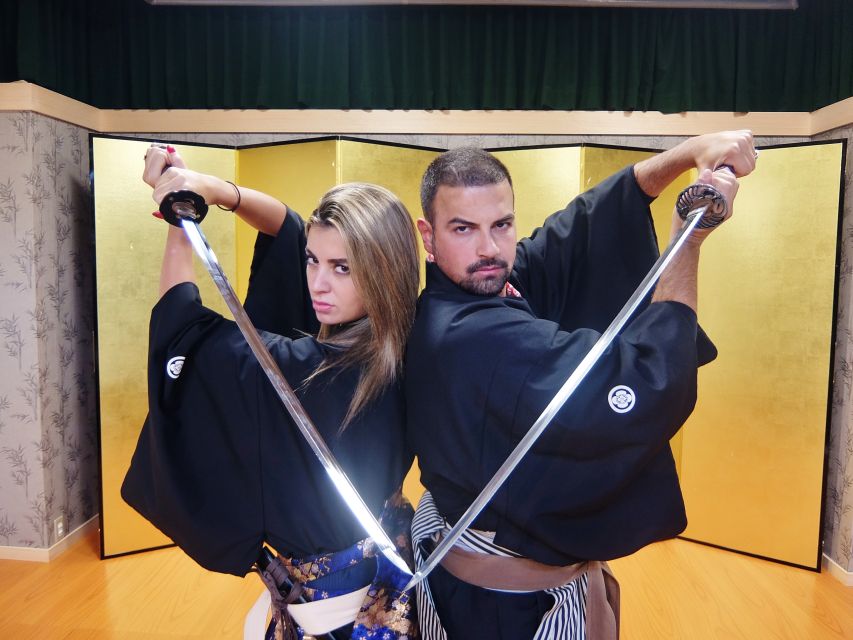
At $64, this is not the cheapest short activity in Kyoto. It offers better value than a quick dress-up photograph because your booking includes instruction, costume use, a photo session, a performance option, a tenugui towel, and a completion certificate.
The strongest value comes from the combination of learning and watching. A theater performance alone would show you the finished product without letting you understand the work behind it. A basic sword lesson alone might leave you wondering what professional Kenbu looks like. Together, the two parts make sense.
The small group limit also supports the price. With no more than 10 participants, you are less likely to disappear in a crowd. The instructor can check your grip and form, and the staff can help with photographs.
Still, you should not book it expecting a long historical seminar. The introduction is short, and the main focus is practical movement. You learn about samurai culture and Kenbu, but this is an active cultural experience rather than a museum-style class.
Food and drinks are not included, and there is no hotel pick-up or drop-off. Those are minor issues in central Kyoto, but they matter if you are trying to keep every expense inside one prepaid booking.
Who will enjoy this most?
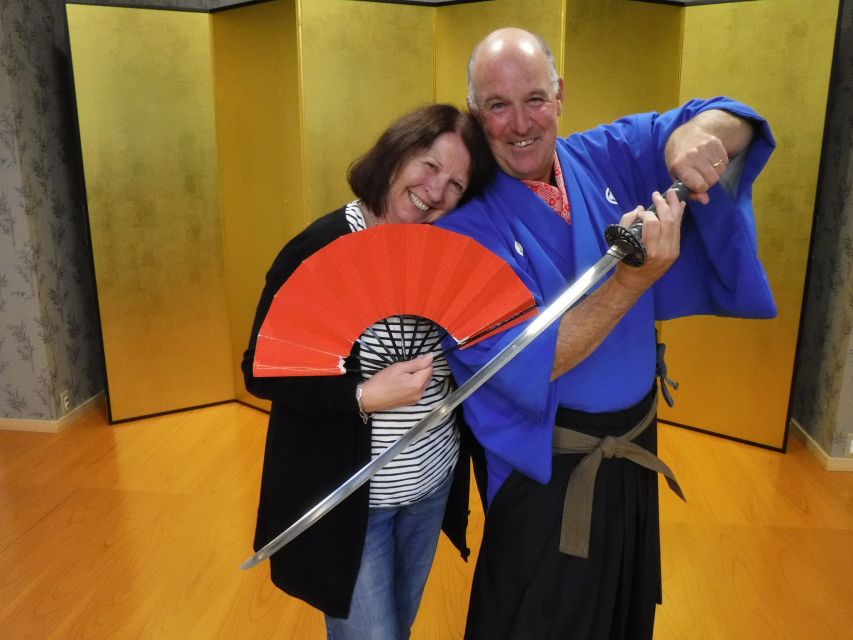
I would recommend this to families with school-age children, couples, solo visitors, and anyone who wants a break from temples and gardens. It offers a different way to connect with Japanese culture, and the physical practice helps the information stick.
Children under 4 are not permitted. Children from 5 to 10 may take part, but the organizers advise that they should have some martial arts experience or prior learning because the lesson is conducted with adults. That is a useful warning for parents. A confident 8-year-old may enjoy it, while a younger child who cannot follow group instructions may struggle.
Teenagers are a particularly good match. The costume, sword movements, and photographs provide plenty of fun, while the class still has enough structure to feel like a real activity rather than a staged attraction.
You should also consider your mobility and clothing. The session involves changing clothes and moving through repeated sword forms. You do not need to be an athlete, but you should be comfortable with light exercise and standing practice.
There is no observation-only option. If one person in your party wants to watch while everyone else participates, contact the provider in advance about whether an additional chaperone can be admitted. The number of people inside cannot exceed the number booked.
Practical details for a smooth visit
Book the exact number of participants who will attend. If the name on the day differs from the reserved name, notify the provider in advance. You also need to cancel the reservation yourself through GetYourGuide if your plans change.
Free cancellation is available up to 24 hours before the activity for a full refund. You can also reserve now and pay later, which helps if your Kyoto schedule is still changing.
Leave large bags at your accommodation or make other arrangements before arriving. Luggage and large travel bags have no place in the room, and the venue does not offer a waiting area.
Wear simple clothing that makes changing easy. Avoid arriving in a single hoodie or tight clothing, since it may not work with the costume process. Do not bring food, alcohol, pets, fireworks, explosives, or sharp objects.
The meeting point is the Samurai Kembu Theater, Kyoto dojo, at B1F Gozan Building, 35-7 Sanchome, Higashiyama-ku, Kyoto 605-0005. Check the starting time carefully because the total duration can range from 90 minutes to two hours depending on the selected option.
Should you book the Kyoto Samurai Sword Class?
Yes, if you want a short, well-organized cultural activity that mixes participation, costume, photography, and live performance. The best parts are the patient instruction, the chance to practice a proper sequence, and the moment when the professional Kenbu demonstration makes your beginner efforts easier to understand.
I would skip it only if you want serious martial arts training, a quiet lecture, or a completely passive show. For everyone else, $64 is a fair price for a compact Kyoto experience with several distinct parts and useful keepsakes.
Choose the longer performance if you care most about the art and explanation. Choose the shorter version if you mainly want the lesson and photographs. Either way, arrive ready to move, travel light, and treat the sword with the respect the instructors teach from the first bow.
FAQ
Where does the samurai sword class take place?
The class takes place at the Samurai Kembu Theater, Kyoto dojo, at 35-7 Sanchome, Higashi-iru, Sanjo-hanamikoji, Higashiyama-ku, B1F Gozan Building, Kyoto 605-0005.
How long does the experience last?
The activity lasts between 90 minutes and two hours. The exact duration depends on the selected option and performance length.
How much does the class cost?
The listed price is $64 per person.
Is the class taught in English?
Yes. The instructors speak English and Japanese.
How many people are in each group?
The activity is limited to 10 participants.
What do you learn during the lesson?
You learn how to bow before the sword, draw it, return it to its scabbard, and perform stylized samurai movements and strikes. You also learn how to show respect to an opponent with the sword.
Is a performance included?
A performance is included with the selected option. It lasts either 10 or 30 minutes and may take place before or after the lesson.
What is included in the price?
The English-speaking instructor, costume photo session, a traditional tenugui towel, and a completion certificate are included. Food, drinks, and hotel transportation are not included.
Just added in Kyoto
- The “Golden Route” and Ancient Japan by DIAMIR Erlebnisreisen – 14-Day Tour★ 2.0 · 2 reviews
- Japan: Castles & Cuisine by G Adventures – 6-Day Kyoto to Osaka Tour★ 4.5 · 4 reviews
- Cycle Japan by Explore! – 13-Day Kyoto to Tokyo Tour★ 4.7 · 12 reviews
- Cycle Japan by Intrepid Travel – 11-Day Kyoto to Tokyo Tour★ 4.8 · 2 reviews
- Classic Japan by Intrepid Travel – 11-Day Kyoto to Tokyo Tour★ 4.4 · 14 reviews
- Ancient & Modern Japan 14-Day Tour by Exodus Adventure Travels★ 4.4 · 40 reviews
- 5 Day Cultural Adventure of Kyoto, Nara & Osaka by Tourist Journey★ 2.5 · 2 reviews
- 12 Days Kinosaki Onsen Escape: A Journey Through Japan’s Timeless Towns by UME Travel★ 4.8 · 5 reviews
Castles and Historic Sites, compared.

Imperial Palace and Shogun Historical Walking Tour
Read our review →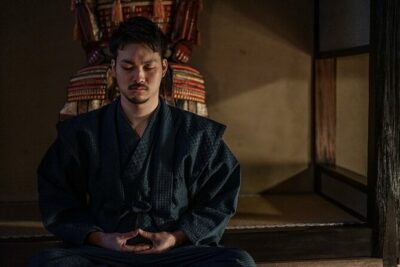
Tokyo Castle & Imperial PalaceーShogun Walking Tour
Read our review →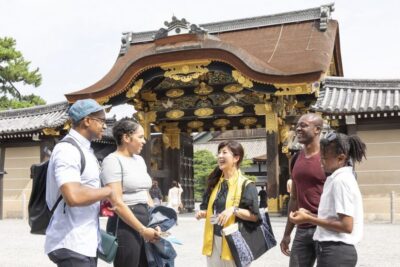
Nijo-jo Castle and Ninomaru Palace Guided Tour
Read our review →
Samurai Ninja Museum Guided tour and Experience
Read our review →Browse the lists this tour appears in