
Reviewed · TEA CEREMONIES
Kyoto: Tea Ceremony Experience
Tea slows Kyoto down. This 45-minute experience gives you a clear, friendly introduction to matcha, with a demonstration, seasonal sweets, and a chance to whisk your own bowl. I especially like the small-group setting and the way the English-speaking hosts explain the utensils, room design, and meaning behind each movement. The main consideration is comfort: much of the session takes place on the floor, though chairs and tables are available.
Held in a traditional machiya in Higashiyama, the Camellia Tea Ceremony is easy to pair with Kiyomizu-dera, Kodai-ji, Gion, or Yasaka-jinja. I also like that the session is cultural rather than merely photogenic. You learn what is happening instead of simply putting on a kimono and posing with a bowl of green tea.
In This Review
- Key points to know before you book
- Entering the Higashiyama machiya
- The opening lesson: matcha, utensils, and room design
- Watching the ceremony in quiet detail
- Seasonal sweets and Kyoto-grown matcha
- Whisking your own bowl of matcha
- How the 45-minute schedule feels
- Floor seating, photography, and kimono plans
- Is $32 a fair price?
- Who should book this Kyoto tea ceremony?
- Booking advice and final verdict
- FAQ
- How long does the Kyoto tea ceremony experience last?
- How much does the experience cost?
- Is the experience offered in English?
- Where does the tea ceremony take place?
- How do I find the meeting point?
- Is food included?
- Can I make my own matcha?
- Can I take photographs during the experience?
Key points to know before you book
- A compact 45-minute lesson: You get an introduction, a full demonstration, seasonal sweets, and hands-on matcha preparation without giving up half a day.
- Excellent Higashiyama location: The teahouse is near Kiyomizu-dera, Kodai-ji, Yasaka-jinja, Maruyama Park, Chion-in, and Gion.
- You make your own matcha: The host guides you through whisking a frothy bowl, making this more active than a ceremony you only watch.
- Clear English instruction: Hosts explain the ceremony, utensils, room decoration, and matcha traditions in English.
- Floor seating is not compulsory: Chairs and tables are available, and the Garden Teahouse is wheelchair accessible.
- A useful add-on: Kimono rental is available nearby, but arrange it before the tea ceremony if you want both activities.
Entering the Higashiyama machiya
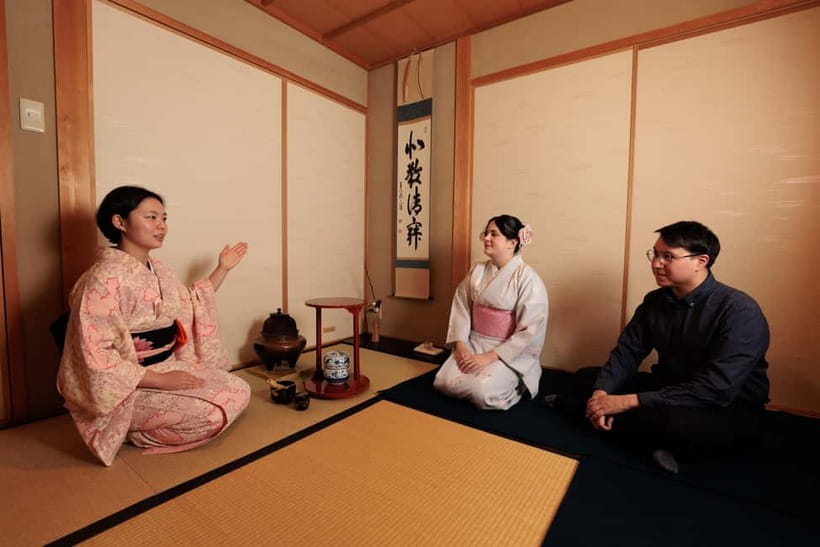
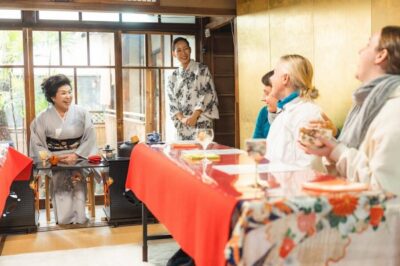
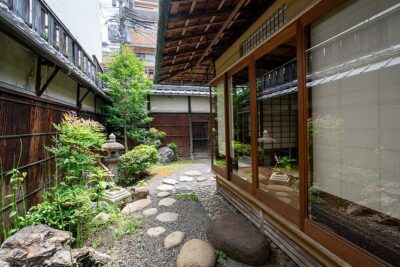
The experience begins in a traditional machiya in Kyoto’s Higashiyama district. The setting matters. This is not a hotel conference room with a few Japanese decorations placed around it. You enter a more fitting space for a ceremony built around quiet gestures, careful objects, and attention to the room.
Finding the door takes a little care. The teahouse sits down an alley branching from Ninenzaka, one of the area’s main pedestrian routes. The simplest landmark is the Park Hyatt hotel. Across from the hotel, look for a Studio Ghibli store. The alley is just to the left of that shop.
The location instructions are quite specific, and that is helpful because narrow Kyoto lanes can be confusing. A sign marks the entrance, and staff may come to the door to direct you upstairs. Give yourself a few extra minutes rather than arriving breathless after rushing up Ninenzaka.
This is a particularly convenient activity if you are already visiting eastern Kyoto. Kiyomizu-dera and the surrounding streets are about a 15-minute walk away, according to the information provided for the experience. Kodai-ji, Yasaka-jinja, Maruyama Park, Chion-in, and Gion are also close.
You can place the ceremony in the middle of a full sightseeing day. Walk through the historic streets in the morning, pause for tea, then continue toward Gion or Maruyama Park. Buses run along Higashi Oji, about 10 minutes from the teahouse, and you can reach Kyoto’s city center on foot in roughly 25 minutes through Gion.
More Tea Ceremonies in Kyoto
- Kyoto: Tea Ceremony in a Traditional Tea House in Kiyomizu
★ 4.9 · 3,519 reviews - Kyoto: Tea Ceremony Ju-An at Jotokuji Temple
★ 4.9 · 3,207 reviews - Kyoto: 45-Minute Tea Ceremony Lesson Experience
★ 4.3 · 2,378 reviews
The opening lesson: matcha, utensils, and room design
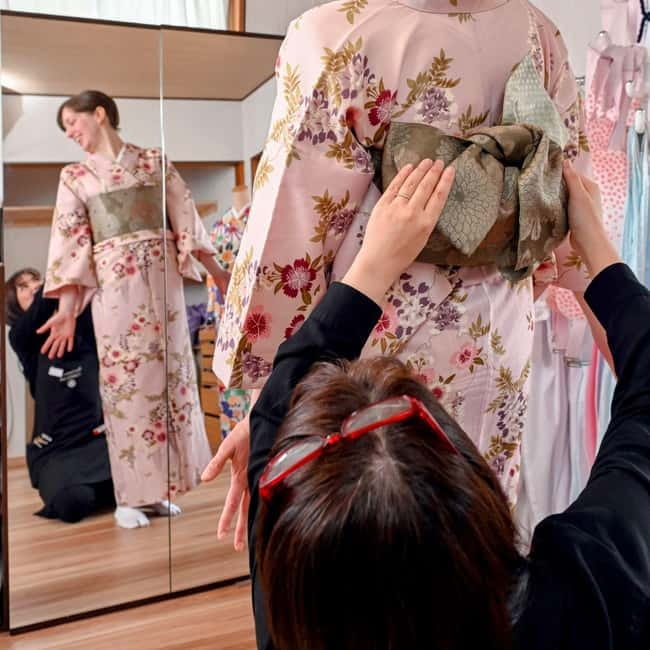
Your host starts with a short introduction to matcha and the tea ceremony. This first section is one of the strongest parts because it gives you a framework for everything that follows.
You learn about the utensils used to prepare and serve the tea. You also hear about the sequence of the ceremony and why the room’s decoration matters. The room is not treated as a neutral backdrop. Its arrangement, objects, and seasonal details help create the tone of the gathering.
The explanations are aimed at first-time participants, so you do not need any prior knowledge of Japanese tea culture. The hosts speak English, and several sessions have been led by especially engaging instructors. Ikuko receives particular praise for explaining the ceremony clearly and helping participants whisk their tea into a good foam.
The best guides keep the lesson moving. One session was described as giving just the right amount of explanation before the demonstration, while another praised the host’s wit and friendly manner. That balance is important. Tea ceremony can involve complex rules, but you are not asked to memorize an entire school of practice in 45 minutes.
You can ask about the three schools of tea ceremony and other aspects of Japanese culture. This makes the session feel like a conversation rather than a lecture. If you are curious about why a particular utensil is handled in a certain way, this is the time to ask.
Watching the ceremony in quiet detail
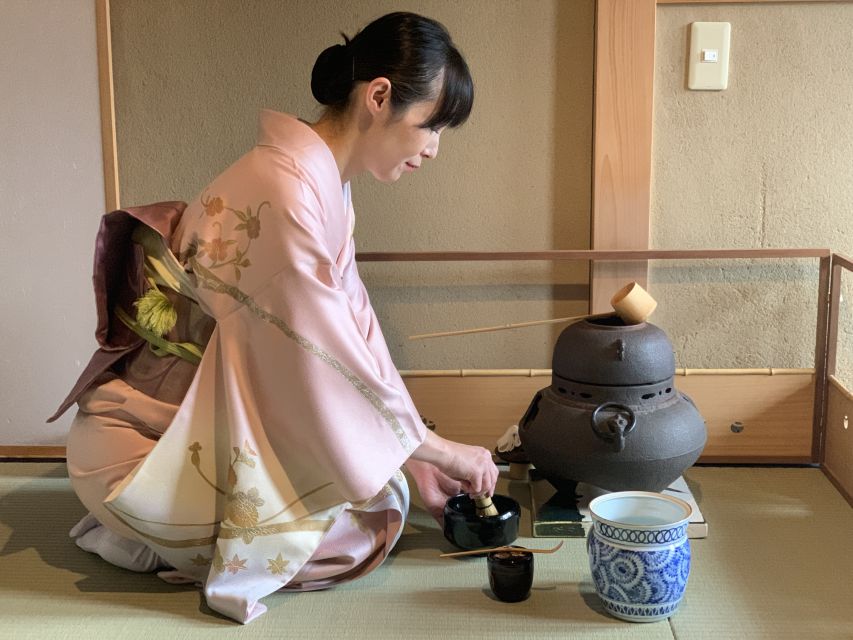
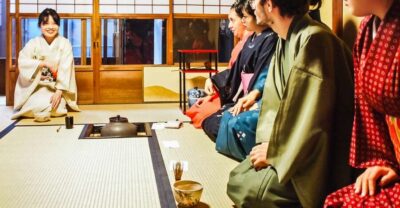
After the introduction, the host demonstrates the tea ceremony. The demonstration lasts about 10 minutes, giving you enough time to notice the controlled pace and exact movements.
This is where the ceremony’s appeal becomes clear. The host handles each item with purpose. A bowl, scoop, whisk, and tea container are not simply tools. Their placement and use form part of a carefully arranged exchange between the person serving and the person receiving the tea.
You do not learn how to perform the entire formal ceremony yourself. One session made this point clear: the activity teaches the history, customs, and matcha preparation, but the complete ritual is too complicated to cover in such a short visit. That is not a weakness as long as you arrive expecting an introduction rather than professional training.
The demonstration is peaceful without becoming stiff. The hosts explain what you are seeing, so you can appreciate the quiet movements instead of wondering when the next part will happen. Several participants found the ceremony calming, especially after a busy day among Kyoto’s crowded sights.
The room also gives you a chance to notice the difference between a staged photo opportunity and a cultural lesson. The ceremony’s beauty comes from restraint. The host is not trying to entertain you with speed or spectacle. The point is attention, respect, and care.
Seasonal sweets and Kyoto-grown matcha
A traditional seasonal sweet accompanies the tea. The sweet is not just a snack before the hands-on portion. Its taste is meant to work with the bitter, grassy character of matcha.
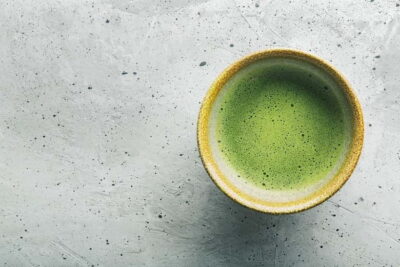
If this is your first taste of matcha, expect a stronger flavor than ordinary green tea. Matcha is powdered tea whisked directly into water, so you drink the leaf rather than steeping and removing it. One participant described the taste as deliciously bitter, which is a fair warning for anyone expecting a sweet café drink.
The local connection adds value. The matcha is grown in Kyoto, and the session connects the flavor in your bowl with the city’s tea traditions. You also get to taste a seasonal sweet rather than a generic packaged snack.
The quantity is modest. This is a tea ceremony, not a meal, and meals are not included. If you arrive hungry, eat beforehand or plan lunch nearby. The experience works best as a cultural stop between sightseeing and meals.
A completely different kind of day out:
- PERFECT KYOTO 1-Day Bus Tour
★ 5.0 · 13,518 reviews - [Kyoto & Nara Day Tour] Sagano Scenic Railway & Nara Park & Fushimi Inari Taisha Thousand Torii Gates & Togetsukyo Bridge & Bamboo Grove & Kimono Forest (Departing from Osaka)
★ 4.9 · 10,942 reviews - Kyoto: Fushimi Inari, Kinkakuji, Bamboo Grove 1 Day Bus Tour
★ 4.8 · 4,316 reviews - Kyoto: Gion Make Your Own Chopsticks with Engraving Option
★ 5.0 · 3,465 reviews
Whisking your own bowl of matcha
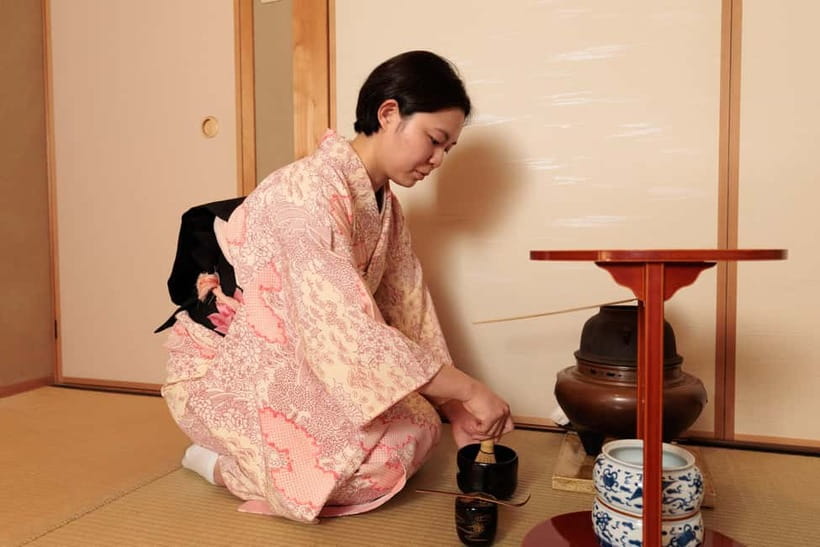
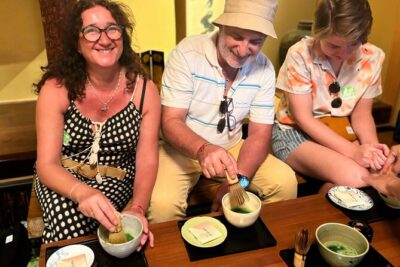
The hands-on portion is the most memorable part for many people. After watching the host, you prepare your own bowl of matcha with personal guidance.
You will not be expected to produce a tea master’s perfect foam on your first attempt. The host shows you how to use the whisk and helps you adjust your technique. That makes the activity approachable for children, first-time tea drinkers, and anyone who feels nervous about handling the utensils.
Whisking looks simple until you try it. The motion needs speed and control, and the aim is a light layer of foam rather than a heavy froth. The host’s help turns this from a demonstration into a practical lesson.
I like this format because you leave with a physical memory of the ceremony. You have not only watched someone prepare matcha. You have handled the tools, made a bowl, and tasted the result. The process also helps you understand why the ceremony values patience and exact movement.
Some people may find the tea’s bitterness surprising. That is part of the appeal, but it is worth knowing before you book. If you already enjoy green tea, you will likely appreciate the flavor. If you prefer sweet drinks, the seasonal confection helps balance it.
How the 45-minute schedule feels
Forty-five minutes is a sensible length for this activity. You receive enough context to understand the ritual, but the session does not take over your day.
The usual flow is:
- Introduction to matcha, tea schools, utensils, and the tearoom
- Host demonstration of the ceremony
- Seasonal sweet and tea
- Guided preparation of your own bowl of matcha
- Time for questions about Japanese culture and tea traditions
The timing depends on the group, but the experience is designed for private or small-group participation. A small group allows you to see the demonstration clearly and gives you a reasonable chance to ask questions.
A private ceremony costs more if you choose that format, but it may be worthwhile for families, couples, or anyone using an interpreter. If you plan to bring an interpreter, a private booking is required so the conversation does not disrupt another group.
The private option is also requested for families bringing a baby or infant under three years old. Those sessions take place at the Garden Teahouse. It is also the wheelchair-accessible option, while the regular tearooms are upstairs.
Floor seating, photography, and kimono plans
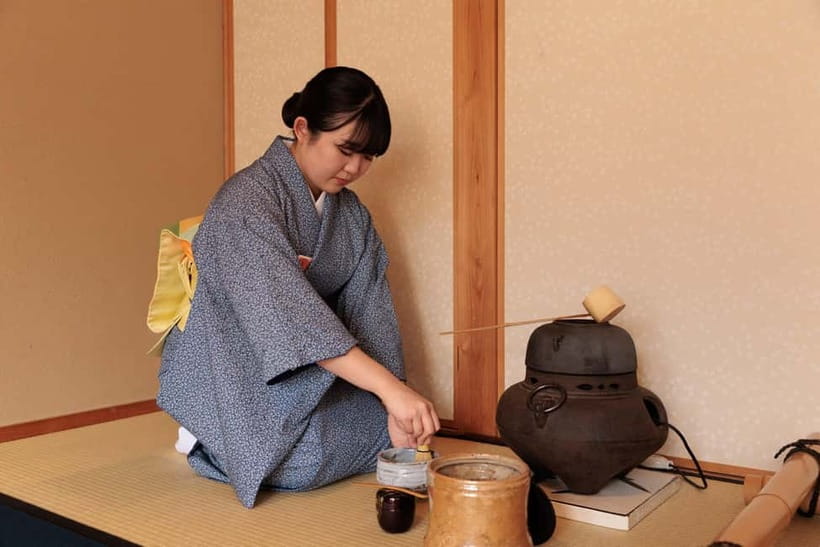
Traditional tea rooms often involve sitting on the floor, and this experience is no different in spirit. Sitting for around 40 minutes can become uncomfortable, especially around the knees and hips.
You are not required to kneel formally. You can make yourself comfortable, and chairs and tables are available for anyone who has difficulty sitting on the floor. Tell the host what you need rather than trying to endure discomfort quietly.
Still photography without flash is permitted. Video recording is not allowed. That rule fits the tone of the ceremony and helps keep the room calm. If taking photos matters to you, use a phone or camera quietly and avoid turning the ceremony into a photo session.
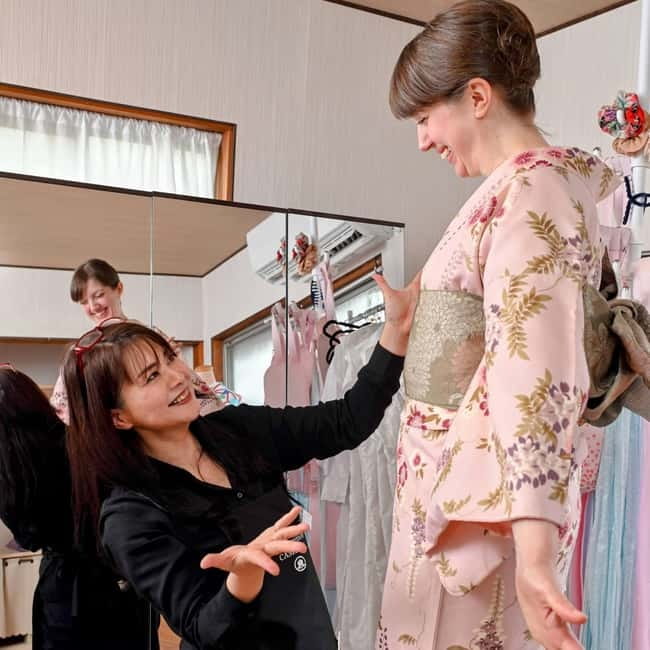
Kimono rental is not included. A rental shop is next door or around the corner, depending on the exact arrangement, and several participants enjoyed combining the clothing with the ceremony. Plan the rental before your tea appointment. One person arrived without realizing the rental shop was nearby, so a little advance planning will save time.
A kimono can make the outing feel more festive, but it is not needed to enjoy the lesson. Comfortable clothing is perfectly suitable, especially if floor seating may bother you.
Is $32 a fair price?
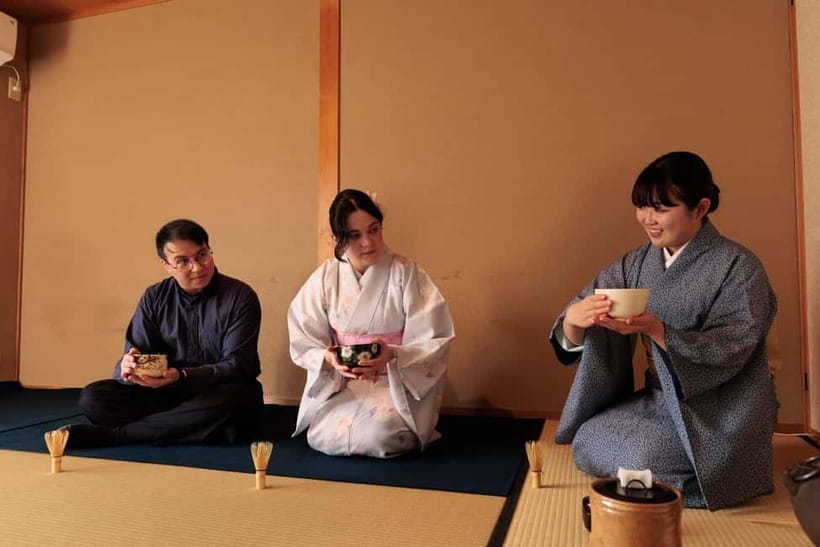
At $32 per person, this is a good-value cultural activity for Kyoto. You receive matcha, seasonal sweets, the use of traditional tea utensils, and a personal English-speaking host. You also get an explanation of the ceremony and a hands-on attempt at making tea.
The value comes from the instruction. A bowl of matcha alone would not justify the price, but the context turns a drink into a cultural experience. You learn why the room is arranged as it is, what the tools do, and how the ceremony connects to Japanese hospitality.
The short duration also helps the value. You can fit the activity into a morning or afternoon without giving up a major temple visit. Its location near Higashiyama’s best-known sights reduces extra transport costs and planning time.
There are limits. This is not a full tea-master course, a meal, or a long formal ceremony. Kimono hire, hotel transfers, and food beyond the seasonal sweet are extra. If you want a highly formal, extended ritual, you should seek a longer specialist program.
For most first-time visitors, though, the price is sensible. You get a polished introduction, a taste of Kyoto-grown matcha, and enough practical instruction to repeat the basic whisking method later.
Who should book this Kyoto tea ceremony?
I would recommend it to anyone who wants more than temple photographs and souvenir shopping. It suits couples, families, solo visitors, and small groups looking for a calm cultural break.
It is especially good for:
- First-time matcha drinkers
- Tea lovers who want to understand preparation
- Families wanting a short, manageable activity
- Solo visitors who appreciate a guided setting
- People staying near Higashiyama or Gion
- Anyone interested in Japanese customs and symbolism
The session also works well for people with limited time. You do not need to commit to a full day or travel to a distant tea district.
I would be more cautious if you dislike bitter drinks, cannot sit comfortably without a chair, or want a complete formal ceremony in which you learn every movement. The hosts make seating easier, but the setting remains a traditional tearoom, not a modern café.
Booking advice and final verdict
You can cancel up to 24 hours before the activity for a full refund, and the reserve-now, pay-later option gives you some useful flexibility. Starting times vary, so check availability when planning your Higashiyama day.
Allow extra time to find the alley from Ninenzaka. Wear something comfortable, eat before you arrive if you need a full meal, and arrange kimono rental in advance if you want that addition. If accessibility or an infant under three is a concern, choose the private Garden Teahouse option.
Book this experience if you want a clear, relaxed introduction to Kyoto’s tea culture. The strongest reasons are the excellent location, thoughtful English instruction, seasonal sweet, and chance to make your own matcha. Skip it only if you are seeking a long formal training session or a substantial food experience. For $32 and 45 minutes, it offers a pleasant way to slow down and understand what makes the tea ceremony more than a cup of green tea.
FAQ
How long does the Kyoto tea ceremony experience last?
The experience lasts 45 minutes. It includes an introduction, a tea ceremony demonstration, seasonal sweets, and guided matcha preparation.
How much does the experience cost?
The listed price is $32 per person.
Is the experience offered in English?
Yes. The instructor and host language is English.
Where does the tea ceremony take place?
It takes place in a traditional machiya in Kyoto’s Higashiyama district, down an alley branching from the main thoroughfare of Ninenzaka.
How do I find the meeting point?
Head toward the Park Hyatt hotel. Across from the hotel is a Studio Ghibli store. The alley is just to the left of the store, and a sign marks the entrance.
Is food included?
Matcha and traditional seasonal sweets are included. Meals are not included.
Can I make my own matcha?
Yes. After watching the host demonstrate the ceremony, you can whisk your own bowl of matcha with guidance.
Can I take photographs during the experience?
Non-flash still photography is permitted. Video recording is not allowed.
Just added in Kyoto
- The “Golden Route” and Ancient Japan by DIAMIR Erlebnisreisen – 14-Day Tour★ 2.0 · 2 reviews
- Japan: Castles & Cuisine by G Adventures – 6-Day Kyoto to Osaka Tour★ 4.5 · 4 reviews
- Cycle Japan by Explore! – 13-Day Kyoto to Tokyo Tour★ 4.7 · 12 reviews
- Cycle Japan by Intrepid Travel – 11-Day Kyoto to Tokyo Tour★ 4.8 · 2 reviews
- Classic Japan by Intrepid Travel – 11-Day Kyoto to Tokyo Tour★ 4.4 · 14 reviews
- Ancient & Modern Japan 14-Day Tour by Exodus Adventure Travels★ 4.4 · 40 reviews
- 5 Day Cultural Adventure of Kyoto, Nara & Osaka by Tourist Journey★ 2.5 · 2 reviews
- 12 Days Kinosaki Onsen Escape: A Journey Through Japan’s Timeless Towns by UME Travel★ 4.8 · 5 reviews
Tea Ceremonies, compared.
Tea Ceremony in a Traditional Tea House in Kiyomizu
Read our review →
World Heritage Kyoto & Nara Uji Authentic Matcha Experience
Read our review →
Browse the lists this tour appears in