
Reviewed · TEA CEREMONIES
Kyoto: Tea Ceremony Meditation – Make Matcha with Tea Master
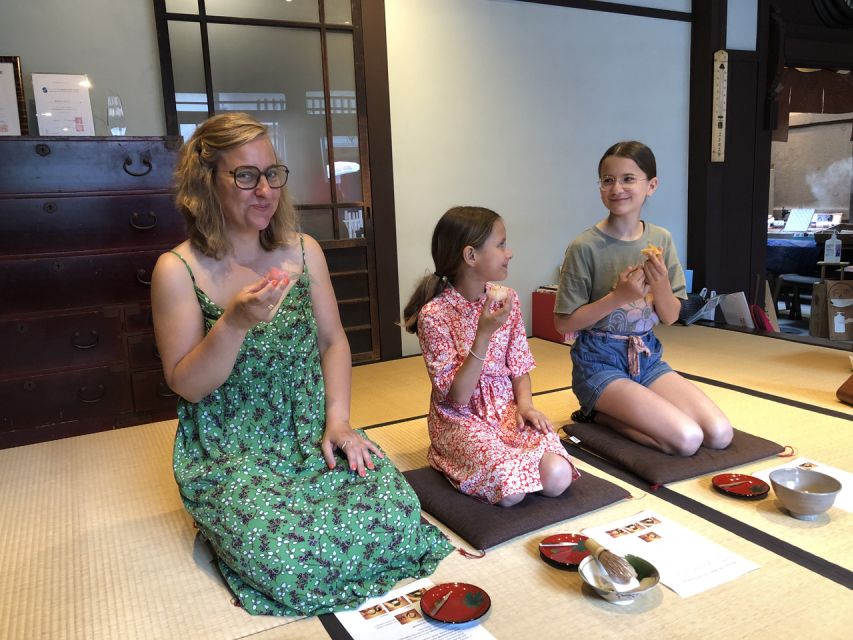
Slow tea, sharp memories. This 45-minute Kyoto experience brings you into a 100-year-old townhouse to learn the quiet art of matcha from an English-speaking tea master. You watch a traditional demonstration, hear the meaning behind the gestures, then whisk your own bowl using handcrafted utensils.
I especially like the small groups of up to 10 and the warm, patient teaching style. Guides such as Miki, Aki, Yoko, Joko, and Kiyoka have been praised for clear English and thoughtful answers. The main consideration is that this is a compact workshop, not a full-length formal tea ceremony with kimono dressing, hair styling, or multiple servings of tea.
The setting is peaceful without feeling stiff. You get a traditional sweet with your matcha, time to ask about Japanese customs, and a chance to browse Japanese crafts afterward. At $45 per person, it offers good value if you want to understand what goes into tea ceremony rather than simply watch someone prepare a bowl.
In This Review
- Key Things to Know Before You Book
- Entering a 100-Year-Old Kyoto Townhouse
- Watching the Tea Master’s Demonstration
- Making Matcha With Handcrafted Utensils
- Asking Questions About Japanese Culture
- What the $45 Price Delivers
- Why the 45-Minute Length Works
- Comfort, Etiquette, and Practical Details
- Who Will Enjoy This Tea Ceremony Most
- My Verdict: Book It for a Thoughtful First Taste
- FAQ
- Where does the Kyoto tea ceremony take place?
- How do I find the meeting point?
- How long does the activity last?
- How much does the experience cost?
- Is the tea ceremony taught in English?
- How many people can join?
- Do I get to make my own matcha?
- What is included in the price?
- Is a kimono included?
- Can I cancel the booking?
Key Things to Know Before You Book
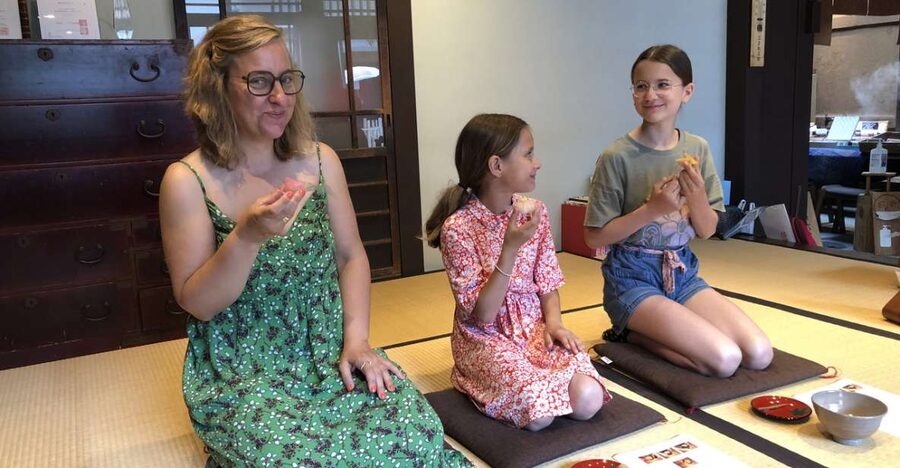
- You make your own bowl of matcha: The activity moves beyond a demonstration, giving you hands-on practice with the whisk, bowl, and preparation method.
- The townhouse is about 100 years old: Tatami, quiet rooms, and traditional design give the lesson a proper sense of place.
- Omotesenke tradition guides the lesson: Your tea master is trained in one of Japan’s major tea ceremony schools.
- Small groups make a real difference: With no more than 10 people, you can ask questions and receive individual help.
- English instruction keeps the customs clear: The guides explain both what to do and why it matters.
- Kimono rental is not included: Come in comfortable clothing, and skip perfume or cologne so the matcha aroma remains easy to enjoy.
Entering a 100-Year-Old Kyoto Townhouse
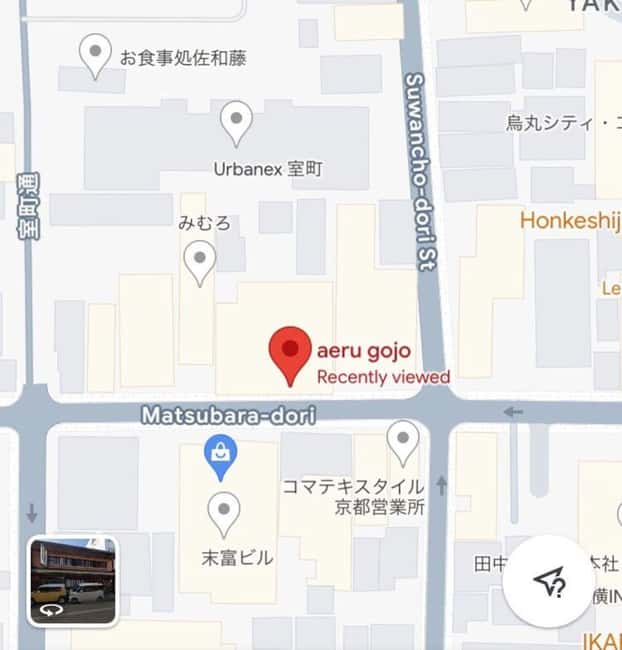
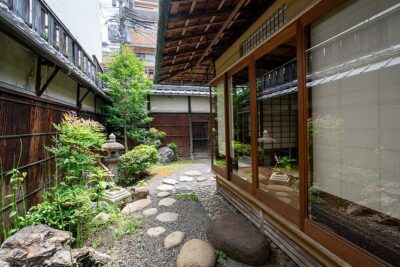
The experience begins at aeru gojo, a traditional townhouse in central Kyoto. Coming from Karasuma-dori Street, turn at the corner by Family Mart, walk straight for one block, and look for the sign beside Only Corporation, across from Zen Kyoto.
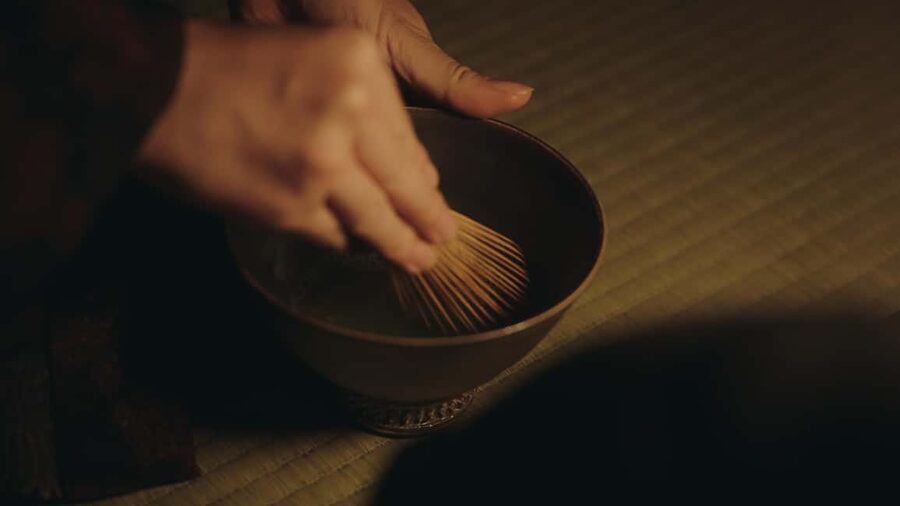
This is not a grand temple hall or a large tourist venue. That works in its favor. The townhouse setting gives the activity a human scale, and the scent of tatami helps shift your attention away from Kyoto’s busy streets. You are asked not to arrive more than 10 minutes early because the space is limited.
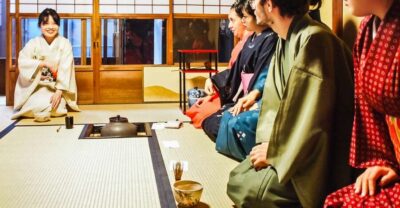
The room combines traditional Japanese elements with a contemporary feel. You will sit in a calm setting with tea bowls, utensils, and other objects chosen for the ceremony. The atmosphere is quiet, but the teaching style is friendly enough for first-time visitors who may worry about making a mistake.
There is no parking lot. If you come by rental bicycle, bicycles are not allowed inside, so use a public bicycle parking area. The nearest one is listed at the meeting-point information. This is worth sorting out before you arrive, since trying to leave a bicycle on a narrow Kyoto street is not a good start to a meditative activity.
More Tea Ceremonies in Kyoto
- Kyoto: Tea Ceremony in a Traditional Tea House in Kiyomizu
★ 4.9 · 3,519 reviews - Kyoto: Tea Ceremony Ju-An at Jotokuji Temple
★ 4.9 · 3,207 reviews - Kyoto: 45-Minute Tea Ceremony Lesson Experience
★ 4.3 · 2,378 reviews
Watching the Tea Master’s Demonstration
Your host first shows you how the ceremony works. The tea master prepares matcha with controlled movements, explaining the order of the actions and the etiquette around serving and receiving tea.
The Omotesenke connection gives the lesson a traditional foundation. You are not simply being shown a fashionable café version of matcha. At the same time, the presentation is adapted for international visitors, so you can follow the meaning without needing prior knowledge of Japanese tea customs.
This balance is one of the strongest parts of the activity. Guides explain the gestures, the tools, and the reason for the sequence. You learn that the ceremony is not only about making a drink. It also concerns attention, hospitality, respect, and creating a peaceful moment for the person receiving the tea.
The demonstration is slow enough to watch closely. Several people who have taken part found this section almost meditative, while others appreciated the relaxed tone and freedom to ask questions. That combination matters. A very formal ceremony can be beautiful but difficult to understand. Here, the English-speaking tea master gives you a way into the tradition.
Miki has received particular praise for being calm, clear, and patient. Aki has also been noted for welcoming questions and helping participants practice individually. Names may vary by session, but the experience is designed around friendly instruction rather than silent observation.
Making Matcha With Handcrafted Utensils
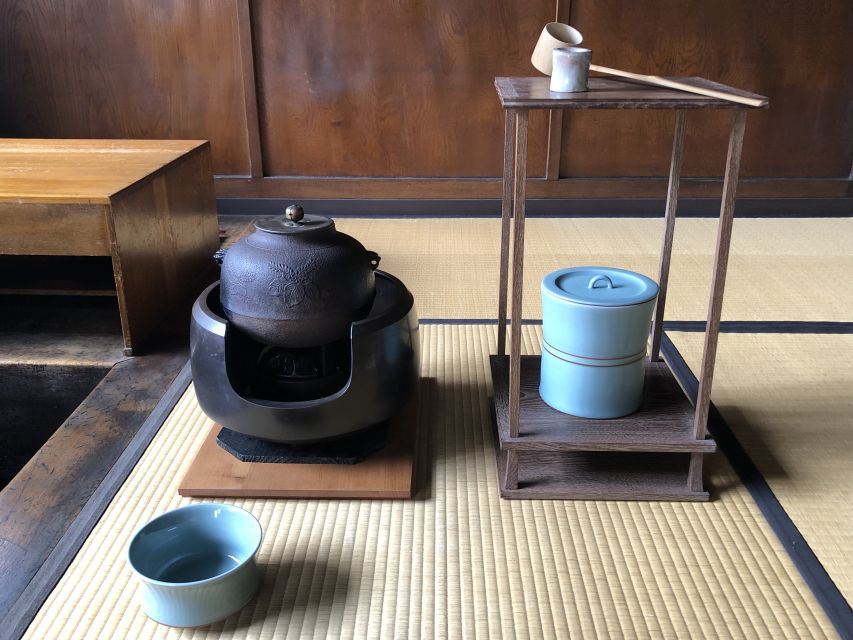
After watching the demonstration, you prepare your own matcha. This is the point where the workshop becomes more than a cultural talk.
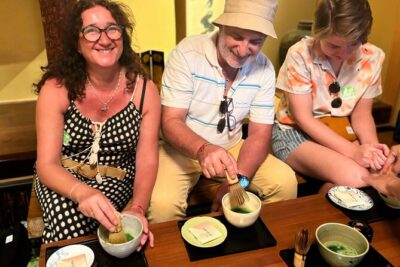
You use authentic tea equipment, including a tea bowl and bamboo whisk, and receive guidance on the steps involved. The tea master shows you how to handle the utensils and how to whisk the powder with the right motion. You do not need to arrive with special skills. The teachers are used to beginners and can offer individual help when needed.
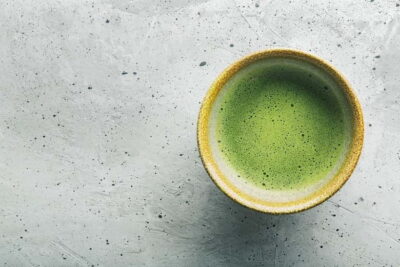
Making matcha yourself also gives you a better sense of the care behind the ceremony. The process looks simple when an expert performs it. Once the whisk is in your hand, you notice the small details: how you hold the bowl, how you move the whisk, and how much attention goes into each stage.
The matcha is served with a traditional Japanese sweet. The sweetness provides a useful contrast to the tea’s grassy, slightly bitter flavor. This is one serving of matcha, not an open-ended tea tasting, so set your expectations accordingly.
I like that the activity lets you take part without turning the ceremony into a performance for the room. You are learning a few beginnings of the skill, not pretending to become a tea master in 45 minutes. That honesty makes the lesson more enjoyable.
Asking Questions About Japanese Culture
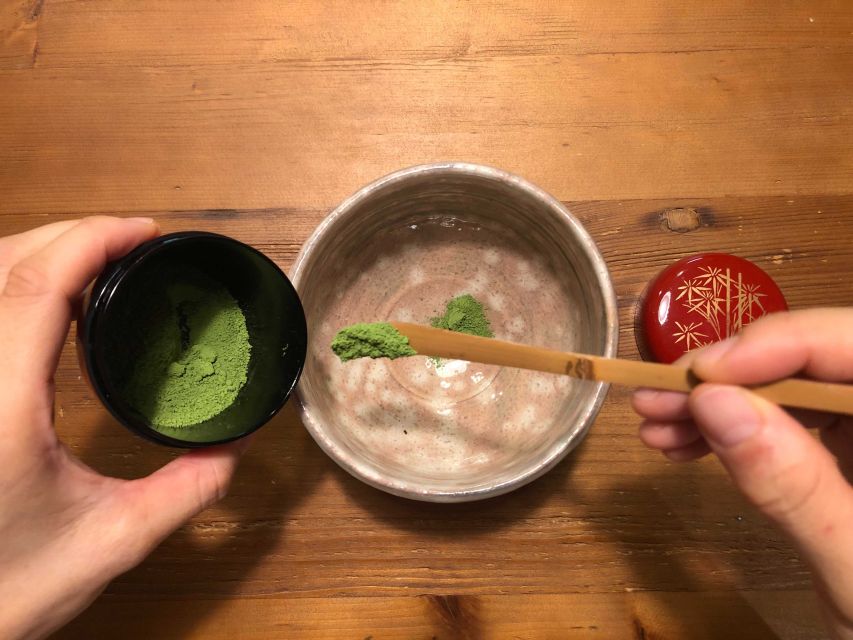
The tea ceremony gives you a natural way to ask broader questions about Japan. The English-speaking hosts welcome conversation about tea, etiquette, traditions, and daily culture.
This is especially useful if you are new to Japan. You can ask about the meaning of particular gestures, the place of matcha in Japanese life, or how formal tea ceremony differs from the more casual preparation you might see elsewhere. The lesson is not limited to memorizing steps.
Several guides have been praised for answering questions beyond the ceremony itself. That can make the session feel personal, particularly when the group is small. Solo visitors also have a good chance to meet other people in the room, while families can take part together.
The activity has worked well for children around ages eight and ten, and one host was especially patient with a restless toddler. Still, this is meant to be a quiet experience. If your children need constant movement, the calm sitting and listening may test them. One parent felt the peaceful setting was best appreciated without young children, so think about your family’s temperament rather than relying on the age range alone.
Teenagers can enjoy it, too, especially because the hands-on part gives them something to do. The lesson is gentle, but it is not empty entertainment. You will need to pay attention.
A completely different kind of day out:
- PERFECT KYOTO 1-Day Bus Tour
★ 5.0 · 13,518 reviews - [Kyoto & Nara Day Tour] Sagano Scenic Railway & Nara Park & Fushimi Inari Taisha Thousand Torii Gates & Togetsukyo Bridge & Bamboo Grove & Kimono Forest (Departing from Osaka)
★ 4.9 · 10,942 reviews - Kyoto: Fushimi Inari, Kinkakuji, Bamboo Grove 1 Day Bus Tour
★ 4.8 · 4,316 reviews - Kyoto: Gion Make Your Own Chopsticks with Engraving Option
★ 5.0 · 3,465 reviews
What the $45 Price Delivers
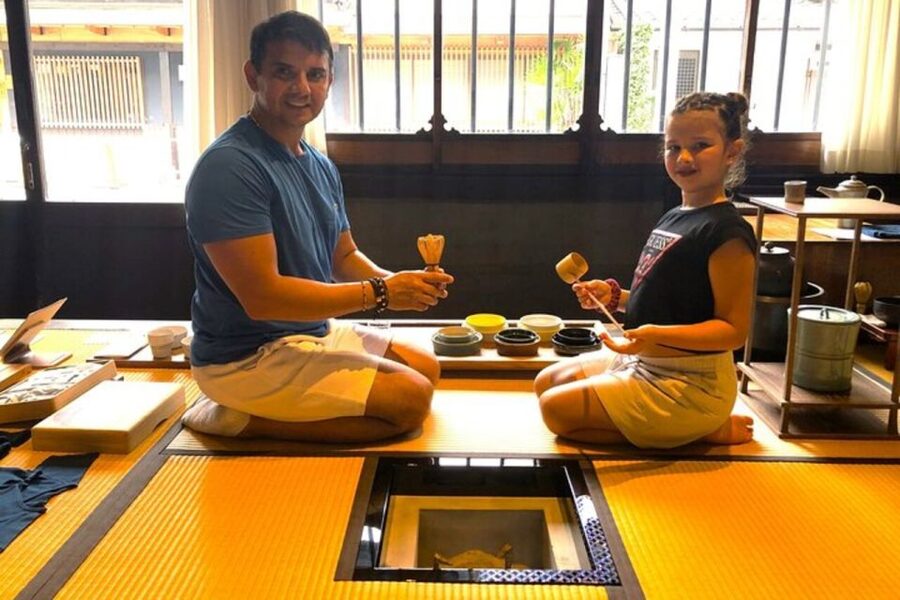
At $45 per person, the price is fair for Kyoto, especially when you consider the setting, instruction, tea, sweet, and use of artisan-made utensils. You are paying for a guided cultural lesson in a historic townhouse, not just a cup of matcha at a café.
The value is strongest if you want context. A café visit may be cheaper, but it will not usually show you the ceremony’s gestures, explain the etiquette, or let you prepare tea under a trained host’s supervision.
The price is less attractive if you mainly want to wear a kimono, take photos, or sample several teas. Kimono rental and hair setting are not included. There are no free refills, and the listed inclusions cover one cup of matcha and traditional sweets.
Japanese crafts are available to purchase after the session. This gives you a chance to take home a tea-related souvenir, though purchases are separate from the activity price. The items are connected to the experience rather than being random airport-style gifts, which makes browsing worthwhile if you want a physical reminder of the lesson.
The company behind the program, aeru, has received an American Express Award for its culture-focused tea program. That recognition does not replace your own judgment, but it supports the sense that this is a serious cultural activity presented in a visitor-friendly way.
Why the 45-Minute Length Works
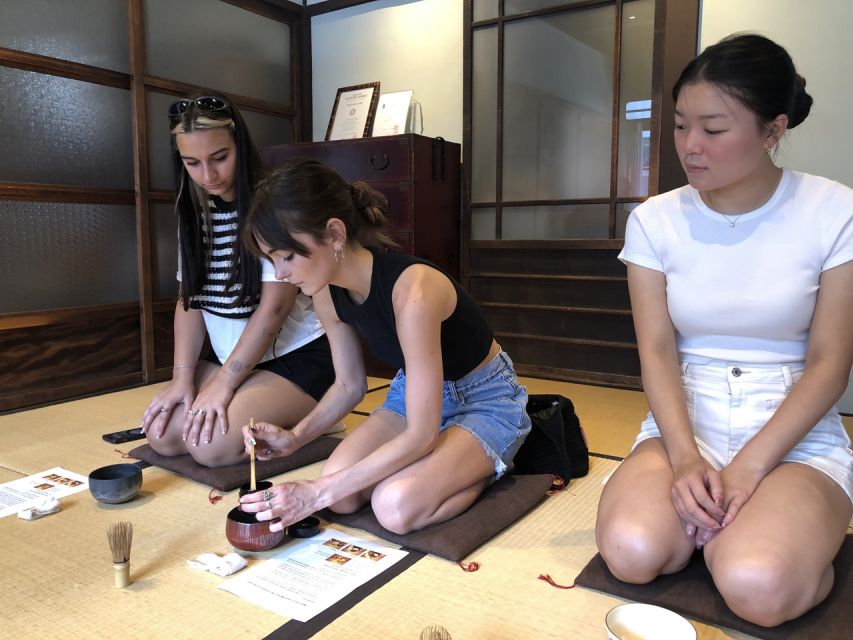
Forty-five minutes is short enough to fit into a busy Kyoto day. You could schedule it between sightseeing in central Kyoto, shopping, or a meal, though food and drinks are not allowed in the venue and the space is not suitable for eating.
The length also helps keep the ceremony approachable. A longer session might offer a fuller formal sequence, but it could feel demanding if you are unfamiliar with sitting quietly or following detailed etiquette.
You can expect the time to include the host’s explanation, a demonstration, your own tea preparation, the sweet, and conversation. Because the group may be smaller than the 10-person limit, some sessions can feel especially personal. One pair found themselves as the only participants and received very direct instruction.
The tradeoff is that the experience may leave you wanting more. You will learn the basic process and ideas behind tea ceremony, but not master its many layers. Think of it as a thoughtful introduction, not a complete study of Omotesenke practice.
Comfort, Etiquette, and Practical Details
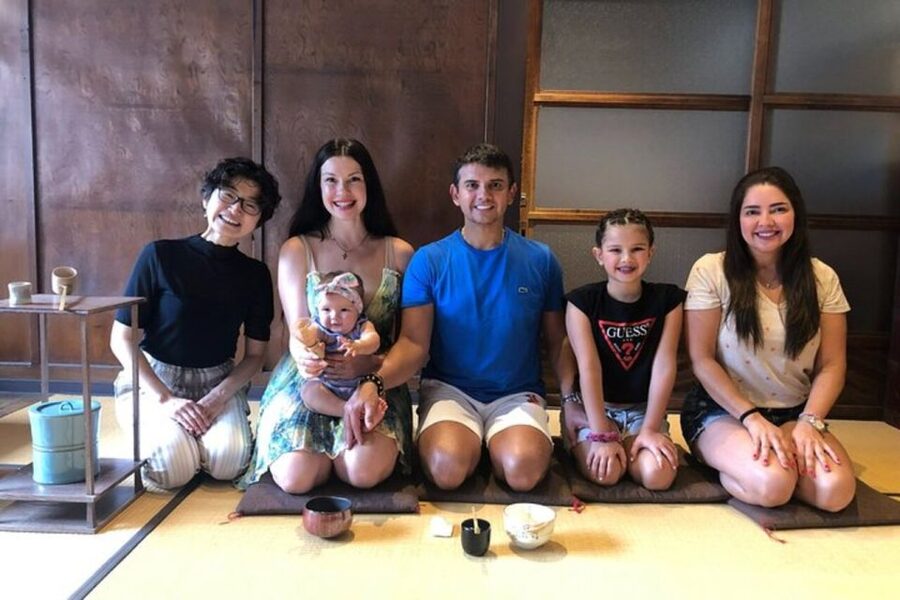
Wear ordinary comfortable clothes. A kimono is not provided, and there is no kimono or hair-setting package included. You should also avoid perfume and cologne, since strong scents can interfere with the aroma of matcha and affect the room for everyone.
Food, drinks, and bicycles are not allowed. The venue has limited room, so arriving early is not useful beyond the 10-minute window. Come ready to sit, listen, practice, and leave your snack for later.
The activity is wheelchair accessible. English is the listed teaching language, and the guides have been praised for speaking clearly and making non-Japanese-speaking visitors feel comfortable.
Cancellation is flexible: you can cancel up to 24 hours in advance for a full refund. You can also reserve now and pay later, which helps if your Kyoto schedule is still changing.
Who Will Enjoy This Tea Ceremony Most
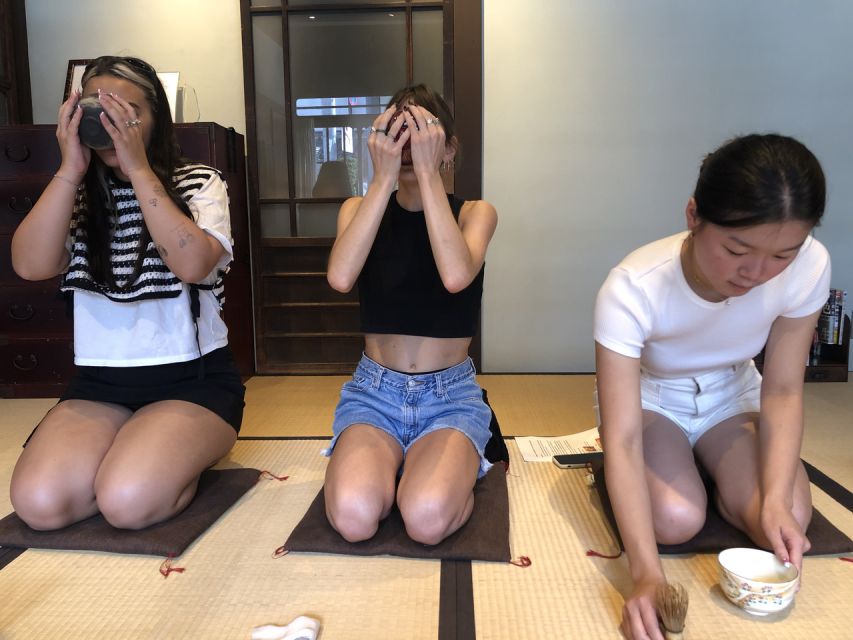
I would recommend this experience to first-time visitors who want a clear introduction to Japanese tea culture. You get the proper setting and traditions without the pressure of already knowing the rules.
It is also a good fit for:
- Solo visitors who enjoy meeting a small group
- Couples looking for a calm activity
- Families with children who can sit and listen
- Teenagers who prefer hands-on cultural activities
- Visitors who want an authentic souvenir connected to what they learned
- Anyone curious about matcha beyond its modern café image
It may not suit you if you want a full kimono photo session, a long formal ceremony, a large meal, or several different teas. It is also not the right choice if you dislike quiet activities or sitting still for part of the session.
My Verdict: Book It for a Thoughtful First Taste
I would book this tea ceremony if I wanted a short, well-explained cultural experience in Kyoto. The setting feels appropriate, the hands-on preparation gives the lesson purpose, and the small group format leaves room for real questions.
The best reason to go is not simply that you get to drink matcha. You learn why the preparation matters, try it yourself, and leave with a better understanding of Japanese hospitality and attention to detail.
Choose it early in your Kyoto visit if you want the lesson to shape how you notice tea, tatami, utensils, and quiet rituals elsewhere in Japan. Choose it near the end if you want a peaceful final memory. At $45, it is a solid buy for curious visitors, as long as you understand that this is a 45-minute introduction rather than a full formal ceremony.
FAQ
Where does the Kyoto tea ceremony take place?
It takes place at aeru gojo, inside a 100-year-old traditional Kyoto townhouse. The meeting point is in central Kyoto.
How do I find the meeting point?
From Karasuma-dori Street, turn at the corner with the Family Mart convenience store. Walk straight for one block and look for the aeru gojo sign beside Only Corporation, across from Zen Kyoto.
How long does the activity last?
The tea ceremony and matcha-making experience lasts 45 minutes.
How much does the experience cost?
The listed price is $45 per person.
Is the tea ceremony taught in English?
Yes. English-speaking tea masters lead the activity, and English is the listed language.
How many people can join?
The experience is limited to 10 participants, making it a small-group activity.
Do I get to make my own matcha?
Yes. After the demonstration, you prepare your own bowl of matcha using traditional utensils.
What is included in the price?
The price includes the tea ceremony experience, one cup of matcha, and Japanese traditional sweets.
Is a kimono included?
No. Kimono rental and hair setting are not included.
Can I cancel the booking?
Yes. You can cancel up to 24 hours before the scheduled time for a full refund. You can also reserve now and pay later.
Just added in Kyoto
- The “Golden Route” and Ancient Japan by DIAMIR Erlebnisreisen – 14-Day Tour★ 2.0 · 2 reviews
- Japan: Castles & Cuisine by G Adventures – 6-Day Kyoto to Osaka Tour★ 4.5 · 4 reviews
- Cycle Japan by Explore! – 13-Day Kyoto to Tokyo Tour★ 4.7 · 12 reviews
- Cycle Japan by Intrepid Travel – 11-Day Kyoto to Tokyo Tour★ 4.8 · 2 reviews
- Classic Japan by Intrepid Travel – 11-Day Kyoto to Tokyo Tour★ 4.4 · 14 reviews
- Ancient & Modern Japan 14-Day Tour by Exodus Adventure Travels★ 4.4 · 40 reviews
- 5 Day Cultural Adventure of Kyoto, Nara & Osaka by Tourist Journey★ 2.5 · 2 reviews
- 12 Days Kinosaki Onsen Escape: A Journey Through Japan’s Timeless Towns by UME Travel★ 4.8 · 5 reviews
Tea Ceremonies, compared.
Tea Ceremony in a Traditional Tea House in Kiyomizu
Read our review →
World Heritage Kyoto & Nara Uji Authentic Matcha Experience
Read our review →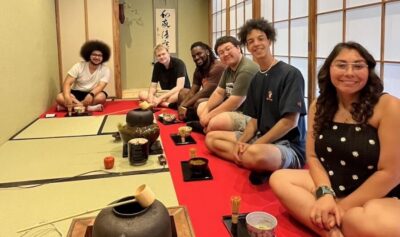
Browse the lists this tour appears in