
Reviewed · WORKSHOPS
Kyoto: Traditional Mini Umbrella Making Workshop
Small umbrella, big craft.
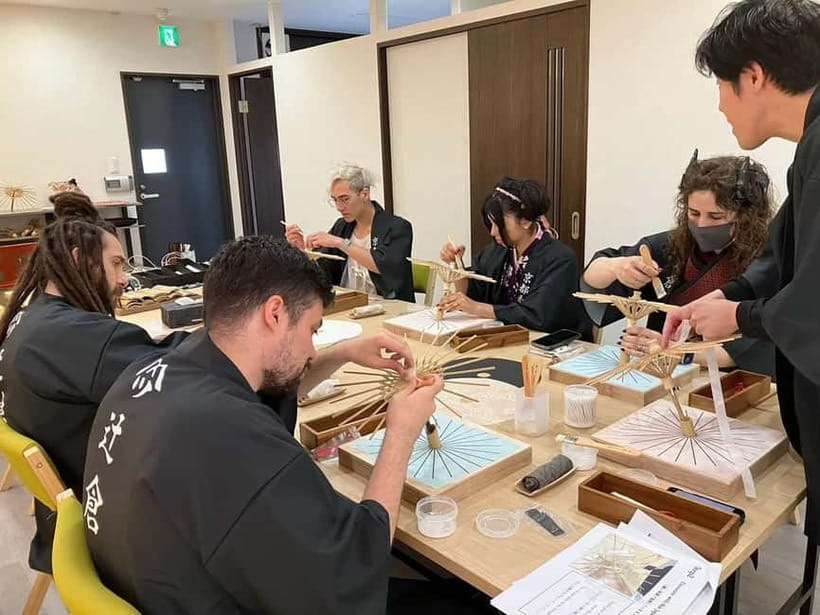
Kyoto’s traditional mini umbrella workshop gives you a rare chance to make a Hime Wagasa at Japan’s oldest umbrella shop, using genuine Japanese materials and guidance from patient Japanese and English-speaking artisans. I especially like the calm workshop setting, with traditional lighting and finished umbrellas around you, and the useful take-home package: your umbrella, a bamboo display stand, a decorative box, and a carry bag. The main consideration is time. Ninety minutes passes quickly, and the work needs care, so this is not a casual craft where you can rush through the steps.
I also like the location. The shop sits in central Kyoto, only two minutes north of the Shijo Kawaramachi intersection, close to one of the city’s main shopping areas. You can pair the class with a stroll through central Kyoto, though the price of $70 per person may feel high if you want only a simple souvenir rather than a hands-on cultural activity.
In This Review
- Key points to know before booking
- Why a tiny Japanese umbrella makes a memorable souvenir
- Entering the central Kyoto umbrella shop
- The 90-minute making process
- Patient instruction from Ai Takenaka and the workshop team
- Choosing your design and finishing the Wagasa
- What you take home for the $70 price
- Who will enjoy this Kyoto workshop most
- A thoughtful gift, not just a craft project
- Practical planning for your Kyoto day
- My verdict: book it if the making matters
- FAQ
- Where is the traditional mini umbrella workshop located?
- How much does the workshop cost?
- How long does the activity last?
- What kind of umbrella will I make?
- Are the craft materials included?
- What do I take home?
- Is instruction available in English?
- Is the workshop wheelchair accessible?
- Can children join the workshop?
- Can I cancel for a refund?
- Can a craftsman finish the umbrella for me?
Key points to know before booking
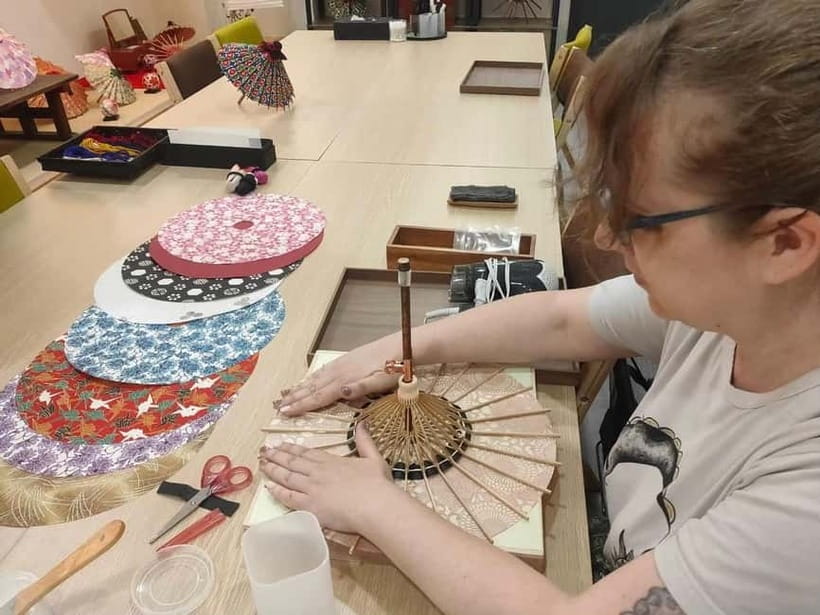
- Make a real mini Hime Wagasa: You work with genuine Japanese materials rather than assembling a generic tourist craft.
- Learn inside Japan’s oldest umbrella shop: The setting gives the activity a direct link to a long-running local trade.
- Expect careful, step-by-step work: The small umbrella requires attention to detail, but the instructors are praised for their patience.
- Take home a complete display piece: Your package includes a bamboo stand, decorative box, and carry bag.
- Meet near Shijo Kawaramachi: The workshop is only a two-minute walk north from this major central Kyoto intersection.
- Allow extra money for finishing: A craftsman can add final touches for an additional fee.
Why a tiny Japanese umbrella makes a memorable souvenir
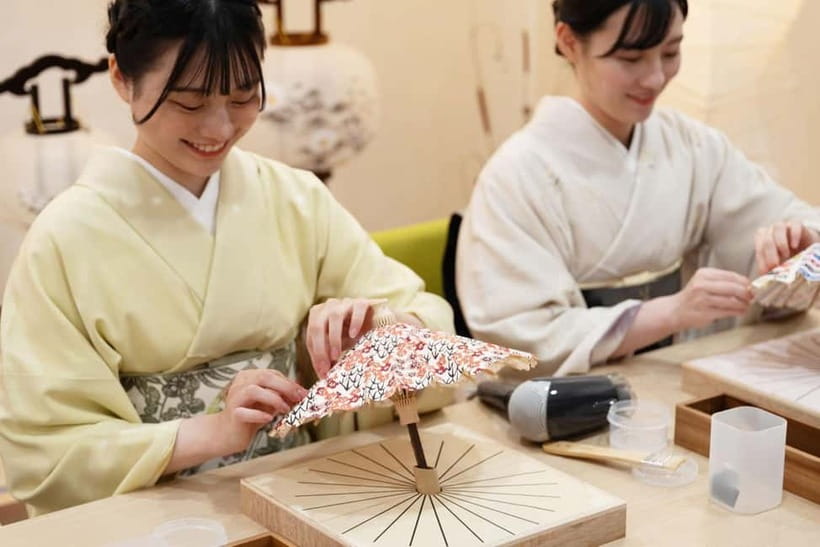
A Wagasa is not just a rain tool. In this workshop, the small umbrella becomes a compact piece of Japanese decorative art, with a shape and finish that reflect traditional making methods.
The miniature scale matters. A full-size umbrella would require far more time and skill, while the Hime Wagasa format lets you take part in the process during a 90-minute class. You still handle the materials and assemble the main parts, but you leave with something manageable to display at home.
I like this better than buying a ready-made object because the memory is attached to the making. You remember the choices, the careful movements, and the moment the separate pieces begin to look like an umbrella. The finished item can also be given as a gift, since the Wagasa is presented here as a symbol of happiness.
The workshop also gives you a useful glimpse into a trade that is easy to miss during a standard Kyoto sightseeing day. Temples, gardens, and food markets fill most itineraries. This class turns your attention to the hand skills behind a traditional Japanese object.
A few more options to weigh up in Kyoto
- PERFECT KYOTO 1-Day Bus Tour
★ 5.0 · 13,518 reviews - [Kyoto & Nara Day Tour] Sagano Scenic Railway & Nara Park & Fushimi Inari Taisha Thousand Torii Gates & Togetsukyo Bridge & Bamboo Grove & Kimono Forest (Departing from Osaka)
★ 4.9 · 10,942 reviews - Kyoto: Fushimi Inari, Kinkakuji, Bamboo Grove 1 Day Bus Tour
★ 4.8 · 4,316 reviews
Entering the central Kyoto umbrella shop
The meeting point is practical for a day in the city. From the famous Shijo Kawaramachi intersection, walk north for about two minutes. That puts you close to major shopping streets and makes the workshop easy to combine with time in central Kyoto.
Inside, the mood is quiet and carefully arranged. Authentic Japanese umbrellas and traditional lighting help create a setting suited to detailed handwork. I would not expect a large production studio or a loud group attraction. The supplied information presents it as a serene workshop where you can focus on the materials and instructions.
That setting is part of the value. You are not simply sitting in a classroom with a printed craft kit. You are working in a place decorated with the objects connected to the trade, with artisans nearby to guide you.
The central location has one small trade-off. Shijo Kawaramachi is one of Kyoto’s busiest shopping areas, so the streets around the shop can be active. Once inside, though, the class is designed to offer a calmer break from the city.
The 90-minute making process
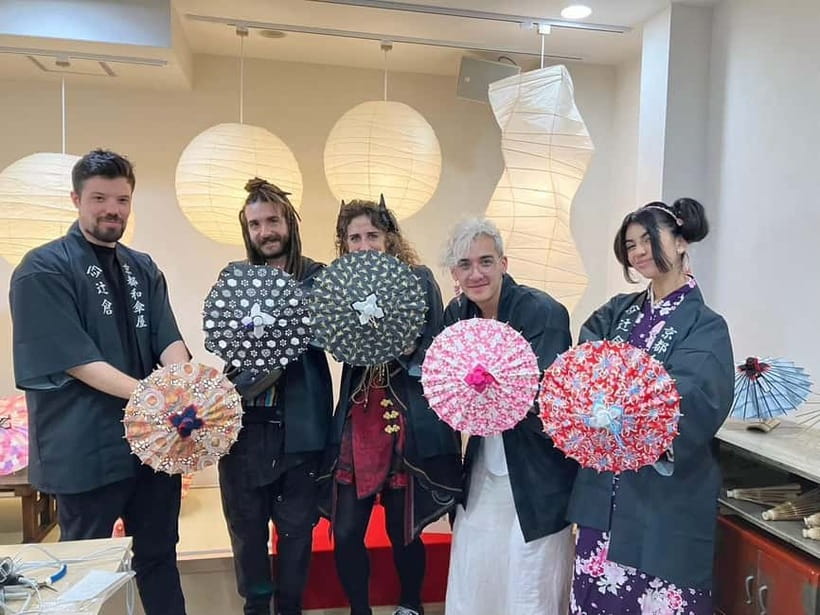
The class lasts 90 minutes, a useful length for a Kyoto itinerary. It is long enough to give you a real task, but short enough to fit before dinner, shopping, or another central Kyoto activity.
You begin by learning about the parts and methods used to create a traditional mini umbrella. The instructors guide you through the work rather than leaving you to figure out an unfamiliar kit. English instruction is available, along with Japanese.
The exact sequence of each person’s work may depend on the class and the design chosen, but the activity centers on shaping and assembling the umbrella from genuine Japanese materials. You can expect to handle each component with care as the form takes shape.
This is a detail-focused craft. One participant described the process as requiring a lot of attention, while also praising the friendly guidance. That is useful advice: you should arrive ready to slow down and follow instructions. If you prefer quick, low-effort activities, the class may feel more demanding than expected.
The reward comes when the umbrella begins to look complete. What first appears to be a collection of small parts turns into a decorative Wagasa that reflects your own choices. The instructors’ role is important here. Several class comments praise their patience, warmth, and ability to show the best way to work with the materials.
Patient instruction from Ai Takenaka and the workshop team
Ai Takenaka is specifically praised for being friendly and helpful. Another class account describes an instructor patiently demonstrating how to work with the materials, and several people point to the calm, encouraging teaching style as a major strength.
That matters because traditional craft can be intimidating at first. You may worry about making a mistake or handling the pieces incorrectly. Patient instruction lets you concentrate on the work instead of feeling rushed.
One particularly strong account describes the class as a privilege because of the instructor’s guidance and manner. Another says the activity helped the participant focus completely on the task. Those details suggest that the class works well for people who want a quiet, absorbing activity rather than a lecture with only a token hands-on element.
The teaching also appears to suit mixed-age groups. One group of nine included five children between ages three and nine, and the class was described as accommodating. Still, the official minimum age is six, so families should not assume that children under six can take part as regular participants.
You may also find that different instructors bring different personalities to the session. The consistent point is the patient, helpful approach, rather than one scripted performance.
A completely different kind of day out:
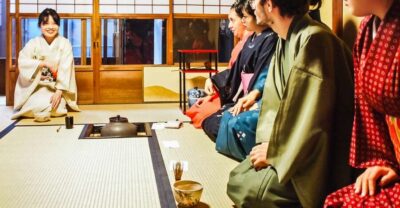
- Kyoto: Tea Ceremony in a Traditional Tea House in Kiyomizu
★ 4.9 · 3,519 reviews - Kyoto: Gion Make Your Own Chopsticks with Engraving Option
★ 5.0 · 3,465 reviews - Kyoto Nara Day Trip │ Kiyomizu-dera Temple + Fushimi Inari-taisha Shrine + Nara Park (Departing from Osaka/Kyoto)
★ 4.7 · 3,408 reviews - Kyoto Geisha Walking Tour: Gion District & Hidden Gems
★ 4.7 · 3,273 reviews
Choosing your design and finishing the Wagasa
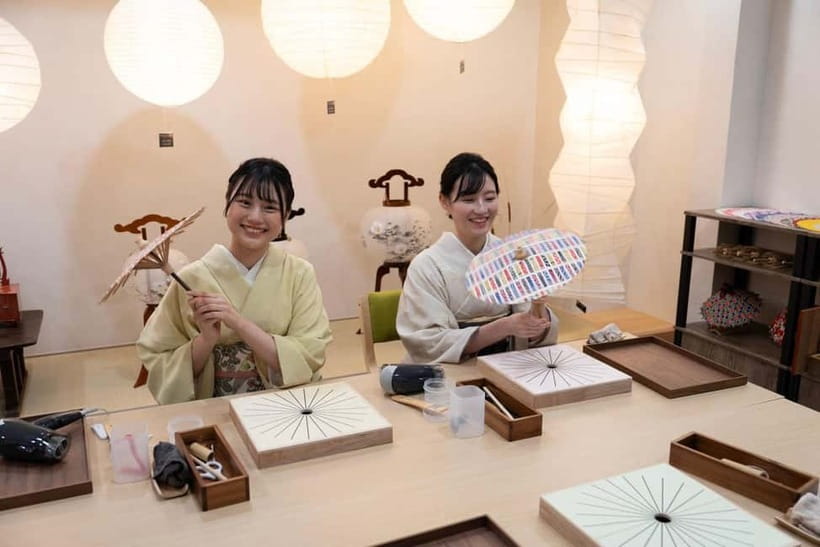
The workshop lets you create a personalized mini umbrella, so the finished piece is not intended to look exactly like everyone else’s. The design process gives you a chance to express your own taste while staying within the forms of traditional Japanese umbrella making.
The information provided does not specify a full menu of colors, patterns, or design options. I would check the available choices when booking or at the start of the session if a particular color matters to you. That way, you can enjoy the creative part without arriving with an expectation the workshop cannot meet.
After the main work, you have the option of paying an additional fee for a craftsman to add finishing touches. This is worth considering if you want the most polished presentation or plan to give the umbrella as a special gift.
The optional finishing service also helps explain the difference between making the object yourself and having an artisan complete it. The workshop gives you the satisfaction of shaping and assembling the main piece. The extra service lets you add professional final details without removing your role in the process.
If you are watching your budget, treat the finishing as optional rather than part of the $70 price. The listed fee includes the materials and take-home items, but not this added service.
What you take home for the $70 price
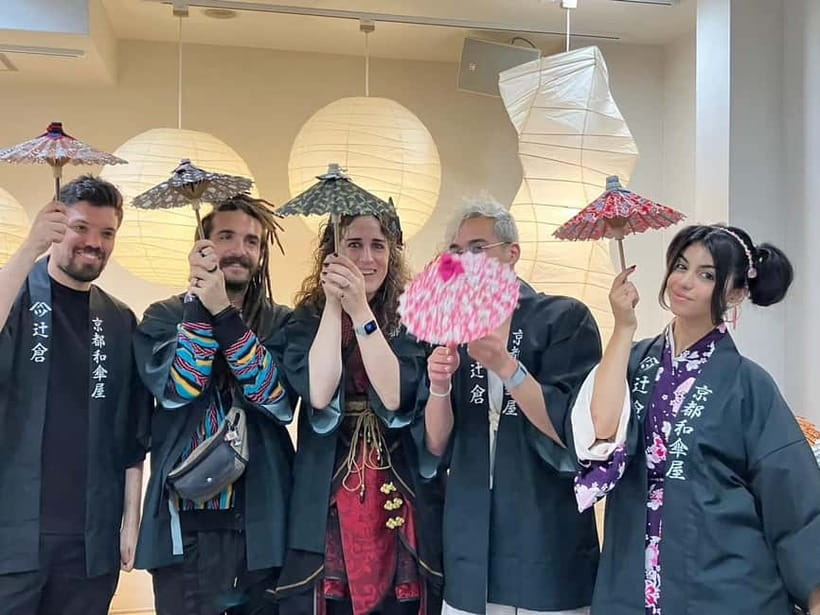
The workshop costs $70 per person. That is more than you would pay for an ordinary souvenir, but the comparison is not quite fair. You are paying for 90 minutes of instruction, access to genuine Japanese materials, time inside a historic umbrella-making business, and a finished object connected to your own effort.
Your package includes:
- All materials for making a Hime Wagasa
- A bamboo umbrella stand
- A decorative box
- A carry bag for the umbrella
The bamboo stand is a particularly useful inclusion. Without it, a small decorative umbrella might be awkward to display once you return home. With the stand, the piece can sit on a shelf or table as a visible reminder of your Kyoto visit.
The box and carry bag also make the souvenir easier to protect and transport. You do not need to improvise packaging after the class, which is helpful if Kyoto is only one stop on a longer Japan trip.
I see the price as fair for someone who values participation, instruction, and a well-presented keepsake. It is less compelling for someone who wants the cheapest possible memento or who has little interest in crafts. The strongest value comes when you enjoy the making as much as the finished umbrella.
Who will enjoy this Kyoto workshop most
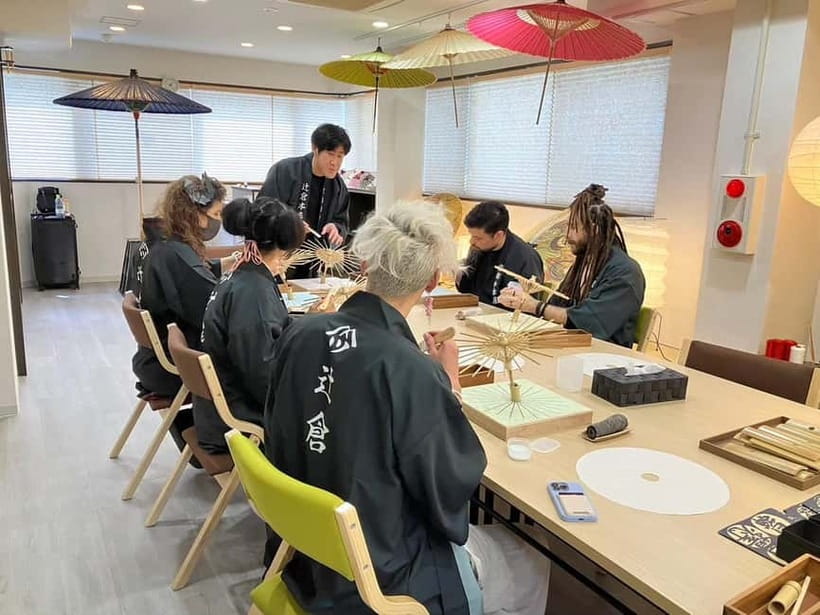
I would recommend the class to adults, couples, families with children six and older, and anyone looking for a slower activity between sightseeing stops.
It suits you especially well if you:
- Like traditional Japanese arts and handcrafts
- Want a souvenir you made yourself
- Enjoy careful work that rewards concentration
- Need an indoor activity in central Kyoto
- Want a gift with a clear connection to Japanese culture
- Prefer a small cultural experience to another shopping stop
The class can also work well for a group. A group of nine was accommodated, including several children, which suggests that the workshop can handle more than a single couple or small family. The available information does not give a maximum group size, so larger parties should confirm before booking.
I would be more cautious about bringing very young children. Children under six are not considered suitable for the activity, and the small, detailed work may test the patience of younger participants even when they meet the minimum age.
The workshop is wheelchair accessible, which makes it a practical option for visitors who need accessible activities. Specific details about the route inside the building or seating arrangements are not provided, so you may want to confirm any particular access needs in advance.
A thoughtful gift, not just a craft project
The Wagasa has a strong gift appeal. Its connection with happiness gives the finished umbrella a meaning beyond decoration, and the box and carry bag make it ready to present.
You could make one for yourself, of course. That is probably the best choice if you want to remember the actual experience. But the workshop also works for a parent, partner, friend, or family member who appreciates Japanese design and handmade objects.
The personal element is the key. A shop-bought umbrella may be more perfectly finished, but your workshop piece carries the story of time spent in Kyoto and the decisions you made during the class. That makes it a more personal gift, even if the final result has small signs of a beginner’s hand.
If you want a flawless display object, pay for the optional craftsman finishing service. If you prefer the honest pleasure of making something yourself, keep the result as it is.
Practical planning for your Kyoto day
Because the shop is near Shijo Kawaramachi, you can place the class in the middle of a central Kyoto day. The short walk from the intersection makes it easy to reach from nearby shopping areas, though you should still check the available start times before building your schedule.
The 90-minute duration is fixed, so leave enough time to arrive, settle in, and complete the work without watching the clock. I would avoid scheduling another activity that begins immediately afterward, especially if you are traveling with children or a larger group.
The class is offered in Japanese and English. That language combination is important for a craft based on precise hand movements. You need to understand each step, not just hear a general explanation.
Smoking, alcohol, drugs, and explosive substances are not allowed. These rules are straightforward and fit the careful indoor setting.
You can cancel up to 24 hours before the activity for a full refund. A reserve-now-and-pay-later option is also available, which helps if your Kyoto schedule is still changing. These policies make the booking less risky, but you still need to check starting times and availability for your chosen date.
My verdict: book it if the making matters
I would book this workshop if you want an authentic, hands-on Kyoto memory and have an interest in traditional Japanese design. The patient teaching, central location, genuine materials, bamboo stand, and protective packaging give the $70 price a solid purpose.
I would skip it if you want a fast souvenir, dislike detail work, or have a packed schedule with no room for 90 focused minutes. The class is not simply a photo stop. You have to pay attention and take part.
For families, check the age rule carefully. For gift buyers, consider the optional artisan finishing service. For anyone who wants a quiet cultural activity with a useful keepsake, this is one of the more personal ways to spend part of an afternoon in Kyoto.
FAQ
Where is the traditional mini umbrella workshop located?
The workshop is in central Kyoto, about a two-minute walk north of the Shijo Kawaramachi intersection.
How much does the workshop cost?
The price is $70 per person.
How long does the activity last?
The workshop lasts 90 minutes.
What kind of umbrella will I make?
You will make a Hime Wagasa, a traditional Japanese mini umbrella.
Are the craft materials included?
Yes. All materials needed to make your Hime Wagasa are included.
What do I take home?
You take home your mini umbrella, a bamboo umbrella stand, a decorative box, and a carry bag.
Is instruction available in English?
Yes. The instructors provide guidance in Japanese and English.
Is the workshop wheelchair accessible?
Yes. The activity is listed as wheelchair accessible.
Can children join the workshop?
Children under six are not considered suitable for the activity. The minimum age is six.
Can I cancel for a refund?
Yes. You can cancel up to 24 hours in advance for a full refund.
Can a craftsman finish the umbrella for me?
Yes. You can request additional finishing touches from a craftsman for an extra fee.
Just added in Kyoto
- The “Golden Route” and Ancient Japan by DIAMIR Erlebnisreisen – 14-Day Tour★ 2.0 · 2 reviews
- Japan: Castles & Cuisine by G Adventures – 6-Day Kyoto to Osaka Tour★ 4.5 · 4 reviews
- Cycle Japan by Explore! – 13-Day Kyoto to Tokyo Tour★ 4.7 · 12 reviews
- Cycle Japan by Intrepid Travel – 11-Day Kyoto to Tokyo Tour★ 4.8 · 2 reviews
- Classic Japan by Intrepid Travel – 11-Day Kyoto to Tokyo Tour★ 4.4 · 14 reviews
- Ancient & Modern Japan 14-Day Tour by Exodus Adventure Travels★ 4.4 · 40 reviews
- 5 Day Cultural Adventure of Kyoto, Nara & Osaka by Tourist Journey★ 2.5 · 2 reviews
- 12 Days Kinosaki Onsen Escape: A Journey Through Japan’s Timeless Towns by UME Travel★ 4.8 · 5 reviews
Workshops, compared.

Sushi Making Tokyo Roll and Authentic Japanese Sushi Class
Read our review →
Gion Make Your Own Chopsticks with Engraving Option
Read our review →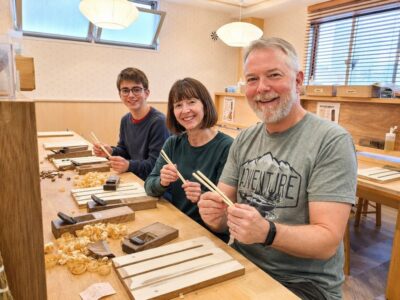

Roll and Authentic Sushi Making Class in Asakusa
Read our review →
Ramen Cooking Class at Ramen Factory in Kyoto
Read our review →
Tokyo Asakusa Chopsticks Workshop: Make Your Own Pair
Read our review →
Ring Making Workshop : Vintage Japanese Coin Ring
Read our review →Browse the lists this tour appears in