
Reviewed · CASTLES AND HISTORIC SITES
Nijo Castle and Imperial Palace Visit with Guide
Kyoto’s power story fits neatly into one morning. This 2.5-hour tour links Nijo Castle, the shogun’s Kyoto base, with the Kyoto Imperial Palace, where the emperor’s court held sway. I like the clear historical contrast and the personal attention from a small group guide. The main drawback is the brisk pace, since each major site gets about an hour.
I also like that admission and public transportation are included, so you do not need to sort out tickets or navigate between the sites alone. Guides such as Mia, Mie, Choko, and Mike have earned warm praise for clear English, humor, visual aids, and thoughtful answers. Just remember that the tour starts at Nijo Castle and ends at the Imperial Palace, not where you began.
In This Review
- Key points to know before booking
- Why these two sites belong together
- Starting at Nijo Castle’s great gate
- What makes Nijo Castle more than a pretty stop
- The public transit transfer to the palace
- Kyoto Imperial Palace and the imperial story
- The guides are the heart of the experience
- Group size, timing, and practical value
- Who should book this tour
- Should you book the Nijo Castle and Imperial Palace tour?
- FAQ
- How long does the tour last?
- Where does the tour begin?
- Where does the tour end?
- Is the tour private?
- Are entrance fees included?
- Is public transportation included?
- Does the tour offer morning and afternoon departures?
- Is hotel pickup included?
- What happens if the weather is poor or I need to cancel?
Key points to know before booking
- Two sides of Kyoto’s political story: See the Tokugawa shogunate at Nijo Castle, then the imperial world at Kyoto Imperial Palace.
- A small, personal format: The tour is described as private for your party, with a small group size of fewer than eight in the itinerary and a maximum of 11 overall.
- Mia is a frequent guide name: She is praised for humor, visual aids, clear English, and her ability to explain symbolism without drowning you in dates.
- Public transit is part of the service: Your guide leads the transfer from the castle to the palace, and the transport cost is included.
- The castle interior is a major highlight: You go inside Nijo Castle, not just around its gardens and outer walls.
- Comfortable shoes matter: Both sites involve walking, and the tour moves at a steady pace.
Why these two sites belong together
Kyoto can sometimes feel like a collection of beautiful buildings without a clear thread tying them together. This tour gives you that thread: shogun and emperor, military rule and court tradition, practical power and ceremonial power.
Nijo Castle helps explain the Edo period, when the Tokugawa shoguns controlled Japan. Kyoto Imperial Palace then gives you a look at the older imperial center and the transfer of authority connected with Emperor Meiji. The guide’s role is important here because the buildings do not always explain themselves. A hall, gate, garden, or arrangement of rooms can carry political meaning that is easy to miss on your own.
I like this pairing because the contrast is more useful than visiting either site in isolation. At Nijo Castle, you learn about the shogun’s authority in Kyoto. At the palace, you get a better sense of the imperial family and the court tradition that continued alongside military rule.
The tour costs $79.18 per person. That is not the cheapest way to see these places, but the price includes both entrance fees, public transportation between the sites, and an English-speaking guide. If you would otherwise pay for two admissions and then hire a guidebook or audio guide, the gap becomes smaller.
The real value comes from interpretation. Several guides are praised for explaining the symbolism at both venues, the workings of the shogun’s government, and the change in power linked with Emperor Meiji. If Japanese political history feels confusing, that context can save you hours of piecing things together later.
More Castles and Historic Sites in Kyoto
- Kyoto Samurai Experience
★ 5.0 · 1,294 reviews - Kyoto: Nijo-jo Castle and Ninomaru Palace Guided Tour
★ 4.7 · 1,020 reviews - Kyoto: Kendo and Samurai Experience with Uniform and Gear
★ 4.9 · 815 reviews
Starting at Nijo Castle’s great gate
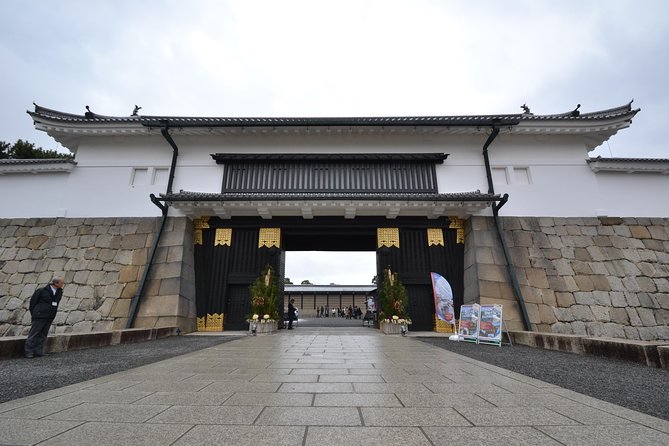
You meet your guide in front of the large white main gate at Nijo Castle. This is a practical meeting point, and one rating specifically describes it as easy to find. The tour offers a morning or afternoon start, which helps you fit it around other Kyoto plans.
Nijo Castle receives about one hour of guided attention. That is enough time for a focused introduction, but it is not enough for a slow, complete exploration of every corner. You should arrive ready to keep moving and listen closely.
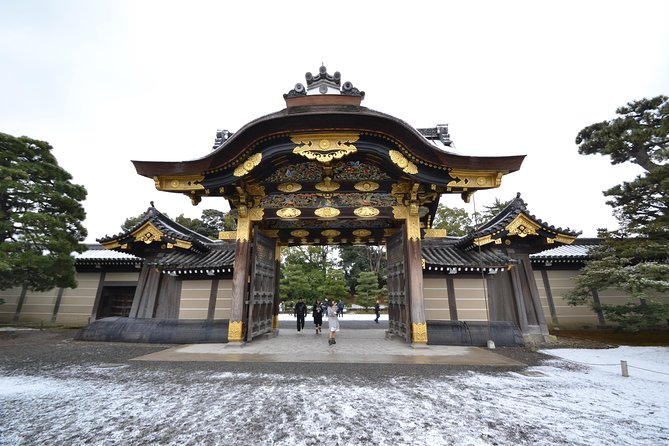
The castle is especially valuable because you enter the historic buildings. The interior gives the guide something concrete to explain: where important meetings took place, how the shogun used the space, and how design choices communicated rank and authority.
The tour also brings out the human side of the political story. Guides have explained the figures connected with the Tokugawa shogunate through personal details and anecdotes, not just a chain of names and dates. That approach can make the period easier to follow, especially if your familiarity with Japanese history begins and ends with television drama.
If you watched Shogun, the castle may feel especially rewarding. The connection is not that the show recreates this exact visit, but the tour helps you understand the world of military rulers, formal meetings, hierarchy, and political theater that the story draws upon.
What makes Nijo Castle more than a pretty stop
Nijo Castle is attractive, but beauty is only part of the point. The guide helps you read the building as a statement of power.
You may hear about the shogun’s meetings and the places used for official business. You may also learn why particular features were placed where they were and what they signaled to people entering the castle. One guide used visual aids to make these ideas easier to grasp, a useful touch when a historical arrangement is hard to understand from the room itself.
I particularly value this kind of explanation because castles can blur together after a few days of Japanese sightseeing. Here, the focus is not simply on taking photographs. You are learning how the building worked as a political stage.
The gardens beside the historic structures add another layer. They give you a chance to pause and see how architecture and outdoor space were arranged together. Still, the hour passes quickly, so do not expect a long garden walk or much unstructured time.
Wear shoes suited to walking. The tour includes the castle interior, the grounds, the transfer, and the palace grounds, so this is not a sit-down history lesson with occasional sightseeing.
The public transit transfer to the palace
After Nijo Castle, you travel with the guide to Kyoto Imperial Palace by public transportation. The fare is included, and the guide handles the transfer, which removes one small but real travel headache.
This middle part of the tour matters more than it may seem. Moving between the sites gives your guide a natural moment to connect the two stories. Instead of treating Nijo Castle and the palace as separate attractions, the tour explains how military and imperial authority existed in relation to one another.
The transfer also makes the tour feel like a Kyoto experience rather than a ride between two gates. You use the city’s public transport with someone who knows where you are going. That is useful if you are still finding your way around Kyoto.
The timing is not designed for wandering or shopping along the route. The purpose is to reach the second site efficiently and preserve the one-hour visit there. If you prefer to set your own pace, stop for snacks, or linger at every garden view, an independent visit may suit you better.
A completely different kind of day out:
- PERFECT KYOTO 1-Day Bus Tour
★ 5.0 · 13,518 reviews - [Kyoto & Nara Day Tour] Sagano Scenic Railway & Nara Park & Fushimi Inari Taisha Thousand Torii Gates & Togetsukyo Bridge & Bamboo Grove & Kimono Forest (Departing from Osaka)
★ 4.9 · 10,942 reviews - Kyoto: Fushimi Inari, Kinkakuji, Bamboo Grove 1 Day Bus Tour
★ 4.8 · 4,316 reviews - Kyoto: Tea Ceremony in a Traditional Tea House in Kiyomizu
★ 4.9 · 3,519 reviews
Kyoto Imperial Palace and the imperial story
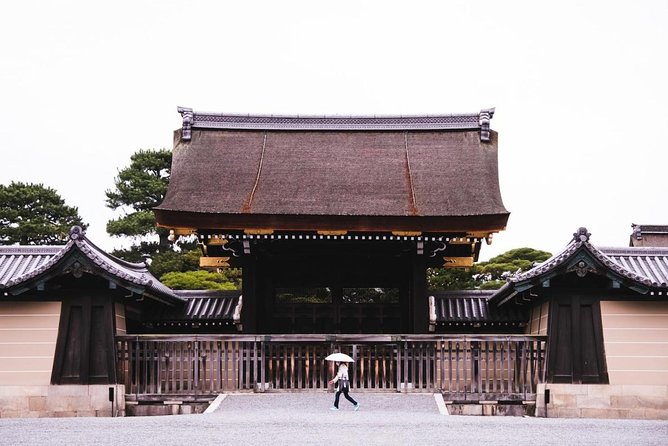
The second guided stop lasts about one hour at Kyoto Imperial Palace. The tour ends in front of the palace, within Kyoto Gyoen National Garden.
Here, the emphasis shifts from the shogun’s military government to the imperial family, court life, and the changes that followed the transfer of power to Emperor Meiji. Guides have been praised for explaining the emperor’s family and descendants, as well as the relationship between the older court tradition and the later political shift.
The palace can be difficult to understand without context. Its significance is not only in what you see, but in what happened there and what the setting represented. A strong guide helps you connect the formal grounds and buildings with the people and institutions that used them.
You can expect another structured walk rather than a free afternoon in the garden. The setting is calm and spacious, but the tour still has a schedule to keep. Since the day’s two sites are large, the guide must choose the most useful areas and ideas.
One important caution comes from the tour’s operating conditions: the Imperial Palace may close for an event. In one case, the castle visit continued, but the palace portion could not take place. The experience still received a positive assessment, yet you should understand that historic sites can be affected by official functions or closures.
The guides are the heart of the experience
The strongest part of this tour is the guide. The names most often praised are Mia and Mie, with Choko and Mike also receiving positive comments. Guide assignments can vary, so you should not assume one particular person will lead your departure.
Mia is repeatedly described as warm, funny, animated, and well prepared. Her style seems to suit people who want serious history without a lecture that never ends. She explains the Tokugawa period and the shift toward imperial rule, then makes room for questions.
Mie is praised for perfect or very clear English, visual aids, and a good sense of humor. Choko is noted for friendly service, strong command of the site history, and helpful answers. Mike is described as offering a wealth of information about both shogun and imperial history.
The common thread is balance. The best guide does not simply recite dates. You get explanations of symbolism, political figures, cultural customs, and small details you might miss on your own. At the same time, the guides seem willing to adjust when you ask a specific question.
Some guide recommendations even include restaurant suggestions, including one for Kobe beef. Treat that as a pleasant extra rather than a promised part of the tour.
Group size, timing, and practical value
The experience is presented as a private tour for you and your party, while the detailed schedule describes a small group of fewer than eight people. The additional information gives a maximum of 11 participants. That wording is worth noting because the exact group size may depend on the departure.
Even with several people, this is far more personal than a large coach tour. You can hear the guide more easily, ask questions, and keep a closer pace through the buildings. If your group ends up being the only one booked, you may receive an especially personal visit, but that is not guaranteed.
The total duration is about two hours and 30 minutes. The two guided site visits are listed at one hour each, with the remaining time covering the transfer and movement through the locations.
Morning and afternoon options make this easy to place in a Kyoto schedule. You might use it early in the day before visiting another central Kyoto sight, or choose the afternoon after a quieter morning. Food and drinks are not included, and there is no hotel pickup or drop-off.
The tour begins at Nijo Castle, located at 541 Nijojocho in Nakagyo Ward. It ends at Kyoto Gyoen National Garden, in front of the Imperial Palace. Plan your next activity from the palace side of central Kyoto, not from Nijo Castle.
Who should book this tour
I would choose this tour if you want historical context but do not want to spend hours reading before your visit. It is especially useful for first-time visitors to Kyoto, families with different levels of interest, and anyone curious about the shogun era or the imperial family.
It also suits you if you like asking questions. The guides are praised for answering specific points rather than forcing everyone through a fixed speech.
You may prefer independent sightseeing if you want to spend half a day at either site, take photographs at your own pace, or avoid a scheduled transfer. The one-hour limit at each stop is efficient, but it can feel short if you enjoy careful architectural study.
Good walking shoes are a must. Most people can take part, and service animals are allowed. The tour operates near public transportation, but hotel transfers are not included.
Cancellation is free up to 24 hours before the start time. Changes or cancellations inside that window are not refunded, and poor weather may lead to a new date or a full refund.
Should you book the Nijo Castle and Imperial Palace tour?
Book it if you want the two sites explained as one story, especially the contrast between Tokugawa military rule and imperial tradition. At $79.18, the cost is fair for a small guided visit that includes entry and public transit, provided you value interpretation more than free time.
I would be more cautious if you dislike fixed schedules or want a long garden visit. For most first-time Kyoto visitors, though, this is a practical way to cover two major historic sites in a short window, with a guide who can make the politics, buildings, and symbolism easier to understand.
FAQ
How long does the tour last?
The experience lasts approximately two hours and 30 minutes. Each main site receives about one hour of guided touring, with the remaining time used for the transfer and movement between locations.
Where does the tour begin?
The meeting point is in front of the main gate of Nijo Castle at 541 Nijojocho, Nakagyo Ward, Kyoto, 604-8301, Japan.
Where does the tour end?
The tour ends in front of Kyoto Imperial Palace in Kyoto Gyoen National Garden at 3 Kyotogyoen, Kamigyo Ward, Kyoto, 602-0881, Japan.
Is the tour private?
It is described as a private tour for you and your party. The schedule also refers to a small group of fewer than eight people, while the stated maximum is 11 participants.
Are entrance fees included?
Yes. Admission to both Nijo Castle and Kyoto Imperial Palace is included in the tour price.
Is public transportation included?
Yes. Public transportation used during the transfer from Nijo Castle to Kyoto Imperial Palace is included.
Does the tour offer morning and afternoon departures?
Yes. You can choose between a morning tour and an afternoon tour.
Is hotel pickup included?
No. Hotel pickup and drop-off are not included. You must reach the Nijo Castle meeting point yourself.
What happens if the weather is poor or I need to cancel?
You can cancel up to 24 hours before the start time for a full refund. If poor weather causes the tour to be canceled, you will be offered another date or a full refund.
Just added in Kyoto
- The “Golden Route” and Ancient Japan by DIAMIR Erlebnisreisen – 14-Day Tour★ 2.0 · 2 reviews
- Japan: Castles & Cuisine by G Adventures – 6-Day Kyoto to Osaka Tour★ 4.5 · 4 reviews
- Cycle Japan by Explore! – 13-Day Kyoto to Tokyo Tour★ 4.7 · 12 reviews
- Cycle Japan by Intrepid Travel – 11-Day Kyoto to Tokyo Tour★ 4.8 · 2 reviews
- Classic Japan by Intrepid Travel – 11-Day Kyoto to Tokyo Tour★ 4.4 · 14 reviews
- Ancient & Modern Japan 14-Day Tour by Exodus Adventure Travels★ 4.4 · 40 reviews
- 5 Day Cultural Adventure of Kyoto, Nara & Osaka by Tourist Journey★ 2.5 · 2 reviews
- 12 Days Kinosaki Onsen Escape: A Journey Through Japan’s Timeless Towns by UME Travel★ 4.8 · 5 reviews
Castles and Historic Sites, compared.

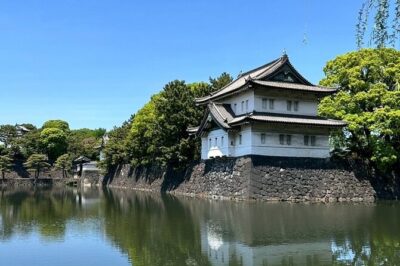
Imperial Palace and Shogun Historical Walking Tour
Read our review →
Tokyo Castle & Imperial PalaceーShogun Walking Tour
Read our review →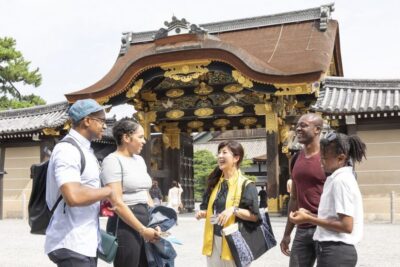
Nijo-jo Castle and Ninomaru Palace Guided Tour
Read our review →
Samurai Ninja Museum Guided tour and Experience
Read our review →Browse the lists this tour appears in