
Reviewed · CASTLES AND HISTORIC SITES
Ninja 1-hour Hands-on Lesson by Japanese master in Kyoto -Entry
Ninja skills are harder than they look. This lively one-hour class at NINJA DOJO and STORE KYOTO gives you a quick, hands-on introduction to ninja training, from breathing and silent walking to sword handling, shuriken throwing, kunai practice, and blowgun shooting. You also put on rented ninja clothing, explore a trick-house feature, and train with an English-speaking Japanese sensei.
I especially like the small maximum group of six, which gives you more time to practice instead of watching from the back. The instructors also receive strong praise for their humor, patience, and clear English. The main drawback is the short format: you try many activities, but anyone seeking a serious or detailed study of ninja history may find the lesson too light.
In This Review
- What makes this Kyoto ninja lesson worth your hour
- Entering the dojo in central Kyoto
- Starting with Kuji-In, breathing, and the ninja walk
- Learning the sword before trying the weapons
- Throwing shuriken, kunai, and other tools
- Why the small group makes a difference
- What the hour feels like for families
- How authentic is the experience?
- Price, value, and the one-hour limit
- Practical points before you book
- Should you book this ninja class?
- FAQ
- Where does the ninja lesson take place?
- How long does the ninja experience last?
- What activities are included?
- Are ninja clothes provided?
- How many people can join the class?
- Can I cancel for a full refund?
What makes this Kyoto ninja lesson worth your hour
- You practice several classic ninja skills, including sword movements, shuriken, kunai, and blowgun techniques.
- The class begins with ninja fundamentals, such as breathing, meditation, and the quiet ninja walk.
- Ninja clothes are provided, making the lesson more visual and fun for families and groups.
- The group is limited to six people, so you get direct instruction and room to practice.
- The dojo includes trick-house features, including secret rooms and a floor with a spike-style challenge.
- English-speaking Japanese instructors explain the activities in a friendly, accessible way.
Entering the dojo in central Kyoto
The class begins at NINJA DOJO and STORE KYOTO, at 528 Hakurakutenchō, second floor, in Kyoto’s Shimogyo Ward. The area is near public transportation, and the activity ends at the same meeting point, so you do not need to arrange a separate return transfer.
The location matters because this is an easy activity to fit between larger Kyoto sights. You can spend the morning at temples, take a break for lunch, and use this class as a compact indoor experience rather than giving up half a day to a distant attraction. The dojo also offers air conditioning, a welcome feature during hot Kyoto weather.
Confirmation arrives when you book, and a mobile ticket is accepted. I would still allow enough time to find the building and reach the second floor. The meeting address includes a building number and floor, so check those details before setting out.
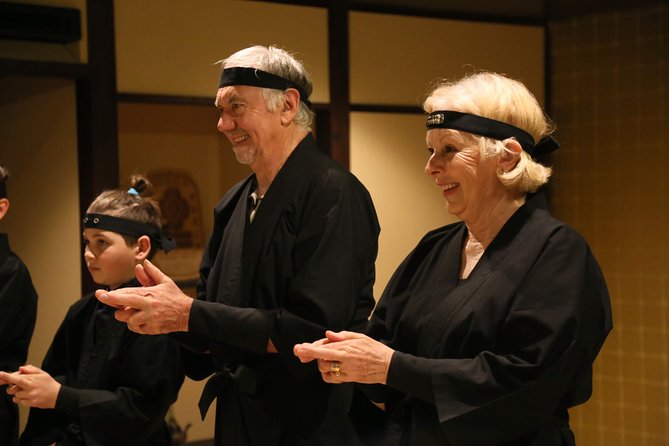
Once inside, you receive ninja clothing to wear during the lesson. This is more than a costume photo opportunity. Changing clothes helps set the tone, especially for children, and gives the class a clear beginning. Adults may arrive expecting a cheesy tourist activity, but the practical instruction starts to change that mood quickly.
More Castles and Historic Sites in Kyoto
- Kyoto Samurai Experience
★ 5.0 · 1,294 reviews - Kyoto: Nijo-jo Castle and Ninomaru Palace Guided Tour
★ 4.7 · 1,020 reviews - Kyoto: Kendo and Samurai Experience with Uniform and Gear
★ 4.9 · 815 reviews
Starting with Kuji-In, breathing, and the ninja walk
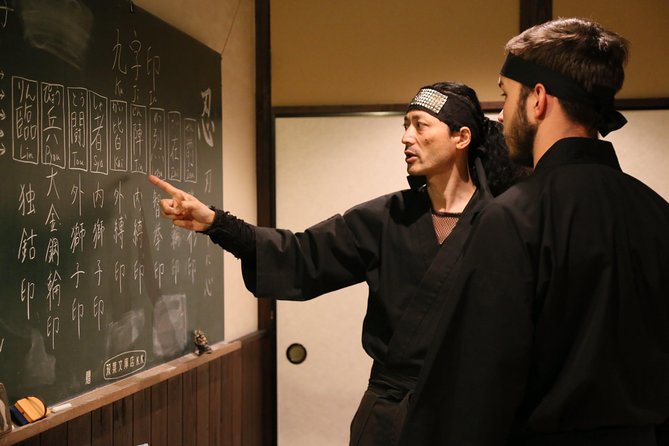
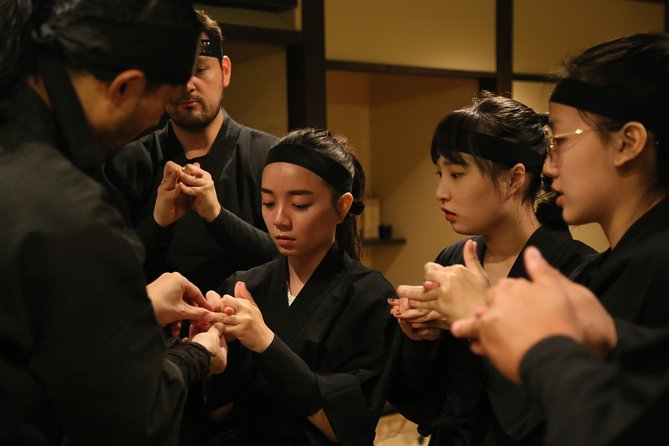
The lesson opens with ninja meditation called Kuji-In, followed by breathing instruction and a lesson in walking quietly. These first exercises are important because they show that ninja training was not simply about throwing stars or swinging a sword.
The breathing work gives you a simple way to settle down and focus. The walking practice is one of the more memorable parts for families because it turns an ordinary movement into a small physical puzzle. You learn how posture, balance, and careful foot placement can reduce noise.
The dojo also introduces tricks and traps connected with a ninja trick house. The exact amount of time spent here can vary, since the full session includes many different skills, but the trick-house section adds a playful sense of discovery. Children often enjoy the secret rooms and hidden features, while adults get a better feel for how ninja stories grew from practical ideas about concealment and surprise.
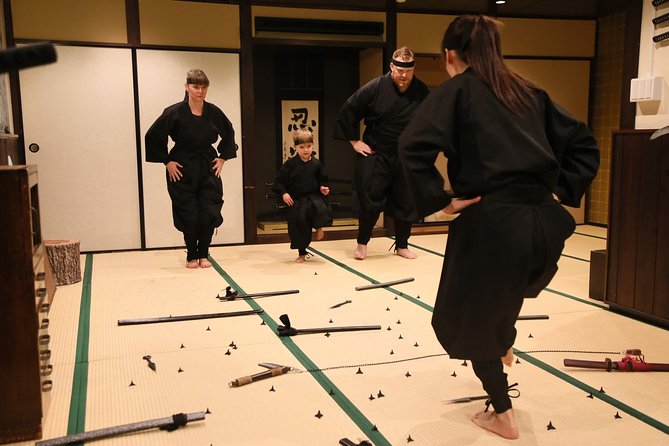
One unusual feature described in the class is a dark floor with spikes. The instructor demonstrates how to avoid the hazard using the ninja walk, so this is presented as a controlled teaching feature rather than a reckless stunt. Listen closely and follow the sensei’s instructions. The point is technique, not speed.
Learning the sword before trying the weapons
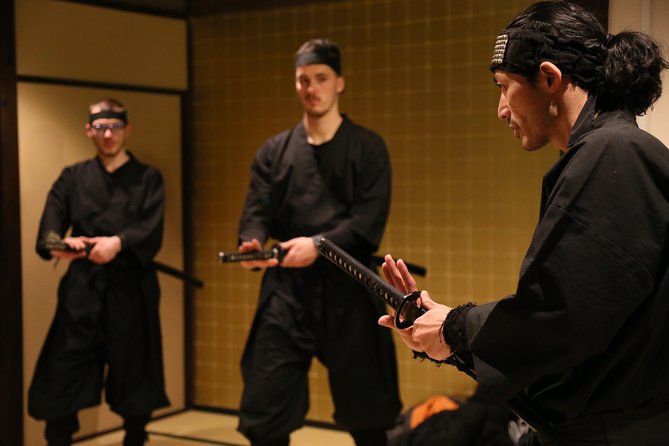
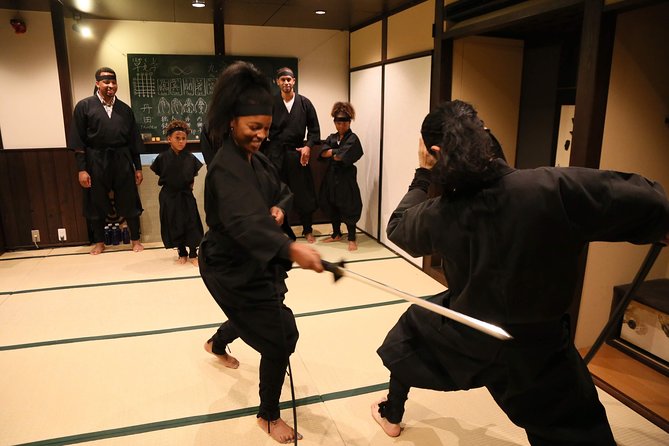
After the opening exercises, the instructor demonstrates ninja sword techniques. You then get time to practice basic sword movements under supervision.
This section works well because it combines explanation with action. You are not simply handed a sword and left to pose. The teacher shows the movement first, then guides the group through the basics. That structure helps younger participants and anyone who has never handled a practice weapon.
The lesson is introductory, so you should not expect a full martial arts course. In one hour, the aim is to learn the shape and purpose of the movements, not to gain advanced skill. Still, the sword portion gives the class a stronger sense of substance than a simple dress-up session.
The staff take care with the weapons, which is particularly useful when children are involved. Families with older children tend to get the most from this part because the activity requires attention and controlled movement. The class is family-friendly, but parents should still expect their children to listen and follow directions.
Throwing shuriken, kunai, and other tools
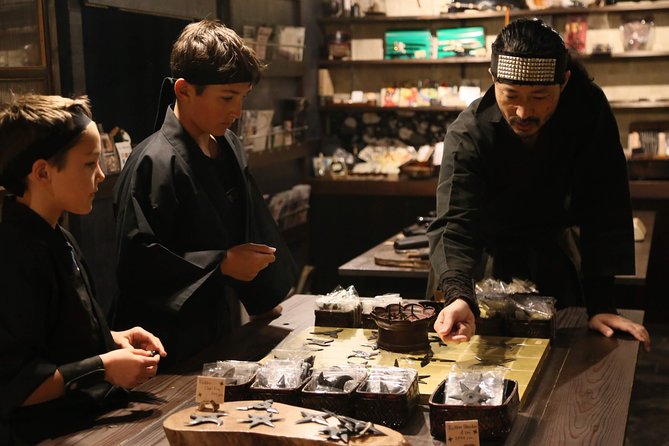
The weapons practice is the energetic center of the class. You try shuriken, commonly called ninja stars, kunai daggers, and a ninja blowgun with blow darts. Each tool offers a different kind of challenge.
Shuriken throwing is quick to understand but not necessarily easy. You aim at a wooden target and adjust your technique based on where the weapon lands. The kunai practice gives you another throwing style to try, while the blowgun adds a surprising test of breath control and aim.
The blowgun is especially good fun because it connects directly with the breathing lesson from the beginning. You have already worked on controlled breathing, and now you see how that idea affects a physical task. It is a small but satisfying link between the quieter opening and the more playful final activities.
The session may also include other target games, such as throwing chopsticks. That sounds simple, but it can be unexpectedly difficult. This is the kind of activity that keeps adults involved instead of making the lesson feel designed only for children.
The instructor demonstrates each technique before you try it. That matters for safety and also makes the activity more rewarding. You understand what you are attempting, rather than randomly tossing objects and hoping one sticks.
A completely different kind of day out:
- PERFECT KYOTO 1-Day Bus Tour
★ 5.0 · 13,518 reviews - [Kyoto & Nara Day Tour] Sagano Scenic Railway & Nara Park & Fushimi Inari Taisha Thousand Torii Gates & Togetsukyo Bridge & Bamboo Grove & Kimono Forest (Departing from Osaka)
★ 4.9 · 10,942 reviews - Kyoto: Fushimi Inari, Kinkakuji, Bamboo Grove 1 Day Bus Tour
★ 4.8 · 4,316 reviews - Kyoto: Tea Ceremony in a Traditional Tea House in Kiyomizu
★ 4.9 · 3,519 reviews
Why the small group makes a difference
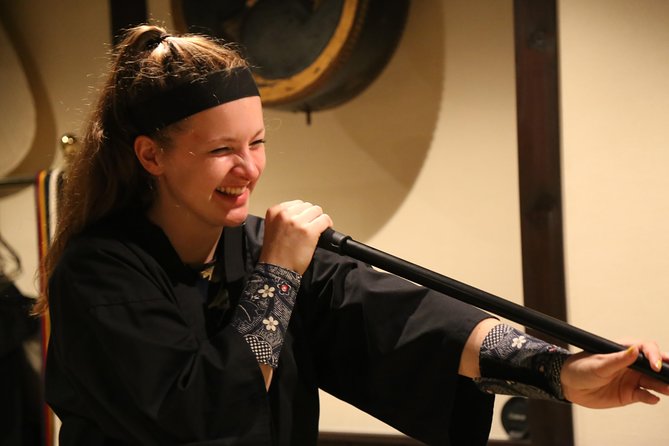
The maximum group size is six. That is one of the strongest practical features of this experience.
A small class means the instructor can watch how each person handles the sword, throws a weapon, or uses the blowgun. You also spend less time waiting for a large crowd to finish. Several activities involve individual turns, so a big group could make the hour feel thin. Here, the compact size helps the lesson maintain its pace.
A small group can also feel almost private when your party is only two or four people. One family described a class with just their own group and one other person, which allowed plenty of practice. The same setup works well for couples, siblings, and friends who want a shared activity without joining a noisy crowd.
The class is taught in English by Japanese instructors trained in ninja arts. English communication is repeatedly praised, and the teaching style is described as kind, funny, and easy to follow. Instructors named in the feedback include Sho and Jack, although the teacher on your date may be different.
Sho is praised for explaining ninja history and keeping the atmosphere relaxed. Jack is described as making the lesson both fun and informative. Other participants also praised a female instructor for her patience. The consistent point is not a single personality, but the staff’s ability to adjust the mood for children and adults.
What the hour feels like for families
This is one of Kyoto’s better choices for a family break. Children as young as seven are described as enjoying the class, and a ten-year-old participant called it a favorite part of the trip. Teenagers also seem to respond well because the activities feel active rather than like a standard museum visit.
Parents do not have to stand on the sidelines. You can put on the clothing, learn the movements, throw the weapons, and try the blowgun yourself. That shared participation is a major part of the value.
The class also gives families a change of pace after several temples and shrines. Kyoto sightseeing can involve lots of walking, quiet observation, and careful behavior. Here, you can laugh, move around, and take photographs while still learning something about Japanese martial traditions.
The class is suitable for adults too. Couples in their twenties and groups of friends in their thirties found it entertaining, though the experience will appeal most to adults who enjoy playful learning. If you want an academic lecture on medieval espionage, this is not the right choice. If you want a social hour with real techniques, historical context, and supervised weapon practice, it makes much more sense.
How authentic is the experience?
The word authentic needs some care here. The dojo setting, Japanese instructors, ninja artifacts, clothing, demonstrations, and explanations of technique give the class a stronger cultural base than a simple theme-park performance. Some participants found it thoughtful and rooted in real history and tradition.
At the same time, this remains a short introductory activity built for international visitors. You learn a little about ninja life and methods, but the hour cannot provide a full study of ninja history, samurai culture, or martial arts. One candid assessment found the class entertaining but high-level, with a slightly gimmicky side.
I think that is the fair reading. The experience is authentic in its setting, instruction, and effort to explain why the techniques matter. It is not an intensive historical course. The secret doors, costumes, target throwing, and theatrical elements are part of the fun, not proof that you are receiving specialist training.
The best approach is to book it for the right reason. Come to understand a few skills, enjoy Japanese instruction, and share an unusual activity with your family or friends. Do not come expecting certification or a detailed reconstruction of a ninja’s daily life.
Price, value, and the one-hour limit
The listed price is $80.58 per person. That is not a cheap hour, especially for a family of four. The value depends on what you compare it with.
You are paying for a small class, an English-speaking sensei, clothing rental, admission, equipment, and direct practice with several weapons. You also avoid the waiting time common in large group activities. For a family, the chance for everyone to participate can justify the cost more easily than an attraction where only one person gets an active role.
The class packs a lot into 60 minutes: meditation, breathing, walking, trick-house features, sword instruction, sword practice, kunai, shuriken, and blowgun training. That variety explains why the hour passes quickly, but it also creates the main limitation. You will sample many skills rather than study any one of them in depth.
A two-hour version is mentioned in the feedback, and one family wished they had booked it. If you see that option and want more history, practice, and time with each weapon, it may offer better value for your interests. The one-hour lesson is best when you want a compact activity that fits neatly into a busy Kyoto schedule.
Practical points before you book
The activity requires a minimum number of participants. If that minimum is not met, the provider offers another date or experience, or a full refund. Poor weather can also lead to a different date or a full refund, even though much of the lesson takes place indoors.
You can cancel for a full refund up to 24 hours before the start time. Cancellations or changes made less than 24 hours before the scheduled start are not refunded or accepted. Cut-off times follow local Kyoto time.
Most people can participate, and service animals are allowed. Food and drinks are not included, and there is no hotel pickup or drop-off. Plan to eat before or after the lesson and make your own way to the dojo.
The class ends where it starts, which simplifies the rest of your day. Since the lesson is short, you can pair it with nearby sightseeing, shopping, or a meal without committing to a full-day excursion.
Should you book this ninja class?
You should book this lesson if you want a fun, active Kyoto experience that works for families, couples, and friends. It is especially good for children from around seven years old, teenagers, and adults who enjoy trying something unusual together.
I would also recommend it for Naruto fans, since familiarity with ninja fiction can make the techniques and costumes even more entertaining. The class does not depend on that interest, though. Clear English instruction, careful weapon handling, and a warm teaching style make it accessible to beginners.
Think twice if your priority is detailed history or serious martial arts training. The lesson moves quickly and includes playful elements. For most people, that is the point. At $80.58, it is worth booking when you value personal instruction, a small group, and a memorable shared activity more than a long lecture or a low-cost attraction.
FAQ
Where does the ninja lesson take place?
The class starts and ends at NINJA DOJO and STORE KYOTO, located at 528 Hakurakutenchō, second floor, in Kyoto’s Shimogyo Ward, postal code 600-8422.
How long does the ninja experience last?
The entry-level lesson lasts approximately one hour.
What activities are included?
The lesson includes Kuji-In meditation, ninja breathing, ninja walking, an introduction to trick-house features, sword demonstrations and practice, kunai training, shuriken training, and ninja blowgun training.
Are ninja clothes provided?
Yes. Ninja clothes rental during the training is included in the admission price.
How many people can join the class?
The maximum group size is six participants.
Can I cancel for a full refund?
Yes. You can cancel at least 24 hours before the experience start time for a full refund. Cancellations or changes made less than 24 hours before the start time are not accepted for a refund.
Just added in Kyoto
- The “Golden Route” and Ancient Japan by DIAMIR Erlebnisreisen – 14-Day Tour★ 2.0 · 2 reviews
- Japan: Castles & Cuisine by G Adventures – 6-Day Kyoto to Osaka Tour★ 4.5 · 4 reviews
- Cycle Japan by Explore! – 13-Day Kyoto to Tokyo Tour★ 4.7 · 12 reviews
- Cycle Japan by Intrepid Travel – 11-Day Kyoto to Tokyo Tour★ 4.8 · 2 reviews
- Classic Japan by Intrepid Travel – 11-Day Kyoto to Tokyo Tour★ 4.4 · 14 reviews
- Ancient & Modern Japan 14-Day Tour by Exodus Adventure Travels★ 4.4 · 40 reviews
- 5 Day Cultural Adventure of Kyoto, Nara & Osaka by Tourist Journey★ 2.5 · 2 reviews
- 12 Days Kinosaki Onsen Escape: A Journey Through Japan’s Timeless Towns by UME Travel★ 4.8 · 5 reviews
Castles and Historic Sites, compared.


Imperial Palace and Shogun Historical Walking Tour
Read our review →
Tokyo Castle & Imperial PalaceーShogun Walking Tour
Read our review →
Nijo-jo Castle and Ninomaru Palace Guided Tour
Read our review →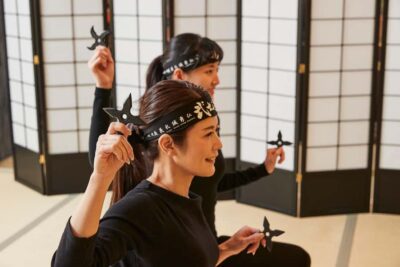
Samurai Ninja Museum Guided tour and Experience
Read our review →Browse the lists this tour appears in