
Reviewed · CASTLES AND HISTORIC SITES
Ninja 2-hour Hands-on Lesson by Japanese master in Kyoto -Medium
Ninja training is more fun than sightseeing. This two-hour class at NINJA Dojo and Store Kyoto gives you far more than a costume photo: you practice ninja breathing, meditation, movement, and a long list of traditional tools under the guidance of an English-speaking Japanese master. I especially like the small group of six or fewer and the chance to try the techniques yourself, rather than simply watching a demonstration.
The included ninja clothing rental adds plenty of fun and makes the photographs memorable. The instructors also bring humor and patience, which helps beginners relax quickly. The main caution is simple: this is an active, hands-on class, so anyone hoping for a quiet lecture on ninja history may find the lesson more playful and practical than academic.
In This Review
- Key points before you book
- Arriving at the Kyoto ninja dojo
- Changing into ninja clothing
- Starting with ninja breathing and Kuji-In
- Inside the ninja trick house
- Practicing the ninja sword and kunai
- Shuriken, sickle, and blowgun practice
- What the instructors add
- Why the small group matters
- Photos and the value of the $95.51 price
- Who will enjoy this most
- Practical details for a smooth morning
- Should you book this Kyoto ninja class?
- FAQ
- How long does the ninja lesson last?
- Where does the activity begin and end?
- What time does the class start?
- How many people can join the class?
- Is ninja clothing included?
- Is the lesson taught in English?
- What techniques and equipment are included?
- Are food, drinks, hotel pickup, or hotel drop-off included?
- Can I cancel for a full refund?
Key points before you book
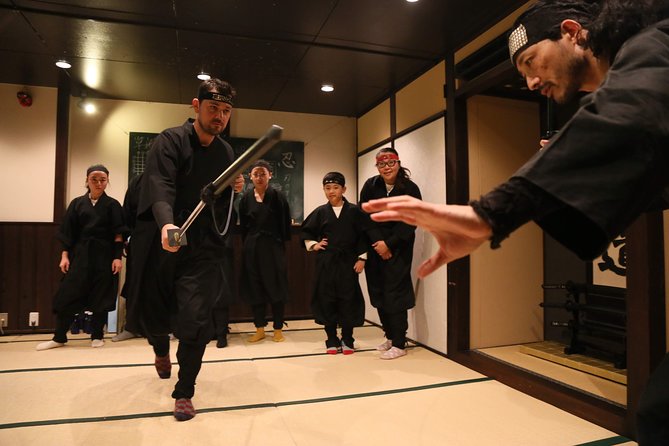
- Small classes: The maximum group size is six, giving the instructor time to correct movements and answer questions.
- More than sword practice: The lesson can include Kuji-In meditation, ninja breathing, ninja walking, rope methods, shuriken, kunai, a blowgun, and more.
- Ninja clothing included: You change into the provided outfit during the training, with help from the staff if needed.
- Family-friendly format: Children as young as five have taken part, while adults, teenagers, and older couples have also enjoyed the class.
- Photos and videos: Staff may take photographs and video during the session and send them by email afterward, sometimes on the same day.
- Central Kyoto meeting point: The dojo is at 528 Hakurakutencho, 2F, in Shimogyo Ward, near public transportation.
Arriving at the Kyoto ninja dojo
The class begins at 10:00 a.m. at NINJA Dojo and Store Kyoto, located at 528 Hakurakutencho, on the second floor. You will finish at the same place, so the activity fits neatly into a morning plan around central Kyoto.
Plan to arrive about 15 minutes early. That gives you time to find the entrance, remove your shoes, and change into slippers before going upstairs. One account describes shoe boxes and slippers at the entrance, followed by a welcome from a staff member named Sho. Small details like these matter because arriving late could cut into a short, tightly scheduled class.
The dojo also includes a store. You can browse ninja-themed items before or after the lesson, but the shop is not the main reason to come. The real value is the instruction and the chance to handle the equipment under supervision.
The location is near public transportation, but the supplied information does not name a particular station or give walking directions. I would use the address carefully in your map app and leave extra time for Kyoto’s narrow streets and busy intersections.
More Castles and Historic Sites in Kyoto
- Kyoto Samurai Experience
★ 5.0 · 1,294 reviews - Kyoto: Nijo-jo Castle and Ninomaru Palace Guided Tour
★ 4.7 · 1,020 reviews - Kyoto: Kendo and Samurai Experience with Uniform and Gear
★ 4.9 · 815 reviews
Changing into ninja clothing
After you arrive, the staff help you put on the provided ninja outfit. This is not just a costume add-on. Changing clothes sets the tone, gives the class a shared sense of purpose, and makes the photos much more fun.
Several families appreciated that the clothing worked for both children and adults. One parent described taking part with children aged five to twelve, while other classes included teenagers, couples, and adults in their fifties. The instructors appear used to mixed groups, so you do not need martial arts experience or a special fitness level.
You should still wear comfortable clothing underneath and expect to move around. The class includes walking, stances, handling tools, and repeated practice. One middle-aged couple found the session accessible despite not being very limber, but the lesson is not completely passive. If you have a physical limitation, consider contacting the provider before booking.
Starting with ninja breathing and Kuji-In
The lesson begins with a calmer side of ninja culture. You may learn ninja breathing and ninja meditation called Kuji-In. This opening helps slow the group down before the more energetic work begins.
That is a smart way to start. Many people arrive excited about swords and throwing stars, but the class presents ninja practice as more than action-movie movement. Focus, controlled breathing, and mental discipline form part of the lesson. You get a short look at the mindset behind the techniques instead of jumping straight to equipment.
The meditation section will likely appeal most to adults and older children, while younger children may be eager to move on. The instructors balance the serious material with humor, keeping the mood light without making the opening feel pointless.
The class also covers ninja walking. This is one of the more distinctive parts because it asks you to pay attention to posture, balance, and quiet movement. It is a simple skill to try, but it gives you a better feel for how ninja techniques are presented: small changes in movement can make a large difference.
Inside the ninja trick house
The program includes an introduction to gimmicks and traps in a ninja trick house. This section adds a sense of place and mystery that a standard martial arts class would not provide.
The supplied details do not specify every trap or explain how large the trick-house area is, so you should not expect a full escape-room experience. Instead, think of it as a demonstration and introduction to the clever devices associated with ninja settings.
For children, this may be one of the most entertaining parts of the morning. For adults, it provides useful context. Ninja culture is often reduced to black clothing and flying stars, while trick doors, hidden mechanisms, and misdirection show another side of the tradition.
A completely different kind of day out:
- PERFECT KYOTO 1-Day Bus Tour
★ 5.0 · 13,518 reviews - [Kyoto & Nara Day Tour] Sagano Scenic Railway & Nara Park & Fushimi Inari Taisha Thousand Torii Gates & Togetsukyo Bridge & Bamboo Grove & Kimono Forest (Departing from Osaka)
★ 4.9 · 10,942 reviews - Kyoto: Fushimi Inari, Kinkakuji, Bamboo Grove 1 Day Bus Tour
★ 4.8 · 4,316 reviews - Kyoto: Tea Ceremony in a Traditional Tea House in Kiyomizu
★ 4.9 · 3,519 reviews
Practicing the ninja sword and kunai
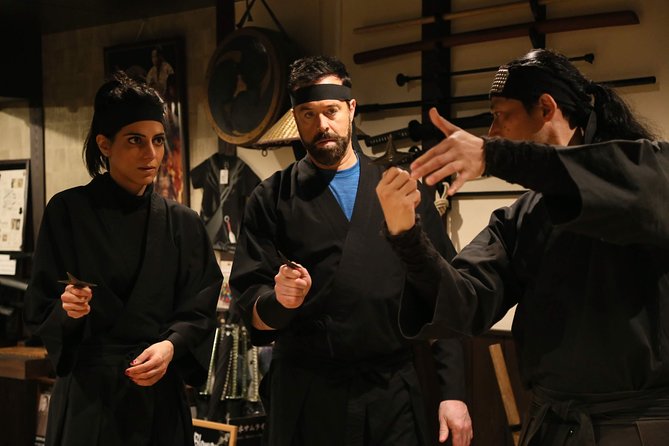
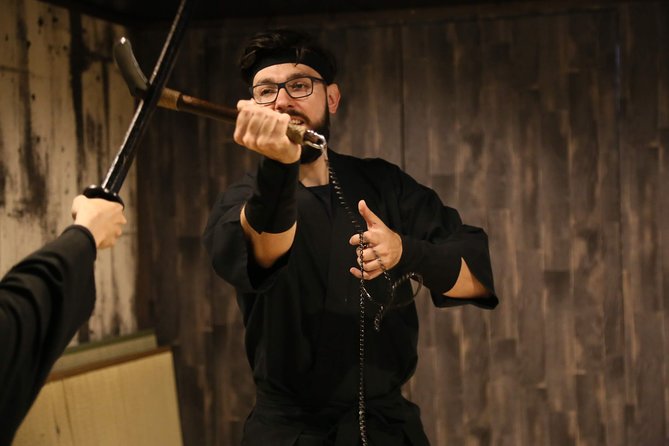
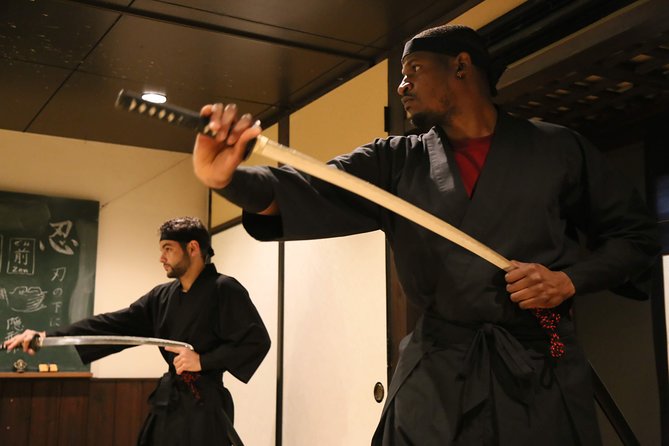
The central hands-on portion includes training with a ninja sword and kunai, or dagger. The instructor demonstrates the movements, explains them in English, and gives you a chance to practice.
The sword work is not presented as a theatrical fight show. You learn entry-level techniques and then add five more techniques during the two-hour lesson. That structure gives beginners a clear starting point while still packing in enough variety to make the class feel substantial.
The kunai section adds a different challenge. A sword requires controlled movement and a firm stance, while a dagger technique changes how you think about grip and distance. You do not need prior skill, and the instructors are described as patient with complete beginners.
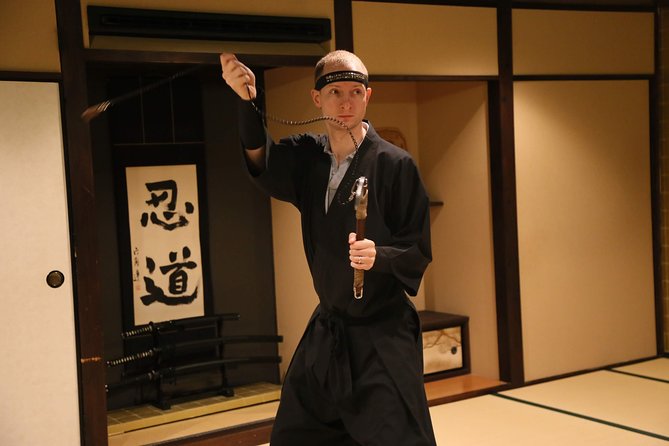
The class also includes rope techniques and kunai with rope. These tools make the lesson more varied, though the exact amount of practice time for each item can change depending on group pace. With six people at most, you should have a reasonable chance to try the equipment rather than watch from the side for most of the session.
Shuriken, sickle, and blowgun practice
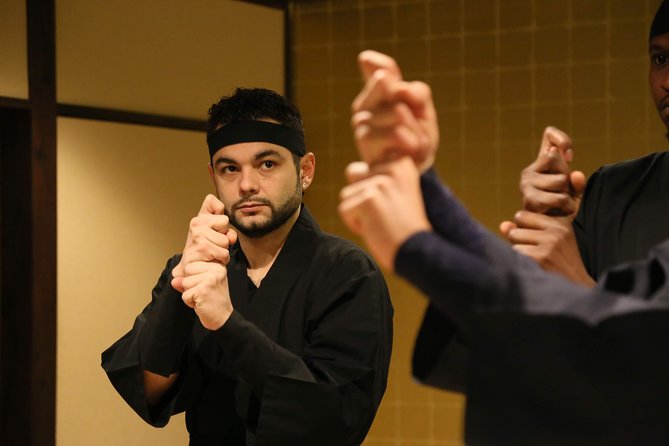
The equipment list is unusually broad for a two-hour activity. Along with the sword and kunai, you may work with shuriken, often called ninja stars, a stick-type shuriken, a kusarigama, which is a sickle with a chain, and a ninja blowgun with blow darts.
The throwing and target work is likely to be the most exciting part for many children and adults. Several participants described trying the tools themselves after professional demonstrations. That direct practice is what makes this experience different from a museum display or staged performance.
The blowgun adds a welcome change of pace. It depends on breath control, linking back to the meditation and breathing exercises at the start. The chain sickle also gives the class a more unusual tool, though you should expect the instructor to control the pace carefully because it involves a moving chain.
One memorable combination is ninja sword with shuriken. The program also lists stick-type shuriken, so the lesson does not rely on a single famous prop. You get a broad introduction to the equipment associated with ninja entertainment and training.
The important point is that this is supervised practice. The class is designed for beginners, but you should listen closely and follow the instructor’s directions. The supplied information does not promise that every participant will spend equal time with every item, so the exact balance depends on group size and timing.
What the instructors add
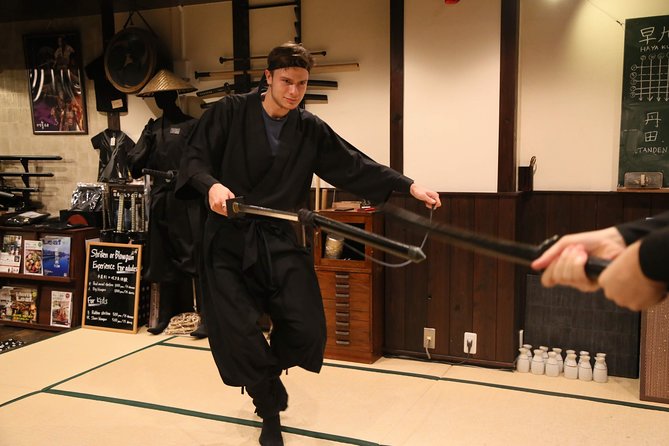
The instructor is the heart of this activity. The master teaches in English, and the class depends on clear demonstrations, simple explanations, and a willingness to help beginners.
The strongest praise centers on teaching style. The instructors are described as patient, funny, attentive, and able to explain each movement clearly. That combination is useful in a class where everyone may have different ages, confidence levels, and coordination.
The humor matters, too. Trying to walk silently or throw a shuriken can feel awkward at first. A relaxed instructor makes it easier for you to laugh at your first attempt, listen to corrections, and try again.
The staff also appear to balance discipline with entertainment. You are not simply handed a costume and a collection of props. The lesson includes technique, meditation, movement, and explanations of ninja culture. Still, the format is built for fun, not for a formal martial arts qualification. The playful phrase ninja certified may make a good souvenir photo, but it is not a professional rank.
Why the small group matters
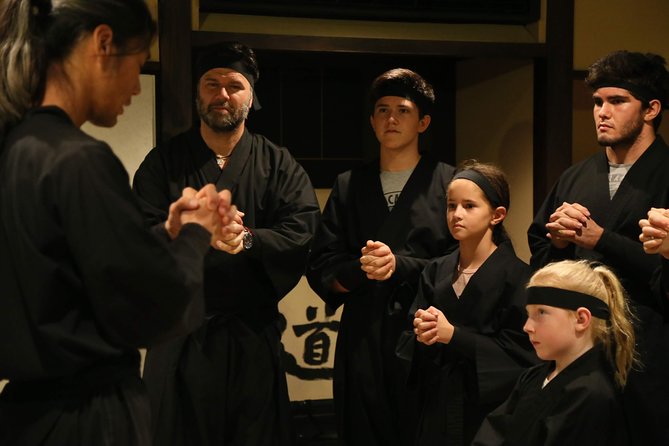
A maximum of six people is a major advantage at this price and duration. With a large class, hands-on weapons practice can turn into a queue. Here, the instructor has a better chance to see how you hold the sword, position your body, or use the throwing tools.
The group size also suits families. Parents can take part with children rather than standing on the sidelines. The class has worked well for families with children from about five years old through the teenage years, as well as couples and solo participants.
A small class can also mean a more personal atmosphere. Solo visitors have enjoyed joining another small party, and couples have taken part with a family or another pair. You should be ready to share the spotlight rather than expect a private lesson, but six people is still intimate by tour standards.
Photos and the value of the $95.51 price
At $95.51 per person, this is not a bargain-bin activity. The price makes more sense when you count what is included: two hours of instruction, clothing rental, admission, an English-speaking Japanese master, and practice with a wide range of equipment.
You are also paying for a small class. That matters more here than it would on a simple walking tour because each person needs time with the tools and demonstrations.
Photos and videos can add further value. Staff may photograph and record the class with a professional camera, then send the files by email, sometimes later the same day. This is a useful bonus because it lets you enjoy the activity instead of constantly reaching for your own phone.
The experience is best value if you want an active cultural activity and memorable family photographs. It is less attractive if you only want a short costume rental or a historical talk. You can find cheaper photo opportunities in Kyoto, but they will not normally include two hours of instruction and hands-on practice.
Food and drinks are not included. Hotel pickup and drop-off are also not included, though the central meeting point and nearby public transportation make independent arrival practical.
Who will enjoy this most
I would recommend the class to families, couples, solo visitors, and older children who like to participate rather than watch. It works especially well for a family with children who need a break from temples, gardens, and long walks.
The activity suits beginners. You do not need martial arts training, and the teaching style is built around demonstrations and repeated practice. Adults should not dismiss it as a children-only outing. Couples in their fifties and solo adults have enjoyed the humor, technical explanations, and variety of equipment.
It is also a good choice for a rainy-day plan, though the cancellation terms mention that the experience requires good weather. Because of that, do not assume every session will operate in poor conditions. If the provider cancels for weather or because the minimum number is not met, you can receive a different date or a full refund.
The class may not suit you if you dislike dressing up, handling training equipment, or taking part in group activities. It also will not satisfy someone seeking a long, detailed study of ninja history. The instruction includes cultural ideas and background, but the focus is active practice.
Practical details for a smooth morning
Book with the 10:00 a.m. start in mind and arrive early. Wear comfortable clothes under the rental outfit, and plan for some movement rather than a sit-down presentation.
The activity ends back at the dojo, making it easy to continue sightseeing in central Kyoto afterward. You can also look around the store before leaving.
Most people can participate, and service animals are allowed. The information provided does not give detailed accessibility measurements or a full list of physical restrictions, so contact NINJA Dojo and Store if you need specific support.
Free cancellation is available up to 24 hours before the start time for a full refund. Changes or cancellations inside that 24-hour window are not accepted and are not refunded. The cut-off uses local Kyoto time, so check the timing carefully if you are changing plans.
Should you book this Kyoto ninja class?
Yes, if you want a lively, unusual activity that combines costumes, cultural ideas, and real participation. The small group, broad equipment list, and patient English instruction make this much stronger than a quick photo stop.
I would book it for families with children, couples looking for something different, and solo visitors who want an easy way to meet a few other people. The $95.51 cost is fair when you value the two hours, clothing, instruction, and possible professional photos.
Skip it if your priority is detailed ninja scholarship, a private session, or a low-cost attraction. Otherwise, this is a playful Kyoto experience with enough substance to feel worthwhile and enough humor to keep the morning moving.
FAQ
How long does the ninja lesson last?
The lesson lasts approximately two hours.
Where does the activity begin and end?
It begins and ends at NINJA Dojo and Store Kyoto, 528 Hakurakutencho, 2F, Shimogyo Ward, Kyoto, postal code 600-8422.
What time does the class start?
The listed start time is 10:00 a.m.
How many people can join the class?
The activity has a maximum of six participants.
Is ninja clothing included?
Yes. Ninja clothing rental during the training is included.
Is the lesson taught in English?
Yes. A Japanese sensei who has trained in ninja arts teaches the lesson in English.
What techniques and equipment are included?
The lesson can include Kuji-In meditation, ninja breathing, ninja walking, ninja trick-house devices, sword training, kunai, kusarigama, rope techniques, kunai with rope, shuriken, stick-type shuriken, ninja sword with shuriken, and a ninja blowgun.
Are food, drinks, hotel pickup, or hotel drop-off included?
No. Food and drinks, hotel pickup, and hotel drop-off are not included.
Can I cancel for a full refund?
Yes, if you cancel at least 24 hours before the experience start time. Cancellations or changes made within 24 hours are not accepted and are not refunded.
Just added in Kyoto
- The “Golden Route” and Ancient Japan by DIAMIR Erlebnisreisen – 14-Day Tour★ 2.0 · 2 reviews
- Japan: Castles & Cuisine by G Adventures – 6-Day Kyoto to Osaka Tour★ 4.5 · 4 reviews
- Cycle Japan by Explore! – 13-Day Kyoto to Tokyo Tour★ 4.7 · 12 reviews
- Cycle Japan by Intrepid Travel – 11-Day Kyoto to Tokyo Tour★ 4.8 · 2 reviews
- Classic Japan by Intrepid Travel – 11-Day Kyoto to Tokyo Tour★ 4.4 · 14 reviews
- Ancient & Modern Japan 14-Day Tour by Exodus Adventure Travels★ 4.4 · 40 reviews
- 5 Day Cultural Adventure of Kyoto, Nara & Osaka by Tourist Journey★ 2.5 · 2 reviews
- 12 Days Kinosaki Onsen Escape: A Journey Through Japan’s Timeless Towns by UME Travel★ 4.8 · 5 reviews
Castles and Historic Sites, compared.


Imperial Palace and Shogun Historical Walking Tour
Read our review →
Tokyo Castle & Imperial PalaceーShogun Walking Tour
Read our review →
Nijo-jo Castle and Ninomaru Palace Guided Tour
Read our review →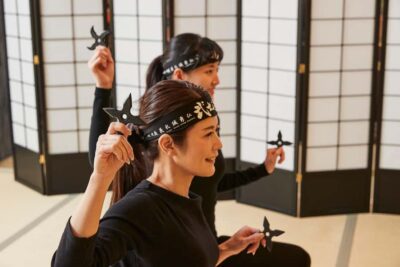
Samurai Ninja Museum Guided tour and Experience
Read our review →Browse the lists this tour appears in