
Reviewed · TEA CEREMONIES
Oboro | Mindful Tea Ceremony in a 100-Year-Old Kyoto Teahouse
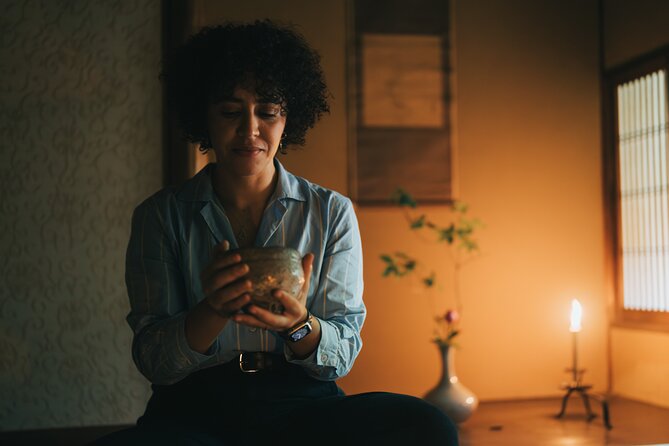
Slow down with a bowl of matcha. Oboro offers a quiet, candlelit tea ceremony inside a 100-year-old Kyoto teahouse, where the focus is less on rushing through a photo opportunity and more on watching each careful movement. I like the small group size, capped at eight, and the English-speaking guide who explains what is happening without breaking the calm.
I also like the welcome tea, sweets, handmade candle, and rare organic green tea served during the ceremony. The main consideration is the short 50-minute format: it gives you a graceful introduction, but not a long lesson in every branch of Japanese tea practice. Arrive early, too. You cannot join more than 10 minutes after the start.
In This Review
- Key points to know before booking
- Entering a century-old Kyoto teahouse
- A soft start with tea and sweets
- Watching the utensils become part of the ritual
- Matcha, organic green tea, and the sensory details
- Why the small group makes a difference
- A ceremony that favors calm over strict formality
- The handmade candle at the end
- Is $45.98 a fair price?
- Location, timing, and practical advice
- Who will enjoy Oboro most?
- Should you book this Kyoto tea ceremony?
- FAQ
- Where does the Oboro tea ceremony take place?
- How long does the tea ceremony last?
- How much does the experience cost?
- How many people can join the activity?
- Is an English-speaking guide included?
- What is included in the price?
- Are tips and gratuities included?
- Where does the experience end?
- What happens if I arrive more than 10 minutes late?
- Can I cancel for a full refund?
Key points to know before booking
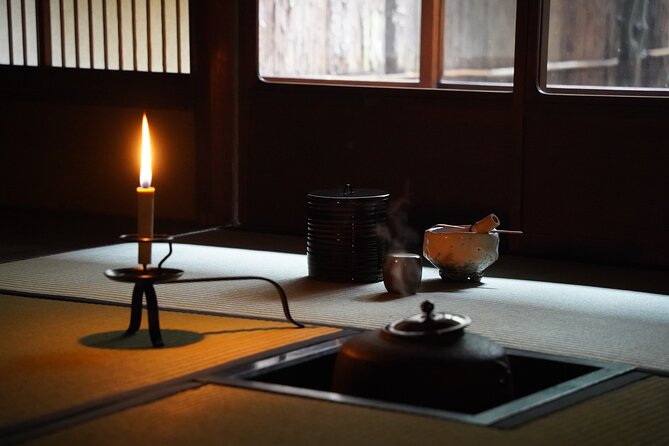
- Candlelit setting: The ceremony takes place in a softly lit, minimally decorated space rather than a busy café.
- Small group limit: A maximum of eight people makes it easier to see the utensils and follow the ritual.
- English assistance: An English-speaking guide translates and explains the ceremony, including questions about tea and technique.
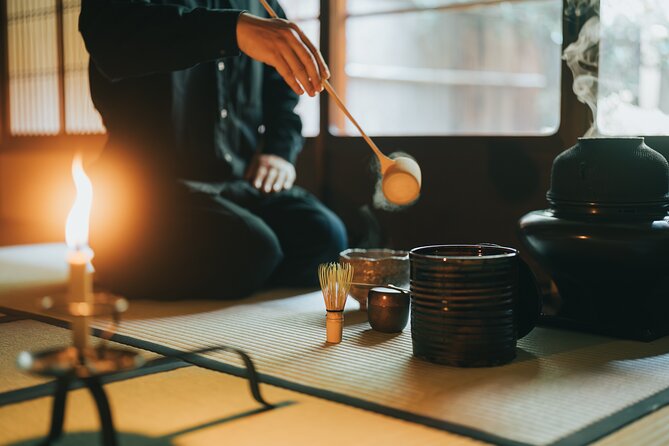
- Hands-on observation: You watch the host clean the utensils, prepare matcha, and serve each bowl one at a time.
- A gentle cultural introduction: The mood is reflective and welcoming rather than rigid or intimidating.
- Good short-visit value: At $45.98 per person, the experience offers a focused cultural activity in under an hour.
Entering a century-old Kyoto teahouse
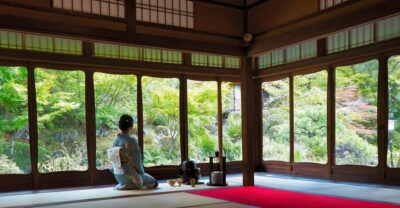
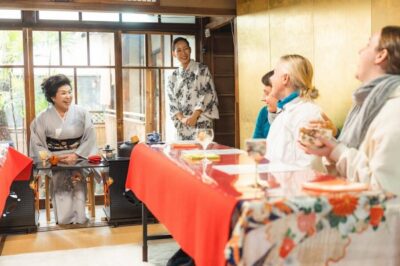
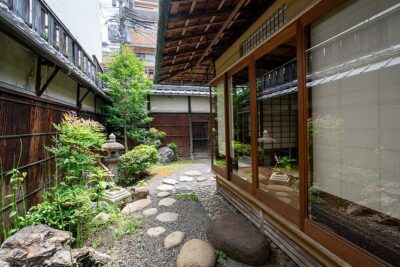
Oboro’s appeal begins before the tea is whisked. You enter a traditional Japanese house that is about 100 years old, then move into a space arranged with very little decoration. Handmade candles provide the light, and the quiet setting helps separate this hour from the noise of a normal sightseeing day.
That change of pace matters. Kyoto can fill your schedule quickly with temples, markets, gardens, and train connections. Here, you are asked to notice smaller things: the sound of an object being placed down, the warmth of a tea bowl, the color of the tea, and the pace of the host’s hands.
I would choose this experience for the atmosphere as much as for the drink. If you only want a cup of matcha, a café will be faster and cheaper. If you want to understand why tea preparation can be treated as a form of attention and hospitality, Oboro gives you much more to consider.
The space is minimally decorated, so do not expect a theatrical show with a large room full of ornaments. Its charm comes from restraint. The candlelight, old house, and quiet sounds do the work.
More Tea Ceremonies in Kyoto
- Kyoto: Tea Ceremony in a Traditional Tea House in Kiyomizu
★ 4.9 · 3,519 reviews - Kyoto: Tea Ceremony Ju-An at Jotokuji Temple
★ 4.9 · 3,207 reviews - Kyoto: 45-Minute Tea Ceremony Lesson Experience
★ 4.3 · 2,378 reviews
A soft start with tea and sweets
The ceremony begins with a welcome tea and sweets. This opening gives you time to settle in and shift your attention away from the day’s errands. It also makes the experience friendly for first-time visitors who may not know how formal a Japanese tea ceremony is supposed to feel.
The sweets are not just a snack before the matcha. They prepare your palate for the tea and add a small moment of hospitality at the beginning. One family group especially appreciated the dessert treat, and a parent noted that a daughter enjoyed the matcha while another family member chose black tea.
That detail is useful if your group has mixed tastes. You should not assume every person needs to be a serious green-tea drinker to enjoy the experience. The tone is open enough for curious beginners, and the preparation itself is often as interesting as the final cup.
The welcome portion also lets you ask questions. Taku, one of the hosts, is praised for speaking excellent English and for making the cultural background understandable without turning the ceremony into a lecture. Naoki is described as a soft-spoken tea master, which fits the quiet mood particularly well.
Watching the utensils become part of the ritual
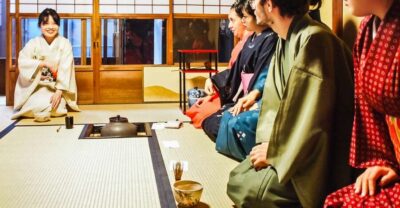
The central portion takes place in the tearoom. The host carefully cleans and prepares the utensils before whisking the tea. This is where the difference between a restaurant matcha service and a tea ceremony becomes clear.
In a restaurant, you usually receive a finished drink. At Oboro, you see the sequence that leads to it. The cleaning, arranging, and measured movements show that the preparation is not treated as a task to hurry through. Each object has a place, and each action helps create a respectful setting for the person receiving the bowl.
You receive the matcha one bowl at a time. That pacing keeps the focus on the act of serving rather than on a group photo or a table full of drinks. It also gives you a chance to observe the host closely, then enjoy your own tea without trying to keep up with everyone else.
The host demonstrates the preparation with care and attention to detail. You can watch the tea change as it is whisked, then notice its aroma, texture, and taste. The experience does not require you to memorize complicated rules. Instead, the guide helps you understand why the movements matter.
This is one of the strongest parts of the activity for anyone interested in Japanese culture. The ritual can look simple from a distance, but the ceremony shows how much thought goes into serving tea well.
Matcha, organic green tea, and the sensory details
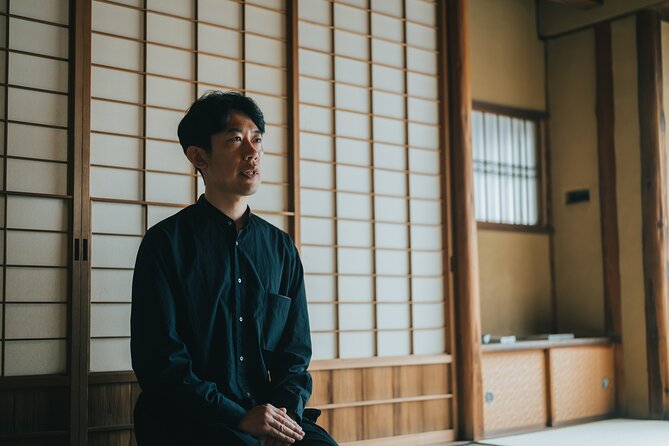
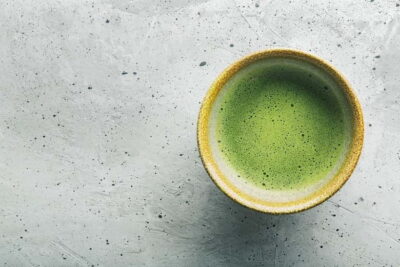
The tea served is described as a rare organic green tea, prepared fresh during the ceremony. You are invited to pay attention to the subtle flavors rather than simply drinking it quickly.
The tea bowl itself becomes part of the experience. You notice its warmth in your hands, the color of the tea, and the feel of the bowl as you drink. The candlelight adds to those sensory details, giving the tea a slower, more reflective setting than you would find in a bright café.
One person who does not care much for tea still described the ceremony as worth doing because the cultural display was so engaging. That is a useful warning and recommendation at the same time. Book this for the ritual, the setting, and the chance to see Japanese hospitality in action, not only because you expect to discover your favorite beverage.
The taste may also be unfamiliar. Matcha has a concentrated, earthy character, and the experience is not designed around sweet café-style matcha drinks. If you prefer black tea, that option has been available during the experience, but the main focus remains the ceremonial preparation of green tea.
A completely different kind of day out:
- PERFECT KYOTO 1-Day Bus Tour
★ 5.0 · 13,518 reviews - [Kyoto & Nara Day Tour] Sagano Scenic Railway & Nara Park & Fushimi Inari Taisha Thousand Torii Gates & Togetsukyo Bridge & Bamboo Grove & Kimono Forest (Departing from Osaka)
★ 4.9 · 10,942 reviews - Kyoto: Fushimi Inari, Kinkakuji, Bamboo Grove 1 Day Bus Tour
★ 4.8 · 4,316 reviews - Kyoto: Gion Make Your Own Chopsticks with Engraving Option
★ 5.0 · 3,465 reviews
Why the small group makes a difference
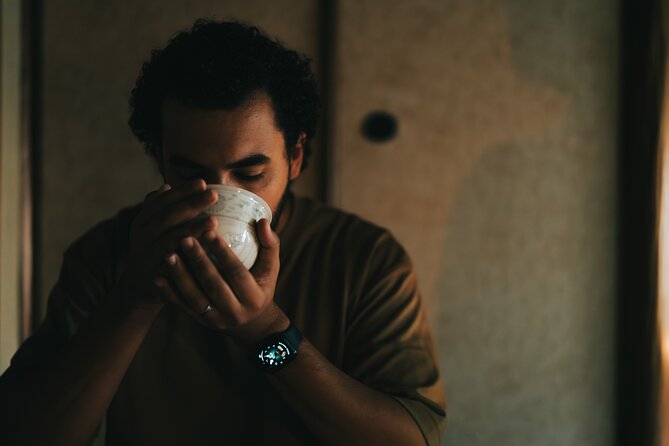
Oboro limits the activity to eight people. That is a practical advantage in a traditional tearoom, where a large crowd would make it harder to see the utensils and easier to lose the quiet mood.
A group of six has been described as comfortable, with enough space for the ceremony to feel personal. You can follow the host’s hands, hear the explanations, and ask questions without competing with a large audience.
Small groups also make the experience less intimidating. First-time visitors often worry that they will use the wrong gesture or interrupt at the wrong moment. The guide’s role is to translate and explain, while the host maintains the ceremony. You are there to observe and appreciate, not to pass an etiquette exam.
The tradeoff is that small-group availability can be limited, especially when several people want the same time. If this experience fits your Kyoto plans, booking ahead is sensible. Confirmation is provided at booking, and the mobile ticket makes arrival straightforward.
A ceremony that favors calm over strict formality
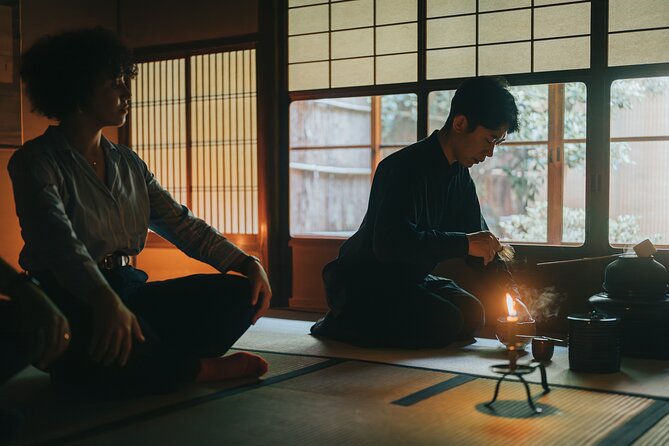
Oboro presents tea ceremony as a practice of respect, attention, and shared quiet. The mood is traditional, but the welcome is not described as severe or difficult for newcomers.
That balance is important. Some tea ceremonies can feel so formal that you spend the whole time worrying about your posture or whether you are holding the bowl correctly. Here, the focus is on watching, listening, tasting, and being present. The English guide helps remove the language barrier, while the host’s careful movements preserve the sense of tradition.
The ceremony also provides a useful window into the long development of Japanese tea culture. Tea in Japan has a history stretching back more than 1,200 years, while the formal ritual developed its own principles around preparation, hospitality, and mindfulness. You do not receive a full academic course in 50 minutes, but you do see how those principles can appear in a simple bowl of tea.
I especially like the way the activity connects a physical action with a mental one. Cleaning a utensil, whisking tea, and presenting a bowl are practical steps, but they also ask you to slow down. That is a meaningful idea to carry into the rest of your trip.
The handmade candle at the end
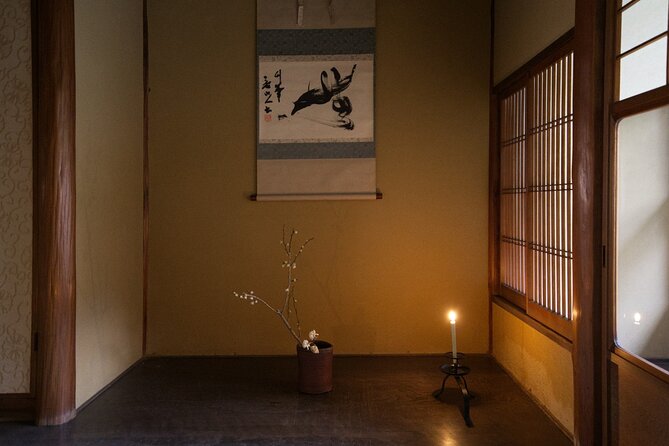
The experience concludes with a small handmade candle. It is a modest souvenir, but it fits the theme better than a generic item from a gift shop.
The candle serves as a reminder of the quiet atmosphere inside the teahouse. It also gives the ceremony a clear ending. You leave with something tied to the experience rather than simply walking out after finishing your drink.
Do not expect a large meal, shopping stop, or extended workshop. This is a compact cultural activity with one clear purpose. The candle, sweets, tea, and careful service make the hour feel complete without adding unnecessary extras.
Is $45.98 a fair price?
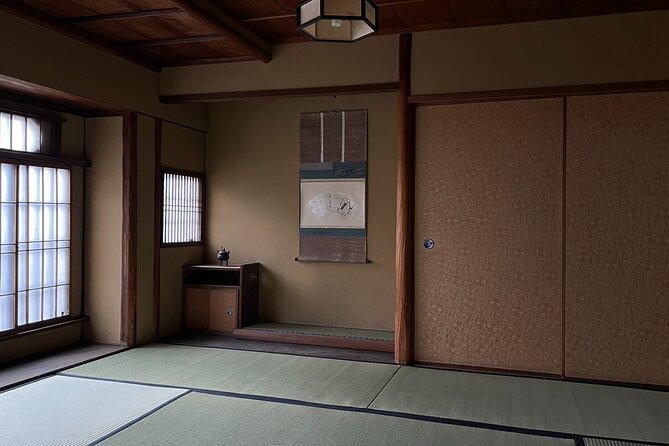
At $45.98 per person, Oboro is not the cheapest way to drink matcha in Kyoto. You can find tea for much less at a café. The value here comes from the setting, instruction, small group, translation, and ceremony itself.
You are paying for access to a traditional teahouse, a guided explanation in English, freshly prepared tea, sweets, and a carefully controlled atmosphere. The maximum group size of eight also matters. A larger commercial activity might cost less, but it would not offer the same sense of quiet or the same view of the host’s technique.
For a short cultural activity, the price is reasonable if you value atmosphere and personal attention. I would consider it particularly worthwhile early in a Kyoto visit, when it can give you context for the other traditional experiences you will see around the city.
The 50-minute duration works well for a busy itinerary. You can fit it between other plans without giving up half a day. The downside is that anyone wanting a detailed historical or practical tea lesson may find the session too brief.
Location, timing, and practical advice
The meeting point is at 237 Nakaogawacho, Kamigyo Ward, Kyoto, 602-0053, Japan. It is near public transportation, and the activity ends back at the same location.
I would give yourself extra time to find the teahouse. The late-arrival rule is strict: after 10 minutes from the start, you cannot join. That policy protects the quiet setting, but it means a delayed train or a last-minute wrong turn could end your plans before they begin.
The mobile ticket is convenient, and booking confirmation arrives at the time of booking. Tips and gratuities are not included, so plan for that separately if you choose to leave one.
Free cancellation is available when you cancel at least 24 hours before the start time. Changes or cancellations inside that window are not refunded. The activity can also be changed or refunded if poor weather affects the experience or if the minimum number of participants is not reached.
Who will enjoy Oboro most?
I would recommend this ceremony to first-time visitors who want an approachable introduction to Japanese tea culture. The English explanation, small group, and relaxed tone remove much of the uncertainty that can come with a highly traditional setting.
It also suits couples, families, and small friend groups looking for a quiet break from sightseeing. The experience is short enough for a child or casual tea drinker to manage, though the reflective mood may appeal more to older children and adults.
You should think twice if you want a lively, hands-on cooking class or a long historical presentation. The central activity is watching the host prepare and serve tea. Your participation is mainly sensory and reflective, with opportunities to ask questions.
I would also skip it if your only goal is a sweet matcha latte. Oboro is about the ritual and the setting, not a modern café drink.
Should you book this Kyoto tea ceremony?
Yes, if you want a calm, well-explained introduction to Japanese tea ceremony in an intimate setting. The candlelight, old teahouse, English guidance, and careful preparation give this short experience a clear sense of place.
The strongest reason to book is the atmosphere. Taku, Naoki, and the other hosts are described as patient, friendly, and deeply familiar with the ceremony, while the space lets you focus on the details. Just arrive early, allow time for transport, and book it for the cultural experience rather than the tea alone.
FAQ
Where does the Oboro tea ceremony take place?
It takes place at 237 Nakaogawacho, Kamigyo Ward, Kyoto, 602-0053, Japan.
How long does the tea ceremony last?
The experience lasts approximately 50 minutes.
How much does the experience cost?
The listed price is $45.98 per person.
How many people can join the activity?
The experience has a maximum of eight participants.
Is an English-speaking guide included?
Yes. An English-speaking guide is included and translates for you during the ceremony.
What is included in the price?
Coffee and/or tea and an English-speaking guide are included.
Are tips and gratuities included?
No. Tips and gratuities are not included.
Where does the experience end?
The activity ends back at the meeting point.
What happens if I arrive more than 10 minutes late?
You cannot join the experience if you arrive more than 10 minutes after it starts.
Can I cancel for a full refund?
Yes, if you cancel at least 24 hours before the experience start time. Cancellations made less than 24 hours before the start are not refunded.
Just added in Kyoto
- The “Golden Route” and Ancient Japan by DIAMIR Erlebnisreisen – 14-Day Tour★ 2.0 · 2 reviews
- Japan: Castles & Cuisine by G Adventures – 6-Day Kyoto to Osaka Tour★ 4.5 · 4 reviews
- Cycle Japan by Explore! – 13-Day Kyoto to Tokyo Tour★ 4.7 · 12 reviews
- Cycle Japan by Intrepid Travel – 11-Day Kyoto to Tokyo Tour★ 4.8 · 2 reviews
- Classic Japan by Intrepid Travel – 11-Day Kyoto to Tokyo Tour★ 4.4 · 14 reviews
- Ancient & Modern Japan 14-Day Tour by Exodus Adventure Travels★ 4.4 · 40 reviews
- 5 Day Cultural Adventure of Kyoto, Nara & Osaka by Tourist Journey★ 2.5 · 2 reviews
- 12 Days Kinosaki Onsen Escape: A Journey Through Japan’s Timeless Towns by UME Travel★ 4.8 · 5 reviews
Tea Ceremonies, compared.
Tea Ceremony in a Traditional Tea House in Kiyomizu
Read our review →
World Heritage Kyoto & Nara Uji Authentic Matcha Experience
Read our review →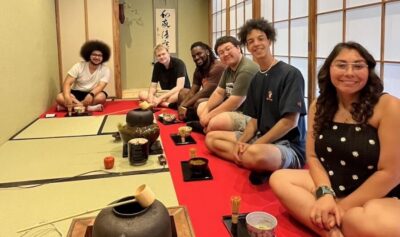
Browse the lists this tour appears in