
Reviewed · WALKING TOURS
One-Day Walking Tour : Enjoy Kyoto to the fullest!
Kyoto rewards a smart route. This private eight-hour tour links the Bamboo Grove, Golden Pavilion, Gion, and Fushimi Inari in one ambitious day, with a guide handling the trains and buses between them. I like the early bamboo walk and the chance to ask a local guide about Japanese history, customs, and daily life. The catch is simple: this is a demanding public-transport day, not a chauffeured sightseeing ride.
The private format is another strong point. Your group can adjust the pace, stop for photos, and ask for help with food or transit, as families did with guides such as Seiya, Naoko, Hironori, Noriko, and Koichi. Still, plan for a lot of walking, extra admission and transit costs, and possible heat, rain, or crowds.
In This Review
- Key points to know before booking
- A big Kyoto day for first-time visitors
- Starting with Arashiyama’s bamboo before the crowds
- Seeing the Golden Pavilion at Kinkaku-ji
- Walking through Gion with eyes open
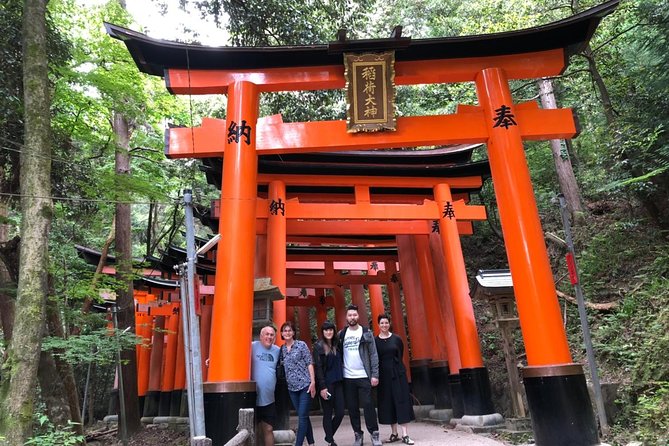
- Walking beneath the torii at Fushimi Inari
- What the private guide adds
- Public transportation is part of the experience
- Pace, weather, and physical effort
- Who will get the most from this Kyoto tour?
- Should you book this one-day Kyoto tour?
- FAQ
- How long does the Kyoto walking tour last?
- What time does the tour start?
- Where does the tour begin?
- Where does the tour end?
- Which sights are included?
- Is the tour private?
- Are admission fees included?
- Is public transportation included?
- Are meals included?
- How much walking is involved?
- Can I cancel for a full refund?
- What happens if bad weather cancels the tour?
Key points to know before booking
- Early Arashiyama visit: You walk through the bamboo forest in the morning, before it becomes as busy.
- Four major Kyoto sights: The route includes Bamboo Forest Street, Kinkaku-ji, Gion, and Fushimi Inari.
- Private experience: Only your group participates, which allows some flexibility during the day.
- Public transportation: Expect trains, buses, and walking rather than a private car.
- Strong guide element: The best part is often the guide’s stories, navigation help, and local suggestions.
- A full physical day: The route can mean 20,000 to 30,000 steps, especially in hot weather.
A big Kyoto day for first-time visitors
Kyoto can feel scattered. Arashiyama lies on the western side of the city, Fushimi Inari is in the south, and Gion sits in between. Add Kyoto’s many railway lines, buses, and busy stations, and a first visit can eat up time before you even reach the sights.
This tour solves that problem with a direct, carefully timed route. You meet at 9 a.m. at Kyoto Station Building, near the Central Station area, then spend roughly eight hours moving from one landmark to the next. The guide is not simply there to point at buildings. The strongest guides help you understand what you are seeing and keep the day moving.
That distinction matters. You could visit these places on your own for less money. You would also need to work out the route, watch the clock, find the correct platform, and decide how long to stay at each stop. For a private group, the fee buys convenience, context, and company more than it buys entry tickets.
The published price is $131.14 per person. You should also allow ¥500 per person for admission, ¥1,500 per person for public transportation, and money for meals. The final cost is therefore higher than the headline price, but it remains reasonable for a private, guide-led day if you want to cover Kyoto’s major sights without planning every connection yourself.
More Walking Tours in Kyoto
- Kyoto Geisha Walking Tour: Gion District & Hidden Gems
★ 4.7 · 3,273 reviews - Kyoto: Gion Magical Night Walking Tour with Geisha Trivia
★ 4.9 · 2,393 reviews - Kyoto: Gion Geisha District Walking Tour – Stories of Geisha
★ 4.7 · 2,187 reviews
Starting with Arashiyama’s bamboo before the crowds
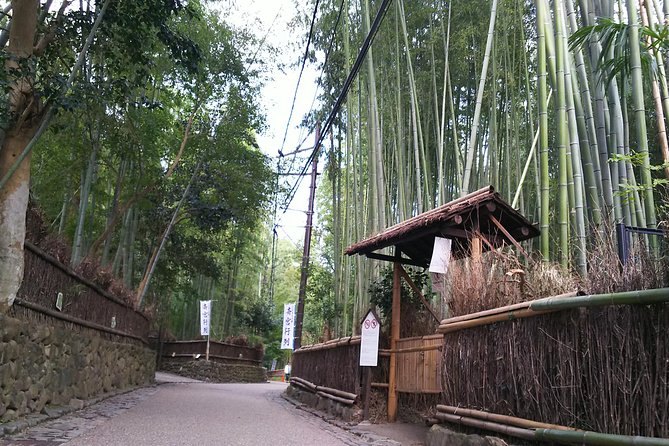
The day begins at Bamboo Forest Street, with about an hour in the famous Arashiyama bamboo grove. This is a smart first stop. The morning light filters through the tall green stalks, and the cooler air gives you a better chance to enjoy the path before it fills with people.
The grove is more about atmosphere than a long hike. You walk beneath the bamboo, pause for photos, and take in the unusual sound and light of the place. The tour description encourages a quiet moment with your eyes closed, which is good advice. Put the camera away briefly and listen to the stalks moving overhead.
The free admission keeps this stop simple. You do not need to budget for an entrance ticket here, though you should wear shoes suited to a full day on foot. Arashiyama is a popular place for photographs, and the early start helps, but it does not guarantee an empty path.
One limitation is time. Arashiyama contains more than the bamboo grove, but this itinerary gives you about an hour at the first stop. If you want a long visit to the district, additional temples, or time beside the river, this tour may feel too tightly packed. The reward is that you get a memorable introduction without spending half the day in one area.
Seeing the Golden Pavilion at Kinkaku-ji
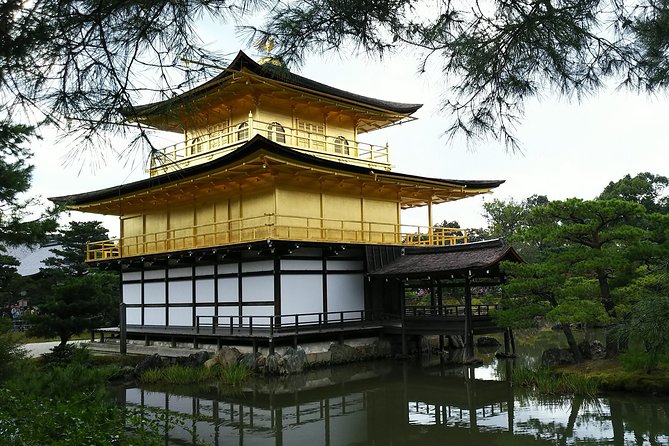
Next comes Kinkaku-ji, usually called the Golden Pavilion. The gold-covered upper structure reflected in the pond is one of Kyoto’s most recognizable views, and it delivers the quick visual impact most first-time visitors expect.
The building began as the villa of a retired shogun and became a temple after his death. That connection gives the site a useful link to samurai-era power and taste. Your guide can add the cultural and historical details that a photograph alone cannot provide.
The visit lasts about an hour. That is enough to see the pavilion, follow the visitor route, and take photographs without turning the stop into a hurried photo break. Admission is not included, so set aside ¥500 per person.
Kinkaku-ji can be crowded, and the main pavilion is viewed from a set route rather than entered as a normal interior space. You should expect a popular monument with a controlled flow of people. The value here comes from seeing it efficiently and understanding why it matters, not from a quiet, solitary temple visit.
The route also makes Kinkaku-ji useful as a contrast to the bamboo grove. Arashiyama offers a natural setting, while Kinkaku-ji presents a polished, highly designed religious site. In one morning, you get two very different images of Kyoto.
Walking through Gion with eyes open
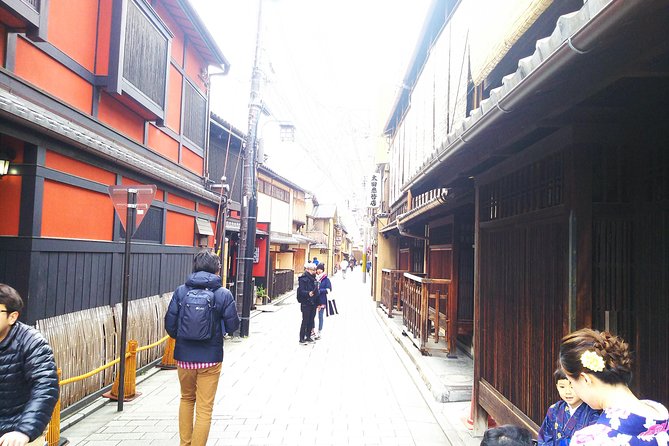
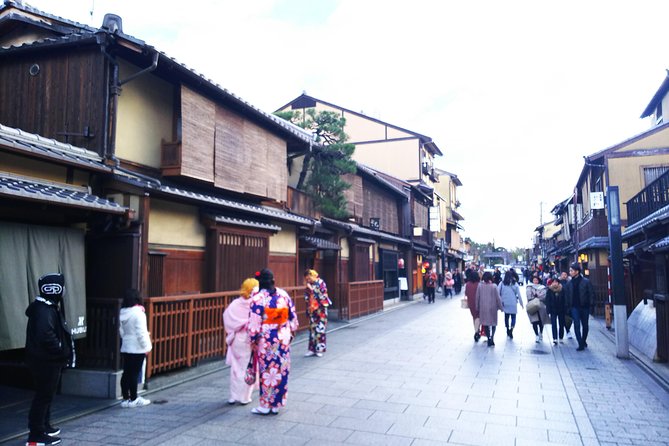
The Gion portion lasts around 40 minutes. That is short, but it gives you time to walk through one of Kyoto’s best-known traditional districts and look at its lanes, buildings, and tea-house culture.
Gion is associated with geisha, known in Kyoto as geiko and maiko depending on their role and training. You might see one walking between a boarding house and a tea house, but there is no promise of an encounter. The sensible approach is to appreciate the district itself rather than treat a person as a photo opportunity.
This is where a guide can add real value. A guide may explain local customs, point out details you would miss, and help you move through the area respectfully. One guide was praised for making history come alive through stories, while another was described as less interactive and more responsive to questions. That tells you something useful: guide style can vary, and you will get more from the walk if you ask questions.
Forty minutes is enough for a taste of Gion, not a full study of the district. If you want extended time on Shirakawa Lane, a meal in the area, or an evening visit, you will need to arrange that separately. The tour gives you a compact introduction before moving on to the final major stop.
A completely different kind of day out:
- PERFECT KYOTO 1-Day Bus Tour
★ 5.0 · 13,518 reviews - [Kyoto & Nara Day Tour] Sagano Scenic Railway & Nara Park & Fushimi Inari Taisha Thousand Torii Gates & Togetsukyo Bridge & Bamboo Grove & Kimono Forest (Departing from Osaka)
★ 4.9 · 10,942 reviews - Kyoto: Fushimi Inari, Kinkakuji, Bamboo Grove 1 Day Bus Tour
★ 4.8 · 4,316 reviews - Kyoto: Tea Ceremony in a Traditional Tea House in Kiyomizu
★ 4.9 · 3,519 reviews
Walking beneath the torii at Fushimi Inari
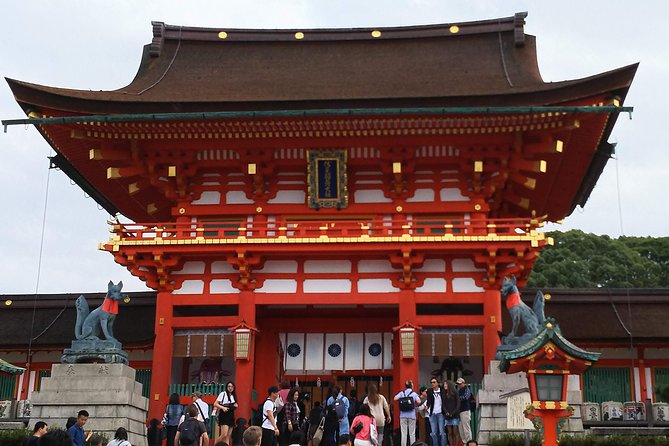
Fushimi Inari-taisha is the day’s most visually distinctive stop. Its hillside path runs beneath rows of vermilion torii gates, many donated by worshippers as thanks for good fortune connected with the shrine’s deity.
The first stretch of gates is the part most people want to see. It is striking, photogenic, and easy to recognize, but it can also be crowded. The route continues uphill, so your guide can help you judge how far to go within the available hour.
Do not expect to explore every path on Mount Inari in one hour. This is an introduction, not a complete mountain walk. If you have limited mobility or are already tired from the day, the steps and slope may be the hardest part of the itinerary.
The shrine is free to enter, which keeps the additional cost down. It also gives the day a strong finish. After the carefully framed view at Kinkaku-ji and the narrow streets of Gion, Fushimi Inari opens into a long, repeating corridor of gates that feels entirely different.
What the private guide adds
The most praised part of this experience is the human element. Guides such as Hironori, Seiya, Noriko, Toshi, Fuji, Lynn, Naoko, Satomi, Saori, Koichi, Chie, Yukako, and Megumi are described as friendly, patient, organized, and helpful with navigation.
That range of names also means you should not assume you will receive one particular guide. The quality of the day depends partly on the person assigned to you. A strong guide can explain Japanese society as well as temples, suggest good photo spots, and adjust the schedule without making you feel rushed.
Several guides helped families move through Kyoto’s train system. One guide helped a group find a Wagyu restaurant near the bamboo grove, while another led a group to excellent udon. Food is not included, but this kind of local help can be useful when you do not want to lose time choosing a restaurant.
The private setup allows practical changes. A family of six adjusted its program and skipped a formal lunch to make better use of the day. Another group with a one-year-old in a stroller received patient help and did not feel hurried. These examples suggest that the tour is more adaptable than a large group excursion.
Still, you should take an active role. Ask questions, explain your pace, and say if you need a break. One less positive experience came from a visitor who expected a car and driver rather than a guide using public transportation. The operator acknowledged that the tour relies on trains, buses, and walking, so this point must be clear before you book.
Public transportation is part of the experience
The guide fare is included, but public transportation is not. Budget ¥1,500 per person for transit, on top of the ¥500 admission charge and your meals. The exact transport mix can include trains, buses, and possibly taxis, depending on the day and the route.
For some people, this is a plus. You learn how to move around Kyoto and avoid the slow, uncertain process of figuring out each connection yourself. Noriko and Fuji were praised for helping with the train system, and that practical support can be worth a great deal on a first visit.
For others, public transit may feel like work. Kyoto stations can be confusing, and the day includes changes between distant parts of the city. You are not sitting in a coach while someone else handles the roads. You are walking to stations, boarding trains or buses, and continuing on foot at the other end.
The itinerary is best for someone who wants to see a lot and accepts that getting there is part of the day. If you want a relaxed pace or private vehicle service, this is the wrong product.
Pace, weather, and physical effort
The official guidance calls for moderate physical fitness and quite a bit of walking. That wording deserves attention. One person recorded about 20,000 steps in hot weather, while a family with a stroller estimated close to 30,000 steps.
Those numbers are not a guarantee, but they show the possible scale of the day. You should wear comfortable shoes, carry water, and be ready for stairs and long transfers. The route crosses much of Kyoto, so tired legs are a normal possibility by the final shrine.
Weather can change the experience sharply. Guides have helped groups stay hydrated and find shade during very hot days. Other groups continued through rain and still enjoyed the route, but poor weather can lead to cancellation, with a different date or full refund offered.
The tour requires good weather, and free cancellation is available up to 24 hours before the start time. Less than 24 hours leaves you outside the full-refund window, so do not wait until the last moment if the forecast looks poor.
Who will get the most from this Kyoto tour?
I would choose this tour if you have only one day in Kyoto and want the major sights organized for you. It is especially useful for first-time visitors, families, and private groups who prefer a guide’s help with transit and want the freedom to ask questions.
It also suits people who like context. The best day is not just four photo stops. It is a chance to connect the bamboo grove with Arashiyama, the Golden Pavilion with samurai-era culture, Gion with traditional entertainment, and Fushimi Inari with shrine practice and offerings.
I would hesitate if you are trying to keep costs very low. You can visit the same broad sights independently for less, provided you are willing to research routes and manage the day yourself. I would also hesitate if you dislike long walking days, hot weather, or public transport.
The 4.9 rating from 78 ratings and 99 percent recommendation rate reflect strong satisfaction overall. The one serious complaint centered on the price and the misunderstanding about transport, not the sights themselves. Read the inclusions carefully, and you will avoid that mismatch.
Should you book this one-day Kyoto tour?
Book it if you want maximum coverage in one private day and value a guide who can explain the city while handling the practical details. The early bamboo visit, efficient route, and help with trains make it a strong first-day orientation to Kyoto.
Skip it if you want a slow temple day, a private car, or extended time in each neighborhood. At $131.14 per person before ¥500 admission, ¥1,500 transit, and meals, it is not the cheapest way to see Kyoto. But for a group that wants four major sights, local guidance, and less time spent navigating, it offers solid value.
FAQ
How long does the Kyoto walking tour last?
The tour lasts approximately eight hours.
What time does the tour start?
It starts at 9 a.m.
Where does the tour begin?
The meeting point is Kyoto Station Building, 901 Higashishiokōjichō, Shimogyo Ward, Kyoto, 600-8216, Japan.
Where does the tour end?
The experience ends back at the meeting point.
Which sights are included?
The route includes Bamboo Forest Street in Arashiyama, Kinkaku-ji Temple, the Gion district, and Fushimi Inari-taisha Shrine.
Is the tour private?
Yes. Only your group participates in the activity.
Are admission fees included?
No. An admission fee of ¥500 per person is listed separately.
Is public transportation included?
No. Public transportation costs about ¥1,500 per person and are paid separately.
Are meals included?
No. Meals are not included.
How much walking is involved?
The tour requires quite a bit of walking and a moderate level of physical fitness. Some people have recorded roughly 20,000 to 30,000 steps during the day.
Can I cancel for a full refund?
Yes, if you cancel at least 24 hours before the experience start time. Cancellations made less than 24 hours in advance are not refunded.
What happens if bad weather cancels the tour?
If the activity is canceled because of poor weather, you will be offered a different date or a full refund.
Just added in Kyoto
- The “Golden Route” and Ancient Japan by DIAMIR Erlebnisreisen – 14-Day Tour★ 2.0 · 2 reviews
- Japan: Castles & Cuisine by G Adventures – 6-Day Kyoto to Osaka Tour★ 4.5 · 4 reviews
- Cycle Japan by Explore! – 13-Day Kyoto to Tokyo Tour★ 4.7 · 12 reviews
- Cycle Japan by Intrepid Travel – 11-Day Kyoto to Tokyo Tour★ 4.8 · 2 reviews
- Classic Japan by Intrepid Travel – 11-Day Kyoto to Tokyo Tour★ 4.4 · 14 reviews
- Ancient & Modern Japan 14-Day Tour by Exodus Adventure Travels★ 4.4 · 40 reviews
- 5 Day Cultural Adventure of Kyoto, Nara & Osaka by Tourist Journey★ 2.5 · 2 reviews
- 12 Days Kinosaki Onsen Escape: A Journey Through Japan’s Timeless Towns by UME Travel★ 4.8 · 5 reviews
Walking Tours, compared.
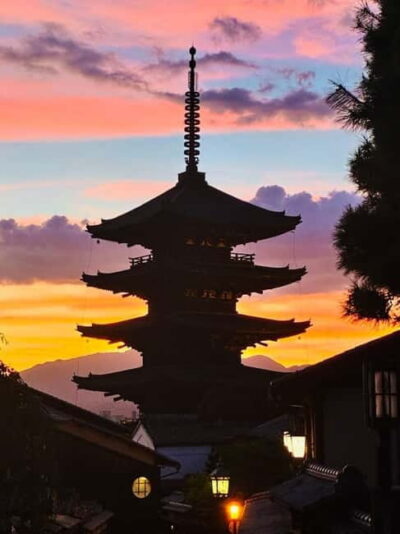
Kyoto Geisha Walking Tour: Gion District & Hidden Gems
Read our review →
Tokyo Tsukiji Fish Market Food and Culture Walking Tour
Read our review →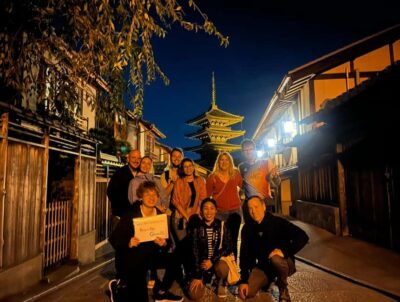
Gion Magical Night Walking Tour with Geisha Trivia
Read our review →
Imperial Palace and Shogun Historical Walking Tour
Read our review →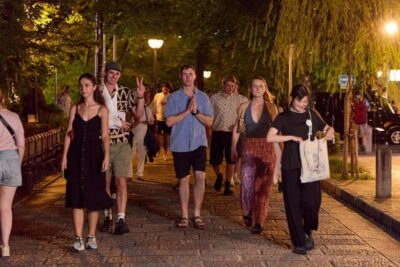
Gion Geisha District Walking Tour – Stories of Geisha
Read our review →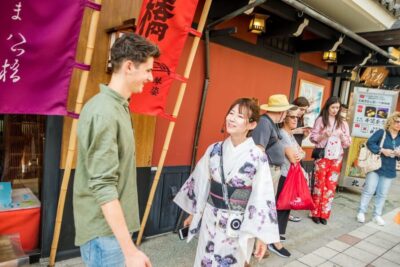

Shinjuku Local Bar and Izakaya Guided Walking Tour
Read our review →
Browse the lists this tour appears in