
Reviewed · KIMONO AND CULTURAL DRESS
One Hour Geisha Show in Gion Kyoto
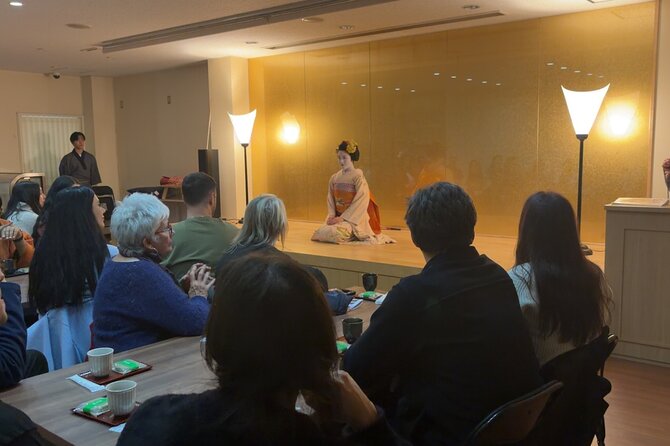
Gion offers more than lucky sightings. This one-hour show gives you a planned, close-up look at Kyoto’s geisha traditions, with live dances, tea, a light snack, a Japanese game, and time for questions. I like the intimate setting and the chance to meet a real maiko, an apprentice geisha, rather than simply hoping to spot one on a Gion street. The main consideration is that this is a staged cultural presentation, not a glimpse into everyday geisha life.
I also like the useful balance of performance and explanation. You see two traditional dances, then have a chance to ask questions and take photos. The show begins at 4:00 pm, which fits neatly before dinner, though the fixed meeting point and one-hour format may feel too brief if you want a longer cultural program.
In This Review
- Key points at a glance
- Why this Gion show is easier than spotting a maiko
- Meeting the maiko at 4:00 pm
- Two dances, then time to ask questions
- Tea and a snack add a simple welcome
- A Japanese game keeps the hour from feeling formal
- Photos work best at the end
- The intimate setting is a strength and a limitation
- What the $79.26 price buys you
- How to fit the show into a Kyoto day
- Who will enjoy this experience most
- Booking, cancellation, and small practical points
- Should you book the One Hour Geisha Show in Gion?
- FAQ
- How long is the One Hour Geisha Show in Gion?
- What time does the show start?
- Where does the experience begin?
- Where does the experience end?
- Is a maiko included in the performance?
- How many dances are included?
- Is tea included?
- Are additional food and drinks included?
- Can I ask questions during the experience?
- Can I take photos?
- Is cancellation free?
Key points at a glance
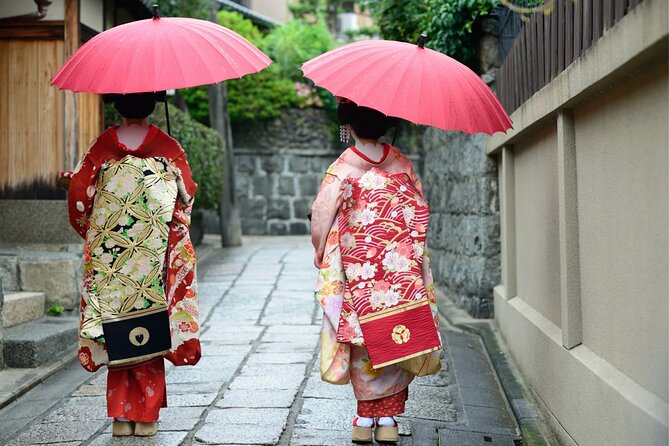
- A real maiko performs up close: Kyoto has only about 40 maikos, making this a rare chance to see an apprentice geisha in a formal setting.
- Two dances anchor the hour: The performance gives you a direct look at the controlled movements, costume, and presentation of maiko culture.
- Questions are part of the program: You can ask about the tradition instead of leaving with only a few photographs.
- Tea and a light snack are included: This adds a small but welcome Japanese hospitality touch without turning the event into a full meal.
- A Japanese game breaks the formality: You do not only sit and watch. You also learn how to play a traditional game with the group.
- Photos come at the end: The timing lets you watch first, then take pictures after the formal performance.
Why this Gion show is easier than spotting a maiko
Gion is one of Kyoto’s best-known areas for geisha culture, but seeing a maiko on the street is never something you can count on. You might catch a brief glimpse of one moving between appointments, or you might spend an evening seeing none at all. This show removes that guesswork.
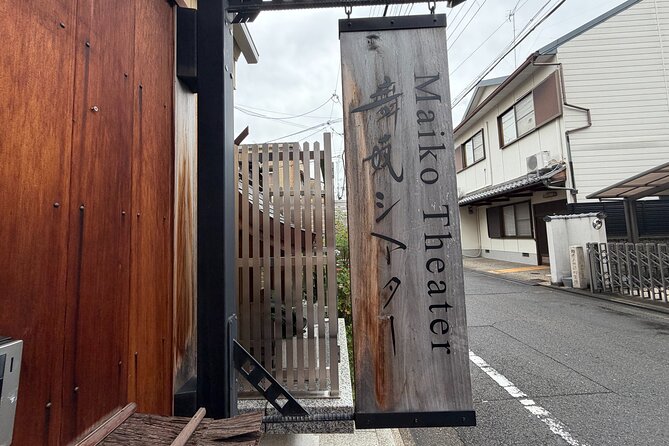
At the meeting point on 302-2 Daikokucho in Higashiyama Ward, you attend a planned presentation focused on the maiko tradition. The setting is described as intimate and private, giving you more direct contact than a large theater production usually allows.
That format matters. A street sighting may be visually striking, but it can tell you very little. Here, the dance is followed by a question-and-answer session, so you can place what you have seen into a wider cultural context.
The experience also gives you a respectful way to encounter this tradition. You are not chasing a performer through the streets or trying to take a rushed photograph. The formal setting makes the interaction clearer for everyone.
More Kimono Experiences in Kyoto
- [Kyoto & Nara Day Tour] Sagano Scenic Railway & Nara Park & Fushimi Inari Taisha Thousand Torii Gates & Togetsukyo Bridge & Bamboo Grove & Kimono Forest (Departing from Osaka)
★ 4.9 · 10,942 reviews - Kyoto Geisha Walking Tour: Gion District & Hidden Gems
★ 4.7 · 3,273 reviews - Kyoto: Gion Magical Night Walking Tour with Geisha Trivia
★ 4.9 · 2,393 reviews
Meeting the maiko at 4:00 pm
The show starts at 4:00 pm and lasts about one hour. The timing is useful for a Kyoto day plan. You can spend the earlier part of the day visiting temples or walking through Higashiyama, then attend the show before an evening meal.
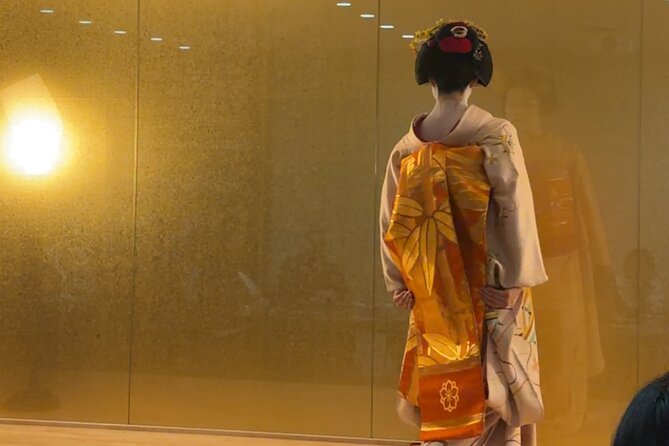
The main attraction is meeting a real maiko, an apprentice geisha. The distinction matters. A maiko is still in training, and her presentation includes formal dance, traditional dress, and carefully practiced movements.
The program describes this as a close-up performance. That does not mean you should expect an unplanned personal visit or a long private conversation. It means the setting places you near the performer and gives you a chance to see details that may be lost in a large venue.
The small number of maikos in Kyoto adds weight to the occasion. The figure given for Kyoto is about 40 maikos, so this is not a common sight in the ordinary sense. For many people, the opportunity to see one in a dedicated cultural setting will be the central reason to book.
You should arrive with the right expectations. This is a show created for an audience, not an open window into every part of maiko life. That staged quality is a limitation, but it is also what makes the hour reliable and accessible.
Two dances, then time to ask questions
The performance includes two dances. This gives the hour a clear center, rather than filling the time with a lecture or a string of unrelated activities.
Dance is especially useful here because it communicates details that a spoken explanation alone cannot. You see the controlled gestures and formal presentation directly. You also get a sense of how much discipline is required to perform even a short piece.
The dances are not presented as the entire lesson. Afterward, the question-and-answer session gives you a chance to ask about points that may not be obvious. This is one of the strongest parts of the program because it lets you steer some of the conversation.
The questions you bring will shape the value of this section. If you are curious about the distinction between a maiko and a geisha, the role of dance, or the meaning of the formal presentation, this is your chance to ask. The supplied information does not list a set menu of questions, so you should not expect every topic to be covered automatically.
One particularly praised part of the event is the host’s communication. The setting allows time for questions, and the host is described as communicating clearly. That helps make the presentation more than a beautiful but hard-to-understand display.
Tea and a snack add a simple welcome
Tea and a light snack are included in the admission price. I see this as a thoughtful extra rather than a major food feature. It gives the hour a more traditional hospitality feel and adds a pause around the performance.
Do not book this expecting a meal. Additional food and drinks are not included, so you will want to plan dinner separately. The snack is best understood as a small accompaniment to the cultural program.
This also makes the price easier to assess. At $79.26 per person, the event is not a cheap way to fill an hour. Part of what you pay for is the arranged access to a maiko, the performance, the explanation, and the controlled setting. Tea and a snack add modest value, but they are not the reason to choose this activity.
If your main goal is eating or drinking, this is the wrong purchase. If your main goal is a focused cultural encounter, the refreshments make the presentation feel more complete.
A completely different kind of day out:
- PERFECT KYOTO 1-Day Bus Tour
★ 5.0 · 13,518 reviews - Kyoto: Fushimi Inari, Kinkakuji, Bamboo Grove 1 Day Bus Tour
★ 4.8 · 4,316 reviews - Kyoto: Tea Ceremony in a Traditional Tea House in Kiyomizu
★ 4.9 · 3,519 reviews - Kyoto: Gion Make Your Own Chopsticks with Engraving Option
★ 5.0 · 3,465 reviews
A Japanese game keeps the hour from feeling formal
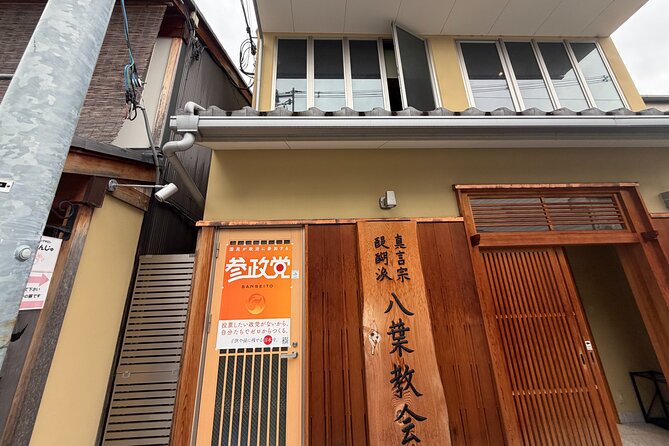
After watching the dances and taking part in the discussion, you learn how to play a Japanese game. This is a welcome change of pace.
A performance can create distance between you and the performer. The game gives you a simple way to participate. It also helps the program work for people who may not be familiar with geisha customs or Japanese performing arts.
The exact game is not identified in the available details, so you should not book this expecting a particular famous game. The important point is the format: you are shown how to play, then get a chance to take part.
This section may be especially useful for families and mixed-age groups, provided everyone in your party can participate in the activity. The program is designed for most people, and the combination of watching, asking, and playing offers more variety than a straight stage show.
It also gives the hour a relaxed finish. The dances supply the formal beauty. The game brings the group into the room in a more direct way.
Photos work best at the end
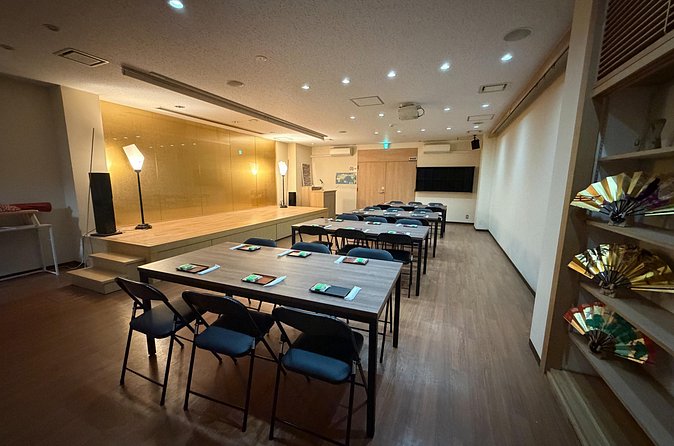
Photo opportunities are available at the end of the program. This arrangement is sensible. You can watch the dances without turning the whole performance into a camera exercise, then take pictures after the formal portion is finished.
You should still follow the directions given at the venue. The supplied information confirms that photos are possible at the end, but it does not promise unlimited private photography or a specific number of pictures.
For many people, this final moment will be important. A photo helps you remember the meeting, but the value of the show is not limited to getting a portrait. The dances, questions, and game give the visit more substance than a quick photo stop.
The timing also makes the program feel orderly. First you watch. Then you ask. Then you play. Finally, you take pictures. That structure is one reason the hour can feel full without becoming rushed.
The intimate setting is a strength and a limitation
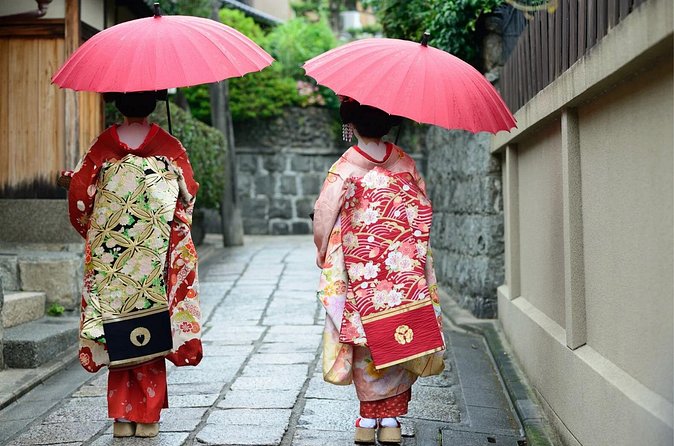
A previous attendee described the setting as intimate and private, with enough time to ask many questions. That detail is worth taking seriously when deciding if the event fits you.
An intimate room can make the maiko’s performance feel more immediate. You are likely to notice more than you would from the back of a large auditorium. The host can also address questions more directly.
At the same time, intimate does not necessarily mean one-on-one. This is a group activity, and the exact group size is not provided. If several people attend, question time will be shared. You should be ready to listen to other people’s questions as well as ask your own.
The staged setting is another point to weigh. This program is built for visitors, so it presents a selected part of geisha culture in a clear, welcoming format. That is useful if you want an introduction. It may feel less satisfying if you are searching for an unscripted look at professional life in Gion.
I would treat the show as a cultural introduction, not a substitute for a wider study of Kyoto’s geisha districts. Within that role, the format makes good sense.
What the $79.26 price buys you
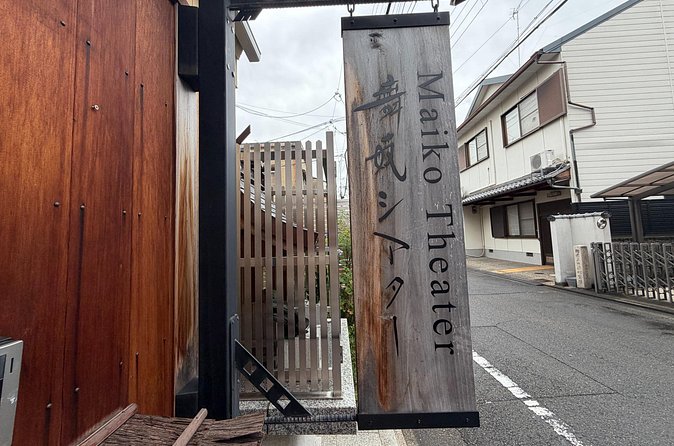
The listed cost is $79.26 per person. That puts the show in the category of a special cultural activity, not a casual stop you add without thought.
The value depends on what you want from Kyoto. If you only want to walk through Gion, you can do that without paying an admission fee. You can also visit the neighborhood at your own pace. But those options do not guarantee a maiko performance, a question period, a Japanese game, or a planned photo opportunity.
The strongest value comes from access and reliability. You are paying for a scheduled encounter with a real maiko, rather than gambling on a street sighting. The one-hour length also keeps the commitment manageable.
I think the price is easier to justify for visitors who place high value on traditional performance and direct explanation. It is less convincing for people who prefer spontaneous experiences or who already have several paid cultural shows on their itinerary.
Group discounts are available, which could improve the cost for a family or party booking together. The exact discount is not stated, so check the total before booking.
How to fit the show into a Kyoto day
The 4:00 pm start gives you several practical options. You can visit Gion earlier, then attend the show without needing to sacrifice a full morning. You can also schedule it between daytime sightseeing and dinner.
The activity starts and ends at the meeting point in Gion. Transportation to and from the venue is not listed as included, so plan to make your own way there. The address is 302-2 Daikokucho, Higashiyama Ward, Kyoto, 605-0832, Japan.
Allow yourself enough time to find the location. Gion’s streets can be confusing, and the most useful detail here is the precise meeting address. Keep it available on your phone, since the ticket is mobile and confirmation arrives when you book.
Because the show lasts only about an hour, it works well beside other plans. Still, do not schedule another activity at exactly 5:00 pm unless you know the route and timing well. The experience ends back at the meeting point, but your next stop may take longer to reach than the show itself.
Who will enjoy this experience most
I would recommend this program to you if you want a reliable introduction to geisha culture without committing to a long lecture or full evening event.
It suits:
- First-time visitors to Kyoto who want context for Gion
- People interested in traditional dance and performance
- Families and groups that like a mix of watching and participating
- Photographers who want a planned opportunity at the end
- Anyone curious about the difference between a maiko and a geisha
- Visitors with a free late afternoon
The program may be less suitable if you want a meal, a long performance, or a private conversation. It also may not satisfy you if you expect to see ordinary, unplanned life behind the scenes.
Most people can participate, according to the practical information provided. No special fitness level is listed, but the activity is still best for anyone comfortable attending a one-hour cultural presentation and joining a simple game.
Booking, cancellation, and small practical points
Confirmation is provided at the time of booking, and the mobile ticket makes it easier to keep the admission details with you. The activity has been booked more than 10 times in the past week, and it has a 4.9 rating from 59 reviews, with 100 percent recommendation shown in the supplied information.
Free cancellation is available if you cancel at least 24 hours before the start time. If you cancel within 24 hours, you will not receive a refund, and changes made in that period are not accepted. The cut-off follows Kyoto local time.
The provider is GuideMe Japan. Since group discounts are offered, compare the booking total if you are visiting with family or friends.
Should you book the One Hour Geisha Show in Gion?
Book it if you want a dependable chance to see a real maiko, watch two dances, ask questions, learn a Japanese game, and take photos in a carefully arranged setting. The strongest parts are the intimate presentation, clear communication from the host, and the mix of performance with participation.
Skip it if you want a full meal, a long evening of entertainment, or an unscripted look at daily geisha life. At $79.26, the hour needs to match your interests.
For most first-time Kyoto visitors curious about Gion, I think the show is a sensible choice. It gives you more than a quick street sighting and more personal context than a photograph alone. Just arrive expecting a polished cultural presentation, and you will have a fair basis for judging its value.
FAQ
How long is the One Hour Geisha Show in Gion?
The experience lasts approximately one hour.
What time does the show start?
The scheduled start time is 4:00 pm.
Where does the experience begin?
It begins at 302-2 Daikokucho, Higashiyama Ward, Kyoto, 605-0832, Japan.
Where does the experience end?
The activity ends back at the meeting point.
Is a maiko included in the performance?
Yes. The program includes a live maiko show featuring an apprentice geisha.
How many dances are included?
The program includes two traditional dances.
Is tea included?
Yes. Tea and a light snack are included.
Are additional food and drinks included?
No. Additional food and drinks are not included.
Can I ask questions during the experience?
Yes. A question-and-answer session is included.
Can I take photos?
Yes. There is an opportunity to take photos at the end of the show.
Is cancellation free?
Free cancellation is available when you cancel at least 24 hours before the experience start time. Cancellations made less than 24 hours in advance are not refunded.
More Show in Kyoto
- Kyoto Sumo Show with Experience & Photo, 2 Drinks Included
★ 5.0 · 941 reviews - Kyoto: Sumo Experience (with Live Show & Audience Challenge)
★ 5.0 · 519 reviews - Kyoto Gion Cultural Walk & Geisha Show with Dining Options
★ 5.0 · 518 reviews - Kyoto Gion Cultural Walk & Geisha Show with Dining Options
★ 5.0 · 483 reviews
Just added in Kyoto
- The “Golden Route” and Ancient Japan by DIAMIR Erlebnisreisen – 14-Day Tour★ 2.0 · 2 reviews
- Japan: Castles & Cuisine by G Adventures – 6-Day Kyoto to Osaka Tour★ 4.5 · 4 reviews
- Cycle Japan by Explore! – 13-Day Kyoto to Tokyo Tour★ 4.7 · 12 reviews
- Cycle Japan by Intrepid Travel – 11-Day Kyoto to Tokyo Tour★ 4.8 · 2 reviews
- Classic Japan by Intrepid Travel – 11-Day Kyoto to Tokyo Tour★ 4.4 · 14 reviews
- Ancient & Modern Japan 14-Day Tour by Exodus Adventure Travels★ 4.4 · 40 reviews
- 5 Day Cultural Adventure of Kyoto, Nara & Osaka by Tourist Journey★ 2.5 · 2 reviews
- 12 Days Kinosaki Onsen Escape: A Journey Through Japan’s Timeless Towns by UME Travel★ 4.8 · 5 reviews
Kimono and Cultural Dress, compared.
![[Kyoto & Nara Day Tour] Sagano Scenic Railway & Nara Park & Fushimi Inari Taisha Thousand Torii Gates & Togetsukyo Bridge & Bamboo Grove & Kimono Forest (Departing from Osaka)](https://media.japanvisits.com/wp-content/uploads/kyoto-nara-day-tour-sagano-scenic-railway-nara-park-fushimi-inari-taisha-thousand-torii-gates-togetsukyo-bridge-bamboo-grove-kimono-forest-departing-from-osaka-k110001-400x257.jpg)

Tokyo Asakusa Kimono&Yukata Rental at Kimono Miyabi Asakusa Station
Read our review →
Kyoto Geisha Walking Tour: Gion District & Hidden Gems
Read our review →
Gion Magical Night Walking Tour with Geisha Trivia
Read our review →
Gion Geisha District Walking Tour – Stories of Geisha
Read our review →
Best of Kyoto: Gion, Geisha, Pagodas & Cobblestones
Read our review →
Kyoto Kimono Rental Experience (Optional Exquisite Hair Styling/Japanese Makeup/Photography) (Ookini Kiyomizu-dera Main Store)
Read our review →Browse the lists this tour appears in