
Reviewed · KIMONO AND CULTURAL DRESS
One Hour Geisha Show in Kyoto
Kyoto’s rarest hour may last only ten minutes. This maiko show gives you a close look at an apprentice geisha through two graceful dances, an open Q&A, photographs, and a traditional game. I like the unusually personal format, and I like that the English and Korean guides help explain the clothing, customs, and performance. The main thing to understand is that the maiko will not dance continuously for an hour.
The tour costs about $50 per person, which is fair if you value access, explanation, and a small cultural setting rather than a long stage performance. The tea house version adds tea, Japanese snacks, and a 30-minute visit to Kitano Tenmangū Shrine, while the Gion Theater version is more accessible but does not include that shrine walk. Guides such as Genki, Rin, Ai, and Taira Yoshino have been praised for making the event easy to follow.
In This Review
- Key details before you book
- Why a short maiko performance matters
- Meeting the maiko before the dances
- The two five-minute dances
- Q&A, tea, and the traditional game
- The photo session and small keepsakes
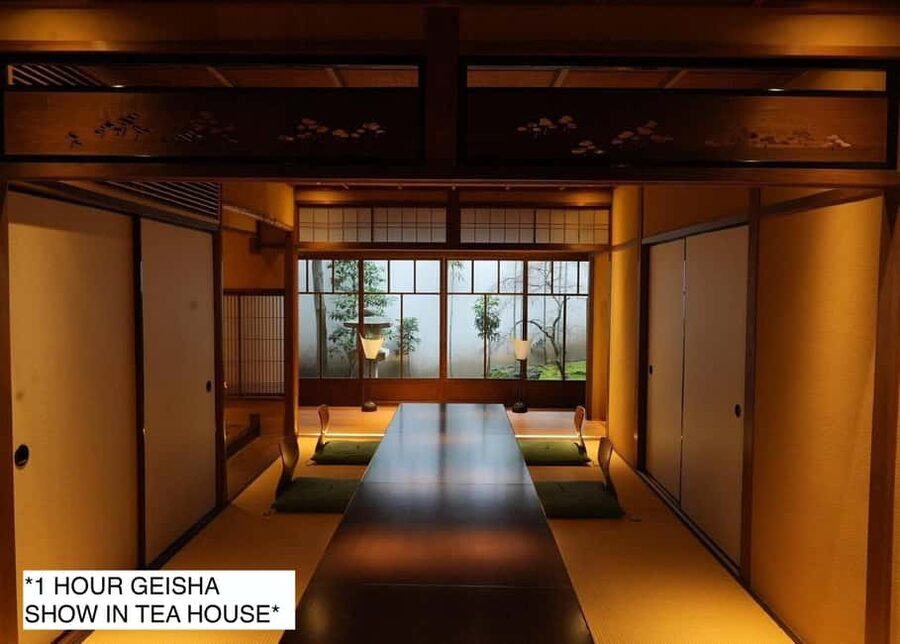
- Choosing the tea house in a Kyo-Machiya
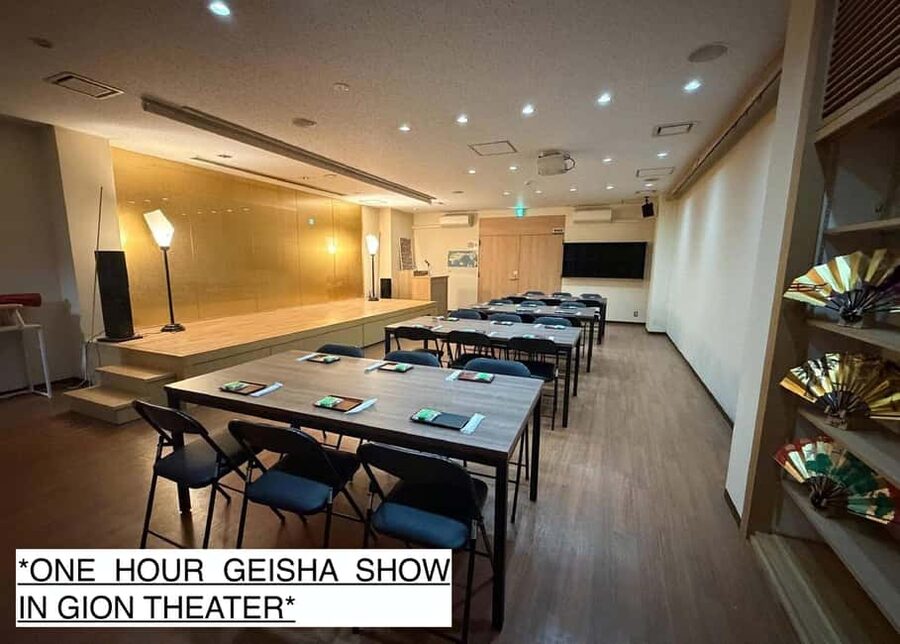
- Choosing the Gion Theater option
- Kitano Tenmangū Shrine adds more than extra time
- Is $50 good value?
- Practical details that can make or break the hour
- Who should book this maiko show?
- Should you book it?
- FAQ
- How long does the maiko show last?
- Will the maiko perform continuously for one hour?
- Can I take photographs and videos?
- Is a photo with the maiko included?
- What is included in the price?
- Are additional food and drinks included?
- What is the difference between the tea house and Gion Theater options?
- Is the experience wheelchair accessible?
- What should I bring?
- What languages are available?
Key details before you book
- Two short dances, not one nonstop show: Each dance lasts about five minutes, reflecting the brief format traditionally used for maiko performances.
- A real maiko appears in person: Kyoto has only about 40 maikos, making this a rare chance to see one at close range.
- The tea house and theater options differ: The tea house is held in a Kyo-Machiya house and includes the shrine session. The theater is a purpose-built showhouse and allows wheelchair access.
- Photos and videos are welcome: You can take pictures during the permitted parts of the event and have a photo opportunity with the maiko.
- The audience joins in: After the dances, you can ask questions and play a traditional game such as Konpira Fune Fune.
- Plan for 60 to 105 minutes: Timing depends on the option you choose, with the tea house version including the extra shrine visit.
Why a short maiko performance matters
A maiko is an apprentice geisha, not simply a performer dressed in historic costume. She is part of Kyoto’s traditional entertainment world, where dance, music, conversation, etiquette, and presentation all matter.
That is why the show is intentionally brief. The two dances together last only around ten minutes, and this may surprise anyone expecting a full hour of continuous entertainment. Instead, the hour is built around the performance and the chance to understand it.
I think this format works well for first-time visitors. You see the maiko move at close range, then have time to ask what you are seeing. The guide can explain the meaning of her hairstyle, makeup, kimono, and accessories, details that would be easy to miss from a theater seat.
The small audience also helps. The tea house option accepts up to 23 people, while the Gion Theater option allows up to 30. Neither is completely private, but these numbers are small enough for the Q&A and photo session to feel more direct than a large cultural show.
More Kimono Experiences in Kyoto
- [Kyoto & Nara Day Tour] Sagano Scenic Railway & Nara Park & Fushimi Inari Taisha Thousand Torii Gates & Togetsukyo Bridge & Bamboo Grove & Kimono Forest (Departing from Osaka)
★ 4.9 · 10,942 reviews - Kyoto Geisha Walking Tour: Gion District & Hidden Gems
★ 4.7 · 3,273 reviews - Kyoto: Gion Magical Night Walking Tour with Geisha Trivia
★ 4.9 · 2,393 reviews
Meeting the maiko before the dances
The event begins with an introduction to the maiko and her appearance. Her clothing, hair, makeup, and ornaments are explained before the dance starts, giving you a useful visual guide.
This opening is one of the strongest parts for visitors who know little about geisha culture. The costume is not just decoration. The guide helps connect the visible details with the maiko’s role and training.
Communication depends on the guide, since the maiko’s answers are translated for the audience. Guides named in past sessions include Genki, Chihiro, Rin, Ai, and Taira Yoshino. Genki, in particular, has been praised for explaining clearly and helping the audience communicate with the maiko.
Language can still affect the pace. English and Korean are offered, and a mixed-language group may require extra translation. One person found that explanations became harder to follow when several languages were being handled at once. If you need every detail, sit where you can hear the guide well and expect a few pauses.
The two five-minute dances
The maiko performs two traditional dances, each lasting roughly five minutes. In one session, the dance was performed from both sides of the table so people could see the movements clearly. That is a thoughtful touch in a compact room.
The dances are slow, controlled, and carefully presented. You will notice hand gestures, posture, footwork, and the movement of the kimono rather than fast choreography. The beauty comes from restraint, so the short length is part of the point.
I would not book this expecting a concert-length show. I would book it if you want to see a traditional art form up close and have the setting explained. The performance is the center of the event, but the surrounding conversation gives it meaning.
Photos and videos are welcome, which is unusual for a cultural event involving a working maiko. Still, be considerate. Keep your phone ready before the dance begins, avoid letting your camera block another person, and follow the guide’s instructions about the best times for photographs.
Q&A, tea, and the traditional game
After the dances, the mood becomes more relaxed. You can ask questions about the maiko’s work, training, daily life, and appearance. The guide translates questions and answers, so this is the part of the event where the guide’s skill matters most.
The Q&A also keeps the experience from becoming a simple photo opportunity. You are given a chance to understand the person and profession behind the costume. Several people especially valued how openly the maiko answered questions.
Tea and traditional Japanese snacks are included with the tea house option. You can choose hot matcha tea or water, according to one detailed account. Additional food and drinks cost extra, so do not assume this is a full meal.
Then comes a traditional Japanese game. Konpira Fune Fune is played with rhythm and hand movements, and the maiko may invite people to take part. It is lighthearted and often produces the biggest laughs of the session. You may lose, as many people do, but that is part of the fun.
This section makes the event feel less formal without turning it into a staged comedy act. The maiko remains the focus, while the game gives you a simple way to participate.
A completely different kind of day out:
- PERFECT KYOTO 1-Day Bus Tour
★ 5.0 · 13,518 reviews - Kyoto: Fushimi Inari, Kinkakuji, Bamboo Grove 1 Day Bus Tour
★ 4.8 · 4,316 reviews - Kyoto: Tea Ceremony in a Traditional Tea House in Kiyomizu
★ 4.9 · 3,519 reviews - Kyoto: Gion Make Your Own Chopsticks with Engraving Option
★ 5.0 · 3,465 reviews
The photo session and small keepsakes
At the end, you have a chance to take a photo with the maiko. Since photography and video are welcome, you can record parts of the occasion, then take a more deliberate portrait at the end.
One person received a name sticker as a small good-luck gift. This is not listed as a guaranteed inclusion, so treat it as a possible extra rather than something to expect.
The photo opportunity is valuable because you are not limited to watching from across a stage. You can preserve a personal memory of the meeting. At the same time, remember that this is a cultural encounter, not a character meet-and-greet. A polite manner and attention to instructions will help keep the atmosphere respectful.
Choosing the tea house in a Kyo-Machiya
The tea house option takes place in a Japanese Kyo-Machiya, a traditional Kyoto-style house. This setting gives the event a more intimate feel and connects the tea, snacks, architecture, and maiko presentation in one place.
The tea house option also includes a 30-minute guided session at Kitano Tenmangū Shrine with the maiko. The shrine visit is a major reason to choose this version. You do not simply watch the maiko indoors, then leave. You spend additional time walking and seeing a well-known Kyoto religious site with the guide explaining the surroundings.
The tradeoff is accessibility. The tea house option is not wheelchair accessible, and you must remove shoes or otherwise follow house rules, which is why socks are required. Bare feet are not allowed.
The meeting point can vary. Possible locations include UMENO at 302-2 Daikokuchō, near KOHYO Kamishichikenten, Kitano Tenmangū Shrine, or another stated departure point connected with the booking. Check the exact option and meeting location carefully before setting out.
Choosing the Gion Theater option
The Gion Theater option is held in a showhouse rather than a traditional Kyo-Machiya. It does not include the walking session at Kitano Tenmangū Shrine, so the total visit is more focused on the performance, conversation, game, and photographs.
Its main practical advantage is wheelchair access. The theater option allows wheelchair users, while the tea house option does not. It also holds up to 30 people, compared with 23 for the tea house version.
If you have already spent the day around Gion, the theater format may fit your schedule well. One person used the show as an ending to a day in the Gion district after visiting the Gion Kagai Art Museum. If you want the most traditional setting and the shrine visit, choose the tea house instead.
Read the option names closely when booking. These are different tours, not two meeting points for the same event. The wrong choice could leave you expecting a shrine walk or house setting that is not part of your session.
Kitano Tenmangū Shrine adds more than extra time
The shrine visit lasts about 30 minutes and is available only with the tea house option. Kitano Tenmangū is an important Kyoto shrine, and visiting with a guide gives you more structure than simply stopping for a few photographs.
The maiko’s presence also changes the feel of the walk. You are seeing her in a public cultural setting rather than only in a controlled performance room. That makes the tea house version feel closer to a short cultural tour than a one-hour show.
The shrine session also explains the difference between the advertised duration and the actual schedule. The performance and indoor activities take about an hour, while the tea house option can run to roughly 105 minutes with the shrine visit included.
The walk may not suit anyone who wants a quick indoor activity or who has mobility concerns. The theater option is the simpler choice for wheelchair users and for people who want to keep the program concentrated.
Is $50 good value?
At $50 per person, this is not the cheapest cultural activity in Kyoto. You are paying for a live maiko appearance, a guide, translation, tea and snacks in the tea house version, interactive time, and a photo opportunity.
The value depends on what you want. If you are looking for a long dance performance, the price may feel high because the actual dancing lasts only around ten minutes. If you value access, explanation, and the chance to ask questions, the cost is easier to justify.
Kyoto offers many temples and traditional streets that you can visit for little money. What you cannot easily arrange on your own is a respectful, guided meeting with a real maiko. With only about 40 maikos in Kyoto, this is a limited cultural world, not a routine stage attraction.
I would consider it good value for a special occasion, a first visit to Kyoto, or anyone with a strong interest in Japanese performing arts. For a budget-focused itinerary, compare it with free temple visits and decide if the personal contact is worth the added cost.
Practical details that can make or break the hour
Wear socks. This is required, especially for the tea house setting, and bare feet are not permitted. Do not bring alcohol or drugs, and baby strollers are not allowed.
The tea house is not wheelchair accessible, but the Gion Theater option is. The event is not suitable for people over 95, according to the stated restrictions.
You can cancel up to 24 hours before the start for a full refund. You can also reserve now and pay later, which helps if your Kyoto plans are still moving around.
Provide a phone number that works in Japan and on WhatsApp. This allows the team to contact you before the event and clarify meeting details. If you are arranging the booking for someone else, use that person’s phone number rather than an agency number.
Guides speak English or Korean. The quality of the experience depends partly on how clearly the guide translates, especially during the Q&A. The names connected with past sessions include Genki, Chihiro, Rin, Ai, and Taira Yoshino, all praised for warmth, clear explanations, or both.
Who should book this maiko show?
I would recommend it to you if you want a rare Kyoto cultural encounter, enjoy asking questions, and are happy with a short performance surrounded by conversation and participation.
It suits couples, solo visitors, families with older children, and anyone interested in costume, dance, traditional arts, or Japanese etiquette. The game also helps if you prefer an activity that is not purely passive.
I would be more cautious if you want a full-length dance production, need a completely private meeting, or dislike translation pauses. You should also choose the theater option if wheelchair access is important.
For most people, the tea house version offers the fuller experience because it adds tea, snacks, the Kyo-Machiya setting, and Kitano Tenmangū Shrine. The Gion Theater version is the better practical choice for wheelchair users or anyone wanting a simpler indoor program.
Should you book it?
Book this show if seeing a real maiko is high on your Kyoto wish list and you understand what you are buying: two short dances, a useful explanation of maiko culture, questions, a game, and photographs.
Choose the tea house option for the most complete cultural outing. Choose the Gion Theater option for wheelchair access or a shorter, more contained visit. At about $50, it is a considered purchase, but the rarity of the encounter and the chance to speak with the maiko make it worthwhile for the right visitor.
FAQ
How long does the maiko show last?
The experience lasts from about 1 hour to 105 minutes, depending on the option selected. The tea house option includes a 30-minute Kitano Tenmangū Shrine session.
Will the maiko perform continuously for one hour?
No. The maiko performs two traditional dances of about five minutes each. The rest of the session includes introductions, Q&A, photographs, tea, snacks, and a traditional game.
Can I take photographs and videos?
Yes. Photography and video are welcome during the experience, with the guide providing direction about the appropriate moments.
Is a photo with the maiko included?
The session includes time for photographs, including a chance to take a photo with the maiko.
What is included in the price?
The experience includes the maiko show, a professional guide, and tea and traditional Japanese snacks. The tea house option also includes a 30-minute Kitano Tenmangū Shrine session with the maiko.
Are additional food and drinks included?
No. Additional food and drinks are not included.
What is the difference between the tea house and Gion Theater options?
The tea house option takes place in a Kyo-Machiya house and includes the shrine walk. The Gion Theater option takes place in a showhouse and does not include the shrine session.
Is the experience wheelchair accessible?
The Gion Theater option is wheelchair accessible. The tea house option is not wheelchair accessible.
What should I bring?
You should wear or bring socks. Bare feet are not allowed.
What languages are available?
The live tour guide service is available in English and Korean.
More Show in Kyoto
- Kyoto Sumo Show with Experience & Photo, 2 Drinks Included
★ 5.0 · 941 reviews - Kyoto: Sumo Experience (with Live Show & Audience Challenge)
★ 5.0 · 519 reviews - Kyoto Gion Cultural Walk & Geisha Show with Dining Options
★ 5.0 · 518 reviews - Kyoto Gion Cultural Walk & Geisha Show with Dining Options
★ 5.0 · 483 reviews
Just added in Kyoto
- The “Golden Route” and Ancient Japan by DIAMIR Erlebnisreisen – 14-Day Tour★ 2.0 · 2 reviews
- Japan: Castles & Cuisine by G Adventures – 6-Day Kyoto to Osaka Tour★ 4.5 · 4 reviews
- Cycle Japan by Explore! – 13-Day Kyoto to Tokyo Tour★ 4.7 · 12 reviews
- Cycle Japan by Intrepid Travel – 11-Day Kyoto to Tokyo Tour★ 4.8 · 2 reviews
- Classic Japan by Intrepid Travel – 11-Day Kyoto to Tokyo Tour★ 4.4 · 14 reviews
- Ancient & Modern Japan 14-Day Tour by Exodus Adventure Travels★ 4.4 · 40 reviews
- 5 Day Cultural Adventure of Kyoto, Nara & Osaka by Tourist Journey★ 2.5 · 2 reviews
- 12 Days Kinosaki Onsen Escape: A Journey Through Japan’s Timeless Towns by UME Travel★ 4.8 · 5 reviews
Kimono and Cultural Dress, compared.
![[Kyoto & Nara Day Tour] Sagano Scenic Railway & Nara Park & Fushimi Inari Taisha Thousand Torii Gates & Togetsukyo Bridge & Bamboo Grove & Kimono Forest (Departing from Osaka)](https://media.japanvisits.com/wp-content/uploads/kyoto-nara-day-tour-sagano-scenic-railway-nara-park-fushimi-inari-taisha-thousand-torii-gates-togetsukyo-bridge-bamboo-grove-kimono-forest-departing-from-osaka-k110001-400x257.jpg)

Tokyo Asakusa Kimono&Yukata Rental at Kimono Miyabi Asakusa Station
Read our review →
Kyoto Geisha Walking Tour: Gion District & Hidden Gems
Read our review →
Gion Magical Night Walking Tour with Geisha Trivia
Read our review →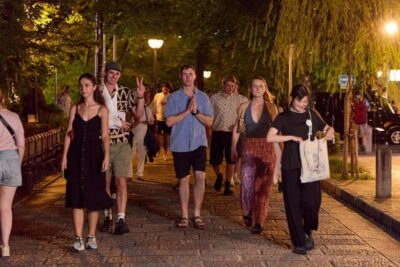
Gion Geisha District Walking Tour – Stories of Geisha
Read our review →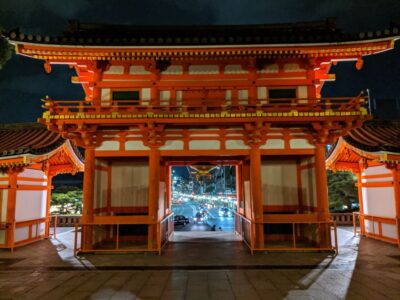
Best of Kyoto: Gion, Geisha, Pagodas & Cobblestones
Read our review →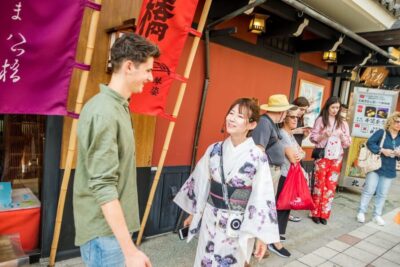
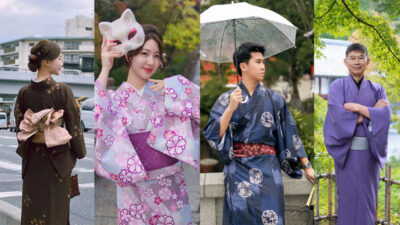
Kyoto Kimono Rental Experience (Optional Exquisite Hair Styling/Japanese Makeup/Photography) (Ookini Kiyomizu-dera Main Store)
Read our review →Browse the lists this tour appears in