
Reviewed · COOKING CLASSES
Osaka Okonomiyaki Cooking Experience!
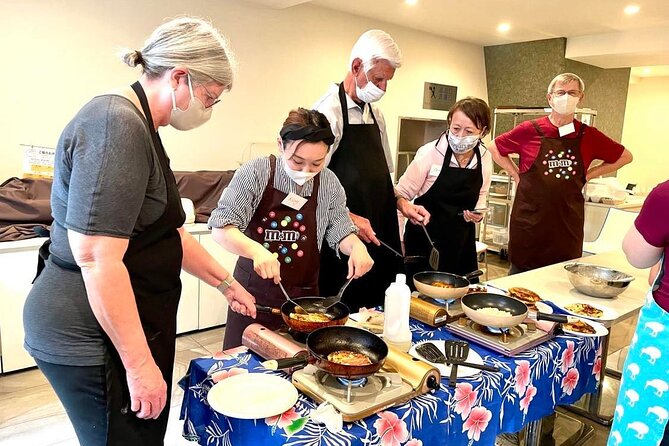
Come hungry, leave with a recipe. This two-hour Osaka cooking class turns a simple meal into a friendly cultural exchange, with host Keiko, her mother, and local friends helping you prepare okonomiyaki and miso soup. I like the small maximum of six people, which gives you room to cook, ask questions, and talk without feeling lost in a crowd.
I also like that the lesson is built for real life. You learn a straightforward method that needs no special equipment, and the recipe can be adjusted for vegan, vegetarian, and halal diets. The main point to consider is cross-contamination in a shared class, and ingredients may contain refined sugar, so guests with strict dietary needs should ask questions before booking.
In This Review
- Key points at a glance
- Why okonomiyaki makes a good Osaka lesson
- Meeting near Nagahoribashi at 4 p.m.
- A small class with real hands-on cooking
- Learning the basic okonomiyaki method
- Miso soup and the meal afterward
- Keiko, her mother, and the local connection
- Dietary needs and shared equipment
- Is $49.55 a good value?
- What the two hours feel like
- Who should book this experience?
- Cancellation and practical planning
- Final verdict: book it for the people as much as the food
- FAQ
- Where does the okonomiyaki class meet?
- What time does the class start?
- How long does the experience last?
- What dishes do I learn to make?
- How many people can join?
- Can dietary requests be accommodated?
- Can I cancel for a full refund?
Key points at a glance
- Cook Osaka’s signature comfort food: Prepare Osaka-style okonomiyaki, a savory pancake often compared to Japanese pizza.
- Learn from Keiko and her family: Keiko leads the class in English, with help from her mother and local assistants.
- Meet Osaka people: Local friends are invited to join the cooking and conversation, making this more than a standard food lesson.
- Keep the class personal: The group is limited to six people, so you get hands-on guidance at the hot plate.
- Eat what you make: The class includes time to sit together, enjoy the okonomiyaki and miso soup, and often share a small dessert such as mochi.
- Take home more than a full stomach: Participants receive useful cooking guidance, and some have received small handmade bags sewn from old kimono fabric.
Why okonomiyaki makes a good Osaka lesson
Okonomiyaki is a fitting dish for a cooking class because it is both local and forgiving. The base is a savory pancake, but the final dish can change with the ingredients and the cook’s preferences. That makes it easier for you to understand the basic method without needing years of kitchen practice.
Keiko explains the Osaka style and compares it with Hiroshima-style okonomiyaki. This regional difference matters. Japanese food is not one uniform tradition, and okonomiyaki shows how the same name can lead to different cooking methods and textures in different cities.
The lesson also places the dish in everyday family life. You are not simply copying a restaurant recipe. You learn how a practical home meal can bring people together around a shared cooking surface, with everyone taking part and adjusting the dish to suit local ingredients.
That flexibility is one of the strongest reasons to choose this class. You can recreate it at home with ingredients available in your own country. Several people found the instructions easy to follow and planned to make okonomiyaki for family meals or parties after returning home.
More Cooking Classes in Osaka
- Sushi Making Osaka Roll and Authentic Japanese Sushi Class
★ 5.0 · 1,220 reviews - Matcha Making Class in Osaka with Authentic Japanese Sweets Set
★ 5.0 · 509 reviews - Osaka Sushi Making Experience
★ 5.0 · 400 reviews
Meeting near Nagahoribashi at 4 p.m.
The class begins at 1-chōme-1-3 Higashishinsaibashi in Osaka’s Chuo Ward. The meeting point is near Nagahoribashi subway station and public transportation, which makes it practical to reach from central Osaka.
The stated start time is 4 p.m., and the activity lasts about two hours. That timing works well as an early dinner plan. You can spend the afternoon sightseeing, then head to the class before the evening gets too late.
The class ends back at the meeting point. That is useful if you are planning to continue into the evening, though you should leave enough time to find the location, especially if this is your first visit to the area.
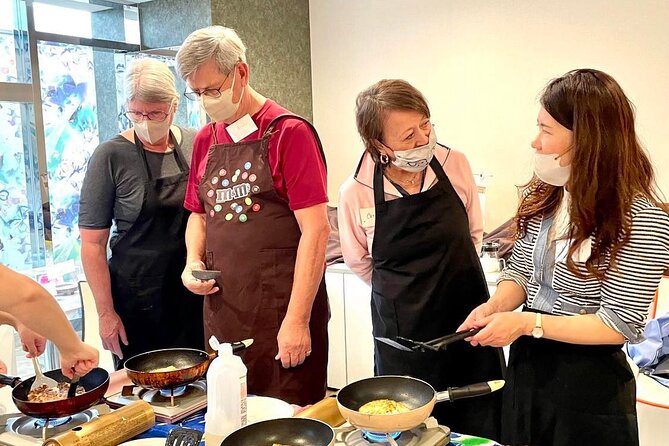
The venue is described as a local hostel, while some class details describe a breakfast-room or language-center setting. Either way, expect an informal indoor space rather than a polished restaurant kitchen. That is part of the appeal: the atmosphere is relaxed, social, and personal.
A small class with real hands-on cooking
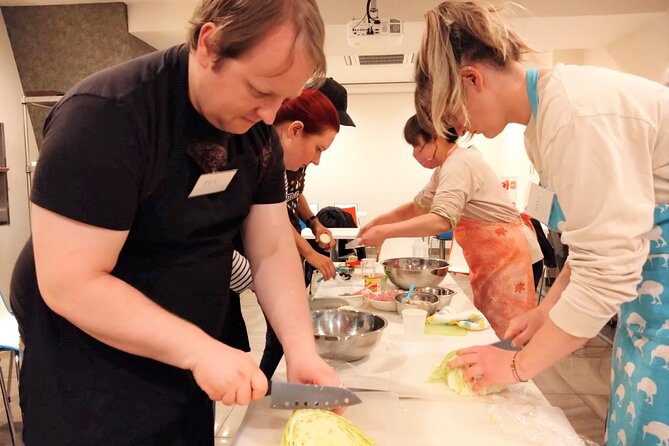
The maximum group size is six. This is an important detail, not just a line in the booking information. With a class this small, Keiko can watch your technique, answer questions, and help you through the steps instead of giving a demonstration from across a large room.
You should expect to participate rather than simply watch. The goal is to prepare your own okonomiyaki under guidance, then eat it with the rest of the group. The relaxed pace leaves room for conversation, which is a major part of the experience.
Families can take part as well. One family of four, including children aged eight and eleven, cooked the dish together and found Keiko patient and helpful. That suggests the class can work for children who enjoy practical activities, though the supplied information does not set a minimum age.
Solo visitors can also fit in easily. The class is social by design, and the small group gives you a natural way to meet people from different countries. You may also find local Japanese participants using the session to practice English, creating a two-way exchange rather than a one-sided lesson.
Learning the basic okonomiyaki method
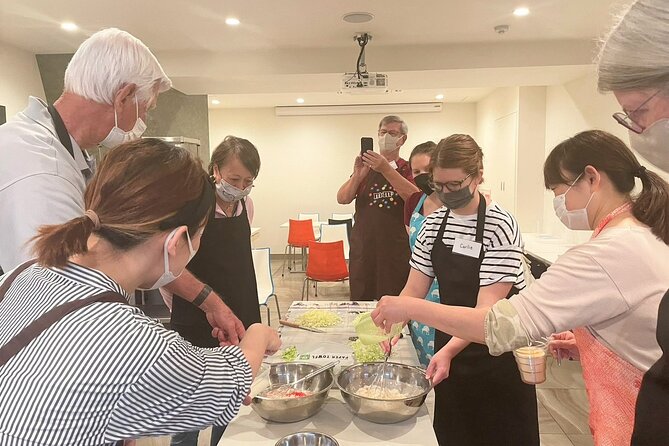
Keiko teaches what she describes as the simplest way to cook okonomiyaki at home. That focus is valuable. You are not being trained to work in an Osaka restaurant. You are learning a repeatable method you can use in an ordinary kitchen.
The class covers the ingredients and preparation, then guides you through cooking. You can ask about substitutions and ways to adapt the dish to your own eating habits. The setting encourages questions, so use the chance to ask how you might recreate the recipe outside Japan.
The instruction is delivered in English, and several people found Keiko easy to understand. She also uses explanations about the dish’s background and regional variations, giving the cooking a little more context without turning it into a lecture.
A recipe or written information may be sent after the experience. One person was still waiting for a recipe, so I would not treat the follow-up material as guaranteed at the exact moment you need it. Take a few notes or ask how the recipe will be shared if cooking at home is your main reason for booking.
More Cooking Classes in Japan:
- Sushi Making Tokyo Roll and Authentic Japanese Sushi Class
★ 5.0 · 3,971 reviews - Tokyo: Roll and Authentic Sushi Making Class in Asakusa
★ 4.9 · 1,957 reviews - Ramen Cooking Class at Ramen Factory in Kyoto
★ 5.0 · 1,937 reviews - Tokyo Shinjuku Chopsticks Making Class
★ 5.0 · 1,763 reviews
Miso soup and the meal afterward
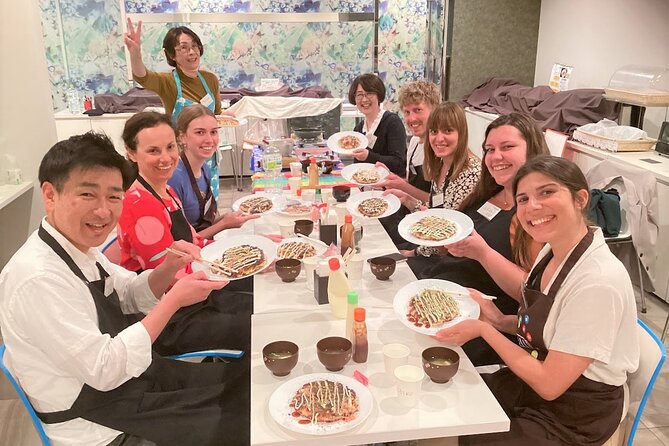
The class includes miso soup as well as okonomiyaki. This gives you a second familiar Japanese dish to learn and makes the final meal feel more complete than a single pancake.
After cooking, everyone sits down together to eat. That shared table is where the class shifts from instruction to conversation. You can compare your results, ask about Osaka life, and talk with the local people invited by Keiko.
Some sessions have also included mochi dessert. It appears to be an extra rather than something that should be treated as guaranteed, but it adds a pleasant finish when available.
The food is the reward, but the value goes beyond the meal. You have spent time preparing it yourself, so the final plate carries a little more meaning than something ordered from a menu. You also leave knowing how to make a version of the dish in your own kitchen.
Keiko, her mother, and the local connection
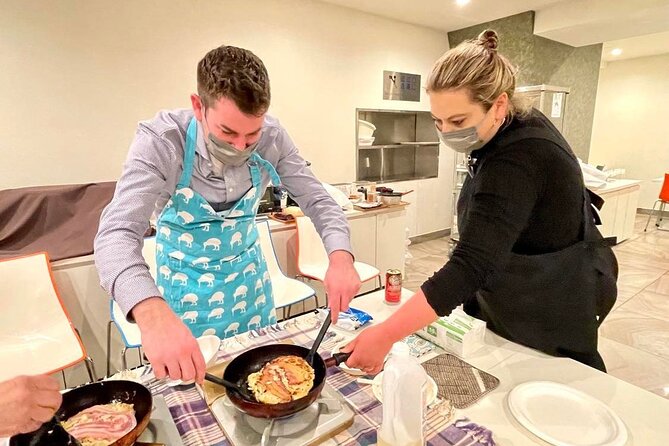
Keiko is the heart of the experience. She is described as warm, patient, organized, and easy to communicate with in English. Her role is not limited to explaining ingredients. She helps the group relax, answers questions, and keeps the cooking moving at a comfortable pace.
Her mother adds a personal touch. She has made the aprons used in class from kimono material, and some people received small tote bags or souvenir bags made from reused kimono fabric. These gifts are not the reason to book, and availability may vary, but they reflect the family feeling of the class.
Local Osaka friends are invited to join the group. This is especially useful if you want conversation rather than a tightly scripted lesson. You can ask about food, daily life, language, and regional habits while also sharing details from your own home.
The class has also been described as a safe place to practice Japanese. You do not need to speak Japanese to enjoy it, but the friendly format gives you a low-pressure chance to try a few words if you want.
Dietary needs and shared equipment
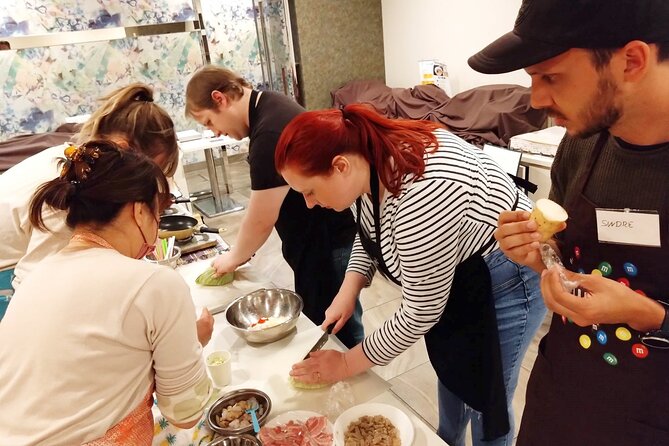
Keiko can accommodate vegan, vegetarian, and halal requests. You should state your needs when booking or contact the provider before the class so the ingredients can be prepared properly.
There are two cautions. Ingredients may contain refined sugar, and group lessons carry a possibility of cross-contamination. If you have an allergy, religious dietary rule, or medical restriction, ask for a precise ingredient list and preparation explanation before paying.
The available information supports dietary adjustments, but it does not promise that every request can be handled in every session. I would consider this class suitable for flexible dietary needs, but people who require a strictly controlled kitchen should seek written confirmation first.
Is $49.55 a good value?
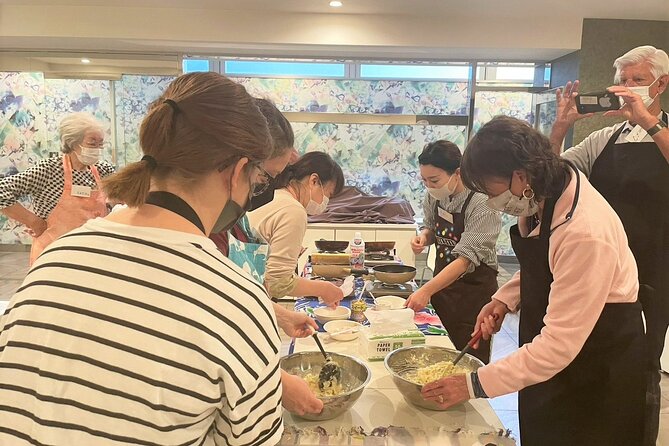
The price is $49.55 per person. For roughly two hours, that includes instruction, ingredients, hands-on cooking, and the food you prepare. It also includes the social side of meeting Keiko, her family, local friends, and other participants.
I see the price as fair if you want an activity rather than just a meal. A restaurant can serve you okonomiyaki for less, but it will not teach you how to make it, explain the Osaka and Hiroshima differences, or give you the same chance to talk with local people.
The value is strongest for anyone who plans to cook the dish again. The lesson is intentionally simple, and the equipment needed at home is ordinary. That makes the experience more useful than a one-time demonstration built around specialist tools.
The value is less clear if you only want to eat okonomiyaki or if you dislike group activities. You will spend part of the session cooking and talking, not simply sitting down to a finished dinner.
The class is often booked about 45 days ahead. That does not mean every date will sell out, but it is a useful planning signal. If your Osaka schedule is fixed, reserve early rather than hoping to find a last-minute opening.
What the two hours feel like
The experience follows a clear rhythm. You meet near Nagahoribashi, settle into the small group, and get an introduction to okonomiyaki, including its Osaka identity and regional variations.
Next comes the practical instruction. Keiko explains the ingredients and method, then you begin preparing the dish. The class is designed to be hands-on, with Keiko and her assistants helping as needed.
You also prepare miso soup. The cooking is mixed with questions and conversation, so the class does not feel like a race from one recipe step to another.
Once the food is ready, you sit down together to eat. This final portion is important because it gives you time to talk with local participants and compare how everyone’s okonomiyaki turned out.
The whole experience returns you to the meeting point by the end. Since the class begins at 4 p.m., it can function as dinner, though you should not book it if you need to reach a tightly timed evening reservation immediately afterward.
Who should book this experience?
I would recommend it to first-time visitors who want a friendly introduction to Osaka food and local life. It is also a good fit for solo visitors, couples, families, and anyone who prefers a small class over a large commercial group.
It suits you especially well if you like to:
- Learn dishes you can make at home
- Meet local people in a casual setting
- Ask questions during a cooking lesson
- Try a cultural activity that is not a museum visit
- Share a meal with people from different countries
- Practice basic Japanese in a relaxed setting
Families should appreciate the simple format and patient instruction. Couples may enjoy the cooperative cooking, and solo visitors can count on the class providing a social setting without requiring them to arrive with a group.
I would hesitate to recommend it if you want a professional culinary school atmosphere, a private lesson, or strict control over every ingredient. The class is informal and shared, which is precisely why many people enjoy it, but it may not meet the needs of someone looking for a highly technical course.
Cancellation and practical planning
Free cancellation is available up to 24 hours before the experience start time for a full refund. Cancellations or changes made less than 24 hours before the 4 p.m. start are not accepted for a refund, and cut-off times follow Osaka local time.
Confirmation is provided when you book. The class uses a mobile ticket, is near public transportation, and has a maximum of six people. Wear something you can cook comfortably in, and arrive with enough time to locate the meeting point.
The provider is C Flat, listed as the Okonomiyaki cooking experience. The class has been offered since 2015, giving the format a long track record.
Final verdict: book it for the people as much as the food
Book this class if you want to understand Osaka through a dish you can recreate at home. The strongest parts are Keiko’s patient teaching, the small group, the chance to meet local people, and the warm family details provided by her mother.
The food is delicious, but the real reward is the easy conversation around the cooking surface and the shared table. At $49.55, it offers good value for a hands-on meal and cultural exchange, especially when you compare it with the cost of a restaurant dinner that teaches you nothing.
Skip it only if you need a private or strictly controlled kitchen, or if you would rather spend your evening sightseeing and dining without participation. For most visitors seeking a personal Osaka activity, this is a friendly, practical choice.
FAQ
Where does the okonomiyaki class meet?
The meeting point is 1-chōme-1-3 Higashishinsaibashi, Chuo Ward, Osaka, 542-0083, Japan. It is near Nagahoribashi subway station and public transportation.
What time does the class start?
The stated start time is 4 p.m.
How long does the experience last?
The cooking experience lasts approximately two hours.
What dishes do I learn to make?
You learn to prepare Osaka-style okonomiyaki and miso soup. Some sessions may also include mochi dessert.
How many people can join?
The class has a maximum of six participants.
Can dietary requests be accommodated?
The host can accommodate vegan, vegetarian, and halal requests. Ingredients may contain refined sugar, and cross-contamination is possible during group lessons, so ask about your needs before attending.
Can I cancel for a full refund?
Yes. You can cancel up to 24 hours before the experience start time for a full refund. Cancellations or changes made less than 24 hours before the start are not accepted for a refund.
Just added in Japan
- A One-of-a-Kind Sushi Experience in a Special Place of Japan★ 5.0 · 15 reviews
- Tokyo Cute Bento Cooking Class – Make a Kawaii Character Lunchbox★ 5.0 · 126 reviews
- Japanese Home Cooking Class & Walk in Todoroki Temple Tokyo★ 5.0 · 88 reviews
- Japan Tokyo Tower Observatory Deck E-Ticket★ 4.0 · 34 reviews
- Catch a Baseball Game in Tokyo with a Local – Tickets Included★ 5.0 · 24 reviews
- JDM Experience with Fast&Furious RX-7 (English speaking Driver)★ 5.0 · 57 reviews
- Tokyo Private Day Tour by Car with English speaking Driver Guide★ 4.0 · 29 reviews
- Japan Classic 10 Day – One Life Adventures★ 5.0 · 129 reviews
Cooking Classes, compared.
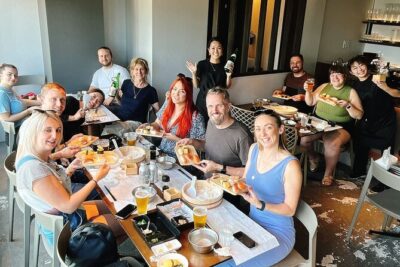
Sushi Making Tokyo Roll and Authentic Japanese Sushi Class
Read our review →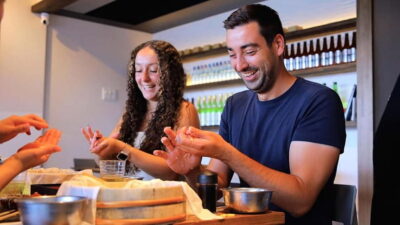
Roll and Authentic Sushi Making Class in Asakusa
Read our review →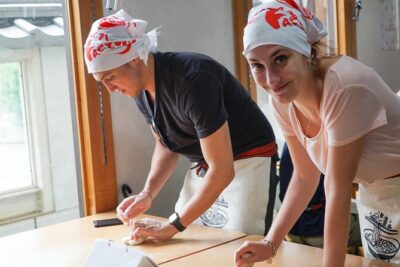
Ramen Cooking Class at Ramen Factory in Kyoto
Read our review →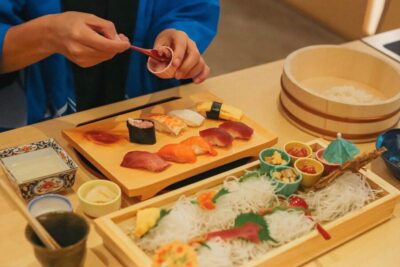
Sushi Making Class in a Happi Coat near a Famous Spot
Read our review →
Sushi Making Osaka Roll and Authentic Japanese Sushi Class
Read our review →
Tokyo Sushi Making Class in Tsukiji with Professional Chef
Read our review →
Ramen & Gyoza Cooking Class in Tokyo with Local Supermarket Visit
Read our review →Browse the lists this tour appears in