
Reviewed · WALKING TOURS
Private & Custom KYOTO Walking Tour – your Travel Companion
Kyoto rewards a plan, but not a rigid one. This private, eight-hour tour lets you shape the day around temples, shrines, markets, food, or local neighborhoods, with an English-speaking companion to help you get around. I like the personal itinerary and the fact that one guide can help with photos, restaurant bookings, ticket questions, and communication. The main concern is consistency: some guides have earned warm praise, while others have lacked local knowledge or struggled with directions.
The price is $265.82 for a group of up to five, which can be fair when shared among several people. I also like the chance to use the day for your own priorities instead of following a fixed bus tour. But entrance fees, meals, and private transportation cost extra, and trying to see all 13 suggested stops in eight hours would leave you rushing from gate to gate.
In This Review
- Key points to know before booking
- What the $265.82 group price really buys
- How to shape your eight-hour Kyoto day
- Kinkakuji and the northern temple route
- Kiyomizudera, old lanes, and Yasaka Shrine
- Fushimi Inari and the limits of a 15-minute stop
- Arashiyama, bamboo, and Tenryuji
- Nishiki Market, Gion, and Kyoto’s everyday side
- Ginkakuji and the eastern temple choices
- Sanjusangendo, the Imperial Palace, and Nijo Castle
- The guide question: flexibility versus reliability
- What is not included and how to plan around it
- Should you book this private Kyoto tour?
- FAQ
- How long is the private Kyoto tour?
- How many people can join the private tour?
- Is transportation included?
- Are entrance fees included?
- Can the itinerary be customized?
- Is hotel or accommodation pickup available?
- Can the tour be canceled for a refund?
Key points to know before booking
- A private group of up to five gives you more control than a large sightseeing bus.
- The itinerary is flexible, so you can focus on temples, shrines, food, shopping, gardens, or Kyoto neighborhoods.
- The suggested route is far too full for deep visits, especially once travel time and meals are added.
- Public transportation help can be valuable, particularly for first-time visitors dealing with Kyoto buses and trains.
- Entrance tickets are extra, including several major temples and Nijo Castle.
- Guide quality has varied, so clear communication about experience and priorities matters.
What the $265.82 group price really buys
The headline price covers a private travel companion and help throughout the day. For five people, that works out to about $53 per person before admissions, meals, and transport. For two people, the same tour costs about $133 per person, so the value depends heavily on your group size and how much help you want.
You are paying for time and flexibility rather than a package with every expense included. The guide can help plan the route, navigate, communicate with local vendors, arrange restaurant bookings, assist with tickets, and take photographs. Those small services can save you stress, especially during a first Kyoto visit.
Still, I would not think of this as an all-inclusive private tour. Private transportation is not included. The experience is described as a walking tour, but the city’s major sights are spread across Kyoto. One positive account describes the guide meeting the group at an Airbnb and helping with buses and trains. That is useful, but you should confirm how transportation will work before the day begins.
The tour is available from 6:00 AM to 10:00 PM, Monday through Sunday, during the stated operating period. An early start could help you reach popular temples before the crowds build, while a later start might suit visitors who prefer evening time in Gion. The practical choice depends on your priorities, since an eight-hour day cannot cover every corner of Kyoto properly.
More Walking Tours in Kyoto
- Kyoto Geisha Walking Tour: Gion District & Hidden Gems
★ 4.7 · 3,273 reviews - Kyoto: Gion Magical Night Walking Tour with Geisha Trivia
★ 4.9 · 2,393 reviews - Kyoto: Gion Geisha District Walking Tour – Stories of Geisha
★ 4.7 · 2,187 reviews
How to shape your eight-hour Kyoto day
The long list of possible stops is best treated as a menu, not a promise. The listed visit times add up to almost eight hours before you account for buses, trains, walking between sites, restroom breaks, food, and ticket lines.
That matters because Kyoto is not one compact sightseeing zone. Kinkakuji is in the northwest, Kiyomizudera is in the eastern hills, Fushimi Inari is south of central Kyoto, and Arashiyama is farther west. Adding Ginkakuji, Nijo Castle, the Imperial Palace, and Nishiki Market creates a day of constant movement.
I would choose one of these rough approaches:
- Classic eastern Kyoto: Kiyomizudera, Sannenzaka and Ninenzaka, Yasaka Shrine, Gion, and Sanjusangendo.
- Fushimi and southern Kyoto: Fushimi Inari, Sanjusangendo, and selected central sights.
- Western Kyoto: Kinkakuji, Arashiyama, the Bamboo Forest, and Tenryuji.
- Central Kyoto: Nishiki Market, Nijo Castle, the Imperial Palace, and Gion.
You can add one or two extra stops if the pace feels right. I would not attempt every listed attraction unless you are satisfied with short photo stops and quick looks.
Kinkakuji and the northern temple route
Kinkakuji, the Golden Pavilion, is one of Kyoto’s most recognizable sights. The gleaming pavilion reflects across its pond, and its origin as a retirement villa for shogun Ashikaga Yoshimitsu gives the site a strong connection to medieval court and military life.
The suggested visit time is only 30 minutes, with admission not included. That is enough for the main view and a walk through the grounds, but not for a slow garden visit. If Kinkakuji is high on your list, tell the guide early so the day does not reduce it to a hurried photograph.
The pavilion is visually powerful, but the visit is also one of the more straightforward stops. You see the building, follow the garden route, and move on. A guide adds the most value by explaining what you are seeing and keeping the larger route efficient.
Kiyomizudera, old lanes, and Yasaka Shrine
Kiyomizudera is one of Kyoto’s major temple visits, known for its large wooden stage projecting from the main hall above the hillside. The structure was built without modern nails, and the view from the stage is the reason many people place this temple near the top of their Kyoto list.
The suggested time is 45 minutes, with admission extra. That is a brisk visit. You will need time for the approach, the temple grounds, photographs, and the lanes below, so ask whether the guide plans to include the main hall only or give you time to look around.
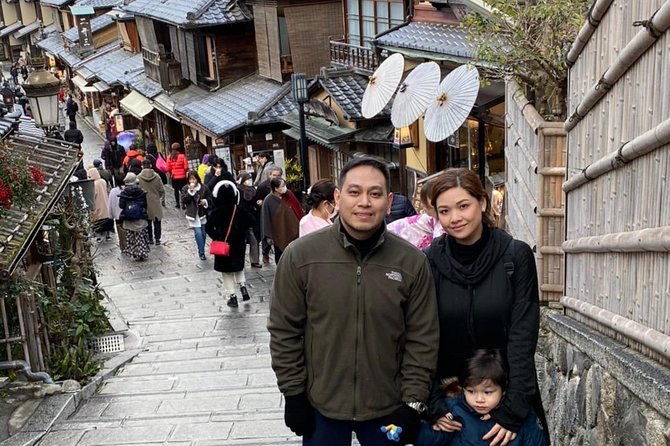
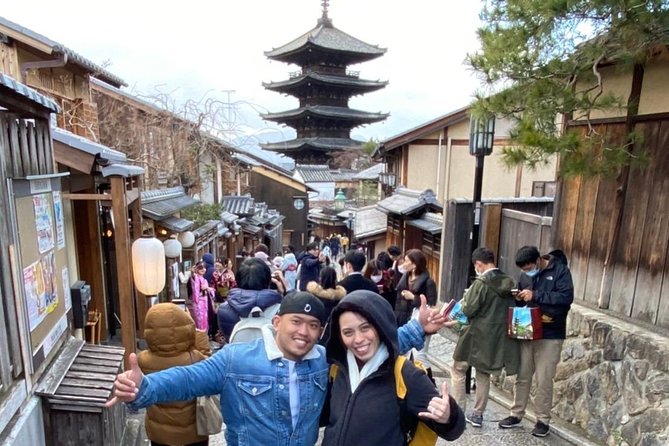
Sannenzaka and Ninenzaka add a different feel. These preserved streets are lined with traditional buildings, shops, and places to stop for food or souvenirs. They can be more enjoyable than a quick run through another temple because you get a sense of Kyoto as a lived-in city, not only a collection of monuments.
Yasaka Shrine is planned for 30 minutes. It is closely tied to Gion and is famous for the Gion Matsuri, held every July and regarded as one of Japan’s best-known festivals. The shrine works well beside Kiyomizudera and Gion, since these sights make geographic sense together.
A completely different kind of day out:
- PERFECT KYOTO 1-Day Bus Tour
★ 5.0 · 13,518 reviews - [Kyoto & Nara Day Tour] Sagano Scenic Railway & Nara Park & Fushimi Inari Taisha Thousand Torii Gates & Togetsukyo Bridge & Bamboo Grove & Kimono Forest (Departing from Osaka)
★ 4.9 · 10,942 reviews - Kyoto: Fushimi Inari, Kinkakuji, Bamboo Grove 1 Day Bus Tour
★ 4.8 · 4,316 reviews - Kyoto: Tea Ceremony in a Traditional Tea House in Kiyomizu
★ 4.9 · 3,519 reviews
Fushimi Inari and the limits of a 15-minute stop
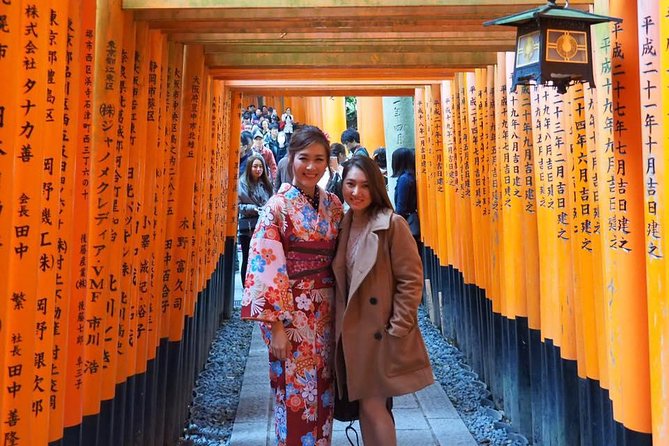
Fushimi Inari is famous for its rows of vermilion torii gates climbing the trails behind the main shrine buildings. It is an important Shinto shrine and one of Kyoto’s most memorable visual experiences.
The suggested time here is only 15 minutes, which is not enough to walk far into the torii route. You can see the lower section and get a taste of the setting, but you will not have time for a serious uphill walk. If the gates are one of your main reasons for visiting Kyoto, ask the guide to give Fushimi Inari more time and remove another stop.
This is a good example of why customization matters. The broad route looks impressive on paper, but the experience changes completely when you spend 15 minutes at a shrine instead of allowing time to follow its trails.
Arashiyama, bamboo, and Tenryuji
Arashiyama is a major sightseeing district filled with temples, shrines, and the famous Bamboo Forest. Tenryuji, one of Kyoto’s major Zen temples, is also part of the suggested visit.
The planned time is one hour, with admission not included. That hour must cover getting into the district, reaching the Bamboo Forest, seeing some of Tenryuji, and moving on. You will get an introduction, not a leisurely exploration.
Arashiyama makes more sense as the main focus of a western Kyoto day. If you pair it with Kinkakuji, you may have a satisfying day of gardens and temples. If you also add Fushimi Inari, Ginkakuji, and Nijo Castle, much of your time will go to transport.
The guide’s role here is less about simply pointing out bamboo and more about helping you decide how far to go. A flexible companion can keep your day from becoming an exhausting checklist, provided the guide has a sound plan and knows the area.
Nishiki Market, Gion, and Kyoto’s everyday side
Nishiki Market is a narrow, five-block shopping street known as Kyoto’s kitchen. More than 100 shops and restaurants line the market area, making it a useful stop for snacks, food shopping, and a look at local commercial life.
The suggested visit is 40 minutes, and admission is free. That is enough for a walk through part of the market, but you will want to make your food interests clear. A guide may help with communication when you are unsure what a product is or how to order.
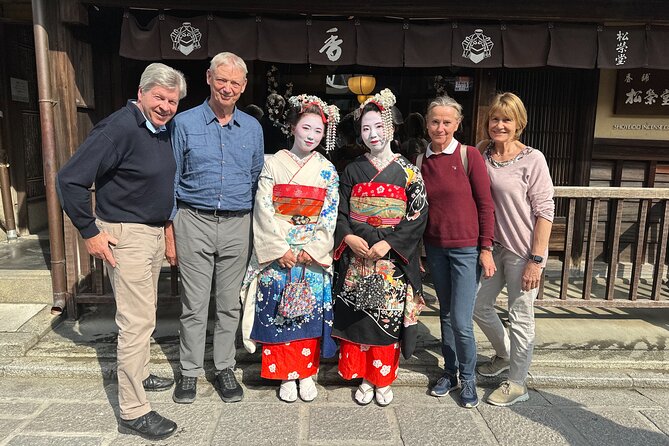
Gion is Kyoto’s famous geisha district, with 30 minutes allotted. That short visit can work for an introduction to the streets and traditional buildings. It is not enough for a patient neighborhood walk, and you should treat the area respectfully. The guide can help you understand the setting without turning the visit into a search for people to photograph.
These two stops bring balance to a temple-heavy itinerary. I would keep at least one of them, since Kyoto is more than its religious buildings.
Ginkakuji and the eastern temple choices
Ginkakuji, the Silver Pavilion, was built by Ashikaga Yoshimitsu’s grandson several decades after Kinkakuji. Despite its name, the pavilion is not covered in silver. The appeal comes from the temple grounds, garden design, and the contrast with the Golden Pavilion.
The suggested visit is 30 minutes, with admission extra. That makes it a quick stop unless you choose it as part of a fuller eastern Kyoto route. Ginkakuji pairs naturally with nearby temple districts, but it is not an efficient addition to a day that already includes Arashiyama and Fushimi Inari.
Eikando Zenrinji Temple receives 45 minutes in the proposed plan. It belongs to the Jodo school of Buddhism and is especially famous for autumn color. Admission is extra. If your visit falls during the fall season, this may deserve priority over a less seasonal stop, but the tour information does not promise special access or a particular seasonal arrangement.
Sanjusangendo, the Imperial Palace, and Nijo Castle
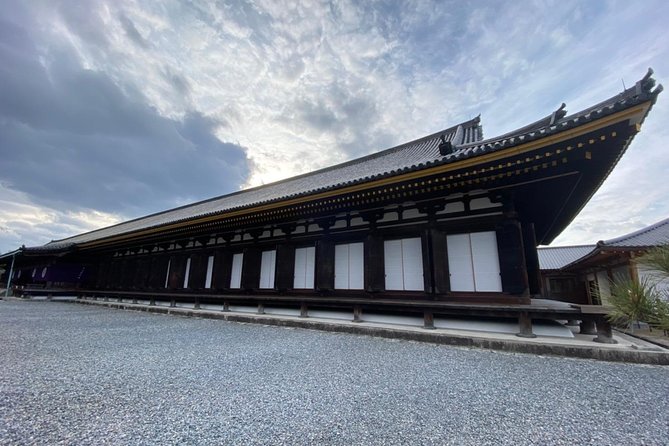
Sanjusangendo is known for its 1,001 statues of Kannon, the goddess of mercy. The sheer number of statues creates a very different experience from the open views at Kinkakuji or the torii gates at Fushimi Inari.
The planned visit is 30 minutes, with admission extra. This can be enough to see the main interior, but it is a place where quiet attention matters. Keep in mind that temple rules may affect photography and pacing.
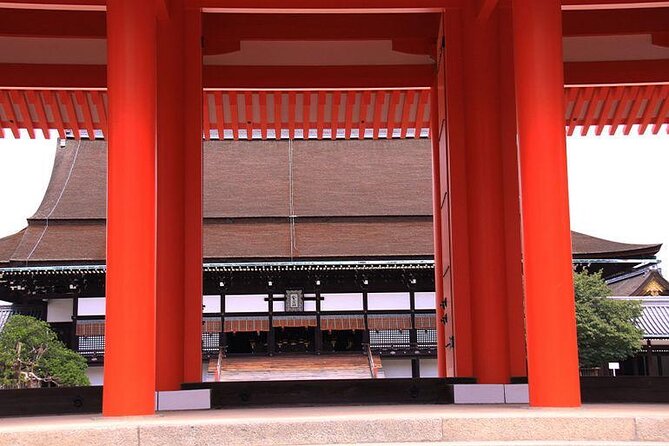
The Kyoto Imperial Palace was the Imperial Family’s residence until 1868, when the emperor and capital moved to Tokyo. It sits within spacious Kyoto grounds, and admission is listed as free. The broad setting gives you a break from tightly packed streets and small temple compounds.
Nijo Castle was built in 1603 as Tokugawa Ieyasu’s Kyoto residence. Its palace buildings were completed later by his grandson Iemitsu. The planned visit is 45 minutes, but admission is extra. It is a strong choice if you want political and military history alongside Kyoto’s religious sites.
These three stops are not easy to combine with the far western and southern sights. Choose them when castles, court life, or Buddhist art interest you more than bamboo or market streets.
The guide question: flexibility versus reliability
The strongest praise for this experience centers on the human side of the day. Jinshi was credited with making a group’s entire day enjoyable across temples, gardens, shrines, and food. Femin was praised for answering a child’s questions with patience and a cheerful attitude. Karl helped one group mix temples and shrines with local interests, while Dalivanh was described as flexible, informative, and helpful with buses and trains.
Rio also received praise for patience with older people. That detail matters if your group includes seniors or anyone who needs a slower pace.
At the same time, guide quality has not been uniform. One last-minute replacement was described as friendly and enthusiastic but still a college student. Other accounts describe guides who did not know Kyoto well, gave incorrect directions, or had little understanding of Japan and the sites being visited.
That range means you should make your expectations clear before the tour. Send a short list of priorities, ask who will guide you, and confirm whether the person can explain the major sights in English. The private format gives you a chance to ask questions, but it cannot replace preparation.
What is not included and how to plan around it
You pay separately for entrance fees at Kinkakuji, Kiyomizudera, Yasaka Shrine if applicable, Arashiyama attractions such as Tenryuji, Ginkakuji, Sanjusangendo, Nijo Castle, and Eikando. The Imperial Palace, Fushimi Inari, Nishiki Market, Sannenzaka and Ninenzaka, and Gion are listed without an admission charge, though food and shopping remain your responsibility.
Meals are also not included. Since the day is long, decide in advance whether you want a proper lunch or quick food at Nishiki Market. A guide can assist with restaurant bookings, but you should not assume the meal itself is part of the price.
Pickup is offered, and the activity ends back at the meeting point. The information also says the tour is near public transportation and that most people can participate. For a group of up to five, agree on the meeting location carefully, especially if you are staying outside central Kyoto.
The cancellation terms are strict. The experience is non-refundable and cannot be changed for any reason, so book only when your date and group plans are firm.
Should you book this private Kyoto tour?
I would consider it for a first Kyoto visit, especially with three to five people who want help with buses, trains, restaurant communication, and route planning. It also suits families, older people, or groups with very different interests, since the day can be adjusted rather than forced into a fixed schedule.
I would not book it expecting a polished, fully escorted luxury tour with guaranteed specialist commentary. The guide experience has varied, and the suggested route is much too ambitious if you want time inside each place.
For the best value, choose three to five major stops, ask for an early start, confirm the guide’s experience, and decide in advance which admissions and meals you will pay for. If you want flexibility and practical help more than a tightly scripted history lesson, this can be a useful Kyoto introduction. If you want detailed interpretation at every temple, choose a guide with confirmed expertise and keep the itinerary narrow.
FAQ
How long is the private Kyoto tour?
The tour lasts approximately eight hours.
How many people can join the private tour?
The price covers one private group of up to five people.
Is transportation included?
Private transportation is not included. The tour is described as a walking experience, and a guide may assist with public buses and trains.
Are entrance fees included?
No. Entrance fees are separate for attractions where an admission charge applies.
Can the itinerary be customized?
Yes. The experience includes a personalized itinerary, and the route can be shaped around your interests.
Is hotel or accommodation pickup available?
Pickup is offered, but the information does not specify that every accommodation location qualifies. You should confirm the meeting point when booking.
Can the tour be canceled for a refund?
No. The stated policy says the experience is non-refundable and cannot be changed for any reason.
Just added in Kyoto
- The “Golden Route” and Ancient Japan by DIAMIR Erlebnisreisen – 14-Day Tour★ 2.0 · 2 reviews
- Japan: Castles & Cuisine by G Adventures – 6-Day Kyoto to Osaka Tour★ 4.5 · 4 reviews
- Cycle Japan by Explore! – 13-Day Kyoto to Tokyo Tour★ 4.7 · 12 reviews
- Cycle Japan by Intrepid Travel – 11-Day Kyoto to Tokyo Tour★ 4.8 · 2 reviews
- Classic Japan by Intrepid Travel – 11-Day Kyoto to Tokyo Tour★ 4.4 · 14 reviews
- Ancient & Modern Japan 14-Day Tour by Exodus Adventure Travels★ 4.4 · 40 reviews
- 5 Day Cultural Adventure of Kyoto, Nara & Osaka by Tourist Journey★ 2.5 · 2 reviews
- 12 Days Kinosaki Onsen Escape: A Journey Through Japan’s Timeless Towns by UME Travel★ 4.8 · 5 reviews
Walking Tours, compared.
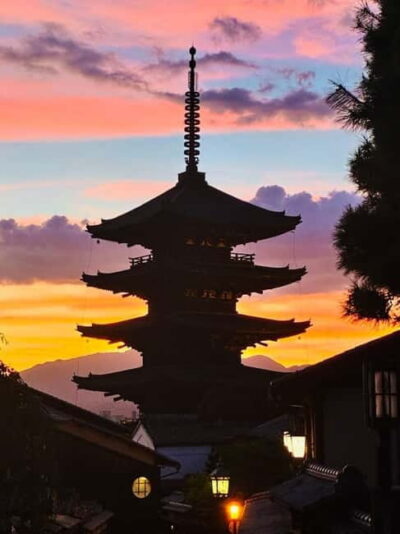
Kyoto Geisha Walking Tour: Gion District & Hidden Gems
Read our review →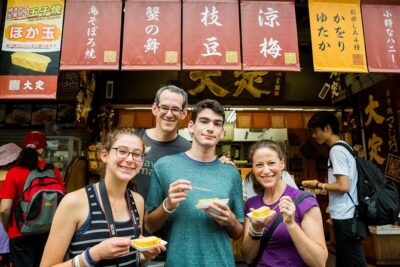
Tokyo Tsukiji Fish Market Food and Culture Walking Tour
Read our review →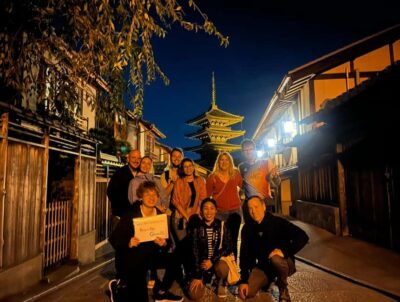
Gion Magical Night Walking Tour with Geisha Trivia
Read our review →
Imperial Palace and Shogun Historical Walking Tour
Read our review →
Gion Geisha District Walking Tour – Stories of Geisha
Read our review →

Shinjuku Local Bar and Izakaya Guided Walking Tour
Read our review →
Browse the lists this tour appears in