
Reviewed · WALKING TOURS
Private Harajuku Omotesando Architecture Walking Tour
Tokyo reveals its best details on foot. This private Harajuku and Omotesando walk links Meiji Jingu, Olympic architecture, designer storefronts, and quiet side streets with a guide who can adjust the route to your interests. I especially like the close look at buildings by major architects and the chance to see more than Tokyo’s polished shopping avenues. The small private format also makes it easier to ask questions and pause when something catches your eye.
I also like the practical break for a drink in a less obvious cafe, since three and a half hours on city pavements is a serious walk. The main consideration is the price, $132.14 per person, along with the need for moderate fitness. One guide has received praise for preparation and architectural material, while one English-language experience was less easy to follow, so communication may vary by guide.
In This Review
- Key Things To Know Before You Book
- Why This Tokyo Walk Feels Different
- Starting At Meiji Jingu And Yoyogi Gymnasium
- Omotesando’s Designer Buildings, One Facade At A Time
- Beyond The Luxury Stores: Harajuku’s Side Streets
- What The Guide Adds To The Experience
- Is $132.14 Per Person A Fair Price?
- Time, Walking, And Weather Advice
- Who Should Choose This Architecture Walk?
- Should You Book The Harajuku Omotesando Tour?
- FAQ
- How long does the private Harajuku Omotesando Architecture Walking Tour last?
- Where does the tour begin?
- Where does the tour end?
- Is this a private tour?
- What is included in the price?
- Is hotel pickup included?
- Can I cancel for a full refund?
Key Things To Know Before You Book
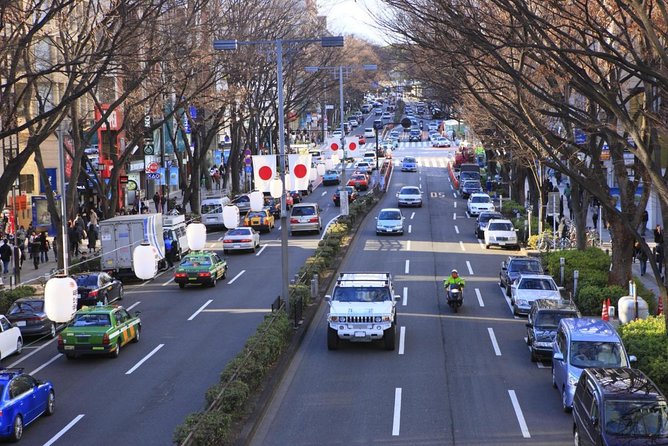
- Kenzo Tange’s Yoyogi Gymnasium begins the architectural story: You see this major Olympic-era landmark from a distance near the start.
- Omotesando becomes an open-air architecture lesson: The route passes striking buildings connected with Dior, Louis Vuitton, Tod’s, Prada, SunnyHills, and The Iceberg.
- The route is private and adjustable: Your guide can spend more time on modern design, local culture, interiors, or neighborhood development.
- Backstreets add balance: Side streets show a quieter, more ordinary side of Harajuku and Aoyama.
- A cafe pause is built in: Drinks and conversation give your feet a break during the walk.
- The finish is useful for onward plans: You end at the Omotesando and Aoyama-dori intersection, near Mizuho Bank.
Why This Tokyo Walk Feels Different
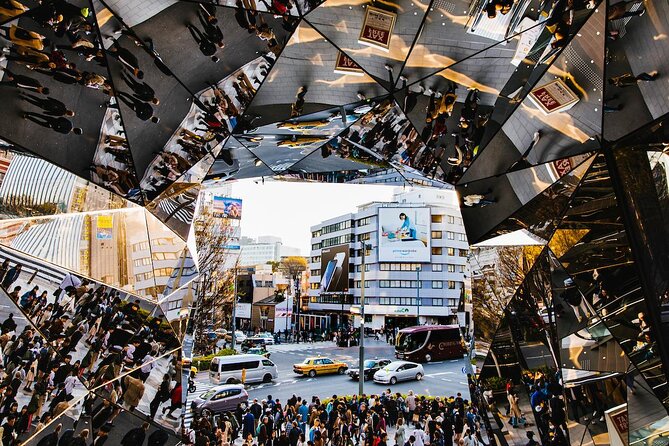
Harajuku is often reduced to youth fashion, crowded shopping streets, and colorful snacks. Omotesando is treated as Tokyo’s answer to a grand European shopping boulevard. This tour gives you both areas, but it asks you to look upward and beyond the storefronts.
The appeal is not simply seeing famous buildings. It is learning how architects use glass, concrete, curves, planted surfaces, underground space, and unusual angles to shape a commercial district. A good guide turns a walk past a luxury shop into a short lesson in design.
The private format matters here. Architecture is full of small questions: Why is this facade tilted? Why does that building appear to float? Why was part of the structure placed below ground? With only your own group, you can stop for an explanation without holding up a larger party.
The experience is also customizable. If you care most about modern architecture, your guide can give that subject more time. If you want a wider introduction to Harajuku, Tokyo development, and local culture, the route can include those subjects too. Several guides, including Yoshi, Yoko, Aki, Taka, Mari, and Junko, have been praised for adapting explanations to individual interests.
More Walking Tours in Tokyo
- Tokyo Tsukiji Fish Market Food and Culture Walking Tour
★ 5.0 · 3,184 reviews - Tokyo: Imperial Palace and Shogun Historical Walking Tour
★ 5.0 · 2,251 reviews - Tokyo: Shinjuku Local Bar and Izakaya Guided Walking Tour
★ 4.9 · 1,794 reviews
Starting At Meiji Jingu And Yoyogi Gymnasium
The meeting point is outside Meiji Jingu near Harajuku Station, at 1 Yoyogikamizonocho in Shibuya. That makes the start easy to reach by public transportation, and it gives the walk a useful contrast from the beginning.
Meiji Jingu is not presented as a long shrine visit in the information provided. Instead, it works as the starting point for understanding the area. You begin near one of Tokyo’s major traditional landmarks, then move toward the bold modern buildings of Harajuku and Omotesando.
From the shrine area, the route takes in a view of Yoyogi Gymnasium, designed by Kenzo Tange. You admire it from a distance rather than entering, so you should book this tour for exterior interpretation, not an indoor stadium visit.
The gymnasium is an important opening subject because it connects Tokyo’s postwar architectural confidence with the Olympic story. The tour was originally promoted with Olympic interest in mind, and the stadium provides a clear example of how major public buildings can become part of a city’s identity.
Your guide may bring photographs or other visual material to help explain what you are seeing. Yoshi has been praised for carrying documented photographs of architects and their projects. Taka, a retired architect, has also used an iPad with photographs, background material, floor plans, and suggested viewing positions. Those details can make a large building easier to understand from the street.
Omotesando’s Designer Buildings, One Facade At A Time
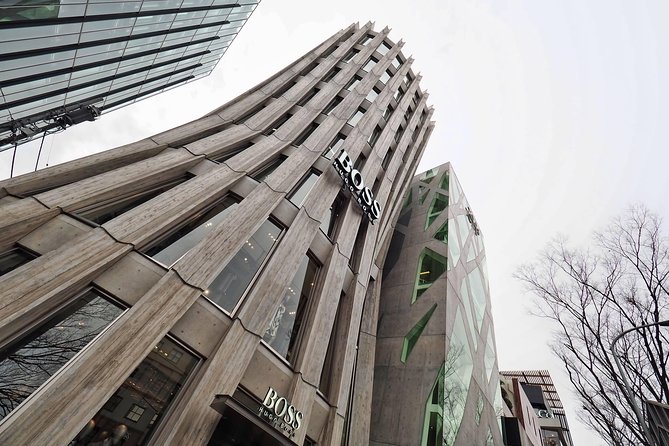
The central stretch of the walk follows Omotesando, where fashion and architecture share the same address. You pass contemporary storefronts and boutiques associated with The Iceberg, Dior, Louis Vuitton, Tod’s, SunnyHills, and Prada.
Do not expect a shopping tour with a list of stores to visit. The point is how each building presents its brand through structure and surface. Omotesando is especially useful for this because several high-profile projects sit within a relatively compact walking area.
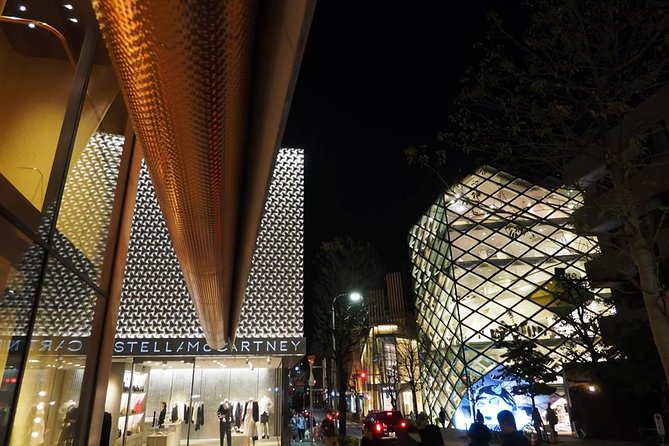
The Prada building is one of the clearest examples. Its convex and concave glass panels create a facade that changes as you move. From one position, the building feels smooth and rounded. From another, its surface breaks into a sharper pattern. A guide can point out where to stand for better photographs, which is more useful than simply telling you the architect’s name.
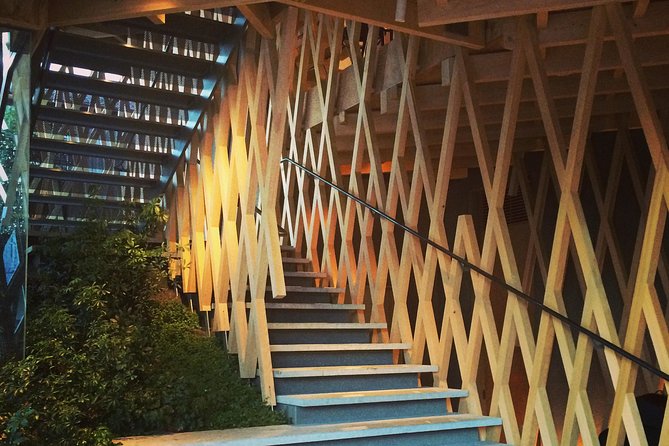
Tokyo Plaza Harakado is another example included in the architectural focus. The building is associated with Akihisa Hirata and has a planted rooftop vertical garden. It gives you a chance to consider how newer buildings use planting as part of their structure and public image.
You may also see Tadao Ando’s Collezione, where part of the building is below ground. That arrangement is easy to miss if you are walking alone. The tour helps you notice how the building fits into the street while keeping some of its volume beneath the surface.
The route includes many other unusual buildings, and some groups have gone inside several structures. Interior access can depend on the day, the building, and the guide’s route, so do not treat every interior as guaranteed. Still, the possibility adds real value. Architecture often makes more sense indoors, where you can see how the facade affects light, movement, and the shape of a room.
Beyond The Luxury Stores: Harajuku’s Side Streets
The best part of this walk may come after you have seen enough polished glass and designer logos. Your guide takes a side trip into a backstreet neighborhood, where the surroundings change quickly.
This detour helps you compare two versions of Harajuku and Aoyama. The main avenues are carefully presented, expensive, and visually controlled. The side streets offer a more mixed local setting, with different building types and a slower feel. The contrast is not a side note. It explains why this part of Tokyo is more interesting than a simple parade of luxury brands.
You might find that the backstreets appeal to you more than the major avenues. They provide the kind of details that are difficult to plan from a map, especially if you do not know where the public route ends and the quieter neighborhood begins.
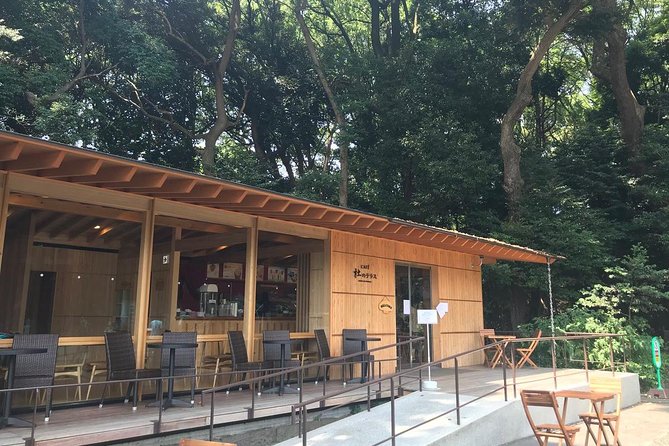
The walk includes a short pause for drinks at an under-the-radar cafe. This is practical as well as pleasant. Three hours or more on foot can become tiring, especially in hot weather, and one group had its indoor time increased because of the heat. The break also gives you space to talk with your guide instead of receiving a constant stream of facts while walking.
There is no hotel pickup or drop-off. That is normal for a walking tour, but you should plan your route to the starting point and your next stop after the finish. The walk ends at 5-chome-1-27 Minamiaoyama, at the Omotesando and Aoyama-dori intersection in front of Mizuho Bank.
A completely different kind of day out:
- Tokyo Disney Resort – Tokyo Disneyland & Tokyo DisneySea Park Tickets
★ 4.8 · 99,488 reviews - SHIBUYA SKY Ticket
★ 4.7 · 46,509 reviews - JR Whole Japan Rail Pass
★ 4.8 · 29,150 reviews - Mt Fuji and Hakone 1-Day Bus Tour Return by Bullet Train
★ 5.0 · 26,383 reviews
What The Guide Adds To The Experience
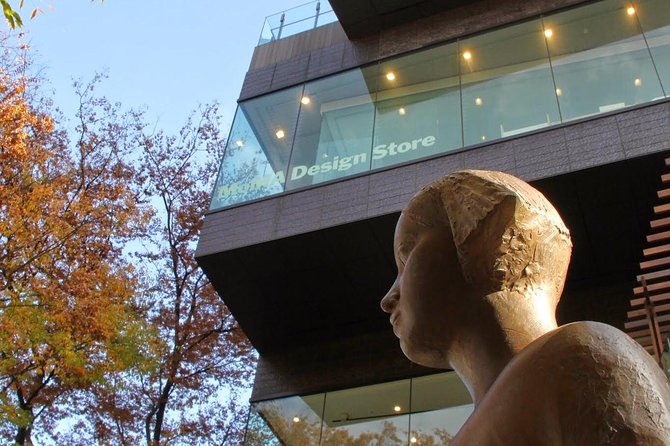
The guide is the main reason to choose this tour over exploring the same streets with a phone map. The buildings are visible to anyone, but the reasons behind their shapes are not.
Yoko has been praised for explaining how design changed over time and how Harajuku developed from the 1960s onward. That wider context helps connect individual buildings to the area’s growth rather than treating each one as an isolated object.
Yoshi is noted for careful preparation, photographs, and detailed information about construction and architects. Taka’s background as a retired architect may appeal especially to people who want technical discussion, floor plans, and design comparisons.
Aki has been praised for patience, humor, and adapting the route to a group’s preferences. Junko has helped connect architecture with local etiquette and neighborhood orientation, and even assisted with subway navigation after the walk. Those small practical touches can be valuable if this is your first day in Tokyo.
The strongest pattern is clear: guides who prepare visual material and adjust their explanations receive the warmest praise. You may see photographs of architects, images of other projects, and comparisons that help you place a building in a wider body of work.
There is one fair warning. One participant found a guide passionate and well informed but sometimes difficult to understand in English. That does not define the whole experience, yet it is worth remembering if precise architectural terminology matters to you. Private touring gives you a chance to ask for a slower explanation or clarification, but communication quality can still differ between guides.
Is $132.14 Per Person A Fair Price?
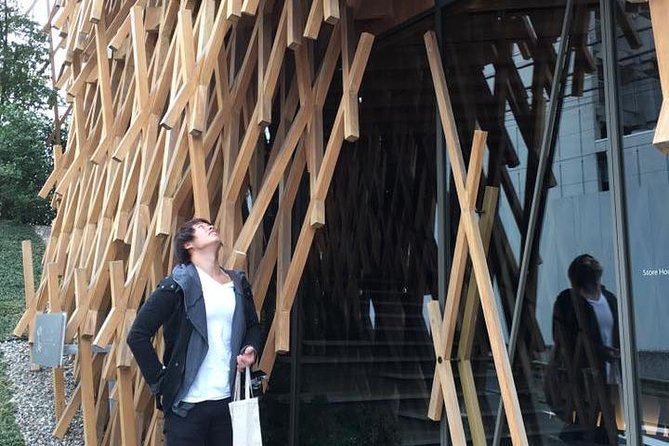
At $132.14 per person, this is not a budget sightseeing walk. The value depends heavily on your interest in architecture and on the number of people in your private group.
You are paying for a licensed local guide, a private experience, customization, and a planned route through buildings that are easy to overlook. You also receive a cafe pause with drinks. There is no admission charge for the listed walking portion, so the price is for interpretation and access to the guide’s knowledge rather than tickets.
For an architecture student, architect, designer, photographer, or serious modern-building enthusiast, the cost can make sense. The compact route includes work associated with several internationally important architects, and a strong guide can save you hours of research and navigation.
For a visitor who simply wants a general introduction to Harajuku, the price is harder to justify. You can walk Omotesando and see many storefronts without booking a private guide. The tour becomes worthwhile when you want to know what you are looking at, compare design choices, and visit side streets you may not find on your own.
Group discounts are available, which may improve the value for families or friends traveling together. The listing describes the activity as private, with only your group participating. Before booking, calculate the total cost for your party rather than looking only at the per-person figure.
The average booking point is 53 days in advance. That suggests you should plan ahead if your dates are fixed, especially if you want a particular guide or time. Confirmation is provided when you book, and free cancellation is available up to 24 hours before the start time. Changes or cancellations inside that window are not accepted for a refund.
Time, Walking, And Weather Advice
The experience lasts about three hours and 30 minutes, although the route description also refers to a three-hour walk. Treat it as a half-day commitment, not a quick orientation stroll.
You will walk through several distinct areas, pause to look at buildings, and stop for a drink. Moderate physical fitness is required. Wear shoes you can use comfortably on pavement, and leave enough energy for the rest of your day.
Weather matters. Much of the appeal comes from being outside and viewing facades from different angles, but hot conditions can make the route demanding. The guide can adjust the balance between outdoor and indoor portions when possible, as one group experienced during very hot weather.
The route is near public transportation at the start, and the finish is also in a well-connected central area. Hotel pickup and drop-off are not included, so check your route to Meiji Jingu before setting out.
Who Should Choose This Architecture Walk?
I would choose this tour if you want to understand Tokyo’s modern buildings rather than simply photograph them. It is particularly well suited to:
- People with a serious interest in architecture or design
- Photographers who want help finding useful viewpoints
- Visitors who enjoy private tours and flexible conversation
- Families or friends who can share the private cost
- First-time visitors who want Harajuku context along with practical orientation
- Repeat visitors looking for side streets beyond the familiar shopping route
You do not need professional training in architecture. Guides have adjusted explanations to different levels of interest, from complete beginners to architects. A curious eye is enough.
I would think twice if you dislike walking, prefer large attractions with indoor admission included, or mainly want time for shopping. The tour passes luxury boutiques, but it is not designed as a shopping excursion. You are there to study the buildings and the way the neighborhood works.
Should You Book The Harajuku Omotesando Tour?
Book it if modern architecture is one of the reasons you came to Tokyo, or if you want a private introduction to Harajuku that reaches beyond the usual fashion stops. The mix of Yoyogi Gymnasium, major designer buildings, possible interiors, quiet backstreets, and a cafe pause gives the walk a pleasing range.
The strongest reason to book is the guide. Ask about your interests in advance and say clearly if you want technical detail, photography help, local development, or a gentler introduction. If you are sensitive to spoken English, ask for clear explanations and time for questions.
Skip it if $132.14 per person feels steep for a walking route without paid admissions, or if you want a short, low-effort visit. For the right audience, though, this is a thoughtful way to read one of Tokyo’s most fashionable districts, one facade and side street at a time.
FAQ
How long does the private Harajuku Omotesando Architecture Walking Tour last?
The experience lasts approximately three hours and 30 minutes. The route description also refers to a three-hour walking portion, so you should allow about half a day.
Where does the tour begin?
It begins in front of Meiji Jingu near Harajuku Station, at 1 Yoyogikamizonocho, Shibuya, Tokyo 151-0052, Japan.
Where does the tour end?
The walk ends at the Omotesando and Aoyama-dori intersection, in front of Mizuho Bank, at 5-chōme-1-27 Minamiaoyama, Minato City, Tokyo 107-0062.
Is this a private tour?
Yes. Only your group participates in the private activity.
What is included in the price?
The price includes a local licensed tour guide and a comfortable pause with drinks along the way.
Is hotel pickup included?
No. Hotel pickup and drop-off are not included.
Can I cancel for a full refund?
Yes, if you cancel at least 24 hours before the experience start time. Cancellations or changes made less than 24 hours before the start time are not accepted for a refund.
Just added in Tokyo
- Private Unforgettable Mt Fuji Tour with English Speaking Driver★ 5.0 · 142 reviews
- Japanese Cooking and Udon Making Class in Tokyo with Masako★ 5.0 · 35 reviews
- Private Kamakura plus Yokohama Tour – English Speaking Driver★ 4.5 · 28 reviews
- Luxury van Ride to famous car meet up spot Daikoku★ 4.5 · 148 reviews
- Private Tour to Mt Fuji and Hakone with English Speaking Driver★ 5.0 · 133 reviews
- Private Customizable Walking Tour of Tokyo★ 5.0 · 70 reviews
- Japanese Food Cooking Class in Asakusa, Tokyo★ 5.0 · 39 reviews
- Private Departure Transfer : Central Tokyo City to Haneda Airport★ 4.5 · 22 reviews
Walking Tours, compared.
Kyoto Geisha Walking Tour: Gion District & Hidden Gems
Read our review →
Tokyo Tsukiji Fish Market Food and Culture Walking Tour
Read our review →
Gion Magical Night Walking Tour with Geisha Trivia
Read our review →
Imperial Palace and Shogun Historical Walking Tour
Read our review →
Gion Geisha District Walking Tour – Stories of Geisha
Read our review →
Shinjuku Local Bar and Izakaya Guided Walking Tour
Read our review →
Browse the lists this tour appears in