
Reviewed · WALKING TOURS
Private Ginza Architecture Walking Tour
Look up in Ginza. This private tour turns a luxury shopping district into an open-air lesson in Japanese design, moving from Tsukiji Hongwanji Temple and Kabukiza Theater to bold storefronts by major architects. I like the personal format, especially for families or small groups, and I like that the guide can adjust the discussion to your interests instead of delivering a fixed speech. The main tradeoff is price: at $132.10 per person, it makes the most sense for a group of several people who want focused attention.
You will walk for about three and a half hours, with a licensed local guide, English-language commentary, and a relaxed drink stop along the way. The route includes several places you can enter, but some buildings are viewed only from outside, and the tour depends on the guide’s ability to explain complex architecture clearly. One mixed experience found the English only adequate and wanted more detail at the most important buildings, so I would share your interests and background when booking.
In This Review
- Key points to know before booking
- Why Ginza works so well for an architecture tour
- Starting near Tsukiji and entering Hongwanji Temple
- Kabukiza Theater and Ginza’s public face
- Modern statements at the Nicolas G. Hayek Center
- Small-scale Ginza at Toyoiwa Inari Shrine
- Ginza Maison Hermes Le Forum and the art of the façade
- Uniqlo, Mikimoto, and Wako from the street
- Okuno Building and older Ginza character
- What the guide adds to the experience
- The drink pause and the pace of three and a half hours
- Is $132.10 per person a fair price?
- Who should book this private Ginza walk?
- Should you book the Ginza architecture tour?
- FAQ
- How long does the Private Ginza Architecture Walking Tour last?
- Where does the tour start and finish?
- Is the tour private?
- What ages can join the tour?
- Is hotel pickup included?
- Can I cancel for a full refund?
Key points to know before booking
- Private groups of up to five: Your party gets the guide’s attention, with no unrelated people joining.
- A flexible architecture lesson: Guides tailor the pace and subject matter to your knowledge, interests, and questions.
- Historic and modern Ginza together: The route links a Buddhist temple, a kabuki theater, small shrines, department stores, luxury boutiques, and major contemporary buildings.
- Some interiors are included: You go inside Tsukiji Hongwanji Temple, Kabukiza Theater, the Nicolas G. Hayek Center, Ginza Maison Hermes Le Forum, and Okuno Building.
- Expect a fair amount of standing and walking: You need moderate physical fitness, and the total walking between sites is listed at about 40 minutes.
- Best value for a small group: The cost is easier to justify when divided among several people who want a custom tour.
Why Ginza works so well for an architecture tour
Ginza can look, at first glance, like a polished shopping district lined with international brands. That is only half the story. Its streets bring together commercial buildings designed to attract attention, older religious and theatrical spaces, compact neighborhood shrines, and historic structures that are easy to miss when you are focused on shop windows.
That mixture gives the tour a useful rhythm. You are not looking at one glass tower after another. One moment you may be considering a luxury façade, and the next you are stepping into a temple or a small shrine tucked among city blocks.
I particularly like the fact that the tour is designed around close observation. A guide can point out why a building looks unusual, how a brand uses architecture to shape its identity, or where older Ginza survives behind the polished front. Without help, you can walk past these details without knowing what deserves a second look.
The private format also matters here. Architecture tours work best when you can stop, ask why a building was designed in a certain way, or admit that you know very little about the subject. Guides have adjusted the conversation for beginners, while experienced architecture fans have received more urban-planning and design context.
More Walking Tours in Tokyo
- Tokyo Tsukiji Fish Market Food and Culture Walking Tour
★ 5.0 · 3,184 reviews - Tokyo: Imperial Palace and Shogun Historical Walking Tour
★ 5.0 · 2,251 reviews - Tokyo: Shinjuku Local Bar and Izakaya Guided Walking Tour
★ 4.9 · 1,794 reviews
Starting near Tsukiji and entering Hongwanji Temple
The meeting point is near Exit 1 of Tsukiji Station, at Tsukiji 3-chome 15-1 in Chuo City. This is a practical start because the first major stop, Tsukiji Hongwanji Temple, is close by. You do not need hotel pickup, so plan to reach the station independently and allow time to find the meeting place.
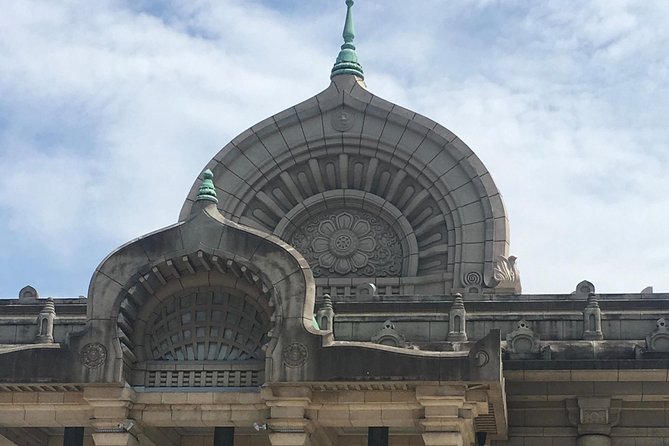
The temple visit lasts about 10 minutes, but it gives the tour an immediate change of tone. Instead of starting with a storefront, you begin inside a religious building with its own visual language and cultural purpose. The guide explains the temple rather than treating it as a quick photo stop.
That short visit is useful for setting up the rest of the walk. Ginza’s architecture is not only about shopping and corporate identity. It also reflects religion, ceremony, performance, and daily neighborhood life. If you are new to Japanese architecture, this opening stop gives you a point of comparison before the route turns toward commercial buildings.
The time is brief, so do not expect a full temple tour. You will see and discuss its features, then move on. Comfortable shoes matter from the beginning, even though this is not a strenuous hike.
Kabukiza Theater and Ginza’s public face
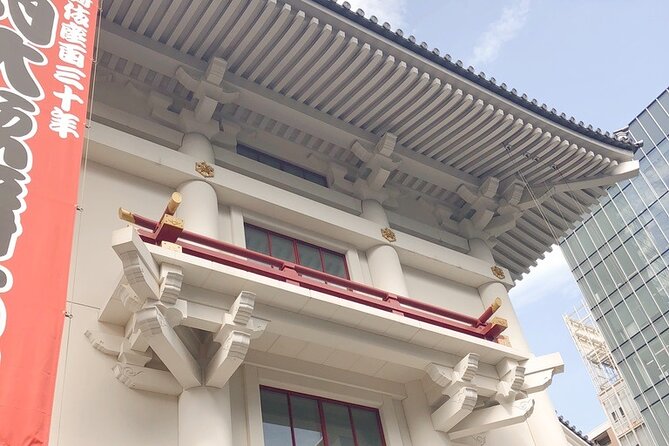
Kabukiza Theater receives about 20 minutes. The guide takes you inside to look at its features, making this more than an exterior photo stop. The theater is an important part of the route because it shows how architecture can serve a traditional performing art while still functioning within a modern commercial district.
This is one of the more valuable stops for visitors who might otherwise see Kabukiza only as a dramatic façade. A guide can help connect the building’s appearance with kabuki culture and the way the theater fits into Ginza’s identity.
You should keep your expectations practical. The tour does not promise a performance, backstage access, or a long theater visit. The value lies in understanding the building and its role in the district.
From here, the route moves through Ginza with about 40 minutes of walking between sites in total. That figure is spread across the tour rather than being one long march, but the route still involves city walking, crossings, and time on your feet.
Modern statements at the Nicolas G. Hayek Center
The Nicolas G. Hayek Center gets roughly 15 minutes, including time inside. This stop represents the modern, brand-driven side of Ginza, where architecture is part of how a company presents itself to the public.
It is a good place to ask your guide about the relationship between design and retail. Luxury and watch brands do not simply rent ordinary spaces in Ginza. Their buildings often serve as three-dimensional advertisements, using materials, shape, light, and scale to create a particular impression.
The tour’s private format helps here because you can decide how far to take the subject. If you enjoy architecture, you can ask about the architect and design choices. If you care more about shopping culture, your guide can explain how these buildings fit into Ginza’s commercial character.
The timing is long enough for a focused explanation, but not for a detailed technical lecture. That balance suits most people who want context without spending an entire day on one building.
A completely different kind of day out:
- Tokyo Disney Resort – Tokyo Disneyland & Tokyo DisneySea Park Tickets
★ 4.8 · 99,488 reviews - SHIBUYA SKY Ticket
★ 4.7 · 46,509 reviews - JR Whole Japan Rail Pass
★ 4.8 · 29,150 reviews - Mt Fuji and Hakone 1-Day Bus Tour Return by Bullet Train
★ 5.0 · 26,383 reviews
Small-scale Ginza at Toyoiwa Inari Shrine
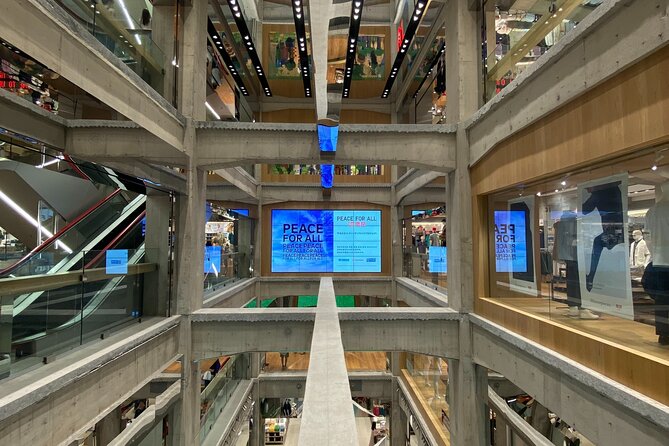
Toyoiwa Inari Shrine lasts only about five minutes, yet it may be one of the route’s most useful contrasts. The stop shows how a small sacred site can sit within a dense commercial neighborhood.
This is the kind of place you could easily miss on your own. It is not presented as a grand monument, and the visit is short. Its value comes from scale and setting: Ginza is not just wide streets and polished façades. It also contains compact religious spaces woven into the city’s everyday fabric.
I would not book this tour expecting every stop to be a major sight. The route works because of these contrasts. A small shrine can sharpen your appreciation of the much larger buildings that follow.
Ginza Maison Hermes Le Forum and the art of the façade
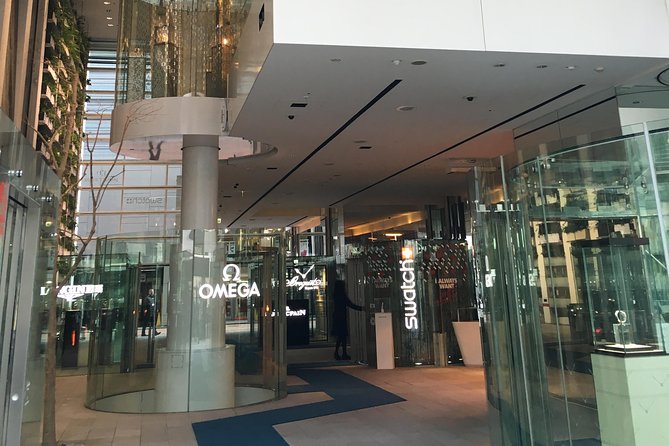
At Ginza Maison Hermes Le Forum, you spend about 15 minutes inside. This is one of the clearest examples of the tour’s central theme: a global luxury brand using architecture to create a distinct presence in Ginza.
The guide can help you look beyond the name on the building. Pay attention to the façade, proportions, surface, and the way the structure meets the street. This is where an architecture walk can make familiar shopping streets feel new.
You do not have to be a design specialist to enjoy this stop. A good guide can explain the building in plain English and connect it with Ginza’s wider pattern of commissioned, world-class architecture.
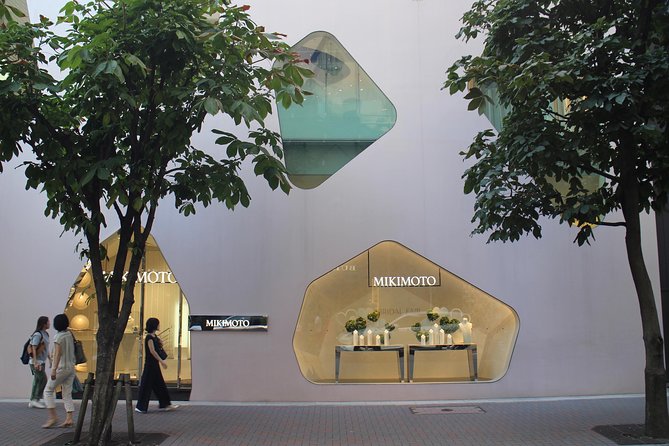
The route may also include the Mikimoto Boutique in Ginza 2-chome if time allows. That visit is listed at about five minutes, so treat it as an extra rather than a guaranteed centerpiece. The schedule has several stops, and exact time at each location depends on the group’s interests and pace.
Uniqlo, Mikimoto, and Wako from the street
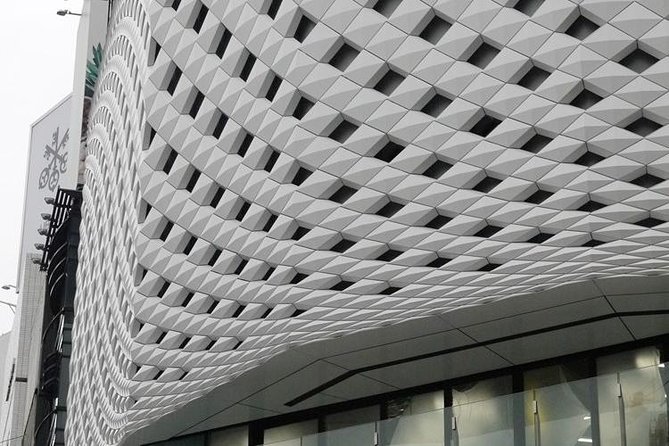
UNIQLO Tokyo is viewed from outside for about 10 minutes. This is a reminder that not every stop involves entering a building. The exterior becomes the subject, with the guide explaining its design and place within Ginza’s commercial streets.
Mikimoto Ginza 4-chome Honten is also an exterior viewing stop, with about five minutes set aside. Wako Ginza receives around 10 minutes from outside. These buildings help create a visual sequence, especially when you compare their façades rather than considering each in isolation.
Wako is particularly useful as a landmark for understanding Ginza’s traditional commercial image. The route finishes at the Ginza 4-chome intersection, in front of Mitsukoshi department store, so the Wako and Mitsukoshi area gives the final stretch a clear sense of place.
A practical tip: exterior stops are weather-sensitive. On a hot, rainy, or cold day, the quality of the experience depends more on your clothing and willingness to pause outdoors. The guide can explain a lot, but you still need to be comfortable looking upward on city sidewalks.
Okuno Building and older Ginza character
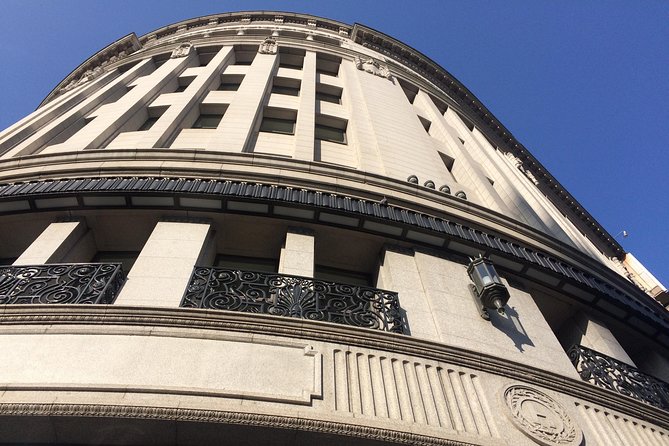
The Okuno Building receives about 10 minutes inside. This is an important counterpoint to the newer luxury structures because it gives the route a chance to examine an older building with a different feel.
The tour’s strongest moments often come from comparison. Modern brand buildings are designed to project a clean, memorable identity. An older structure can offer a more layered sense of time, texture, and individual spaces. The guide helps make that contrast visible.
You may not spend long enough to inspect every detail, but the stop rounds out the route. By this point, you have seen religious, theatrical, retail, commercial, and historic architecture. The district begins to read as a collection of competing eras and purposes rather than one expensive shopping zone.
What the guide adds to the experience
The guide is the main reason to choose this tour instead of walking Ginza with a map. Names praised in the feedback include Yoko, Yuki, Taka Yamamura, Yoshi, Mari, Haruka, Makoto, and Eriko. Their strengths varied, but the most repeated positive points were clear explanations, friendly manner, flexibility, and strong knowledge of Ginza.
Taka Yamamura was described as an urban planner with a particularly strong understanding of the district. Haruka was praised for linking historic context with contemporary culture, while Makoto adjusted the route to personal interests and helped with translation questions during an unexpected tea tasting.
Eriko reportedly stayed beyond the planned tour time, though you should not count on extra time as part of the official service. The key lesson is to tell the company what you want before arriving. One family had its interests gathered in advance so the guide could customize the outing.
If you know little about architecture, say so. Yoshi was praised for helping beginners learn without making them feel out of place. If you have studied design or urban planning, ask for more technical detail. The private structure allows the guide to change level and pace.
English ability may not be identical with every guide. Most feedback praises the explanations, but one account found the English only sufficient and wanted more information at the most notable buildings. If precise architectural terminology is important to you, mention that when arranging the tour.
The drink pause and the pace of three and a half hours
A drink stop is included, described as a cozy pause along the way. That small feature matters more than it may sound. A walking tour with eleven possible stops can become a steady stream of standing, listening, and moving. A pause gives you time to reset and ask questions.
The advertised duration is approximately three hours and 30 minutes. The listed stop times add up to roughly 95 minutes, with about 40 minutes of walking between sites. The remaining time allows for transitions, explanations, entering buildings, questions, and the drink break.
Two departure times are available, making it easier to fit the tour into a Tokyo itinerary. The exact times are not provided here, so confirm the options when you book.
The meeting point is near public transportation, and the end is at Ginza 4-chome in front of Mitsukoshi. That finish is convenient if you want to continue shopping, eat nearby, or connect with another central Tokyo activity.
Is $132.10 per person a fair price?
The cost is $132.10 per person, and group discounts are available. With a maximum of five people per booking, the price is easier to justify for a family or group of friends than for one person traveling alone.
You are paying for a licensed local guide, a private three-hour-plus route, customization, architectural interpretation, and the included drink pause. You are not paying admission fees for the listed stops, and hotel transportation is not included.
I see the best value in the guide’s access and judgment rather than in the number of sights. Ginza is easy to walk through on your own, but much harder to interpret well. If you would otherwise spend hours reading about buildings or miss the small shrine and older structures entirely, the guide earns more of the price.
The value is lower if you want only a quick overview, dislike shopping districts, or prefer to explore independently. It is also less appealing if your main goal is entering every building, since several stops are exterior views and the Mikimoto 2-chome visit is time permitting.
Who should book this private Ginza walk?
I would recommend it to first-time Tokyo visitors who want a clear introduction to Ginza, repeat visitors who have already shopped in the district, and anyone interested in the connection between architecture and commercial culture.
Families with children aged 10 and older may like the private setup, since the guide can adjust the pace and explain ideas at a suitable level. The minimum age is 10, and all participants are charged the adult price.
Architecture students and design fans should contact the provider with specific interests before the tour. You may get more from the experience if you ask for details about certain buildings, urban planning, or the contrast between older and newer Ginza.
I would be more cautious if you have limited mobility or strongly dislike walking. The tour requires moderate physical fitness, and the schedule includes repeated standing and city walking. It is not described as wheelchair accessible, so ask the provider directly if that is important for your plans.
Free cancellation is available up to 24 hours before the start time. Changes or cancellations made inside that window are not accepted for a refund.
Should you book the Ginza architecture tour?
Book it if you want Ginza explained rather than simply photographed. The strongest features are the private guide, the ability to set the level of discussion, and the unusual mix of temple, theater, shrines, historic buildings, and luxury architecture.
I would especially choose it for a small group that has already seen Tokyo’s headline sights and wants a more focused view of the city. Share your interests in advance, wear comfortable shoes, and ask the guide to spend extra time on the buildings that matter most to you.
Skip it if you want a cheap self-guided walk, a shopping tour, or guaranteed long visits inside every building. At $132.10 per person, this is a specialist experience, but for the right group it offers a thoughtful new way to read one of Tokyo’s most famous districts.
FAQ
How long does the Private Ginza Architecture Walking Tour last?
The tour lasts approximately three hours and 30 minutes. The listed route includes about 40 minutes of walking between sites, along with stops, explanations, transitions, and a drink pause.
Where does the tour start and finish?
It starts near Exit 1 of Tsukiji Station at Tsukiji 3-chome 15-1 in Chuo City. It finishes at the Ginza 4-chome intersection, in front of Mitsukoshi department store.
Is the tour private?
Yes. Only your group participates, and each booking can include a maximum of five people.
What ages can join the tour?
The minimum age is 10 years old. Adult pricing applies to all participants.
Is hotel pickup included?
No. Hotel pickup and drop-off are not included. The meeting point is near public transportation.
Can I cancel for a full refund?
Yes, if you cancel at least 24 hours before the experience start time. Cancellations or changes made less than 24 hours before the start time are not accepted for a refund.
Just added in Tokyo
- Very popular in Harajuku♡Animal petting zoo★ 4.6 · 39 reviews
- Yokohama Port: Private Customizable Tour with Transfer★ 5.0 · 19 reviews
- Wagyu & Sake 8 Course Tasting Dinner in Shinjuku★ 4.9 · 20 reviews
- Warner Bros. Studio Tour Tokyo – The Making of Harry Potter★ 4.8 · 181 reviews
- Yanaka District: Historical Walking Tour in Tokyo’s Old Town★ 4.8 · 117 reviews
- Tokyo: Classic Tsukiji Food Tour★ 4.9 · 78 reviews
- Tokyo: Tsukiji Fish Market Tour with 6 Stops & Seafood Lunch★ 4.5 · 165 reviews
- TOKYO Ultimate Samurai Armor Photo Experience!★ 5.0 · 16 reviews
Walking Tours, compared.
Kyoto Geisha Walking Tour: Gion District & Hidden Gems
Read our review →
Tokyo Tsukiji Fish Market Food and Culture Walking Tour
Read our review →
Gion Magical Night Walking Tour with Geisha Trivia
Read our review →
Imperial Palace and Shogun Historical Walking Tour
Read our review →
Gion Geisha District Walking Tour – Stories of Geisha
Read our review →
Shinjuku Local Bar and Izakaya Guided Walking Tour
Read our review →
Browse the lists this tour appears in