
Reviewed · WALKING TOURS
Tokyo Architecture and Contemporary Art Walking Tour with a local guide
Tokyo reveals its best ideas in concrete, glass, steel, and neon. This private tour links major buildings, fashion districts, art centers, and local neighborhoods into one long city walk, with public transport filling the gaps between them. I like the private format, which lets your group set the pace, and I like the chance to see Tokyo through architecture rather than only through temples and famous viewpoints. The main drawback is distance: you may cover 13,000 to 20,000 steps, with plenty of subway time between stops.
The guide is the heart of the day. Guides such as Tomoya, Richie, Riley, and Masa have earned praise for clear English, strong architecture knowledge, and willingness to adjust the route. You should expect a full day rather than a gentle stroll, so comfortable shoes and a reasonable interest in buildings are important.
In This Review
- Key points to know before booking
- Why this private Tokyo tour feels different
- Ginza: luxury shops and architecture at street level
- Tokyo International Forum: a short stop with a big structure
- Roppongi: Tokyo’s art triangle and polished towers
- Omotesando: where fashion turns into architecture
- Takeshita Street and Harajuku: youth culture in motion
- Shibuya Crossing: a brief look at Tokyo’s famous intersection
- Daikanyama and Nakameguro: a calmer finish
- The real pace: trains, steps, and city connections
- The guides are the tour’s biggest strength
- Who gets the most value from the $424.58 price
- Booking details worth knowing
- Should you book this Tokyo architecture tour?
- FAQ
- How long does the Tokyo architecture tour last?
- How many people can join the private tour?
- What is the price of the experience?
- Which Tokyo districts are included?
- Does the tour use public transportation?
- Is hotel pickup available?
- Is this a group tour with other people?
- Can I cancel for a full refund?
Key points to know before booking
- Seven very different Tokyo districts: The route moves from polished Ginza and Roppongi to youth-focused Harajuku, crowded Shibuya, and quieter Daikanyama.
- Private service for up to nine people: Your group travels together without the rush of a large coach tour.
- Public transport is part of the experience: Trains and subways connect the widely scattered stops, with IC cards used by some groups.
- Architecture comes in many forms: Expect postmodern convention halls, luxury retail design, cultural centers, bookshops, galleries, and unusual fashion buildings.
- The walking can be serious: The scheduled stops add up to more than five hours, before transfers and breaks.
- Strong guide feedback: The 4.9 rating from 15 reviews and 100 percent recommendation rate put guide quality at the center of the tour’s appeal.
Why this private Tokyo tour feels different
Many first visits to Tokyo concentrate on shrines, food, shopping, and observation decks. This tour takes another route. It asks you to look up at facades, notice how a building meets the street, and compare the design language of Ginza with the more relaxed streets around Daikanyama.
The tour costs $424.58 per group of up to nine people. That is a large charge for one or two people, but the math changes for a full group. With nine participants, the price works out to about $47 per person before any personal transport or food costs. For four people, it is about $106 each. The value is strongest for families, friends, or a small design-minded group that wants a private guide for most of a day.
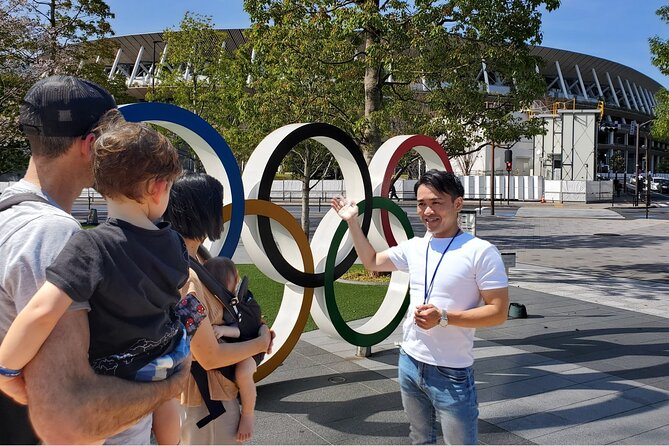
I like the private setup because Tokyo’s architecture is scattered across the city. A guide can explain why a building matters, help with the train connections, and respond when your group wants more time in one district. The route is not simply a parade of exteriors. It mixes buildings with art districts, retail streets, cafes, fashion, and everyday city life.
The tradeoff is that the schedule is ambitious. Listed stop times total roughly five hours and 45 minutes, but the complete experience lasts about six to eight hours. That leaves limited room for long museum visits or leisurely shopping. The day is about seeing a broad slice of Tokyo, not examining every building at length.
More Walking Tours in Tokyo
- Tokyo Tsukiji Fish Market Food and Culture Walking Tour
★ 5.0 · 3,184 reviews - Tokyo: Imperial Palace and Shogun Historical Walking Tour
★ 5.0 · 2,251 reviews - Tokyo: Shinjuku Local Bar and Izakaya Guided Walking Tour
★ 4.9 · 1,794 reviews
Ginza: luxury shops and architecture at street level
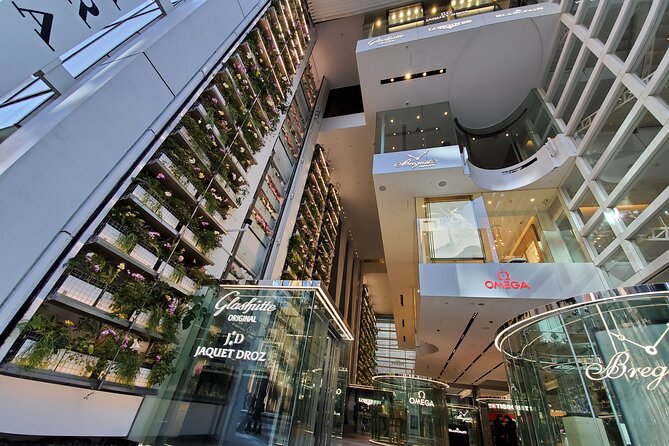
Ginza begins the day with Tokyo’s polished face. The district is known for boutiques, stylish Japanese stores, small galleries, and major architectural works. Here, shopping streets become an outdoor design exhibit, with high-end storefronts competing for attention through shape, materials, lighting, and scale.
The scheduled time is about one hour, and that is enough to get a strong introduction. Your guide can point out buildings that are easy to miss when you are focused on department stores or window displays. This is also a useful opening stop because it introduces the tour’s main idea: in Tokyo, commercial buildings are often designed as carefully as cultural institutions.
Ginza can feel highly controlled and polished. If you want old Tokyo streets or traditional architecture, this section may not satisfy you on its own. Its value is in seeing how contemporary design operates in a dense retail district.
Tokyo International Forum: a short stop with a big structure
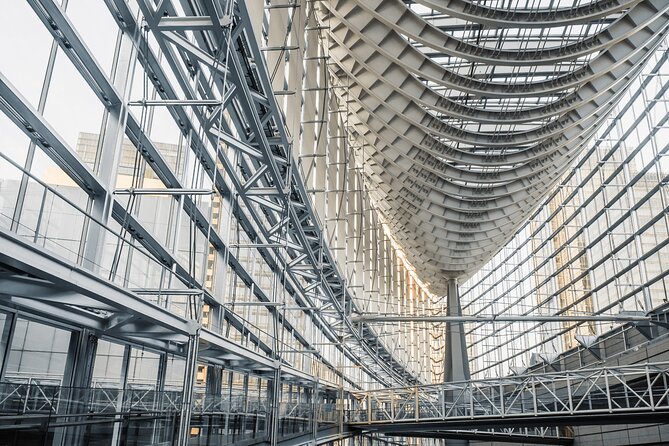
The Tokyo International Forum gets only about 15 minutes, but it may be the most visually striking architecture stop of the day. Designed by Rafael Viñoly, a Uruguay-born American architect, this postmodern convention and art center is known for its dramatic scale and unusual form.
The short time here is a limitation, especially if you enjoy taking photographs or want to study the structure from several angles. Still, the stop works well as a focused architectural pause between districts. Your guide’s explanation can give the building context that a quick independent visit might lack.
This is a good example of why the tour suits people who want interpretation, not just a list of addresses. You can look at the Forum and appreciate its shape on your own. The guide helps you understand why it matters within Tokyo’s modern civic architecture.
Roppongi: Tokyo’s art triangle and polished towers
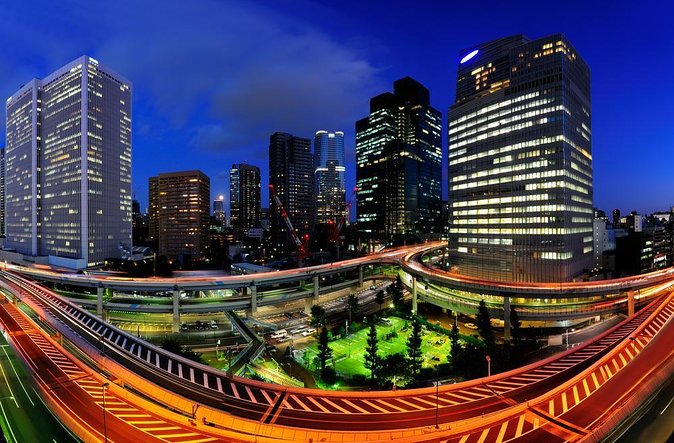
Roppongi brings the art side of the tour into sharper focus. The district contains three major cultural points often grouped as the Art Triangle: the National Art Center, Mori Art Museum, and Suntory Museum of Art. The area also includes art galleries and the Fujifilm presence noted in the route description.
You have about one hour here. That is enough for an introduction to the district and its architecture, but not enough for a full museum visit at each institution. Admission to the walking stops is listed as free, so you should not assume that entrance to temporary exhibitions or museums is included. If one museum matters greatly to you, ask the guide about adjusting the day.
Roppongi is a useful contrast to Ginza. Ginza emphasizes retail architecture and brand identity. Roppongi shows how museums, galleries, and large cultural projects shape a district. I especially like this stop for people who want art without booking a separate gallery tour.
A completely different kind of day out:
- Tokyo Disney Resort – Tokyo Disneyland & Tokyo DisneySea Park Tickets
★ 4.8 · 99,488 reviews - SHIBUYA SKY Ticket
★ 4.7 · 46,509 reviews - JR Whole Japan Rail Pass
★ 4.8 · 29,150 reviews - Mt Fuji and Hakone 1-Day Bus Tour Return by Bullet Train
★ 5.0 · 26,383 reviews
Omotesando: where fashion turns into architecture
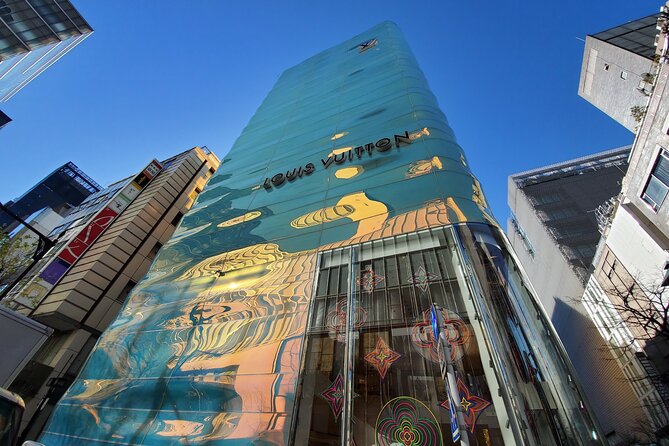
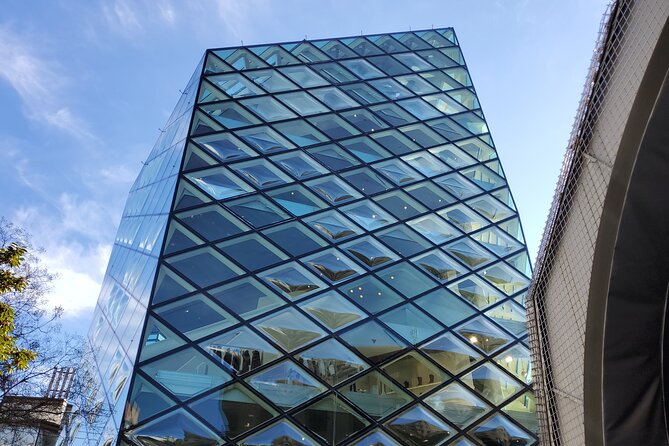
Omotesando is one of the strongest sections for architecture fans. Its luxury fashion and jewelry stores occupy buildings designed to attract attention from the street. The tour begins with the Prada flagship store, designed by Swiss architects Herzog and de Meuron, then continues through a district where retail design becomes part of the public experience.
You get about an hour here. That gives you time to compare several storefronts and notice how each brand uses glass, angles, concrete, light, and empty space. Even if you are not shopping, the buildings offer plenty to see.
This section is also practical for anyone interested in the connection between commerce and design. Tokyo’s best architecture is not always found in a museum. Sometimes it houses a clothing store, and the tour makes that point clearly.
Takeshita Street and Harajuku: youth culture in motion
Takeshita Street changes the mood. After the controlled elegance of Omotesando, Harajuku brings youth culture, unusual fashion, and more playful design. The route allows about one hour, giving you time to see the street and its surrounding visual energy.
The architecture here is less about famous masterworks and more about how shops, signs, clothes, and people create a changing urban scene. You may see unusual building designs alongside bold fashion trends. Your guide can help connect these details to Japanese youth culture.
This stop may be less satisfying if you want a quiet architectural study. Takeshita Street is famously intense, and the crowds can compete with the buildings. Still, it adds an important piece to the day. Tokyo is not only polished towers and museums. It is also fast-changing street style and commercial creativity.
Shibuya Crossing: a brief look at Tokyo’s famous intersection
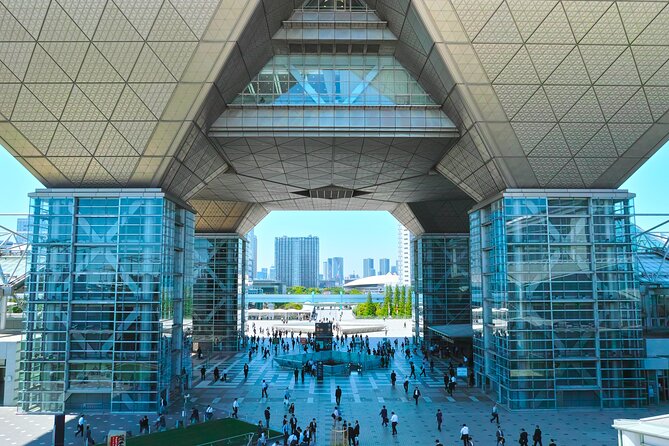
The Shibuya stop lasts about 30 minutes. The crossing is famous for its waves of pedestrians moving through the intersection, and the tour places you in one of Tokyo’s most recognizable urban scenes.
Thirty minutes is enough to take in the crossing and surrounding streets, but not enough for extended shopping or a long cafe stop. That brevity is sensible. Shibuya can absorb hours, and the tour still has another district ahead.
The value here is contrast. You have just seen carefully composed buildings in Omotesando and energetic street culture in Harajuku. Shibuya shows Tokyo at its most compressed and theatrical, where infrastructure, advertising, crowds, and high-rise development meet in one view.
Daikanyama and Nakameguro: a calmer finish
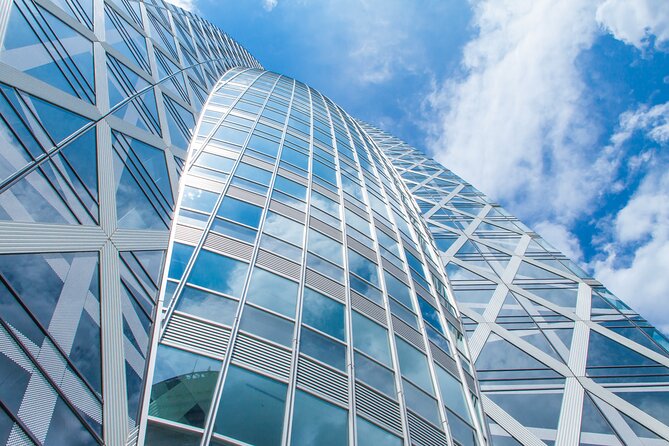
Daikanyama provides the day’s quietest change of pace. Along with nearby Nakameguro, the district is filled with boutiques and cafes and has a less hectic feel than Ginza, Harajuku, or Shibuya. The route allows about one hour.
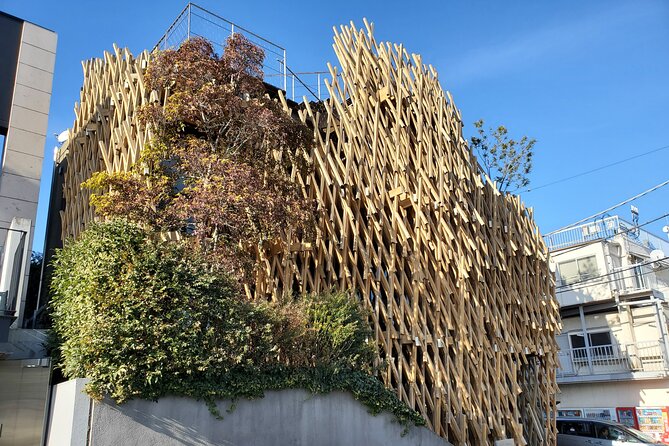
The Tsutaya bookstore is a key point here. It gives the district a strong design and cultural focus, while the boutiques and cafes make this a pleasant place to finish a long day. You may appreciate this final stop even more after hours in crowded central districts.
Daikanyama also helps the tour avoid a common problem: ending only at the loudest, most famous sight. Instead, you finish with a neighborhood where architecture, shopping, and daily life feel more relaxed. If your group wants to pause for coffee or browse, this is likely the most natural place to ask about using extra time.
The real pace: trains, steps, and city connections
The route covers widely separated parts of Tokyo, so public transport is not a minor detail. It is part of the day. The guide meets your group at a central point or outside your hotel, then helps you move by train and subway between districts.
One report describes extensive underground travel between sites. Another records roughly 13,000 to 20,000 steps, along with local trains and IC cards. That gives you a useful picture of the physical demand. The tour is not seven hours of continuous walking, but the transfers, station passages, stairs, and district walks add up.
Bottled water is provided, which is welcome on a hot day. Still, bring comfortable shoes and plan for a full urban day. A bus or taxi may sometimes make a transfer more enjoyable, and the provider has indicated that these options can be considered. Do not assume every transfer will use them, though. Public transport remains the main way to connect the route.
A private group gives you some control. You can tell the guide if your family needs a slower pace, if one building matters most, or if you want time for food. One group managed to buy chopsticks and eat ramen during the day, but lunch is not presented as a formal included part of the experience. Treat that as a possible break, not a promised meal.
The guides are the tour’s biggest strength
The strongest praise goes to the guides. Tomoya is described as highly informed and able to plan a full day well. Richie received praise for explaining the city clearly during a hot, high-step day. Riley was noted for very good English, responsiveness to suggestions, and thoughtful guidance, including during rain. Masa was praised for being friendly, adapting to requests, and showing both interior and exterior views.
Those details matter because architecture tours can become dry if the guide only recites names and dates. Here, the best reported experiences involve conversation and adjustment. You are not simply following a fixed flag through Tokyo. You have a person who can shape the day around your interests.
Guide assignment may vary, so you should not book expecting one particular person unless the operator confirms it. The consistent pattern is more useful than any single name: clear communication, strong subject knowledge, and a willingness to respond to the group.
Who gets the most value from the $424.58 price
I would recommend this tour most strongly to a small group with at least one of these interests:
- Architecture, urban design, or contemporary art
- Japanese fashion and retail design
- A private day with a flexible guide
- Seeing several Tokyo districts without planning every train transfer
- A full-day city outing rather than a short sightseeing walk
The price is harder to justify for a solo participant or couple unless having a dedicated guide is especially important. You will still see a lot, but the per-person cost is high compared with a group tour or self-guided day.
The value improves when you divide the fee among several people. It also improves if you would otherwise spend hours researching buildings, mapping train routes, and deciding which districts fit together. The guide provides a shortcut to places that can be difficult to connect efficiently on your own.
The tour is less suitable if you dislike public transport, want extensive time inside museums, or prefer a slow food-and-cafe day. It is also a poor fit for anyone who needs a low-walking itinerary, given the reported step count and number of transfers.
Booking details worth knowing
The experience lasts approximately six to eight hours and ends back at the meeting point. Pickup is offered, while the meeting information also refers to a central point, so confirm the exact arrangement after booking. The activity runs daily during the listed operating periods, from 8:30 AM to 3:00 PM, and confirmation is sent within 48 hours, subject to availability.
Most people can participate, and the activity is private for your group only. Bottled water and a mobile ticket are included features. Admission to the listed outdoor stops is free, but extra museum entry, food, shopping, and personal transport costs should not be treated as part of the $424.58 fee.
Free cancellation is available if you cancel at least 24 hours before the local start time. Changes or cancellations inside that window are not accepted for a refund.
Should you book this Tokyo architecture tour?
Book it if you want Tokyo explained through buildings, neighborhoods, and contemporary culture, and if your group can handle a long day on foot and underground. The route gives you strong variety, from Ginza’s luxury design to Harajuku’s youth style and Daikanyama’s calmer boutiques.
I would be especially comfortable recommending it to a group of four to nine people, since the price becomes more reasonable when shared. Ask about the pace, preferred districts, museum entry, and transport choices before the day begins. If the guide matches the praised standard set by Tomoya, Richie, Riley, and Masa, you should finish with a much clearer sense of how Tokyo’s architecture fits into everyday city life.
FAQ
How long does the Tokyo architecture tour last?
The experience lasts approximately six to eight hours.
How many people can join the private tour?
The private tour is available for one group of up to nine people.
What is the price of the experience?
The listed price is $424.58 per group, with up to nine people included.
Which Tokyo districts are included?
The route includes Ginza, Tokyo International Forum, Roppongi, Omotesando, Takeshita Street in Harajuku, Shibuya, and Daikanyama.
Does the tour use public transportation?
Yes. The guide and group travel between the districts using public transportation, including local trains and subway services.
Is hotel pickup available?
Pickup is offered, and the tour information says the guide may meet you outside your hotel or at a central meeting point. Confirm the exact meeting arrangement after booking.
Is this a group tour with other people?
No. This is a private activity, so only your own group participates.
Can I cancel for a full refund?
Yes, if you cancel at least 24 hours before the experience start time. Cancellations or changes made less than 24 hours before the start are not accepted for a refund.
Just added in Tokyo
- Very popular in Harajuku♡Animal petting zoo★ 4.6 · 39 reviews
- Yokohama Port: Private Customizable Tour with Transfer★ 5.0 · 19 reviews
- Wagyu & Sake 8 Course Tasting Dinner in Shinjuku★ 4.9 · 20 reviews
- Warner Bros. Studio Tour Tokyo – The Making of Harry Potter★ 4.8 · 181 reviews
- Yanaka District: Historical Walking Tour in Tokyo’s Old Town★ 4.8 · 117 reviews
- Tokyo: Classic Tsukiji Food Tour★ 4.9 · 78 reviews
- Tokyo: Tsukiji Fish Market Tour with 6 Stops & Seafood Lunch★ 4.5 · 165 reviews
- TOKYO Ultimate Samurai Armor Photo Experience!★ 5.0 · 16 reviews
Walking Tours, compared.
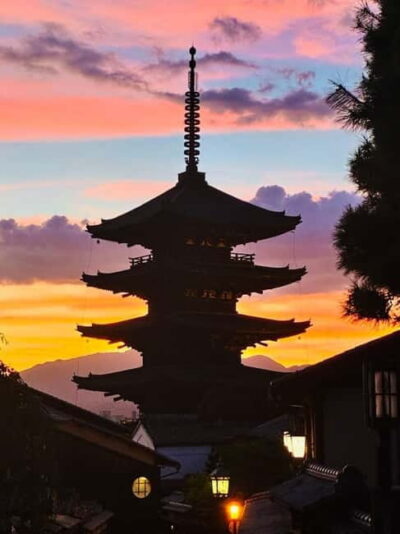
Kyoto Geisha Walking Tour: Gion District & Hidden Gems
Read our review →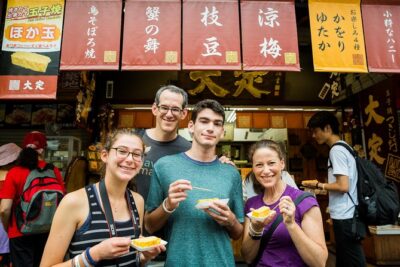
Tokyo Tsukiji Fish Market Food and Culture Walking Tour
Read our review →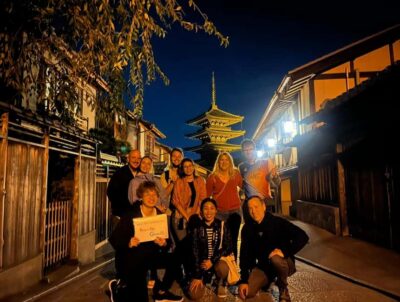
Gion Magical Night Walking Tour with Geisha Trivia
Read our review →
Imperial Palace and Shogun Historical Walking Tour
Read our review →
Gion Geisha District Walking Tour – Stories of Geisha
Read our review →
Shinjuku Local Bar and Izakaya Guided Walking Tour
Read our review →
Browse the lists this tour appears in