
Reviewed · WORKSHOPS
Private Koto Lesson in Kyoto with a Professional Koto Performer
Music makes a fine doorway into Kyoto. This private lesson lets you sit at a traditional koto, learn the Japanese song Sakura, and hear the instrument played by a professional performer. I like the one-to-one setting, which gives your group direct help rather than a crowded classroom experience. I also like that the lesson includes the instrument, music notation, tea, and a performance, so the $60 price covers the main costs. The main consideration is time: at about 1 hour and 20 minutes, this is a focused introduction, not a full course in koto playing.
The lesson suits a wide range of ages, from children as young as three to older adults. A son was able to work toward mastering Sakura with patient guidance, which tells me this is built for beginners rather than trained musicians. You will need to reach the studio in Kyoto on your own, since private transportation is not included, but the meeting point is near public transportation.
In This Review
- Key points to know before booking
- Arriving at Soushunan in central Kyoto
- Meeting the koto before you play
- Learning Sakura on the koto
- Learning from a professional performer
- The tea break and the slower pace
- Is $60 per person a fair price?
- Who will enjoy this Kyoto experience?
- Practical details for families and groups
- What makes this lesson worth remembering
- Should you book this private koto lesson?
- FAQ
- How long does the private koto lesson last?
- What song will I learn?
- Is the koto provided?
- Are music notes provided?
- Where does the experience begin and end?
- Can I cancel for a full refund?
Key points to know before booking
- A private lesson for your group: Only your party takes part, so the teacher can adjust the pace and offer direct help.
- Sakura is the main goal: You will learn a recognizable traditional Japanese song rather than only hearing an explanation of the instrument.
- Taught by a professional performer: The owner performs koto professionally and teaches the instrument herself.
- Tea and a live performance follow the lesson: The experience gives you time to listen after you have tried playing.
- Everything needed is supplied: The koto, lesson materials, music notation, and lesson fee are included.
- Suitable for ages three and up: Families can take part together, and the activity is open to most participants.
Arriving at Soushunan in central Kyoto
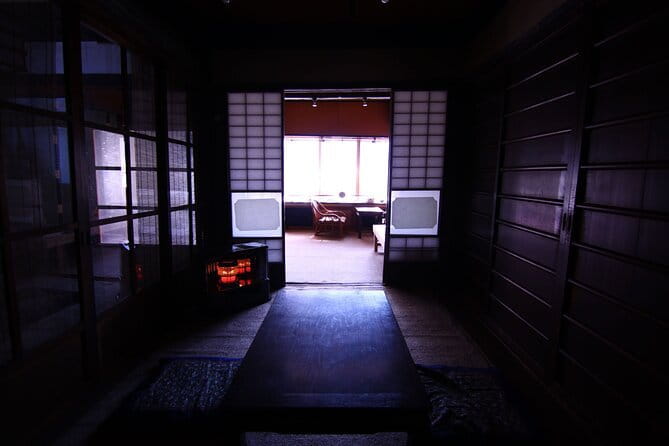
Your meeting point is Soushunan, at 288-2 Higashishinmeicho in Kyoto’s Kamigyo Ward. The official address is also written as 箏春庵 soushunan. The studio is near public transportation, but you are responsible for getting there because private transport is not part of the experience.
I would allow extra time to find the address, especially if you are coming from another Kyoto sight. A music lesson is not the place to arrive breathless and late. Confirmation is sent within 48 hours of booking, subject to availability, so it is sensible to have that confirmation before setting out.
This is a private activity, which matters more than it may first appear. You do not have to keep pace with an unrelated group, and a young child, older parent, or first-time musician can receive help without feeling rushed. It also gives your group a quieter setting for asking about the instrument and its role in Japanese culture.
The activity ends back at the same meeting point. There is no hotel pickup or transport between locations, so plan this as a self-contained Kyoto stop.
A few more options to weigh up in Kyoto
- PERFECT KYOTO 1-Day Bus Tour
★ 5.0 · 13,518 reviews - [Kyoto & Nara Day Tour] Sagano Scenic Railway & Nara Park & Fushimi Inari Taisha Thousand Torii Gates & Togetsukyo Bridge & Bamboo Grove & Kimono Forest (Departing from Osaka)
★ 4.9 · 10,942 reviews - Kyoto: Fushimi Inari, Kinkakuji, Bamboo Grove 1 Day Bus Tour
★ 4.8 · 4,316 reviews
Meeting the koto before you play
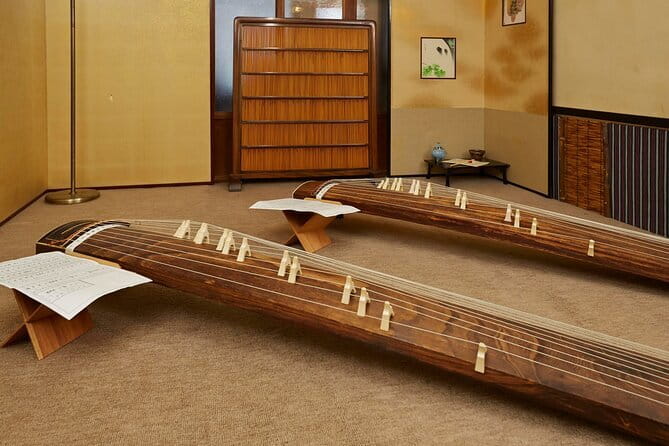
The koto is a traditional Japanese string instrument associated with formal ceremonies in Japan. Here, you do not simply pose beside one for a photograph. You are given the chance to sit down and try it with guidance from a professional performer.
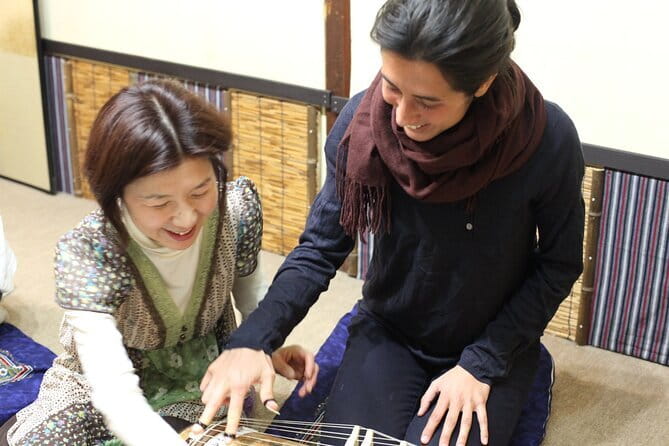
The teaching begins with help using the instrument and the supplied notation. Since the lesson is aimed at beginners, you are not expected to arrive knowing how to read music or handle a koto. The teacher’s role is practical: she helps you make the instrument work while explaining the tradition behind it.
That combination is one of the strongest parts of the experience. You learn through your hands, but the lesson also gives context. A koto can look graceful and simple from across a room. Trying to play it gives you a better sense of the care and technique involved.
The experience is also friendly to mixed-age groups. A three-year-old can take part, as can an elderly family member, although the exact pace will naturally depend on the people in your party. For a family visiting Kyoto, this can be a welcome change from temples, shrines, and long walks. Everyone has the same task, and the lesson gives you something to do together.
Learning Sakura on the koto
The main musical goal is Sakura, one of the best-known traditional Japanese songs. Learning one specific piece gives the lesson shape. Instead of leaving with only a general introduction, you work toward playing something recognizable.
The teacher helps you through the notes and the handling of the instrument. You should expect an introductory version rather than a polished concert performance from yourself. Still, completing part of a song creates a clear sense of progress, especially for children.
One useful detail comes from the experience of a young student who worked hard and was able to master Sakura by the end of the lesson. That suggests the teacher is patient and willing to support a learner through mistakes. Another account praises the instruction for being kind, patient, and highly talented. Those qualities matter in a musical lesson, where a rushed teacher can make a beginner feel clumsy.
I would book this for the chance to try something new, not to become a koto player in eighty minutes. The song gives you a satisfying target, but the real value is the process of learning how this instrument works and hearing how it should sound.
If you already play a stringed instrument, you may find the basic material fairly gentle. That is not a fault, but it is worth knowing. This is designed as an accessible cultural activity, not an advanced workshop.
Learning from a professional performer
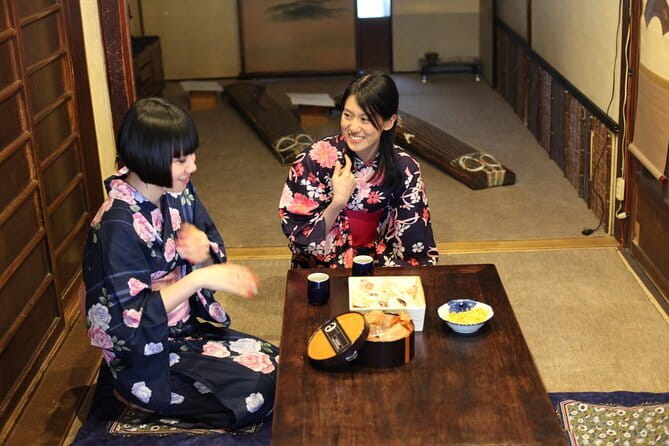
The owner of Soushunan is a professional koto performer, so the lesson comes directly from someone who uses the instrument at a high level. You get more than a scripted introduction. The teacher can demonstrate proper playing and show you what the instrument is capable of after you have tried it yourself.
The teacher’s performance is an important part of the visit. Once your lesson is over, you can take a tea break and listen as she plays. This changes the rhythm of the experience. You first make the effort yourself, then hear the same instrument in the hands of an expert.
I especially like that order. A performance alone can be beautiful, but it may leave you wondering how the sound is made. Playing first gives you a practical reference. You will have some idea of the movements and concentration involved, even if your own version of Sakura is still a work in progress.
The performance also keeps the activity from feeling like a standard music class. You get instruction, cultural context, personal practice, and a demonstration in one visit. For $60 per person, that package is more useful than paying only to watch a short show.
A completely different kind of day out:
- Kyoto: Tea Ceremony in a Traditional Tea House in Kiyomizu
★ 4.9 · 3,519 reviews - Kyoto: Gion Make Your Own Chopsticks with Engraving Option
★ 5.0 · 3,465 reviews - Kyoto Nara Day Trip │ Kiyomizu-dera Temple + Fushimi Inari-taisha Shrine + Nara Park (Departing from Osaka/Kyoto)
★ 4.7 · 3,408 reviews - Kyoto Geisha Walking Tour: Gion District & Hidden Gems
★ 4.7 · 3,273 reviews
The tea break and the slower pace
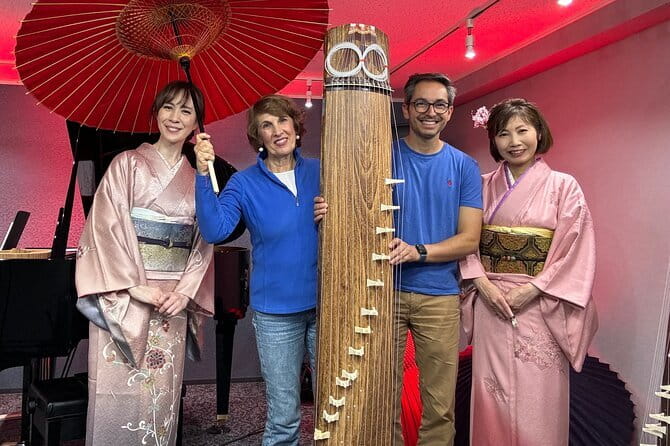
The tea break gives you a pause after the hands-on part of the lesson. It is a small feature, but it helps the experience feel rounded rather than rushed from one instruction to the next.
You can use this time to listen to the teacher, enjoy the setting, and let the lesson settle. The supplied information does not promise a full tea ceremony, so I would not book this expecting a formal ceremony with an elaborate set of steps. Think of it as a simple break with tea and a performance.
That distinction is useful. The koto lesson is the central activity, and the tea is an added moment of calm. If your main interest is Japanese music, this balance works well. If you are specifically looking for a detailed tea ceremony, you should choose a separate activity built around that tradition.
Is $60 per person a fair price?
At $60 per person, the value depends on how much you want a personal cultural activity. The fee includes the koto instrument, lesson, music notation, all taxes, and the tea break with the teacher’s performance. You do not need to rent an instrument or pay a separate lesson charge once you arrive.
For a private experience, the price is reasonable. Only your group participates, and the teacher can focus on your party rather than dividing attention among strangers. The individual setting is particularly useful if your group includes children or people who have never played an instrument.
The price is less compelling if you only want a quick photo or a short demonstration. You are paying for participation and instruction, not just entertainment. I would choose it when you want to spend real time trying the koto and understanding more about its place in Japanese culture.
There are no extra activity fees listed, which makes budgeting easy. The main additional cost is simply getting yourself to Soushunan. Since transportation is not included, factor in your local train, bus, or taxi expense when planning the day.
Who will enjoy this Kyoto experience?
I would recommend the lesson to families, couples, solo visitors, and small groups who want a personal activity away from the usual sightseeing route. It works especially well for people who enjoy music but have no formal training. You do not need to be an accomplished performer to take part.
Children can join from age three, and older adults are welcome too. That broad age range makes it a practical choice for multigenerational groups. The private format also means your group can share the lesson without being compared with strangers.
The activity may suit you if:
- You want to play a traditional Japanese instrument rather than only watch a performance.
- You prefer a private setting with direct instruction.
- You are interested in the customs and background connected to the koto.
- You want a manageable activity lasting about 80 minutes.
- You are comfortable arranging your own way to the Kyoto meeting point.
I would be more cautious if you want an advanced music class, a long concert, or a formal tea ceremony. The lesson is short and beginner-friendly. Its strength is access, patience, and personal contact.
Practical details for families and groups
The activity includes a mobile ticket, making it easy to keep the booking on your phone. Confirmation arrives within 48 hours, subject to availability, so check your email before heading to the studio.
Service animals are allowed, and most people can participate. The activity is not described as requiring previous musical experience. Still, if someone in your party has particular mobility, sensory, or other access needs, it is sensible to confirm details with the provider before booking.
Because the lesson takes place at one location, you do not need to manage a complicated route during the experience. Arrive at Soushunan, complete the lesson, enjoy tea and the performance, and finish at the same address.
The cancellation terms are flexible if your plans remain uncertain. You can receive a full refund by cancelling at least 24 hours before the local start time. Cancellations or changes made inside that 24-hour window are not accepted for a refund.
What makes this lesson worth remembering
The best part is the change in perspective. At first, the koto may seem like a formal object connected to ceremonies and performance. After you sit down and try to play Sakura, it becomes something you can approach directly.
I also value the teacher’s patience. A child learning the song and reaching the end of the lesson with a piece under his fingers is a good sign for beginners. This is not an activity that expects you to arrive polished. It gives you room to make mistakes and keep going.
The teacher’s own performance adds a second layer. You hear the instrument played with skill after discovering how much attention even a simple exercise requires. That contrast can make the music more meaningful.
For many people, the memory will not be a perfect performance of Sakura. It will be the feeling of sitting with family or friends, trying the same traditional instrument together, then listening while tea is served. That is a modest but genuine connection to Kyoto’s musical culture.
Should you book this private koto lesson?
Book it if you want a hands-on Kyoto experience with a professional performer, clear beginner instruction, and a private setting. The inclusion of the instrument, notation, tea, and performance makes the $60 fee easy to understand, especially for families or small groups.
Skip it if you want advanced musical training, a long concert, or a formal tea ceremony. For everyone else, this is a thoughtful break from sightseeing, with enough instruction to give you a real introduction and enough performance time to show why the koto matters.
FAQ
How long does the private koto lesson last?
The experience lasts approximately 1 hour and 20 minutes.
What song will I learn?
The lesson teaches Sakura, a traditional Japanese song.
Is the koto provided?
Yes. The instrument is supplied, and the koto usage fee is included in the price.
Are music notes provided?
Yes. Music notation needed for the lesson is available.
Where does the experience begin and end?
It begins at Soushunan, 288-2 Higashishinmeicho, Kamigyo Ward, Kyoto, 602-8162, Japan. The activity ends back at the same meeting point.
Can I cancel for a full refund?
Yes. You can cancel at least 24 hours before the experience start time for a full refund. Cancellations and changes made less than 24 hours before the start time are not accepted for a refund.
Just added in Kyoto
- The “Golden Route” and Ancient Japan by DIAMIR Erlebnisreisen – 14-Day Tour★ 2.0 · 2 reviews
- Japan: Castles & Cuisine by G Adventures – 6-Day Kyoto to Osaka Tour★ 4.5 · 4 reviews
- Cycle Japan by Explore! – 13-Day Kyoto to Tokyo Tour★ 4.7 · 12 reviews
- Cycle Japan by Intrepid Travel – 11-Day Kyoto to Tokyo Tour★ 4.8 · 2 reviews
- Classic Japan by Intrepid Travel – 11-Day Kyoto to Tokyo Tour★ 4.4 · 14 reviews
- Ancient & Modern Japan 14-Day Tour by Exodus Adventure Travels★ 4.4 · 40 reviews
- 5 Day Cultural Adventure of Kyoto, Nara & Osaka by Tourist Journey★ 2.5 · 2 reviews
- 12 Days Kinosaki Onsen Escape: A Journey Through Japan’s Timeless Towns by UME Travel★ 4.8 · 5 reviews
Workshops, compared.
Sushi Making Tokyo Roll and Authentic Japanese Sushi Class
Read our review →
Gion Make Your Own Chopsticks with Engraving Option
Read our review →
Roll and Authentic Sushi Making Class in Asakusa
Read our review →
Ramen Cooking Class at Ramen Factory in Kyoto
Read our review →
Tokyo Asakusa Chopsticks Workshop: Make Your Own Pair
Read our review →
Ring Making Workshop : Vintage Japanese Coin Ring
Read our review →Browse the lists this tour appears in