
Reviewed · CASTLES AND HISTORIC SITES
Samurai experience: art and soul of the sword
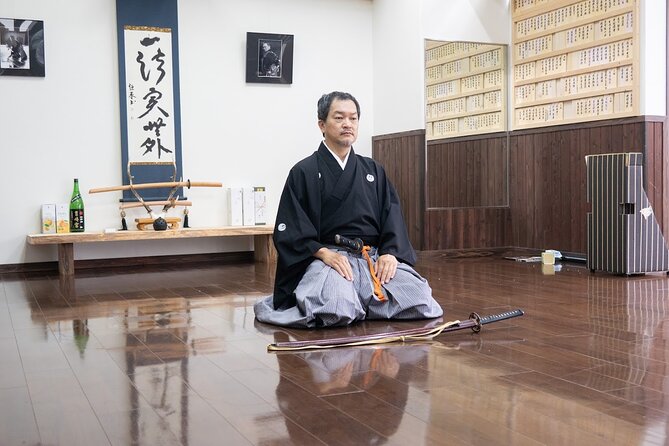
The sword teaches restraint before it teaches speed. I like that this Tokyo dojo experience begins with samurai etiquette and bushido, not costume play or staged combat. I also like the close master demonstration and the chance to handle a sword under careful instruction. The main drawback is its short 90-minute length, which leaves little room for a broad lesson in Japanese swordsmanship.
This is a focused introduction to Iaido, the samurai art of drawing and using the sword. You change into samurai attire, learn why courtesy and discipline mattered, practice with a sword, and cut a man-shaped cardboard target. Adults can add real tatami cutting, but that option brings extra rules, a waiver, and a minimum age of 18.
In This Review
- Key points to know before booking
- Why this samurai lesson feels different
- Arriving at the Kuramae dojo
- Changing into samurai attire
- Learning Iaido and the values of bushido
- Your turn with the sword
- The optional real tatami cutting
- Watching the master’s solo demonstration
- What the $216.86 price delivers
- Who should book this experience
- Practical details that affect your choice
- Should you book the Art and Soul of the Sword?
- FAQ
- Where does the samurai experience begin?
- What time does the experience start?
- How long does the experience last?
- Where does the experience end?
- What is the maximum group size?
- What is the minimum age?
- Who can try cutting a rolled tatami mat?
- Do I receive anything at the end?
- Can I cancel for a full refund?
Key points to know before booking
- The lesson starts with respect for the sword: You learn proper etiquette and the values of bushido before handling the weapon.
- Iaido is the central art: The session focuses on controlled drawing, movement, and cutting rather than mock combat.
- Real tatami cutting is optional: Participants aged 18 and over can try cutting a rolled tatami mat after signing a waiver.
- The master’s demonstration is a highlight: Watching an expert perform up close gives the lesson much more meaning after you have tried the basics.
- The group is small: A maximum of 10 people allows for a more personal dojo setting.
- The experience ends with a certificate: You receive a certificate of completion before returning to the meeting point.
Why this samurai lesson feels different
Many sword-themed activities sell the image of the fierce warrior. This one takes a quieter path. The central idea is that drawing the sword or attacking someone was not a decision to make lightly. A strong samurai was expected to settle disputes through discussion when possible, while maintaining the skill and discipline needed to discourage a fight.
That point comes early, and it changes the rest of the session. Instead of treating the sword as a prop, the lesson presents it as a serious tool that demands courtesy. You may arrive expecting a dramatic slice through a straw target. You leave with a clearer sense of why restraint, posture, and self-control mattered as much as force.
I find that approach valuable because it gives the activity context. The clothing and sword make for memorable photographs, but the etiquette gives the experience its purpose. You are not simply dressing up as a warrior for an hour. You are being shown the conduct expected of someone trusted to carry a sword.
The lesson also corrects a common modern image of the samurai. The dramatic warrior charging into battle is only part of the story. Here, diplomacy and discipline receive as much attention as sword technique. That balance is one of the strongest reasons to choose this experience over a simple photo opportunity.
More Castles and Historic Sites in Tokyo
- Tokyo: Imperial Palace and Shogun Historical Walking Tour
★ 5.0 · 2,251 reviews - Tokyo Castle & Imperial PalaceーShogun Walking Tour
★ 4.7 · 1,068 reviews - Tokyo: Samurai Ninja Museum Guided tour and Experience
★ 4.6 · 1,010 reviews
Arriving at the Kuramae dojo
The meeting point is at Kuramae Station, at 2-chōme-3-1 Kuramae in Taito City. The location is near public transportation, and the activity begins at 9:00 am. You return to the same meeting point at the end.
That early start matters in Tokyo. It gives you a structured morning activity before the rest of your sightseeing day, although you will need to plan your route to Kuramae carefully. The experience lasts about 1 hour and 30 minutes, so you can still fit other sights into the afternoon.
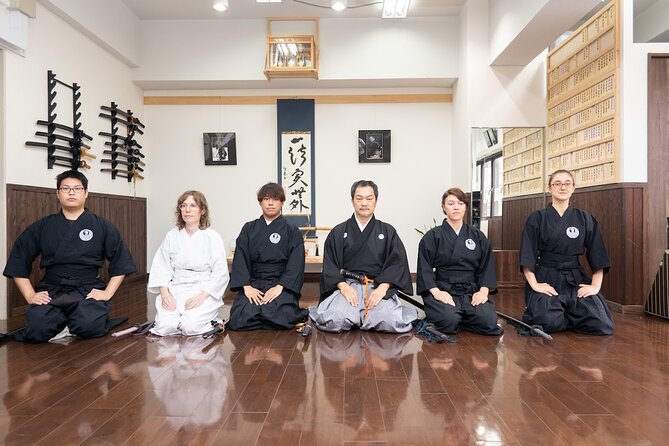
The group can have up to 10 people. That is small enough to keep the lesson from feeling like a large stage show, though it is still a group class rather than a private appointment. If you prefer personal attention, arriving ready to listen and follow directions will help you get the most from the limited time.
The experience requires a moderate level of physical fitness. That does not mean you need athletic training, but you should be comfortable standing, changing into the provided samurai attire, and following physical instructions with care.
Changing into samurai attire
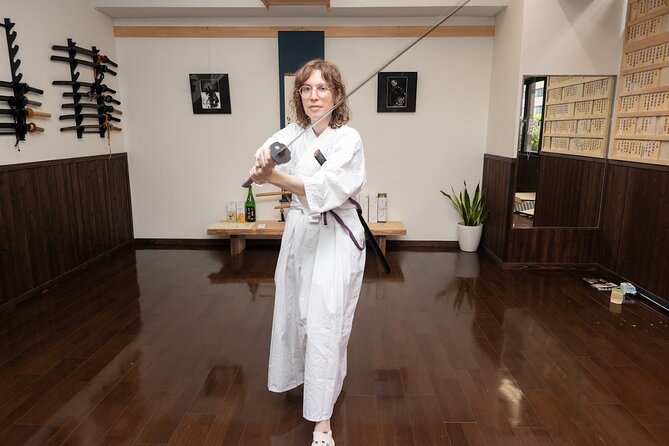
After arriving at the dojo, you change into samurai attire and receive a sword. This is the point where the activity becomes more than a talk about historical warriors. Wearing the clothing and holding the sword gives you a direct sense of the posture and care expected during the lesson.
Still, it is important to keep your expectations in check. The attire is part of the learning setting, not the whole attraction. The purpose is not simply to look like a samurai. The clothing helps place you in the discipline of the dojo, where movements are deliberate and manners matter.
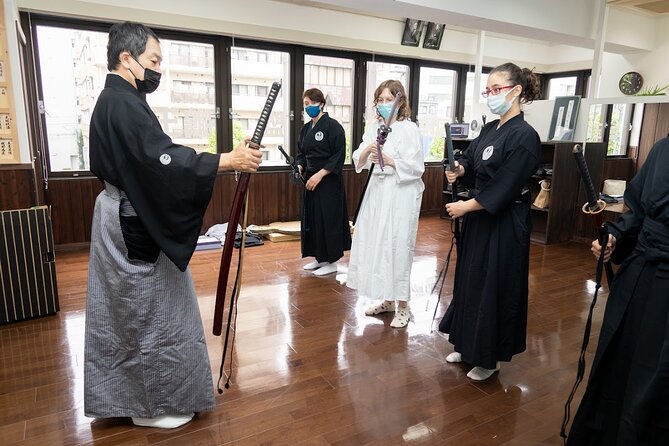
The sword should also be treated seriously. You are instructed in the proper etiquette toward it before moving on to cutting practice. That early emphasis helps prevent the session from turning into casual swordplay, and it gives beginners a useful framework for every movement that follows.
Learning Iaido and the values of bushido
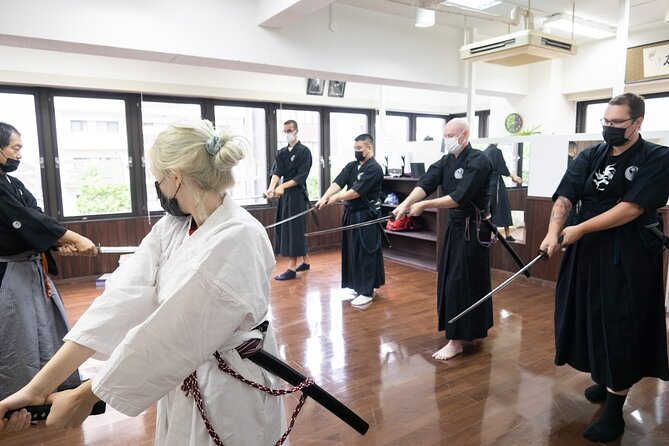
The master explains what Iaido is and describes the flow of the experience. Iaido is a form of swordsmanship built around drawing the sword, moving with control, and completing a precise cut. The image of a samurai swiftly slicing a rolled straw mat comes from this kind of practice.
For a first-time participant, the important lesson is not speed. You learn that the sword is used with intent, not wild energy. The teaching connects physical technique with courtesy, discipline, and the ideals of bushido, often translated as the way of the samurai.
This opening section is especially useful if your knowledge of samurai culture comes mainly from films. It gives you a better way to understand the movements you are about to attempt. You are not just copying a dramatic pose. You are learning why the sword is drawn in a controlled manner and why the practitioner’s conduct matters.
The short format means the instruction cannot cover every part of Iaido. You should see this as an introduction rather than a full martial arts course. Even so, the emphasis on values makes the 90-minute lesson feel more substantial than a simple demonstration.
A completely different kind of day out:
- Tokyo Disney Resort – Tokyo Disneyland & Tokyo DisneySea Park Tickets
★ 4.8 · 99,488 reviews - SHIBUYA SKY Ticket
★ 4.7 · 46,509 reviews - JR Whole Japan Rail Pass
★ 4.8 · 29,150 reviews - Mt Fuji and Hakone 1-Day Bus Tour Return by Bullet Train
★ 5.0 · 26,383 reviews
Your turn with the sword
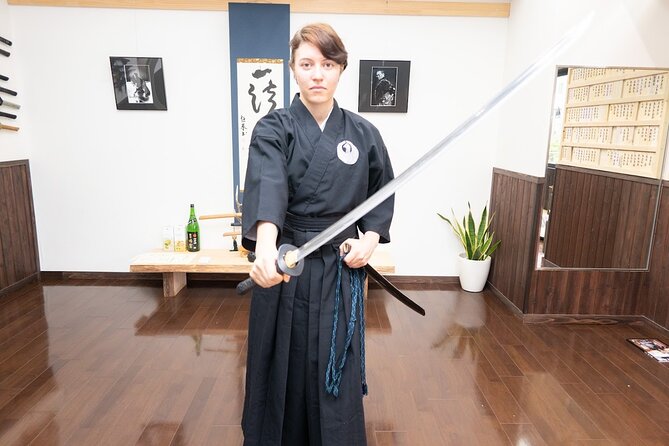
Once the master has explained the basics, you take part in the practical lesson. You use a sword and practice the movements under direction. The listed activity includes cutting a man-shaped cardboard target, giving you a clear physical goal without immediately requiring the more demanding real-sword option.
This is where the experience becomes both exciting and humbling. A sword may look simple in a demonstration, but controlled movement requires attention. You need to listen closely, follow the master’s instructions, and avoid treating the blade like a toy.
The activity is suitable for beginners, and the minimum age is 5 if you do not choose the real sword option. That makes the standard version accessible to families, though parents should still consider whether a child can remain focused and obey safety instructions in a dojo.
The cardboard target also provides a practical middle step. You can experience the motion of a cut without taking on the additional requirements of slicing a rolled tatami mat. If you are nervous around real blades, this is likely the better choice.
The optional real tatami cutting
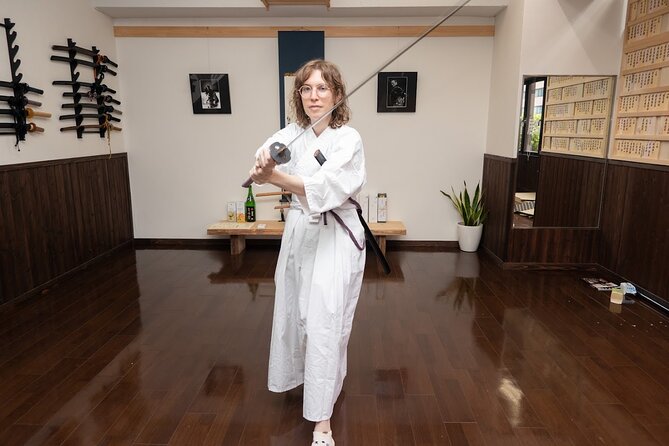
Adults aged 18 and over can sign up for the real sword option. This involves cutting a rolled tatami mat, the material often associated with demonstrations of Iaido technique. You must sign a waiver and follow the dojo master’s instructions.
This option adds a genuine challenge, but it is not essential to enjoy the experience. The lesson’s core value comes from the etiquette, explanation, practice, and demonstration. You do not need to cut tatami to understand the discipline being taught.
I would choose the real sword option only if you are comfortable with the added responsibility. The age requirement and waiver are clear reminders that this is not a casual add-on. You must take the safety instructions seriously, and the master has final authority over how the activity is conducted.
The option may also affect how you experience the session emotionally. Cutting a real rolled tatami mat can make the sword work feel more concrete, but it can also shift your attention toward the thrill of the cut. If your main interest is samurai philosophy and etiquette, the standard lesson may be enough.
Watching the master’s solo demonstration
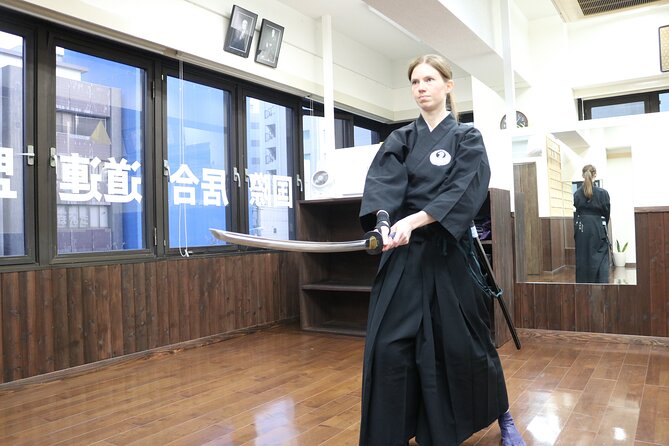
Near the end, the master gives a solo demonstration at close range. This is one of the most rewarding parts of the session because you watch the technique after attempting some of it yourself.
A fast and precise movement looks impressive from any distance. After you have held the sword and tried to coordinate your own actions, you can better appreciate the master’s control. The demonstration becomes a lesson in timing, posture, and economy rather than a flashy performance.
An assistant also takes part in demonstrations and training activities, giving you another close view of the dojo’s practice. The small group size helps keep the action near you, although exact viewing positions can depend on the group and the layout of the space.
The demonstration is a good reason not to rush through the earlier teaching. Listen carefully and take your own attempt seriously. The better you understand the basics, the more you will notice when the master performs them with far greater precision.
What the $216.86 price delivers
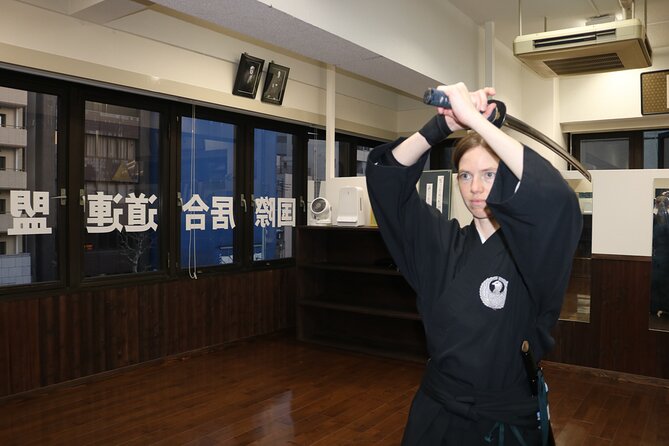
At $216.86 per person, this is not a budget Tokyo activity. The price makes the most sense for you if you want a guided cultural lesson in a real dojo setting, with attire, sword handling, instruction, demonstrations, and a certificate included in the experience.
It is harder to justify if you only want a samurai photograph or a quick theatrical show. Tokyo offers many lower-cost cultural activities, and this one asks you to pay for focused instruction and a limited group size. The value lies in the quality and seriousness of the encounter, not in the number of stops or hours.
The 90-minute duration is both a strength and a weakness. It keeps the lesson manageable and easy to fit into a sightseeing schedule. At the same time, the price feels high for an activity that ends after an hour and a half, especially if you skip the real tatami cutting.
I see it as a special-interest experience rather than an all-purpose Tokyo tour. If samurai culture, martial arts, and traditional discipline are high on your list, the price may feel fair. If you are simply curious but not especially interested in Iaido, you may find the cost difficult to defend.
The 5 out of 5 rating from 13 reviews and the 100 percent recommendation mark suggest strong satisfaction among the people who chose it. That is a small review sample, so I would treat it as encouraging rather than final proof. The praise centers on the rare chance to learn at a long-established dojo and see the master’s skills close up.
Who should book this experience
I would recommend it to adults and older children who can listen carefully and follow instructions. It suits you especially well if you want a cultural activity that explains ideas, not just costumes and action.
It is also a good choice for martial arts fans, photographers interested in traditional dress, and visitors who have already seen Tokyo’s major temples and museums and want something more hands-on. The certificate gives you a small keepsake, but the stronger souvenir is the understanding of why samurai discipline involved restraint.
Families can book the standard experience for children from age 5, since the 18-plus rule applies only to the real sword option. Parents should use their judgment about maturity and concentration. A child who enjoys structured activities may do well, while a child seeking free-form play may find the strict instructions limiting.
You should think twice if you dislike formal settings, have limited physical stamina, or want a long session with extensive historical explanation. The activity moves quickly, and the dojo’s rules are part of the experience rather than optional decoration.
Practical details that affect your choice
Confirmation arrives within 48 hours of booking, subject to availability. The activity is booked, on average, 23 days in advance, so reserving early is sensible if you have a fixed Tokyo schedule.
You can cancel free of charge up to 24 hours before the start time for a full refund. Changes or cancellations made less than 24 hours before the 9:00 am start are not accepted for a refund, and the cut-off follows local Tokyo time.
A mobile ticket makes arrival simple. You should still allow enough time to reach Kuramae Station and find the exact meeting point before the early start. The activity ends back where it begins, which keeps the rest of your day easy to plan.
The experience is not described as wheelchair accessible, and no special accessibility details are provided. If you have mobility needs, contact the provider before booking rather than assuming the dojo setup will work for you.
Should you book the Art and Soul of the Sword?
Book it if you want a serious, compact introduction to samurai conduct and Iaido, with real instruction rather than a costume photo session. The master’s demonstration, small group, and early lesson on respect for the sword are the strongest reasons to go.
Skip it if your main goal is cheap entertainment, a long historical tour, or extended sword combat. The price is high for 90 minutes, and the activity requires focus and obedience to dojo rules.
For the right person, this is a memorable Tokyo morning. You learn that the samurai ideal was not simply about winning a fight. It was also about avoiding one, and having the discipline to act only when necessary.
FAQ
Where does the samurai experience begin?
It begins at Kuramae Station, at 2-chōme-3-1 Kuramae, Taito City, Tokyo 111-0051, Japan.
What time does the experience start?
The scheduled start time is 9:00 am.
How long does the experience last?
The activity lasts approximately 1 hour and 30 minutes.
Where does the experience end?
It ends back at the meeting point.
What is the maximum group size?
The activity accepts a maximum of 10 participants.
What is the minimum age?
The minimum age is 5 for the standard experience without the real sword option.
Who can try cutting a rolled tatami mat?
Only participants aged 18 or older can choose the real sword option. They must also sign a waiver and follow the dojo master’s instructions.
Do I receive anything at the end?
Yes. You receive a certificate of completion.
Can I cancel for a full refund?
Yes. You can cancel at least 24 hours before the experience start time for a full refund. Cancellations or changes made less than 24 hours before the start are not accepted for a refund.
Just added in Tokyo
- Very popular in Harajuku♡Animal petting zoo★ 4.6 · 39 reviews
- Yokohama Port: Private Customizable Tour with Transfer★ 5.0 · 19 reviews
- Wagyu & Sake 8 Course Tasting Dinner in Shinjuku★ 4.9 · 20 reviews
- Warner Bros. Studio Tour Tokyo – The Making of Harry Potter★ 4.8 · 181 reviews
- Yanaka District: Historical Walking Tour in Tokyo’s Old Town★ 4.8 · 117 reviews
- Tokyo: Classic Tsukiji Food Tour★ 4.9 · 78 reviews
- Tokyo: Tsukiji Fish Market Tour with 6 Stops & Seafood Lunch★ 4.5 · 165 reviews
- Tokyo Wagyu & Sake Pairing Tasting Experience with Local Flavors★ 5.0 · 108 reviews
Castles and Historic Sites, compared.



Imperial Palace and Shogun Historical Walking Tour
Read our review →
Tokyo Castle & Imperial PalaceーShogun Walking Tour
Read our review →
Nijo-jo Castle and Ninomaru Palace Guided Tour
Read our review →
Samurai Ninja Museum Guided tour and Experience
Read our review →Browse the lists this tour appears in