
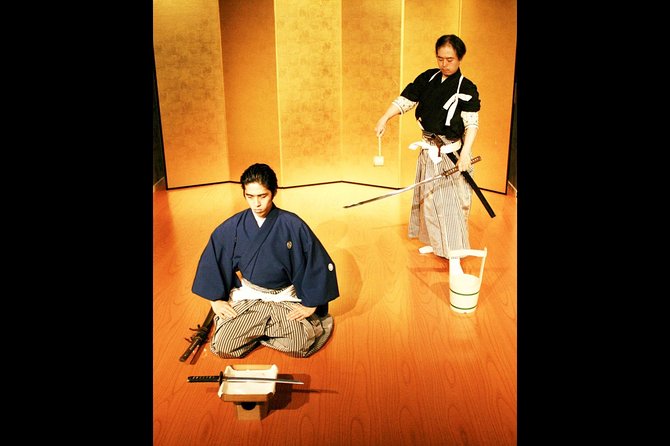
Reviewed · CASTLES AND HISTORIC SITES
Samurai Performance and Casual Experience: Kyoto Ticket
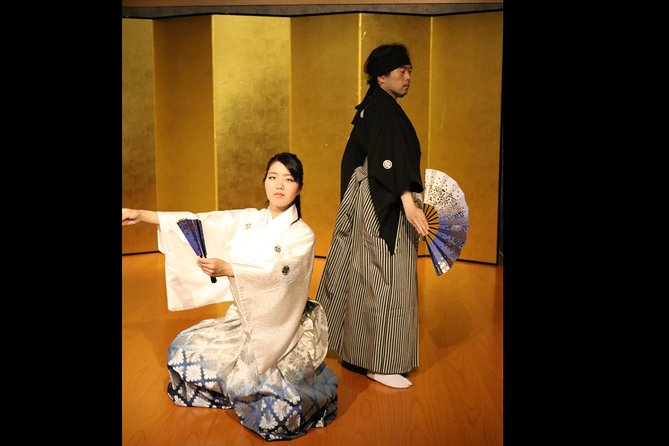
Samurai stories come alive with a sword. At Kyoto’s Samurai Kembu Theater, you watch trained performers present Kembu, a graceful sword art linked to Japan’s samurai class, then try simple fan and sword movements yourself. I like the clear historical introductions and the friendly photo session at the end. I also like the compact one-hour format, which fits neatly after temple visits and before dinner.
The main thing to understand is that this is a theatrical cultural performance, not a realistic sword-fighting show. If you expect long battle scenes or advanced martial-arts training, you may find the action too brief and the narration too prominent. If you want an entertaining introduction to samurai customs, poems, weapons, and ceremony, the $33.03 price is fair.
In This Review
- Key points before you book
- What Kembu means beyond sword swinging
- Entering the Samurai Kembu Theater
- The opening talk makes the show easier to follow
- Traditional and new-style Kembu performances
- Fans, poems, and the meaning of seppuku
- The hands-on photo session at the end
- Is the one-hour format good value at $33.03?
- Who will enjoy this Kyoto samurai show?
- How to fit it into a day in Kyoto
- Booking, cancellation, and small practical details
- Should you book the Samurai Performance and Casual Experience?
- FAQ
- How long does the Samurai Performance and Casual Experience last?
- What is the listed start time?
- Where does the performance take place?
- Do I need to remove my shoes?
- Is the performance in English?
- Can I take photographs with a sword?
- Is hotel transportation included?
- What is the cancellation policy?
Key points before you book
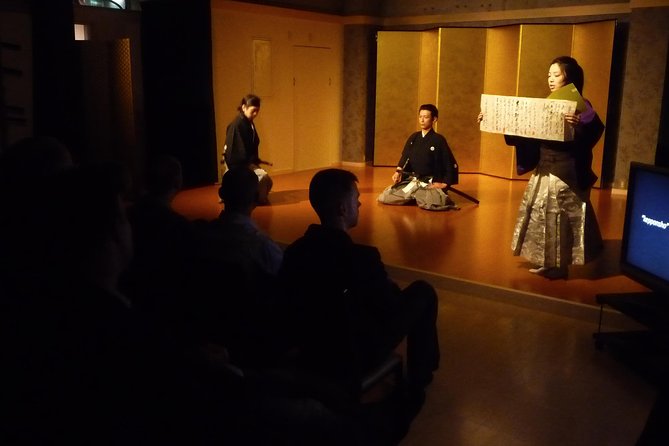
- About 40 minutes of stage performance: The show combines narration, traditional and new-style Kembu, sword movements, Japanese poems, fan work, and samurai customs.
- A short hands-on finish: After the performance, you can handle a sword and folding fan for photographs with the performers.
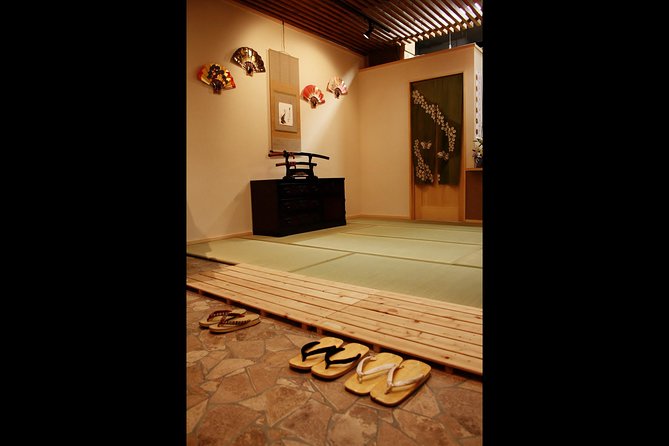
- Shoes come off at the entrance: This follows a familiar Japanese indoor custom, so wear socks you do not mind showing.
- Good for families and first-time visitors: The presentation includes humor, history, costumes, and simple participation rather than difficult physical training.
- Central Kyoto setting: The theater is in downtown Kyoto and near public transportation, with the Gion area within walking distance according to the supplied directions.
- Plan for early arrival: Come 15 to 5 minutes before the 4:15 pm start, and find the reception desk down the stairs on the right side toward the GOZAN building.
What Kembu means beyond sword swinging
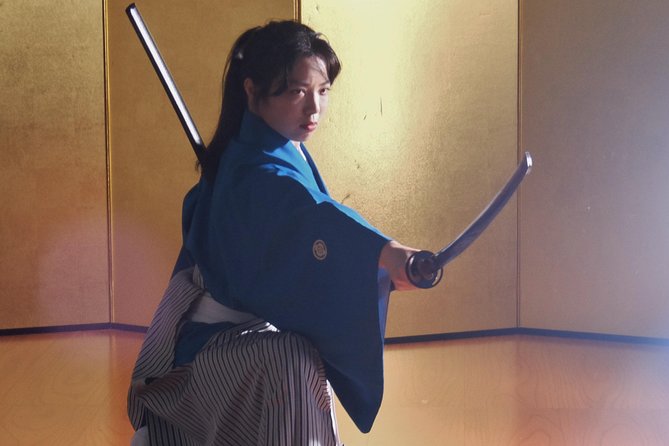
Kembu is a performance art built around the sword. It uses controlled movements, posture, rhythm, facial expression, and poetry to communicate the spirit of the samurai. The art is linked to the feudal period, when samurai held power in Japan from roughly the 12th through the 19th centuries.
The performance explains that Kembu helped samurai gather courage and focus their minds before battle. That context matters. The sword is not presented only as a weapon. It becomes part of a formal expression of discipline, emotion, and readiness.
You will hear short Japanese poems associated with warriors preparing to leave for battle. The performers recite them while moving through carefully practiced sword patterns. The effect is closer to a compact stage production than to a sword duel.
I think this distinction makes or breaks the experience. The show is best understood as a cultural performance that uses samurai imagery and technique. It is not designed to teach you how to fight, and the sword work is not a free-form contest between performers.
More Castles and Historic Sites in Kyoto
- Kyoto Samurai Experience
★ 5.0 · 1,294 reviews - Kyoto: Nijo-jo Castle and Ninomaru Palace Guided Tour
★ 4.7 · 1,020 reviews - Kyoto: Kendo and Samurai Experience with Uniform and Gear
★ 4.9 · 815 reviews
Entering the Samurai Kembu Theater
The experience begins at the Samurai Kembu Theater, a downtown Kyoto venue near public transportation. You arrive for your selected showtime, then remove your shoes before entering the performance space. This small custom immediately gives the visit a more traditional feel, though it also means you should arrive with comfortable socks.
Seating includes both low-to-the-ground chairs and more standard chairs, based on the available seating description. That is useful for mixed-age groups and anyone who may not be comfortable sitting directly on the floor.
The meeting instructions deserve close attention. You are told to go down the stairs on the right side toward the GOZAN building and continue to the reception desk. Allow enough time to find this entrance, especially if you are arriving from another Kyoto sight. The recommended arrival window is 15 to 5 minutes before the start, with the listed start time at 4:15 pm.
There is no hotel pickup or drop-off. You make your own way to the theater, which is part of the reason this works well as an independent evening activity. You can pair it with a day in central Kyoto instead of giving up a full day to a guided excursion.
The opening talk makes the show easier to follow
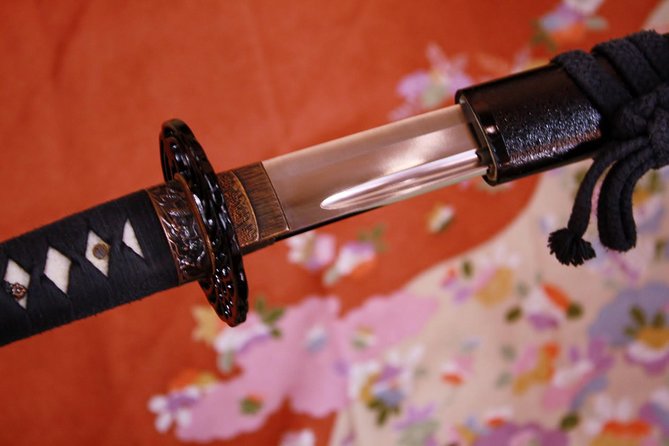
Before the sword work begins, a performer introduces Kembu and explains the background of the samurai. The narration sets up each demonstration with a short lesson about samurai culture and the purpose of the movements.
This introduction is one of the most useful parts of the program. Without it, you might see swords flashing and costumes moving without understanding why the performers pause, recite poetry, or use a fan. The explanations provide a basic map for what follows.
The presentation is in English, but the clarity may vary depending on the speaker. One available comment specifically found the English pronunciation difficult to follow, although the show remained worthwhile. If English is not your first language, sit where you can see the performers clearly and pay attention to the demonstrations as much as the narration.
The tone is not solemn from start to finish. The staff uses jokes and light dialogue, and several audience members found the humor added to the fun. That approach makes the subject easier for children and casual visitors, but it may disappoint you if you want a serious lecture on samurai warfare.
Traditional and new-style Kembu performances
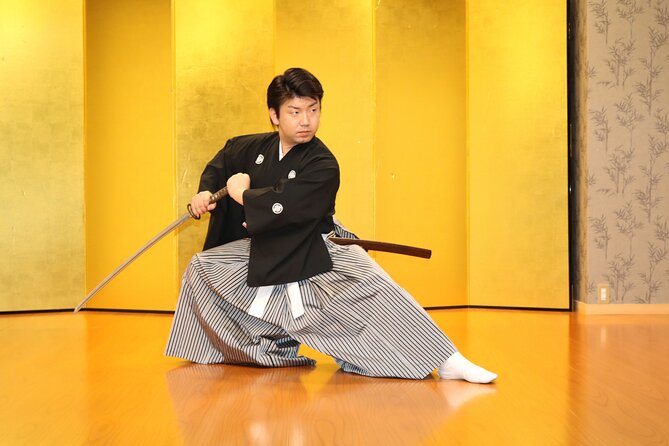
The central portion features short demonstrations of both traditional and new-style Kembu. Performers wield swords through a series of precise movements, then recite brief poems associated with samurai leaving for battle.
The sword work appears to focus on control and expression rather than speed alone. A movement can suggest courage, sorrow, resolve, or tension. The performance uses the body, the blade, and the spoken poem together, which gives it a dramatic quality similar to a short dance or stage scene.
The costumes and polished presentation also add to the appeal. Several comments praised the performers’ physical commitment and attractive costumes. The small venue helps you see the gestures and expressions without the distance of a large theater.
Still, the stage segments are short. About 40 minutes of the one-hour visit is devoted to the show, and the program includes several sections rather than one long story. Some of the time is spent explaining the next scene, so the balance is part performance and part cultural lesson.
I would not book this expecting constant action. The quieter moments are important because they explain the meaning behind the movements. But if you want a full evening of dramatic sword choreography, you may wish there were more performances on stage.
A completely different kind of day out:
- PERFECT KYOTO 1-Day Bus Tour
★ 5.0 · 13,518 reviews - [Kyoto & Nara Day Tour] Sagano Scenic Railway & Nara Park & Fushimi Inari Taisha Thousand Torii Gates & Togetsukyo Bridge & Bamboo Grove & Kimono Forest (Departing from Osaka)
★ 4.9 · 10,942 reviews - Kyoto: Fushimi Inari, Kinkakuji, Bamboo Grove 1 Day Bus Tour
★ 4.8 · 4,316 reviews - Kyoto: Tea Ceremony in a Traditional Tea House in Kiyomizu
★ 4.9 · 3,519 reviews
Fans, poems, and the meaning of seppuku
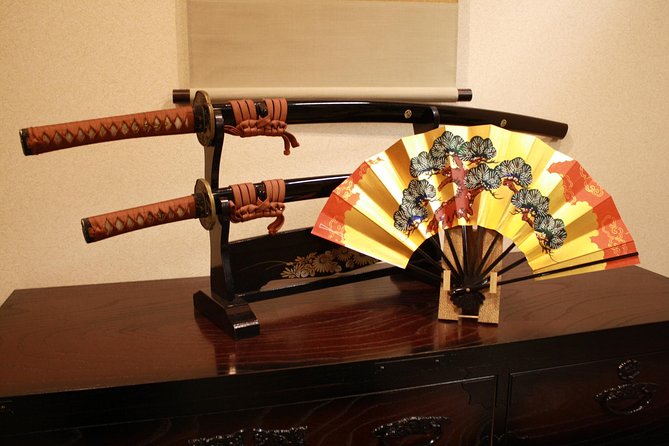
The sword is only one part of the program. You also learn about the Japanese folding fan and its place in the performance. The fan movements add a change of pace and show how samurai expression could involve ceremony and symbolism, not only weapons.
The program also discusses seppuku, sometimes called hara-kiri, the ritual suicide associated with samurai culture. This is presented as part of the historical explanation rather than as a graphic scene. The subject can be difficult, especially for younger children, but it helps show that the performance addresses more than costume and sword technique.
I appreciate this wider range of topics. You leave with a better idea of how samurai culture has been represented through poetry, gesture, ritual, and stage tradition. The program does not attempt to cover every part of Japanese history, but it gives you several points to notice.
The historical treatment is introductory. If you already have a strong background in Japanese history, you may want more detail. For a first visit to Kyoto, though, the information gives the spectacle a clear cultural frame.
The hands-on photo session at the end
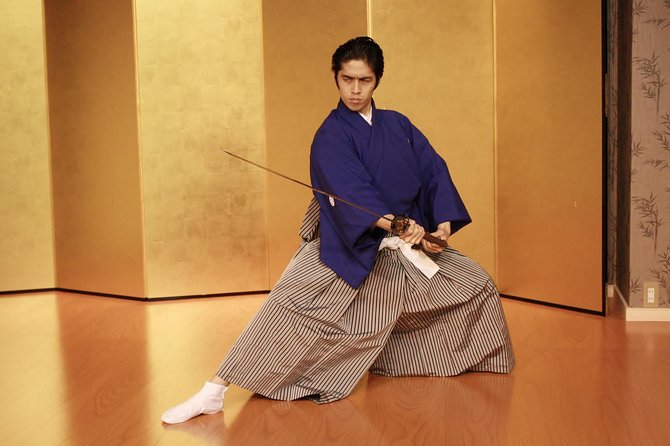
After the stage performance, the program shifts from watching to participation. You can handle a sword and fan while posing for photographs with the performers. This is a short mini experience, not an extended sword lesson, but it gives the evening a memorable finish.
The photo session is especially useful for families. Children get a chance to hold the props, and adults can take candid shots with the performers. The performers are described as friendly and helpful, which matters during a brief activity where people may feel awkward about how to pose.
Some descriptions refer to learning a few simple fan and sword movements, so you are not only standing still for a picture. The activity offers a small taste of the gestures seen on stage. It does not turn you into a Kembu student, but it helps you understand how much control goes into the performance.
One practical tip is to ask about costume or dressing options before the practice portion begins. At least one participant wished they had known that dressing up might be possible for the practice. Since the supplied information does not spell out exactly what costumes are available, check with the theater if this is important to you.
A few people would prefer a more interactive program throughout. That is a fair criticism. Most of the hour is spent watching and listening, with participation saved for the end.
Is the one-hour format good value at $33.03?
At $33.03 per person, this is not the cheapest short activity in Kyoto. But the ticket covers a performance, historical narration, a cultural demonstration, and a photo opportunity in a central venue. For an evening attraction lasting about an hour, the price is reasonable if you value a structured introduction to samurai arts.
The short length is a strength for many schedules. You can spend the afternoon visiting temples, shrines, or the Gion area, then attend the show without committing to a three-hour dinner theater or a full-day tour. The listed experience also offers a choice of two showtimes, though the supplied booking details do not specify both times.
The value is weaker if your only goal is hands-on sword practice. The active portion comes after roughly 40 minutes of performance, and it is described as a mini experience. For serious martial-arts students, this will feel too light.
The rating information is strong, with a 4.6 rating from 115 reviews and 91 percent recommending the experience. The most praised features are consistent: friendly staff, impressive performers, useful explanations, family appeal, and the fun photo session.
Who will enjoy this Kyoto samurai show?
I would recommend it most strongly to:
- Families looking for an indoor activity with history and humor
- First-time visitors curious about samurai culture
- Adults who enjoy theater, dance, costumes, and traditional arts
- Visitors who want something different from Kyoto’s temples
- Anyone with a rainy evening and an hour to spare
- People who want a simple souvenir photo with a sword and performer
The show also suits visitors who prefer a small, intimate setting. A smaller audience can make the demonstrations feel personal, and the performers’ explanations are easier to follow than they might be in a large production.
You may want to skip it if you are seeking realistic combat, advanced sword instruction, or a long, serious historical lecture. The humor and theatrical style are central to the program. They are not occasional distractions from a battle show.
Children appear to be welcome, and the family response is particularly positive. The combination of colorful costumes, sword movements, storytelling, and simple participation gives younger viewers several ways to stay interested.
How to fit it into a day in Kyoto
The listed start time is 4:15 pm, which makes the performance a natural late-afternoon or early-evening plan. You can visit central Kyoto earlier, then head to the theater with time to spare for the stairs and reception check-in.
The venue is described as being in downtown Kyoto and near public transportation. One description places it near the Gion district, so you may be able to combine the show with a walk around that area before or after. Do not leave your arrival until the last minute, since the entrance instructions are more specific than simply arriving at a theater door.
The experience lasts about one hour. Roughly 40 minutes is the main show, followed by the sword, fan, and photography segment. Food and drinks are not included, so plan dinner separately.
The theater is indoors, making it a useful backup on a wet day. One especially positive account came from someone who attended during heavy rain and found the booking a welcome choice. It will not replace a full day of outdoor sightseeing, but it can save an evening when Kyoto’s weather turns unpleasant.
Booking, cancellation, and small practical details
Your mobile ticket provides the admission method, and confirmation is issued when you book. Most people can participate, and the venue is near public transportation.
If you need to cancel, you must handle the cancellation yourself through Viator. Free cancellation is available up to 24 hours before the local start time for a full refund. Changes or cancellations made less than 24 hours before the start are not accepted for a refund.
The experience is provided by Ginbu Co., LTD., formerly known as Samurai Kenbu Co., LTD. That name may appear in booking or venue information, so it is useful to recognize both versions.
Wear socks, arrive early, and keep your expectations in the right place. Those three points will do more for your enjoyment than any special preparation.
Should you book the Samurai Performance and Casual Experience?
Book it if you want a friendly, compact introduction to Kembu and samurai culture, especially if you are traveling with children or need an indoor evening plan. The strongest parts are the polished sword demonstrations, the clear historical setup, and the chance to handle a sword and fan for photographs.
Think twice if you want realistic combat or a long interactive class. The show is theatrical, the action comes in short sections, and the hands-on portion is brief.
For most first-time visitors, the $33.03 ticket offers a pleasant change from shrine and temple visits. It gives you a glimpse of samurai ceremony through movement, poetry, costume, and humor, then sends you back into Kyoto with a good photograph and a few new things to notice.
FAQ
How long does the Samurai Performance and Casual Experience last?
The experience lasts approximately one hour. About 40 minutes is the main Kembu performance, followed by a short sword, fan, and photography activity.
What is the listed start time?
The supplied meeting information lists a 4:15 pm start time. The experience also advertises a choice of two showtimes, but the second time is not specified in the provided details.
Where does the performance take place?
It takes place at the Samurai Kembu Theater in downtown Kyoto. The venue is near public transportation and is described as being near the Gion district.
Do I need to remove my shoes?
Yes. You remove your shoes before entering the performance area, following a traditional Japanese indoor custom.
Is the performance in English?
The introduction and explanations are given in English. The supplied information notes that some visitors may find the pronunciation difficult to follow, particularly if English is not their first language.
Can I take photographs with a sword?
Yes. After the show, you can hold a sword and fan and take photographs with the performers.
Is hotel transportation included?
No. Hotel pickup and drop-off are not included, so you must make your own way to the Samurai Kembu Theater.
What is the cancellation policy?
You can cancel up to 24 hours before the local start time for a full refund. Cancellations or changes made less than 24 hours before the experience are not accepted for a refund.
Just added in Kyoto
- The “Golden Route” and Ancient Japan by DIAMIR Erlebnisreisen – 14-Day Tour★ 2.0 · 2 reviews
- Japan: Castles & Cuisine by G Adventures – 6-Day Kyoto to Osaka Tour★ 4.5 · 4 reviews
- Cycle Japan by Explore! – 13-Day Kyoto to Tokyo Tour★ 4.7 · 12 reviews
- Cycle Japan by Intrepid Travel – 11-Day Kyoto to Tokyo Tour★ 4.8 · 2 reviews
- Classic Japan by Intrepid Travel – 11-Day Kyoto to Tokyo Tour★ 4.4 · 14 reviews
- Ancient & Modern Japan 14-Day Tour by Exodus Adventure Travels★ 4.4 · 40 reviews
- 5 Day Cultural Adventure of Kyoto, Nara & Osaka by Tourist Journey★ 2.5 · 2 reviews
- 12 Days Kinosaki Onsen Escape: A Journey Through Japan’s Timeless Towns by UME Travel★ 4.8 · 5 reviews
Castles and Historic Sites, compared.


Imperial Palace and Shogun Historical Walking Tour
Read our review →
Tokyo Castle & Imperial PalaceーShogun Walking Tour
Read our review →
Nijo-jo Castle and Ninomaru Palace Guided Tour
Read our review →
Samurai Ninja Museum Guided tour and Experience
Read our review →Browse the lists this tour appears in