
Reviewed · CASTLES AND HISTORIC SITES
Samurai School in Kyoto: Samurai for a Day
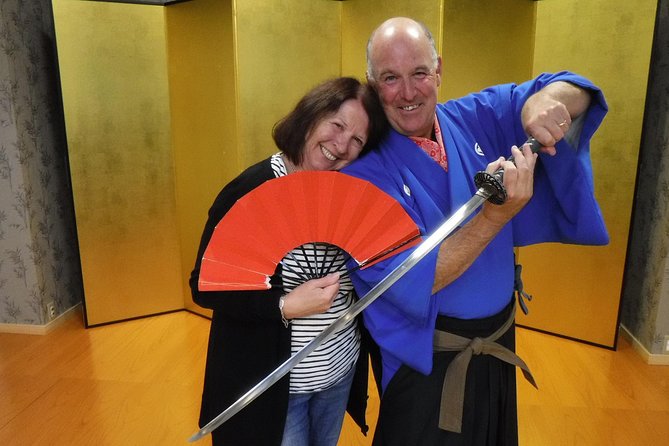
Samurai training is more fun than it sounds. This Kyoto class gives you a hands-on introduction to kenbu, a stylized samurai art that combines sword movements, choreography, music, and poetry. You learn how to bow, draw and sheath a sword, strike, and move with control rather than simply waving a prop around for a photo.
I like the small group limit of 10, which gives the instructor room to correct your movements. I also like the mix of history, costume, practice, photos, and live performance. The main drawback is timing: the show or introductory material can take longer than expected, and the photo session may feel rushed if another class is waiting.
At $66.32 per person, this is not the cheapest short activity in Kyoto. Still, the price covers an English-speaking instructor, costume use, sword practice, photos, a completion certificate, a traditional tenugui towel, and a performance. For families, teens, and anyone who prefers doing over looking, it offers good value.
In This Review
- Key points at a glance
- What this Kyoto samurai class really teaches
- Finding the Kembu Kyoto Dojo
- The first lesson: bowing, drawing, and sheathing
- Dressing as a samurai and taking photos
- The optional longer session
- Why the performance adds real value
- Who will enjoy this most?
- The value of $66.32
- Practical advice before you book
- Should you book Samurai for a Day?
- FAQ
- How long does Samurai for a Day last?
- Where does the class meet?
- How early should I arrive?
- Is the class taught in English?
- What will I learn?
- Is a costume included?
- Are photos included?
- Is this activity suitable for children?
- What happens if I need to cancel?
Key points at a glance
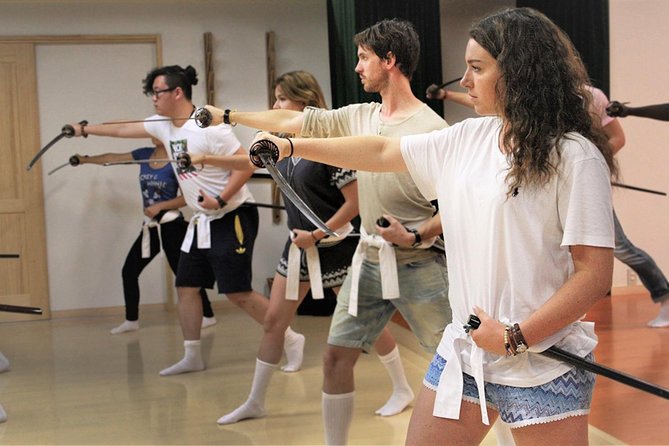
- Learn the sword basics: Practice the formal bow, drawing the sword, returning it to its scabbard, striking, and thrusting.
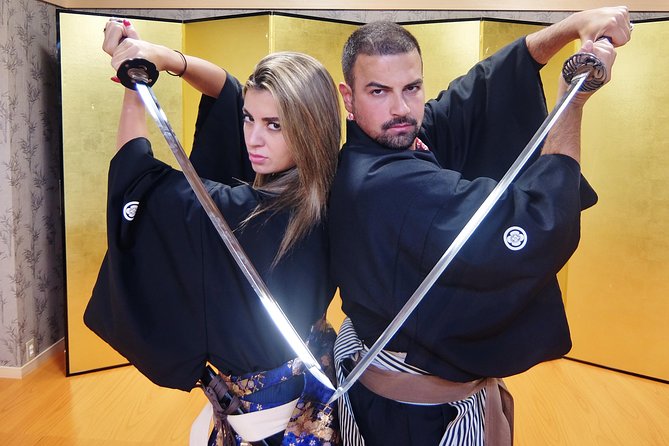
- Try traditional costume: Put on a samurai outfit with a white belt and Japanese-style socks before taking photos.
- Choose your lesson length: The shorter option focuses on the main sword skills, while the longer option adds walking, folding-fan movements, and more choreography.
- Watch skilled performers: A kenbu presentation uses sword movements with music and a poem, giving context to the techniques you practice.
- Plan for a small indoor class: The maximum group size is 10, and the activity works well as a rainy-day plan.
- Bring the right clothes: Wear comfortable exercise clothing that allows room for changing into costume. A single hoodie or tights are not suitable.
What this Kyoto samurai class really teaches
This is not a full martial arts course, and you will not leave ready for combat. It is a practical introduction to the performance art of kenbu, a tradition built around disciplined, graceful sword movements.
That distinction matters. The class is less about force and speed than posture, timing, respect, and controlled motion. You practice gestures that look simple when performed by an expert but require concentration when you try them yourself.
The lesson begins with a short three-minute film about basic samurai practices. You then meet the instructor and prepare for the practical part of the class. English instruction makes the session easy to follow, even when the movements become more involved.
The experience suits people who want a taste of Japanese culture without sitting through a long lecture. It also gives history buffs a useful physical connection to the subject. You are not only hearing about samurai customs. You are asked to bow correctly, handle a sword properly, and follow a set sequence of movements.
More Castles and Historic Sites in Kyoto
- Kyoto Samurai Experience
★ 5.0 · 1,294 reviews - Kyoto: Nijo-jo Castle and Ninomaru Palace Guided Tour
★ 4.7 · 1,020 reviews - Kyoto: Kendo and Samurai Experience with Uniform and Gear
★ 4.9 · 815 reviews
Finding the Kembu Kyoto Dojo
The meeting point is in Kyoto’s Higashiyama Ward at 35 Sanchome, Kyoto 605-0005. The venue is near public transportation, but pay close attention to the arrival instructions.
On the day, go to the first basement floor using the stairs on the right side of the GOZAN building. This is the sort of detail that can save you from wandering around a Kyoto street wondering if you missed the entrance.
Arrive roughly 10 minutes before the start time. The stated arrival guidance says to come between 10 and 3 minutes before the lesson, so arriving early is the safer choice. You need time to find the building, reach the basement, and get settled before costume changes begin.
The activity ends back at the meeting point. Hotel pickup and drop-off are not included, so you are responsible for reaching the dojo and continuing on to your next Kyoto stop.
The first lesson: bowing, drawing, and sheathing
Your training starts with the formal bow. This is more than a quick greeting. It establishes the respectful tone of the class and introduces the careful posture expected throughout the session.
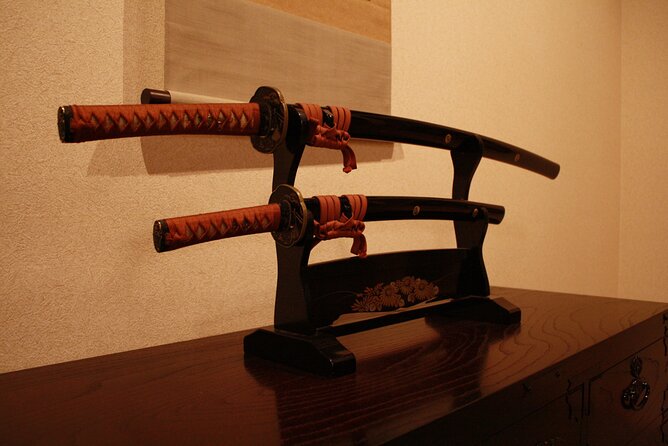
Next comes the sword. You learn how to draw it from its protective scabbard and return it safely. The action requires more control than you might expect, especially when you are trying to keep your posture straight and your movements deliberate.
The instructor then introduces basic strikes and other sword actions. The class may look playful in costume, but safety is taken seriously. You must follow directions closely, keep control of the sword, and pay attention to the people around you.
This is one of the strongest parts of the experience because you get actual instruction instead of a quick photo opportunity. You have time to repeat the movements, make mistakes, and try again. The teaching style is described as friendly and patient, though one family found the instructor strict with younger children who were not following the directions.
That balance is fair. A sword lesson needs clear rules. Children who can listen and follow instructions should have fun, but this is not a free-for-all activity.
Dressing as a samurai and taking photos
Partway through the experience, you change into traditional samurai clothing. The outfit includes a white belt, Japanese-style socks, and the sword. The costume adds a visual sense of occasion and makes the photo session more memorable than a standard group snapshot.
You may be able to choose among traditional garments, depending on what is available for your session. Photos are included, but bring realistic expectations about the setup. One of the less positive experiences came from a rushed photo session using a visitor’s own camera, with little time for carefully posed shots.
I suggest having your camera or phone ready before the costume session begins. If you are traveling with family or friends, decide in advance who will take the photos and what poses you want. That saves time and gives you a better chance of getting a useful portrait with the sword and costume.
The photos are a nice record, but the class itself is the main attraction. If posed costume photography is your top reason for booking, you may find the time limited.
You also receive a certificate of completion and a tenugui towel, a traditional Japanese towel. These are modest souvenirs, but they are more useful than a generic ticket stub and give the experience a clear finish.
A completely different kind of day out:
- PERFECT KYOTO 1-Day Bus Tour
★ 5.0 · 13,518 reviews - [Kyoto & Nara Day Tour] Sagano Scenic Railway & Nara Park & Fushimi Inari Taisha Thousand Torii Gates & Togetsukyo Bridge & Bamboo Grove & Kimono Forest (Departing from Osaka)
★ 4.9 · 10,942 reviews - Kyoto: Fushimi Inari, Kinkakuji, Bamboo Grove 1 Day Bus Tour
★ 4.8 · 4,316 reviews - Kyoto: Tea Ceremony in a Traditional Tea House in Kiyomizu
★ 4.9 · 3,519 reviews
The optional longer session
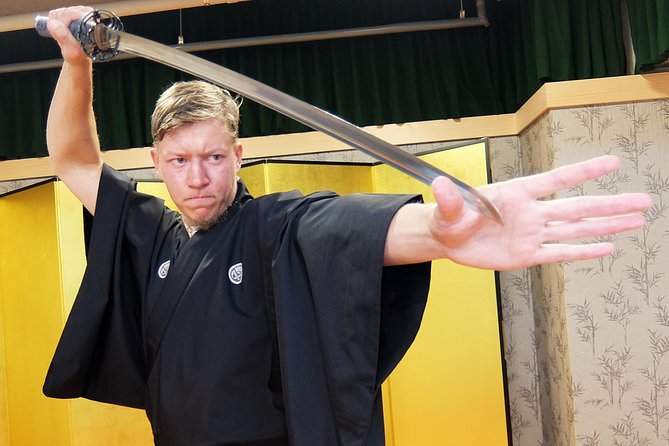
The longer lesson is worth considering if you want more than the basic sword introduction. After the core training, you continue with stylized samurai movements, including how to walk with the proper manner and how to use a folding fan.
The fan may sound like a small extra, but it helps show that kenbu is a performance art rather than only a method of fighting. The fan, sword, stance, and footwork all work together to tell a story through movement.
The extended session ends with more challenging choreography. You perform with the sword on stage while a poem and music accompany the movement. This gives you a better sense of how individual techniques fit into a finished performance.
The short option is suitable if you have a packed sightseeing schedule or simply want to try the basics. Choose the longer option if you enjoy learning sequences, want more practice time, or are especially interested in martial arts and stage performance.
Keep some flexibility in your day. The class can run over its stated time, particularly when the show and lesson are arranged close together. I would not schedule a train departure or timed attraction immediately afterward.
Why the performance adds real value
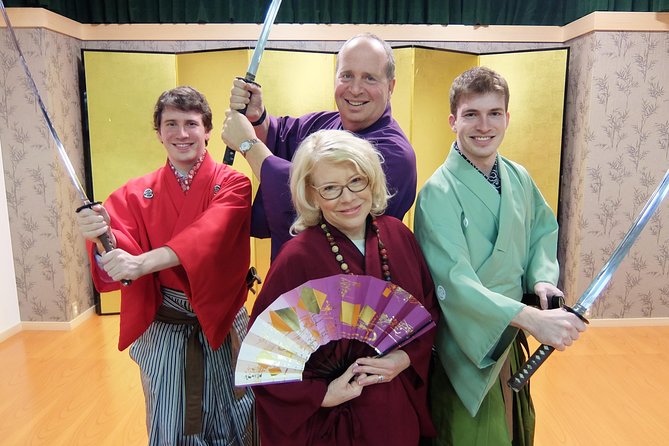
The performance helps explain what the lesson is aiming toward. Watching trained performers use the same broad ideas of posture, sword handling, rhythm, and controlled movement makes the class more meaningful.
The show includes sword choreography with music and a poem. It is not presented as a museum lecture, so you learn through movement and atmosphere. This works especially well for teenagers and children who may lose interest during a long explanation of feudal Japan.
The order can vary. Some sessions may place the performance before the practical lesson, while others may have you train first and watch afterward. If you prefer to understand the class before seeing the show, ask the staff about the schedule when you arrive.
One important planning point: the performance may take longer than the brief introduction some people expect. A complaint about a show lasting close to an hour before the sword practice shows why you should allow extra time. The performance is well liked, but it can change the rhythm of your day.
I consider the show a useful part of the ticket rather than a distraction, especially if you watch it after practicing. You can spot the difference between a beginner’s stiff sword movement and the performers’ polished control.
Who will enjoy this most?
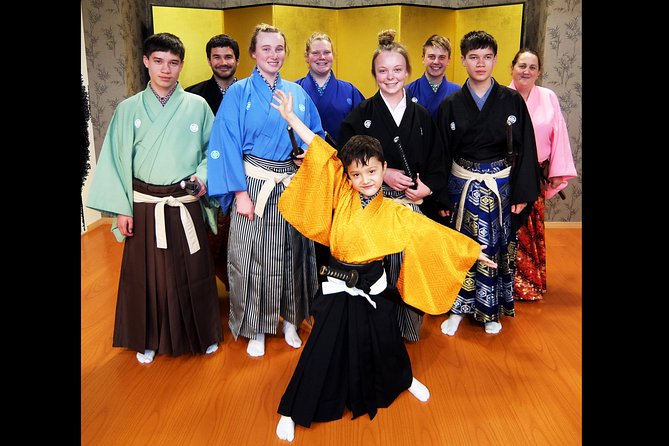
This class is a good match for martial arts enthusiasts, history buffs, families, and visitors who like active cultural experiences. It also works well for teens. One family found the hands-on format kept a 17-year-old more interested than a museum visit would have.
Families with several members can also get good value from the group format. The activity is social without requiring you to perform alone in front of a large audience. Couples and small groups may appreciate the limited capacity, particularly when only a few people share the class.
You need moderate physical fitness. The activity involves standing, moving, changing direction, handling a sword, and repeating choreographed actions. Wear clothing suited to exercise and movement.
Children aged 5 to 11 should preferably already attend some kind of class or martial arts school. That guidance is sensible because the lesson depends on listening, patience, and careful control.
This is not ideal for someone who wants a quiet historical talk or a polished photo shoot with no physical effort. You will be asked to participate.
The value of $66.32
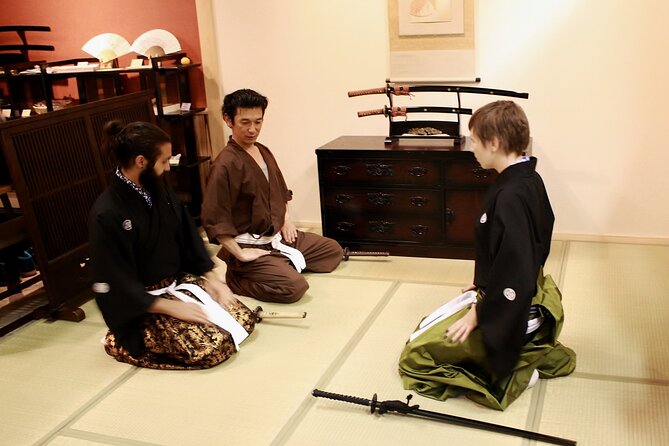
At $66.32, the experience costs more than a simple cultural demonstration. The price makes sense because it combines several parts: instruction, costume, photos, a certificate, a tenugui towel, and access to a performance.
The strongest value comes from the lesson. You are given a short but genuine introduction to sword handling and kenbu movement, not just a costume rental. The small group limit also matters. With no more than 10 participants, the instructor can give corrections and keep the session orderly.
The performance adds another layer. If you attend only for the sword practice, you may feel the schedule spends too long on the show. If you enjoy the full cultural package, the presentation helps explain why the movements look the way they do.
For a family, the price can add up quickly. Still, it may compare well with paying separately for a show, a costume experience, and a short lesson. For couples and solo visitors, the decision depends on your interest in samurai culture. If you want an active Kyoto memory and not just another sightseeing stop, the cost is reasonable.
Practical advice before you book
Wear comfortable clothing that is easy to change out of. A single hoodie or tights are specifically poor choices for costume changes. Exercise clothing gives you freedom to move and makes the lesson more comfortable.
Follow the instructor’s safety rules. The sword work is controlled, but it is still equipment that needs careful handling. Keep your attention on the demonstrations, particularly during drawing, sheathing, striking, and thrusting.
Allow extra time after the scheduled 90 minutes. The stated duration is approximately one hour and 30 minutes, but the show and class may run longer. This is especially important if you have restaurant reservations or evening tickets.
The experience is indoors, making it a useful rainy-day choice in Kyoto. It also provides a change of pace from temples and gardens. You can still visit those afterward, but your photos may include a few new costume-inspired poses.
Free cancellation is available if you cancel at least 24 hours before the local start time. Changes or cancellations inside that window are not refundable, so check your plans before the deadline.
Should you book Samurai for a Day?
I would book this class if you want an active, family-friendly introduction to samurai culture and have about two hours to spare. The best parts are the patient instruction, the chance to handle a sword under supervision, the costume session, and the polished kenbu performance.
Choose the longer lesson if you want more choreography and stage practice. Choose the shorter option if you mainly want the basic sword skills, photos, and a quick cultural activity.
Skip it if you dislike costumes, standing, or structured instruction. Also skip it if you need a tightly timed itinerary. For everyone else, this is a playful but respectful way to add something different to Kyoto, with enough real practice to make the souvenir photos feel earned.
FAQ
How long does Samurai for a Day last?
The approximate duration is one hour and 30 minutes. The activity can sometimes run longer, particularly when a performance and lesson are scheduled together.
Where does the class meet?
The meeting point is at 35 Sanchome in Kyoto’s Higashiyama Ward, postal code 605-0005. On arrival, go to the first basement floor using the stairs on the right side of the GOZAN building.
How early should I arrive?
Arrive before the start time, ideally around 10 minutes early. The arrival guidance asks participants to come between 10 and 3 minutes before the scheduled start.
Is the class taught in English?
Yes. An English-speaking local guide or instructor leads the experience.
What will I learn?
You learn how to bow, draw and sheath a samurai sword, perform basic strikes, and practice other stylized movements. The longer lesson can also include walking, folding-fan techniques, and kenbu choreography.
Is a costume included?
Yes. You dress in traditional samurai clothing for part of the activity, including a white belt, Japanese-style socks, and a sword.
Are photos included?
Yes. A photo session is included, but the time may be limited if another class is waiting. Bring a camera or phone if you want additional photos.
Is this activity suitable for children?
Participants need a moderate level of physical fitness and must follow safety instructions. Children aged 5 to 11 should preferably attend some kind of class or martial arts school.
What happens if I need to cancel?
You can receive a full refund if you cancel at least 24 hours before the experience’s local start time. Cancellations or changes made less than 24 hours in advance are not accepted for a refund.
Just added in Kyoto
- The “Golden Route” and Ancient Japan by DIAMIR Erlebnisreisen – 14-Day Tour★ 2.0 · 2 reviews
- Japan: Castles & Cuisine by G Adventures – 6-Day Kyoto to Osaka Tour★ 4.5 · 4 reviews
- Cycle Japan by Explore! – 13-Day Kyoto to Tokyo Tour★ 4.7 · 12 reviews
- Cycle Japan by Intrepid Travel – 11-Day Kyoto to Tokyo Tour★ 4.8 · 2 reviews
- Classic Japan by Intrepid Travel – 11-Day Kyoto to Tokyo Tour★ 4.4 · 14 reviews
- Ancient & Modern Japan 14-Day Tour by Exodus Adventure Travels★ 4.4 · 40 reviews
- 5 Day Cultural Adventure of Kyoto, Nara & Osaka by Tourist Journey★ 2.5 · 2 reviews
- 12 Days Kinosaki Onsen Escape: A Journey Through Japan’s Timeless Towns by UME Travel★ 4.8 · 5 reviews
Castles and Historic Sites, compared.


Imperial Palace and Shogun Historical Walking Tour
Read our review →
Tokyo Castle & Imperial PalaceーShogun Walking Tour
Read our review →
Nijo-jo Castle and Ninomaru Palace Guided Tour
Read our review →
Samurai Ninja Museum Guided tour and Experience
Read our review →Browse the lists this tour appears in