
Reviewed · CASTLES AND HISTORIC SITES
Samurai Training Tokyo Asakusa
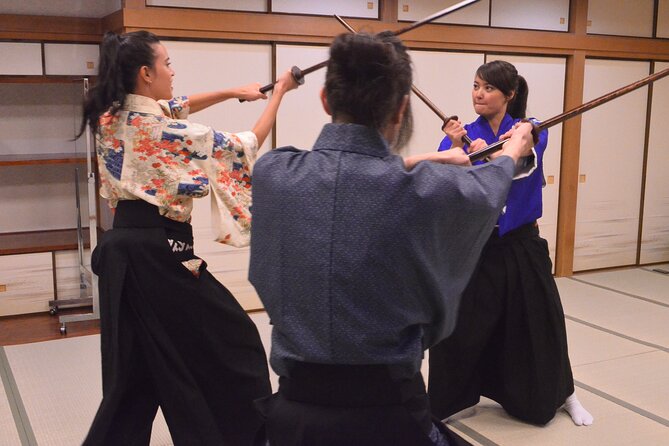
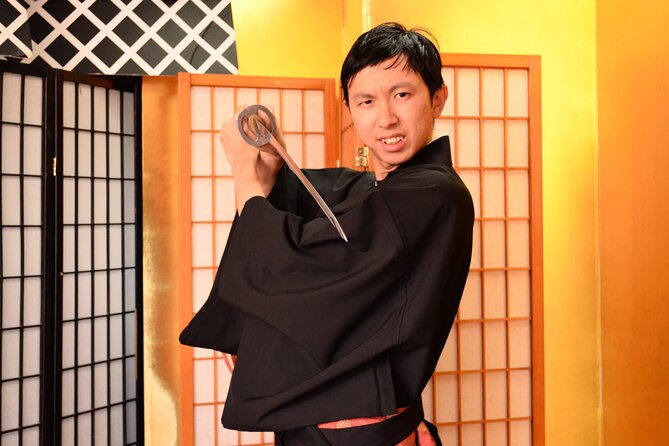
Trade a museum visit for a samurai sword. Samurai Training Tokyo Asakusa gives you a compact, private lesson with a costume change, basic katana work, staged combat, and a photo session. I like the personal instruction and the fact that your group does not share the class with strangers. I also like that the instructors handle the photography, so you can focus on the fun.
The main thing to keep in mind is the level of training. This is a one-hour cultural activity, not an intense martial arts course. You will learn formal movements and a choreographed fight, but serious martial artists may find it fairly light. At $85.89 per person, the value comes from the private attention, costume, photos, video, and certificate, not from hours of sword practice.
- Private lesson with Jiro and assistants such as Aya and Akari: Your group receives direct help throughout the session.
- Traditional samurai costume and katana practice: You dress up, learn how to draw and sheath the sword, and practice basic forms.
- Photo and video keepsakes included: The staff take pictures and record the staged battle, with footage provided on an SD card or memory device.
- A certificate with your photo: You receive a samurai recognition certificate at the end.
- Family-friendly from age six: Children must attend with an adult, and the maximum booking size is 10 people.
- Convenient Asakusa setting: The meeting point is at Hanakawado Sunny Mansion, near public transportation, though the exact site can change with group size.
In This Review
- What This Asakusa Samurai Class Really Offers
- Meeting in Hanakawado, Then Getting Ready
- Greetings and the First Katana Movements
- The Mock Battle Is the Main Event
- Photos, Video, and the Samurai Certificate
- Why the Private Format Matters
- The Best Fit: Families, Couples, and First-Time Visitors
- Is $85.89 Per Person a Fair Price?
- Timing, Group Size, and Small Practical Details
- Should You Book Samurai Training Tokyo Asakusa?
- FAQ
- Where does Samurai Training Tokyo Asakusa meet?
- How long does the samurai training last?
- What is included in the price?
- Can children take part?
- How many people can join one booking?
- What is the cancellation policy?
What This Asakusa Samurai Class Really Offers
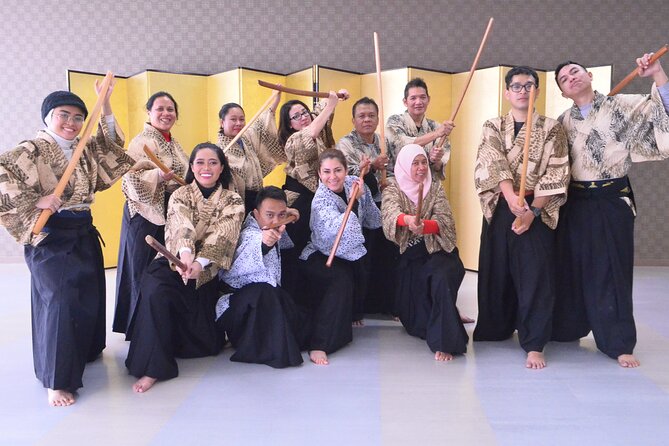
This activity is best understood as a short, theatrical introduction to samurai sword handling. You are not signing up for a long dojo course or a demanding fitness session. Instead, you get a guided taste of the clothing, manners, movements, and staged fighting associated with samurai performance.
The class is supervised by Ukon Takafuji, Iemoto of the Kenbu Ukon-ryu, also called the Tachibana samurai kenbu school. That gives the activity a formal performance tradition behind it, rather than making it only a costume photo stop.
The structure is simple and well suited to a busy Tokyo day. The listed duration is about one hour, though the full sequence of meeting, changing, photographs, practice, video recording, changing back, and receiving your certificate may take closer to one to one and a half hours. I would avoid scheduling a train departure or restaurant reservation immediately afterward.
Meeting in Hanakawado, Then Getting Ready
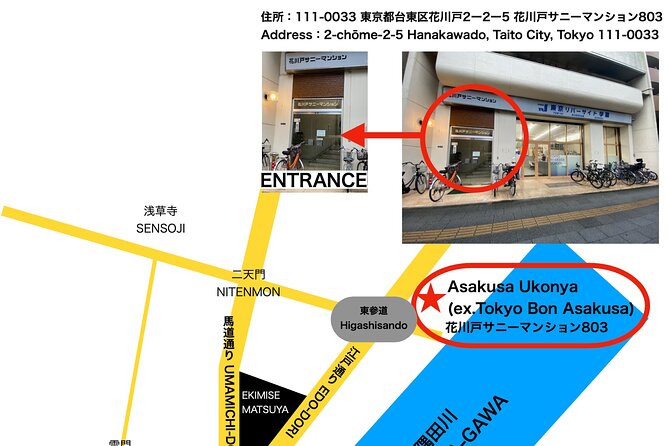
The stated starting point is Hanakawado Sunny Mansion at 2-chome-2-5 Hanakawado, Taito City, Tokyo 111-0033. It is in the Asakusa area and near public transportation. The activity ends back at the meeting point, and hotel pickup and drop-off are not included.
One practical wrinkle matters here: the exact meeting place and training location can vary depending on the number of people booked. You should receive the final details at least two days before the reserved date. Read that message carefully rather than assuming the address shown at booking is the entire story.
Once the group gathers, you change into the samurai outfit. The clothing is one of the strongest parts of the activity because it changes the mood immediately. You are not simply holding a practice sword in ordinary street clothes. The outfit gives the photographs a proper setting and helps children take the role seriously, at least until the first mock battle produces plenty of laughter.
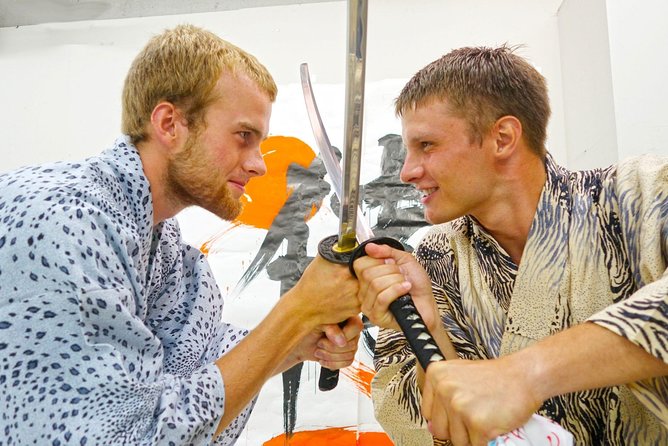
The staff then help you belt on the sword. This is a useful moment for photographs, and it also gives you a first sense of how much care is needed when moving with a katana at your side.
More Castles and Historic Sites in Tokyo
- Tokyo: Imperial Palace and Shogun Historical Walking Tour
★ 5.0 · 2,251 reviews - Tokyo Castle & Imperial PalaceーShogun Walking Tour
★ 4.7 · 1,068 reviews - Tokyo: Samurai Ninja Museum Guided tour and Experience
★ 4.6 · 1,010 reviews
Greetings and the First Katana Movements
The class begins with greetings. That opening is important because it frames the activity as a lesson in discipline and form, not simply a sword-themed photo session. Your instructor introduces the basic attitude and movements before asking you to perform them.
You practice battou, drawing the katana, and nattou, returning it to the scabbard. These actions are slower and more deliberate than a movie fight makes them look. The emphasis is on posture, hand position, and controlled movement.
Next comes kata, a set sequence of movements. The instructor demonstrates, then guides you through the routine. Jiro receives especially strong praise for being patient, friendly, funny, and clear, including with children and teenagers. Aya and other assistants help with clothing, positioning, photos, and the practical parts of the session.
The teaching style appears to be encouraging rather than stern. That makes a difference for families. A child who is nervous about holding a sword can watch first, copy the instructor, and receive direct help. One particularly useful detail is that the instructor has paired with a child during the simulated fighting, helping younger participants feel comfortable rather than leaving them to manage the routine alone.
The Mock Battle Is the Main Event
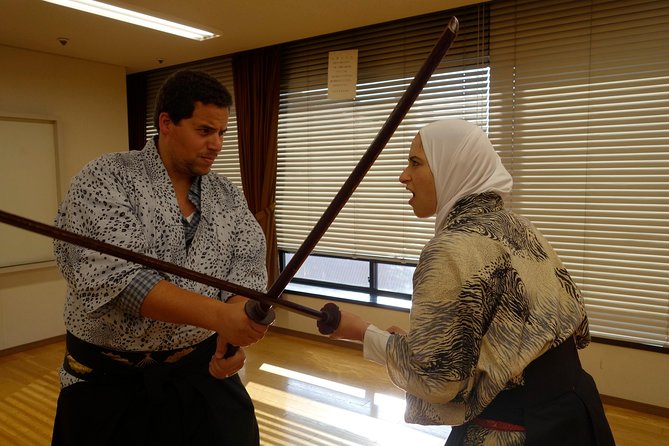
After the basic movements, you practice sword fighting. This is staged combat, not contact fighting. The instructor teaches a series of moves that look like a samurai battle and then records your performance.
This part works best when you treat it as a small piece of theater. You are learning timing, poses, and a sequence of actions. The goal is not to defeat anyone. The goal is to perform the routine safely, clearly, and with enough drama to make the video entertaining.
That distinction should shape your expectations. If you or your child already has serious martial arts training, the class may feel introductory. One participant with a second-degree black belt described it as fun but not a hard-core dojo session. That is a fair way to view it.
For most families, couples, and first-time visitors, the lighter approach is an advantage. You can laugh, make mistakes, and try again without worrying about meeting a high technical standard. The activity offers a small workout and some movement, but it is not advertised as strenuous training.
Photos, Video, and the Samurai Certificate
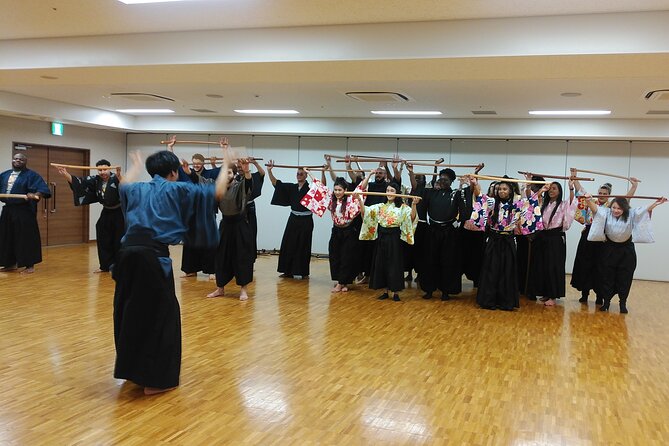
The staff photograph the class throughout the session and record the battle. This is a major part of the value. Parents do not have to stand outside the activity trying to capture everything on a phone. You can take part while the instructors handle the camera work.
The photographs are not limited to a single posed picture. The planned sequence includes costume portraits, sword-belt photographs, and images from the training. The staff also make videos of the sword routine and staged fight. You may receive the files on an SD card, memory card, or similar storage device. Some sessions have also used a participant’s own phone or tablet for additional video recording.
That arrangement is worth clarifying when you arrive. The experience includes picture and video footage, but the exact delivery method may vary. Bring a device if you want the staff to record extra footage on it, and make sure you understand how the included files will be transferred.
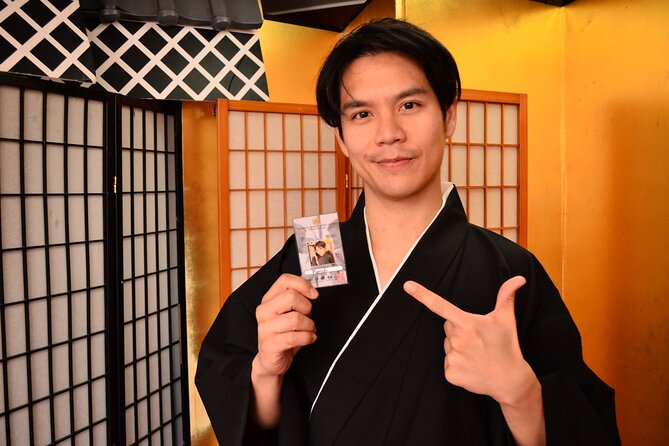
At the end, you change back into your clothes. You receive a certificate of recognition with your photo, along with photo data and a photo of your face. The certificate is a cheerful souvenir rather than an official martial arts rank, but it gives children something tangible to take home and show relatives.
Teenagers seem especially well matched to this format. The staged fight produces an action scene they can replay later, and the certificate turns a brief activity into a memorable travel story. Adults tend to enjoy the same thing, though you may feel slightly silly at first. That usually passes once the sword comes out.
A completely different kind of day out:
- Tokyo Disney Resort – Tokyo Disneyland & Tokyo DisneySea Park Tickets
★ 4.8 · 99,488 reviews - SHIBUYA SKY Ticket
★ 4.7 · 46,509 reviews - JR Whole Japan Rail Pass
★ 4.8 · 29,150 reviews - Mt Fuji and Hakone 1-Day Bus Tour Return by Bullet Train
★ 5.0 · 26,383 reviews
Why the Private Format Matters
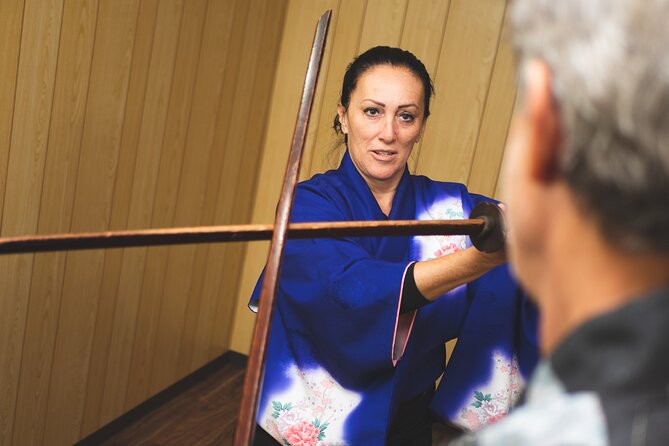
The booking is private, with only your group taking part, and each booking can include up to 10 people. That is a better setup than a large class for families with different ages or confidence levels.
The instructor can slow down for a six-year-old, repeat a movement for a parent, or give more attention to a teenager who wants to perform the routine well. Couples and solo participants also have room to ask questions and take photos without feeling watched by a crowd.
The private format also makes the activity more flexible emotionally. Some people want to play along fully. Others are less comfortable with costumes or dramatic poses. A small group lets you participate at your own level.
English support appears to be a strength. Several sessions have been described as easy to follow, with the instructor and assistant communicating well in English. Still, the class involves physical demonstrations, so you will learn by watching and copying as much as by listening.
The Best Fit: Families, Couples, and First-Time Visitors
I would recommend this most strongly to families with children age six and older, especially if your children enjoy costumes, action scenes, or hands-on activities. The class gives them a clear sequence to follow and enough novelty to hold attention during a short Tokyo visit.
It also suits couples looking for a shared activity that produces better memories than another quick photograph outside a temple. You can train together, pose together, and leave with photos and a comic battle video.
Solo visitors are welcome, too. The private booking means you are not simply added to a large group, and the instructor can give you direct help. You will need to be comfortable participating on your own, but the staff’s friendly approach should make that easier.
I would be more cautious if your main goal is rigorous sword instruction. You will not receive an advanced curriculum in one hour. The lesson teaches basic drawing, sheathing, kata, and staged battle movements. It offers a taste of the tradition and performance style, not a path toward technical mastery.
A moderate level of physical fitness is requested. The activity includes standing, repeated movements, costume handling, and a short practice battle. No special athletic ability is stated, but you should be able to take part in a light physical class.
Is $85.89 Per Person a Fair Price?
At $85.89 per person, this is not the cheapest short activity in Tokyo. The price makes more sense when you count what is included: a local instructor, costume rental, a private class, photographs, video footage, and a certificate with your photo.
If you only want to wear a costume for five minutes and pose, the price may feel high. You are paying for guided instruction and staff time as well as the clothing. The private arrangement is also important. A family of four can receive personal attention without sharing the lesson with unrelated groups.
The value improves if you would otherwise spend money on a professional photo session. Here, the photographs are part of the activity, and the staff can record your performance while you take part. The included files give you something more lasting than a souvenir shop purchase.
I would think of it as a compact special event rather than a cheap attraction. For a once-in-a-trip family activity in Asakusa, the package is reasonable. For a solo visitor watching every dollar, it is worth booking only if the costume, photos, and personal lesson all appeal to you.
The activity is often reserved well ahead of time, with an average booking lead of 48 days. That does not guarantee every date sells out, but it is a useful signal to plan ahead if your Tokyo schedule is tight.
Timing, Group Size, and Small Practical Details
Children must be accompanied by an adult, and the minimum age is six. The maximum is 10 people per booking. Since the location can change with the number of participants, keep an eye on the final meeting instructions.
The activity uses a mobile ticket, so keep your booking accessible on your phone. Plan to arrive at the stated meeting point with enough time to find the building. One past session involved a late arrival and still proceeded, but I would not count on that courtesy. Late arrivals can put pressure on a short private class.
Wear clothing that is easy to change in and out of. The provided information does not state a strict dress code, but loose, manageable clothing will make the costume process less awkward. You should also leave room on your phone or storage device if you want extra videos.
Cancellation terms are fairly strict near the date. You can receive a full refund when canceling at least six full days before the start time. Cancellation two to six full days ahead brings a 50 percent refund, while cancellation less than two full days ahead receives no refund. Changes follow the same deadlines. If the provider cancels because the minimum number is not met, you will be offered another date or experience, or a full refund.
Should You Book Samurai Training Tokyo Asakusa?
I would book this if you want a short, private, highly photogenic activity that works for both children and adults. The strongest reasons are the patient instruction, the full costume, the staged battle, and the included photos and video. Jiro, Aya, and the other staff have made a strong impression through their friendly teaching and willingness to help participants feel at ease.
I would skip it if you are seeking demanding martial arts instruction or a long lesson in samurai history. This is a polished cultural activity with real structure, but it is designed for fun and memory-making.
For a family spending several days in Tokyo, it fits neatly between Asakusa sightseeing stops. You can learn the basic movements, laugh through the mock battle, and leave with a certificate that makes the children feel officially promoted. That is a good return from one compact hour.
FAQ
Where does Samurai Training Tokyo Asakusa meet?
The stated meeting point is Hanakawado Sunny Mansion, 2-chome-2-5 Hanakawado, Taito City, Tokyo 111-0033, Japan. The exact meeting and training location may vary based on the number of participants, with updated details sent at least two days before the reserved date.
How long does the samurai training last?
The listed duration is approximately one hour. The full process includes meeting, changing, photographs, training, video recording, changing back, and receiving your certificate, so some sessions may take about one to one and a half hours.
What is included in the price?
The price includes a local instructor, rental samurai costume, picture and video footage, and a certificate of recognition with your photo. Hotel pickup and drop-off are not included.
Can children take part?
Yes. The minimum age is six, and children must be accompanied by an adult. The activity is designed to work for families and children.
How many people can join one booking?
A maximum of 10 people can be included in one booking. The activity is private, so only your group participates.
What is the cancellation policy?
You can receive a full refund if you cancel at least six full days before the start time. Canceling two to six full days ahead provides a 50 percent refund. Cancellations less than two full days before the activity are not refunded.
Just added in Tokyo
- Very popular in Harajuku♡Animal petting zoo★ 4.6 · 39 reviews
- Yokohama Port: Private Customizable Tour with Transfer★ 5.0 · 19 reviews
- Wagyu & Sake 8 Course Tasting Dinner in Shinjuku★ 4.9 · 20 reviews
- Warner Bros. Studio Tour Tokyo – The Making of Harry Potter★ 4.8 · 181 reviews
- Yanaka District: Historical Walking Tour in Tokyo’s Old Town★ 4.8 · 117 reviews
- Tokyo: Classic Tsukiji Food Tour★ 4.9 · 78 reviews
- Tokyo: Tsukiji Fish Market Tour with 6 Stops & Seafood Lunch★ 4.5 · 165 reviews
- TOKYO Ultimate Samurai Armor Photo Experience!★ 5.0 · 16 reviews
Castles and Historic Sites, compared.
Imperial Palace and Shogun Historical Walking Tour
Read our review →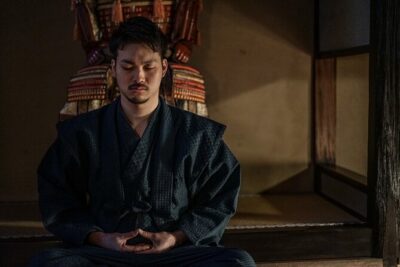
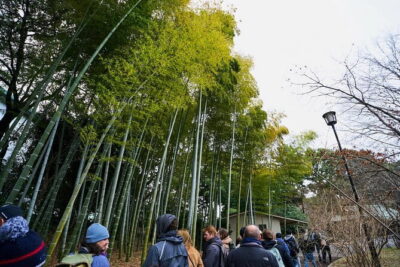
Tokyo Castle & Imperial PalaceーShogun Walking Tour
Read our review →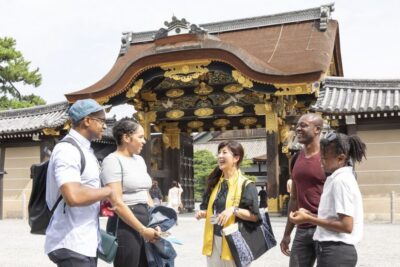
Nijo-jo Castle and Ninomaru Palace Guided Tour
Read our review →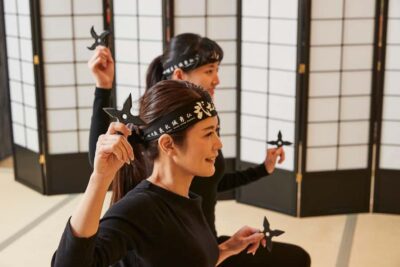
Samurai Ninja Museum Guided tour and Experience
Read our review →Browse the lists this tour appears in