
Reviewed · CASTLES AND HISTORIC SITES
Samurai Training with Modern day Musashi in Kyoto
Kyoto has a dojo for that. I like the real training hall setting and the small-class format, which gives you room to practice instead of simply posing with a sword. The lesson also has a strong personal touch through Yushin Sensei, a master with more than 20 years of experience, plus instructors such as Jordan and John.
The main thing to know is that this is a beginner-friendly introduction to iaido and samurai culture, not a full martial arts course. I also like the careful focus on safety and form, though the experience currently does not include cutting mats with a real katana. If you expect a dramatic cutting session, adjust your expectations before booking.
In This Review
- Five details that shape the experience
- Entering a working dojo in central Kyoto
- Changing into dōgi, obi, and hakama
- Learning what samurai swordsmanship meant
- Practicing how to draw and sheath the katana
- Learning an actual kata instead of a photo pose
- Watching Yushin Sensei’s two-katana performance
- How long the class takes and what the price means
- Who will enjoy this Kyoto sword lesson
- Practical details for finding the right fit
- Should you book Samurai Training with Modern Day Musashi?
- FAQ
- Where does the samurai training take place?
- How long does the experience last?
- What will I wear during the activity?
- Do I need previous sword or martial arts experience?
- Are real katanas used?
- What is the minimum age?
- Can I cancel for a full refund?
Five details that shape the experience
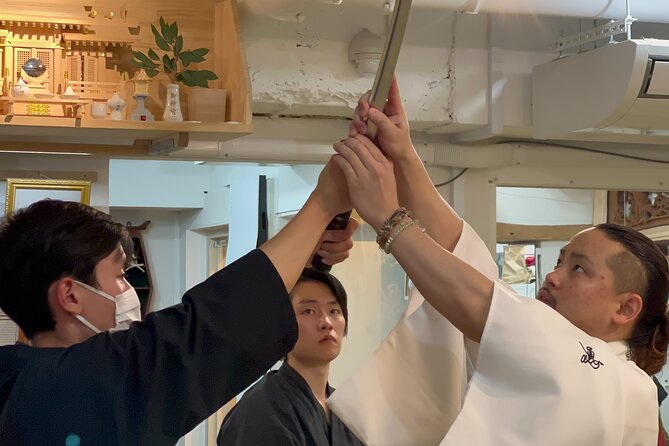
- You train in an actual dojo: The basement training center has a shrine and wooden name plaques for dojo members, giving the room a working-school feel rather than a stage set.
- You wear proper training clothing: Dōgi, obi, and hakama make the lesson feel more connected to traditional practice and create memorable photographs.
- You learn a real kata: The session teaches an actual sequence of movements, including how to draw, handle, and sheath a katana safely.
- You watch a two-katana demonstration: Yushin Sensei’s performance is a major highlight and is not part of the usual tourist photo routine.
- You get instruction in English and Japanese: Jordan and John help explain the lesson and answer questions, while Sensei leads the technical training.
- You need only moderate fitness: The class lasts about 1 hour and 45 minutes, but you must be at least 12 years old and comfortable with basic movement and standing practice.
Entering a working dojo in central Kyoto
The meeting point is at 452-4 Matsugaechō in Nakagyo Ward, close to public transportation. The dojo is in the basement level of a building, so do not expect a grand temple entrance or a polished cultural museum. That is part of the appeal.
Inside, the setting feels like a place where martial arts are practiced regularly. Wooden plaques with students’ names line the back wall, and a Shinto shrine adds a quiet sense of purpose. You are not entering a temporary room arranged for tourists. You are stepping into a school with its own community and traditions.
That difference matters. A staged sword show can be fun, but it usually ends when the photographs are taken. Here, the room helps frame the lesson as a form of practice. You get to ask questions, watch instructors correct movement, and see how a dojo operates.
The space is underground, which may surprise you if you picture samurai training in a wooden hall surrounded by gardens. It is also worth knowing that the atmosphere is functional rather than luxurious. You come for the instruction and the sense of place, not for elaborate scenery.
More Castles and Historic Sites in Kyoto
- Kyoto Samurai Experience
★ 5.0 · 1,294 reviews - Kyoto: Nijo-jo Castle and Ninomaru Palace Guided Tour
★ 4.7 · 1,020 reviews - Kyoto: Kendo and Samurai Experience with Uniform and Gear
★ 4.9 · 815 reviews
Changing into dōgi, obi, and hakama
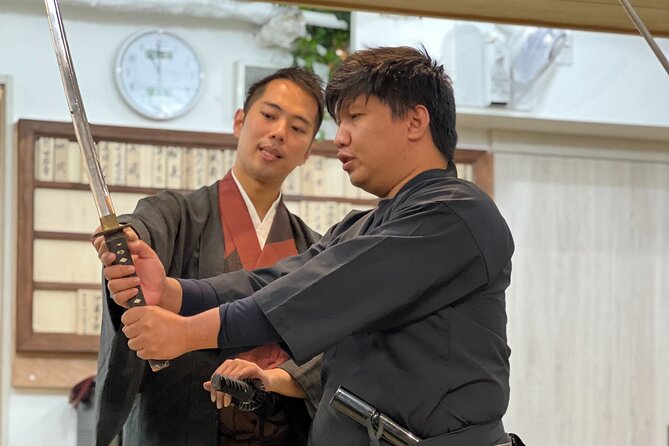
The session begins with samurai training clothing. You put on a dōgi, obi, and hakama before handling the sword. The clothing is not just a costume change for photographs. It helps you understand that posture, movement, and etiquette are tied together in Japanese sword arts.
The hakama can make simple movements feel more deliberate. You become more aware of where your feet are, how you stand, and how you turn. Even a basic sword motion feels different when you are dressed for practice.
This part works especially well for families and groups who want photographs. Parents can watch teenagers or older children take part, and the clothing gives the pictures more substance than a quick prop-and-pose session. The minimum age is 12, and the activity has been enjoyed by families with teenagers and younger participants within the stated age requirement.
Do not expect a perfectly fitted historical outfit made for you alone. The clothing is training gear, and the purpose is to prepare you for practice. Still, it adds a sense of occasion and helps turn a short class into a fuller cultural activity.
Learning what samurai swordsmanship meant
Before you start swinging, the instructors explain samurai culture, sword etiquette, and the role of the katana. This context is one of the strongest parts of the session because it keeps the activity from becoming a simple lesson in dramatic gestures.
You learn about safe handling, how swords were used, who could use them, and the ideas connected with discipline and honor. The instructors also discuss the sword itself, including its parts and how Japanese swords are made. The pace is compact, but the teaching does not feel like a rushed list of facts.
Yushin Sensei brings the authority of long practice, while Jordan and John help make the information easy to follow. Their roles also create a useful balance. Sensei can focus on technique and demonstration, while the English-speaking instructors help explain terms and answer questions.
If you already practice karate or another martial art, you may appreciate the attention to detail more than someone looking only for a fun photo. Several experienced martial artists have found the lesson worthwhile because the instructors correct form and take questions seriously. At the same time, beginners are not expected to arrive with any sword experience.
The lesson is not designed to make you a samurai in an afternoon. It gives you a clear first look at iaido, the art of drawing and using the Japanese sword, with enough background to understand why the movements are controlled and formal.
Practicing how to draw and sheath the katana
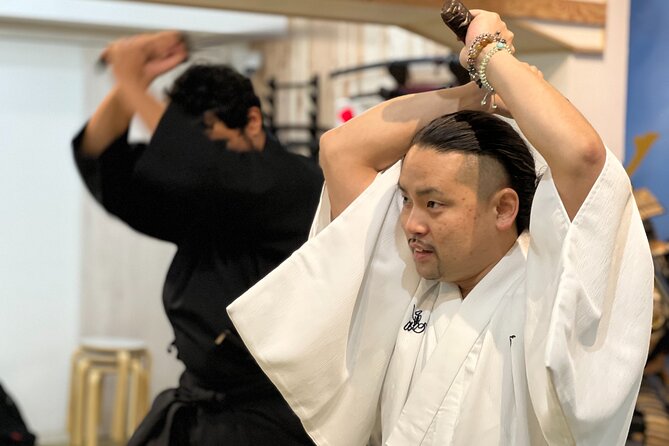
The practical training begins with basic sword handling. You learn how to draw, wield, and return the katana to its sheath. These actions require more care than they appear to in a film.
The instructors guide you through posture, hand position, footwork, and the order of each movement. You practice slowly, which is exactly what you want when working with a sword. The point is not speed. The point is control.
The swords used for practice are iaito, which allow you to work through the movements in a safer way than using a sharpened blade. Some descriptions of the training refer to real katana-style swords, but you should understand the important distinction: practice blades are used for the lesson, while sharpened swords are not offered for general beginner handling.
That safety approach makes the activity suitable for people who are curious but cautious. You still get the feel of the weight and shape of a sword, but the session is built around instruction rather than risk.
The class size is usually limited to six participants per class, although the operator notes that the number can be higher when only a small number of parties are booked. The maximum group size is nine. A smaller class gives you more chances to receive corrections, while a larger one may mean more waiting between turns.
Even with several people, the lesson is hands-on. You are not simply watching Sensei perform from across the room. You practice the movements yourself and have time to ask questions.
A completely different kind of day out:
- PERFECT KYOTO 1-Day Bus Tour
★ 5.0 · 13,518 reviews - [Kyoto & Nara Day Tour] Sagano Scenic Railway & Nara Park & Fushimi Inari Taisha Thousand Torii Gates & Togetsukyo Bridge & Bamboo Grove & Kimono Forest (Departing from Osaka)
★ 4.9 · 10,942 reviews - Kyoto: Fushimi Inari, Kinkakuji, Bamboo Grove 1 Day Bus Tour
★ 4.8 · 4,316 reviews - Kyoto: Tea Ceremony in a Traditional Tea House in Kiyomizu
★ 4.9 · 3,519 reviews
Learning an actual kata instead of a photo pose
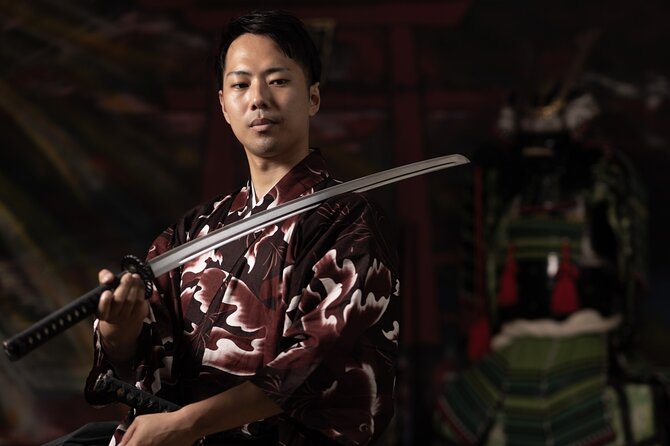
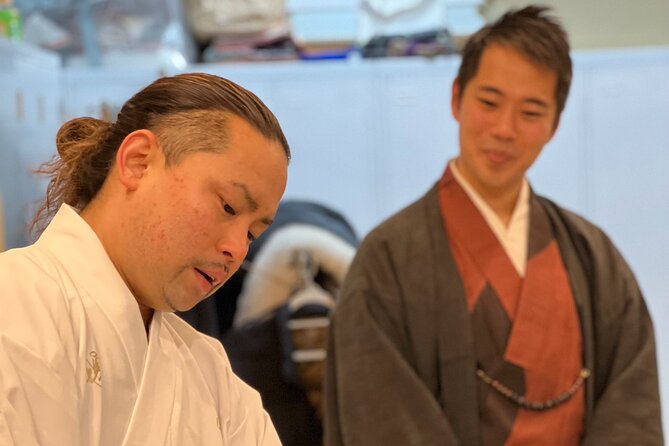
The most satisfying part for many people is learning a kata, or formal sequence. A kata links individual movements into a routine. You draw, move, strike through the form, and sheath the sword in a set order.
You will not master the art in one session. You can, however, leave with a short routine that has structure and meaning. That is much more rewarding than being handed a sword for a few seconds and told to smile.
The instructors pay close attention to form. They may adjust your posture, correct the angle of your arms, or help you make the sequence more controlled. This is where the small group format matters most. You get a chance to repeat the action and improve it rather than simply moving on after one attempt.
The kata also gives the session a useful rhythm. First comes explanation, then demonstration, then practice. You are not asked to absorb everything at once. The activity builds from simple safety points to a more complete movement pattern.
You may take photographs or video while learning, according to the experience details and the way the class is conducted. Ask before filming during a demonstration or instruction so you do not distract the people practicing around you.
Watching Yushin Sensei’s two-katana performance
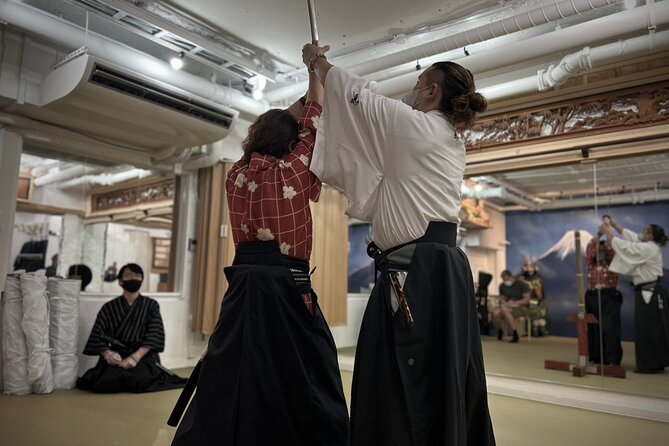
After your own practice, the focus shifts to demonstration. Yushin Sensei performs with two katana, showing a level of coordination and control that beginners cannot reproduce in a short class.
This is the moment when the difference between a lesson and a show becomes clear. You have already learned how difficult it is to draw, move, and sheath one sword with care. Watching Sensei work with two makes the skill easier to appreciate.
The performance is a major reason to book this particular activity. Many sword-themed activities offer costumes and a staged flourish. This one connects the demonstration to the instruction you have just received.
You may also see a genuine historical sword and learn about its parts and construction. That provides a useful contrast with the practice iaito. One is a working tool for training, while the other reflects the craftsmanship and history of Japanese blades.
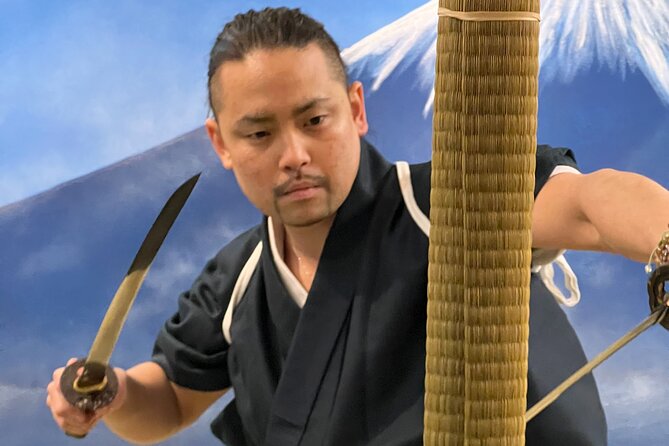
The current program does not offer mat cutting with a real katana. This is an important change for anyone who has seen older descriptions or past photographs of sword-cutting demonstrations. You can still watch Sensei display his ability, but you should not book this expecting to cut a tatami mat yourself.
How long the class takes and what the price means
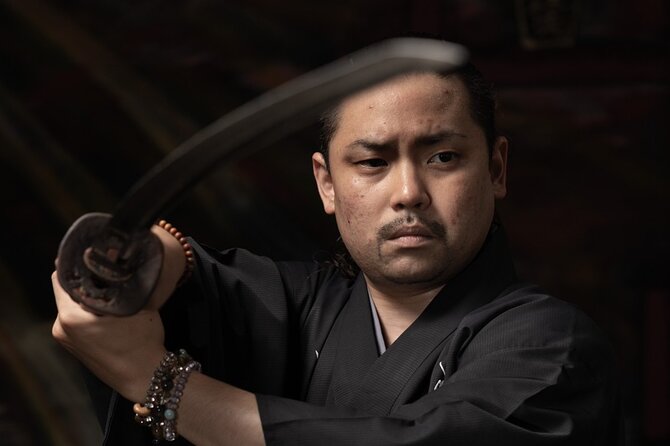
The listed price is $132.65 per person, and the session lasts about 1 hour and 45 minutes. The operator allows roughly 1.5 to 2 hours, depending on the number of participants.
That price is not cheap for a short activity. You are paying for more than costume rental, though. The fee covers access to a real dojo, training clothing, instruction in sword handling, a kata lesson, cultural explanation, and a master’s demonstration.
I think the value is strongest if you care about authenticity and personal instruction. You get the chance to train rather than just watch. The value is weaker if your main goal is a low-cost photo opportunity or a live mat-cutting show, since neither is the central offering and mat cutting is not currently available.
The class can also fill a useful gap in a Kyoto schedule. Temples and gardens give you a view of Japan’s past through buildings and art. This activity lets you engage with a living martial tradition in a modern working school. It is active, social, and compact enough to fit between other central Kyoto plans.
The experience is booked frequently, so it is sensible to reserve ahead if you have fixed dates. Confirmation is sent within 48 hours, subject to availability. Free cancellation is available up to 24 hours before the start time, but cancellations or changes within 24 hours are not refunded.
Who will enjoy this Kyoto sword lesson
I would recommend it most strongly to:
- Families with children aged 12 and older
- Teenagers interested in samurai, anime, Japanese culture, or martial arts
- Couples looking for an activity beyond temples and shopping
- People who want to learn basic sword etiquette and movement
- Martial artists who enjoy comparing different training methods
- Visitors who prefer a working cultural setting over a staged attraction
The activity is also a good choice if you want something that welcomes beginners. You do not need prior sword training. The instructors break down the movements and focus on safety.
You should think twice if you dislike changing clothes, standing practice, or following precise instructions. This is not a passive cultural talk. You will be asked to move, repeat actions, and pay attention to details.
The moderate fitness requirement is manageable for most people who can stand and move through a short practice session. Still, the class includes formal movement and sword handling, so wear something that lets you move comfortably under the training gear.
Practical details for finding the right fit
The activity begins and ends at the same meeting point in central Kyoto. Since the dojo is near public transportation, it can be easier to reach than a rural cultural attraction, but check the street address carefully because the training hall is in a basement-level complex.
Plan on more than exactly 1 hour and 45 minutes. The stated time can stretch toward two hours when the group is larger or when questions run long. That extra time is not a problem if you leave room in your schedule, but it could matter if you have a timed restaurant booking or another tour immediately afterward.
The maximum group size is nine, with six participants as the intended class size. If a small number of parties book a time slot, the group may be larger than six. Ask about the expected class size if personal attention is your main reason for booking.
English and Japanese are used during instruction. Jordan and John have helped English-speaking participants follow the lesson, while Yushin Sensei leads the technical side. The mix works well for international visitors who want clear guidance without losing the Japanese setting.
Should you book Samurai Training with Modern Day Musashi?
Book it if you want hands-on practice in a real dojo, a short lesson in iaido, and a serious demonstration by Yushin Sensei. The strongest parts are the working-school atmosphere, the care given to form and safety, the traditional clothing, and the two-katana performance.
I would not book it for mat cutting, since that is not currently offered. I would also skip it if you want a long academic lecture or advanced martial arts training.
For most visitors aged 12 and older, this is a memorable use of part of a Kyoto day. You learn a kata, handle a practice sword with purpose, and leave with a better sense of why samurai swordsmanship is built on control rather than cinematic speed. At $132.65, it is a considered purchase, but the combination of instruction, setting, clothing, and demonstration gives it solid value for the right person.
FAQ
Where does the samurai training take place?
The activity takes place at 452-4 Matsugaechō in Nakagyo Ward, Kyoto. The dojo is in the basement level of a complex in central Kyoto and is near public transportation.
How long does the experience last?
The session lasts about 1 hour and 45 minutes. Depending on the number of participants, the total time can range from about 1.5 to 2 hours.
What will I wear during the activity?
You will change into samurai training gear consisting of a dōgi, obi, and hakama.
Do I need previous sword or martial arts experience?
No previous experience is listed as a requirement. The activity teaches basic sword handling, drawing, sheathing, wielding, and a kata for beginners.
Are real katanas used?
The training uses iaito for safe and authentic practice. Sharpened katana use is not part of the current beginner training, and mat cutting with a real katana is not currently offered.
What is the minimum age?
You must be at least 12 years old to participate.
Can I cancel for a full refund?
Yes. You can cancel up to 24 hours before the experience start time for a full refund. Cancellations or changes made within 24 hours are not refunded or accepted.
Just added in Kyoto
- The “Golden Route” and Ancient Japan by DIAMIR Erlebnisreisen – 14-Day Tour★ 2.0 · 2 reviews
- Japan: Castles & Cuisine by G Adventures – 6-Day Kyoto to Osaka Tour★ 4.5 · 4 reviews
- Cycle Japan by Explore! – 13-Day Kyoto to Tokyo Tour★ 4.7 · 12 reviews
- Cycle Japan by Intrepid Travel – 11-Day Kyoto to Tokyo Tour★ 4.8 · 2 reviews
- Classic Japan by Intrepid Travel – 11-Day Kyoto to Tokyo Tour★ 4.4 · 14 reviews
- Ancient & Modern Japan 14-Day Tour by Exodus Adventure Travels★ 4.4 · 40 reviews
- 5 Day Cultural Adventure of Kyoto, Nara & Osaka by Tourist Journey★ 2.5 · 2 reviews
- 12 Days Kinosaki Onsen Escape: A Journey Through Japan’s Timeless Towns by UME Travel★ 4.8 · 5 reviews
Castles and Historic Sites, compared.



Imperial Palace and Shogun Historical Walking Tour
Read our review →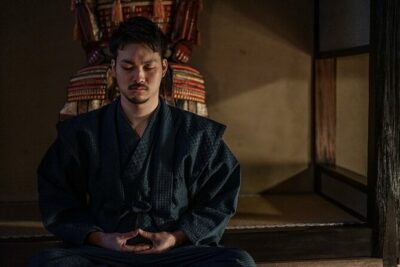
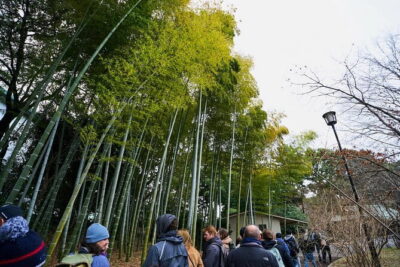
Tokyo Castle & Imperial PalaceーShogun Walking Tour
Read our review →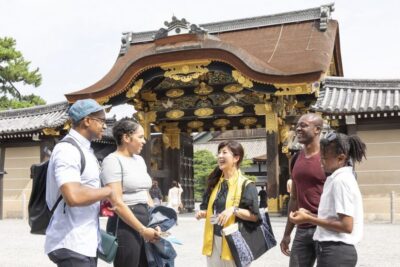
Nijo-jo Castle and Ninomaru Palace Guided Tour
Read our review →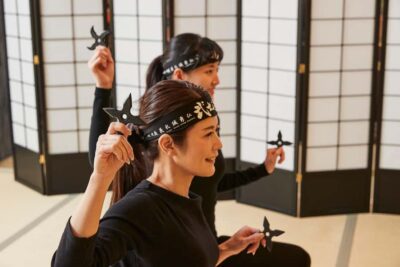
Samurai Ninja Museum Guided tour and Experience
Read our review →Browse the lists this tour appears in