
Reviewed · COOKING CLASSES
Sushi Making with Interactive Samurai Experience at JIN-ASAKUSA
Sushi, swords, and a little friendly rivalry. This two-hour experience at JIN-ASAKUSA in Asakusa combines a hands-on sushi lesson with samurai costumes, chef demonstrations, food quizzes, and plenty to eat. I like the private format, which keeps the activity focused on your own group, and the mix of sushi-making with Japanese cultural entertainment gives the meal more energy than a standard cooking class.
The food offering is also generous for the price. You may prepare several kinds of nigiri, a futomaki roll, and a sushi donut, while also tasting appetizers, Japanese omelet, seafood, and Wagyu beef. The main drawback is the fixed, non-refundable booking policy, so you need to be sure of your plans before paying.
In This Review
- Key points at a glance
- Entering JIN-ASAKUSA in Asakusa
- Samurai costumes and the photo session
- Learning five kinds of nigiri from a sushi chef
- Futomaki, sushi donuts, and dashimaki tamago
- The sword show and food quiz battle
- What the food and entertainment are worth at $49.27
- Choosing between the four course options
- Who will enjoy this most
- Timing, transport, and practical planning
- The strongest parts of the experience
- Should you book JIN-ASAKUSA?
- FAQ
- How long does the JIN-ASAKUSA experience last?
- Where does the experience take place?
- Is the activity private?
- What food will I make?
- Are drinks included?
- Can I cancel or change my booking?
Key points at a glance
- Samurai dress-up comes first: Try on samurai armor or a feudal lord outfit and take photos in a Sengoku-era setting.
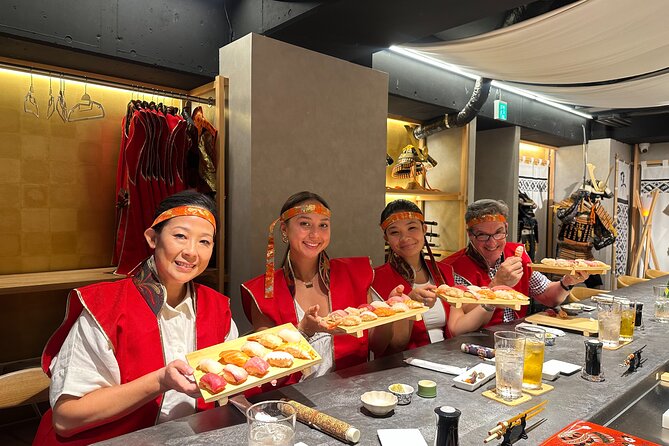
- A chef leads the sushi lesson: You learn hands-on techniques for five types of nigiri, plus futomaki and a sushi donut.
- The meal is more than sushi: The food can include three appetizers, crab, salmon, caviar, Wagyu or Kobe beef, and dashimaki tamago.
- Entertainment is part of the plan: Expect a Japanese sword show, cooking demonstrations, quizzes, and food-related games.
- Your group gets the room to itself: This is a private activity, useful for couples, families, or friends who want to compete and laugh together.
- Plan ahead: It costs $49.27 per person, is usually reserved about 50 days ahead, and cannot be refunded or changed after booking.
Entering JIN-ASAKUSA in Asakusa
JIN-ASAKUSA is at CREAL Asakusa Skyview Square, on the fourth floor at 1-chome Hanakawado in Taito City. The activity ends at the same place, and the venue is near public transportation, so it fits neatly into a day spent around Asakusa.
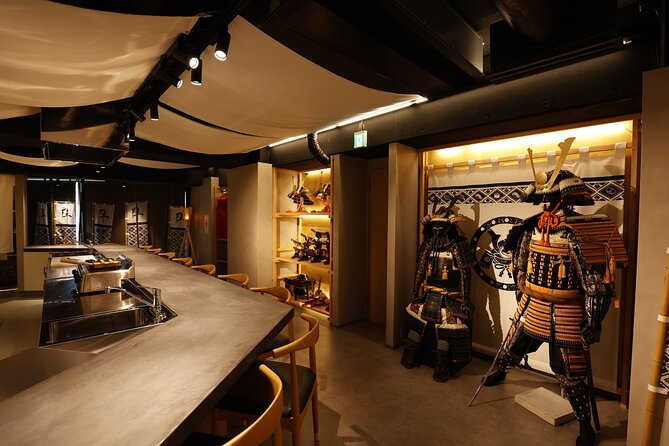
The setting is designed around Japan’s Sengoku period. Armor, swords, and gold screens help turn the room into a stage rather than a plain cooking studio. This matters because the samurai theme is not just a quick photo prop. It runs through the food games, sword presentation, and atmosphere of the meal.
You receive a mobile ticket, and confirmation is sent within 48 hours of booking if space is available. I would save the meeting address and ticket on your phone before leaving your hotel. The location includes a building name and floor number, which is useful in a busy Tokyo neighborhood where several signs can compete for your attention.
More Castles and Historic Sites in Tokyo
- Tokyo: Imperial Palace and Shogun Historical Walking Tour
★ 5.0 · 2,251 reviews - Tokyo Castle & Imperial PalaceーShogun Walking Tour
★ 4.7 · 1,068 reviews - Tokyo: Samurai Ninja Museum Guided tour and Experience
★ 4.6 · 1,010 reviews
Samurai costumes and the photo session
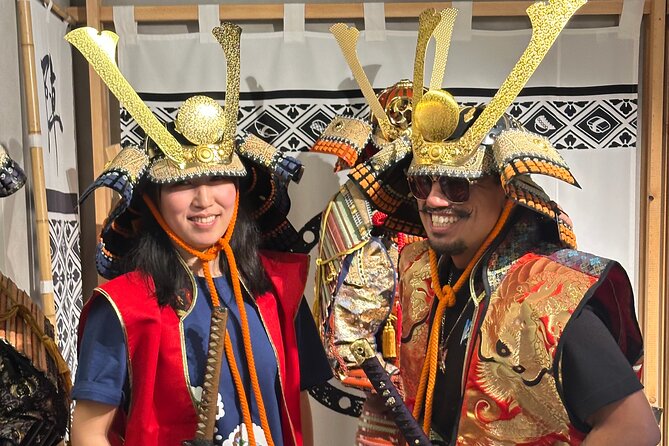
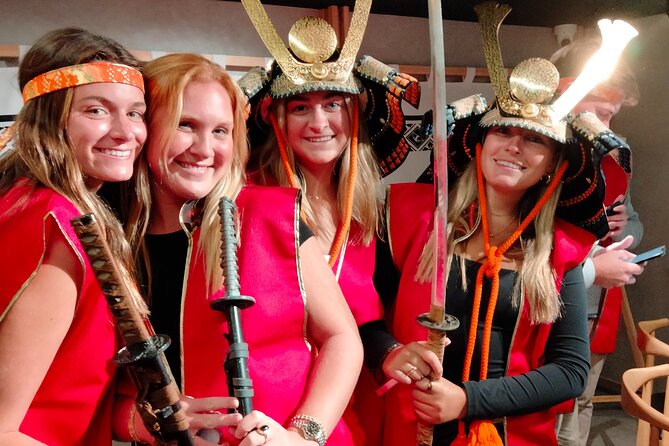
The samurai portion gives the experience its playful opening. You can dress in samurai gear, and the available setup also includes a feudal lord outfit. Armor and swords provide strong photo opportunities, especially for families and groups of friends who want something beyond the usual Tokyo food stop.
You do not need to know much about samurai history to enjoy this part. The appeal is visual and social. Put one person in the role of shogun, pose with the group, and let the room’s armor and gold screens do the rest.
This is also a good reason to bring a phone with enough storage and battery. The activity is built for photos and short videos, and the costume session may become one of the most memorable parts of the visit. The setting can feel theatrical, so anyone seeking a quiet, formal sushi lesson should know that this is a lively entertainment experience first and a traditional cooking school second.
Learning five kinds of nigiri from a sushi chef
The central food lesson focuses on nigiri sushi. In the chef-led format, you make five types of nigiri, five pieces in total. The chef explains the methods used by professional sushi makers, then gives you a chance to shape the rice and place the topping yourself.
That small scale is a plus. You are not expected to produce a restaurant’s worth of sushi. Five pieces let you pay attention to the basics, including how much rice to use and how to handle the fish. The chef’s demonstrations give you a model to copy, and the results are ready to eat soon after you make them.
The seafood selection may include ingredients such as salmon, crab, and caviar. Exact ingredients can vary by course or availability, so you should treat those items as part of the advertised offering rather than a promise that every piece will contain each one.
The best part of making sushi yourself is the instant reward. You prepare the food, sit down, and eat it during the same visit. It is a simple lesson, but you leave with a better sense of why rice texture, balance, and neat shaping matter.
Futomaki, sushi donuts, and dashimaki tamago
Nigiri is only one part of the menu. You also make one futomaki, a thick sushi roll, and one sushi donut. The donut shape adds a playful touch and helps keep the class accessible to people who may feel nervous about making neat sushi by hand.
The chef demonstrates futomaki preparation, so you can watch the rolling process before or after making your own. Thick rolls are less delicate than nigiri and often easier for children or first-time cooks to handle.
Dashimaki tamago, the rolled Japanese omelet, is demonstrated by the chef as well. This is a useful addition because Japanese omelet technique is harder to judge from a menu. The demonstration lets you watch how the chef handles the egg and builds its layered shape, without turning the class into a second major cooking course.
The complete food lineup includes three kinds of appetizers, five pieces of nigiri, one futomaki, and one sushi donut. There may also be Japanese omelet, seafood, and Wagyu or Kobe beef to taste. For a two-hour activity priced at $49.27, that is a substantial amount of food and instruction.
More Cooking Classes in Tokyo
- Sushi Making Tokyo Roll and Authentic Japanese Sushi Class
★ 5.0 · 3,971 reviews - Tokyo: Roll and Authentic Sushi Making Class in Asakusa
★ 4.9 · 1,957 reviews - Tokyo Shinjuku Chopsticks Making Class
★ 5.0 · 1,763 reviews - Tokyo: Sushi Making Class in a Happi Coat near a Famous Spot
★ 4.9 · 1,377 reviews
The sword show and food quiz battle
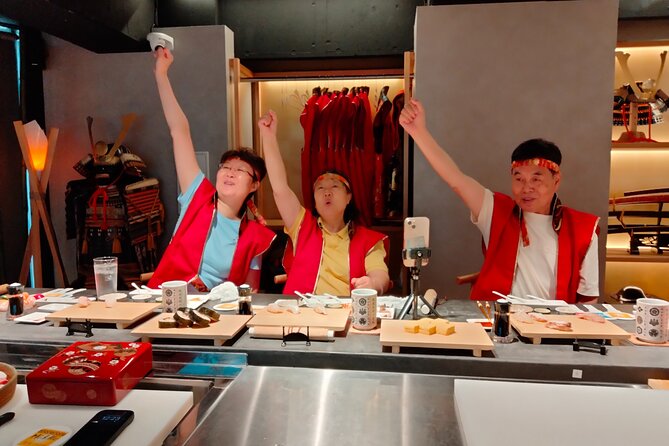
The samurai theme returns during the demonstrations. The chef presents a Japanese sword show alongside the futomaki and dashimaki demonstrations. This is where the activity moves beyond a normal sushi lesson. You are eating and cooking, but you are also watching a staged cultural performance.
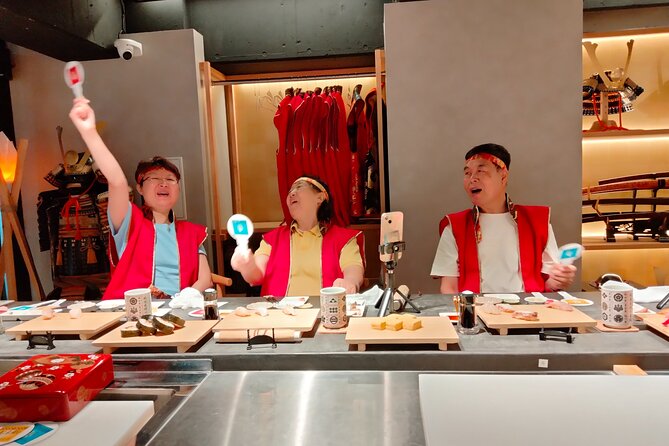
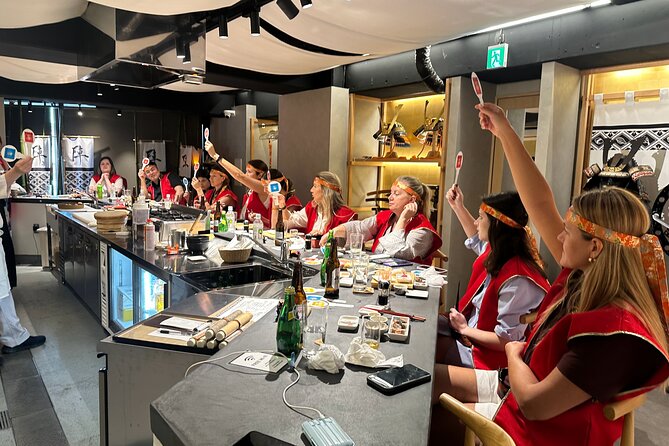
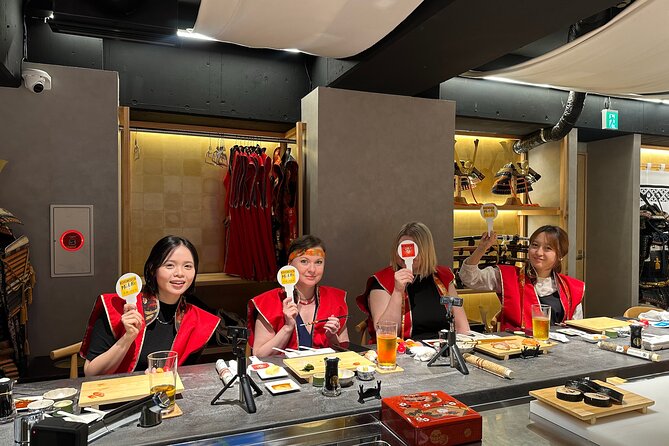
The food quiz battle adds friendly competition. In one course, you aim to become shogun, and the winner can receive sushi made by the chef. That prize gives the quiz a useful purpose rather than making it feel like filler between courses.
The games work best for groups that enjoy calling out answers and teasing one another. The atmosphere is reported to be energetic and highly interactive, with English-speaking staff helping make the instructions clear. If you are traveling alone, the private format may feel less lively unless you are comfortable taking part on your own. The experience is particularly well suited to couples, families, and groups of friends.
What the food and entertainment are worth at $49.27
At $49.27 per person, this is priced below many polished food-and-culture activities in central Tokyo. You are not paying only for a plate of sushi. The fee covers instruction, ingredients, entertainment, service charge, and consumption tax.
The value depends on what you want. If your only goal is to eat the highest-end sushi possible, a focused sushi restaurant may be a better use of your budget. If you want to make food, dress as a samurai, take photos, watch demonstrations, and join a quiz, the price is more convincing.
The quantity also helps. Three appetizers, five pieces of nigiri, a futomaki, and a sushi donut create a proper light meal rather than a tiny tasting. Additional items such as crab, salmon, caviar, Wagyu beef, or Kobe beef make the menu feel more special, though exact inclusions depend on the selected course.
Water and green tea are included, while additional drinks cost extra. I would check the exact option you select, since the available choices include standard courses and versions that include dessert.
Choosing between the four course options
The experience is offered in several versions, and the names can be confusing at first.
The Premium Int. Ent. SHOGUN course includes the nigiri experience, a samurai sword show, futomaki and dashimaki demonstrations, and the food quiz battle. A second version adds dessert.
The Trio Experience Chef Live course focuses on the chef-led preparation of five types of nigiri, along with the wider food lineup of appetizers, futomaki, and sushi donut. A dessert version is also available.
Before booking, check the exact course name and inclusions shown for your date. The words standard course and includes dessert make the difference clear, but the two main formats appear to place slightly different emphasis on the entertainment and chef-live elements.
For most first-time visitors, I would choose based on your group rather than chasing a small menu difference. A competitive group may prefer the SHOGUN format and its quiz battle. A group more interested in watching and making sushi may prefer the Trio Experience Chef Live option. Dessert versions make sense if this is replacing a full meal or if you want the visit to feel like a complete evening outing.
Who will enjoy this most
This experience suits people who want an activity, not just a meal. It is especially good for:
- Families looking for an easy cultural activity with hands-on food
- Couples who want unusual photos and a shared challenge
- Friends who enjoy quizzes, contests, and group dining
- First-time sushi makers who want clear guidance
- Visitors seeking a memorable indoor activity in Asakusa
- Anyone who likes Japanese food but does not want a formal restaurant setting
Children may enjoy the costumes, sushi donut, and quiz format, though the supplied information does not specify age limits. The private booking is useful because your group can take part at its own pace without being mixed with strangers.
I would be more cautious if you dislike theatrical entertainment, cannot eat the listed ingredients, or want detailed instruction in advanced sushi technique. This is an introductory lesson paired with a show. It is not a professional culinary workshop.
Timing, transport, and practical planning
The activity lasts about two hours. That is long enough for costumes, demonstrations, food preparation, eating, and games, but short enough to add to a day of sightseeing.
Since transportation to the venue is not included, you need to make your own way to JIN-ASAKUSA. The venue is near public transportation, and the end point is the same as the starting point. This makes it easy to continue exploring Asakusa afterward, with the meeting point serving as a clear base.
The experience is commonly booked about 50 days ahead, which suggests you should reserve early for a preferred date. Confirmation arrives within 48 hours, subject to availability. The mobile ticket is convenient, but I would not wait until the last minute to sort out the route.
The cancellation rule deserves attention. The activity is non-refundable and cannot be changed for any reason. If your Tokyo schedule is still uncertain, wait before booking. At this price, losing the full payment because of a change of plans would be a needless sting.
The strongest parts of the experience
The highest praise centers on three things: the quality of the sushi, the energy of the staff and chef, and the unusual combination of food with samurai entertainment.
The sushi-making race and quiz battle give the meal a social spark. You are not simply following instructions in silence. You may compete with the people in your group, answer questions about Japanese food and culture, and try to win chef-prepared sushi.
The staff’s English support is another practical strength. Clear instruction matters in a hands-on class, particularly when you are shaping rice or rolling futomaki for the first time. The setting also receives strong approval for its samurai armor, swords, and feudal lord costumes.
The overall rating is 4.9 on Google Maps, with more than 100 reviews and 99 percent of users giving the highest rating. The available rating summary also shows 5 out of 5 from 19 reviews and 100 percent recommendation. Those numbers point to a consistently well-received experience, though they do not change the need to choose the right style of activity for your group.
Should you book JIN-ASAKUSA?
Book it if you want a fun, private, food-centered activity with strong photo opportunities and a clear Japanese theme. At $49.27, the combination of sushi preparation, appetizers, entertainment, and cultural touches offers solid value.
I would choose it over a standard cooking class when your group enjoys interaction and a bit of competition. The samurai costumes, sword show, food quiz, and shogun challenge give the visit a personality that a basic sushi lesson may lack.
Skip it if you want a calm, serious sushi apprenticeship, or if your schedule cannot handle a non-refundable booking. For most couples, families, and friend groups spending time in Asakusa, JIN-ASAKUSA offers a memorable two-hour break from sightseeing, with enough food to make it feel like more than a photo stop.
FAQ
How long does the JIN-ASAKUSA experience last?
The activity lasts approximately two hours.
Where does the experience take place?
It takes place at JIN-ASAKUSA, located at CREAL Asakusa Skyview Square 4F, 1-chome Hanakawado, Taito City, Tokyo 111-0033, Japan.
Is the activity private?
Yes. Only your personal group participates in the activity.
What food will I make?
The experience includes five types of nigiri sushi, one futomaki, and one sushi donut. The chef also demonstrates futomaki preparation and dashimaki Japanese omelet.
Are drinks included?
Water and green tea are included. Additional drink orders are not included.
Can I cancel or change my booking?
No. The experience is non-refundable and cannot be changed for any reason.
Just added in Tokyo
- Tokyo The Izakaya tour★ 5.0 · 131 reviews
- The Best Family-Friendly Tokyo Tour with Government Licensed Guide★ 5.0 · 28 reviews
- Highlights & Hidden Gems of the Shibuya District Private Tour★ 5.0 · 48 reviews
- Tokyo Deep Inside Cycle Tour~3 Hours E Bike Tour around Tokyo★ 5.0 · 50 reviews
- Tattoo-friendly open-air Onsen & drink★ 5.0 · 25 reviews
- Tokyo Traditional Tea Ceremony with a Japanese Tea Master★ 5.0 · 40 reviews
- Taisho Sushi Making Class in Tokyo★ 5.0 · 89 reviews
- Baseball Professional • Yomiuri Giants★ 4.5 · 13 reviews
Cooking Classes, compared.
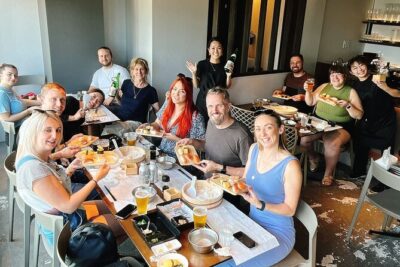
Sushi Making Tokyo Roll and Authentic Japanese Sushi Class
Read our review →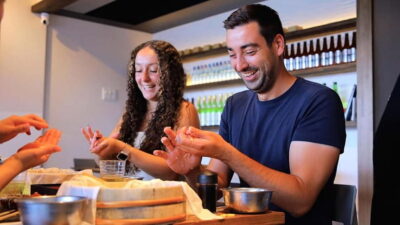
Roll and Authentic Sushi Making Class in Asakusa
Read our review →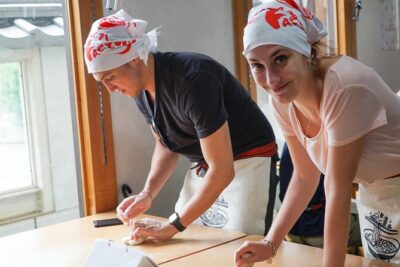
Ramen Cooking Class at Ramen Factory in Kyoto
Read our review →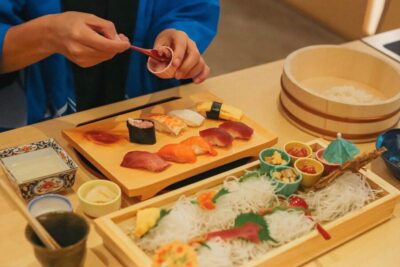
Sushi Making Class in a Happi Coat near a Famous Spot
Read our review →
Sushi Making Osaka Roll and Authentic Japanese Sushi Class
Read our review →
Tokyo Sushi Making Class in Tsukiji with Professional Chef
Read our review →
Ramen & Gyoza Cooking Class in Tokyo with Local Supermarket Visit
Read our review →Browse the lists this tour appears in