
Reviewed · MARKETS AND FOOD HALLS
Taste of Nishiki Market Walking Food Tour with Local guide
Kyoto is best understood one bite at a time. This three-hour food walk links Rokkakudo Temple, Yaoyaichi, Daimaru Department Store, Nishiki Market, and Nishiki Tenmangu Shrine, giving you both local flavors and a useful look at daily life in the city. I like the small group of six or fewer, and I like that the tastings go beyond Nishiki Market itself. You get bread, meat buns, wagashi, sashimi, and wagyu, with the exact selection changing by season and shop availability.
The main consideration is the schedule. The experience is described as three hours, but the listed times run from 10:00 AM to 2:00 PM, so I would confirm the exact finish time before booking. You should also be comfortable walking and standing, and leave large luggage behind.
In This Review
- Five things to know before booking
- Starting at Sanjo Karasuma
- Rokkakudo gives the morning a quiet start
- Yaoyaichi shows Kyoto’s seasonal side
- Daimaru’s basement turns shopping into a food lesson
- Nishiki Market is the main event
- Nishiki Tenmangu Shrine provides a calm finish
- What you actually eat
- How good is the value at $77?
- Who will enjoy this food walk?
- Practical advice for a smoother morning
- Should you book the Nishiki Market tour?
- FAQ
- How long does the Taste of Nishiki Market Walking Food Tour last?
- Where does the tour meet?
- Where does the tour finish?
- How many foods are included?
- Is the tour conducted in English?
- Can I join with luggage or a large bag?
- Are transportation and extra food included?
Five things to know before booking
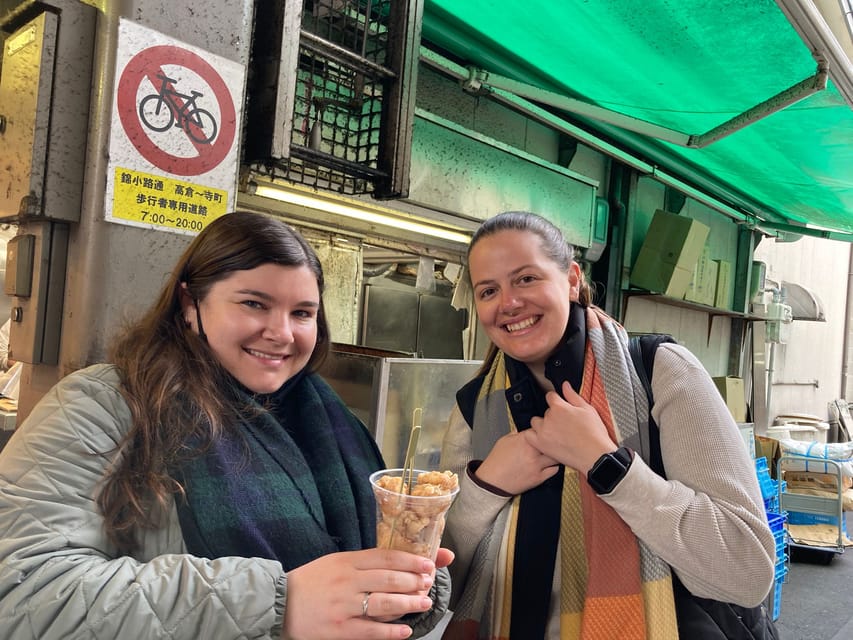
- Six to ten tastings are included, with examples such as local bread, nikuman, wagashi, sashimi, and skewered wagyu.
- The route has more than food, with a temple, a shrine, neighborhood streets, a department-store food hall, and Kyoto’s famous market.
- The group is limited to six participants, which makes it easier to ask questions and request food recommendations.
- English guidance is provided, and guides such as Kaoru and Rikka have been praised for personal service, local tips, and help with photos.
- The meeting point is easy to identify, Starbucks Coffee in the Kyoto Sanjo Karasuma Building, but transportation there and back is not included.
- Dietary planning matters, since tastings may include meat, seafood, wheat, and dairy.
Starting at Sanjo Karasuma
The tour begins at Starbucks Coffee Kyoto Sanjo Karasuma Building Store, at 85-1 Mikura-cho in Kyoto’s Nakagyo Ward. This is not a hotel pickup, so you need to make your own way to the starting point. Transportation to the first stop and from the final shrine is also your responsibility.
Arrive ready to walk. Comfortable shoes are listed as essential, and that advice is worth taking seriously. Nishiki Market can be crowded, and a food walk involves stopping, standing, moving through narrow areas, and keeping pace with the group.
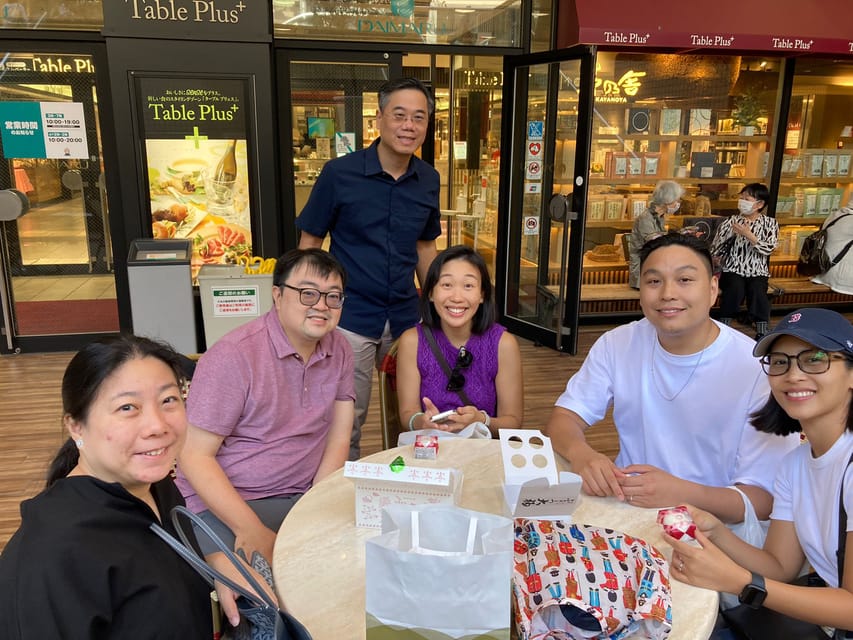
The limited group size is one of the strongest features here. With no more than six people, you are less likely to be herded from counter to counter. You can ask what a food is, how it is made, and where to find it later. The guides also seem to adjust the experience to personal interests. Jennifer’s time with Kaoru, for example, included customized food stops, local history, and plenty of conversation.
More Food Tours in Kyoto
- Kyoto Night Foodie Tour in Gion (9+ dishes + 6 Sake tastings)
★ 5.0 · 1,762 reviews - Kyoto: Gion Food Tour 13 Dishes at 4 Eateries
★ 5.0 · 408 reviews - Kyoto Foodie Night Tour
★ 5.0 · 376 reviews
Rokkakudo gives the morning a quiet start
The first stop is Rokkakudo Temple, a peaceful change from the commercial streets around Sanjo and Karasuma. Beginning here gives the walk some balance. You are not simply moving from one food stall to another. You get a short cultural stop before the food portion gathers speed.
Rokkakudo is also useful as a reminder that Kyoto’s food culture sits beside religious and neighborhood life. The route connects ordinary shopping with places of worship, rather than treating the market as an isolated attraction.
The supplied schedule places this visit after the 10:00 AM meeting, with Yaoyaichi listed at 10:30 AM. That suggests a fairly brisk start. If you like to linger at temples, take photographs, or settle in slowly, keep an eye on the guide’s timing.
Yaoyaichi shows Kyoto’s seasonal side
Yaoyaichi is described as a local market featuring seasonal produce and unusual ingredients. This stop helps explain what makes Kyoto cooking different from a simple collection of familiar Japanese dishes. You are looking at ingredients first, then tasting prepared food.
One example is bread popular with Japanese locals. That may sound modest beside sashimi or wagyu, but it is exactly the sort of detail that can make a food tour useful. A local favorite does not have to be famous abroad. It can be something ordinary that people in the area actually buy.
At Yaoyaichi, your guide can also explain how local foods are made and point out ingredients you might otherwise pass without noticing. The exact tasting changes according to availability and the preferences of the group, so do not book this expecting a fixed menu.
This is a good stop for curious eaters who want context. If you only want large portions, it may feel light. The food is served as a series of samples, not as a full lunch, and additional purchases are not included.
Daimaru’s basement turns shopping into a food lesson
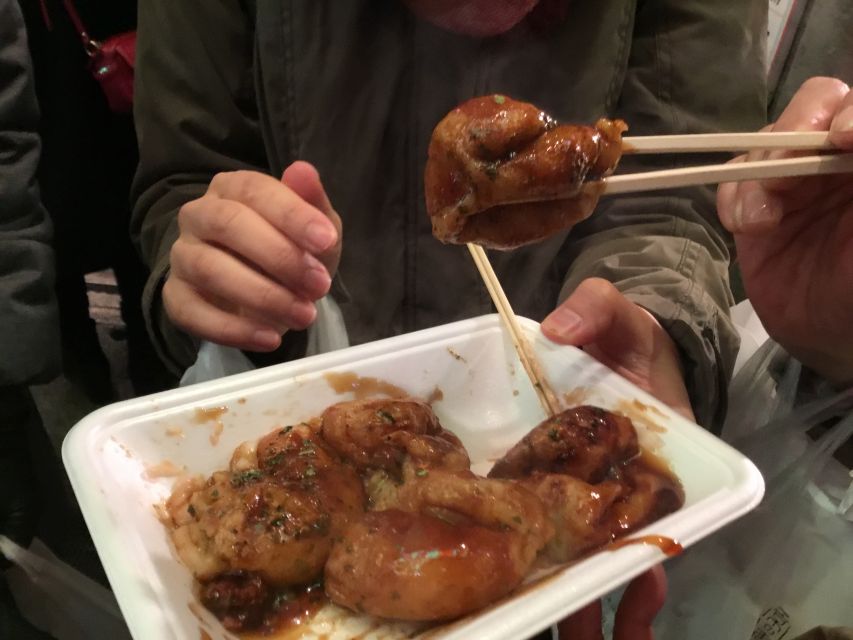
The basement food floor of Daimaru Department Store gives you a different view of Kyoto’s food scene. Instead of open-air market stalls, you get the polished, highly organized side of Japanese food shopping. It is a useful contrast with Nishiki Market.
The listed examples include nikuman, or steamed meat buns, and wagashi from a wagashi shop with centuries of history. The bun offers an easy, savory introduction to a familiar Japanese comfort food. The wagashi brings in a more delicate side of local eating, with sweets that are closely tied to Japanese tea and seasonal presentation.
I like this part of the route because it broadens the idea of what counts as a food market. A department-store basement can be one of the best places to see the care given to presentation, packaging, and gift foods. It is also a practical place to spot items that travel well, though any purchases come at your own cost.
The timing listed for Daimaru is 11:30 AM. Since food tours can slow down when the market is busy, you should allow some flexibility in your wider Kyoto plans.
More Markets and Food Halls in Kyoto
- Nishiki Market Brunch Walking Tour (7 Tastings + Brunch)
★ 5.0 · 1,355 reviews - Kimono Tea Ceremony at Kyoto Maikoya, NISHIKI
★ 5.0 · 911 reviews - Kyoto Nishiki Market Food and Culture Walking Tour
★ 5.0 · 412 reviews - Kyoto: Nishiki Market Tea Ceremony with Koto Performance
★ 4.8 · 294 reviews
Nishiki Market is the main event
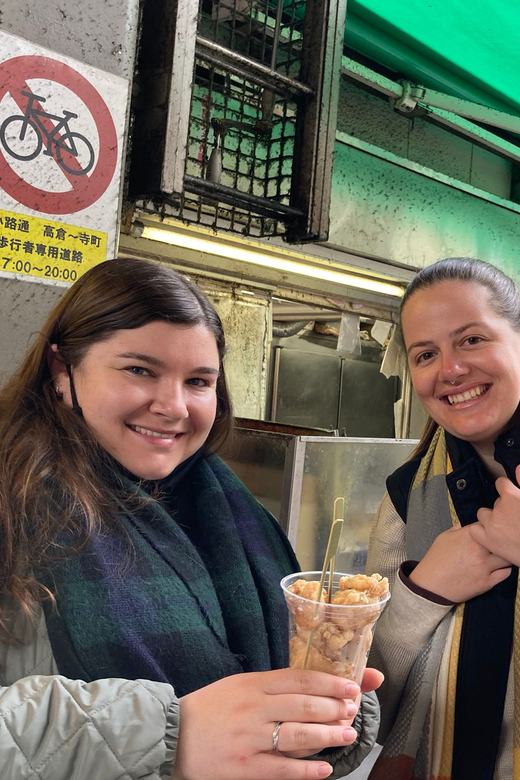
Nishiki Market is often called Kyoto’s Kitchen, and this is where the route reaches its most concentrated food stop. The market offers a long run of shops and counters, with products ranging from fresh ingredients to ready-to-eat bites.
The point of having a local guide here is not simply to walk down the arcade. It is to know which shops are worth your limited stomach space and how to approach foods you may not recognize. The experience includes examples such as sashimi and skewered wagyu beef, though the final selection can change.
Sashimi gives you a taste of fresh seafood in a market setting. Skewered wagyu offers a more substantial bite, but it is also the kind of item that can quickly increase your spending if you continue buying after the included tastings. The guide introduces recommended shops, and you are free to keep exploring and purchase extra food independently.
Nishiki can be crowded. One participant specifically noted that Rikka handled the busy market well and led the group to favorite stores. That is an important benefit of a small tour. You can focus on the food instead of trying to read every sign or decide between dozens of counters on your own.
The market is not a quiet museum. You may need to move with care, wait your turn, and keep your bag close. Large bags and luggage are not allowed on the tour, which is sensible in tight market lanes. Bring only what you need.
Nishiki Tenmangu Shrine provides a calm finish
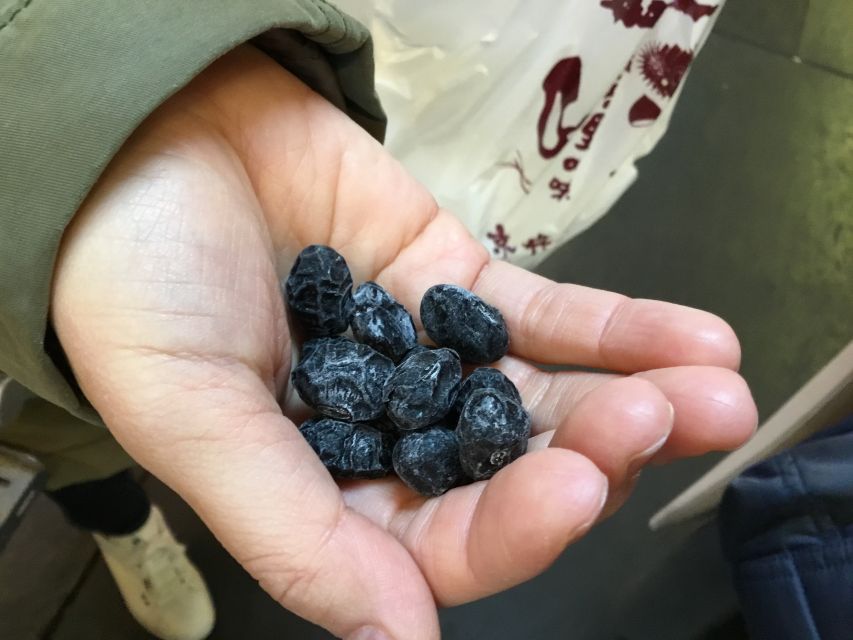
The walk ends at Nishiki Tenmangu Shrine. After several food stops and the noise of the market, a shrine is a fitting place to slow down. You can reflect on the route, ask final questions, and decide which foods or shops you want to revisit.
The ending also gives the experience a cultural shape. It begins with Rokkakudo Temple and closes at a shrine, with markets and food between them. That structure makes the tour feel like a short introduction to Kyoto neighborhoods rather than a meal with a few facts added on.
The supplied schedule lists the end at 2:00 PM, although the activity is also described as three hours. Because of that mismatch, check the confirmed starting and ending times before you commit to a train, museum entry, or lunch reservation afterward.
What you actually eat
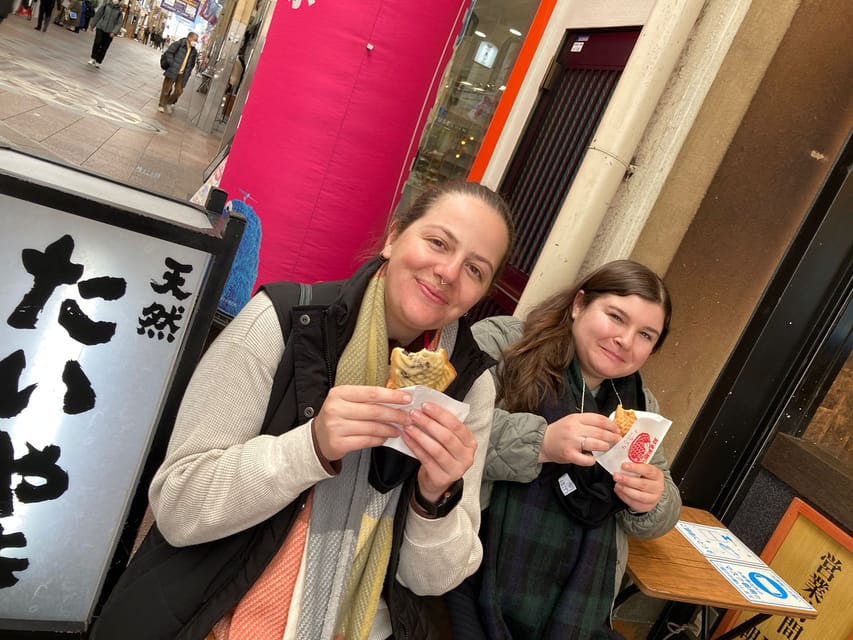
The tour includes six to ten local foods. That is enough variety to make the experience feel substantial, but not enough to replace a full day of eating. Think of it as a guided tasting route with room to buy more.
Possible items include:
- Bread popular with local Japanese shoppers at Yaoyaichi
- Nikuman at Daimaru
- Wagashi from a long-established sweets shop
- Sashimi at Nishiki Market
- Skewered wagyu beef
- Other seasonal or shop-specific samples
The selection is not fixed. Food availability and group preferences affect what you receive, so you should be open to substitutions. Before booking, contact Cooking Sun if you have allergies or dietary limits. Meat, seafood, wheat, and dairy may all appear in the tastings.
The tour does not include food purchased beyond the six to ten included samples. Bring a payment method for extras, but do not arrive with a large shopping bag or suitcase.
How good is the value at $77?
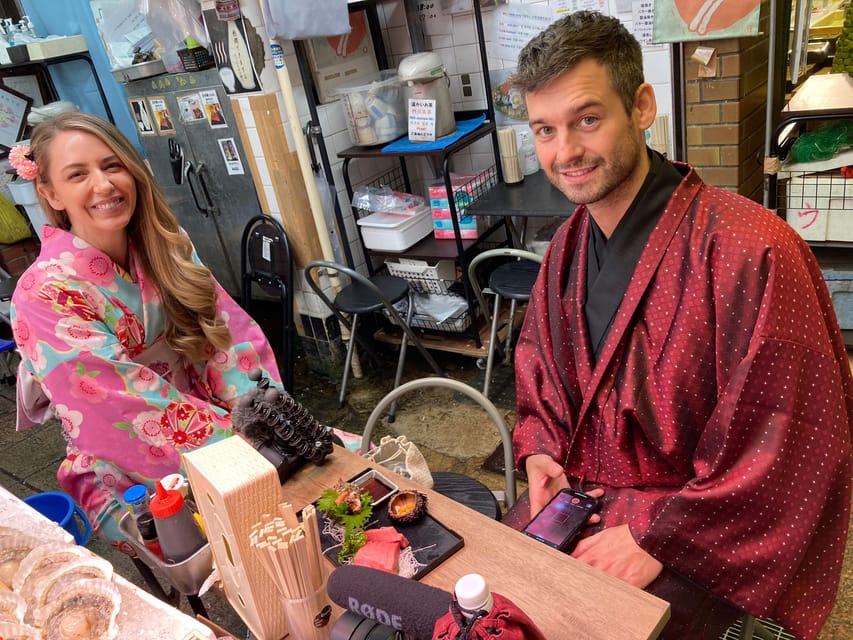
At $77 per person, the price is reasonable if you want a guide to choose the stops and explain what you are eating. You are paying for six to ten samples, an English-speaking guide, a small group, and access to several different food settings in one outing.
The value is strongest for a first visit to Kyoto. You do not need to spend the morning guessing which Nishiki Market stalls are worthwhile, and you get recommendations for restaurants, cafés, shops, and food souvenirs. Those suggestions can continue to pay off after the tour ends.
The price is less attractive if you are already comfortable shopping in Japanese markets or prefer to choose every bite yourself. It also does not cover transportation, extra food, or personal purchases. Treat the $77 as the cost of orientation and guided tastings, not an all-you-can-eat meal.
The small group helps justify the cost. Guides can answer questions and adjust the conversation more easily with six people than with a large bus group. Kaoru was praised for making the route personal, while Rikka was noted for showing a less obvious temple and helping with photographs. Guide assignments can change, but those details show the kind of service to hope for.
Who will enjoy this food walk?
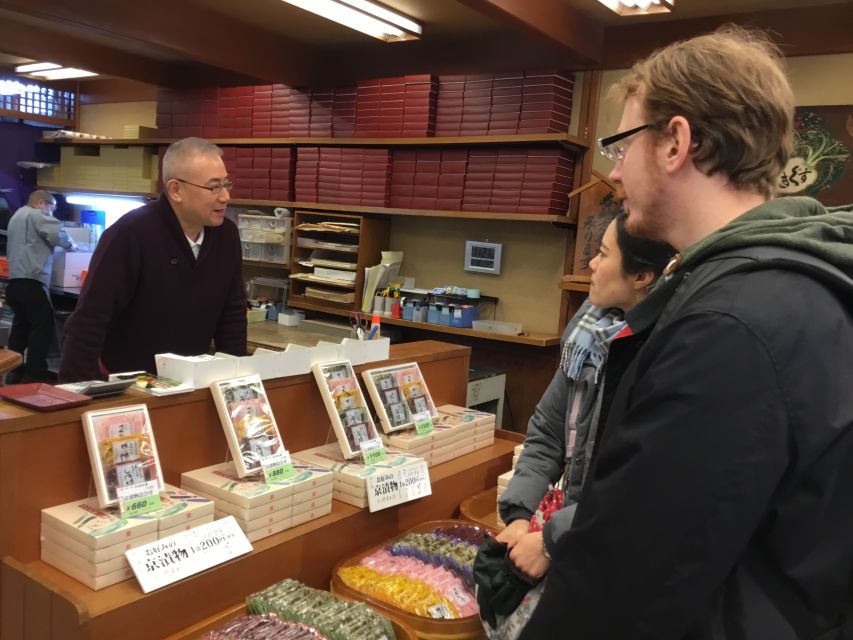
I would recommend it to you if you:
- Want a first look at Kyoto food without planning every stop
- Prefer small groups to large organized tours
- Enjoy learning how foods are made and why they matter locally
- Want both markets and cultural sights
- Need help finding food souvenirs
- Like asking questions and receiving restaurant suggestions
- Have three to four flexible morning or early afternoon hours
It is especially useful early in a Kyoto stay. You can return to favorite shops later, use the restaurant advice for another meal, and recognize ingredients in other markets.
I would be more cautious if you have limited mobility. The activity is not suitable for people with mobility impairments, and the route includes walking through a crowded market. It may also disappoint you if you want a formal sit-down meal, a fixed menu, or a tour focused only on high-end cuisine.
Families and mixed-interest groups may find the route appealing because it combines food, history, shopping, and religious sites. Still, young children may need help keeping pace and waiting at busy counters. Since the group is small, a slow-moving party can affect the whole experience.
Practical advice for a smoother morning
Wear shoes you can walk in for several hours. Avoid bringing luggage or a large bag, since it is not permitted. Eat a light breakfast so you can enjoy the samples without arriving overly hungry or overly full.
Keep your schedule open after the stated finish. The activity description gives a three-hour duration, but the published stop times run from 10:00 AM to 2:00 PM. Confirm the final timing with the provider before planning a tight connection.
If you have allergies, send the provider a message before reserving. The tour may include seafood, meat, wheat, and dairy, and the tastings can change. Do not assume a substitution will be available on the day.
Bring a little extra money for foods you want to buy after the included samples. The guide will introduce recommended shops, but those additional items are not covered by the tour price.
Free cancellation is available up to 24 hours before the activity for a full refund, and you can reserve now and pay later. That flexibility helps if your Kyoto plans are still shifting.
Should you book the Nishiki Market tour?
Book this tour if you want a friendly, compact introduction to Kyoto food with a real local guide and a group capped at six. The strongest features are the range of settings, the tenable mix of sweet and savory samples, and the practical shop and restaurant advice.
Skip it if you want a full meal, dislike walking in crowded areas, or have strict dietary requirements that the provider cannot confirm in advance. Also check the timing discrepancy before booking.
With a current 5.0 rating from 17 ratings, the most praised parts are clear: warm guides, personal attention, tasty samples, useful local recommendations, and a good blend of food and culture. At $77, it is a solid choice for a first Kyoto visit, especially if you want Nishiki Market to feel less like a maze of counters and more like a place with a story.
FAQ
How long does the Taste of Nishiki Market Walking Food Tour last?
The activity is advertised as three hours. The listed schedule runs from a 10:00 AM meeting to a 2:00 PM finish, so confirm the exact timing before booking other plans.
Where does the tour meet?
The meeting point is Starbucks Coffee Kyoto Sanjo Karasuma Building Store, at 85-1 Mikura-cho, Karasuma Building 1F KDX Kyoto, in Nakagyo Ward, Kyoto City.
Where does the tour finish?
The tour ends at Nishiki Tenmangu Shrine.
How many foods are included?
Six to ten local foods are included. The selection can change based on participant preferences and what is available at the shops.
Is the tour conducted in English?
Yes. The activity includes a live English-speaking guide.
Can I join with luggage or a large bag?
No. Luggage and large bags are not allowed. Comfortable walking shoes are recommended.
Are transportation and extra food included?
No. Transportation to and from the meeting and departure points is not included. Food purchased beyond the included tastings is also your responsibility.
More Walking Tours in Kyoto
- Kyoto Geisha Walking Tour: Gion District & Hidden Gems
★ 4.7 · 3,273 reviews - Kyoto: Gion Magical Night Walking Tour with Geisha Trivia
★ 4.9 · 2,393 reviews - Kyoto: Gion Geisha District Walking Tour – Stories of Geisha
★ 4.7 · 2,187 reviews - Night Walk in Gion: Kyoto’s Geisha District
★ 4.5 · 2,003 reviews
Just added in Kyoto
- The “Golden Route” and Ancient Japan by DIAMIR Erlebnisreisen – 14-Day Tour★ 2.0 · 2 reviews
- Japan: Castles & Cuisine by G Adventures – 6-Day Kyoto to Osaka Tour★ 4.5 · 4 reviews
- Cycle Japan by Explore! – 13-Day Kyoto to Tokyo Tour★ 4.7 · 12 reviews
- Cycle Japan by Intrepid Travel – 11-Day Kyoto to Tokyo Tour★ 4.8 · 2 reviews
- Classic Japan by Intrepid Travel – 11-Day Kyoto to Tokyo Tour★ 4.4 · 14 reviews
- Ancient & Modern Japan 14-Day Tour by Exodus Adventure Travels★ 4.4 · 40 reviews
- 5 Day Cultural Adventure of Kyoto, Nara & Osaka by Tourist Journey★ 2.5 · 2 reviews
- 12 Days Kinosaki Onsen Escape: A Journey Through Japan’s Timeless Towns by UME Travel★ 4.8 · 5 reviews
Markets and Food Halls, compared.
Tokyo Tsukiji Fish Market Food and Culture Walking Tour
Read our review →
Senkyaku Banrai Toyosu Manyo Club Onsen Experience in Tokyo
Read our review →
Nishiki Market Brunch Walking Tour (7 Tastings + Brunch)
Read our review →
Tokyo Sushi Making Class in Tsukiji with Professional Chef
Read our review →
Tsukiji Fish Market Guided Tour and Sushi Making with Pro Chef
Read our review →Browse the lists this tour appears in