
Reviewed · TEA CEREMONIES
Tea ceremony by the tea master in Kyoto SHIUN AN
Slow down for a cup of matcha. Shiun An offers a small, traditional tea ceremony near Daitoku-ji, where you watch a tea master work, learn the meaning behind the ritual, and prepare your own bowl. I especially like the small group size and the chance to enjoy two bowls of matcha with two Japanese sweets. The main drawback is the location: this quiet residential area can be hard to find, and some visitors have found the stairs and floor seating uncomfortable.
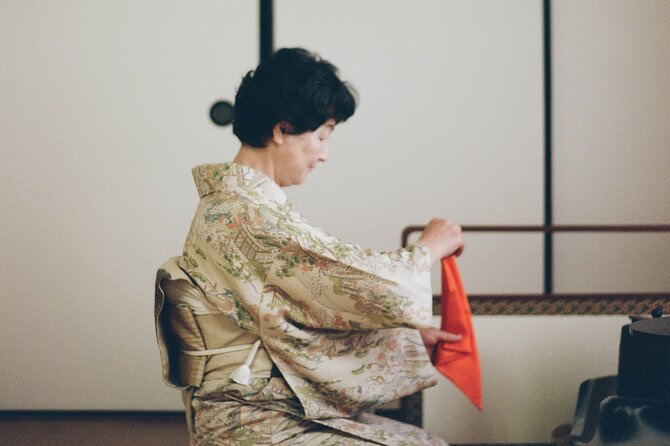
This is not a quick green-tea demonstration in a shop near Gion. It takes place in a traditional home setting, with a tea room, seasonal decoration, white socks, a folding fan, and proper tea utensils. The experience lasts about 45 minutes, though several descriptions suggest allowing closer to an hour, and it costs $33.03 per person. That is a fair price for a personal lesson with a qualified tea master, especially if you want something calmer and more serious than a standard sightseeing stop.
In This Review
- Key points at a glance
- Why Shiun An feels different from a tourist tea show
- Finding the tea room near Daitoku-ji
- Entering the room: scrolls, flowers, and quiet details
- Watching the formal preparation
- Making your own bowl of matcha
- Sitting on the floor and handling the stairs
- The best timing for a northern Kyoto day
- How the $33.03 price holds up
- Who will enjoy this Kyoto tea ceremony most
- Booking and practical details
- Should you book Shiun An?
- FAQ
- How long does the Shiun An tea ceremony last?
- How many people can attend each session?
- What is included in the price?
- Can I make my own matcha?
- Where does the ceremony take place?
- Is transportation included?
Key points at a glance
- Tea master instruction: Learn the basic movements, tools, and meaning of the ceremony from a host with a formal Tea Name, indicating full professor qualification.
- Small traditional setting: Sessions usually have up to six people, increasing to eight during peak seasons.
- Two bowls of matcha: Watch the formal preparation, then make your own bowl with a tea scoop and whisk.
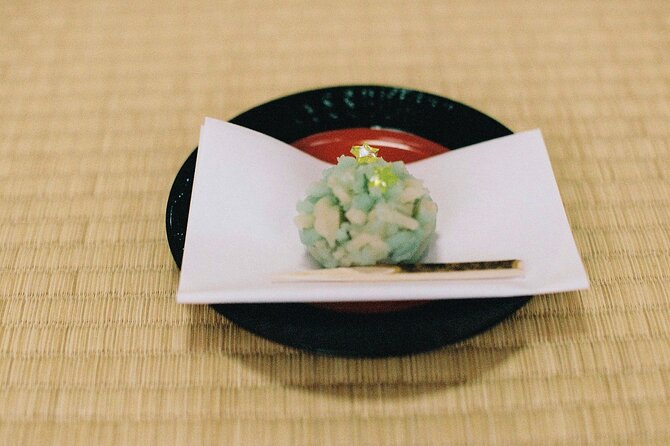
- Seasonal sweets included: You receive two kinds of Japanese sweets, served alongside the matcha.
- Near Daitoku-ji and Kinkaku-ji: The ceremony is in northern Kyoto, about four bus stops from the Golden Pavilion area.
- Practical warning: The house can be difficult to locate, and floor seating or stairs may be challenging for some people.
Why Shiun An feels different from a tourist tea show
Kyoto has plenty of places where you can drink matcha in a few minutes. Shiun An offers something more deliberate. The tea ceremony is treated as a learned art tied to Zen practice, self-discipline, and attention to small details.
That does not mean you need to know anything about Zen or Japanese tea before arriving. The host explains the sequence, the utensils, and the reason the room looks the way it does. You are not expected to memorize complicated rules. Instead, you learn by watching first, then trying the basic preparation yourself.
The setting matters. Shiun An is near Daitoku-ji, a major Zen Buddhist temple complex with a long connection to Japanese tea culture. Many important priests studied there, and the temple’s influence reaches well beyond religion. It helped shape the quiet, disciplined style of culture associated with the tea ceremony.
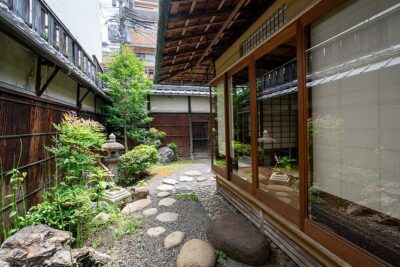
The experience also takes place away from Kyoto’s busiest sightseeing streets. That can make the journey less convenient, but it gives the ceremony a calmer start. You move from buses and city traffic into a small residential neighborhood, then into a room designed for stillness.
More Tea Ceremonies in Kyoto
- Kyoto: Tea Ceremony in a Traditional Tea House in Kiyomizu
★ 4.9 · 3,519 reviews - Kyoto: Tea Ceremony Ju-An at Jotokuji Temple
★ 4.9 · 3,207 reviews - Kyoto: 45-Minute Tea Ceremony Lesson Experience
★ 4.3 · 2,378 reviews
Finding the tea room near Daitoku-ji
The meeting point is 955-1 Idacho, Kamigyo Ward, Kyoto, postal code 602-8302. This is not in Gion, beside Kyoto Station, or directly at Kinkaku-ji. Plan your route before leaving, and allow extra time for the final walk.
The location is close to public transportation, but finding the house may take some patience. Google Maps and local bus directions are useful, though the address is in a residential area rather than beside a large attraction. One practical approach is to use the subway for the main part of the journey and then take a taxi or Uber from the nearest station. The short ride has been described as costing about 1,000 yen, though fares can change.
If you are coming from Kinkaku-ji, the Golden Pavilion is only about four bus stops away. That makes Shiun An a sensible pairing with northern Kyoto sightseeing. You can visit Kinkaku-ji first, then continue to the tea ceremony, or schedule the ceremony before seeing the temple when you want a quiet break from sightseeing.
Do not cut the timing close. The ceremony begins at a set time, and getting lost in a residential neighborhood is a poor way to begin a lesson in calm and precision.
Entering the room: scrolls, flowers, and quiet details
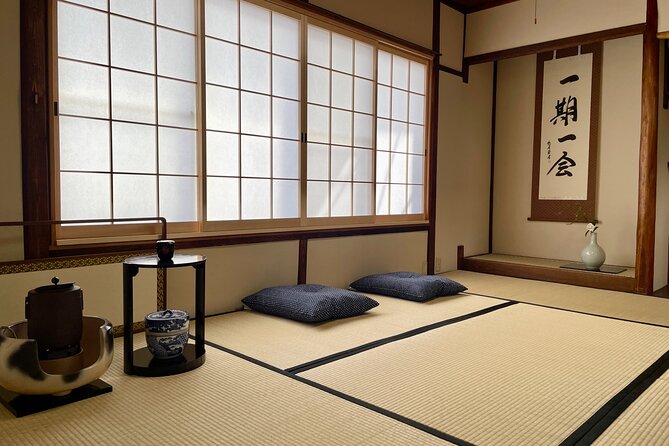
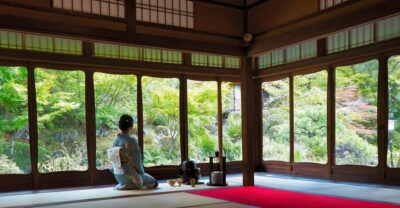
At the start, the host brings you into the tea room and gives you time to notice its decoration. You see a hanging scroll and a seasonal flower arrangement, both selected to suit the occasion.
These details are not simply decoration. The room’s layout, the scroll, and the flowers help set the mood and express the season. The tea ceremony pays attention to the immediate moment, so the objects chosen for the room carry meaning even before the tea is served.
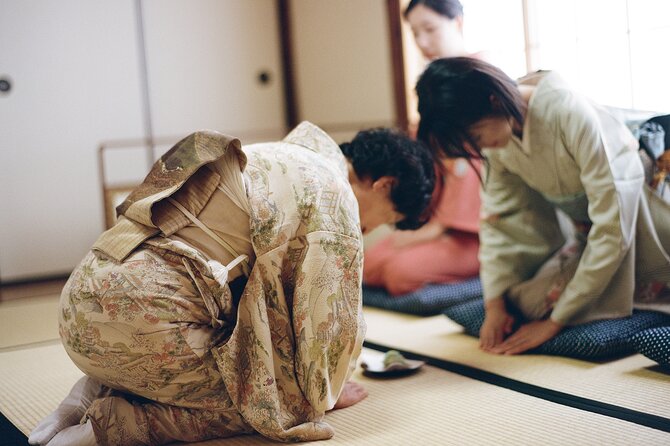
You will also receive white socks and a folding fan. The socks are useful on the tatami floor, while the fan is part of traditional tea etiquette. These small items help you take part in the ceremony in the proper setting rather than simply watching a performance from a chair.
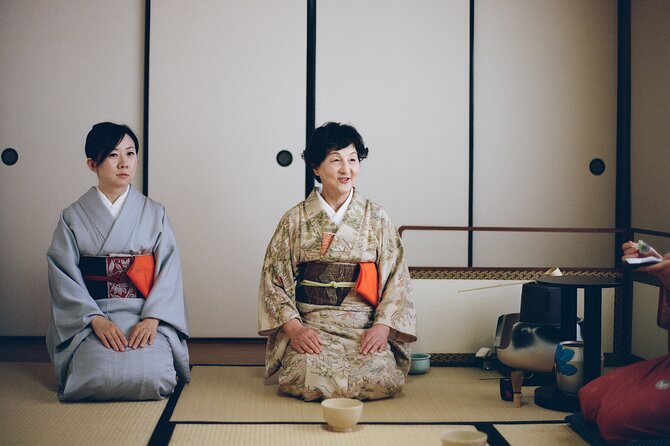
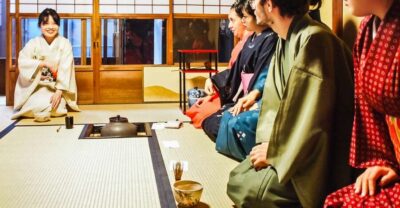
The atmosphere is intimate. Sessions normally allow a maximum of six people, although that can rise to eight in busy periods. A smaller group gives you a better chance to see the tea tools and follow the movements. It also makes it easier to ask questions during the explanation and hands-on portion.
Watching the formal preparation
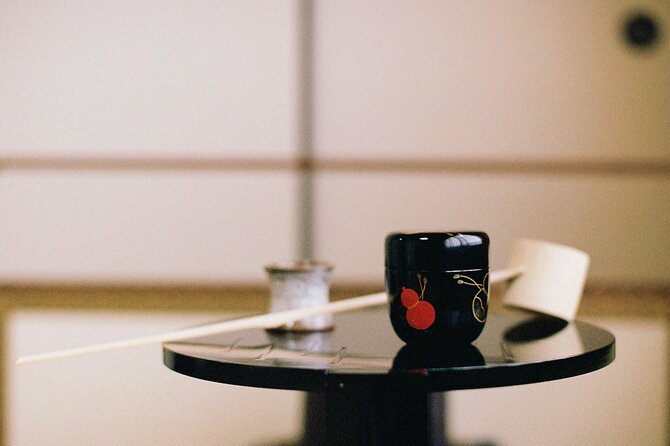
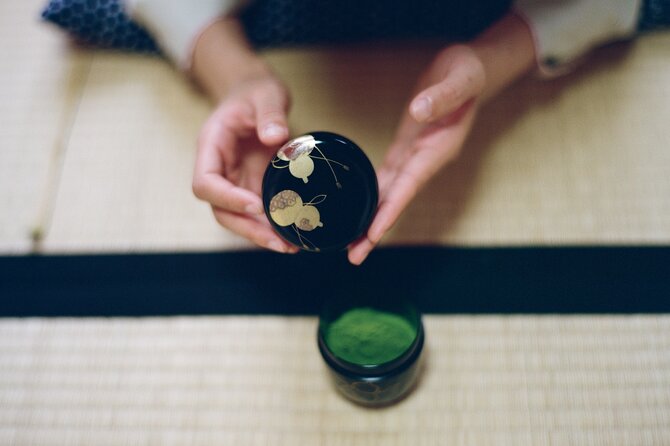
Before the host prepares the tea, you receive an explanation of the utensils and the order of the ceremony. The tea container, bowl, tea scoop, and bamboo whisk each have a role. The movements may look simple at first, but the ceremony depends on careful placement, measured gestures, and a clear rhythm.
The tea master performs the preparation while you watch. A seasonal sweet is served with the matcha, giving you a traditional contrast between the bitter tea and the sweet confection. The sweets are not an afterthought. They are part of the balance of the experience and help prepare your palate for the matcha.
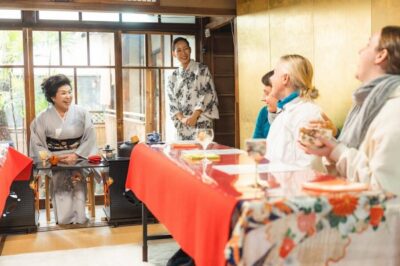
An English translator assists with the explanation. This is one of the strongest features for English-speaking visitors because the ceremony contains many small customs that would otherwise be easy to miss. The translation also gives you a chance to ask questions after the demonstration.
The tea master has a Tea Name, a title connected with full professor qualification in the tea tradition. You can expect instruction from someone with formal training rather than from a staff member giving a memorized tourist talk. The host’s precision is part of what makes the ceremony feel serious without becoming stiff.
A completely different kind of day out:
- PERFECT KYOTO 1-Day Bus Tour
★ 5.0 · 13,518 reviews - [Kyoto & Nara Day Tour] Sagano Scenic Railway & Nara Park & Fushimi Inari Taisha Thousand Torii Gates & Togetsukyo Bridge & Bamboo Grove & Kimono Forest (Departing from Osaka)
★ 4.9 · 10,942 reviews - Kyoto: Fushimi Inari, Kinkakuji, Bamboo Grove 1 Day Bus Tour
★ 4.8 · 4,316 reviews - Kyoto: Gion Make Your Own Chopsticks with Engraving Option
★ 5.0 · 3,465 reviews
Making your own bowl of matcha
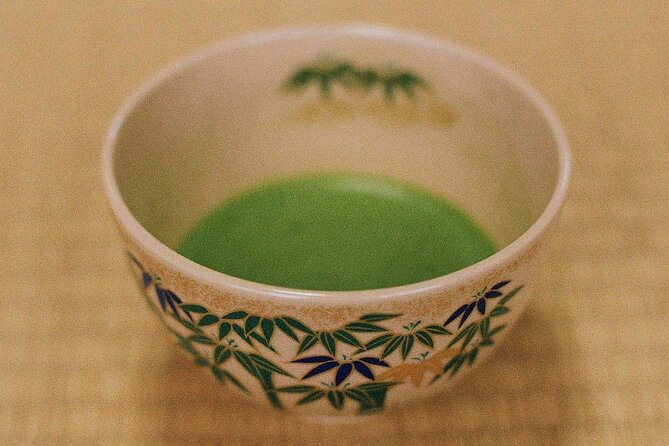
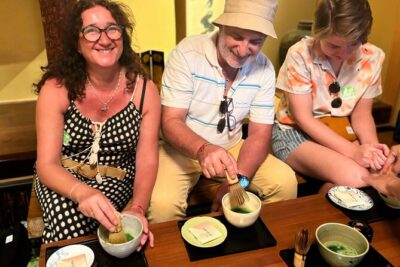
The hands-on part comes after you have watched the tea master. You receive the tools and learn how to make your own bowl of matcha, using the scoop and whisk provided for the session.
This is where the ceremony becomes more than a cultural demonstration. You feel how much technique goes into what appears to be a simple cup of tea. The host guides you through the basic movements and allows time for questions.
Your bowl will probably not look or taste exactly like the tea master’s. That is part of the lesson. The tea master has years of practice, while you are learning the first steps. The contrast helps you understand that the ceremony is a craft built through repetition.
You receive two bowls of matcha during the experience. One is served as part of the formal ceremony, and another comes through your own preparation. Two sweets are also included. That makes the $33.03 price easier to justify, since you are paying for instruction, cultural context, equipment, tea, and a personal attempt rather than only a small serving of matcha.
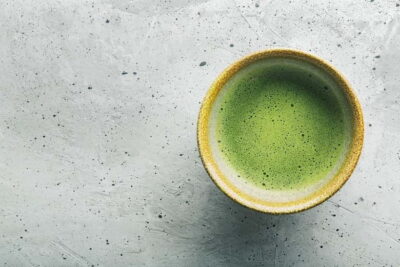
If you do not enjoy the strong, grassy taste of matcha, the experience may not change your mind about the flavor. The point is not simply to drink a sweetened tea. It is to learn how matcha is prepared and why the ritual has lasted.
Sitting on the floor and handling the stairs
The traditional room uses tatami flooring, and the preferred position involves sitting on the floor. You may be invited to sit in the formal kneeling position, but comfort is taken into account. Some people have been unable to maintain the position for the full time and were still made welcome.
One visitor specifically noted that a husband who could no longer sit on the floor was accommodated and included. That suggests the hosts are considerate, but you should still contact them in advance if you have mobility concerns. The supplied information also notes difficult stairs, so this is not the best choice for anyone who needs step-free access.
White socks are provided for the tatami. The folding fan is included as well. These touches are practical and help you follow the customs of the room, but they do not remove the physical demands of a traditional house.
Service animals are allowed. Pickup and drop-off are not included, so you must arrange your own transportation to and from the meeting point.
The best timing for a northern Kyoto day
Shiun An works especially well as part of a northern Kyoto itinerary. Daitoku-ji is nearby, and Kinkaku-ji is roughly four bus stops away. You can build a day around the tea ceremony instead of crossing the city only for a 45-minute activity.
Kinkaku-ji is one of Kyoto’s most famous sights, and it can be busy. A tea ceremony afterward gives you a slower setting and a chance to reflect on the temples you have seen. Daitoku-ji offers a stronger connection to the Zen and tea traditions that explain why this ceremony matters.
The ceremony ends back at the same meeting point. There is no hotel pickup, guided transfer, or onward transportation included. That keeps the price down, but it means you need a clear plan for the next part of your day.
Because the ceremony is short, it can fit between other activities. Still, the journey to the residential neighborhood and the need to arrive on time make it less suitable as a last-minute addition from central Kyoto.
How the $33.03 price holds up
At $33.03 per person, Shiun An sits in the affordable range for a structured cultural activity in Kyoto. The value comes from the combination of personal instruction and included items.
You receive the use of tea bowls, tea containers, tea scoops, and whisks. You also receive white socks, a folding fan, two bowls of matcha, and two types of Japanese sweets. The small group format matters too. A class for six people gives you far more contact with the host than a large presentation would.
The price is especially reasonable if you want an introduction rather than a full-day study of tea ceremony. You learn the purpose of the room, watch a formal serving, taste the tea, and make your own bowl. That is enough to give you a strong first understanding without taking half a day.
The tradeoff is convenience. You pay less partly because there is no pickup or drop-off, and the location is not in the most central sightseeing district. If you value a quick walk from Gion or a polished venue designed for large groups, this may feel less easy. If you value personal attention and a traditional home atmosphere, the price works well.
Who will enjoy this Kyoto tea ceremony most
I would recommend Shiun An to anyone who wants cultural context, not just a photo opportunity. It suits people curious about Japanese customs, matcha preparation, Zen connections, and the meaning behind formal gestures.
It is also a good choice for families. A young child who already enjoys Japanese culture may find the tools, sweets, and chance to whisk tea engaging. The calm pace can be a welcome change from crowded temples and packed sightseeing schedules.
Couples and solo visitors can also enjoy the setting. One person described having the tea ceremony alone, which created a particularly quiet and focused experience. Group size can vary, so you should not assume every session will feel private, but the normal limit is six people.
This is less suitable if you want to stay near Gion, dislike matcha, cannot manage stairs, or strongly prefer chairs to tatami seating. It may also disappoint anyone expecting a long formal ceremony performed entirely for observation. The key feature is participation. You watch, learn, taste, and then try it yourself.
Booking and practical details
Mobile tickets are available, and confirmation is provided when you book. The experience has a 4.8 rating from 76 reviews, with 96 percent recommending it, which fits the pattern of praise for the warm hosts, clear translation, traditional setting, and hands-on instruction.
Tell the operator about food allergies before attending. Japanese sweets are included, and the ceremony is built around tasting both sweets and matcha.
Free cancellation is available if you cancel at least 24 hours before the start time. Changes or cancellations made within 24 hours are not refunded, and the experience may be canceled if the minimum number of participants is not reached. In that case, you are offered another date or experience, or a full refund.
Should you book Shiun An?
Book it if you want a quiet, small-group introduction to tea ceremony with real instruction and a traditional setting. The tea master, translator, sweets, equipment, and two bowls of matcha make this a strong value at $33.03.
Skip it if convenient central access is your top priority, or if stairs and floor seating will cause trouble. For most visitors who can handle those practical points, Shiun An offers a thoughtful way to understand Kyoto beyond its famous temple gates. Pair it with Daitoku-ji or Kinkaku-ji, leave extra time to find the house, and you will get much more from the session.
FAQ
How long does the Shiun An tea ceremony last?
The experience lasts approximately 45 minutes. Some descriptions refer to the session as about an hour, so allow a little extra time around the scheduled start.
How many people can attend each session?
The usual maximum is six people. During peak seasons, the group can increase to a maximum of eight.
What is included in the price?
The experience includes tea bowls, tea containers, tea scoops, tea whisks, white socks, a folding fan, matcha tea, and two kinds of Japanese sweets.
Can I make my own matcha?
Yes. After watching the tea master, you receive instruction and the opportunity to prepare your own bowl of matcha using the provided equipment.
Where does the ceremony take place?
The meeting point is 955-1 Idacho, Kamigyo Ward, Kyoto, 602-8302, Japan. The activity ends at the same location.
Is transportation included?
No. Pickup and drop-off are not included. The location is near public transportation and is close to Daitoku-ji, with Kinkaku-ji about four bus stops away.
Just added in Kyoto
- The “Golden Route” and Ancient Japan by DIAMIR Erlebnisreisen – 14-Day Tour★ 2.0 · 2 reviews
- Japan: Castles & Cuisine by G Adventures – 6-Day Kyoto to Osaka Tour★ 4.5 · 4 reviews
- Cycle Japan by Explore! – 13-Day Kyoto to Tokyo Tour★ 4.7 · 12 reviews
- Cycle Japan by Intrepid Travel – 11-Day Kyoto to Tokyo Tour★ 4.8 · 2 reviews
- Classic Japan by Intrepid Travel – 11-Day Kyoto to Tokyo Tour★ 4.4 · 14 reviews
- Ancient & Modern Japan 14-Day Tour by Exodus Adventure Travels★ 4.4 · 40 reviews
- 5 Day Cultural Adventure of Kyoto, Nara & Osaka by Tourist Journey★ 2.5 · 2 reviews
- 12 Days Kinosaki Onsen Escape: A Journey Through Japan’s Timeless Towns by UME Travel★ 4.8 · 5 reviews
Tea Ceremonies, compared.
Tea Ceremony in a Traditional Tea House in Kiyomizu
Read our review →
World Heritage Kyoto & Nara Uji Authentic Matcha Experience
Read our review →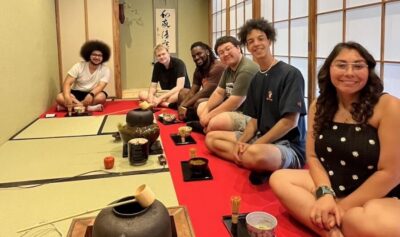
Browse the lists this tour appears in