
Reviewed · TEA CEREMONIES
The Art of Mindful Living: Tea Ceremony in Kyoto
Slow down in an old Kyoto home. This one-hour tea ceremony pairs a calm garden, organic Uji matcha, and a clear introduction to Japanese tea culture. I especially like the hands-on matcha making and the chance to enjoy a traditional sweet while Naomi explains what is happening. The main drawback is the location, which is away from central Kyoto and takes extra planning to reach.
I also like the friendly, flexible setup. Food allergies and vegan requests can be accommodated, chairs are available, and children can have cocoa instead of matcha. Kimono rental adds a memorable photo opportunity, but it costs extra and requires more time.
In This Review
- Key points at a glance
- Entering a Traditional Kyoto Home
- Naomi’s Introduction to Matcha and Tea Etiquette
- Watching the Ceremony With a Traditional Sweet
- Making Your Own Matcha
- The Garden and Photo Time
- Kimono Rental: Worth the Extra ¥4,000?
- Group Size, Private Sessions, and the Atmosphere
- Is $44.42 Good Value?
- Getting There and Planning Your Day
- Who Will Enjoy This Tea Ceremony Most?
- Should You Book It?
- FAQ
- How long does the tea ceremony last?
- Where does the tea ceremony take place?
- What is included in the price?
- Can I rent a kimono?
- Is hair styling or makeup included with kimono rental?
- Can children attend?
- Can food allergies and vegan diets be accommodated?
- Is the experience private?
- What is the cancellation policy?
Key points at a glance
- Organic Kyoto Uji matcha: The tea is made with organic matcha from Uji, the area near Kyoto famed for green tea.
- You make your own bowl: After watching Naomi prepare the tea, you whisk matcha yourself.
- A peaceful old residence: The ceremony takes place in a traditional Japanese house with a garden for photographs.
- Useful cultural explanation: You learn about tea ceremony history, types of Japanese tea, matcha’s effects, and proper drinking manners.
- Optional kimono and photo props: Kimono rental costs ¥4,000, while private sessions can include a traditional umbrella and imitation sword for photographs.
- Flexible for families and diets: Vegan food, allergy adjustments, chairs, and cocoa for children are available.
Entering a Traditional Kyoto Home
The meeting point is Kaze no Waon at 14 Utanokitanoinchō in Kyoto’s Ukyo Ward. This is not a quick stop in the middle of the downtown shopping streets. It is in the direction of Kinkakuji Temple and Arashiyama, so you need to allow time for the journey.
That distance is the clearest tradeoff. The setting feels quieter than a central tourist venue, but you will not simply wander into it between Nishiki Market and Gion. Check your route before leaving, and avoid squeezing the ceremony between tightly timed sights.
Once inside, you find a room set aside for tea ceremony and a garden behind the house. Chairs are provided, which matters if kneeling on the floor would be uncomfortable. You may bring a stroller onto the premises, but it cannot go inside the building.
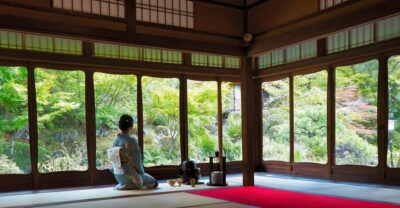
The house and garden give the activity a sense of place. This is not just a cup of matcha served in a modern café. You are entering a private-feeling residential setting where the room, garden, utensils, sweets, and movements all form part of the lesson.
More Tea Ceremonies in Kyoto
- Kyoto: Tea Ceremony in a Traditional Tea House in Kiyomizu
★ 4.9 · 3,519 reviews - Kyoto: Tea Ceremony Ju-An at Jotokuji Temple
★ 4.9 · 3,207 reviews - Kyoto: 45-Minute Tea Ceremony Lesson Experience
★ 4.3 · 2,378 reviews
Naomi’s Introduction to Matcha and Tea Etiquette
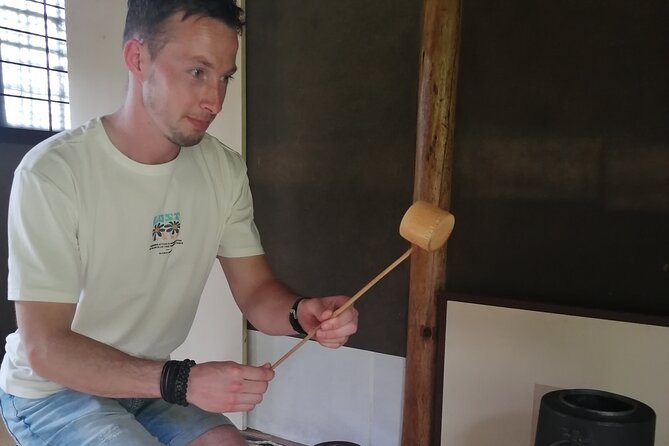
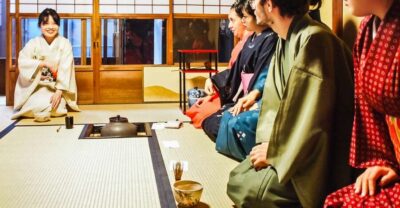
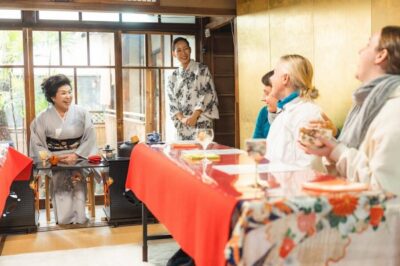
Naomi leads the ceremony and explains the basics in English. Her approach is friendly rather than stiff. The aim is not to make you memorize every rule of a formal tea school. It is to help you understand why the host prepares the tea in a particular way and how you should receive and drink it.
The introduction covers several useful subjects:
- The history of Japanese tea ceremony
- The effects and character of matcha
- Different types of matcha and Japanese tea
- How to drink matcha
- The meaning behind the ceremony’s movements and manners
This explanation gives the activity more weight than a simple demonstration. Matcha can look mysterious if you have only seen it in lattes or desserts. Learning how powdered tea is whisked, served, and consumed helps you notice details that might otherwise pass by.
You also get a sense of the ceremony as a quiet practice. One family described the session as a kind of meditation that could even change the way you think about drinking coffee at home. That is a useful way to approach the hour. You do not need to treat it as a test of perfect manners. Pay attention, slow down, and let the ritual set the pace.
Watching the Ceremony With a Traditional Sweet
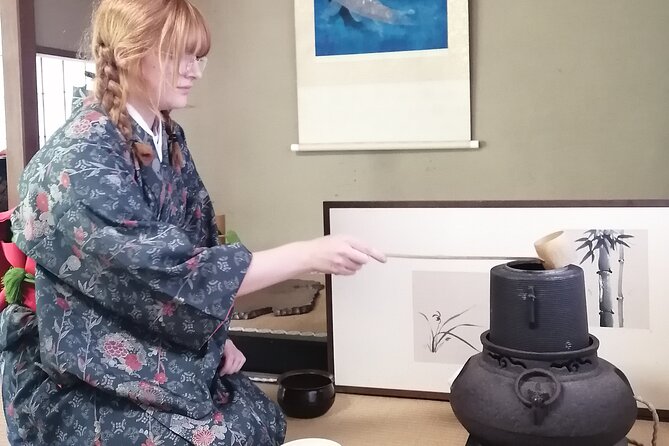
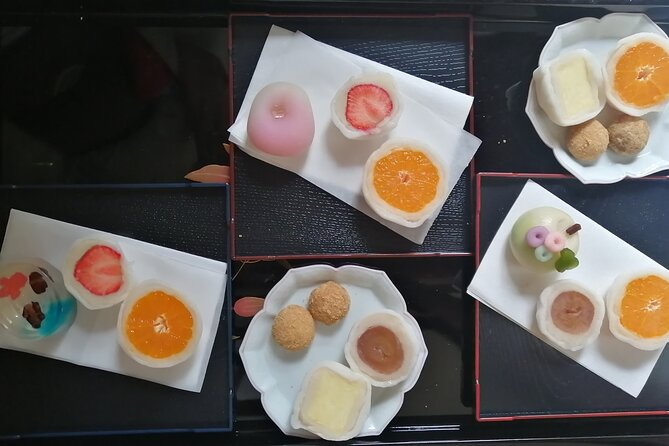
Naomi prepares matcha while you watch. You receive one Japanese sweet with the tea, and you can choose between a traditional bean paste sweet and fresh fruit daifuku.
The sweet is not an afterthought. Japanese tea sweets are designed to balance the bitter edge of matcha, and the soft texture of mochi gives the tasting a different feel from an ordinary biscuit with a hot drink. A small cookie may also be included with the sweet selection.
If you want to try both sweet options, there is an additional charge of ¥500 per person. That is worth considering if food is an important part of your cultural experiences, but the included serving is enough to complete the basic ceremony.
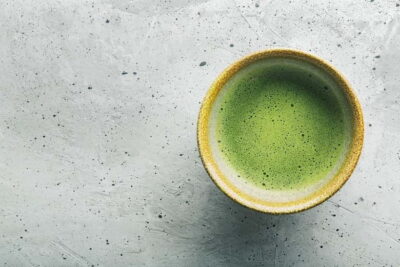
The matcha comes from Uji in Kyoto and is organic. It is not presented as a famous luxury brand, but it is described as high quality, and the emphasis is on its flavor and origin rather than packaging. If you normally avoid strong green tea, ask questions and take the drinking instructions seriously. Matcha has a concentrated taste, and the sweet helps soften it.
Alcoholic drinks are not included. That is hardly a surprise for a tea ceremony, but it is useful to know if you are comparing this with a broader food-and-drink activity.
Making Your Own Matcha
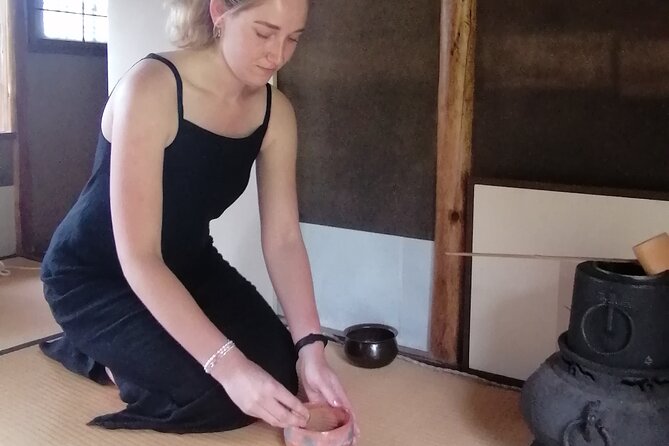
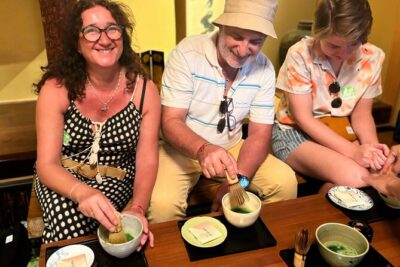
The most enjoyable part for many people is the practical lesson. After seeing Naomi prepare the tea, you get to whisk matcha yourself.
This turns the hour from a performance into a shared activity. You can feel the movement of the whisk, see the powder change as it mixes with water, and then taste the result. Your bowl may not look exactly like Naomi’s, and that is part of the fun. The point is to understand the method and take part in the ritual.
For families, this is a strong feature. Children may not sit patiently through a long formal ceremony, but making the tea gives them something active to do. Children who do not want matcha can have cocoa instead.
The format also works well for first-time visitors. You do not need previous tea experience, and the ceremony is short enough to fit into a day of sightseeing. At about one hour, it offers a focused cultural activity without taking over your entire afternoon.
A completely different kind of day out:
- PERFECT KYOTO 1-Day Bus Tour
★ 5.0 · 13,518 reviews - [Kyoto & Nara Day Tour] Sagano Scenic Railway & Nara Park & Fushimi Inari Taisha Thousand Torii Gates & Togetsukyo Bridge & Bamboo Grove & Kimono Forest (Departing from Osaka)
★ 4.9 · 10,942 reviews - Kyoto: Fushimi Inari, Kinkakuji, Bamboo Grove 1 Day Bus Tour
★ 4.8 · 4,316 reviews - Kyoto: Gion Make Your Own Chopsticks with Engraving Option
★ 5.0 · 3,465 reviews
The Garden and Photo Time
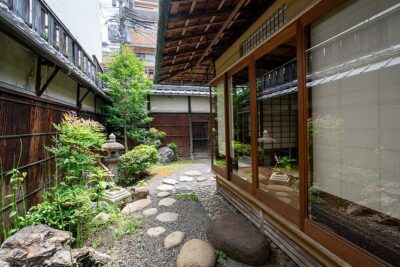
The garden behind the house is one of the experience’s best features. It provides a tranquil place for photographs before the ceremony and during the visit.
You can take pictures during the tea ceremony as well. The garden offers several places for photos, and the traditional setting gives your images more character than a staged backdrop. If you rent a kimono, this is where the extra cost can make more sense.
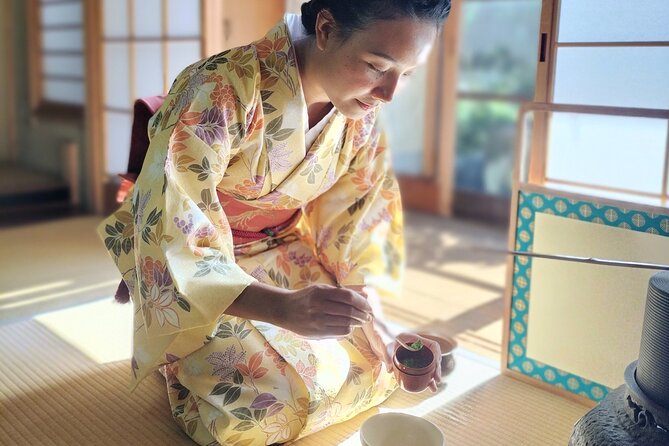
The kimono option costs ¥4,000 and is worn during the ceremony. A hakama rental costs ¥8,000. A baby romper-style kimono is available for ¥600, and an undershirt rental costs ¥200.
Hair styling and makeup are not provided. Hair accessories are available for kimono renters to use freely, so you can add a little finish without booking a separate beauty service. Plan your expectations accordingly. This is a tea ceremony with clothing rental, not a full dressing and photography package.
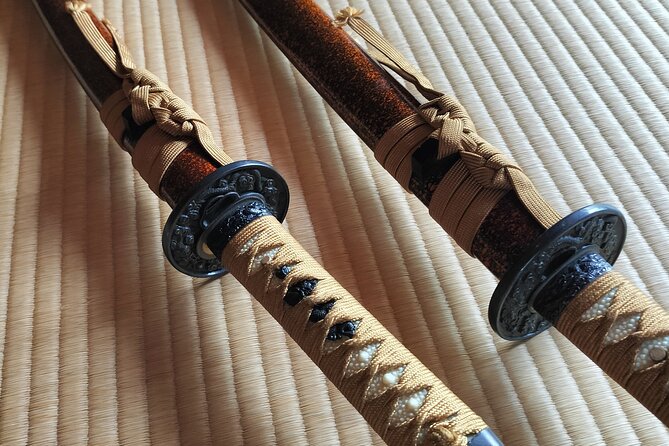
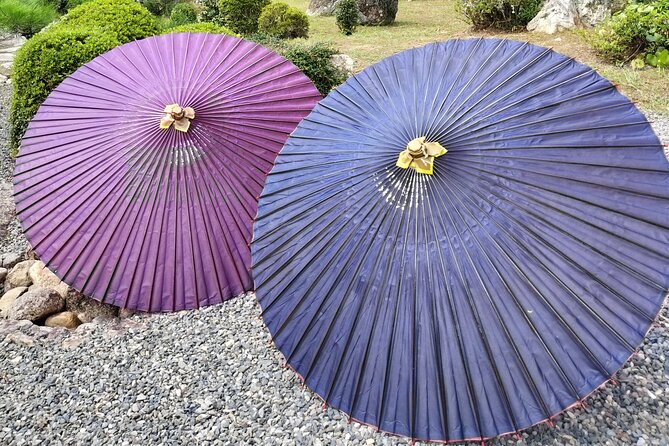
A special private-session option allows you to use a Japanese traditional umbrella and an imitation sword for photos. These are only for pictures, not for any practical use. In rainy weather, photographs can be taken while you hold an umbrella. You cannot take outdoor kimono photographs in the rain without an umbrella and remain dry.
Kimono Rental: Worth the Extra ¥4,000?
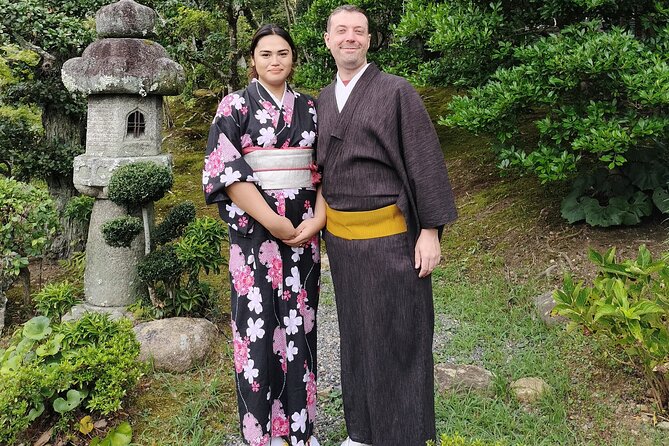
The kimono option is tempting, especially if you want a visual memory of Kyoto beyond temple gates and street scenes. The garden, old house, and tea room create a natural setting for the clothing.
Still, allow extra time. Putting on a kimono takes longer than slipping into a jacket, and the session itself lasts only about an hour. If your schedule is tight, the basic tea ceremony may be the better choice.
I would choose the kimono if you have room in your day and care about photographs. I would skip it if your main goal is learning about matcha and trying the whisking yourself. The tea ceremony remains the core activity, and you do not need a costume to appreciate it.
Families should also look at the child options. The baby romper-style kimono is inexpensive compared with the adult rentals, while cocoa gives younger children a drink that is more familiar than matcha.
Group Size, Private Sessions, and the Atmosphere
Regular group sessions have a maximum of six people. That is a useful limit because a small group makes it easier to see the preparation, ask questions, and receive help when it is your turn to make tea.
Larger groups can sometimes be accommodated, but you should arrange that before booking. One larger family group found Naomi especially accommodating, though a bigger party can naturally feel less intimate than a small one.
Private sessions are also available by advance contact. The supplied price is $44.42 per person for the standard experience, while private-session pricing is not stated. If you want privacy, a specific arrangement, or the umbrella and imitation sword photo option, contact the provider before paying for the booking so the fee is clear.
This point deserves attention because an extra upgrade charge caused confusion for one person. The practical lesson is simple: confirm exactly what private service, clothing rental, or other add-on costs before the day of the ceremony.
Is $44.42 Good Value?
At $44.42 per person, the standard price is reasonable for a one-hour cultural activity in Kyoto, especially because it includes the tea, one Japanese sweet, instruction, and the chance to prepare your own matcha.
You are also paying for the setting. The old residence and garden give the experience a stronger connection to Kyoto than a quick matcha tasting in a generic café. Naomi’s explanations add value for anyone who wants context rather than a photograph with a bowl of green tea.
The value is strongest for first-time visitors who want a manageable introduction to tea ceremony. You receive enough background to understand the basics, but the session is not so long or formal that it becomes hard work.
The price feels less attractive if you are only seeking a drink. A Kyoto café will give you matcha more cheaply and may be easier to reach. This activity earns its price through the house, garden, instruction, ceremony, and hands-on lesson.
Kimono, hakama, the second sweet, and other extras raise the total. Treat those as optional additions, not hidden requirements. The standard visit is complete without them.
Getting There and Planning Your Day
The experience is near public transportation, but it is not near central Kyoto’s main sightseeing areas. Its position toward Kinkakuji and Arashiyama means you should group it with sights in that general part of the city rather than crossing Kyoto solely for a one-hour appointment.
The activity is usually booked about 13 days in advance. That does not mean you must reserve exactly two weeks ahead, but it is a helpful guide if you are visiting during a busy season or want a private session.
Confirmation arrives within 48 hours, subject to availability. The activity ends back at the meeting point, so plan your next stop from there.
The experience depends on good weather. If poor weather causes cancellation, you can receive a different date or a full refund. A minimum number of participants may also apply. If that minimum is not met, you are offered another date or experience, or a full refund.
You can cancel for a full refund up to 24 hours before the start time. Changes or cancellations inside that 24-hour window are not accepted for a refund.
Who Will Enjoy This Tea Ceremony Most?
I would recommend this experience to you if you want a gentle introduction to Japanese culture, especially one that involves doing rather than only watching.
It suits:
- First-time visitors curious about matcha
- Couples seeking a quiet Kyoto activity
- Families who want a short cultural lesson
- People interested in kimono photographs
- Visitors who value a garden and traditional home setting
- Anyone who prefers a small group over a large performance
It may not suit you if you need a central Kyoto location, dislike powdered green tea, or want a full-day cultural program. The activity is brief, and the setting is calm rather than packed with sights.
People with mobility concerns should note that chairs are available, but the building has rules about stroller use. Ask ahead if you need more specific arrangements, since the available information only confirms chairs and that strollers cannot enter the building.
Should You Book It?
Book this tea ceremony if you want to understand matcha, not merely photograph it. Naomi’s warm teaching style, the garden, and the chance to whisk your own tea make the hour feel personal and useful.
I would choose the standard session for the best value. Add the ¥4,000 kimono only if photographs matter enough to justify the extra time and cost. If you want a private session or have more than six people, contact the provider first and confirm every additional fee.
The location is the one real inconvenience. Plan it alongside Kinkakuji or Arashiyama area sightseeing, and the journey becomes much easier to justify. For a quiet, hands-on Kyoto experience away from the city center, this is a thoughtful choice.
FAQ
How long does the tea ceremony last?
The experience lasts approximately one hour.
Where does the tea ceremony take place?
It takes place at Kaze no Waon, 14 Utanokitanoinchō, Ukyo Ward, Kyoto, 616-8201, Japan.
What is included in the price?
The standard experience includes snacks, matcha, Japanese sweets, the tea ceremony explanation, and the chance to make matcha yourself.
Can I rent a kimono?
Yes. Kimono rental costs ¥4,000. Hakama rental costs ¥8,000, a baby romper-style kimono costs ¥600, and an undershirt rental costs ¥200.
Is hair styling or makeup included with kimono rental?
No. Hair styling and makeup are not provided, but hair accessories are available for kimono renters to use.
Can children attend?
Yes. Children can attend, and cocoa is available instead of matcha. A baby romper-style kimono can also be rented.
Can food allergies and vegan diets be accommodated?
Yes. Food allergies and vegan requests can be accommodated. You can choose a traditional bean paste sweet or fresh fruit daifuku.
Is the experience private?
The standard group session has a maximum of six participants. Private sessions are available, but you should contact the provider before booking to confirm arrangements and pricing.
What is the cancellation policy?
You can cancel up to 24 hours before the start time for a full refund. Cancellations or changes made less than 24 hours before the start time are not accepted for a refund. If poor weather or an unmet minimum number of participants causes cancellation, you are offered another date or experience, or a full refund.
Just added in Kyoto
- The “Golden Route” and Ancient Japan by DIAMIR Erlebnisreisen – 14-Day Tour★ 2.0 · 2 reviews
- Japan: Castles & Cuisine by G Adventures – 6-Day Kyoto to Osaka Tour★ 4.5 · 4 reviews
- Cycle Japan by Explore! – 13-Day Kyoto to Tokyo Tour★ 4.7 · 12 reviews
- Cycle Japan by Intrepid Travel – 11-Day Kyoto to Tokyo Tour★ 4.8 · 2 reviews
- Classic Japan by Intrepid Travel – 11-Day Kyoto to Tokyo Tour★ 4.4 · 14 reviews
- Ancient & Modern Japan 14-Day Tour by Exodus Adventure Travels★ 4.4 · 40 reviews
- 5 Day Cultural Adventure of Kyoto, Nara & Osaka by Tourist Journey★ 2.5 · 2 reviews
- 12 Days Kinosaki Onsen Escape: A Journey Through Japan’s Timeless Towns by UME Travel★ 4.8 · 5 reviews
Tea Ceremonies, compared.
Tea Ceremony in a Traditional Tea House in Kiyomizu
Read our review →
World Heritage Kyoto & Nara Uji Authentic Matcha Experience
Read our review →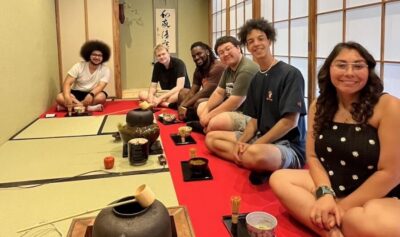
Browse the lists this tour appears in