
Reviewed · TEA CEREMONIES
Tokyo Traditional Tea Ceremony with a Japanese Tea Master
Tea can tell you a lot about Japan. At Ocharu, you taste several kinds, learn how each is brewed, and make your own matcha with guidance from a tea master. I like the small group of up to 12 and the mix of hands-on practice, sweets, and tea education. I also like that you leave with a certificate and group photo, not just a quick cup of green tea.
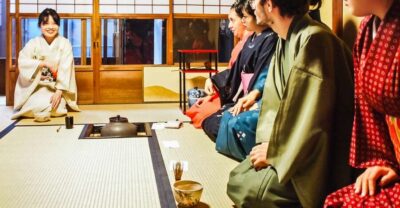
The main thing to know is that this is not the highly formal ceremony many people picture, with a kimono-clad host serving tea while you sit quietly on the floor. It is closer to a relaxed tea lesson and tasting, which is a strength for curious beginners but a possible disappointment if you want a traditional performance.
In This Review
- Key points at a glance
- What kind of tea experience is this?
- Finding Ocharu in Bunkyo
- Wakocha and cake begin the tasting
- Gyokuro sencha shows why preparation matters
- Making matcha gives you an active role
- Genmaicha closes with a comforting cup
- What is included for $33.03?
- Language and teaching style
- Who will enjoy this activity most?
- Practical details before you book
- Should you book the Ocharu tea experience?
- FAQ
- How long does the Tokyo tea experience last?
- Where does the tea experience take place?
- Does the activity begin and end at the same location?
- How many people can join the session?
- What teas are included?
- Is food included?
- Is transportation included?
- Can I cancel for a full refund?
Key points at a glance
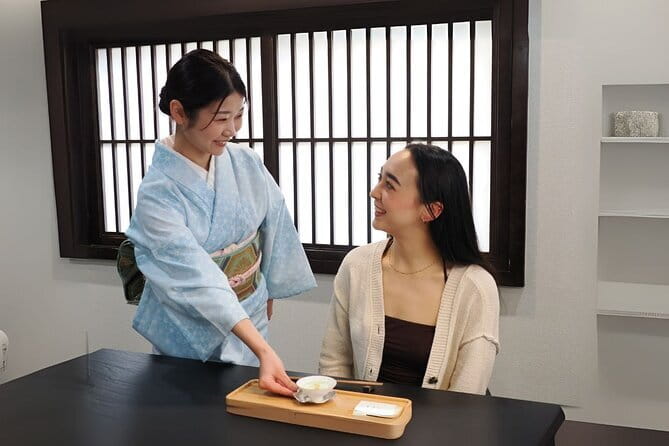
- Five tea styles in about one hour: Taste wakocha, Gyokuro sencha, matcha, Genmaicha, and other Japanese teas during a compact session.
- You make your own matcha: The tea master guides you through whisking with traditional tools.
- Cake and wagashi are included: Sweets are paired with the teas, including a seasonal treat from Ougiya.
- Across from Tokyo University: The Ocharu tea room is in Hongō, Bunkyo City, near public transportation.
- Small-group setting: With no more than 12 people, you have a fair chance to ask questions.
- A practical cultural introduction: The session explains tea preparation, flavors, water temperature, and the place of tea in Japanese culture.
What kind of tea experience is this?
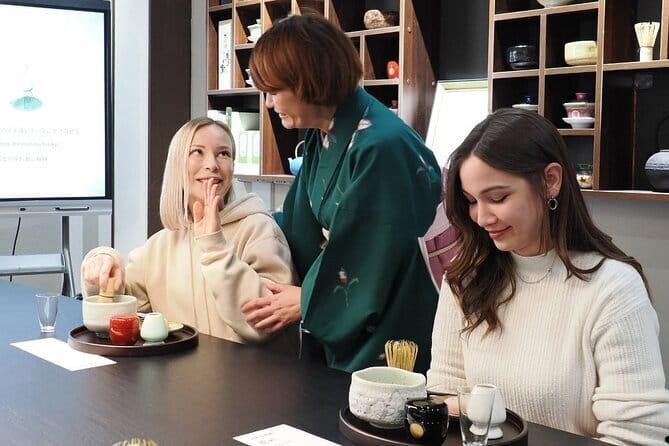
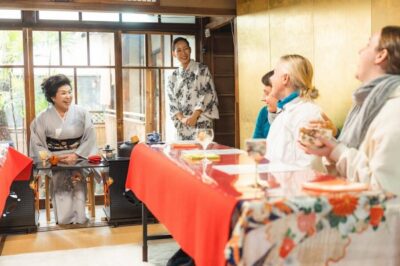
The name may lead you to expect a full tea ceremony. In practice, Ocharu offers a friendly, educational tasting with a matcha-making session. You learn how different teas are produced and prepared, watch the tea master work, taste the results, and take part yourself.
That distinction matters. A formal Japanese tea ceremony can be quiet, highly structured, and ceremonial. This one is more approachable. You are encouraged to learn, taste, and ask questions rather than simply observe.
I see that as a good fit for most first-time visitors. You get a clear introduction without spending several hours on ritual details. The one-hour format also works well between sightseeing stops. Families and people who enjoy trying new flavors should find the pace manageable.
The drawback is that the experience may feel less traditional than its title suggests. One dissatisfied customer expected a geisha-style presentation and sitting on the floor, then found a matcha lesson instead. If that is your picture of a tea ceremony, adjust your expectations before booking.
More Tea Ceremonies in Tokyo
- Matcha Making Class in Tokyo with Authentic Japanese Sweets Set
★ 5.0 · 744 reviews - Tokyo: Traditional Tea Ceremony with a Tea Master
★ 5.0 · 528 reviews - Tokyo: Matcha Making Experience with Mochi Sweets in Asakusa
★ 4.9 · 388 reviews
Finding Ocharu in Bunkyo
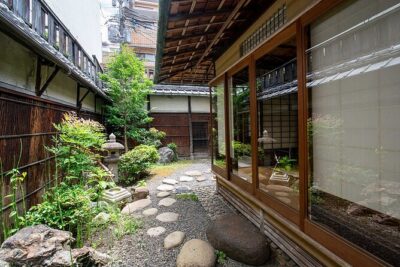
The experience begins at OCHARU, at 6-chōme-2-10 Hongō, Bunkyo City, Tokyo 113-0033. The tea room is across from the University of Tokyo, giving you a useful landmark in a city where addresses can be hard to interpret.
The meeting point is also convenient for building a short Bunkyo outing. You can pair the tea session with time around the university area, though the tea experience itself begins and ends at Ocharu. Transportation to and from the tea room is not included, so you need to make your own way there.
Plan to arrive with enough time to find the entrance. One person reported waiting outside for 30 minutes when the scheduled session did not take place. The provider apologized and said the scheduling problem was being addressed, but the incident is a reminder to check your confirmation carefully and keep the meeting details handy on your phone.
The mobile ticket is useful here. You receive confirmation at booking, and having the address and ticket available makes the arrival process easier.
Wakocha and cake begin the tasting
The session starts with wakocha, Japanese black tea from Shizuoka. This is a useful first cup because it breaks the common assumption that Japanese tea means only green tea.
Wakocha has fruity and floral notes, according to the experience description, and it comes with a slice of cake. The pairing gives you an easy way to notice how sweetness changes the taste of tea. You do not need a trained palate. Pay attention to the aroma first, then take a sip with and without the cake.
This opening also sets the tone. You are not rushed straight into a ritual. You begin with a familiar snack and a tea that may be new to you, then move toward more specialized styles.
The cake is included in the $33.03 price, along with all tea tastings and access to the tea room. That makes the cost reasonable for a short cultural activity in Tokyo, especially since the session includes instruction rather than just a drink.
Gyokuro sencha shows why preparation matters
Next comes Gyokuro sencha, one of Japan’s highest-grade green teas. The tea master prepares it while explaining the process and characteristics that set it apart.
This part is especially valuable because it shows that tea is not simply a matter of pouring hot water over leaves. Water temperature and brewing technique affect the result. One particularly useful detail from the experience is that you get to taste the tea leaves themselves. That gives you another way to notice texture and flavor instead of treating the leaves as something to discard without thought.
The Gyokuro portion is also where the session feels most like a demonstration. You watch the tea master prepare the cup, then taste it as an example of careful brewing.
Seasonal wagashi sweets from Ougiya accompany this part of the tasting. Ougiya has made these confections for generations, and the sweets are chosen to work with the tea. Wagashi are often small and carefully shaped, so the portion is more about balance and presentation than filling you up.
If you enjoy learning through food, this is one of the strongest parts of the hour. You see how tea and sweets are meant to support each other, not compete for attention.
A completely different kind of day out:
- Tokyo Disney Resort – Tokyo Disneyland & Tokyo DisneySea Park Tickets
★ 4.8 · 99,488 reviews - SHIBUYA SKY Ticket
★ 4.7 · 46,509 reviews - JR Whole Japan Rail Pass
★ 4.8 · 29,150 reviews - Mt Fuji and Hakone 1-Day Bus Tour Return by Bullet Train
★ 5.0 · 26,383 reviews
Making matcha gives you an active role
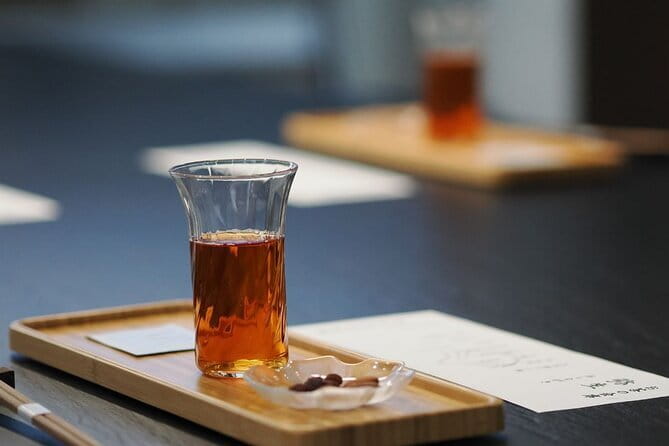
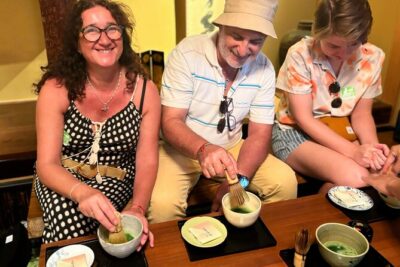
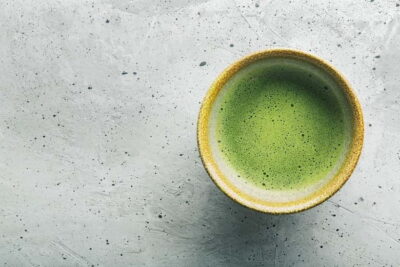
The central hands-on section is the matcha-making session. After watching the tea master, you use traditional tools to whisk your own powdered green tea.
This is where the experience earns its value. You are not only told how matcha is prepared. You try it yourself, with guidance available as you work. The simple act of whisking helps you understand why matcha has a different texture from brewed tea and why the preparation requires care.
You can expect a practical lesson rather than a theatrical display. The tea master explains the process and helps you produce a drink you can taste immediately. That makes the session suitable for beginners, including people who have never handled a bamboo whisk.
Matcha can taste grassy, bitter, creamy, or unexpectedly sweet depending on how it is prepared and what you expect from it. Making your own cup gives you a better sense of the drink than ordering one at a café. It also leaves you with a small skill you can try again at home.
The setting is described as intimate, and the maximum group size is 12. That does not guarantee a private lesson, but it should give the instructor more opportunity to respond to questions than a large tour would.
Genmaicha closes with a comforting cup
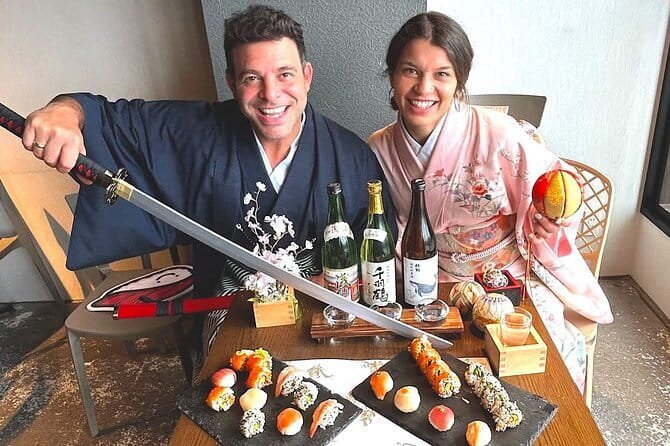
The final tea is Genmaicha, a blend of sencha and roasted rice from Niigata Prefecture. Its toasted rice flavor gives the tasting a gentle finish after the sharper, more concentrated character of matcha and Gyokuro.
This is a smart ending. Genmaicha is familiar and comforting, so it helps bring the tasting back to an everyday style of Japanese tea. You finish with a cup that many people find easier to drink than powdered matcha.
The sequence also gives you a useful range: Japanese black tea, a high-grade green tea, matcha, and roasted-rice tea. The experience description refers to learning about five different teas, though the named itinerary specifically identifies these four styles. You may taste an additional tea during the instruction, but the exact selection can vary.
The hour passes quickly. Several people appreciated that the activity was informative without becoming drawn out. That is an advantage if your Tokyo schedule is full. The trade-off is that there is limited time for extended ceremony, quiet reflection, or a long question period.
What is included for $33.03?
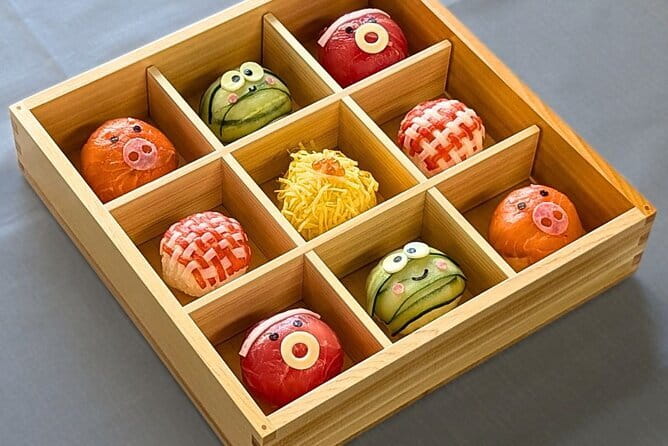
At $33.03 per person, the experience sits in the affordable range for a guided cultural activity in Tokyo. You receive more than a beverage stop:
- Welcome tea and cake
- Sencha tasting
- Matcha-making session
- Genmaicha finale
- Access to the tea ceremony room
- Certificate of completion
- Group souvenir photo
The certificate is a lighthearted keepsake rather than a professional qualification. Still, it gives children and first-time participants something tangible to take home. The group photo adds another memory without requiring you to arrange one yourself.
The value depends on what you want. If you are mainly looking for a quiet cup of tea, a café will cost less. If you want an introduction to Japanese tea, hands-on instruction, several tasting samples, sweets, and a guide in a small group, the price is fair.
Souvenirs and gifts are not included. Neither is transportation to or from Ocharu. There are also no custom requests included beyond the standard session, so you should not assume you can change the menu or create a private format at this price.
Language and teaching style
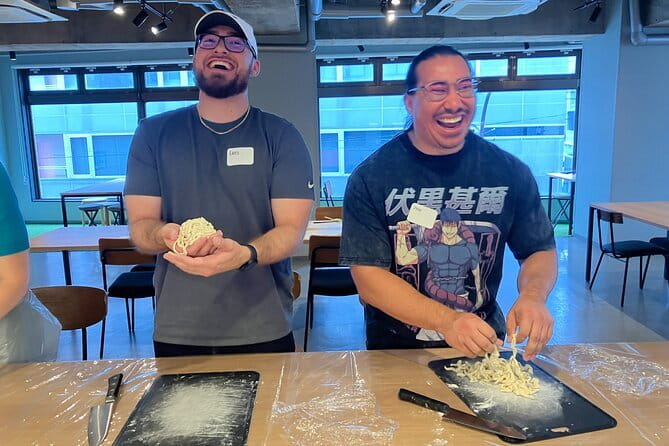
The strongest descriptions of the experience praise the explanations, the relaxed atmosphere, and the chance to learn about different teas. People particularly liked understanding brewing temperatures, tea properties, and the cultural meaning behind preparation.
The provider identifies the leader as a Japanese tea master, and the experience is designed around instruction. Names for individual hosts are not supplied in the available information, though the provider correspondence is signed by Nikolai and Kaho of Sunrise Adventure.
You should confirm the language arrangements if English instruction is important to you. One person reported that the leader did not speak English and that information had to be read from a screen, despite having requested an English-speaking session. Other accounts describe the activity as educational and easy to follow, so this may have been a communication problem on a particular date, but it is worth clarifying before you pay.
This is also a good reason to keep your expectations practical. The value comes from tasting and learning, but the amount of spoken explanation may depend on the host and the language setup for your booking.
Who will enjoy this activity most?
I would recommend Ocharu to you if you want a short, low-pressure way to learn about Japanese tea. It suits:
- First-time visitors who want cultural context
- Families looking for an activity that is both edible and hands-on
- People curious about matcha but unsure how it is made
- Tea drinkers who want to compare several Japanese styles
- Visitors with only one free hour
- Anyone who prefers participation over watching a formal performance
It is less suitable if you want a strict, traditional ceremony with formal etiquette, long periods of silence, floor seating, or a geisha-style presentation. The tea room setting and traditional tools are real parts of the experience, but the format is a lesson and tasting rather than a full ceremonial event.
The group limit of 12 is another point in its favor. A small group makes it easier to see the preparation and ask questions. It may still feel shared rather than private, so book a private experience only if the provider specifically confirms that option.
Practical details before you book
The session lasts about one hour and returns you to the same meeting point. It is near public transportation, but no hotel pickup or return transfer is included.
You can cancel for a full refund if you do so at least 24 hours before the local start time. Cancellations or changes made within 24 hours are not refunded or accepted. That policy is simple, but remember it if your Tokyo plans depend on weather, train delays, or a changing sightseeing schedule.
The activity has been booked more than 10 times in the past week and carries a 4.8 out of 5 rating from 40 ratings, with 95 percent recommendation. Those numbers point to strong overall satisfaction, but the lower scores reveal the two issues you should take seriously: the format may not match the image of a formal tea ceremony, and English communication should be confirmed.
Should you book the Ocharu tea experience?
Book it if you want to taste several Japanese teas, learn why brewing matters, and make matcha yourself in a compact one-hour session. The cake, seasonal wagashi, certificate, and group photo add pleasant extras, while the location across from Tokyo University makes the activity easy to fit into a Bunkyo afternoon.
Skip it if your main goal is a grand, highly formal ceremony with traditional dress and strict ritual. Also pause before booking if you need guaranteed spoken English and have not confirmed how your session will be conducted.
For the price, this is a practical introduction to Japanese tea rather than a staged cultural show. Go expecting a tasting lesson with hands-on matcha preparation, and you are likely to get good value from the hour.
FAQ
How long does the Tokyo tea experience last?
The experience lasts approximately one hour.
Where does the tea experience take place?
It takes place at OCHARU, 6-chōme-2-10 Hongō, Bunkyo City, Tokyo 113-0033, Japan, across from Tokyo University.
Does the activity begin and end at the same location?
Yes. The experience ends back at the Ocharu meeting point.
How many people can join the session?
The activity has a maximum of 12 participants.
What teas are included?
The named tea experience includes wakocha, Gyokuro sencha, matcha, and Genmaicha. The description also refers to learning about five different Japanese teas.
Is food included?
Yes. The experience includes a welcome tea with cake and seasonal wagashi sweets with the tea tasting.
Is transportation included?
No. You must arrange your own transportation to and from the Ocharu Tea Ceremony Room.
Can I cancel for a full refund?
Yes. You can receive a full refund if you cancel at least 24 hours before the experience start time. Cancellations or changes within 24 hours are not refunded or accepted.
Just added in Tokyo
- Tokyo The Izakaya tour★ 5.0 · 131 reviews
- The Best Family-Friendly Tokyo Tour with Government Licensed Guide★ 5.0 · 28 reviews
- Highlights & Hidden Gems of the Shibuya District Private Tour★ 5.0 · 48 reviews
- Tokyo Deep Inside Cycle Tour~3 Hours E Bike Tour around Tokyo★ 5.0 · 50 reviews
- Tattoo-friendly open-air Onsen & drink★ 5.0 · 25 reviews
- Baseball Professional • Yomiuri Giants★ 4.5 · 13 reviews
- Taisho Sushi Making Class in Tokyo★ 5.0 · 89 reviews
- Sushi Making in Tokyo at a Michelin-Listed Restaurant★ 5.0 · 40 reviews
Tea Ceremonies, compared.
Tea Ceremony in a Traditional Tea House in Kiyomizu
Read our review →
World Heritage Kyoto & Nara Uji Authentic Matcha Experience
Read our review →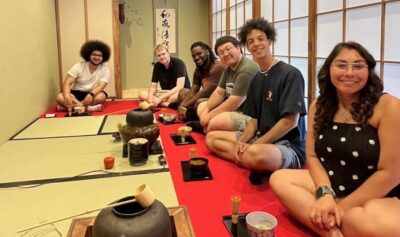
Browse the lists this tour appears in