
Reviewed · MARKETS AND FOOD HALLS
Tokyo Tsukiji Fish Market Food Tour: 15 Stops & Walk Local Street
Fresh fish is only half the story. This small-group Tsukiji tour pairs market browsing with a temple visit, food culture, and guidance on Japanese dining manners. I like the clear route through four different stops, and I like that a Japanese guide takes photos and explains what you are seeing. The main concern is important: the tour details conflict about whether food tastings are included, so you should confirm this before paying $80.
You can expect about two to three hours on foot, with a maximum of 15 people. That size should make it easier to hear the guide and ask questions, but the price feels high if you must buy every bite yourself. Guide Sakura-san has been praised for her sushi etiquette advice and friendly conversation, while another successful outing showed the guide adapting when part of the market was closed for a holiday.
In This Review
- Key points before you book
- Why Tsukiji still rewards a guided walk
- Meeting at Tsukiji Hongwanji Temple
- Tsukiji Jogai Market: 90 minutes of food and browsing
- Passing the small wholesale fish market
- Namiyoke Inari Shrine and the close of the route
- What the guide adds to sushi and dining manners
- Is $80 a fair price for two to three hours?
- Who will get the most from this experience?
- Practical details that affect your day
- Should you book the Tsukiji food tour?
- FAQ
- How long does the Tsukiji tour last?
- Where does the tour begin?
- Where does the tour end?
- Is food included in the tour price?
- How many people can join the tour?
- What is included besides the guide?
Key points before you book
- Four distinct stops: The route includes Tsukiji Hongwanji Temple, Tsukiji Jogai Market, a small wholesale fish market area, and Namiyoke Inari Shrine.
- Food cost needs checking: The description presents tastings as part of the appeal, but the exclusions also say food is not included.
- A guide adds useful context: You receive explanations about food, etiquette, culture, and local history rather than simply following a route.
- Small group, maximum 15 people: This is more manageable than a large walking group in narrow market lanes.
- The tour returns to its starting point: You meet at Tsukiji Honganji Temple and finish there, with no hotel transfer.
- Best for first-time Tsukiji visitors: The route gives you structure, but independent shoppers may prefer to spend the $80 directly on food.
Why Tsukiji still rewards a guided walk
Tsukiji is no longer Tokyo’s main wholesale fish auction site. That role moved to Toyosu, but Tsukiji remains a major destination for seafood shops, prepared food, kitchen goods, and small eateries. The outer market, known as Tsukiji Jogai Market, is the part most visitors come to explore.
I like this tour because it does not treat Tsukiji as just a place to grab sushi. It links the market to two religious sites and uses food as a way to explain Japanese customs. You get a little more sense of how the district works, where its traditions come from, and how to behave around busy food stalls.
Still, a guide cannot remove every market challenge. Walkways can be tight, shops may close for holidays, and the experience is built around walking and standing. If you want a relaxed, sit-down meal or a long shopping session, this route may feel too quick.
The tour is listed at $80 per person and lasts roughly two to three hours. Its value depends heavily on the food question. If several tastings are covered, the price can make sense for a visitor who wants a guided introduction. If you pay for food separately, you are mainly paying for the guide, explanations, photos, and convenience.
More Food Tours in Tokyo
- Tokyo: Shinjuku Food Tour (13 Dishes at 4 Local Eateries)
★ 5.0 · 6,603 reviews - Tokyo: Shinjuku Food Tour (15 Dishes and 4 Eateries)
★ 4.9 · 2,033 reviews - Best of Shinjuku: Izakaya Food Tour (4 Stops, 14+ Tastings)
★ 5.0 · 1,863 reviews
Meeting at Tsukiji Hongwanji Temple
The tour begins in front of Tsukiji Honganji Temple, at 3-chōme-15-1 Tsukiji, Chuo City. This is a useful meeting point because it gives you an easy landmark and starts the outing with something more substantial than a quick orientation beside a shop.
The temple visit lasts about 15 minutes and has no admission charge. Your guide introduces Tsukiji Hongwanji before leading you toward the market. That short pause matters. It gives you a chance to settle into the area and learn that Tsukiji is connected to more than seafood and souvenir snacks.
Do not expect a long temple tour. Fifteen minutes is enough for an introduction and a look around, not a detailed religious or architectural study. I see this stop as a smart opening rather than the main event.
Arrive ready to walk. The meeting point is near public transportation, but transportation to the temple is not included. You will need to make your own way there and should allow enough time to find the entrance before the group sets off.
Tsukiji Jogai Market: 90 minutes of food and browsing
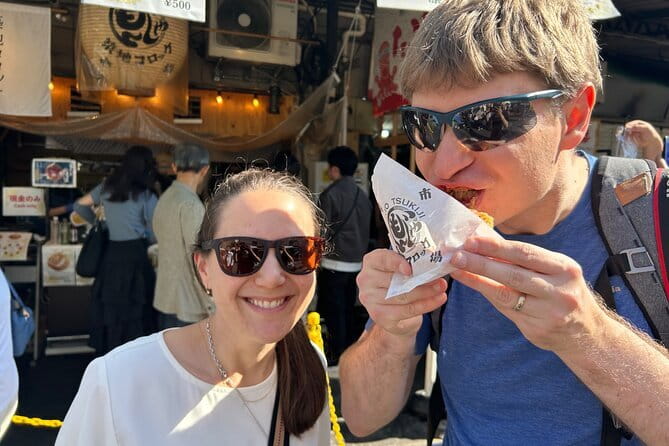
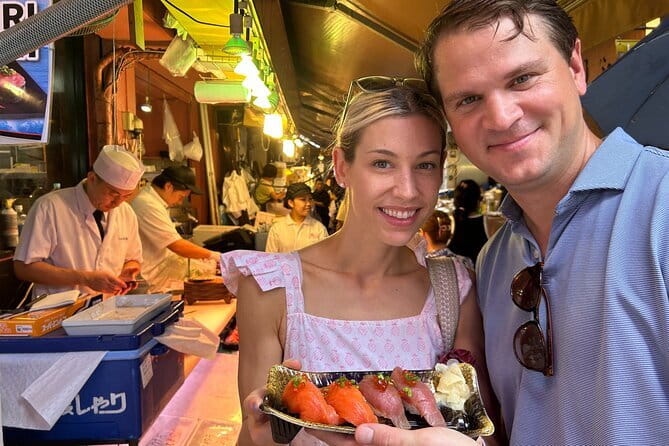
The longest part of the outing is Tsukiji Jogai Market, with about an hour and a half assigned to the shopping street. More than 400 shops are located here, so a guide can save you from wandering without a plan.
This is where the tour has its strongest appeal. Instead of looking at rows of seafood and wondering what is worth trying, you can ask about local foods, ordering customs, and suitable choices. The guide provides explanations about food, etiquette, culture, and history, which can turn a simple snack into a useful lesson.
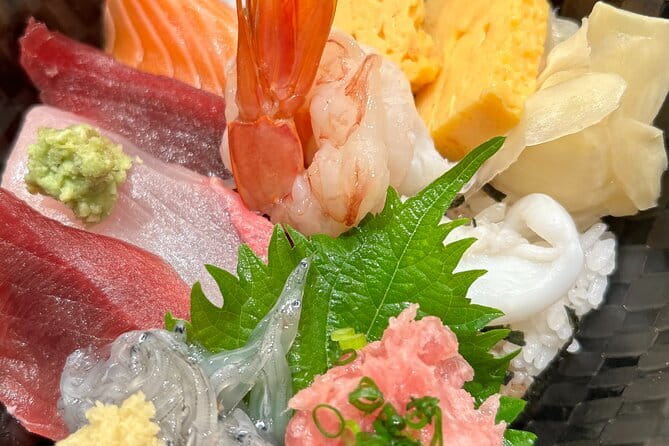
The market is also a good place to notice the difference between shopping for local cooking and eating as a visitor. Some shops focus on ingredients, while others sell ready-to-eat items. The supplied tour description specifically mentions possibilities such as sushi and Japanese oysters, but the payment details create a serious gray area around tastings.
That point deserves careful attention. The overview says food tastings are included, while the exclusions say food is not included. One participant booked expecting covered food and later found the wording unclear. The provider apologized for the misunderstanding and explained that the inclusion information was stated in the tour details, but this did not erase the confusion.
My advice is simple: contact Fuji Tour before booking and ask exactly how many tastings are covered, what foods are included, and how much extra money you should bring. Do not assume that a phrase such as 15 stops means 15 paid tastings. The route may include food-related stops without covering the cost of each item.
A holiday closure can also change the market portion. On one occasion, the guide adjusted the route when some shops were closed and still produced an enjoyable visit with a good lunch. That is a point in the tour’s favor. A flexible guide matters in a market district, where opening days and stock can affect the plan.
The 90-minute block should give you enough time to sample, listen, and browse, but it is not an unlimited food crawl. If you want to stop at every appealing counter, you will need to choose between shopping and keeping up with the group.
Passing the small wholesale fish market
The route then spends about 30 minutes passing through a smaller wholesale market area. The purpose is to see the range of fresh fish and the working side of Tsukiji rather than only the polished food stalls aimed at visitors.
I value this part because it adds context. You see that the district is not merely a row of restaurants. It is also tied to buying, selling, and handling seafood. The description refers to hundreds of kinds of fresh fish, giving you a sense of the market’s range even though the stop is short.
Keep your expectations in check. This is described as passing by a mini wholesale market, not as a behind-the-scenes access tour or fish auction visit. You should expect observation and explanation, not an extended look at commercial operations.
The 30-minute timing is probably enough for a general introduction. It also keeps the tour moving, which is helpful if you are visiting Tsukiji before another Tokyo activity. If fish markets are your main reason for booking, you may want more time than this route provides.
More Markets and Food Halls in Tokyo
- Tokyo Tsukiji Fish Market Food and Culture Walking Tour
★ 5.0 · 3,184 reviews - Tokyo: Tsukiji Fish Market Food and Walking tour
★ 5.0 · 1,724 reviews - Senkyaku Banrai Toyosu Manyo Club Onsen Experience in Tokyo
★ 4.7 · 1,690 reviews - Tokyo: Tsukiji Fish Market Guided Walking Tour
★ 4.9 · 1,397 reviews
Namiyoke Inari Shrine and the close of the route
The last listed stop is Namiyoke Inari Shrine, visited for about 15 minutes. The shrine is associated with Namiyoke Inari, described as the deity who wards off disasters and weathers the waves.
This makes a fitting ending for a market walk. The shrine’s connection to protection and the sea fits the character of a district built around seafood and maritime trade. Your guide can connect the site to the working life of Tsukiji, giving the route a cultural finish rather than ending abruptly at a food stall.
Again, this is a short stop. I would not book the tour expecting a full shrine-focused visit. Its value is in the connection between place, belief, and market culture.
The activity ends back at the meeting point. That is convenient if you need to retrieve luggage or continue from the same part of Tokyo, but it means you should plan your next destination from Tsukiji. Hotel pickup and drop-off are not provided.
What the guide adds to sushi and dining manners
The guide is the main reason to choose this experience over simply walking through Tsukiji on your own. A Japanese guide can explain details that are easy to miss, including how to eat sushi and how to act around food stalls.
Sakura-san received especially warm praise for explaining sushi-eating customs and other etiquette. On one date, cancellations left her with a one-person group, which allowed for a more personal exchange. That kind of attention cannot be promised, but it shows how the format can work when the group is small.
The tour is capped at 15 people, and that is a sensible limit for narrow market lanes. You can generally expect better access to the guide than on a large coach-style outing. Even so, 15 people is not the same as a private tour. If you want constant conversation with the guide, your experience will depend on the final group size.
The guide also takes photos during the experience and sends them afterward. This is a pleasant extra, especially if you are busy choosing food and do not want to keep stopping for pictures. The details do not specify how many photos you receive or how they are delivered, so treat this as a bonus rather than a major reason to pay the fee.
Is $80 a fair price for two to three hours?
At $80, this tour sits in the range where the included benefits must be clear. You are paying for a Japanese guide, a planned route, cultural explanations, photos, and a small group. You are not paying for hotel transfers, transportation to the meeting point, or personal expenses.
If food tastings are genuinely included, the price is easier to defend. You receive an organized introduction to several parts of Tsukiji and do not have to guess what to order. The guide can also help you avoid wasting money on items that do not suit your taste.
If food is not included, the value becomes less convincing. A self-guided visit costs nothing beyond your own purchases, and the district is easy to explore at your own pace. A cheaper walking tour could cover the streets and shops, leaving you with more of your budget for lunch.
I would judge the tour this way:
- Choose it for structure and explanation, not simply access to Tsukiji.
- Consider the price worthwhile if the guide’s food advice and etiquette instruction matter to you.
- Confirm the tasting policy in writing before booking.
- Bring extra money for personal purchases even if some tastings are covered.
- Avoid it if your main goal is a long, flexible meal with no fixed route.
The rating attached to the experience is 5 out of 5 from 139 reviews, with a 99 percent recommendation figure. Those numbers suggest broad satisfaction, but the food confusion is still relevant to your decision because it affects the central value of the tour.
Who will get the most from this experience?
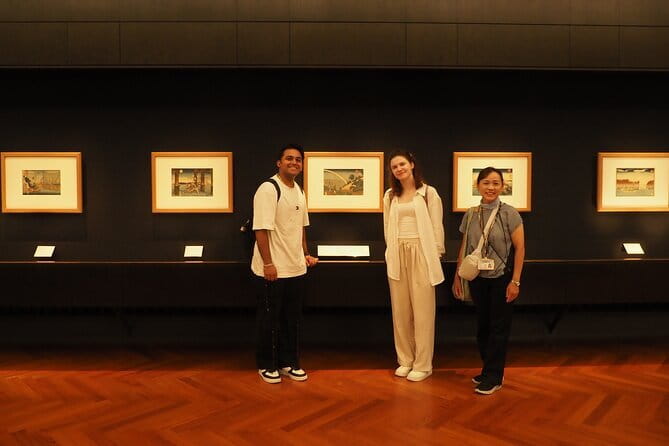
I would recommend this outing to a first-time Tokyo visitor who wants a manageable introduction to Tsukiji. It suits you if you like trying food but also want to understand etiquette, local customs, and the role of the market.
It is also useful for people who feel unsure about ordering at Japanese food counters. Having a guide explain sushi manners and suggest what to try can remove much of the guesswork. The included photos are helpful if you want a record of the morning without constantly using your phone.
Families and mixed-interest groups may also find the route practical because it combines food, markets, a temple, and a shrine. Most people can participate, according to the tour information, though you should be comfortable walking and standing for much of the two to three hours.
I would be less enthusiastic if you have already explored Tsukiji several times. Repeat visitors may prefer to spend their money directly on specialist shops, a longer lunch, or ingredients to take home. Independent eaters who enjoy making their own discoveries may also find the fixed route limiting.
The experience is not designed as a wholesale auction visit. It does not include hotel transportation, and it is not a private food tour. Think of it as a guided orientation to the district with a food focus.
Practical details that affect your day
Confirmation arrives when you book, and the experience uses a mobile ticket. For communication on the day, you need to download WhatsApp because the operator plans to use it for contact.
That requirement is easy to overlook. Install the app before you leave your hotel, and make sure you can receive messages. The meeting point is Tsukiji Honganji Temple, not your accommodation, so transportation planning is your responsibility.
The tour has free cancellation up to 24 hours before the start time. Cancellations made less than 24 hours before the experience are not refunded, and changes inside that period are not accepted. The cut-off follows Tokyo local time.
Weather and closures can affect the feel of the route. A cold or wet day may make the market walk less comfortable, while a holiday may reduce the number of open shops. The guide’s ability to adjust is useful, but it cannot guarantee that every planned food option will be available.
Should you book the Tsukiji food tour?
Book this tour if you want a guided first look at Tsukiji and care about food etiquette, local context, and an orderly route. The four stops create a better sense of place than a quick visit to one sushi counter, and the small-group limit, guide photos, and cultural explanations add real value.
Before you commit, settle the food issue. Ask Fuji Tour whether tastings are included in the $80 price and request examples of what is covered. If the answer is clear and the foods fit your plans, this can be a convenient introduction to one of Tokyo’s best-known market districts.
Skip it if you mainly want the freedom to eat, shop, and set your own pace. In that case, explore Tsukiji independently and put the $80 toward the meal you actually want.
FAQ
How long does the Tsukiji tour last?
The experience lasts approximately two to three hours.
Where does the tour begin?
You meet in front of Tsukiji Honganji Temple at 3-chōme-15-1 Tsukiji, Chuo City, Tokyo 104-8435, Japan.
Where does the tour end?
The activity ends back at the meeting point.
Is food included in the tour price?
The tour details are inconsistent. The overview presents food tastings as included, while the exclusions state that food is not included. Contact Fuji Tour before booking to confirm exactly what you will pay for.
How many people can join the tour?
The group has a maximum of 15 participants.
What is included besides the guide?
The price includes a Japanese guide, explanations about food, etiquette, culture, and history, plus photos taken during the tour that are sent afterward. Hotel transfers, transportation to the meeting point, and personal expenses are not included.
Just added in Tokyo
- Very popular in Harajuku♡Animal petting zoo★ 4.6 · 39 reviews
- Yokohama Port: Private Customizable Tour with Transfer★ 5.0 · 19 reviews
- Wagyu & Sake 8 Course Tasting Dinner in Shinjuku★ 4.9 · 20 reviews
- Warner Bros. Studio Tour Tokyo – The Making of Harry Potter★ 4.8 · 181 reviews
- Yanaka District: Historical Walking Tour in Tokyo’s Old Town★ 4.8 · 117 reviews
- Tokyo: Classic Tsukiji Food Tour★ 4.9 · 78 reviews
- Tokyo: Tsukiji Fish Market Tour with 6 Stops & Seafood Lunch★ 4.5 · 165 reviews
- Tokyo Wagyu & Sake Pairing Tasting Experience with Local Flavors★ 5.0 · 108 reviews
Markets and Food Halls, compared.
Tokyo Tsukiji Fish Market Food and Culture Walking Tour
Read our review →

Senkyaku Banrai Toyosu Manyo Club Onsen Experience in Tokyo
Read our review →
Nishiki Market Brunch Walking Tour (7 Tastings + Brunch)
Read our review →
Tokyo Sushi Making Class in Tsukiji with Professional Chef
Read our review →
Tsukiji Fish Market Guided Tour and Sushi Making with Pro Chef
Read our review →Browse the lists this tour appears in