
Reviewed · MARKETS AND FOOD HALLS
Tsukiji Fish Market Culture Walking and Food Tour
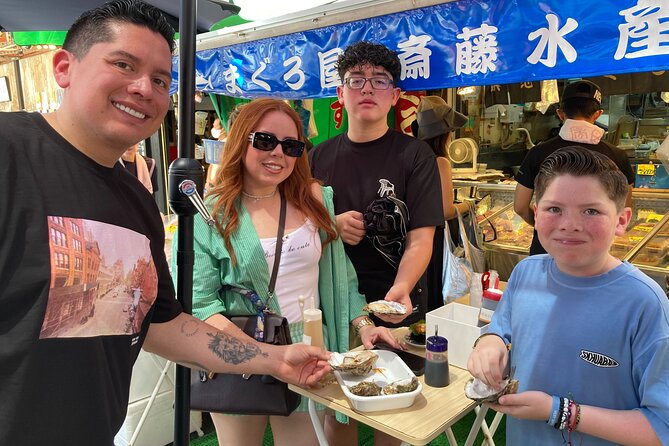
Tsukiji feeds your curiosity before lunch. This three-hour Tokyo walk pairs seafood tastings and lunch with a close look at Tsukiji Hongwan-ji Temple, Namiyoke Inari Shrine, and the market streets in between. I like that you are not left guessing what to order, and I like the small-group limit of 10, which gives the guide room to translate, answer questions, and adjust the food stops.
The main consideration is the strong seafood focus. The guide has helped non-fish eaters with alternatives such as mochi, but you should still tell the tour operator about dietary needs ahead of time. Also note the strict late-arrival rule: the guide waits only 10 minutes, and no refund is offered after the tour moves on.
In This Review
- Key points to know before booking
- Why this Tsukiji tour is more than a food crawl
- Starting at Tsukiji Hongwan-ji Temple
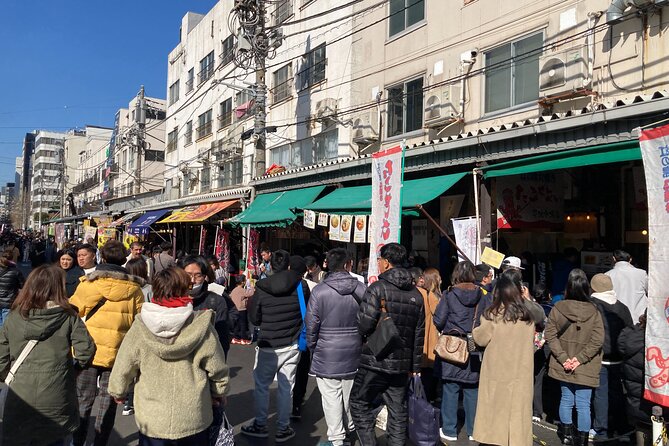
- Walking through Tsukiji’s outer market
- The included lunch at a local restaurant
- Namiyoke Inari Shrine and Tsukiji’s local side
- What the guide adds to the experience
- Price, timing, and practical value at $85.66
- Who will enjoy this morning most
- Should you book the Tsukiji Fish Market Culture Walking and Food Tour?
- FAQ
- How long is the Tsukiji Fish Market Culture Walking and Food Tour?
- Where does the tour begin?
- What time does the tour start?
- What food is included?
- How large is the tour group?
- What happens if I arrive late?
- Can I cancel for a full refund?
Key points to know before booking
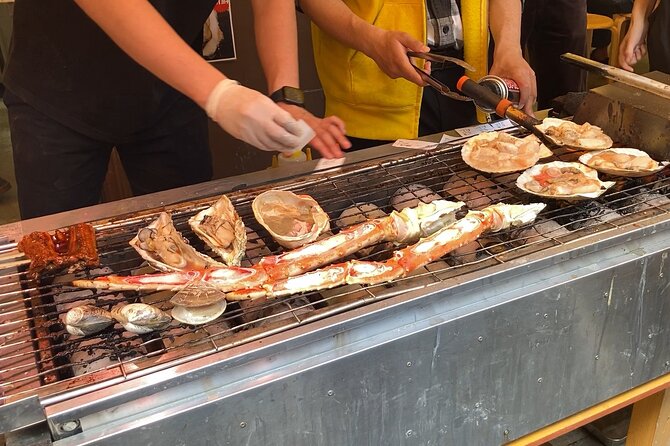
- A full meal is part of the three-hour walk: Street food tastings are followed by lunch at a local restaurant.
- The tour begins at Tsukiji Hongwan-ji Temple: You learn basic temple manners and see a striking traditional-style building before reaching the market.
- The market visit focuses on Tsukiji’s outer market: This is a food-shopping district with stalls, prepared bites, and wholesale shops rather than the old inner tuna auction site.
- Guide Inoki receives especially warm praise: His food knowledge, patience, and ability to find alternatives have made a strong impression.
- The group is capped at 10 people: That is small enough for questions and personal help without paying private-tour pricing.
- The walk ends at Namiyoke Inari Shrine: The final stop adds local religious customs and a look at Tsukiji’s connection to the sea.
Why this Tsukiji tour is more than a food crawl
Tsukiji can be confusing on your first visit. The lanes are packed with food shops, signs may be difficult to read, and the best choice is not always the most obvious one. You can wander alone and eat well, but you may miss the context that connects the market to the temples, shrines, workers, and neighborhood around it.
This tour gives you a simple route and a guide who handles translation. You spend about three hours walking, tasting, asking questions, and sitting down for a seafood lunch. The food is the main attraction, but the cultural stops keep the morning from feeling like a string of unrelated snacks.
The experience has earned a 5 out of 5 rating from 36 ratings, with 100 percent recommending it. That strong record appears to come from the same qualities again and again: generous food portions, a friendly guide, useful explanations, and a local restaurant that is easy to miss when you explore independently.
At $85.66 per person, this is not the cheapest way to see Tsukiji. It becomes better value when you count the included tastings, lunch, translation help, and three hours of guiding. You are also paying to avoid several small hassles: deciding where to stop, explaining what you want, and working out how to order.
More Food Tours in Tokyo
- Tokyo: Shinjuku Food Tour (13 Dishes at 4 Local Eateries)
★ 5.0 · 6,603 reviews - Tokyo: Shinjuku Food Tour (15 Dishes and 4 Eateries)
★ 4.9 · 2,033 reviews - Best of Shinjuku: Izakaya Food Tour (4 Stops, 14+ Tastings)
★ 5.0 · 1,863 reviews
Starting at Tsukiji Hongwan-ji Temple
The meeting point is in front of Tsukiji Hongwan-ji Temple at 3-chome-15-1 Tsukiji, Chuo City. The tour starts at 10:00 a.m., and the temple visit takes about 30 minutes.
This is a smart opening stop. You begin with place and custom before the food takes over. The guide explains how to behave in a Japanese temple, including the traditional ritual before entering and praying in the Jodo Shinshu style. You can learn about giving incense and the basic rhythm of a respectful visit rather than copying other people without knowing why.
The temple itself gives you something different from the market streets. Its traditional design makes a strong first impression, and the quiet setting helps you reset before stepping into the commercial side of Tsukiji. If you have never visited a Japanese temple, this short introduction is useful. It is also a good chance to ask questions that might feel awkward later.
I would not book this tour only for the temple. The visit lasts about half an hour, and the main value comes from the explanation rather than a long guided inspection. Think of it as a cultural starting point that gives the food walk a clearer setting.
Arrive early. The stated late policy allows the guide to wait up to 10 minutes, but the information also gives a final wait time of 10:40 a.m. The safest plan is to be at the temple before 10:00, not hurrying through Tokyo’s train system with breakfast still undecided.
Walking through Tsukiji’s outer market
The central part of the experience lasts about two hours. You walk through Tsukiji’s outer market, stop for street food, and then eat lunch at a restaurant selected by the guide.
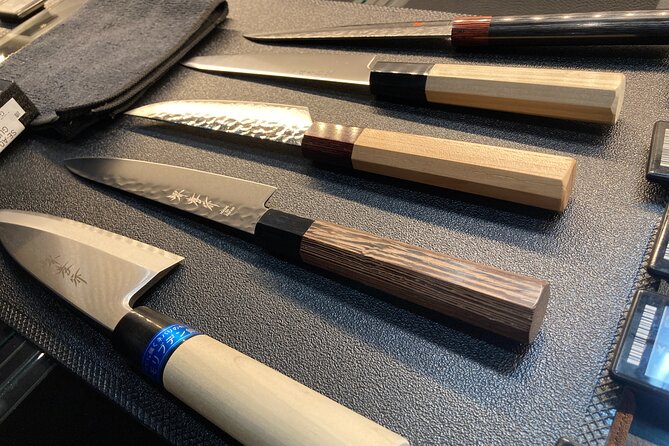
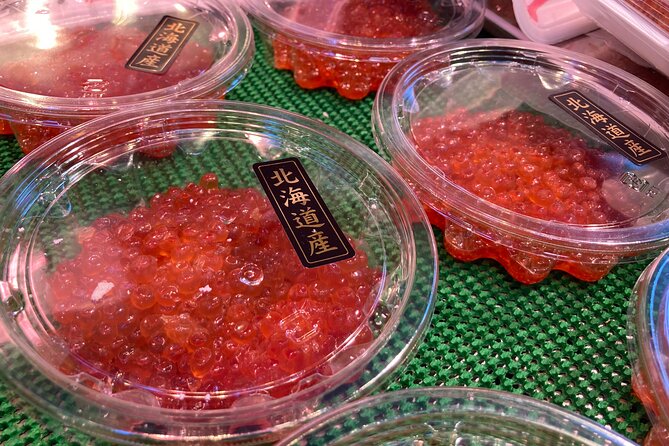
This is not a tour of the former inner wholesale market and tuna auction. The route centers on the outer market, where food shops, prepared dishes, and small stores serve both local customers and people coming to taste Tokyo’s seafood culture. That distinction matters. If your only goal is to see an auction, this is the wrong experience. If you want to eat and understand the neighborhood, it makes much more sense.
The guide’s role matters most here. You can point at a skewer or tray and hope for the best, but a guide can explain what you are seeing and help you choose. The tour includes translation, so you do not need to manage every order yourself. That is particularly useful when a stall is busy or when you want to ask about an unfamiliar ingredient.
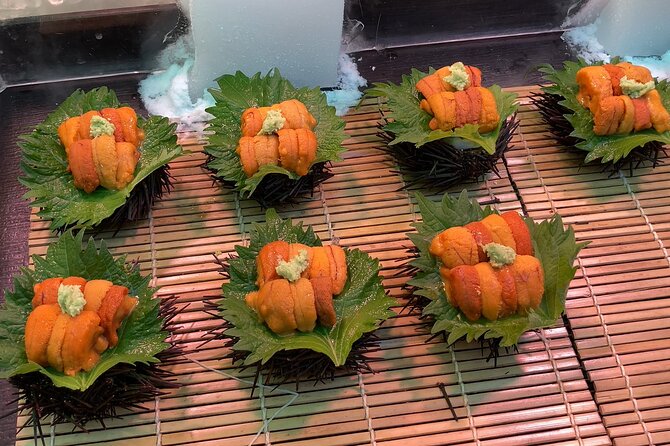
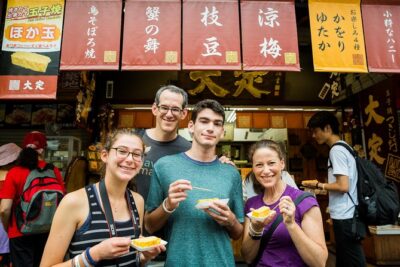
The tasting list can vary, but the supplied experience includes examples such as tuna on a skewer, eel, daifuku, and other market foods. Eel on a stick gives you a savory bite with a different texture from raw fish. Daifuku adds a sweet pause and keeps the walk from becoming one long parade of seafood.
One useful detail comes from the way the guide handles shopping. Inoki has been praised for standing in line while people selected snacks, helping them get good items without forcing everyone to wait beside a stall. That may sound minor, but it can make a crowded food market much easier. You can look around while the guide manages part of the purchase.
The tasting stops are meant to fill you up, not merely provide a tiny sample for a photograph. Still, appetite varies, and the exact food selection is not fixed in the information provided. You should treat the listed foods as examples rather than a guaranteed menu.
The included lunch at a local restaurant
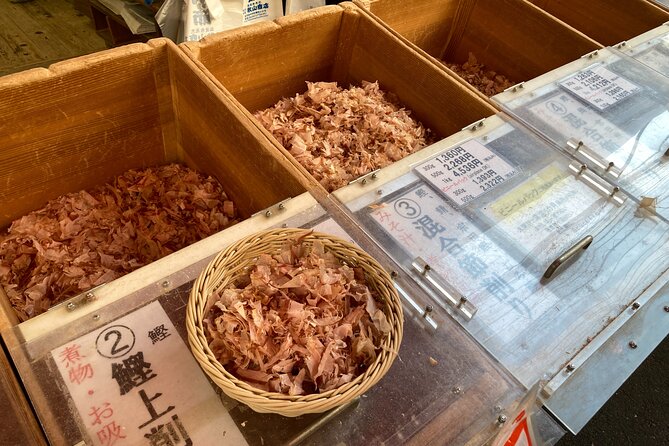
After the market tastings, the guide takes you to a restaurant for lunch. This is one of the tour’s strongest features because finding a small, suitable place in Tsukiji can take time, especially when you do not read Japanese.
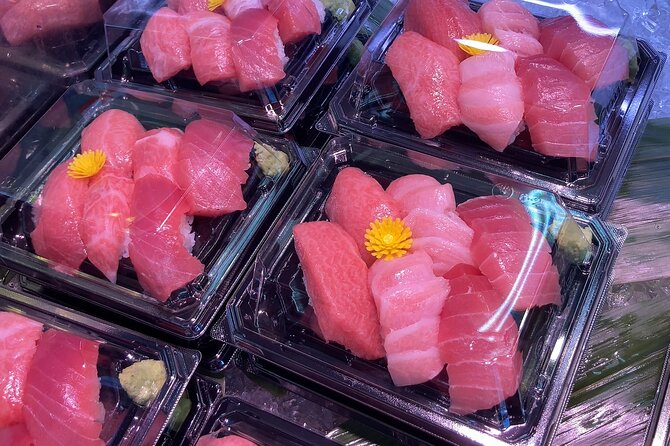
The meal is described as a seafood lunch, with sashimi lunches specifically praised in the feedback. For many people, this will be the point when the separate bites become a proper meal. You get to sit down, eat at a slower pace, and ask the guide about the dishes rather than trying to balance food while walking.
I like the progression. The street tastings let you sample the market’s energy and variety. Lunch then gives you a chance to focus on quality and conversation. It is a better structure than simply stopping at one restaurant and calling the morning a market tour.
The restaurant is also described as a place you might easily miss without local help. That does not mean you should expect a secret or exclusive dining room. It means the guide adds practical judgment, taking you beyond the most obvious places aimed at first-time shoppers.
Food needs are worth discussing before you book. One person in a group did not eat fish, and Inoki found alternatives including mochi. That is encouraging, but it does not turn the tour into a general food tour for every diet. The advertised meal is seafood, and the tastings are built around Tsukiji’s fish-market identity. If you avoid seafood, have allergies, or need a strict diet, contact Fantasy Travel before paying.
More Markets and Food Halls in Tokyo
- Tokyo Tsukiji Fish Market Food and Culture Walking Tour
★ 5.0 · 3,184 reviews - Tokyo: Tsukiji Fish Market Food and Walking tour
★ 5.0 · 1,724 reviews - Senkyaku Banrai Toyosu Manyo Club Onsen Experience in Tokyo
★ 4.7 · 1,690 reviews - Tokyo: Tsukiji Fish Market Guided Walking Tour
★ 4.9 · 1,397 reviews
Namiyoke Inari Shrine and Tsukiji’s local side
The final stop is Namiyoke Inari Shrine, a local shrine associated with the Tsukiji area. This section takes about 30 minutes and shifts the focus from eating to Shinto customs and the neighborhood’s past.
The guide explains what Shinto is and connects the shrine with Tsukiji’s market story. On the way, you may pass wholesale shops used by local businesses. That detail helps you see Tsukiji as a working food district, not only a sightseeing stop.
The route gives you a useful contrast. Hongwan-ji introduces Buddhist practice at the beginning, while Namiyoke Inari Shrine brings in Shinto practice at the end. You do not need to become an expert in either tradition after one morning, but you will have a better sense of how religious sites and commercial streets sit side by side in Tokyo.
This last stop is also why the tour feels broader than a basic snack walk. You see food, faith, and local commerce within a compact area. The visit is short, so anyone wanting a long shrine tour should adjust expectations. Its purpose is to add context and show a less obvious part of Tsukiji.
The activity ends back at the starting point. That makes the tour easy to fit into a Tokyo day, especially if you want to continue exploring nearby after lunch.
What the guide adds to the experience
A good Tsukiji tour depends heavily on its guide. The food is already appealing, but the guide decides how much you understand and how relaxed the morning feels.
Inoki is praised for enthusiasm, strong knowledge of Japanese food, and careful attention to questions. The guide has also been described as someone who keeps conversation moving and looks after the group rather than rushing from stall to stall.
That personal help is especially valuable in a group of 10 or fewer. You can ask why a food is served in a certain way, request a recommendation, or explain that you do not eat something. A larger group would make those exchanges harder.
The tour can sometimes operate almost like a private tour if few people book that date. One person described being the only participant, while another small group found the guide flexible about what to buy. You should not assume you will have a private tour, but the capped size gives you a reasonable chance of a personal feel.
There is a tradeoff. A small-group walking tour is less private than booking a fully private guide, and the route or food choices may follow the needs of the whole group. Still, the limit of 10 keeps the format manageable and avoids the feel of a large procession.
Price, timing, and practical value at $85.66
The listed price is $85.66 per person for about three hours. Since tastings and a seafood lunch are included, the price is easier to justify than it would be for a walk with no food.
You are also getting interpretation, restaurant guidance, cultural explanations, and a planned route. If you would otherwise buy several market foods, sit for lunch, and pay for transport between separate sights, the difference may be smaller than it first appears.
The best value comes if you are new to Tsukiji, curious about Japanese food, or not confident ordering on your own. The tour also works well near the start of a Tokyo stay because you can use what you learn later when visiting markets and restaurants independently.
The value is weaker if you already know Tsukiji well, speak Japanese comfortably, or prefer to choose every dish yourself. Independent visitors have more freedom and may spend less, though they give up the translation and local guidance.
The experience is usually booked about 36 days in advance. That suggests you should not leave it until the last morning of your trip, particularly if you need a certain date. Group discounts are available, and the ticket is mobile, so you can keep confirmation on your phone.
Public transportation is nearby. The meeting point is clear, but Tokyo’s stations and streets can still take longer than expected. Give yourself a cushion and check the temple location before the morning of the tour.
Free cancellation is available until 24 hours before the start time. Inside that 24-hour window, the payment is not refunded and changes are not accepted. That policy is reasonable for a food tour with restaurant planning, but it means you should not book it as a loose placeholder.
Who will enjoy this morning most
I would recommend this tour to people who want a guided introduction rather than a quick market photo. It suits first-time visitors, food-focused couples, families with children accompanied by an adult, and anyone who wants a manageable way to try unfamiliar Japanese dishes.
It is also a good fit if you like history in small portions. You get temple customs, market background, shrine traditions, and local wholesale activity without spending the whole day in a museum.
Families should remember that children must be accompanied by an adult. The tour involves walking and eating in a market setting, so parents should consider how well their children handle new foods and a three-hour morning.
You may want another option if you do not eat seafood, need guaranteed dietary substitutions, or want a full private experience. The guide has found alternatives such as mochi, but the tour’s identity remains firmly tied to fish, eel, sashimi, and Tsukiji food culture.
Should you book the Tsukiji Fish Market Culture Walking and Food Tour?
Book it if you want Tsukiji explained as well as tasted. The included street food, seafood lunch, translation, temple and shrine visits, and small group make $85.66 a fair price for a carefully organized morning.
I especially like the chance to sample foods such as tuna and eel, then sit down for sashimi lunch, while a guide handles the language barrier. The strongest personal touch comes from Inoki’s flexible approach, including finding mochi for a non-fish eater and helping with market purchases.
Skip it if you want the old wholesale auction experience, a strictly self-guided visit, or a tour built around non-seafood dishes. For everyone else, this is a practical first look at Tsukiji, with enough food to count as breakfast and lunch, and enough local context to make the market feel like part of Tokyo rather than a stop on a checklist.
FAQ
How long is the Tsukiji Fish Market Culture Walking and Food Tour?
The tour lasts approximately three hours.
Where does the tour begin?
It begins at Tsukiji Hongwan-ji Temple, at 3-chome-15-1 Tsukiji, Chuo City, Tokyo 104-8435, Japan.
What time does the tour start?
The scheduled start time is 10:00 a.m.
What food is included?
Street food tastings and a seafood lunch are included. Examples mentioned include tuna on a skewer, eel, daifuku, and sashimi lunch.
How large is the tour group?
The group has a maximum of 10 people.
What happens if I arrive late?
The guide waits up to 10 minutes after the start time. After the guide begins the tour, you cannot receive a refund for the tour fee.
Can I cancel for a full refund?
Yes. You can cancel at least 24 hours before the experience’s start time for a full refund. Cancellations or changes made less than 24 hours before the start time are not accepted for a refund.
Just added in Tokyo
- Very popular in Harajuku♡Animal petting zoo★ 4.6 · 39 reviews
- Yokohama Port: Private Customizable Tour with Transfer★ 5.0 · 19 reviews
- Wagyu & Sake 8 Course Tasting Dinner in Shinjuku★ 4.9 · 20 reviews
- Warner Bros. Studio Tour Tokyo – The Making of Harry Potter★ 4.8 · 181 reviews
- Yanaka District: Historical Walking Tour in Tokyo’s Old Town★ 4.8 · 117 reviews
- Tokyo: Classic Tsukiji Food Tour★ 4.9 · 78 reviews
- Tokyo: Tsukiji Fish Market Tour with 6 Stops & Seafood Lunch★ 4.5 · 165 reviews
- Tokyo Wagyu & Sake Pairing Tasting Experience with Local Flavors★ 5.0 · 108 reviews
Markets and Food Halls, compared.
Tokyo Tsukiji Fish Market Food and Culture Walking Tour
Read our review →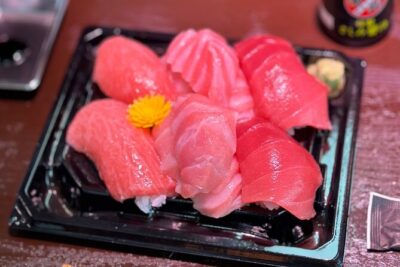

Senkyaku Banrai Toyosu Manyo Club Onsen Experience in Tokyo
Read our review →
Nishiki Market Brunch Walking Tour (7 Tastings + Brunch)
Read our review →
Tokyo Sushi Making Class in Tsukiji with Professional Chef
Read our review →
Tsukiji Fish Market Guided Tour and Sushi Making with Pro Chef
Read our review →Browse the lists this tour appears in