
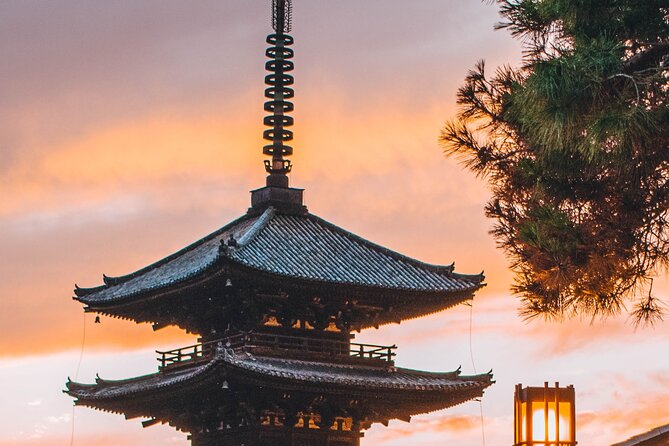
Reviewed · WALKING TOURS
2 Hour Night Walking Tour Throughout Gion with snack
Gion reveals itself after dark. This two-hour Kyoto walk takes you from Yasaka Shrine through Hanamikoji Street, Kiyamachi, and the Kamogawa River, with local stories, restaurant advice, and a traditional Japanese snack along the way. I like the small group size of up to 10 people and the useful food recommendations from guide Simon. I also like that this is more than a photo stop in front of pretty streets: it explains how Kyoto’s geiko and maiko districts still function today.
The main caution is crowd control. Several people found Simon funny and well informed, but busy evenings made it hard to keep up. One group lost sight of the guide near the end, and another felt the pace was too quick. At $32.58 per person, this can be good value if you want orientation and local context, but it is less appealing if you expect a quiet, slow stroll.
In This Review
- Key Points Before You Book
- What This Gion Night Walk Is Really For
- Starting at the Disney Store Near Shijo-Kawaramachi
- Yasaka Shrine: A Strong First Stop
- Hanamikoji Street and the Geiko District
- Kiyamachi Street: From Tradition to Nightlife
- The Kamogawa River at Night
- Snack, Chocolate, and What You Actually Receive
- Is $32.58 Good Value?
- Group Size, Pace, and Crowds
- Who Will Enjoy This Tour Most?
- Should You Book the Gion Night Walking Tour?
- FAQ
- How long does the tour last?
- Where does the tour start?
- Where does the tour end?
- Is dinner included?
- How many people can join the tour?
- What happens if the weather is bad?
Key Points Before You Book
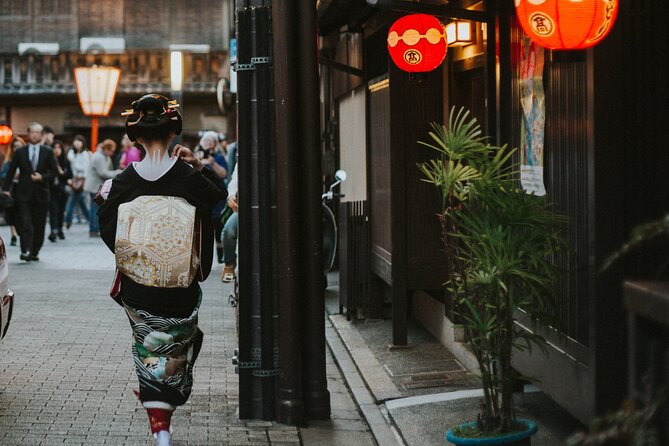
- Yasaka Shrine opens the evening: You get a short introduction to one of Kyoto’s best-known religious sites without paying an entrance fee.
- Hanamikoji explains geiko and maiko life: The walk focuses on the difference between these two types of traditional performers and the role of the old hanamachi district.
- Simon’s restaurant advice is a major benefit: His suggestions focus on places where you may not need a reservation, useful after the tour ends.
- The route mixes old and new Kyoto: You move from shrine grounds and traditional streets to Kiyamachi’s modern entertainment area.
- A snack and geisha chocolate add a small local touch: Dinner is not included, so think of the food as a sample rather than a meal.
- Crowds can affect the experience: Kyoto’s popular evening streets may make it difficult to hear or stay close to the guide.
What This Gion Night Walk Is Really For
This is an orientation tour, not a grand sightseeing production. You spend about two hours walking through central Kyoto while a local guide explains what you are seeing and points out places you might otherwise pass without understanding.
That makes it especially useful on your first night. Simon’s advice about restaurants and things to do in the following days can help you use the rest of your Kyoto stay more wisely. One participant specifically wished this walk had been taken on arrival, rather than later in the visit.
The tour is conducted in English, and Simon’s humor is part of the appeal. Several people enjoyed his easy style and his willingness to answer questions. He also shares personal experience of the area, which can make the walk feel less like a memorized speech.
That style is not perfect for everyone. One person felt Simon sometimes talked more about himself than the district, its people, and its customs. If you want a formal lecture with tightly sourced historical facts, this may feel loose. If you prefer an outgoing guide who talks freely and gives practical suggestions, you are more likely to enjoy it.
More Walking Tours in Kyoto
- Kyoto Geisha Walking Tour: Gion District & Hidden Gems
★ 4.7 · 3,273 reviews - Kyoto: Gion Magical Night Walking Tour with Geisha Trivia
★ 4.9 · 2,393 reviews - Kyoto: Gion Geisha District Walking Tour – Stories of Geisha
★ 4.7 · 2,187 reviews
Starting at the Disney Store Near Shijo-Kawaramachi
The meeting point is outside the Disney Store at the northeast corner of Shijo-dori and Kawaramachi-dori, at Kotocross Hankyu Kawaramachi 1 and 2F. This places you in a central part of Kyoto, close to public transportation and surrounded by shops and restaurants.
You should arrive early and have your mobile ticket ready. The official meeting point is specific, but evening crowds can still make it harder to identify a guide quickly. Previous groups had no trouble finding Simon, while one late booking led to a serious problem when the time slot had already been canceled. The provider apologized and arranged a full refund, but I would avoid booking only two hours before departure.
The tour returns to this same meeting point. That is handy if you have dinner plans in central Kyoto, though you should allow extra time if the streets are packed and the group moves slowly.
Yasaka Shrine: A Strong First Stop
The first stop lasts about 30 minutes at Yasaka Shrine. There is no admission fee, and the guide explains the shrine’s background while giving you time to walk around and take photographs.
Yasaka Shrine is a sensible place to begin because it connects the religious side of Kyoto with the entertainment districts that follow. You get a chance to look at the setting, listen to the guide, and settle into the walking pace before entering narrower streets.
Do not expect an hour-long temple visit. This is a compact introduction, not a full examination of every gate, hall, and ritual. The advantage is that you do not spend the evening on only one sight. The drawback is that anyone wanting detailed architectural or religious commentary may find 30 minutes short.
The stop works best if you arrive ready to listen while walking. Keep your camera available, but pay attention to the explanation. The point is not simply to collect another night photograph. It is to understand why this area acts as a gateway between old Kyoto and the districts around Gion.
Hanamikoji Street and the Geiko District
The longest traditional-cultural stop is Hanamikoji Street, with about 40 minutes devoted to the area. This is where the tour explains the hanamachi, the traditional entertainment districts where geiko and maiko live and work.
The distinction between geiko and maiko is one of the most useful pieces of information on the walk. You learn that these are not interchangeable labels, and the guide places them within the customs of Kyoto’s traditional arts community.
This is also the part of the tour where manners matter most. You are walking through a real neighborhood and working district, not a stage set built for sightseeing. The best approach is to stay with the group, keep your voice low, and take photographs respectfully. The supplied details do not promise a private meeting or guaranteed geisha sighting, so you should not book this expecting one.
One group did happen to see a couple of geishas, but that was a fortunate moment, not a scheduled feature. The value of Hanamikoji is the explanation of the district and its customs, whether or not you see a performer.
Crowds can be a problem here. People have found the area difficult to navigate during high season, and some had trouble hearing or keeping up. If you have mobility concerns, ask about the pace before setting out. The activity says most people can participate, but the walk takes place outdoors and through busy streets.
A completely different kind of day out:
- PERFECT KYOTO 1-Day Bus Tour
★ 5.0 · 13,518 reviews - [Kyoto & Nara Day Tour] Sagano Scenic Railway & Nara Park & Fushimi Inari Taisha Thousand Torii Gates & Togetsukyo Bridge & Bamboo Grove & Kimono Forest (Departing from Osaka)
★ 4.9 · 10,942 reviews - Kyoto: Fushimi Inari, Kinkakuji, Bamboo Grove 1 Day Bus Tour
★ 4.8 · 4,316 reviews - Kyoto: Tea Ceremony in a Traditional Tea House in Kiyomizu
★ 4.9 · 3,519 reviews
Kiyamachi Street: From Tradition to Nightlife
The route then moves to Kiyamachi Street for roughly 40 minutes. This changes the mood. Instead of focusing mainly on traditional culture, the guide introduces Kyoto’s modern entertainment district.
This contrast is one of the best parts of the experience. Kyoto is often presented as a city of temples, quiet gardens, and wooden lanes. Kiyamachi shows another side, with restaurants, nightlife, and the practical question of where to eat after a long day.
Simon’s restaurant recommendations are repeatedly praised as useful. He points out options away from the most obvious tourist choices and suggests places where you may not need a reservation. That advice can be worth a good share of the tour price, especially if you are trying to find dinner during a busy evening.
Dinner itself is not included. The tour description also promises a traditional Japanese snack and a geisha chocolate, but you should treat those as small extras, not a substitute for a meal. Plan to eat before or after the walk.
The Kiyamachi stop is not a guided restaurant crawl. You will receive recommendations, but the tour does not include restaurant reservations, a full tasting menu, or dinner costs. That keeps the price low, while leaving you free to choose what fits your budget and appetite.
The Kamogawa River at Night
The final stop is the Kamogawa River, where you spend about 10 minutes. The river is described as the heart of Kyoto’s entertainment district, and this brief pause gives the evening a quieter finish.
People gather along the river, and entertainers may be present in the surrounding area. The attraction here is the atmosphere rather than a long commentary or a major monument. After shrine grounds, traditional lanes, and nightlife streets, the river provides space to take in the sounds and movement of central Kyoto.
Ten minutes is enough for a short look and a few photographs, but not enough for a long riverside break. If you love scenic pauses, you may wish the tour lingered. If you prefer a compact route that returns you to the center of town, the short stop keeps the evening moving.
Snack, Chocolate, and What You Actually Receive
The experience is promoted with a traditional Japanese snack and a geisha chocolate. These details give the walk a modest food component and make the evening feel a little more personal than a standard street orientation.
Still, dinner is specifically excluded. I would eat beforehand if you need a proper meal, or use Simon’s restaurant suggestions once the tour ends. The snack should be viewed as a taste of local culture, not a food tour.
The formal inclusion details emphasize recommendations, while the broader experience description mentions the snack and chocolate. If those extras are important to you, confirm the current arrangement before booking. The price is low enough that the food should not be your main reason for choosing the tour.
Is $32.58 Good Value?
At $32.58 per person, the tour is priced below many longer guided experiences in major Japanese cities. You are paying mainly for the guide’s time, local orientation, cultural explanation, and practical advice rather than for admission tickets. All listed stops are free.
I think the value is strongest for a first evening in Kyoto. You see several key areas in two hours, learn how Gion and Kiyamachi connect, and finish with ideas for restaurants and later sightseeing. A private guide would cost much more, while exploring alone would give you fewer explanations and less personal advice.
The value is weaker if you already know Gion well or have spent time researching the district. One participant felt the information was vague or inaccurate compared with other research. That is an important warning: Simon’s approach leans on personal experience and informal explanation, so you should not expect a scholarly history seminar.
The overall score is 4.1 from 13 ratings. That points to a generally positive experience with real variation. Many people praised the humor, the amount of information, the back streets, and the food advice. The lower scores focused on pace, crowd management, and one complaint about factual accuracy.
Group Size, Pace, and Crowds
The maximum group size is 10 people, which is small enough for a conversational walk in normal conditions. In practice, one group found the size too large, while another had difficulty staying with the guide during a very busy period.
Kyoto’s evening crowds are the key variable. The route includes popular areas where a guide can disappear quickly among pedestrians. Simon does not always use a visible flag, according to one account, so stay close and keep an eye on the group at every crossing.
The walk seems best suited to people who are comfortable walking at a steady pace. If you want frequent stops, long photo breaks, or plenty of time to browse, you may find it rushed. A good tactic is to save detailed photographs for the moments when the group pauses rather than trying to stop repeatedly while moving.
The activity requires good weather. If poor weather forces cancellation, you are offered another date or a full refund. You can cancel for a full refund up to 24 hours before the start time. Inside that window, refunds and changes are not accepted.
Who Will Enjoy This Tour Most?
I would recommend this walk to you if:
- You are visiting Kyoto for the first time.
- You want a quick introduction to Gion after dark.
- You enjoy hearing personal stories and asking questions.
- You need restaurant ideas without committing to a reservation.
- You want to understand the difference between geiko and maiko.
- You are comfortable walking through busy streets for two hours.
It may not suit you if you need guaranteed geisha sightings, a quiet route, a formal academic presentation, or a full dinner. It is also not ideal if losing sight of a guide in a crowd would cause stress.
Service animals are allowed, the route is near public transportation, and most people can participate. The supplied details do not give a full accessibility breakdown, so contact the provider if you need specific information about surfaces, stairs, or walking distance.
Should You Book the Gion Night Walking Tour?
Book it if you want to get your bearings fast on your first Kyoto evening. The strongest reasons are Simon’s local recommendations, the mix of religious, traditional, and modern Kyoto, and the chance to ask questions while walking through the real districts.
Go in with sensible expectations. You are not buying dinner, a private geisha encounter, or a slow photography walk. You are buying two hours of orientation, conversation, a snack, and practical ideas for the rest of your stay.
I would book at least a day ahead, arrive early at the Disney Store meeting point, and stay close to the guide in crowded areas. For $32.58, it is a worthwhile introduction for many first-time visitors, provided you value local perspective more than polished presentation.
FAQ
How long does the tour last?
The tour lasts approximately two hours. The listed stops total 30 minutes at Yasaka Shrine, 40 minutes on Hanamikoji Street, 40 minutes on Kiyamachi Street, and 10 minutes at the Kamogawa River.
Where does the tour start?
The meeting point is the Disney Store at the northeast corner of Shijo-dori and Kawaramachi-dori, at Kotocross Hankyu Kawaramachi 1 and 2F in Kyoto.
Where does the tour end?
The activity ends back at the same meeting point where it begins.
Is dinner included?
No. Dinner is not included. The experience description includes a traditional Japanese snack and a geisha chocolate, along with restaurant recommendations.
How many people can join the tour?
The maximum group size is 10 people.
What happens if the weather is bad?
The experience requires good weather. If it is canceled because of poor weather, you can choose another date or receive a full refund. Free cancellation is available up to 24 hours before the start time.
Just added in Kyoto
- The “Golden Route” and Ancient Japan by DIAMIR Erlebnisreisen – 14-Day Tour★ 2.0 · 2 reviews
- Japan: Castles & Cuisine by G Adventures – 6-Day Kyoto to Osaka Tour★ 4.5 · 4 reviews
- Cycle Japan by Explore! – 13-Day Kyoto to Tokyo Tour★ 4.7 · 12 reviews
- Cycle Japan by Intrepid Travel – 11-Day Kyoto to Tokyo Tour★ 4.8 · 2 reviews
- Classic Japan by Intrepid Travel – 11-Day Kyoto to Tokyo Tour★ 4.4 · 14 reviews
- Ancient & Modern Japan 14-Day Tour by Exodus Adventure Travels★ 4.4 · 40 reviews
- 5 Day Cultural Adventure of Kyoto, Nara & Osaka by Tourist Journey★ 2.5 · 2 reviews
- 12 Days Kinosaki Onsen Escape: A Journey Through Japan’s Timeless Towns by UME Travel★ 4.8 · 5 reviews
Walking Tours, compared.
Kyoto Geisha Walking Tour: Gion District & Hidden Gems
Read our review →
Tokyo Tsukiji Fish Market Food and Culture Walking Tour
Read our review →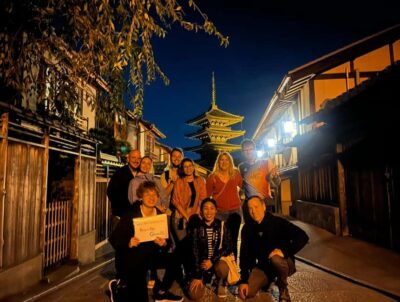
Gion Magical Night Walking Tour with Geisha Trivia
Read our review →
Imperial Palace and Shogun Historical Walking Tour
Read our review →
Gion Geisha District Walking Tour – Stories of Geisha
Read our review →
Shinjuku Local Bar and Izakaya Guided Walking Tour
Read our review →
Browse the lists this tour appears in