
Reviewed · TEA CEREMONIES
Kyoto: Arashiyama Bamboo, Temple, Matcha, Monkeys & secret spots
Arashiyama rewards those who keep walking. This five-hour small-group tour takes you beyond Kyoto’s famous bamboo grove to Okochi Sanso Garden, Tenryu-ji Temple, the Katsura River, local shops, and the hillside Monkey Park. I like the mix of major sights and quieter corners, and I especially like that the entrance fees for the garden, temple, and monkey park are included.
The guide-led format also gives the visit shape. Guides such as Toru, Karim, Tom, Francis, and others have been praised for clear explanations, humor, food tips, and help with directions. The main caution is simple: this is a real walking tour, and the uphill path to the monkeys can be tiring, especially in Kyoto’s summer heat.
In This Review
- Key things to know before booking
- Why this Arashiyama tour makes sense
- Starting among the bamboo in Kameyama Park
- A quiet pause at Okochi Sanso Garden
- Tenryu-ji Temple and the famous dragon pond
- Arashiyama shopping street and local food advice
- Togetsukyo Bridge and the Katsura River
- The uphill walk to Arashiyama Monkey Park
- What the guides add to the day
- Is $89.54 good value?
- Who should book this walking tour?
- Should you book Kyoto Arashiyama Bamboo, Temple, Matcha, Monkeys and Secret Spots?
- FAQ
- How long does the Arashiyama tour last?
- What is the maximum group size?
- Is this a walking tour or a bus tour?
- What admissions are included?
- Is matcha included?
- Does the tour include lunch?
- How difficult is the Monkey Park walk?
- Where does the tour end?
- What happens if the tour is canceled or I need to cancel?
Key things to know before booking
- The bamboo grove is only the beginning: You also visit a private garden, a major Zen temple, a bridge, shopping street, and monkey park.
- Matcha is served at Okochi Sanso: Your entrance includes a drink in a former tea house used as a rest area.
- The tour has a maximum of 12 people: That keeps it more personal and leaves room for questions.
- The Monkey Park hike is steep: Allow 15 to 20 minutes uphill, and wear comfortable shoes.
- The tour ends at the monkey park: Your guide gives you the ticket and instructions, then you can continue up at your own pace.
- The $89.54 price covers key admissions: Lunch, souvenirs, and shopping purchases are extra.
Why this Arashiyama tour makes sense
Arashiyama is one of Kyoto’s easiest places to visit badly. Many people arrive, take a few photos among the bamboo, and leave without seeing the gardens, temple, river, or hilltop view. This tour solves that problem by linking the area’s major sights into one walking route.
I like the range. You get nature, religious buildings, traditional garden design, a shopping street, a famous bridge, and Japanese macaques in a single half-day. The stops do not all feel alike, which helps the five hours pass without becoming one long temple visit.
I also like the small group size. With no more than 12 people, the guide can answer questions and adjust the pace better than on a large coach excursion. The guide-led approach is especially useful if you want context about Japanese customs, temple details, bamboo, food, and local life rather than simply a list of photo stops.
The trade-off is physical effort. The route covers plenty of ground, and the Monkey Park climb comes after several hours on foot. You should not book this expecting a gentle stroll from one nearby attraction to the next.
More Tea Ceremonies in Kyoto
- Kyoto: Tea Ceremony in a Traditional Tea House in Kiyomizu
★ 4.9 · 3,519 reviews - Kyoto: Tea Ceremony Ju-An at Jotokuji Temple
★ 4.9 · 3,207 reviews - Kyoto: 45-Minute Tea Ceremony Lesson Experience
★ 4.3 · 2,378 reviews
Starting among the bamboo in Kameyama Park
The tour begins near 18-12 Sagatenryuji Kurumamichicho in Ukyo Ward, close to Arashiyama’s main attractions. You should arrive 15 minutes early. The operator does not accept late arrivals because the group moves on, and a late arrival cannot join or receive a refund.
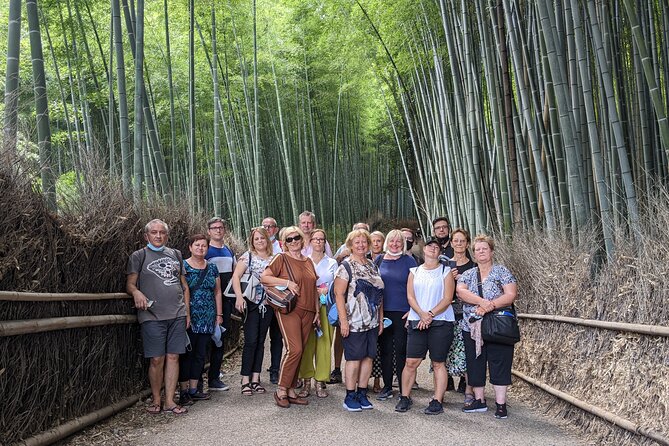
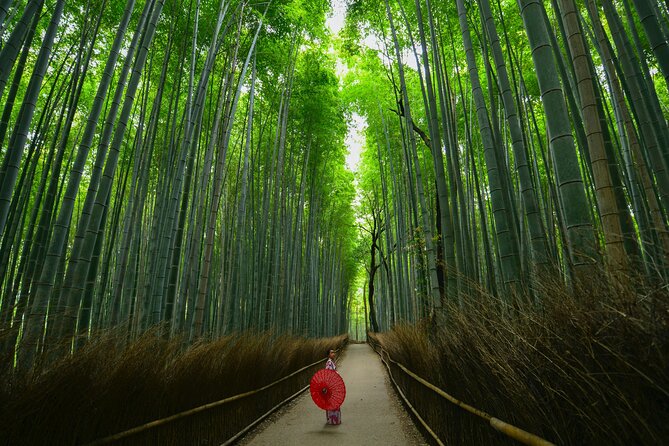
The first stop is the bamboo grove and the Kameyama area of Arashiyama Park. The scheduled time is about one hour, and the guide leads you through the grove toward higher ground in the park.
The bamboo itself is famous for good reason. Tall green stalks filter the light, and the narrow paths create a strong sense of enclosure. Still, the grove can be crowded, so the guide’s local timing and route choices matter. Several guide names have received praise for finding quieter sections and helping the group reach the bamboo before the heaviest crowds.
This is also where the guide can add useful detail. One tour member found the explanation of how bamboo grows and how it is used particularly interesting. That kind of information changes the grove from a pretty backdrop into a working part of Japanese culture and craft.
Do not treat the first hour as a photo-only stop. The route reaches the top of the park area, and the walking begins immediately. You will want shoes with a firm sole, water, sun protection, and enough energy for the later climb to the monkeys.
A quiet pause at Okochi Sanso Garden
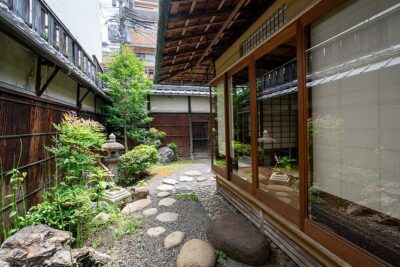
Okochi Sanso is one of the most appealing parts of the route. This private garden offers a change of mood after the public bamboo paths. You have about 45 minutes to walk, sit, breathe, and take in the views and plantings at a slower pace.
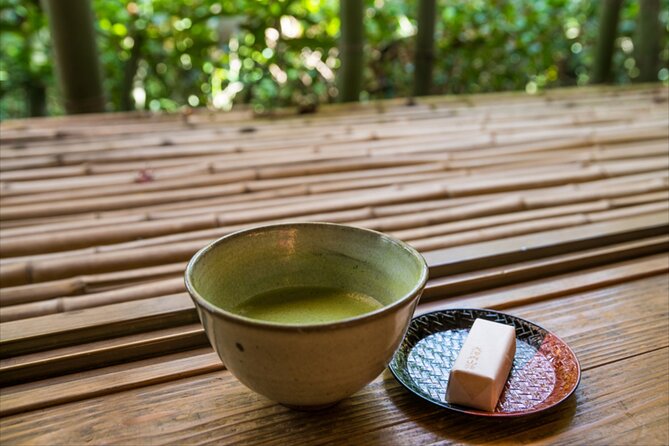
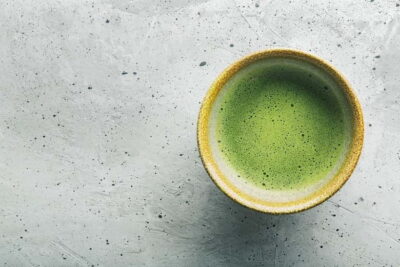
The entrance fee is included, which matters because this is not simply a free path you could wander into on your own. The experience includes a warming bowl of matcha served in a former tea house that now functions as a rest area.
I like this stop because it gives the tour breathing room. Kyoto sightseeing can become a race between gates, ponds, and photo points. Here, you are encouraged to stop moving for a while. The tea adds a small but memorable connection to Japanese hospitality and garden culture.
The garden has received especially strong praise for its views and seasonal color. In autumn, the foliage can be striking. You might also find this the best place to enjoy the tour’s quieter side, away from the noise of the main bamboo route.
Keep in mind that Okochi Sanso is still part of an active walking day. The garden includes paths and some changes in level, so it is not a seated tea ceremony. The matcha is a simple included refreshment, not a separate formal tea lesson.
Tenryu-ji Temple and the famous dragon pond
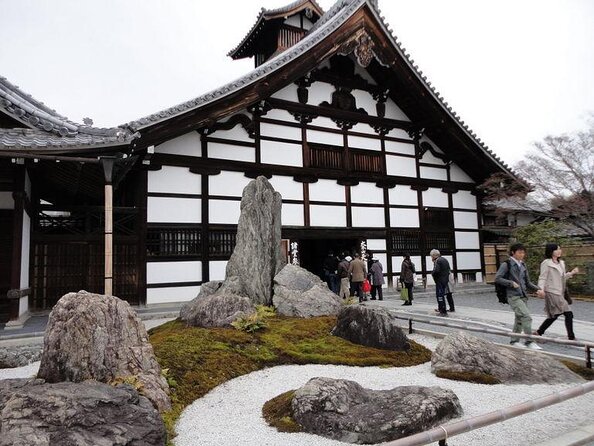
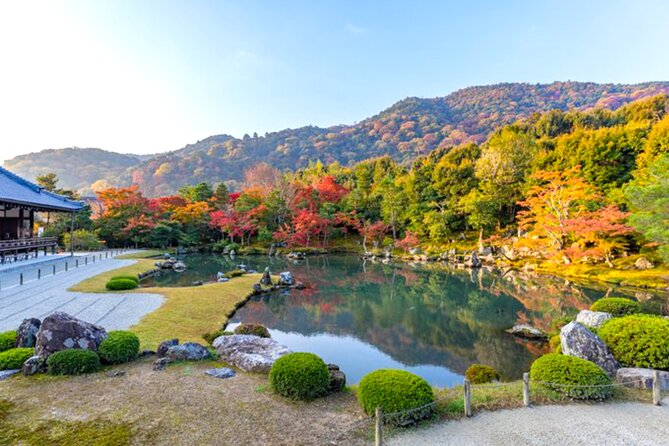
Next comes Tenryu-ji, one of Kyoto’s major temples. The tour allows around 45 minutes, with time to see both indoor and outdoor areas and the pond with its koi.
Tenryu-ji works well in this itinerary because it combines architecture, religious history, and garden design. Your guide can explain what you are seeing instead of leaving you to guess which hall, pond, or feature matters. The temple is also a useful counterpoint to the bamboo grove: one is shaped by nature and cultivation, while the other shows how Buddhist temple spaces organize buildings, water, and views.
A pond known for its dragon imagery is one of the memorable details mentioned by visitors on the tour. Children may also enjoy the koi and small discoveries along the way. One guide, Tomio, was praised for pointing out wildlife and interesting details to younger members of the group.
I would allow your attention to slow down here. The temple is not just a quick stop for a photograph. Look at the relationship between the buildings and the garden, listen to the guide’s explanation, and notice how the space changes as you move from interior rooms to open paths.
The 45-minute schedule is enough for a guided introduction, but it will not cover every corner of the temple complex. If Tenryu-ji is a personal priority, you may want to return independently with more time.
More Temples and Shrines in Kyoto
- [Kyoto & Nara Day Tour] Sagano Scenic Railway & Nara Park & Fushimi Inari Taisha Thousand Torii Gates & Togetsukyo Bridge & Bamboo Grove & Kimono Forest (Departing from Osaka)
★ 4.9 · 10,942 reviews - Kyoto: Fushimi Inari, Kinkakuji, Bamboo Grove 1 Day Bus Tour
★ 4.8 · 4,316 reviews - Kyoto Nara Day Trip │ Kiyomizu-dera Temple + Fushimi Inari-taisha Shrine + Nara Park (Departing from Osaka/Kyoto)
★ 4.7 · 3,408 reviews - Fushimi Inari Hidden Hiking Tour (Private Option Available)
★ 5.0 · 1,750 reviews
Arashiyama shopping street and local food advice
The shopping portion lasts about an hour, giving you time to browse the Arashiyama street rather than simply walk through it. The guide can assist with translation and help you decide what to look at, but purchases are not included.
This is a practical feature for first-time visitors. Shopping streets in Japan can be enjoyable but confusing, especially when you want to understand what a food, craft item, or souvenir actually is. Guides have also shared suggestions about Japanese food and local restaurants, and one recommendation reportedly led to a particularly good meal.
One fun food detail is the custard-filled fish-shaped cake often sold in Japan. A guide named Karim helped introduce this treat to a group, making the shopping stop feel less like a scheduled retail break and more like a chance to sample something local.
The hour gives you freedom, but remember that the tour is still moving on a timetable. You should not expect an open-ended shopping afternoon. If you want to buy larger items, compare prices, or eat lunch, plan to return later or continue after the tour.
Lunch is not included. Since the tour lasts about five hours and involves a climb at the end, it is sensible to eat before departure or plan a meal after the Monkey Park. The exact timing of your tour may vary by about 30 minutes.
Togetsukyo Bridge and the Katsura River
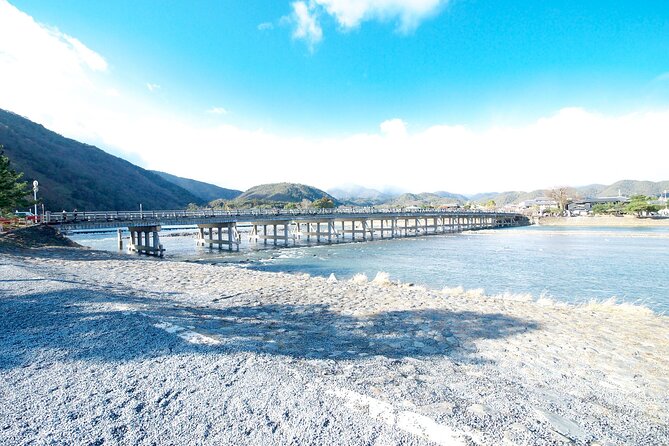
The visit to Togetsukyo Bridge is brief, about 15 minutes, but it provides an important change of view. The bridge crosses the Katsura River and is one of Arashiyama’s most recognizable photo spots.
You will have time for photographs and a look at the river corridor before heading toward the final stop. The bridge can be busy, so the short visit keeps the group from getting stuck in one place.
I see this as a linking stop rather than a full sightseeing session. The bamboo grove gives you vertical walls of green, while the bridge opens the view across the water and hills. That contrast helps you understand why Arashiyama feels bigger than its famous grove.
If you want calm photographs, you may need to be flexible with your angle and timing. The tour gives you an introduction, not a private photo shoot.
The uphill walk to Arashiyama Monkey Park
The Monkey Park is the tour’s most demanding stop and one of its most distinctive. Admission is included, but the official tour ends at the park entrance area. Your guide gives you the ticket and explains the route, then leaves you to make the climb and explore independently.
The path to the monkeys takes about 15 to 20 minutes uphill on a steep section. Several people found the climb worthwhile because of the view over Kyoto, but the effort was noticeable in hot weather, including temperatures around 33 degrees Celsius.
You should take this warning seriously. Comfortable shoes are essential, and sunscreen, water, and an umbrella can help in warm or sunny weather. The climb may be manageable for most people in reasonable physical condition, but it is not suitable for someone expecting flat walking.
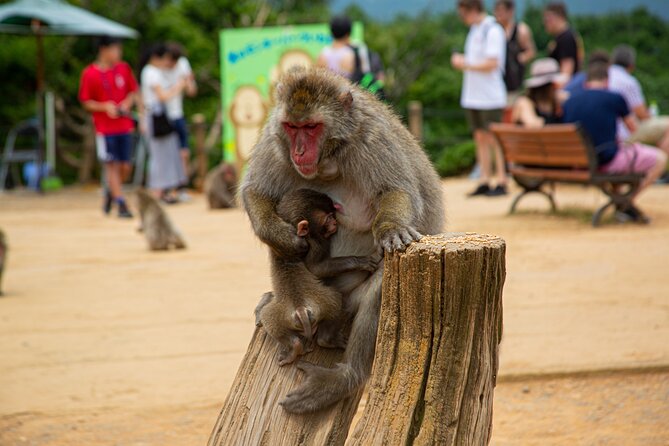
At the top, you can watch the monkeys and take in one of the best elevated views of Kyoto. The park is especially appealing for families and children, though adults often enjoy the setting just as much. Food for the monkeys is available at the park, and one guide shared a useful tip about the animals preferring apples to peanuts in the afternoon.
Because the guide does not remain with you for the final visit, this stop feels different from the rest of the tour. Some people appreciate the freedom to stay as long as they like and leave whenever they choose. Others may prefer a guide to continue explaining the park. Follow the instructions carefully, keep a respectful distance from the animals, and do not rush the descent.
What the guides add to the day
The strongest part of this experience is often the guide. Names vary by departure, but Toru, Karim, Tom, Francis, Diana, Tomio, and others have been praised for warmth, humor, patience, and strong explanations.
Toru is noted for mixing historical context with personal stories and a sense of humor. Karim has been praised for maintaining a good mood, answering detailed questions, assisting older participants, and offering help with directions after the tour. Francis is described as friendly and patient, while Tom has been appreciated for explaining Japanese history and culture in a way that connected with the rest of a visitor’s trip.
You should not assume a particular guide will lead your departure. The language guarantee applies to English, while French, German, and Spanish depend on guide availability. Contact the operator before booking if another language is important to you.
The small group also affects the tone. You can ask about temple customs, bamboo, food, local practices, and Kyoto’s past without trying to catch a guide’s voice across a crowd. The pace is often described as relaxed, but relaxed does not mean easy. It remains a five-hour walking route.
Is $89.54 good value?
At $89.54 per person, this is not the cheapest way to see Arashiyama. You could walk through the bamboo grove and across Togetsukyo Bridge without paying for a tour. You could also visit the paid sites independently if you are comfortable handling directions, tickets, timing, and explanations.
The value comes from what is bundled together. Your fee includes the guide, Okochi Sanso admission, Tenryu-ji admission, Monkey Park admission, shopping assistance, and translation help. It also saves you the planning work of arranging a route across several parts of Arashiyama.
For a first visit, I think the price is fair if you want structure and cultural context. It is particularly useful if you have only half a day and want to see more than the bamboo grove. A private garden, temple, bridge, shopping street, and monkey park would be a lot to organize smoothly on your own.
The price is less compelling if you dislike group tours, want long unhurried visits at each temple, or prefer to choose your own restaurants and shopping stops. Lunch, souvenirs, and personal purchases cost extra.
Who should book this walking tour?
I would choose this tour if you are visiting Arashiyama for the first time and want an organized introduction. It suits families, couples, solo visitors, and anyone who enjoys asking questions while walking.
It is also a good choice for people who want more than postcard views. The private garden, matcha break, temple explanations, food tips, and hilltop view add substance to the famous bamboo stop.
I would think twice if you have limited mobility, dislike steep paths, or struggle with heat. The operator says most people can participate, but the Monkey Park climb is the clear physical test. You also need to arrive early, since late arrivals cannot join.
Bad weather can cancel the experience. If that happens, you are offered another date or a full refund. You can also cancel for a full refund up to 24 hours before the local start time.
Should you book Kyoto Arashiyama Bamboo, Temple, Matcha, Monkeys and Secret Spots?
Book it if you want a well-paced, five-hour introduction to the whole Arashiyama area rather than a quick bamboo photo stop. The included admissions and small group make the $89.54 fee reasonable, while the guides add the stories and practical help that are hard to get from a map.
Skip it if you want a completely independent day or cannot manage a steep 15 to 20 minute climb. For most fit visitors with comfortable shoes, the route offers a satisfying mix of Kyoto scenery, garden calm, temple culture, local food, and monkeys, all in one thoughtfully connected outing.
FAQ
How long does the Arashiyama tour last?
The tour lasts approximately five hours. The actual duration can be about 30 minutes shorter or longer.
What is the maximum group size?
The tour has a maximum of 12 participants. It is a shared group tour, not a private tour.
Is this a walking tour or a bus tour?
It is a walking tour. No bus transportation is provided during the experience.
What admissions are included?
Your fee includes entrance to Okochi Sanso Garden, Tenryu-ji Temple, and Arashiyama Monkey Park Iwatayama.
Is matcha included?
Yes. At Okochi Sanso Garden, a beverage is served in a former tea house used as a rest area. The tour description identifies it as a warming bowl of matcha.
Does the tour include lunch?
No. Lunch is not included, and shopping and souvenirs are also paid separately.
How difficult is the Monkey Park walk?
The path to the top takes about 15 to 20 minutes and is steep. Comfortable shoes and reasonable physical condition are recommended.
Where does the tour end?
The official tour ends at Arashiyama Monkey Park Iwatayama. Your guide gives you the ticket and instructions, and you may leave the park whenever you wish.
What happens if the tour is canceled or I need to cancel?
You can receive a full refund if you cancel at least 24 hours before the local start time. If poor weather or an insufficient number of participants causes cancellation, you are offered another date or a full refund.
Just added in Kyoto
- The “Golden Route” and Ancient Japan by DIAMIR Erlebnisreisen – 14-Day Tour★ 2.0 · 2 reviews
- Japan: Castles & Cuisine by G Adventures – 6-Day Kyoto to Osaka Tour★ 4.5 · 4 reviews
- Cycle Japan by Explore! – 13-Day Kyoto to Tokyo Tour★ 4.7 · 12 reviews
- Cycle Japan by Intrepid Travel – 11-Day Kyoto to Tokyo Tour★ 4.8 · 2 reviews
- Classic Japan by Intrepid Travel – 11-Day Kyoto to Tokyo Tour★ 4.4 · 14 reviews
- Ancient & Modern Japan 14-Day Tour by Exodus Adventure Travels★ 4.4 · 40 reviews
- 5 Day Cultural Adventure of Kyoto, Nara & Osaka by Tourist Journey★ 2.5 · 2 reviews
- 12 Days Kinosaki Onsen Escape: A Journey Through Japan’s Timeless Towns by UME Travel★ 4.8 · 5 reviews
Tea Ceremonies, compared.
Tea Ceremony in a Traditional Tea House in Kiyomizu
Read our review →
World Heritage Kyoto & Nara Uji Authentic Matcha Experience
Read our review →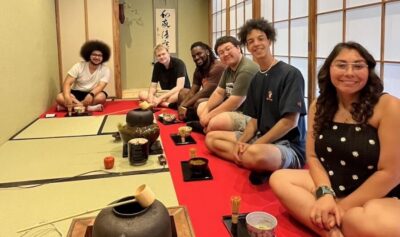
Browse the lists this tour appears in