
Reviewed · CYCLING AND E-BIKE TOURS
Kyoto: Early Bird E-Bike Tour with Lunch
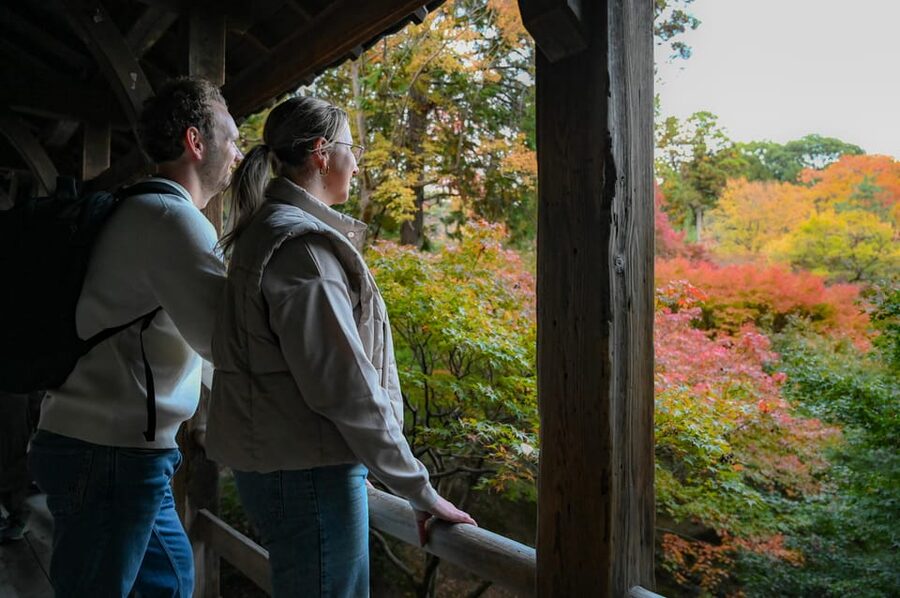
Beat Kyoto’s crowds on two wheels. This seven-hour e-bike tour covers a generous sweep of south and east Kyoto, from the vermilion gates of Fushimi Inari to the canals of Gion. I like the early start, which gives you a calmer look at Kyoto’s most famous shrine, and the small group, limited to eight people.
I also like that the day includes real pauses: coffee at a local café and a sit-down lunch, not just quick photo stops. Guides such as Julian, Indra, Carl, and Karl have been praised for their energy, local stories, and willingness to adjust the pace. The main drawback is simple: you must be comfortable riding for much of the day, and some uphill stretches make the e-bike more than a luxury.
In This Review
- Key points to know before booking
- Why an early e-bike is a smart way to see Kyoto
- Starting near Kyoto Station
- Fushimi Inari before the crowds
- Tofukuji and the ride beside the Kamo River
- A local café break with your guide
- Ginkakuji and the Path of Philosophy
- Nanzenji, the aqueduct, and Heian Shrine
- Lunch is part of the value
- Shirakawa Canal and the streets of Gion
- Ending at Higashi Honganji Temple
- What the $135 price really covers
- Who should book this ride
- Booking flexibility and practical details
- Should you book Kyoto’s early-bird e-bike tour?
- FAQ
- How long does the Kyoto e-bike tour last?
- What is included in the tour price?
- Is hotel pickup and drop-off included?
- How large is the group?
- What should I bring?
- Who should not take this tour?
Key points to know before booking
- Early access to Fushimi Inari: You reach the shrine before the crowds arrive, making the famous torii gates easier to enjoy.
- A full east Kyoto route: The day links Fushimi Inari, Tofukuji, Ginkakuji, Nanzenji, Heian Shrine, Gion, and Higashi Honganji.
- Coffee and lunch included: You get a morning café break, a proper sit-down lunch, and water, though extra drinks and snacks cost more.
- Small group, English guide: With no more than eight participants, it is easier to ask questions and keep a sensible pace.
- E-bike power matters: The motor helps on uphill sections, but this remains a cycling tour, not a sightseeing ride from a bus.
- Good value for an active day: At $135, the price covers the bike, helmet, guide, coffee, lunch, and seven hours of sightseeing.
Why an early e-bike is a smart way to see Kyoto
Kyoto’s famous sights are spread out, and moving between them can eat up a surprising amount of your day. By bicycle, you avoid spending every hour on trains, buses, or waiting at crowded crossings. The e-bike also lets you cover ground without turning the day into a test of athletic endurance.
The early start is especially useful at Fushimi Inari Taisha. The shrine is open throughout the day, but its lower torii-gate paths become much harder to enjoy once large crowds arrive. Getting there first gives you a better chance to appreciate the repeated red gates, the wooded setting, and the shrine’s layered paths without stopping every few seconds for a photo.
You will still spend a long time in the saddle. The schedule includes a safety briefing, several guided visits, river riding, café time, lunch, and the ride back to Cycle Kyoto. Past participants found the day manageable rather than exhausting, but they also stressed the value of choosing an e-bike because some sections climb.
More Bike Tours in Kyoto
- Bike Tour Exploring North Kyoto plus Lunch
★ 5.0 · 1,087 reviews - Arashiyama Bamboo Forest & Hidden Gems Bike Tour (Early Bird)
★ 5.0 · 613 reviews - 5 Top Highlights of Kyoto Full Day Bike Tour (E-bike option)
★ 5.0 · 511 reviews
Starting near Kyoto Station
The tour begins at Cycle Kyoto, within walking distance of JR Kyoto Station. From the station, walk past Avanti, cross at the traffic lights, pass the Daily Yamazaki convenience store, and take the next left.
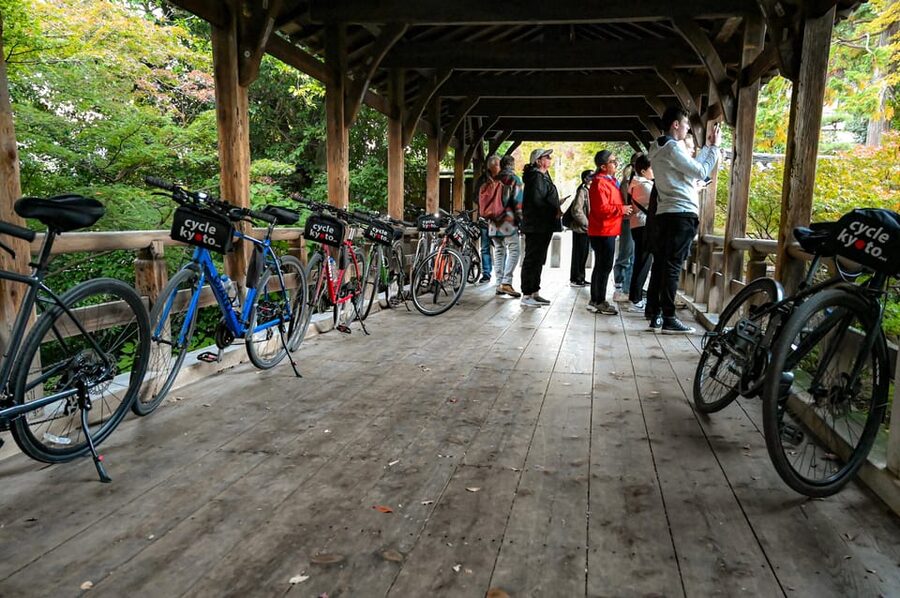
Arrive 15 minutes early. The opening safety briefing lasts about 15 minutes and gives you time to get used to the bicycle, listen to the guide’s instructions, and settle into the group. Helmets and e-bikes are included.
The group size is limited to eight. That is a useful middle ground: large enough to have company, but small enough for a guide to notice if someone needs a slower pace or wants to pause for a picture. Carl was praised for adjusting the time spent at different stops, while Julian was noted for keeping the day lively and well organized.
Fushimi Inari before the crowds
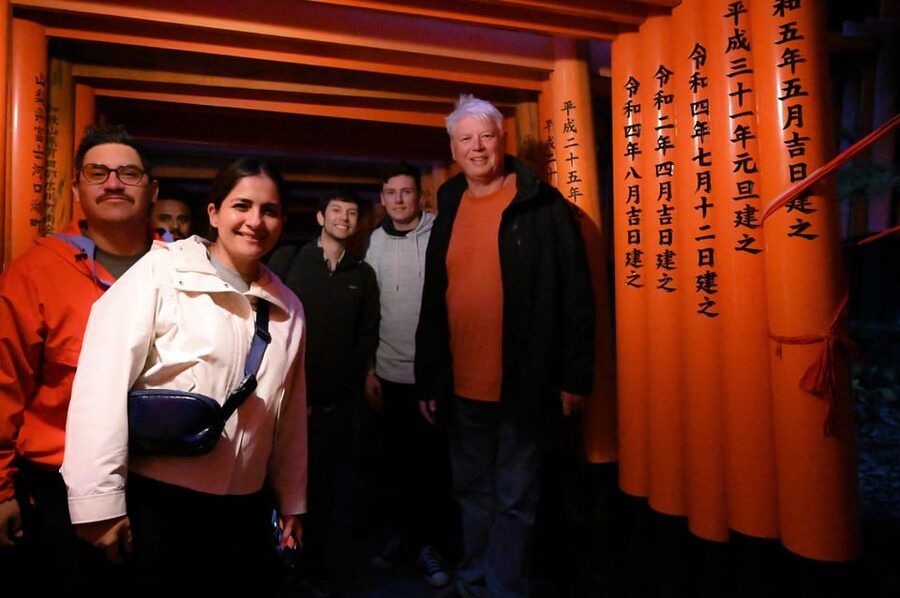
The first major stop is Fushimi Inari Taisha, reached after cycling south from the meeting point. You have about 45 minutes for a guided visit.
Fushimi Inari is best known for its long rows of orange-red torii gates, which climb into the forest behind the main shrine buildings. The lower area is the most recognizable and the easiest to visit during a timed tour. Your guide can give context to the shrine and help you understand what you are seeing instead of leaving you to wander through a sea of gates without a sense of place.
The timing is the real prize. Fushimi Inari is one of Kyoto’s most photographed sites, so the early arrival changes the mood. You may still see other visitors, but the paths are generally more pleasant before the day builds.
The visit is not a long mountain hike. Still, you should wear shoes that work for walking and cycling, since the shrine grounds include steps and uneven sections. Your 45 minutes will pass quickly if you stop often for pictures.
Tofukuji and the ride beside the Kamo River
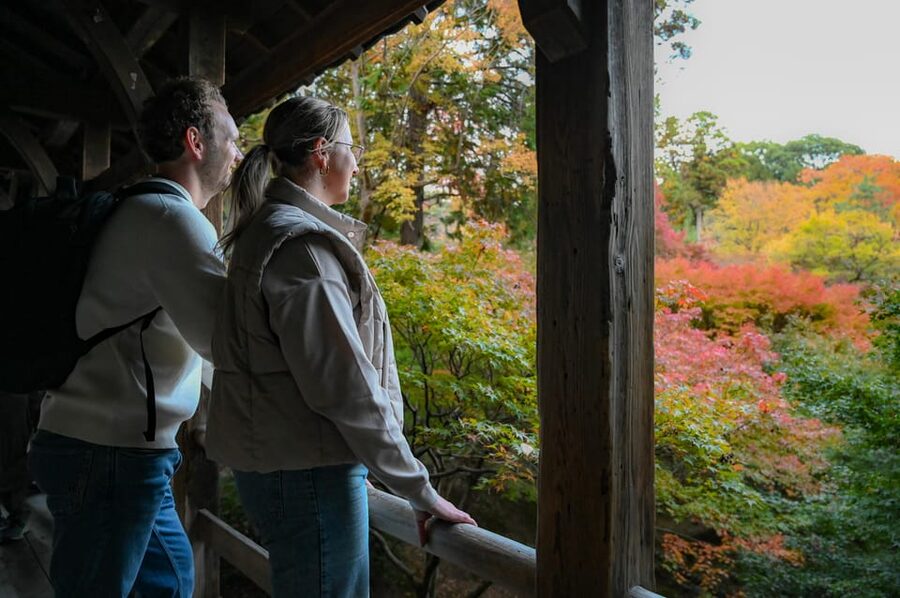
From Fushimi Inari, the route continues toward Tofukuji Temple. Tofukuji is one of Kyoto’s major Zen temples, known for its temple grounds and seasonal scenery. The visit adds another side of Kyoto before the route leaves the southern temple district.
The ride then reaches the Kamo River, where you spend around 40 minutes visiting and cycling along the river. This is one of the tour’s quieter shifts in pace. Instead of moving from one formal temple entrance to the next, you get open views and a chance to see how Kyoto’s daily life fits around the water.
Cycling along the Kamo River also gives you a break from temple paths and city traffic. The route is not simply a string of famous names. It includes the spaces between them, which helps you understand Kyoto as a working city rather than a collection of monuments.
A completely different kind of day out:
- PERFECT KYOTO 1-Day Bus Tour
★ 5.0 · 13,518 reviews - [Kyoto & Nara Day Tour] Sagano Scenic Railway & Nara Park & Fushimi Inari Taisha Thousand Torii Gates & Togetsukyo Bridge & Bamboo Grove & Kimono Forest (Departing from Osaka)
★ 4.9 · 10,942 reviews - Kyoto: Fushimi Inari, Kinkakuji, Bamboo Grove 1 Day Bus Tour
★ 4.8 · 4,316 reviews - Kyoto: Tea Ceremony in a Traditional Tea House in Kiyomizu
★ 4.9 · 3,519 reviews
A local café break with your guide
The morning coffee stop lasts about 20 minutes. The coffee is included, and the café is described as one of the guide’s favorite local haunts.
Do not expect a long café linger. Twenty minutes is enough to get a drink, rest your legs, and ask the guide questions. It is also a useful chance to learn about places that may not appear in a standard sightseeing plan. The guides have been praised for sharing small facts and stories beyond the basic information found in guidebooks.
This is a modest part of the day, but it improves the rhythm. You are not riding continuously from one temple to another, and you get a chance to reset before the route heads north toward Ginkakuji.
Ginkakuji and the Path of Philosophy
Ginkakuji, the Silver Pavilion, is one of the main highlights and receives about an hour of guided attention. It is UNESCO-listed as part of Kyoto’s historic monuments, and its gardens are a major reason to visit.
Despite its name, the pavilion is not covered in silver. The name reflects an old plan rather than the building’s actual appearance. The grounds are the real attraction, with carefully arranged gardens and a calm sense of order that rewards slow looking.
A guide adds value here because the details can be easy to miss. You can ask about the temple’s design, religious role, and gardens while seeing the site in person. With only an hour, you will not have unlimited time, so listen first and save the final minutes for your own photographs.
After Ginkakuji, you roll slowly south along the Path of Philosophy. This famous walking route follows a canal lined with trees and small temples, shops, and gardens. On a bicycle, you can cover more of it than you would on foot, but you should not expect to race through. The route is better at a gentle pace, with attention to pedestrians and the scenery.
The Path of Philosophy is also one of the places where cycling conditions matter. You share space with people walking, and a considerate pace is essential. The tour’s e-bike makes the distance easier, but it does not remove the need for careful riding.
Nanzenji, the aqueduct, and Heian Shrine
The route continues into Nanzenji Temple, with about 35 minutes for a guided visit. Nanzenji combines traditional religious buildings, gardens, and a striking red-brick aqueduct. That mix gives the grounds a different character from Ginkakuji.
The aqueduct is especially memorable because it looks out of place at first glance. Its brick arches reflect a later period of infrastructure and show how old temple districts can contain layers from different eras. You get both formal Japanese garden design and a practical engineering work in the same stop.
The Nanzenji visit is fairly short, so you will see selected parts rather than every corner of the grounds. That is a fair trade on a route covering this much of Kyoto. If you want a long, quiet temple visit with no schedule, a private visit on foot may suit you better.
Heian Shrine follows with about 30 minutes. Its large entrance gate and broad grounds offer a change from the intimate paths and enclosed gardens earlier in the day. The stop helps vary the experience, giving you a wide ceremonial space before the route turns toward Gion.
Lunch is part of the value
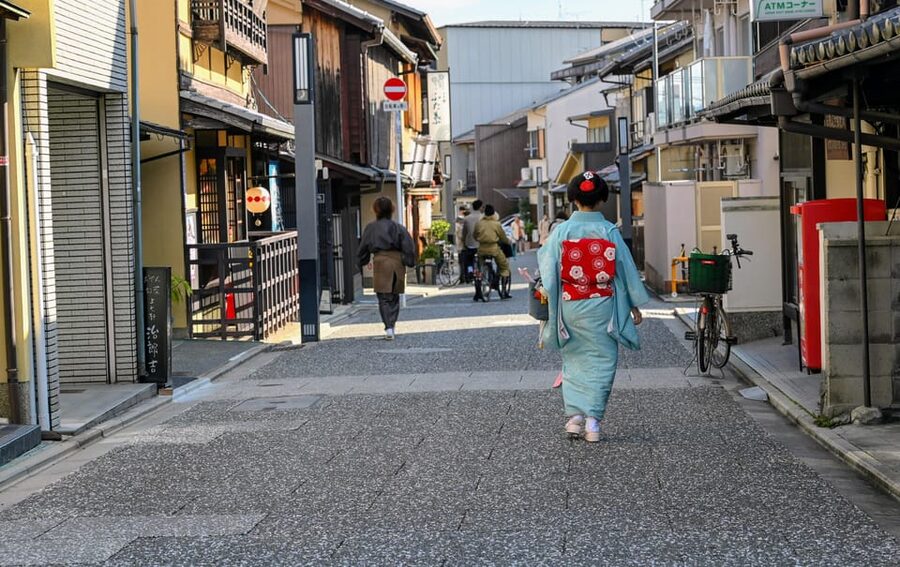
Lunch is a 40-minute stop at a local restaurant, and a sit-down meal is included in the price. That matters on a seven-hour active tour. You can eat properly rather than relying on a convenience-store snack while standing beside a bicycle.
The exact menu is not specified, so you should not book this expecting a particular dish. Extra drinks and snacks are not included, and it is wise to carry some money for anything beyond the supplied meal and water.
The lunch break also divides the day into two manageable sections. By this point, you will have already seen Fushimi Inari, Tofukuji, the Kamo River, Ginkakuji, and part of the Path of Philosophy. After eating, the final section moves through Nanzenji, Heian Shrine, Gion, and Higashi Honganji before returning to the base.
Shirakawa Canal and the streets of Gion
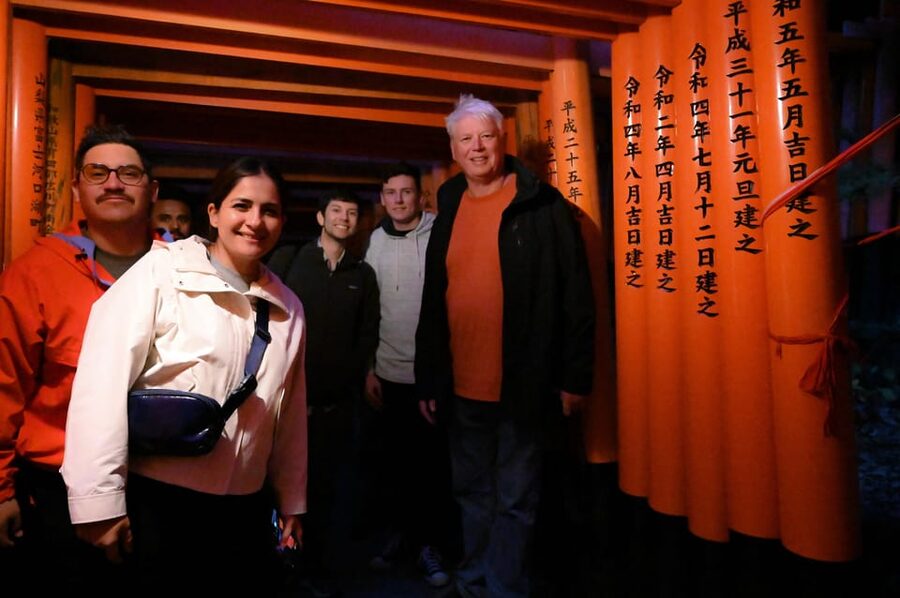
The last leg heads south along the Shirakawa Canal and into Gion. This is where the tour shifts from major temple grounds to Kyoto’s traditional urban scenery.
The Shirakawa Canal is known for its waterway, narrow streets, and traditional buildings. Riding here lets you see the district at street level, though you should expect a slower pace and careful attention to pedestrians. Gion is not a place for fast cycling. The value is in seeing the street pattern, canals, and architecture while your guide points out what makes the area distinctive.
The Gion visit lasts about 50 minutes. That gives you enough time to understand the district, take photographs, and hear explanations without making the stop feel like a rushed pass-through.
Remember that Gion is a lived-in neighborhood, not a theme park. Follow the guide’s instructions, avoid blocking narrow streets, and do not treat private entrances as photo backdrops. The tour’s small size helps, but good manners still matter.
Ending at Higashi Honganji Temple
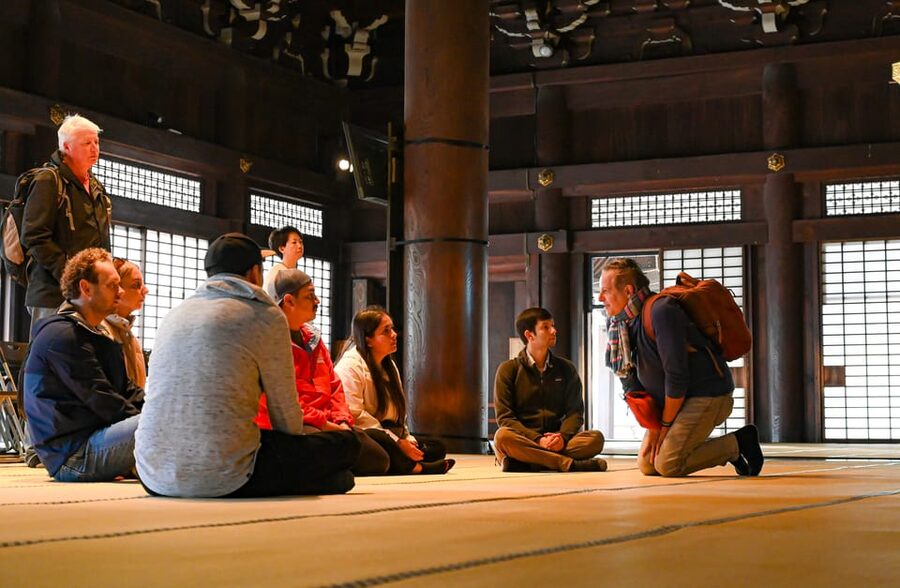
The final guided stop is Higashi Honganji Temple, with about 50 minutes before the ride back to Cycle Kyoto. The temple provides a strong closing point because it brings you back toward central Kyoto and the area around Kyoto Station.
Higashi Honganji is a major Buddhist temple with imposing religious buildings and broad grounds. After the intimate canal lanes of Gion, its scale feels different. The stop also gives the guide room to connect the day’s many temples and shrines, from Shinto worship at Fushimi Inari to the Buddhist traditions represented at several later sites.
Then you cycle back to the starting point. The return is included, so you do not need to arrange separate transport for the bicycle or figure out how to retrieve your belongings elsewhere.
What the $135 price really covers
At $135 per person, this is not the cheapest way to see Kyoto. The cost makes more sense when you count what is included: a seven-hour guided route, e-bike rental, helmet, coffee, sit-down lunch, and water.
You are also paying for the route planning. Seeing these places independently would require combining trains, buses, walking, and several separate decisions about order and timing. Fushimi Inari before the crowds is not just a destination choice. It is a timing advantage built into the day.
The small group adds value, too. A maximum of eight people makes it more practical to ask a question, stop for a photograph, or let the guide adjust the pace. The strongest praise has focused on guides who explain clearly, share local facts, and keep the day moving without making it feel rushed.
The price is less appealing if you already plan to rent a bicycle separately, dislike group schedules, or want to spend half a day at one temple. It is a good fit if your Kyoto time is limited and you want to see many east and south Kyoto highlights in one organized day.
Who should book this ride
I would recommend it to confident cyclists who want an active overview of Kyoto. It is particularly useful for a first visit, when you want an introduction to several major sites and a guide to explain what you are seeing.
It also suits people who like a little local texture. The café stop, Kamo River ride, canal route, and neighborhood streets keep the day from becoming a temple checklist. The guides have been praised for sharing facts that go beyond standard sightseeing notes, which can make a packed day feel more personal.
You should think twice if you cannot ride a bike, have back problems, or are pregnant. Those conditions are specifically listed as unsuitable for the activity. You also need comfortable clothing and shoes, plus sunscreen and a hat. Warm clothing and gloves are sensible additions, especially in cooler weather.
Bring a camera, but do not overload yourself. You will want your hands free and your clothes comfortable. Water is included, but carry enough personal hydration for your own needs, particularly on a warm day.
Booking flexibility and practical details
You can cancel up to 24 hours before the start for a full refund, and you can reserve now and pay later. Starting times vary, so check availability for the date you want.
The tour is offered in English with a live guide. Smoking, alcohol, and drugs are not allowed. Hotel pickup and drop-off are not included, so plan your route to the Cycle Kyoto meeting point in advance.
Should you book Kyoto’s early-bird e-bike tour?
Book it if you want one active day that connects Kyoto’s major eastern sights, especially if Fushimi Inari, Ginkakuji, Gion, and Nanzenji are high on your list. The early timing, included meals, small group, and strong guide feedback make the $135 easier to justify.
Skip it if you want a slow temple day, dislike cycling in city streets, or are not comfortable with seven hours of scheduled activity. For the right rider, though, this is an efficient and unusually human way to get oriented in Kyoto, with enough coffee, lunch, river air, and neighborhood riding to keep the famous sights from blurring together.
FAQ
How long does the Kyoto e-bike tour last?
The tour lasts seven hours, including the safety briefing, guided visits, coffee break, lunch, cycling time, and return to Cycle Kyoto.
What is included in the tour price?
The price includes an e-bike, helmet, English-speaking live guide, morning coffee, a sit-down lunch, and water.
Is hotel pickup and drop-off included?
No. You must make your own way to Cycle Kyoto and return from there after the tour.
How large is the group?
The tour is limited to eight participants, making it a small-group experience.
What should I bring?
Bring comfortable clothes, comfortable shoes suitable for biking, a hat, sunscreen, a camera, warm clothing, and gloves. You should also carry water for hydration.
Who should not take this tour?
The activity is not suitable for pregnant women, people with back problems, or people who cannot ride a bike.
More Lunch Experiences in Kyoto
- Osaka/Kyoto: Arashiyama, Nara & Fushimi Inari Shrine w/Lunch
★ 4.4 · 754 reviews - Kyoto Zen Meditation & Garden Tour at a Zen Temple with Lunch
★ 5.0 · 441 reviews - 4.5-Hour Kyoto Bike Tour with Lunch and UNESCO Zen Temples
★ 5.0 · 122 reviews - From Kyoto: Nara History Guided Half Day Bus Tour with Lunch
★ 4.8 · 114 reviews
Just added in Kyoto
- The “Golden Route” and Ancient Japan by DIAMIR Erlebnisreisen – 14-Day Tour★ 2.0 · 2 reviews
- Japan: Castles & Cuisine by G Adventures – 6-Day Kyoto to Osaka Tour★ 4.5 · 4 reviews
- Cycle Japan by Explore! – 13-Day Kyoto to Tokyo Tour★ 4.7 · 12 reviews
- Cycle Japan by Intrepid Travel – 11-Day Kyoto to Tokyo Tour★ 4.8 · 2 reviews
- Classic Japan by Intrepid Travel – 11-Day Kyoto to Tokyo Tour★ 4.4 · 14 reviews
- Ancient & Modern Japan 14-Day Tour by Exodus Adventure Travels★ 4.4 · 40 reviews
- 5 Day Cultural Adventure of Kyoto, Nara & Osaka by Tourist Journey★ 2.5 · 2 reviews
- 12 Days Kinosaki Onsen Escape: A Journey Through Japan’s Timeless Towns by UME Travel★ 4.8 · 5 reviews
Cycling and E-Bike Tours, compared.
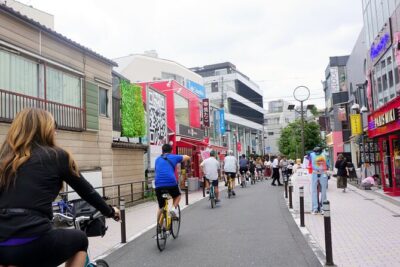
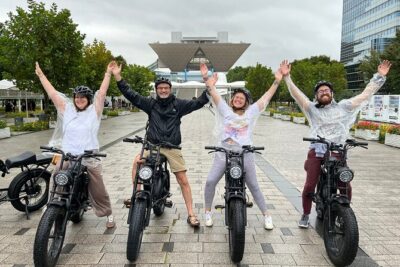
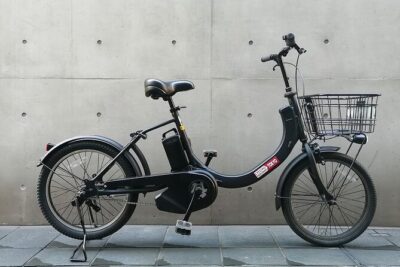
3h Tokyo E-Bike Tour: Hidden Gems, and Local Life with guide
Read our review →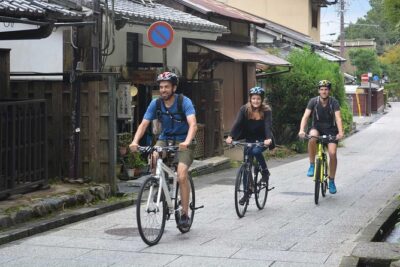
Arashiyama Bamboo Forest & Hidden Gems Bike Tour (Early Bird)
Read our review →
5 Top Highlights of Kyoto Full Day Bike Tour (E-bike option)
Read our review →

Hiroshima 2hr Peace Cycling Tour with Local Guide
Read our review →Browse the lists this tour appears in