
Reviewed · TEMPLES AND SHRINES
Kyoto Fushimi Inari Night Walking Tour
The torii gates look better after sunset. This one-hour walk at Kyoto’s Fushimi Inari Shrine gives you an evening look at Japan’s most famous shrine without committing half a day. I like the cooler timing and the chance to learn about Shinto and Buddhism from an English-speaking guide. I also like the modest $35.93 price, especially for a small-group tour capped at 15 people.
The main drawback is the short length. You get an informative introduction and a guided walk, not a full climb through every section of the shrine. The 5:00 pm start can also bring daylight at first, depending on the season, so this is better described as an evening visit than a guaranteed late-night experience.
In This Review
- Key points
- Why an evening walk suits Fushimi Inari
- Finding the group at JR Inari Station
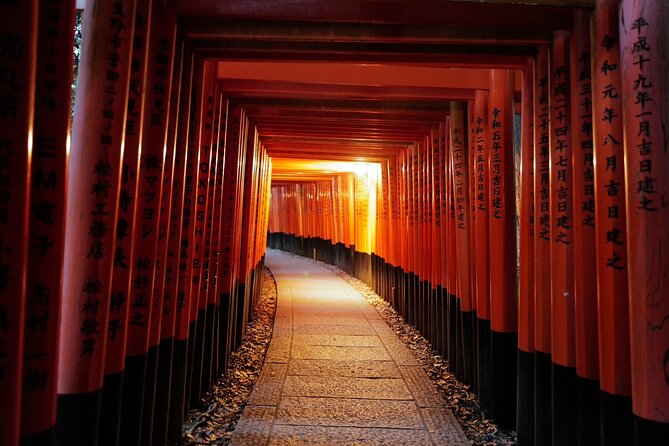
- Walking beneath 10,000 torii gates
- Shinto, Buddhism, and the stories behind the shrine
- What the one-hour format really gives you
- The guides make the difference
- Is $35.93 a fair price?
- Who should book this Fushimi Inari walk?
- Practical tips for a better evening
- Should you book it?
- FAQ
- Where does the tour begin?
- What time does the tour start?
- How long does the tour last?
- What does the tour include?
- Is admission to Fushimi Inari Shrine included?
- What is not included?
- How many people can join the tour?
Key points
- Evening timing: Begin at 5:00 pm, when the shrine is a more comfortable choice than a midday visit.
- 10,000 torii gates: Walk beneath Fushimi Inari’s famous orange-red gates and learn what they represent.
- English-speaking guides: Guides including Kanami, Mai, Satsuki Morikawa, Moto, and Haruki have received especially warm praise.
- A focused one-hour route: Ideal before dinner, after dinner, or as a short Kyoto activity.
- Free shrine admission: Your payment covers the guided experience, not an entrance ticket.
- Easy meeting point: Meet outside the Daily Yamazaki convenience store by JR Inari Station.
Why an evening walk suits Fushimi Inari
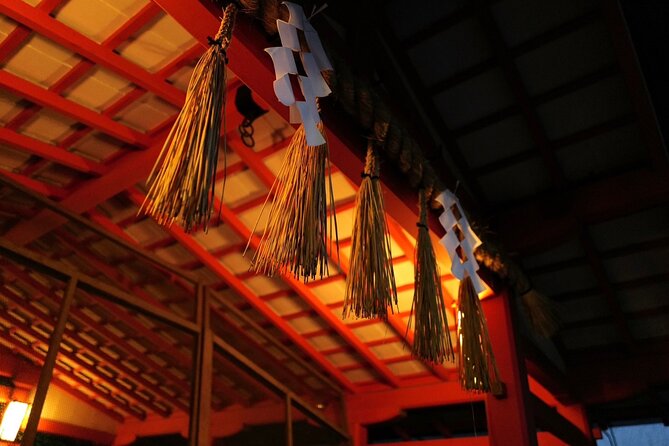
Fushimi Inari-taisha is one of Kyoto’s essential sights. Its long rows of orange-red torii gates climb Mount Inari, creating the famous tunnel-like view seen in countless photographs. The shrine is dedicated to Inari, a Shinto deity associated with rice, prosperity, and business, and fox statues appear throughout the grounds as Inari’s messengers.
The shrine is open to the public without an admission charge, but free entry does not mean the place is simple to understand. A guide can explain the religious symbols, the purpose of the gates, and the difference between Shinto and Buddhism while you walk. That context gives the bright gates and stone foxes more meaning than a quick photo stop would provide.
The evening schedule is practical for a Kyoto sightseeing day. You can spend the morning and afternoon elsewhere, then reach Inari for a short walk before dinner. The start time is 5:00 pm, so the exact feel will depend on the season. In summer, you may begin with plenty of daylight. In winter, the visit will feel much more like a night outing.
I like this timing because Fushimi Inari can feel demanding in the middle of the day. The shrine’s paths rise uphill, and the gates continue far beyond the first photogenic section. A cooler evening makes the walk easier, though you should still wear comfortable shoes.
More Temples and Shrines in Kyoto
- [Kyoto & Nara Day Tour] Sagano Scenic Railway & Nara Park & Fushimi Inari Taisha Thousand Torii Gates & Togetsukyo Bridge & Bamboo Grove & Kimono Forest (Departing from Osaka)
★ 4.9 · 10,942 reviews - Kyoto: Fushimi Inari, Kinkakuji, Bamboo Grove 1 Day Bus Tour
★ 4.8 · 4,316 reviews - Kyoto: Tea Ceremony in a Traditional Tea House in Kiyomizu
★ 4.9 · 3,519 reviews
Finding the group at JR Inari Station
The meeting point is unusually simple. Exit JR Inari Station, turn left, and look for the Daily Yamazaki convenience store. The group meets in front of the store at 5:00 pm.
That location matters because the station is right by the shrine entrance. You do not need a long transfer from a distant part of Kyoto once you reach the area. The tour ends at Fushimi Inari-taisha, at 68 Fukakusa Yabunouchicho, so the walk finishes inside the shrine complex rather than returning you to the station.
Give yourself enough time to locate the correct exit and meeting spot. The instructions are clear, but a prompt start is important on a one-hour tour. If you arrive early, the convenience store gives you a practical place to wait or buy a drink. Food and drinks are not included, so plan to purchase anything you need before the walk.
The experience uses a mobile ticket, and confirmation is provided when you book. It is also near public transportation, making it a sensible addition to a Kyoto evening rather than a complicated standalone trip.
Walking beneath 10,000 torii gates
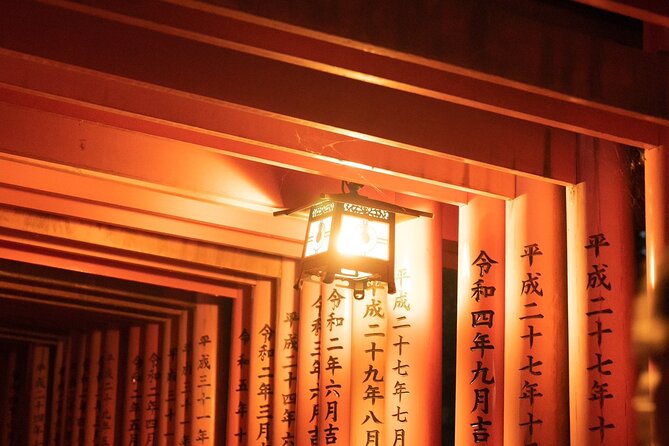
The torii gates are the heart of the visit. They form repeated corridors of orange-red posts, with Japanese characters written on the wooden surfaces. Each gate has been donated by an individual or company, often as a wish for success or as thanks for good fortune.
You will begin near the main shrine area, then follow the paths where the torii gates become the main visual feature. The route is attractive from the first stretch, but the setting changes as you continue uphill. A one-hour tour will not cover every part of the mountain, and that is worth understanding before you book.
The short route works well if you want an introduction rather than a serious hike. Your guide can point out details that are easy to miss when you are focused on taking photographs. One guide, Kanami, was praised for answering questions, noticing small details, and suggesting good photo opportunities. Those touches are valuable at a shrine where the repeated gates can look similar at first glance.
Photo timing is another reason to choose the evening. The guide can help you find attractive angles and may know where to pause without blocking the path. The tour does not promise an empty shrine, and you should not expect complete solitude, but the evening schedule is designed to avoid the worst of the midday heat and crowds.
Shinto, Buddhism, and the stories behind the shrine
The tour is not only a walk through photogenic gates. A central part of the experience is learning about Shinto, Buddhism, and the way these traditions differ.
Shinto is Japan’s native religious tradition, with a strong focus on kami, sacred places, rituals, and connections between people and the natural world. Buddhism arrived in Japan from outside the country and developed its own teachings, temples, and practices. The two traditions have influenced Japanese life for centuries, and their symbols can be confusing if you are seeing them for the first time.
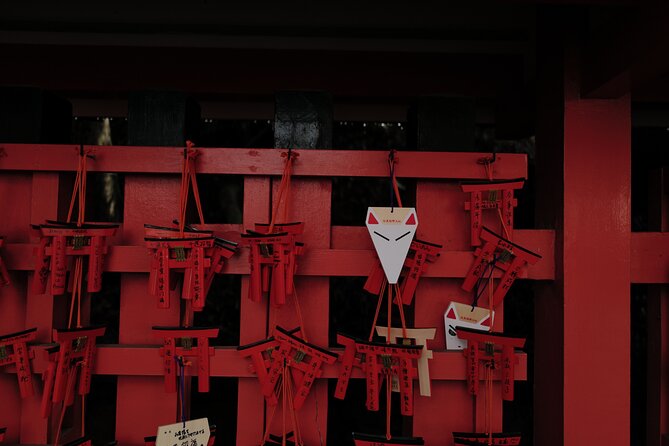
At Fushimi Inari, this explanation helps you read the site more carefully. You can ask why torii gates are used, what the fox figures mean, and how a shrine differs from a Buddhist temple. The guide’s role is especially useful here because you are learning while looking at the actual buildings and objects around you.
Haruki received praise for explaining both the shrine and the differences between Buddhism and Shinto. The same guide also offered transport advice for the surrounding area, which can be useful if Fushimi Inari is one stop in a longer Kyoto itinerary. This kind of practical conversation is one reason I think a short guided walk can be worth paying for even when the shrine itself costs nothing to enter.
More Walking Tours in Kyoto
- Kyoto Geisha Walking Tour: Gion District & Hidden Gems
★ 4.7 · 3,273 reviews - Kyoto: Gion Magical Night Walking Tour with Geisha Trivia
★ 4.9 · 2,393 reviews - Kyoto: Gion Geisha District Walking Tour – Stories of Geisha
★ 4.7 · 2,187 reviews - Night Walk in Gion: Kyoto’s Geisha District
★ 4.5 · 2,003 reviews
What the one-hour format really gives you
One hour is enough for a clear introduction, but it calls for realistic expectations. You will have time to walk through a major section of the torii gates, hear background about the shrine, ask questions, and take photographs. You will not have time to explore every trail, climb the full mountain, or linger at every structure.
That limit is a benefit for some people. If you have only a few evenings in Kyoto, this tour gives you a manageable visit with a defined start and finish. It also fits neatly before or after dinner, which is more useful than a long excursion for many sightseeing plans.
Families may appreciate the format as well. Satsuki Morikawa was praised for making the experience enjoyable for both an adult and a 13-year-old grandson. That suggests the explanations can work across age groups, especially for families who want cultural context without signing up for a long lecture.
The short length may frustrate you if your main goal is to reach the higher sections of Mount Inari. In that case, you could use the guided hour as an orientation, then continue exploring independently if time and energy allow. The supplied information does not promise that the tour includes the full mountain route, so do not book it expecting an extended hike.
The guides make the difference
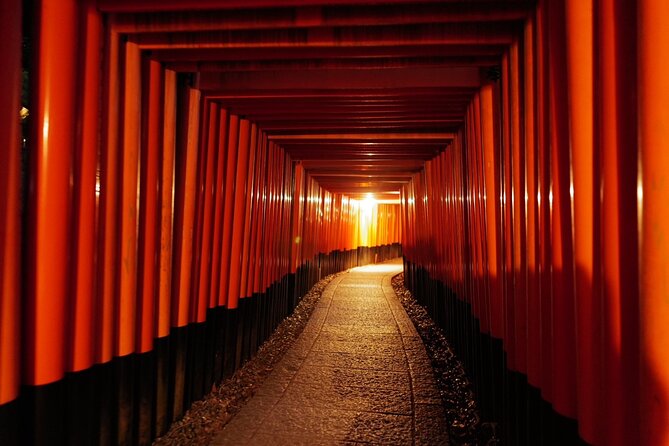
The strongest part of this experience is the human element. Different dates may have different guides, but several names have earned particularly warm praise.
Kanami was appreciated for strong answers, small details, and photo suggestions. Mai was described as an excellent guide for an evening visit, with an emphasis on both good photographs and useful information. Moto was praised for being kind and well informed about the shrine.
Satsuki Morikawa received especially strong family-focused praise for taking time to make the visit enjoyable. Haruki was valued for explaining religious traditions and offering transport guidance around Kyoto. These comments point to a consistent quality that matters more than a memorized script: the guides appear to adjust to questions and the needs of the group.
The group size can reach 15 people. That is not a private tour, but it is still small enough for an English-speaking guide to address questions more easily than on a large coach excursion. If you want a completely personal pace, this may feel too social. If you prefer some company and a guide who can keep the walk moving, the size is reasonable.
Is $35.93 a fair price?
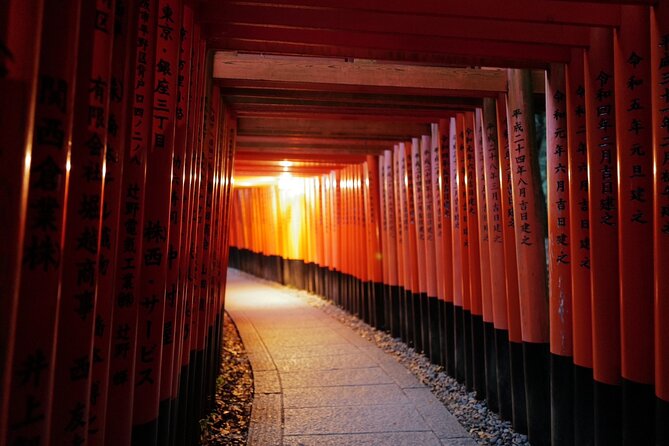
At $35.93 per person, the tour is priced as a low-cost guided introduction. Since admission to Fushimi Inari is free, you are paying for the guide, the explanation, the organized meeting point, and the convenience of a set route.
The value depends on how you would otherwise visit. If you are comfortable reading about Shinto, Buddhism, and the shrine on your own, you can enter independently without paying for admission. But a guide can answer questions as they arise and help you make better use of a short evening visit.
I consider the price fair for three reasons. First, the walk is focused on one of Kyoto’s most important sights rather than padded with unrelated stops. Second, the evening timing helps you fit it into a busy schedule. Third, the guide adds cultural meaning to a place that can otherwise become a quick photo stop.
This is not the right purchase if you want food, transport, hotel pickup, or a long mountain hike. None of those are included. You pay for an English-speaking guide and one hour of instruction at the shrine.
Who should book this Fushimi Inari walk?
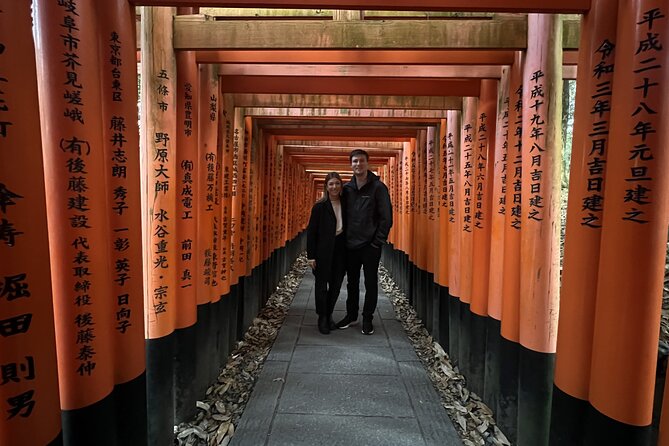
I would recommend it most strongly to first-time visitors who want help understanding what they are seeing. It also suits you if you have only a short window in Kyoto, prefer an evening activity, or want a guide to suggest photo spots and explain local religious traditions.
Families with older children and teenagers may find the length manageable. The experience has also worked well for a 13-year-old, according to the feedback available. The cultural subject is substantial, but the walk keeps it tied to visible details rather than treating the shrine like a classroom.
It is also a good fit if you are looking for ideas for the rest of your Japan trip. Guides have offered transport advice and broader recommendations, so you may get useful help beyond the shrine itself.
I would hesitate to recommend it if you dislike group walks, need a private guide, or want to reach the summit of Mount Inari. The group may include up to 15 people, and the one-hour format limits how far you can go. Independent visitors who mainly want photographs may also prefer to enter on their own and stay as long as they like.
Free cancellation is available if you cancel at least 24 hours before the 5:00 pm start time. Cancellations or changes made less than 24 hours ahead are not accepted for a refund, so keep that deadline in mind when planning your Kyoto days.
Practical tips for a better evening
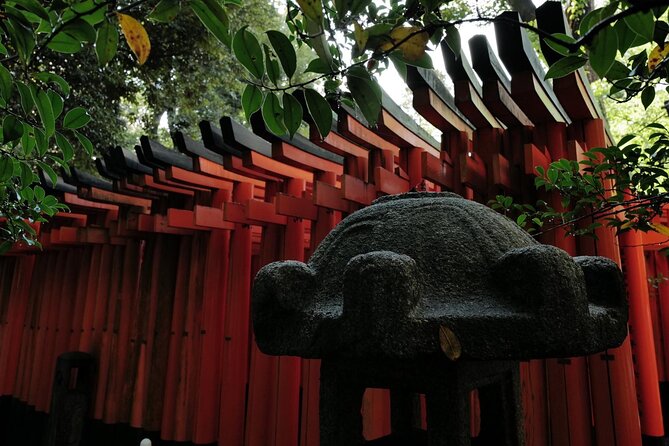
Wear shoes suitable for an uphill walk. The tour is only about an hour, but Fushimi Inari’s paths do rise, and the gate corridors can encourage you to keep walking farther than planned.
Arrive at JR Inari Station early enough to find the Daily Yamazaki store. The meeting instructions are straightforward: exit, turn left, and meet in front of the store. Bring your mobile ticket and consider buying water or a snack before the walk, since food and drinks are not included.
Keep your camera ready, but leave room to listen. The best part of the tour is not simply recording the gates. It is learning why they are there, what the fox statues signify, and how the shrine fits into Japanese religious life.
If you hope for a dark, quiet visit, check the season before booking. A 5:00 pm start may still be in daylight, especially in summer. The timing is still useful for avoiding the hottest part of the day, but it does not guarantee a late-night atmosphere.
Should you book it?
Book this Fushimi Inari night walking tour if you want an affordable, compact introduction with an English-speaking guide. The combination of evening timing, a simple station meeting point, strong guide feedback, and a maximum group size of 15 makes it a practical choice for a first Kyoto visit.
Skip it if you want a full mountain climb or unlimited time for independent photography. For everyone else, $35.93 buys more than a walk under orange gates. It gives you a clearer understanding of the shrine and a well-shaped hour before the rest of your Kyoto evening begins.
FAQ
Where does the tour begin?
The tour begins at Inari Station in Kyoto. After exiting JR Inari Station, turn left and meet in front of the Daily Yamazaki convenience store.
What time does the tour start?
The tour starts at 5:00 pm.
How long does the tour last?
The walking tour lasts approximately one hour.
What does the tour include?
It includes an English-speaking guide and a one-hour in-depth tour of Fushimi Inari Shrine.
Is admission to Fushimi Inari Shrine included?
Admission is listed as free. The tour price covers the guided experience rather than an entrance ticket.
What is not included?
Hotel pickup, food, and drinks are not included.
How many people can join the tour?
The activity can have a maximum of 15 participants.
Just added in Kyoto
- The “Golden Route” and Ancient Japan by DIAMIR Erlebnisreisen – 14-Day Tour★ 2.0 · 2 reviews
- Japan: Castles & Cuisine by G Adventures – 6-Day Kyoto to Osaka Tour★ 4.5 · 4 reviews
- Cycle Japan by Explore! – 13-Day Kyoto to Tokyo Tour★ 4.7 · 12 reviews
- Cycle Japan by Intrepid Travel – 11-Day Kyoto to Tokyo Tour★ 4.8 · 2 reviews
- Classic Japan by Intrepid Travel – 11-Day Kyoto to Tokyo Tour★ 4.4 · 14 reviews
- Ancient & Modern Japan 14-Day Tour by Exodus Adventure Travels★ 4.4 · 40 reviews
- 5 Day Cultural Adventure of Kyoto, Nara & Osaka by Tourist Journey★ 2.5 · 2 reviews
- 12 Days Kinosaki Onsen Escape: A Journey Through Japan’s Timeless Towns by UME Travel★ 4.8 · 5 reviews
Temples and Shrines, compared.
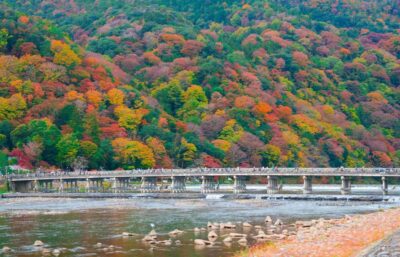
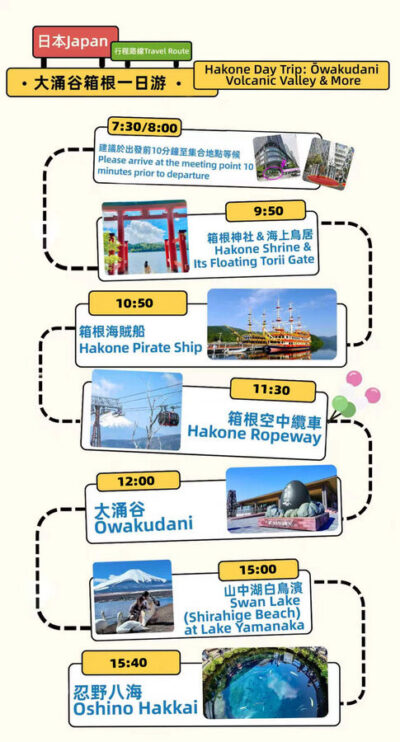
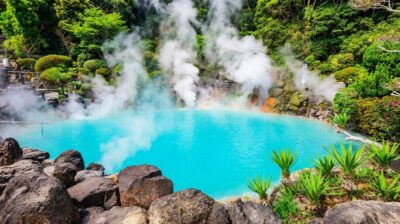
Kyushu One-Day Tour: Yufuin no Mori Train & Yufuin Town & Nyoirin-ji Temple & Dazaifu & Hell Hot Springs (Departing from Fukuoka)
Read our review →
Fushimi Inari, Kinkakuji, Bamboo Grove 1 Day Bus Tour
Read our review →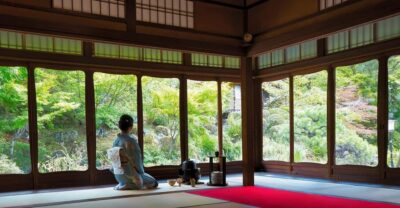
Tea Ceremony in a Traditional Tea House in Kiyomizu
Read our review →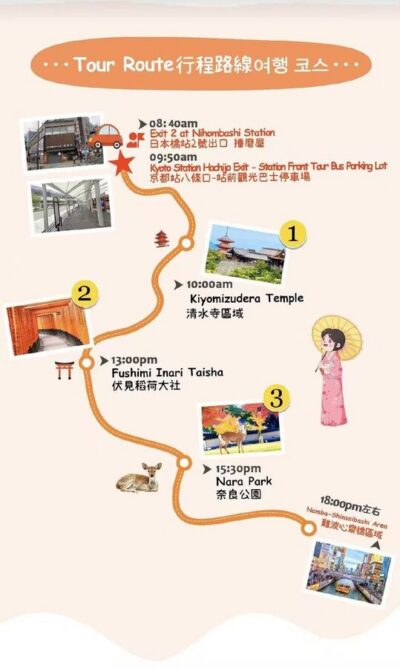
Kyoto Nara Day Trip │ Kiyomizu-dera Temple + Fushimi Inari-taisha Shrine + Nara Park (Departing from Osaka/Kyoto)
Read our review →
Browse the lists this tour appears in