
Reviewed · TEA CEREMONIES
Kyoto Kiyomizu Tea Ceremony with Scenic Garden Views
Slow down for a taste of old Kyoto. This 45-minute tea ceremony pairs a beautiful garden setting with a careful introduction to matcha, so you get more than a quick cup in a café. I like the intimate group size, capped at 12 people, and the chance to watch a tea master prepare the first bowl before making the second yourself. The main consideration is value: at $50.87 per person, the session may feel brief if you want a long, formal ceremony.
I also like how much attention goes to meaning, not just mechanics. An English-speaking host explains the history, etiquette, and symbolism while the tea master performs each movement. You receive two cups of matcha, traditional wagashi sweets, and a peaceful view of the garden, but you should know that the experience is not suited to people with poor feet or knees because sitting and moving in a traditional tea room can be demanding.
In This Review
- Key points to know before booking
- Arriving at Tea Ceremony SAKAGUCHIAN in Kiyomizu
- The first cup: watch the tea master at work
- The second cup: make your own matcha
- Why the garden view changes the experience
- The English guidance and question time
- Is $50.87 a fair price?
- How long the ceremony really feels
- Who will enjoy this most
- Photos, video, and what is included
- Booking, cancellation, and practical limits
- Should you book the Kyoto Kiyomizu tea ceremony?
- FAQ
- Where does the tea ceremony take place?
- Where does the activity end?
- How long does the tea ceremony last?
- How many people can join?
- How many cups of matcha are included?
- Are traditional Japanese sweets included?
- Is a photograph included?
- Is kimono rental included?
- Is video recording included?
- Can I cancel for a full refund?
- What happens if bad weather cancels the experience?
Key points to know before booking
- Two cups, two roles: Watch the first matcha being made, then learn to prepare the second cup yourself.
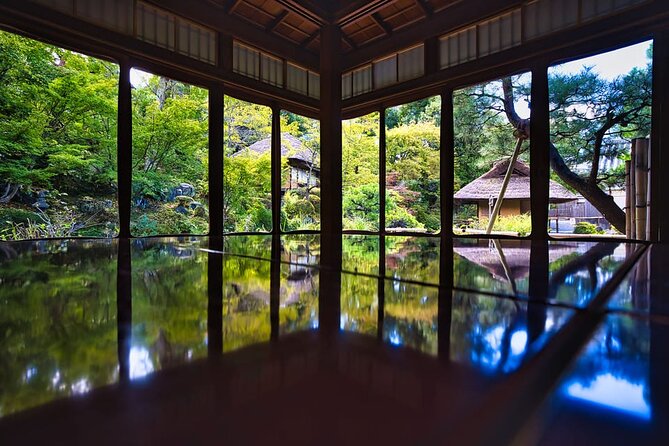
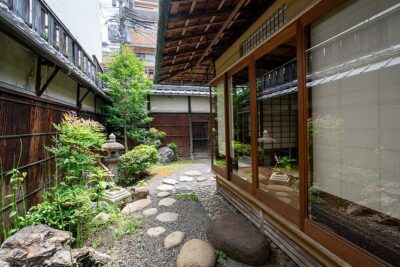
- Garden-facing tea room: Large windows provide views of a carefully maintained Japanese garden throughout the ceremony.
- Small group setting: The group can include up to 12 people, making it easier to hear explanations and ask questions.
- Short but focused visit: The advertised duration is about 45 minutes, though some guests describe the experience as closer to an hour.
- Traditional sweets included: Wagashi is served with the matcha, adding a small but important part of Japanese tea culture.
- Socks are a smart choice: One useful practical tip is to wear or bring socks, especially if you plan to take part in a traditional room setting.
Arriving at Tea Ceremony SAKAGUCHIAN in Kiyomizu
The meeting point is Tea Ceremony SAKAGUCHIAN, written in Japanese as 茶道体験 阪口庵, at 3-chōme-334 Kiyomizu in Kyoto’s Higashiyama Ward. The activity begins and ends at this same location, so you do not need to arrange transport between separate parts of the visit.
The address places you in the Kiyomizu area, a good part of Kyoto for combining a cultural activity with old streets and nearby sights. The experience itself is calm, while the surrounding area gives you plenty to see before or after. I would avoid cramming this ceremony between two far-flung appointments. Allow yourself enough time to arrive without rushing, since quiet attention is part of the pleasure here.
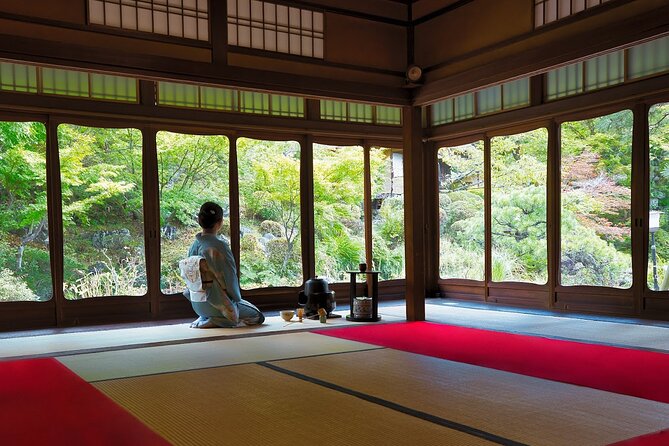
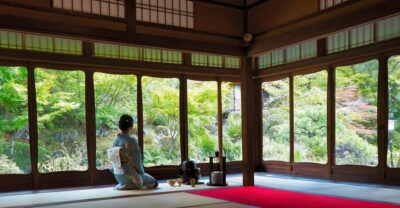
The venue is a traditional teahouse with views toward a Japanese garden. Large windows are a particularly appealing feature. You are not looking at a blank wall while someone explains the ceremony. Instead, the garden provides a changing backdrop, with seasonal beauty adding to the mood.
Because the group is limited to 12 people, the room should feel more personal than a large demonstration. That matters in a tea ceremony, where small actions are easy to miss if you are seated too far away. A smaller group also gives you a better chance to ask about the bowl, utensils, gestures, and preparation.
More Tea Ceremonies in Kyoto
- Kyoto: Tea Ceremony in a Traditional Tea House in Kiyomizu
★ 4.9 · 3,519 reviews - Kyoto: Tea Ceremony Ju-An at Jotokuji Temple
★ 4.9 · 3,207 reviews - Kyoto: 45-Minute Tea Ceremony Lesson Experience
★ 4.3 · 2,378 reviews
The first cup: watch the tea master at work
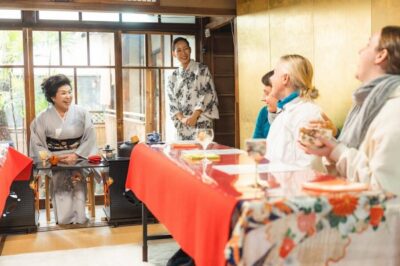
The ceremony begins with an explanation of what you are about to see. An assistant or host provides background on the history and culture of tea ceremony, then helps translate and explain the tea master’s movements in clear English.
This introduction is not filler. Without it, a formal tea ceremony can seem slow or mysterious. With context, you begin to understand why the movements are measured, why the utensils are handled with care, and why the sequence matters. The point is not simply to produce matcha quickly. The preparation is treated as a practiced art built around respect, purity, harmony, and tranquility.
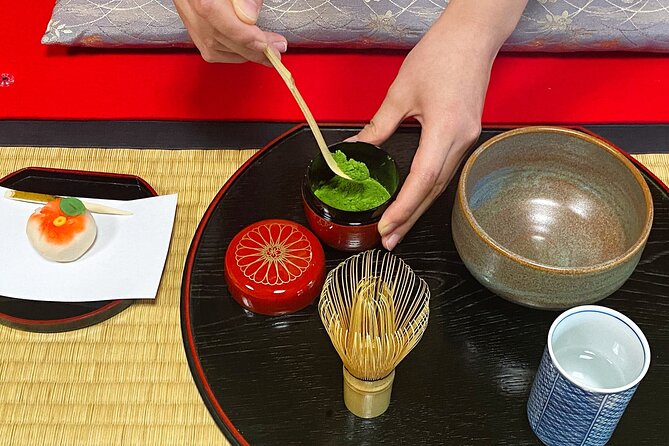
You then watch the tea master prepare the first cup. The process includes purifying the utensils, handling the tea bowl, measuring the matcha, and whisking it into a frothy drink. The steady pace gives you time to notice details that would be lost in a casual tea shop.
The tea master’s formal dress and precise movements add to the sense of occasion. This is a demonstration, but it is not a stage show. The appeal comes from seeing a familiar drink made through a set of gestures passed down over generations.
The first cup is served with a traditional wagashi sweet. These sweets are not an extra dessert tacked onto the booking. They help balance the taste of matcha and form part of the customary tea experience. If you usually find matcha bitter, the sweet provides a useful contrast before and during the tea.
The second cup: make your own matcha
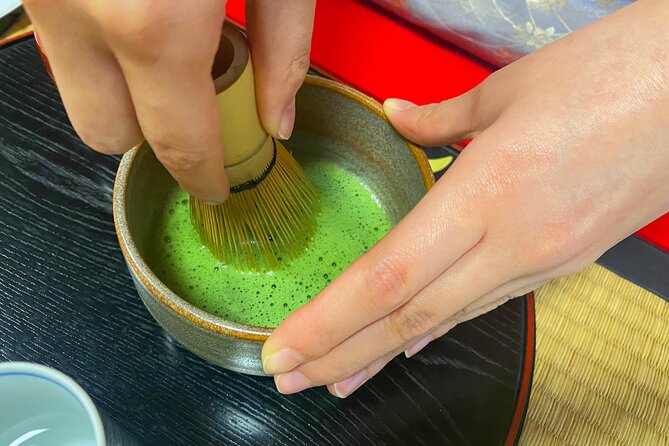
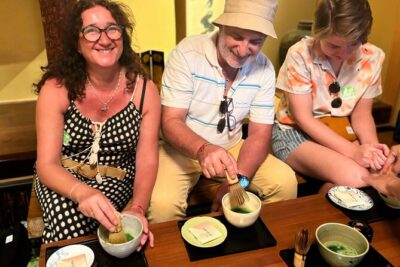
The hands-on portion gives this experience its practical edge. After watching the tea master, you learn how to prepare the second cup yourself. You receive guidance on using the whisk, creating the right froth, and handling the bowl properly.
You should not expect to become a tea master in one short session. The instruction is an introduction, not a full course. Still, making the tea yourself changes the way you understand what you have just watched. The controlled whisking looks simple until you try it, and the lesson helps explain why the tea master’s movements appear so effortless.
You also learn how to receive and drink the tea in the proper way. These details may seem small, but they are central to the ceremony. The bowl is not treated like an ordinary mug, and the act of drinking carries its own etiquette.
This part is especially useful if you prefer cultural activities that let you participate. You are not only observing a performance and taking photographs. You are given a chance to follow the process with your own hands, then taste the result.
Why the garden view changes the experience
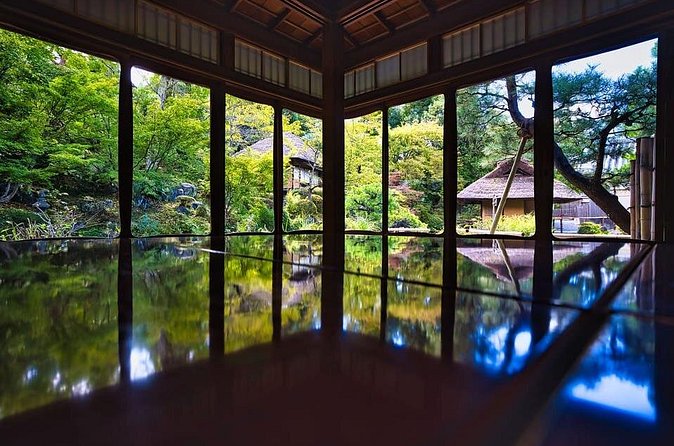
Kyoto has no shortage of places serving matcha. The reason to pay for this activity is the combination of setting, instruction, and ritual. The garden views make the tea room feel removed from the noise outside, even though the Kiyomizu area is close to major sightseeing routes.
The garden also reinforces the ideas being discussed. Tea ceremony is closely tied to attention, season, restraint, and appreciation of simple surroundings. Looking through the windows at a carefully maintained garden while listening to an explanation of those values makes the subject easier to grasp.
The setting receives some of the strongest praise, and it is easy to see why. The room, garden, architecture, aromas, sweets, and ceremonial dress all contribute to a sense of place. You are not simply learning about Japanese tea culture in a modern classroom.
The views may vary with the season and weather. That is part of the charm, but it also explains the weather-related cancellation policy. If poor weather prevents the experience from going ahead, you are offered another date or a full refund.
More Temples and Shrines in Kyoto
- [Kyoto & Nara Day Tour] Sagano Scenic Railway & Nara Park & Fushimi Inari Taisha Thousand Torii Gates & Togetsukyo Bridge & Bamboo Grove & Kimono Forest (Departing from Osaka)
★ 4.9 · 10,942 reviews - Kyoto: Fushimi Inari, Kinkakuji, Bamboo Grove 1 Day Bus Tour
★ 4.8 · 4,316 reviews - Kyoto Nara Day Trip │ Kiyomizu-dera Temple + Fushimi Inari-taisha Shrine + Nara Park (Departing from Osaka/Kyoto)
★ 4.7 · 3,408 reviews - Fushimi Inari Hidden Hiking Tour (Private Option Available)
★ 5.0 · 1,750 reviews
The English guidance and question time
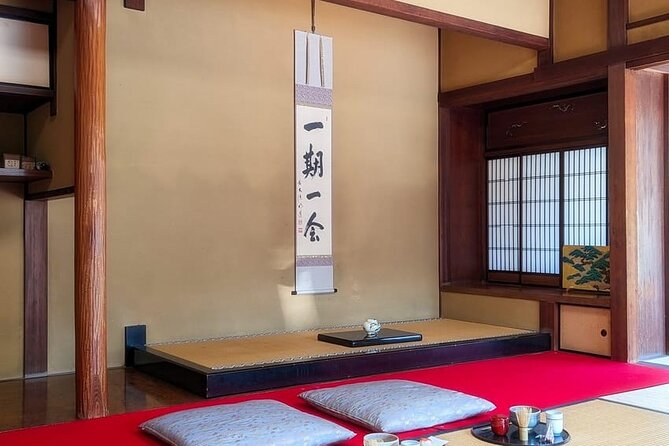
The quality of the explanation matters as much as the tea itself. The host and translator are described as warm, polite, and easy to understand, with enough historical background to make the ceremony accessible to first-time visitors.
You can ask questions about the ceremony, the tea, the garden, and the cultural meaning behind the actions. That makes this a good choice for families, couples, and small groups with different levels of interest. One person can enjoy the quiet beauty, while another can focus on tea preparation or Japanese customs.
The explanations also help prevent a common problem with traditional demonstrations: watching something beautiful without knowing what it means. Here, the tea master’s movements are explained as they happen, giving the ceremony a clear thread.
There is a limit, however. In 45 minutes, or around an hour depending on the session, the introduction can only cover the basics. You will learn the main sequence and prepare matcha, but you will not receive an exhaustive study of tea schools, utensils, or Japanese history. If you already have serious experience with tea ceremony, the material may feel introductory.
Is $50.87 a fair price?
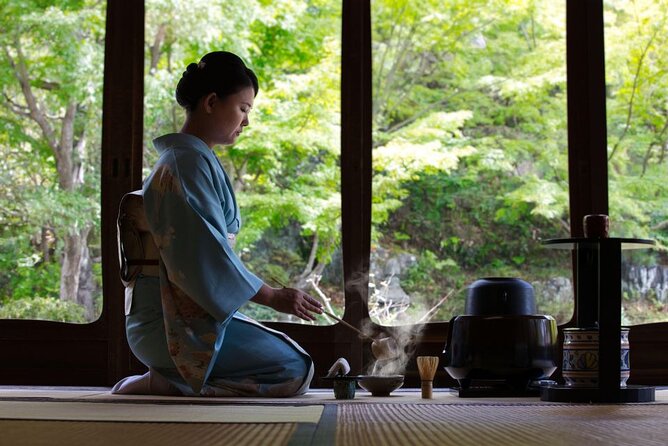
At $50.87 per person, this is not the cheapest way to drink matcha in Kyoto. You can find tea in a restaurant or café for much less. But comparing the price with a single beverage misses what you are buying.
Your fee includes two cups of matcha, wagashi sweets, instruction from a tea master, English cultural guidance, access to the traditional setting, garden views, and a photograph. You also get the chance to prepare tea yourself, which gives the visit more substance than a simple tasting.
I consider the price reasonable for someone who values a polished cultural experience in a memorable setting. The cost is harder to justify if your main goal is simply to sample matcha or if you prefer lengthy, highly formal ceremonies.
The strongest value comes from the setting and the personal instruction. If the experience were held in an ordinary room and only included a demonstration, I would be less enthusiastic about the price. The garden-facing tea room and small group help make the fee easier to understand.
How long the ceremony really feels
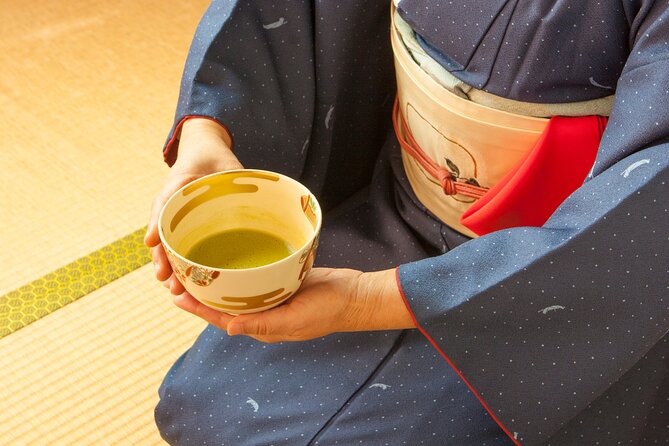
The official duration is approximately 45 minutes. That is short enough to fit into a busy day of sightseeing and long enough to introduce the ceremony without demanding an entire afternoon.
Some descriptions of the experience refer to an hour, so you should allow a little flexibility around the stated time. The exact length may depend on questions, group pace, and how the instruction unfolds.
A short session has benefits. You can schedule it between visits to nearby sights, and it will not overwhelm a child or a first-time visitor who is unsure about formal Japanese customs. It also works well as a quiet pause after several hours on your feet.
The drawback is depth. One person specifically found the activity brief and somewhat expensive because both the formal ceremony and matcha instruction only scratched the surface. I think that is a fair warning. Book this as a focused cultural introduction, not as an advanced tea-study session.
Who will enjoy this most
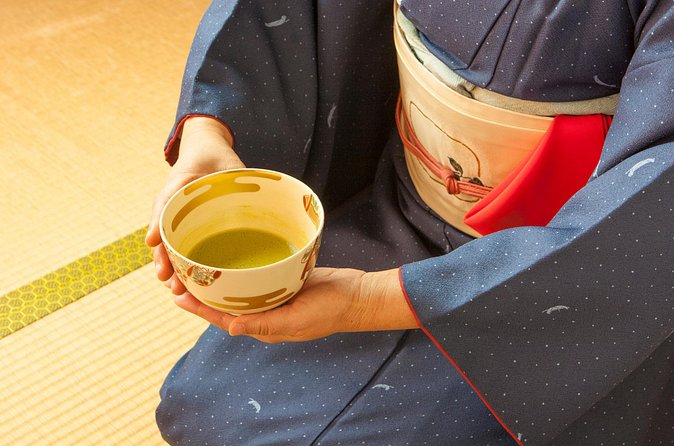
I would recommend this experience to you if you want a calm, structured look at Japanese culture and prefer learning by watching and doing. It suits first-time visitors, families, couples, and anyone curious about why matcha preparation involves such care.
It is also a good choice if you have spent the morning visiting temples and want an activity with a slower pace. The room’s air conditioning was appreciated during a summer visit, and the indoor setting offers a comfortable break from hot weather.
The experience suits people who enjoy details. You will get more from it if you are interested in the history of tea ceremony, the symbolism of the gestures, the relationship between tea and gardens, or the correct way to use a tea bowl.
I would hesitate to recommend it if you dislike sitting in traditional rooms, have significant foot or knee problems, or want a long, elaborate ceremony. The activity is also less suitable if you only want a quick taste of matcha without instruction.
Wear or bring socks. This simple tip comes directly from the practical side of the experience and may make you more comfortable in the tea room.
Photos, video, and what is included
A photograph is included, giving you a record of the visit without requiring you to interrupt the ceremony with your phone. You are also welcome to appreciate the garden and room as part of the experience, but video recording is not included.
Kimono rental is not included either. You should not book this expecting a costume package. The focus is the tea ceremony itself, including the tea master’s performance, your own matcha preparation, the sweets, and the setting.
That narrower approach is a strength for many people. You spend less time changing clothes or posing and more time paying attention to the ceremony. If wearing a kimono is an essential part of your Kyoto plans, you will need to arrange that separately.
Booking, cancellation, and practical limits
Confirmation is provided when you book. The maximum group size is 12 people, though the experience is described as intimate and small-group.
Free cancellation is available until 24 hours before the local start time for a full refund. Cancellations or changes made less than 24 hours before the start are not refunded or accepted.
The activity requires suitable weather. If poor weather causes a cancellation, you are offered another date or a full refund. Since the garden view is part of the appeal, it is worth checking the forecast and keeping a little flexibility in your Kyoto schedule.
The activity returns you to the same meeting point. That makes it easy to continue exploring Kiyomizu and Higashiyama afterward, rather than ending at an unfamiliar location.
Should you book the Kyoto Kiyomizu tea ceremony?
Book it if you want a polished first introduction to tea ceremony in a lovely traditional setting. The strongest reasons are the garden-facing room, two-part format, clear English explanation, gentle hosts, and chance to make your own matcha.
The experience is not a bargain tea stop, and it is not a full academic study of Japanese tea. Its 45-minute format gives you a graceful, accessible taste of the tradition. For most visitors, that balance works well, especially when paired with sightseeing in the Kiyomizu area.
I would book this for a first Kyoto visit, a family cultural activity, or a quiet break from temples and busy streets. I would skip it only if you have knee or foot problems, dislike traditional sitting arrangements, or want a longer and more demanding ceremony.
FAQ
Where does the tea ceremony take place?
It takes place at Tea Ceremony SAKAGUCHIAN, also written as 茶道体験 阪口庵, at 3-chōme-334 Kiyomizu, Higashiyama Ward, Kyoto, 605-0043, Japan.
Where does the activity end?
The activity ends back at the meeting point.
How long does the tea ceremony last?
The listed duration is approximately 45 minutes. Some descriptions refer to an experience lasting about an hour, so allow a little flexibility.
How many people can join?
The maximum group size is 12 people.
How many cups of matcha are included?
Two cups of matcha are included.
Are traditional Japanese sweets included?
Yes. Wagashi, traditional Japanese sweets, are included with the experience.
Is a photograph included?
Yes. A photo is included.
Is kimono rental included?
No. Kimono rental is not included.
Is video recording included?
No. Video recording is not included.
Can I cancel for a full refund?
Yes, if you cancel at least 24 hours before the local start time. Cancellations made less than 24 hours before the start are not refunded.
What happens if bad weather cancels the experience?
You are offered a different date or a full refund if poor weather causes the activity to be canceled.
Just added in Kyoto
- The “Golden Route” and Ancient Japan by DIAMIR Erlebnisreisen – 14-Day Tour★ 2.0 · 2 reviews
- Japan: Castles & Cuisine by G Adventures – 6-Day Kyoto to Osaka Tour★ 4.5 · 4 reviews
- Cycle Japan by Explore! – 13-Day Kyoto to Tokyo Tour★ 4.7 · 12 reviews
- Cycle Japan by Intrepid Travel – 11-Day Kyoto to Tokyo Tour★ 4.8 · 2 reviews
- Classic Japan by Intrepid Travel – 11-Day Kyoto to Tokyo Tour★ 4.4 · 14 reviews
- Ancient & Modern Japan 14-Day Tour by Exodus Adventure Travels★ 4.4 · 40 reviews
- 5 Day Cultural Adventure of Kyoto, Nara & Osaka by Tourist Journey★ 2.5 · 2 reviews
- 12 Days Kinosaki Onsen Escape: A Journey Through Japan’s Timeless Towns by UME Travel★ 4.8 · 5 reviews
Tea Ceremonies, compared.
Tea Ceremony in a Traditional Tea House in Kiyomizu
Read our review →
World Heritage Kyoto & Nara Uji Authentic Matcha Experience
Read our review →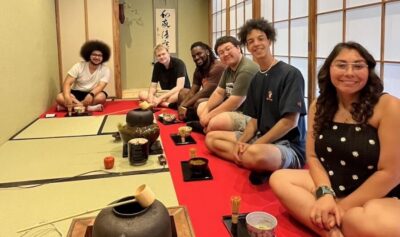
Browse the lists this tour appears in