
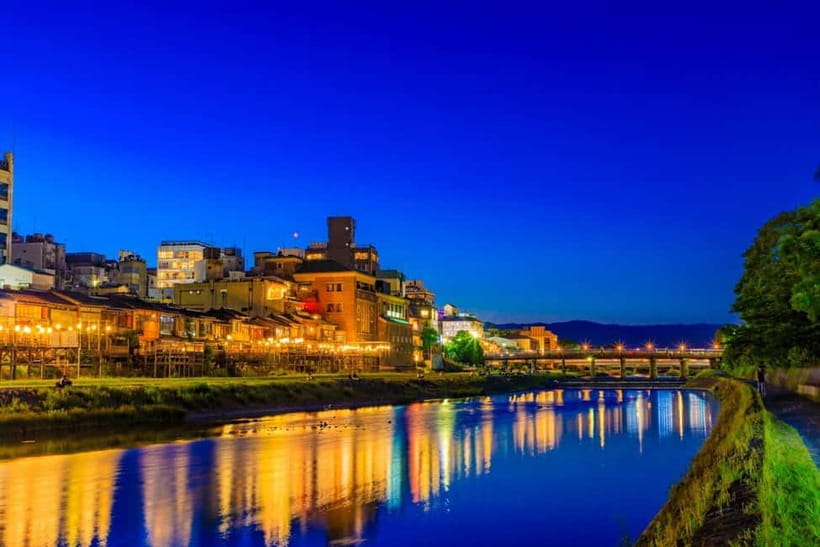
Reviewed · 3-HOUR EXPERIENCES
Kyoto: Personalize, private tour (3h, 5h, 8h) [W/Car Option]
Kyoto rewards a flexible plan. This private tour lets you shape the day around your interests, and I like the chance to ask a local guide about small restaurants, lesser-known stops, and the city’s religious traditions. I also like the choice of three, five, or eight hours, though the unscripted format requires you to accept that the day may feel less structured than a standard sightseeing tour.
Guide Jose receives especially strong praise for his warmth, planning, and command of Kyoto’s history. He has helped solo visitors navigate train stations, adjusted routes around short schedules, and explained how Buddhism and Shinto fit into daily life. Bring sturdy shoes and water, because even a short tour can involve a lot of walking.
In This Review
- Key details that shape the day
- A Kyoto day built around you
- Choosing three, five, or eight hours
- Three hours for a sharp introduction
- Five hours for a better balance
- Eight hours for a spread-out Kyoto
- What the first meeting tells you about the tour
- Temples, traditions, and Kyoto’s long story
- How public transport changes the experience
- The value of local advice beyond the famous sights
- What the price really means
- Weather, clothing, and practical limits
- Who will enjoy this private Kyoto tour?
- Should you book it?
- FAQ
- How long is the Kyoto private tour?
- Where can I meet the guide?
- Can the tour start or end somewhere else?
- Is the tour private?
- Which languages are available?
- Is transportation included?
- Are temple and museum tickets included?
- Are food and drinks included?
- Is the tour suitable for wheelchair users?
- What should I bring?
Key details that shape the day
![Kyoto: Personalize, private tour (3h, 5h, 8h) [W/Car Option] - Key details that shape the day](https://media.japanvisits.com/wp-content/uploads/kyoto-personalize-private-tour-3h-5h-8h-w-car-option-1.jpg)
- You help design the route: A short survey asks about your interests, hopes, and expectations before the tour.
- Three time choices: Select a three-hour, five-hour, or eight-hour outing, depending on how much of Kyoto you want to cover.
- Three meeting options: Meet at your lodging, the Disney Store in downtown Kyoto, or Starbucks at Sanjo-Ohashi.
- Public transport is part of the plan: Train, bus, taxi, and subway costs are paid separately, unless you choose the optional car arrangement.
- Jose is praised for personal service: He has met visitors at train stations, helped with goshuin collection, and guided people onward after the tour ended.
- English and Spanish are available: The tour is offered in both languages, including Spanish support with ¡Hablamos Español!.
A Kyoto day built around you
![Kyoto: Personalize, private tour (3h, 5h, 8h) [W/Car Option] - A Kyoto day built around you](https://media.japanvisits.com/wp-content/uploads/kyoto-personalize-private-tour-3h-5h-8h-w-car-option-2.jpg)
Most Kyoto tours ask you to follow a fixed route. This one starts with a conversation. After meeting, you spend about five minutes introducing yourselves and discussing the shape of the day. That small pause matters, especially if you have only one free afternoon or already know the famous sights.
You complete a short survey after booking. Use it carefully. Tell the guide if you care most about temples, Japanese history, food, neighborhoods, photography, religion, shopping, or walking. Also mention places you have already visited. Hans-Peter had seen many Kyoto sights before his outing, so Jose prepared a custom plan rather than repeating the usual circuit.
That flexibility is the main reason to book. You are not buying a fixed performance. You are paying for a local person who can help turn a loose wish list into a workable route.
The tradeoff is equally clear. The tour is described as unscripted, so you should not expect a polished, minute-by-minute program delivered in the same order every time. If you need exact stops and guaranteed entry times, a fixed tour may suit you better. If you want to ask questions and change direction, this format has more room to breathe.
More Private Tours in Kyoto
- Kyoto 6hr Private Tour with Government-Licensed Guide
★ 5.0 · 1,369 reviews - 10 Must-see Spots in Kyoto One Day Private Tour (up to 7 people)
★ 5.0 · 1,108 reviews - Kyoto 4hr Private Tour with Government-Licensed Guide
★ 5.0 · 629 reviews
Choosing three, five, or eight hours
Three hours for a sharp introduction
The three-hour option works best when your time in Kyoto is tight. Lizet had only a short span available, and Jose used the time to cover as many places as possible. TaLees also chose three hours, using it to focus on Buddhism, Shinto, Japanese history, and less familiar places.
I would choose three hours for one neighborhood or one clear theme. You could focus on Higashiyama, combine a temple visit with nearby streets, or ask for an introduction to Kyoto’s religious traditions. Trying to cross the whole city in three hours can turn the outing into a race, especially when train or bus connections are involved.
Five hours for a better balance
Five hours gives you more breathing room. You can visit several connected sites, stop for questions, and allow time for transport without making every minute count. It is a sensible middle choice if you want more than an introduction but do not want to commit most of the day.
A late start can also work well. Luis suggested a four-hour outing beginning at 5 p.m., pointing to Kyoto’s beauty around sunset. The exact timing depends on availability, but the point is useful: an afternoon start may give you a different view of the city than a morning temple run.
A completely different kind of day out:
- PERFECT KYOTO 1-Day Bus Tour
★ 5.0 · 13,518 reviews - [Kyoto & Nara Day Tour] Sagano Scenic Railway & Nara Park & Fushimi Inari Taisha Thousand Torii Gates & Togetsukyo Bridge & Bamboo Grove & Kimono Forest (Departing from Osaka)
★ 4.9 · 10,942 reviews - Kyoto: Fushimi Inari, Kinkakuji, Bamboo Grove 1 Day Bus Tour
★ 4.8 · 4,316 reviews - Kyoto: Tea Ceremony in a Traditional Tea House in Kiyomizu
★ 4.9 · 3,519 reviews
Eight hours for a spread-out Kyoto
I would pick eight hours if you want to combine distant parts of Kyoto. Kyoto’s major sights are not all close together, and moving between them takes time even when the trains are quick. Lauren felt the longer option was the best way to see more of the city.
An eight-hour day also gives you room for a change of plan. TaLees added an unplanned temple stop during a shorter outing. With eight hours, you have a better chance of making that kind of change without losing a major stop.
The limitation is stamina. This is a walking tour with transport between places, not a relaxed vehicle ride from door to door. If your fitness is low, a full day may be tiring. Ask about the car option if heat, hills, or long distances are a concern.
What the first meeting tells you about the tour
![Kyoto: Personalize, private tour (3h, 5h, 8h) [W/Car Option] - What the first meeting tells you about the tour](https://media.japanvisits.com/wp-content/uploads/kyoto-personalize-private-tour-3h-5h-8h-w-car-option-4.jpg)
You can meet at your lodging, at the Disney Store in downtown Kyoto, or at Starbucks in Sanjo-Ohashi. The meeting point can change depending on the places you plan to visit, which is practical. Starting near the first area saves time and avoids crossing town before the tour begins.
The opening chat is brief, about five minutes. Use it to settle the basics:
- Which sights matter most to you?
- Which places have you already seen?
- How much walking feels comfortable?
- Do you want temples, neighborhoods, food suggestions, or historical context?
- Do you need to finish near a station, hotel, or particular attraction?
The tour can end at the original meeting place, another agreed location, or a major destination such as Fushimi Inari, Kiyomizu-dera, or Nijo Castle. If you have a train to catch or another reservation, say so at the beginning. Cassi appreciated that Jose met her at a train station and helped make sure she reached her next destination after the tour ended. That kind of help is especially useful when Kyoto is one stop in a larger Japan trip.
Temples, traditions, and Kyoto’s long story
![Kyoto: Personalize, private tour (3h, 5h, 8h) [W/Car Option] - Temples, traditions, and Kyoto’s long story](https://media.japanvisits.com/wp-content/uploads/kyoto-personalize-private-tour-3h-5h-8h-w-car-option-5.jpg)
The strongest part of this experience is the interpretation. Jose does more than point at a gate and name a temple. He explains Buddhist and Shinto practices, and how the two traditions have existed alongside one another in Japan.
TaLees specifically wanted to understand Buddhism and Shintoism. Jose planned around that interest, explained both religions, and showed how they connect. That makes a difference at a place such as Fushimi Inari or Kiyomizu-dera, where a visitor can easily notice the architecture without understanding the rituals, symbols, or purpose of the site.
Omar chose a more active route. The outing began at Chion-in Temple, continued along the Kyoto trail to a mountain viewpoint, and came down behind Kiyomizu-dera. From there, the walk went through the Higashiyama neighborhood, where Jose had once lived. He added context about shops, restaurants, and places of interest along the way.
That route sounds rewarding, but it is not easy sightseeing. A mountain trail and a long descent require comfortable shoes and a reasonable level of fitness. The stated restrictions exclude people with recent surgeries, low fitness, or certain mobility needs, and the tour is not suitable for wheelchair users or mobility scooters. You should be honest about your walking ability before choosing a route.
How public transport changes the experience
![Kyoto: Personalize, private tour (3h, 5h, 8h) [W/Car Option] - How public transport changes the experience](https://media.japanvisits.com/wp-content/uploads/kyoto-personalize-private-tour-3h-5h-8h-w-car-option-6.jpg)
Transportation is not included. You pay separately for trains, buses, taxis, or the subway, along with entrance fees, food, drinks, snacks, and souvenirs. That can make the final cost higher than the initial tour price, but it also lets the guide choose the most useful connection for your route.
Jennifer traveled by train between three selected sites and found the rides quick and interesting. This is an important point. In Kyoto, public transport is not just a cost to tolerate. It is often the fastest way to connect areas, and having Jose with you can make transfers less stressful.
You should still budget for fares and allow some time for stations. A route that looks simple on a map may involve walking at both ends. Ask the guide to explain the transport plan at the start so you know how much time will go to riding and how much will go to sightseeing.
The optional car arrangement changes the day. Dot upgraded to a private car on a very hot day and reached four major sites instead of the planned three without feeling rushed. The air conditioning was a major benefit. A car can also help when your chosen sights are spread out.
The car is not automatically the best choice. Kyoto’s streets can be crowded, and trains may be faster for some connections. Since the vehicle option carries a separate cost, compare the comfort and time savings with your route before deciding.
The value of local advice beyond the famous sights
![Kyoto: Personalize, private tour (3h, 5h, 8h) [W/Car Option] - The value of local advice beyond the famous sights](https://media.japanvisits.com/wp-content/uploads/kyoto-personalize-private-tour-3h-5h-8h-w-car-option-7.jpg)
A good private guide earns part of the fee by saving you from poor choices. Jose has recommended family-run restaurants, small local activities, shops, and places in the Higashiyama area. These suggestions are useful because they connect the major sights with ordinary parts of Kyoto.
You should ask directly for food advice. The tour does not include meals, and the guide cannot promise a specific restaurant, but the service is designed for questions about mom-and-pop places and small activities that large groups usually skip.
Do not expect a formal food tour. This is a sightseeing and conversation-based outing, with food suggestions folded into the day when they fit your interests. You pay for anything you eat.
Jose has also helped with goshuin, the temple and shrine stamps many people collect in a book. If that interests you, mention it in advance. It can turn a quick temple visit into a more personal record of your time in Kyoto, though the stamps and books are not included.
What the price really means
![Kyoto: Personalize, private tour (3h, 5h, 8h) [W/Car Option] - What the price really means](https://media.japanvisits.com/wp-content/uploads/kyoto-personalize-private-tour-3h-5h-8h-w-car-option-8.jpg)
The advertised price is $76 per group up to one person, with the total depending on the option and booking details. Treat that figure as the starting point to check rather than the complete cost of a Kyoto day. Transport, temple and museum entrance fees, meals, drinks, snacks, and souvenirs are separate.
For a solo visitor, the value can be strong. You receive a private guide, a route shaped around your interests, help with navigation, and the chance to ask questions throughout the outing. A solo traveler may also find the support at stations and the help with onward travel worth more than a standard group tour.
For a private party, confirm how the price changes with the number of people before paying. The experience is listed as a private group, but the displayed price says up to one person, so the checkout total matters.
An eight-hour option costs more in time and likely in transport, but it may give better value if your goal is to see distant areas. A three-hour tour is the safer choice for a short stop or a single subject. I would not choose solely by the lowest price. Choose based on how much of Kyoto you want to connect in one day.
Weather, clothing, and practical limits
![Kyoto: Personalize, private tour (3h, 5h, 8h) [W/Car Option] - Weather, clothing, and practical limits](https://media.japanvisits.com/wp-content/uploads/kyoto-personalize-private-tour-3h-5h-8h-w-car-option-9.jpg)
Wear shoes that are comfortable and easy to remove. Kyoto’s temples and religious buildings may require you to take off your shoes, and a day that combines streets, stairs, and temple grounds puts real demands on your feet.
Bring a hat, sunglasses, sunscreen, a sun umbrella, and lots of water during hot summer weather. A plastic bag for your own trash is also requested. These are small items, but they matter when you are outside for several hours.
Large bags and luggage are not allowed. The rules also prohibit pets except assistance dogs, drones, smoking, vaping, alcohol and drugs, weapons, sharp objects, skateboards, skates, fireworks, speakers, costumes, and oversized luggage. Red wine is specifically listed among the prohibited items.
The outing is not suitable for wheelchair users, people with low fitness, people with recent surgeries, or people with visual impairments. It also has a stated weight limit of 264 pounds, or 120 kilograms. If any of these points apply to you, contact the provider before booking rather than hoping the route can be changed on the day.
Who will enjoy this private Kyoto tour?
![Kyoto: Personalize, private tour (3h, 5h, 8h) [W/Car Option] - Who will enjoy this private Kyoto tour?](https://media.japanvisits.com/wp-content/uploads/kyoto-personalize-private-tour-3h-5h-8h-w-car-option-10.jpg)
I would recommend it most strongly to:
- Solo visitors who want help with transport and city orientation
- Couples or small private groups with different interests
- People who have already seen Kyoto’s main sights
- History and religion enthusiasts
- Visitors who want Spanish or English guiding
- Anyone with only a few hours and a clear list of priorities
- People who prefer conversation and flexibility to a fixed group route
It is less suitable if you want a completely passive day, minimal walking, or guaranteed stops in a fixed order. It is also not a fit for visitors carrying large luggage or using a wheelchair or mobility scooter.
The guide’s strongest qualities are personal attention, clear explanations, and flexibility. Jose has adapted plans for short visits, arranged routes around special interests, taken photographs, helped with goshuin, and suggested food afterward. Those details make the service feel useful rather than merely informative.
Should you book it?
Book this tour if you want Kyoto explained by a local guide who can adjust the day around your interests. I would choose three hours for one neighborhood or a short introduction, five hours for a balanced outing, and eight hours if you want to connect several parts of the city.
The car option deserves serious thought in hot weather or when your route covers four major areas. Otherwise, public transport can be quick and adds a practical look at how Kyoto works.
Skip it if you need a rigid schedule, a low-walking route, or one all-inclusive price. For everyone else, this is a strong private option, especially if you tell Jose what you care about before the meeting. Free cancellation is available up to 24 hours before the start, and you can reserve now and pay later, which gives you some useful flexibility while planning Japan.
FAQ
How long is the Kyoto private tour?
You can choose a three-hour, five-hour, or eight-hour tour. Starting times depend on availability.
Where can I meet the guide?
You can meet at your lodging, the Disney Store in downtown Kyoto, or Starbucks at Sanjo-Ohashi. The meeting point may change based on your planned route.
Can the tour start or end somewhere else?
The meeting point can be altered for the places you plan to visit. The tour can end at the meeting location, another agreed location, or a destination such as Fushimi Inari, Kiyomizu-dera, or Nijo Castle.
Is the tour private?
Yes. It is offered as a private group experience.
Which languages are available?
The live guide is available in English and Spanish.
Is transportation included?
No. You pay separately for trains, buses, taxis, or the subway. A car option is available at an additional cost.
Are temple and museum tickets included?
No. Temple fees and museum fees are paid separately.
Are food and drinks included?
No. You pay separately for food, drinks, snacks, and souvenirs.
Is the tour suitable for wheelchair users?
No. The experience is not suitable for wheelchair users or people using mobility scooters.
What should I bring?
Wear comfortable shoes that are easy to remove. In hot weather, bring water, a hat, sunglasses, sunscreen, and a sun umbrella. A plastic bag for your trash is also recommended.
Just added in Kyoto
- The “Golden Route” and Ancient Japan by DIAMIR Erlebnisreisen – 14-Day Tour★ 2.0 · 2 reviews
- Japan: Castles & Cuisine by G Adventures – 6-Day Kyoto to Osaka Tour★ 4.5 · 4 reviews
- Cycle Japan by Explore! – 13-Day Kyoto to Tokyo Tour★ 4.7 · 12 reviews
- Cycle Japan by Intrepid Travel – 11-Day Kyoto to Tokyo Tour★ 4.8 · 2 reviews
- Classic Japan by Intrepid Travel – 11-Day Kyoto to Tokyo Tour★ 4.4 · 14 reviews
- Ancient & Modern Japan 14-Day Tour by Exodus Adventure Travels★ 4.4 · 40 reviews
- 5 Day Cultural Adventure of Kyoto, Nara & Osaka by Tourist Journey★ 2.5 · 2 reviews
- 12 Days Kinosaki Onsen Escape: A Journey Through Japan’s Timeless Towns by UME Travel★ 4.8 · 5 reviews
3-Hour Experiences, compared.
3-Hour Kyoto Insider Sake Brewery Tour with Tastings & Pairings
Read our review →
3h Tokyo E-Bike Tour: Hidden Gems, and Local Life with guide
Read our review →
3-hour Guided E-Bike Tour of the City’s Hidden Gems
Read our review →
3-Hour Bike/E-Bike Tour of the City’s Highlights
Read our review →
Browse the lists this tour appears in