
Reviewed · CYCLING AND E-BIKE TOURS
Kyoto Satoyama Cycling with Lunch and English Guide
Trade city crowds for country roads. This private e-bike tour takes you from Kyoto City to Sonobe, a rural town where mountain views, shrines, old homes, and river sounds replace the usual sightseeing rush. I like the close look at everyday Kyoto life, and I like that the guides are local, English-speaking, and able to explain the area from personal experience. The main consideration is timing: the basic tour lasts about four to five hours, but optional stops can push the day beyond 2 PM.
The soba-making lunch gives this outing more purpose than a simple bicycle ride. I also appreciate the choice of a local-restaurant meal in a traditional Japanese house, especially for anyone who prefers a relaxed lunch over a hands-on cooking session. Cycling is still exercise, even with an e-bike, and this tour is better for people comfortable spending several hours outdoors.
In This Review
- Five details that make this Sonobe tour different
- Why Sonobe makes a good break from Kyoto
- Starting with Ikimi Tenmangu Shrine
- Sonobe Castle, where the past meets a school entrance
- Making soba at a former elementary school
- Visiting Make Shrine and its thatched roof
- Choosing your extra activities
- What the cycling feels like
- The strongest part: local hospitality
- Is the $78.83 price good value?
- Who should book this experience?
- Final verdict: a strong half-day outside Kyoto
- FAQ
- How long does the Kyoto Satoyama cycling tour last?
- Where does the tour start?
- Is the tour conducted in English?
- What are the lunch choices?
- Can dietary restrictions be accommodated?
- What extra activities can I choose?
- What happens if bad weather cancels the tour?
Five details that make this Sonobe tour different
- A 30-minute train ride from Kyoto City: Sonobe feels far removed from central Kyoto, but it is close enough for a half-day escape.
- A private tour with local guides: Only your group takes part, with English guidance from people raised in the town.
- Fresh soba made at a former elementary school: Course A includes local buckwheat, noodle-making, and a soba set meal with tempura and rice balls.
- Free cultural extras: You can choose activities such as wearing a kimono, playing the koto, visiting a castle, or worshipping at a Shinto shrine.
- Mt. Komugi and the Mario connection: The optional mountain exploration can add a quirky, unexpected chapter to the ride.
- Flexible meals: Vegan, vegetarian, and allergy-friendly food can be arranged if requested in advance.
Why Sonobe makes a good break from Kyoto
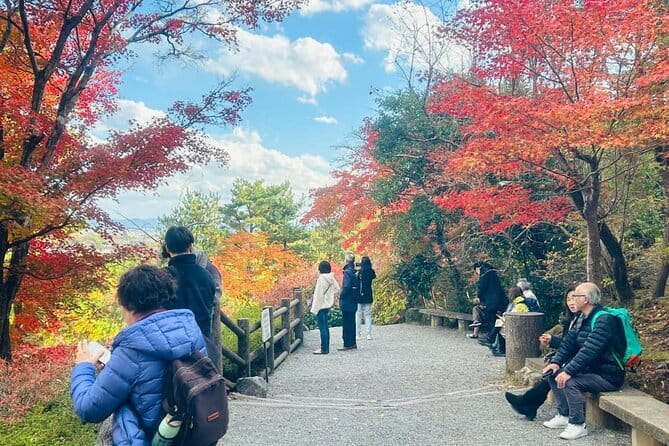
Kyoto is famous for temples, gardens, and packed lanes. Sonobe offers another side of the prefecture: open fields, wooded slopes, Japanese houses, shrines, and a quieter pace. You can hear birds and flowing water while riding between stops, which is a fine reminder that Kyoto is also a rural region, not just a historic city.
The tour begins at 10 AM in Sonobe, at Mizobe-6-21 Sonobecho Oyama Higashimachi in Nantan. Since the town is about 30 minutes from Kyoto City by train, you can reach it without committing to a full day of complicated transport. You should still allow enough time to find the meeting point and arrive ready to ride.
The e-bikes matter here. They make the countryside more approachable than a standard bicycle, especially if you are not used to Japanese roads or do not want every uphill stretch to become a personal battle. Still, you will be cycling outdoors for much of the morning, so comfortable clothes, sensible shoes, and weather-appropriate layers are wise.
The tour is private, but the published information also refers to group discounts and a participation fee of 15,000 yen for one person. The advertised price is about $78.83 per person. Prices can change, and the difference between the per-person listing price and the stated one-person fee is worth checking before you pay, especially for a small group.
More Bike Tours in Kyoto
- Bike Tour Exploring North Kyoto plus Lunch
★ 5.0 · 1,087 reviews - Arashiyama Bamboo Forest & Hidden Gems Bike Tour (Early Bird)
★ 5.0 · 613 reviews - 5 Top Highlights of Kyoto Full Day Bike Tour (E-bike option)
★ 5.0 · 511 reviews
Starting with Ikimi Tenmangu Shrine
The first stop is Ikimi Tenmangu Shrine, described as the oldest Tenmangu Shrine in Japan. It honors Sugawara no Michizane, a figure associated with learning, so people visit to pray for success in exams.
You spend about 10 minutes here. That is enough time for a short introduction, a look at the shrine grounds, and a chance to understand how Shinto worship fits into local life. It is not a long temple visit, and that is useful on a cycling tour. You get cultural context without losing the rhythm of the morning.
Your guide can also explain the proper way to worship at a Shinto shrine. That small lesson is valuable because many visitors know the broad outline of shrine etiquette but are unsure about the sequence or gestures. Treat this as an introduction rather than a major architectural stop.
Sonobe Castle, where the past meets a school entrance
The ruins of Sonobe Castle provide the next short stop, lasting about 20 minutes. This castle is described as the last castle built in Japan, and its surviving features include the main gate, walls, turrets, and a guardhouse.
The unusual part is that the main gate now serves as the entrance to Sonobe High School. That gives the site a very local feel. Instead of being isolated behind museum barriers, the remaining structure forms part of a living town. Depending on the schedule, access or the exact visit may vary, so do not expect a full castle complex or a long museum-style tour.
This is one of the tour’s better history stops because it does not ask you to spend an hour studying empty foundations. You see a few clear remnants, hear the local story, and then get back on the bike. If castles are your main reason for booking, this stop alone will feel modest. If you enjoy the way old buildings continue to fit into modern communities, it is a pleasing surprise.
Making soba at a former elementary school
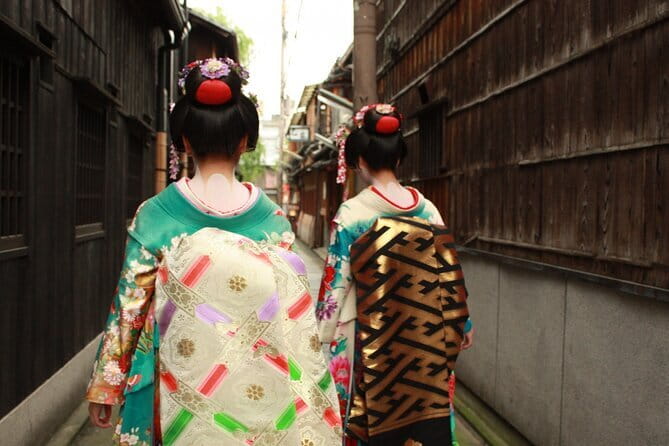
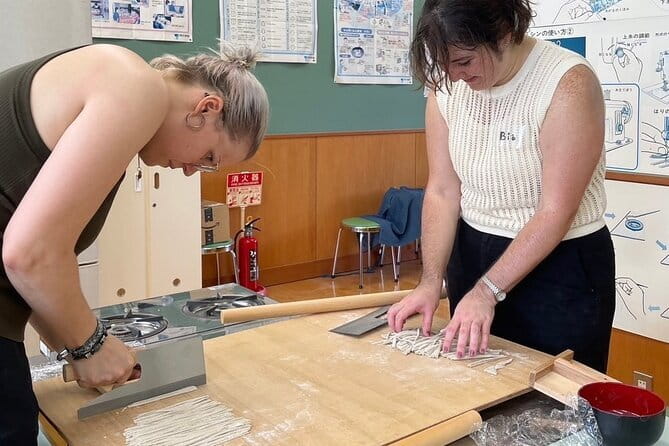
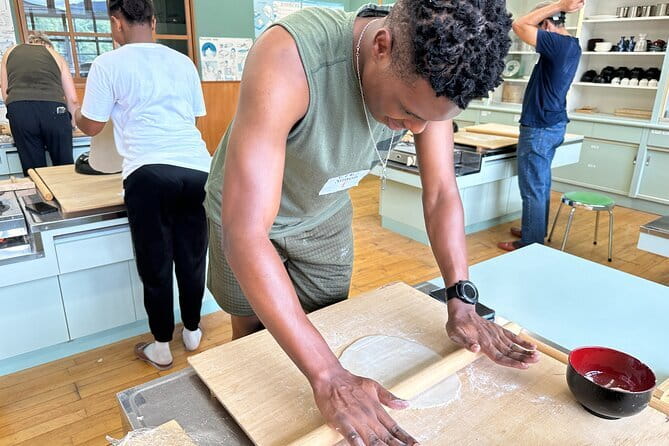
Course A takes you to the former Maki Elementary School, now used for a local soba-making experience. You work with buckwheat flour harvested in the area, then eat the noodles fresh after they are boiled.
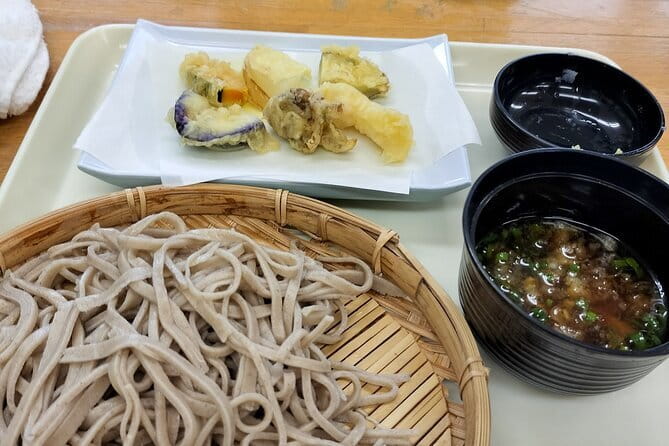
This is the longest scheduled stop, about one hour and 50 minutes. The meal includes soba, tempura, and rice balls, so you are not simply watching a demonstration and receiving a small taste. The hands-on element makes the lunch memorable, particularly for families, school groups, and anyone who likes learning through food.
The setting adds character. A closed school is a much more interesting place for a cooking activity than a generic restaurant room. It connects the meal to the town and gives you a sense of how local buildings can be reused.
You should tell the operator about dietary needs when booking. Vegan, vegetarian, and allergy-friendly meals are available on request. Do not wait until you sit down to raise the issue, since the meal arrangement needs planning.
If you would rather not make noodles, Course B offers local produce at a restaurant in a traditional Japanese house. That option may suit you better if you want a calmer meal, if you are traveling with someone who does not want a cooking activity, or if the food itself matters more than the process.
A completely different kind of day out:
- PERFECT KYOTO 1-Day Bus Tour
★ 5.0 · 13,518 reviews - [Kyoto & Nara Day Tour] Sagano Scenic Railway & Nara Park & Fushimi Inari Taisha Thousand Torii Gates & Togetsukyo Bridge & Bamboo Grove & Kimono Forest (Departing from Osaka)
★ 4.9 · 10,942 reviews - Kyoto: Fushimi Inari, Kinkakuji, Bamboo Grove 1 Day Bus Tour
★ 4.8 · 4,316 reviews - Kyoto: Tea Ceremony in a Traditional Tea House in Kiyomizu
★ 4.9 · 3,519 reviews
Visiting Make Shrine and its thatched roof
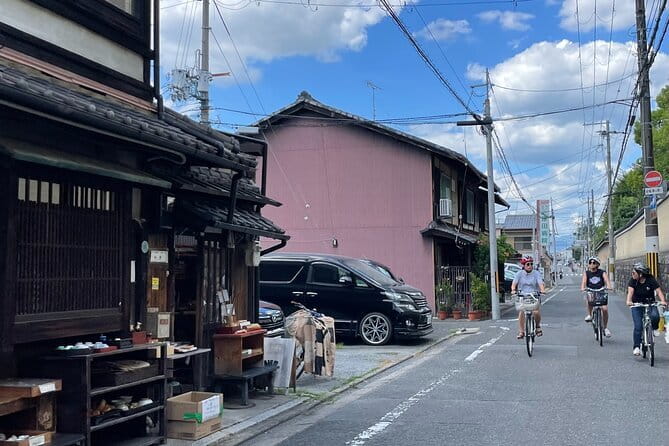
The final listed stop is Make Shrine, which takes about 30 minutes. The shrine honors the agricultural god of the Tanba region, an area historically important to Kyoto’s food supply.
The main hall has a traditional thatched roof, giving the stop a distinct rural character. Here, your guide can show you how to worship properly and explain the shrine’s connection to farming and food. That context helps tie the day together: the buckwheat at lunch, the fields beside the road, and the agricultural traditions represented by the shrine all belong to the same regional story.
This is not a grand city shrine with sweeping grounds or famous artworks. Its value is quieter. You are seeing a place connected to the local community and to the food culture that you have just sampled.
Choosing your extra activities
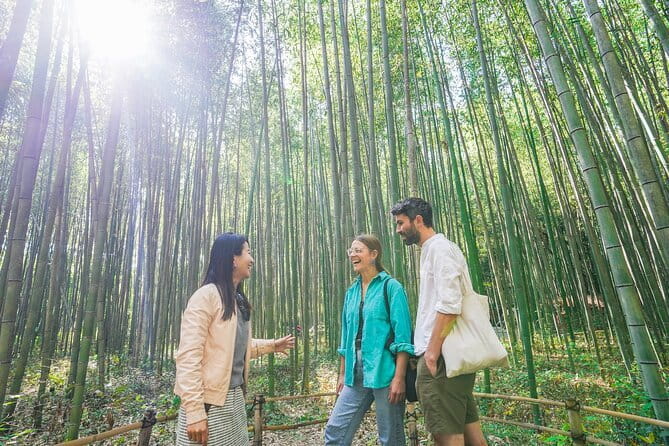
The tour includes a choice of two or three extra experiences. You should tell the guide at the start which ones you want, rather than assuming every option will fit into the morning.
Choices include:
- Visiting the castle
- Worshipping at Shinto shrines
- Drinking spring water after crossing a small mountain
- Taking a photograph in a kimono
- Playing the koto, a traditional Japanese instrument
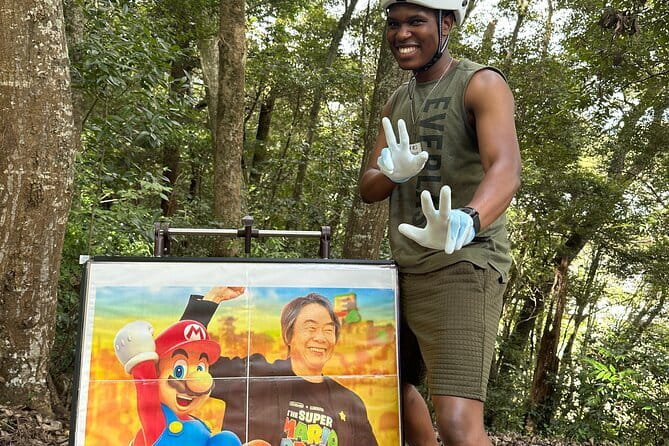
- Exploring Mt. Komugi, described as the birthplace of Mario
The kimono and koto choices are especially useful if your group includes someone who wants a cultural activity without additional cost. They also give the tour a little variety, since the day is not only about cycling and food.
Mt. Komugi is the option to watch most carefully. Exploring it can extend the tour beyond 2 PM, making the experience longer than the standard four to five hours. That may be ideal if you want a fuller day, but it could create a problem if you have an afternoon train, dinner booking, or evening activity in Kyoto.
What the cycling feels like
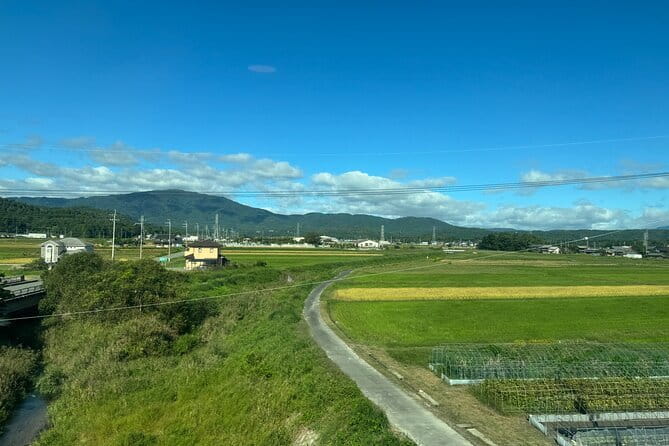
The ride between points generally takes 10 to 20 minutes. That means you are not pedaling for hours without a break, but you are also not taking a sightseeing tour where the bicycle is merely decorative. The movement between shrines, historic remains, and lunch is part of the experience.
You will pass mountains, fields, Japanese homes, trees, and countryside roads. The scenery and fresh air are central pleasures here. The e-bike lets you pay attention to the view instead of focusing only on your legs, though you should still be comfortable handling a bicycle and following your guide.
The operator pays attention to weather and safety. The tour team has advised participants what to wear based on the forecast and has prepared safety equipment. On a cold day, they have also provided disposable hand warmers and neck warmers. That kind of practical care can make a real difference, since Sonobe’s open roads may feel colder than Kyoto’s sheltered streets.
Weather remains the key variable. The tour requires good conditions, and rain or other poor weather can lead to cancellation. If that happens, you can reschedule, choose transportation by car when offered, or receive a full refund.
The strongest part: local hospitality
The English-speaking guides are one of the main reasons to choose this experience. Maki, her husband, and Yasu have welcomed groups and provided clear explanations at the stops. Maki’s enthusiasm for Sonobe comes through in the way she presents her hometown, and that personal connection gives the ride more warmth than a standard scripted excursion.
That local viewpoint is particularly helpful in a rural area. You are not simply being shown a shrine and told its name. You can ask about the town, local food, customs, and the meaning of what you are seeing. The language support also makes the experience easier for families and school groups from overseas.
The tour works for solo visitors and groups, but the private format is especially attractive for families or larger parties. A school group of 16 has used the experience, including high school students, adults, and children. Group discounts are available, though you should confirm the current terms before booking.
Is the $78.83 price good value?
At about $78.83 per person, this is not the cheapest way to spend a half-day near Kyoto. The value comes from what is bundled together: an e-bike, English-speaking local guides, several cultural stops, a substantial lunch, and a private format.
Course A gives you a meal plus a cooking activity. Course B provides local produce in a traditional Japanese house. The included cultural extras can also add value, particularly if you choose the kimono or koto experience instead of paying separately for a short cultural activity elsewhere.
The price makes the most sense if you want a guided introduction to rural Kyoto without having to plan the route, find the shrines, arrange a meal, and work out where to cycle. It is less compelling if you only want a quick bicycle rental or if you are already comfortable exploring Sonobe on your own.
One practical point deserves attention: the information gives both a dollar price and a 15,000-yen participation fee for one person. Because those figures may reflect different booking conditions or an update, confirm the total cost, group discount, and meal choice before finalizing payment.
Who should book this experience?
I would recommend it to:
- Families wanting an active but structured day
- School groups and larger private parties
- Couples or solo visitors seeking rural scenery
- Food lovers interested in making soba
- First-time visitors who want English explanations
- Anyone who has already seen central Kyoto and wants a different setting
You should think twice if cycling is difficult for you, if you dislike outdoor activities, or if you need to return to Kyoto at a tightly fixed time. The optional mountain exploration can lengthen the day, and the tour depends on favorable weather.
The tour is not built around major monuments or long indoor visits. Its appeal is the combination of movement, local food, small historic sites, and conversation with people from Sonobe. You get a sense of place rather than a checklist of famous attractions.
Final verdict: a strong half-day outside Kyoto
Book this tour if you want countryside, food, and local guidance in one manageable outing. The soba-making course is the best choice for a hands-on experience, while Course B suits anyone who prefers a quieter lunch in a traditional house.
I especially like the balance between short cultural stops and time on the e-bike. Ikimi Tenmangu Shrine, Sonobe Castle, and Make Shrine each offer a different angle on the region, while the ride itself lets you see fields, homes, trees, and mountains at a human pace.
The main cautions are straightforward: check the price, request dietary arrangements early, dress for the forecast, and leave your afternoon flexible if you choose Mt. Komugi or other extras. For a private, friendly introduction to rural Kyoto, this is a thoughtful use of half a day.
FAQ
How long does the Kyoto Satoyama cycling tour last?
The tour takes approximately four to five hours, including cycling time between stops. Optional activities, especially Mt. Komugi exploration, may extend the experience beyond 2 PM.
Where does the tour start?
The meeting point is Mizobe-6-21 Sonobecho Oyama Higashimachi, Nantan, Kyoto 622-0041, Japan. The tour starts at 10 AM and ends back at the meeting point.
Is the tour conducted in English?
Yes. Local guides who were born and raised in Sonobe lead the activity in English.
What are the lunch choices?
Course A includes hands-on soba-making with local buckwheat flour, freshly boiled soba, tempura, and rice balls. Course B offers local produce at a restaurant in a traditional Japanese house.
Can dietary restrictions be accommodated?
Vegan, vegetarian, and allergy-friendly meals are available on request. You should provide this information when booking.
What extra activities can I choose?
You can select two or three included extras from options such as a castle visit, Shinto shrine worship, spring-water drinking after crossing a small mountain, a kimono photo, koto playing, and Mt. Komugi exploration.
What happens if bad weather cancels the tour?
If poor weather causes cancellation, you can reschedule, choose transportation by car when offered, or cancel for a full refund. You can also cancel for a full refund if you do so at least 24 hours before the start time.
More Lunch Experiences in Kyoto
- Osaka/Kyoto: Arashiyama, Nara & Fushimi Inari Shrine w/Lunch
★ 4.4 · 754 reviews - Kyoto Zen Meditation & Garden Tour at a Zen Temple with Lunch
★ 5.0 · 441 reviews - 4.5-Hour Kyoto Bike Tour with Lunch and UNESCO Zen Temples
★ 5.0 · 122 reviews - From Kyoto: Nara History Guided Half Day Bus Tour with Lunch
★ 4.8 · 114 reviews
Just added in Kyoto
- The “Golden Route” and Ancient Japan by DIAMIR Erlebnisreisen – 14-Day Tour★ 2.0 · 2 reviews
- Japan: Castles & Cuisine by G Adventures – 6-Day Kyoto to Osaka Tour★ 4.5 · 4 reviews
- Cycle Japan by Explore! – 13-Day Kyoto to Tokyo Tour★ 4.7 · 12 reviews
- Cycle Japan by Intrepid Travel – 11-Day Kyoto to Tokyo Tour★ 4.8 · 2 reviews
- Classic Japan by Intrepid Travel – 11-Day Kyoto to Tokyo Tour★ 4.4 · 14 reviews
- Ancient & Modern Japan 14-Day Tour by Exodus Adventure Travels★ 4.4 · 40 reviews
- 5 Day Cultural Adventure of Kyoto, Nara & Osaka by Tourist Journey★ 2.5 · 2 reviews
- 12 Days Kinosaki Onsen Escape: A Journey Through Japan’s Timeless Towns by UME Travel★ 4.8 · 5 reviews
Cycling and E-Bike Tours, compared.

3h Tokyo E-Bike Tour: Hidden Gems, and Local Life with guide
Read our review →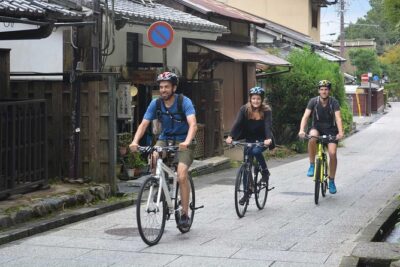
Arashiyama Bamboo Forest & Hidden Gems Bike Tour (Early Bird)
Read our review →
5 Top Highlights of Kyoto Full Day Bike Tour (E-bike option)
Read our review →

Hiroshima 2hr Peace Cycling Tour with Local Guide
Read our review →Browse the lists this tour appears in