
Reviewed · TEA CEREMONIES
Kyoto: Tea Museum Tickets and Matcha Grinding Experience
Fresh matcha starts with a stone mill. This one-hour experience in Uji combines hands-on tea grinding with a visit to Chazuna’s interactive museum, giving you more than a quick cup of green tea. I especially like making matcha from tencha leaves and drinking the powder you prepare yourself. The included museum ticket also adds useful context about Uji tea, its production, and the town’s past. The main consideration is timing: arrive 15 minutes early, since latecomers can be refused entry and the one-hour session leaves little room for delays.
The instructors are a major part of the appeal. Guides such as Hideko, Keiko, Yano-san, and Sukimoto have been praised for warm explanations and good humor, though English delivery may sometimes follow a prepared script. The museum is compact rather than a full-day attraction, but the ticket, workshop, tea, sweets, and central Uji location make the $23 price strong value for a short cultural activity.
In This Review
- Key points at a glance
- Why this Uji tea experience is worth your time
- Starting at Chazuna’s reception desk
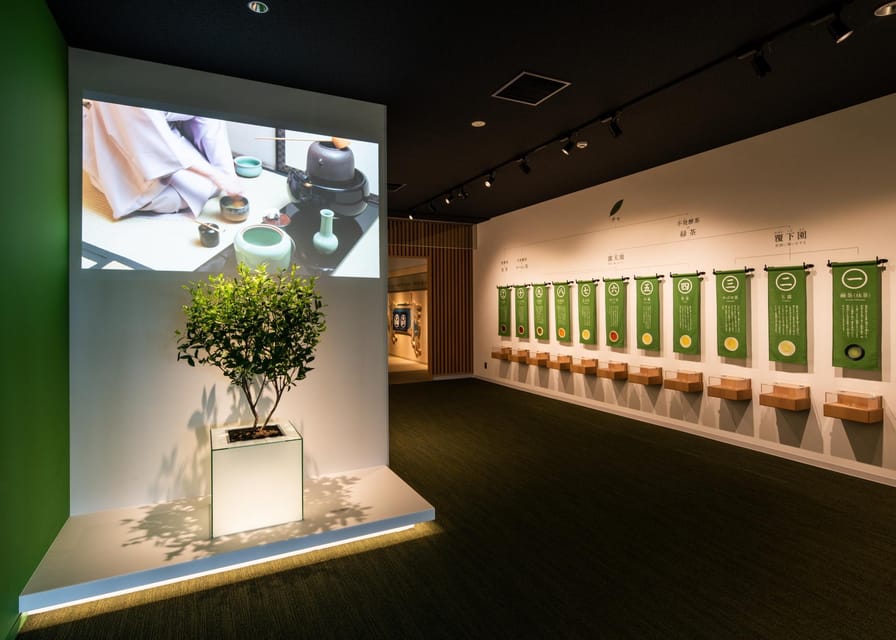
- The museum begins with Uji’s story
- Grinding tencha into matcha
- Whisking and tasting your own tea
- The summer-only matcha and ice cream option
- What the one-hour format does well
- Getting more from your visit to Uji
- Who should book this experience?
- Should you book the Chazuna matcha workshop?
- FAQ
- How long does the matcha grinding experience last?
- What is included in the price?
- Where do I meet the instructor?
- How far is Chazuna from the train stations?
- What languages are available?
- Do I need to arrive early?
- Is the experience wheelchair accessible?
- Can I cancel or change my reservation?
Key points at a glance
- Grind your own matcha: Use a traditional tea mill to turn prepared tea leaves into fine green powder.
- Learn from tea instructors: Japanese and English instruction covers matcha preparation and basic tea culture.
- Explore Chazuna’s museum: Touchable exhibits, videos, digital displays, and a 4K screen explain Uji tea and local history.
- Enjoy tea you prepared yourself: Your freshly ground matcha is whisked and served with sweets.
- Add a summer treat: At 2:45 p.m. in summer, you can pour matcha over ice cream and eat or drink it.
- Easy Uji stop: Chazuna is a four-minute walk from Keihan Uji Station and a 12-minute walk from JR Uji Station.
Why this Uji tea experience is worth your time
Uji is one of Japan’s best-known tea towns, and Chazuna gives you a clear introduction without requiring a full tea-study course. You learn where tea comes from, how it is processed, and why matcha is different from ordinary loose-leaf green tea.
I like the way the activity moves from explanation to action. You do not simply watch an instructor whisk a bowl. You handle the tea mill, make the powder, and then prepare a drink with guidance. That small change matters. The tea becomes something you have worked with, not just another souvenir flavor sampled between temples.
The experience also works well for mixed-interest groups. A serious matcha drinker can focus on the production process, while someone new to Japanese tea can enjoy the simple, guided format. Families, couples, solo visitors, and groups of friends all have a reason to consider it.
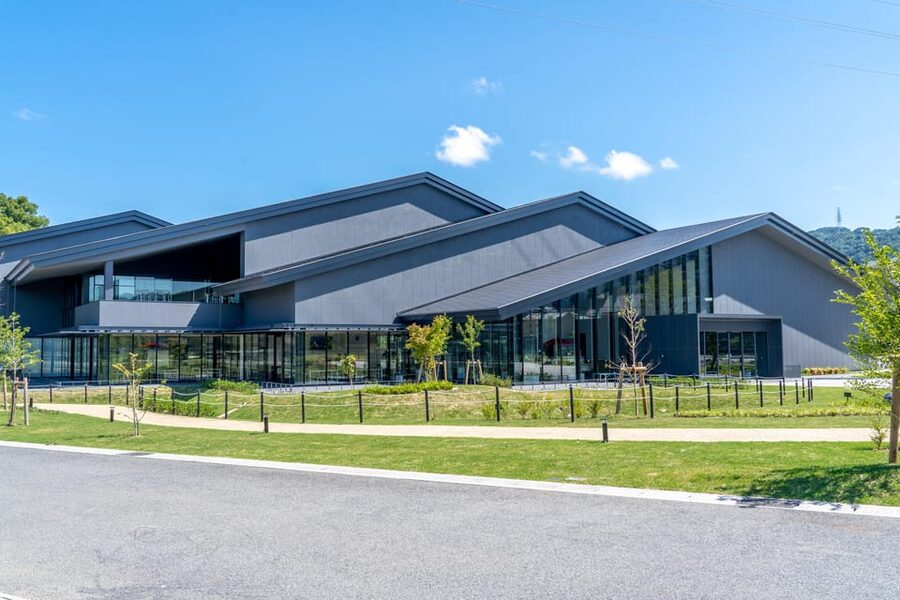
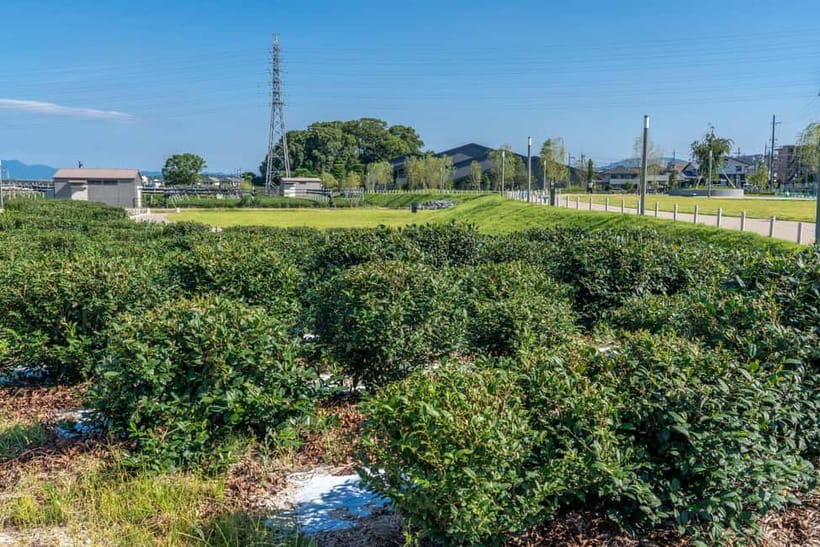
The setting adds to the mood. Chazuna is located in the Historical Park of Tea and Uji Town, with views toward tea fields and gardens. You are still in a modern community center, not a centuries-old tea house, but the clean, peaceful space helps you slow down for an hour.
More Museums and Galleries in Kyoto
- teamLab Biovortex Kyoto ticket
★ 4.8 · 3,186 reviews - Skip the lines Basic Ticket at SAMURAI NINJA MUSEUM KYOTO
★ 4.5 · 632 reviews - Kyoto : Geiko Maiko Dance of Kyoto & Visits of Gion Museum
★ 4.6 · 415 reviews
Starting at Chazuna’s reception desk
Your meeting point is the first-floor reception area at Chazuna. It sits in the Historical Park of Tea and Uji Town, so you should head there before the scheduled start rather than trying to join the activity at the last moment.
The timing rule is strict. Arrive 15 minutes before your reservation and check in at reception. Entry can be refused 30 minutes after the start time, and the participation fee is not refunded in that case. This is not a flexible drop-in demonstration. The class follows a set order, so one late arrival can interrupt the instructor and everyone else.
From Keihan Uji Station, the walk is about four minutes. From the South Exit of JR Uji Station, allow about 12 minutes. That longer walk is easy enough, but you should leave extra time if you are carrying luggage, traveling with children, or stopping for directions.
Drivers coming from Osaka can use the Keiji Bypass Uji Nishi Interchange and take the side road toward Uji, a trip of roughly 10 minutes from the exit. From Tokyo or Nagoya, the directions use the Uji-higashi Interchange, with approximately three minutes from the exit after turning at the traffic light.
The museum begins with Uji’s story
The museum portion introduces Uji tea through digital and touchable displays. This is useful because tea production has several steps, and a short explanation helps you understand what you are about to do at the mill.
In the History Room, a large 10-yen coin featuring Byodoin Phoenix Hall welcomes you. It is a playful local reference, since the temple’s image appears on the coin and Byodoin is one of Uji’s best-known sights.
A large 4K digital screen presents modernized drawings of the town, based on Meisho-zue, illustrated guides that showed famous places and scenes. The digital presentation makes the town’s development easier to follow than a wall of dates and labels.
The displays are designed to be touched and explored. That makes the museum a good choice for families and for anyone who finds traditional exhibit cases a little dry. You can also find a playful photo area where you appear to swim in matcha, a detail that adds some fun after the more serious explanations.
You should set your expectations correctly. The museum is short, not a major national institution that requires half a day. Its strength is focus. It explains Uji tea and gives you context before the workshop, then leaves you time to explore Uji afterward.
Grinding tencha into matcha
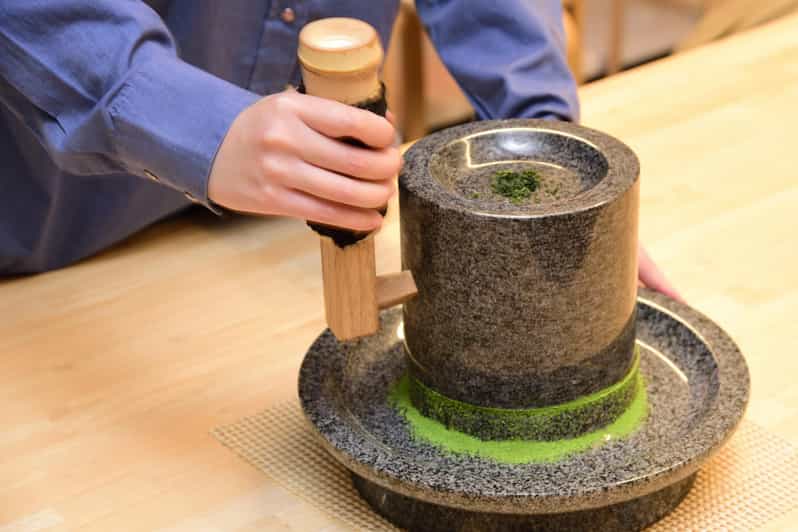
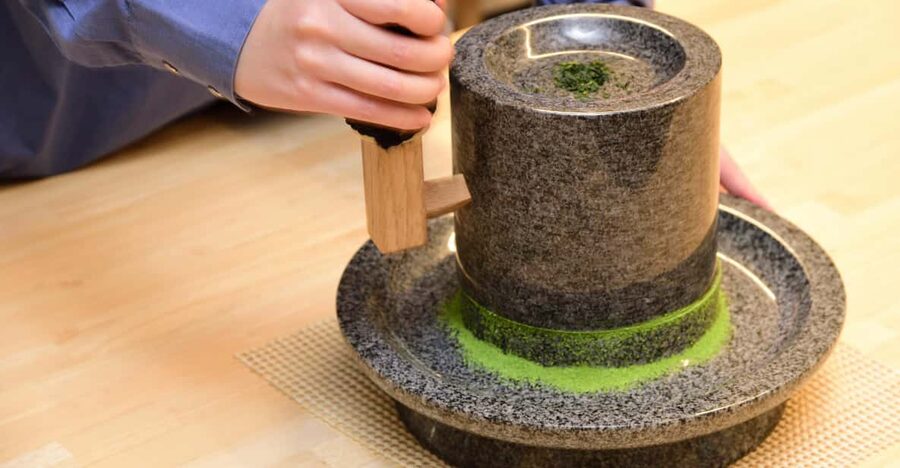
The central activity begins with the tea mill. You grind tea leaves into powder, working slowly as the instructor explains the process. The motion is simple, but it is not instant. You get a better sense of the care required to make matcha than you would from watching a machine do the work.
The tea used for matcha starts as tencha, a leaf prepared for grinding. The class connects that raw material to the powder in your bowl, which makes the process easy to understand. You can see why matcha has a different character from tea leaves that are steeped and removed.
The instructors guide each step and answer questions. Hideko has been singled out for a friendly teaching style, while Keiko has been praised for combining clear instruction with humor. Sukimoto has also received warm attention for detailed explanations and comic timing. Those personal touches help the class feel less like a factory demonstration.
English instruction is available, though the delivery may vary by instructor. Some explanations may rely on a prepared script. That is not a serious problem for following the activity, but if you want a long, free-flowing discussion in English, keep your expectations modest.
The class is hands-on without being difficult. You do not need previous tea experience, and the instructors are there to correct your technique. If you have a strong interest in matcha, you will appreciate the traditional steps. If you are simply curious, the format gives you enough help to participate comfortably.
More Tea Ceremonies in Kyoto
- Kyoto: Tea Ceremony in a Traditional Tea House in Kiyomizu
★ 4.9 · 3,519 reviews - Kyoto: Tea Ceremony Ju-An at Jotokuji Temple
★ 4.9 · 3,207 reviews - Kyoto: 45-Minute Tea Ceremony Lesson Experience
★ 4.3 · 2,378 reviews - Kyoto: Table-Style Tea Ceremony at a Kyo-Machiya
★ 4.9 · 1,211 reviews
Whisking and tasting your own tea

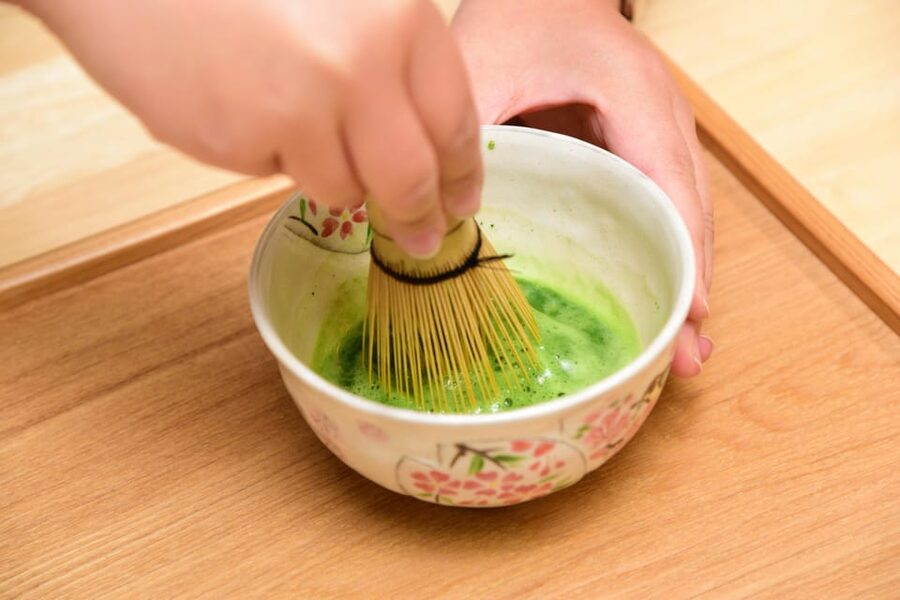
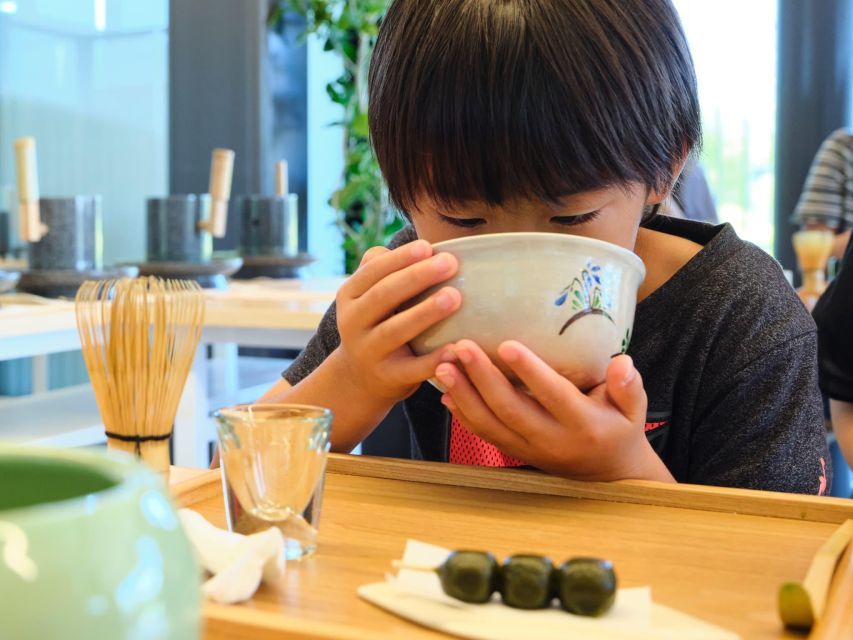
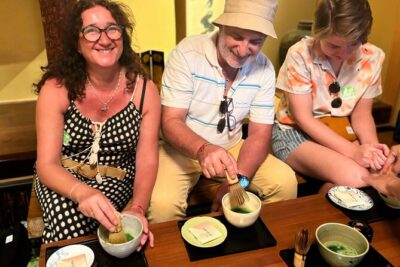
After grinding, you learn how to brew matcha with the instructor’s direction. The class shows the basic movements used to whisk the powder, then you prepare and taste your own bowl.
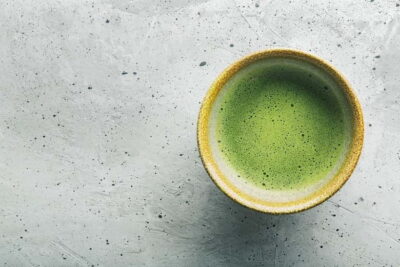
This is the moment when the workshop pays off. Freshly ground matcha has a strong aroma, and the scent becomes part of the experience before you even taste it. You also gain a practical skill that you can repeat at home, provided you later obtain matcha, a bowl, and a whisk.
The tea is served with sweets, which give the tasting a pleasant balance. A bitter or grassy note becomes easier to enjoy alongside a small sweet. The preparation also encourages you to drink slowly rather than treating the matcha as a fast sample.
The portion is intended for use during the class. One point to keep in mind is that you should not count on taking your freshly ground matcha home. Some visitors wished they had been able to keep more of what they produced, so bring your expectations in line with the activity’s purpose: this is a tasting workshop, not a tea-making session that supplies a take-home packet.
You may find tea and matcha equipment available to purchase at or near the center, but the supplied details do not promise a particular shop or product. If you want souvenirs, leave time to explore Uji’s shopping streets after the class.
The summer-only matcha and ice cream option
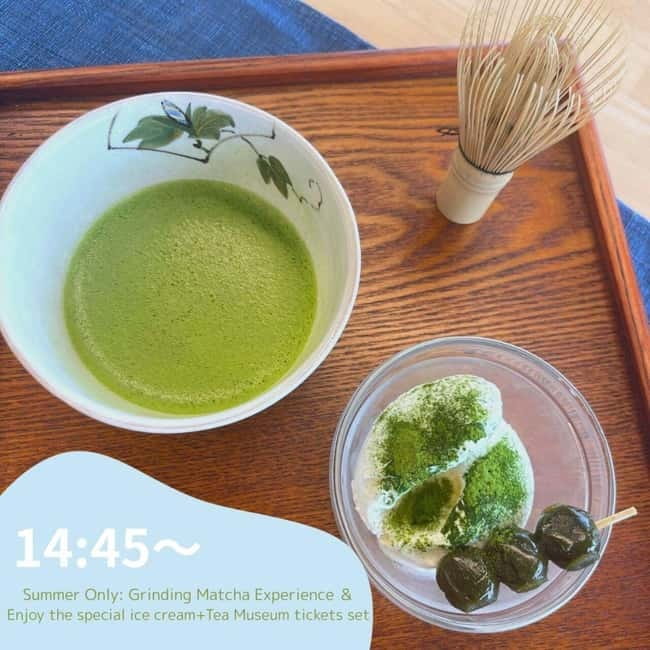
At 2:45 p.m. during summer, the restaurant offers a seasonal variation. You can pour your freshly ground matcha over ice cream, then enjoy it as a cool dessert and drink.
This is a fun addition on a hot day. The combination gives matcha a gentler entry point for children or anyone who finds straight tea too intense. The ice cream also turns the workshop into a more memorable treat rather than simply a lesson followed by a cup.
The timing matters. The ice cream option is listed as summer-only and available at 2:45 p.m. only, so do not assume every departure includes it. If this is the part that interests you most, confirm the date and start time before booking.
What the one-hour format does well
One hour is enough to cover the museum introduction, tea grinding, preparation, and tasting without taking over your day. That makes it easy to pair with Byodoin Temple, Uji’s main market street, or a walk through town.
The tradeoff is that the schedule is tightly packed. You will not have unlimited time to linger at every digital display or ask an extended series of questions. The class is best approached as a compact introduction, followed by your own exploration of Uji.
I like this balance for a Kyoto itinerary. You get a real activity rather than another passive sightseeing stop, but you do not need to sacrifice an entire afternoon. Several people have also found it suitable for families, and the guided format means you do not need to know tea etiquette in advance.
The museum ticket is included, so you can return to the exhibits during the visit as time allows. The museum itself may not fill a whole hour, but it strengthens the workshop by explaining the tea-growing and processing stages first.
Getting more from your visit to Uji
Plan to stay in Uji after the workshop. The town offers an easy change of pace from central Kyoto, with tea foods, tea shops, souvenirs, and the Byodoin area within walking distance of Chazuna.
One practical tip is to watch the station you use. Keihan Uji Station is only about four minutes away, while JR Uji Station takes about 12 minutes on foot. If you are catching a train immediately after the session, the extra walking time from JR matters.
You can also use the activity as an introduction before visiting other tea-related sights. Once you have seen tencha ground and whisked your own matcha, tea products and menus around Uji become easier to understand. You will know why some items are bright, bitter, creamy, or strongly scented.
The site is wheelchair accessible, and instruction is offered in Japanese and English. The information provided does not give detailed access notes for every part of the building, so you can contact the venue if you need help with a particular mobility requirement.
Who should book this experience?
I would choose this for anyone who enjoys matcha, Japanese food culture, or practical museum visits. It is especially good for first-time visitors who want a simple explanation of tea production rather than a formal ceremony lasting several hours.
It also suits families and solo visitors. Solo participants may be seated with other people in the class, and the guided format gives you an easy social setting without requiring you to arrive with a group.
You might skip it if you have very little interest in tea, dislike scheduled activities, or want to spend your time only at major temples. The museum is compact, the class is structured, and the take-home product is limited. This is about understanding and tasting the process, not producing a large quantity of matcha.
At $23 per person, the value is strong. You receive museum admission, instruction, a hands-on activity, freshly prepared tea, and sweets. The experience also places you in Uji, where you can continue sightseeing without paying for another major attraction immediately afterward.
Should you book the Chazuna matcha workshop?
Book it if you want a short, useful cultural activity that gives you something to do with your hands. The tea mill, fresh aroma, friendly instructors, and included museum make this more satisfying than a basic tasting.
I would aim for a morning or early afternoon time unless you specifically want the summer ice cream option at 2:45 p.m. Arrive early, allow 12 minutes from JR Uji Station, and keep the rest of your Uji visit open for Byodoin, tea shops, and the market street.
For matcha fans, this is an easy yes. For everyone else, it is still a good choice if you have a spare hour in Uji and want to leave Kyoto’s usual sightseeing path for a practical lesson in a local specialty.
FAQ
How long does the matcha grinding experience last?
The activity lasts one hour, including the museum and the matcha-making session.
What is included in the price?
The $23 price includes admission to the Chazuna Museum, the matcha-making experience, and an instructor.
Where do I meet the instructor?
Go to the first-floor reception area at Chazuna in the Historical Park of Tea and Uji Town.
How far is Chazuna from the train stations?
Chazuna is about a four-minute walk from Uji Station on the Keihan Uji Line. It is about a 12-minute walk from the South Exit of Uji Station on the JR Nara Line.
What languages are available?
The experience is offered in Japanese and English.
Do I need to arrive early?
Yes. You should arrive 15 minutes before your reservation and check in at reception. Entry or participation can be refused after 30 minutes from the scheduled start time, with no refund.
Is the experience wheelchair accessible?
Yes, the activity is listed as wheelchair accessible.
Can I cancel or change my reservation?
You can cancel up to 24 hours in advance for a full refund. Reservations can also be changed through the website’s change procedure, and schedule changes cannot be handled by phone.
Just added in Kyoto
- The “Golden Route” and Ancient Japan by DIAMIR Erlebnisreisen – 14-Day Tour★ 2.0 · 2 reviews
- Japan: Castles & Cuisine by G Adventures – 6-Day Kyoto to Osaka Tour★ 4.5 · 4 reviews
- Cycle Japan by Explore! – 13-Day Kyoto to Tokyo Tour★ 4.7 · 12 reviews
- Cycle Japan by Intrepid Travel – 11-Day Kyoto to Tokyo Tour★ 4.8 · 2 reviews
- Classic Japan by Intrepid Travel – 11-Day Kyoto to Tokyo Tour★ 4.4 · 14 reviews
- Ancient & Modern Japan 14-Day Tour by Exodus Adventure Travels★ 4.4 · 40 reviews
- 5 Day Cultural Adventure of Kyoto, Nara & Osaka by Tourist Journey★ 2.5 · 2 reviews
- 12 Days Kinosaki Onsen Escape: A Journey Through Japan’s Timeless Towns by UME Travel★ 4.8 · 5 reviews
Tea Ceremonies, compared.
Tea Ceremony in a Traditional Tea House in Kiyomizu
Read our review →
World Heritage Kyoto & Nara Uji Authentic Matcha Experience
Read our review →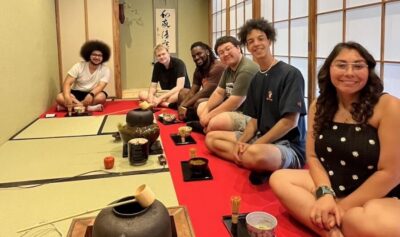
Browse the lists this tour appears in