
Reviewed · TEA CEREMONIES
Osaka Japanese Cooking And Matcha Class near Osaka Castle
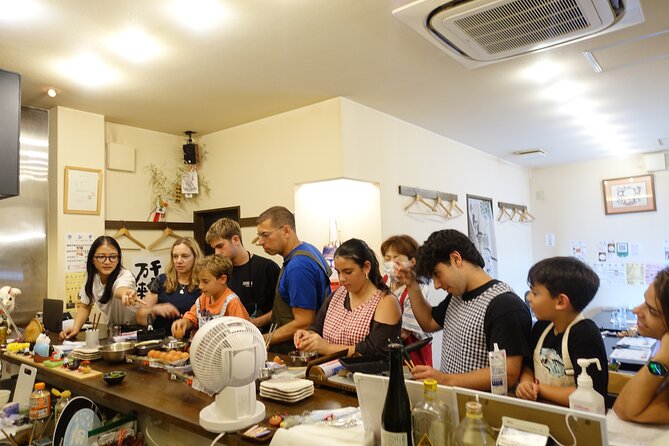
Cooking is Osaka sightseeing with an apron. This two-hour class gives you a practical way to meet Japanese food culture through hands-on cooking, homemade matcha, and a meal you help prepare. I like the small maximum of 10 people, which should leave room for questions, and I also like the friendly family setting led by Ikuko with help from her son, Takumi.
The class offers a choice of home-cooked dishes, okonomiyaki, or bento, with the chance to add a sake tasting. The main consideration is that the exact dish may vary: past sessions have included salmon, dashimaki rolled omelette, and takoyaki, so I would confirm the menu if one particular food is the reason you are booking.
In This Review
- What makes this Osaka cooking class worth your time
- A two-hour food experience near Osaka Castle
- Getting to 3-chōme-8-2 Nakamichi
- Choosing between home cooking, okonomiyaki, and bento
- What the cooking portion feels like
- Matcha is more than a drink at the end
- Adding sake to the meal
- Ikuko and Takumi give the class its character
- Is $65.69 a fair price?
- Who should book this experience?
- Timing, group size, and cancellation details
- FAQ
- How long does the Osaka cooking and matcha class last?
- Where does the class meet?
- What dishes can I choose to make?
- Is sake included in the class?
- How many people can join the class?
- Can I cancel for a full refund?
- Should you book this Osaka cooking class?
What makes this Osaka cooking class worth your time
- Small-group instruction: The class is limited to 10 people, allowing more personal help than a large demonstration.
- Three cooking choices: Pick from home-cooked dishes, okonomiyaki, or bento for your lunch or dinner experience.
- Matcha practice included: You learn how to prepare authentic matcha at home, not just taste a cup.
- Optional sake tasting: Add a sake pairing to your meal for a broader introduction to Japanese food culture.
- Convenient Osaka setting: The class is one JR station from Osaka Castle Station and about a seven-minute walk from Morinomiya Station.
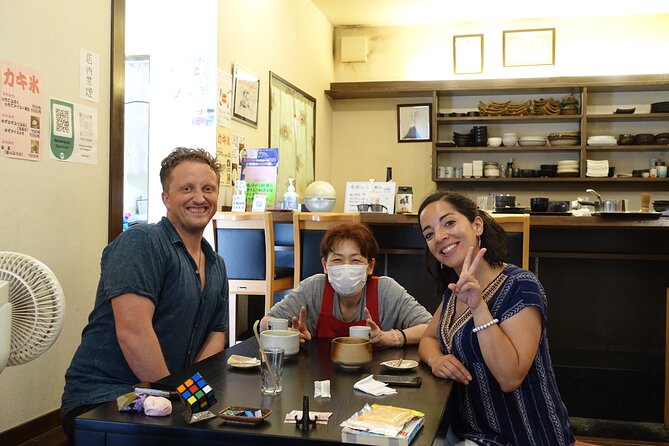
- Warm family hosting: Ikuko leads the experience, while Takumi can help with translation and communication.
A two-hour food experience near Osaka Castle
This class is built around a simple idea: instead of only eating Osaka specialties, you learn how to make them. In about two hours, you cook, prepare matcha, sit down to eat, and have time to ask questions.
That format works well for you if you want something more personal than a restaurant meal but less demanding than a full-day food course. You do not need to give up an entire afternoon or evening. The class can fit around sightseeing, especially if you are already planning to visit Osaka Castle or the nearby Morinomiya area.
The experience is offered as lunch or dinner, while the supplied schedule shows a 5:30 pm start. Check the time attached to your chosen booking before you set your day around it. This matters because the class is not a flexible drop-in activity. You arrive at a set meeting point and return there when the session ends.
More Castles and Historic Sites in Osaka
- Osaka Castle: Museum and Tower Entry Ticket
★ 4.5 · 2,380 reviews - Ultimate Osaka Walking Tour: Castle, Dotonbori & Hidden Gems
★ 5.0 · 862 reviews - Osaka Castle Walking Tour and Castle Tower Admission
★ 5.0 · 561 reviews
Getting to 3-chōme-8-2 Nakamichi
The meeting point is at 3-chōme-8-2 Nakamichi in Osaka’s Higashinari Ward, postal code 537-0025. The location is near public transportation, making it manageable from several popular parts of the city.
From Osaka Castle Station on the JR line, the class is described as one station away. From Morinomiya Station, allow about seven minutes on foot. The class is also convenient from Shinsaibashi and Namba, so you can place it between other plans instead of treating it as a remote side trip.
That location gives you useful scheduling options. You might visit Osaka Castle first, then attend the evening class. Or you could spend time around Namba and Shinsaibashi before heading over. The host also operates a cafe, so you can arrive early and have a coffee before cooking begins.
I would not cut your arrival too close. The class includes cooking, translation, and meal time, so arriving with a few unhurried minutes is more sensible than rushing in from the train.
Choosing between home cooking, okonomiyaki, and bento
You choose one dish from three broad options:
- Home-cooked dishes
- Okonomiyaki
- Bento
Each choice gives you a different view of everyday Japanese food.
Home-cooked dishes are the best match if you want something close to an ordinary Japanese meal. This option may be especially useful for you if you are interested in ingredients, preparation methods, and recipes you could repeat at home.
Okonomiyaki is a natural Osaka choice. The dish is associated strongly with the city and offers a social cooking format. You work with familiar ingredients in a way that feels distinctly local, making this a good pick if you want a food with a clear Osaka connection.
Bento gives you a look at how Japanese meals are arranged and presented in portions. It can appeal to you if you enjoy several small elements rather than one large central dish.
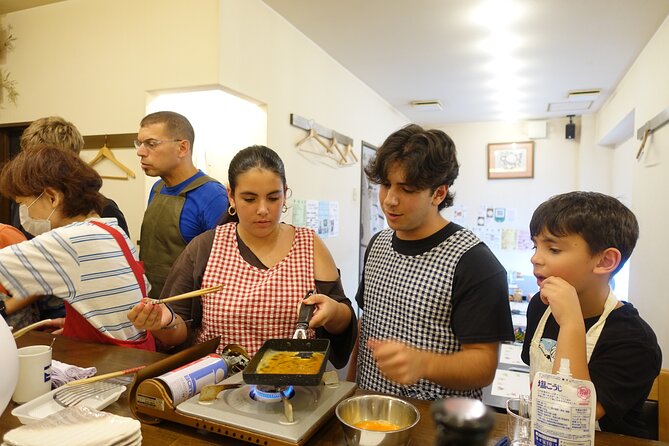
The menu is not described as fixed. The class has included salmon and dashimaki rolled omelette in one session, while another session included takoyaki. Those examples suggest the food may change according to the class plan, ingredients, or group selection. If you have a dietary restriction or a strong preference, contact the provider before booking rather than assuming every dish will be available.
What the cooking portion feels like
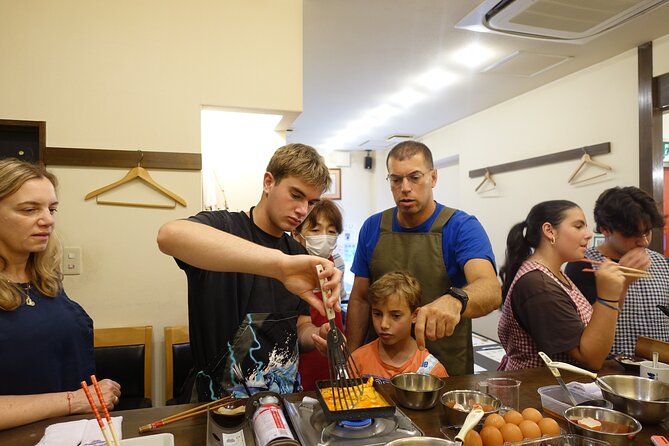
The emphasis is on practice. You are not simply watching Ikuko prepare a meal while standing at a distance. You take part in Japanese cooking techniques, with the small class size leaving space for individual tips and corrections.
That personal attention is one of the strongest reasons to choose this experience. In a larger cooking school, you may spend much of the lesson trying to see over someone’s shoulder. Here, the stated limit of 10 people gives the instructor more opportunity to notice what you are doing and answer questions.
Ikuko is praised for making people feel comfortable and keeping the mood light. Her son Takumi helps with translation when needed. Communication may not be fully fluent in English through the entire class, but the family approach appears to soften that limitation. You get interaction, demonstrations, and help rather than a formal lecture.
The class also suits families. One family described the experience as fun and personal for everyone, and the setup allows people with different cooking confidence levels to participate together. You do not need to arrive as an experienced cook. The point is to learn by doing.
More Tea Ceremonies in Osaka
- Osaka: Tea Ceremony Experience
★ 4.9 · 1,426 reviews - Tea Ceremony Experience in Osaka Doutonbori
★ 5.0 · 754 reviews - Matcha Making Class in Osaka with Authentic Japanese Sweets Set
★ 5.0 · 509 reviews - Osaka: Matcha Making Experience with Japanese Sweets
★ 5.0 · 146 reviews
Matcha is more than a drink at the end
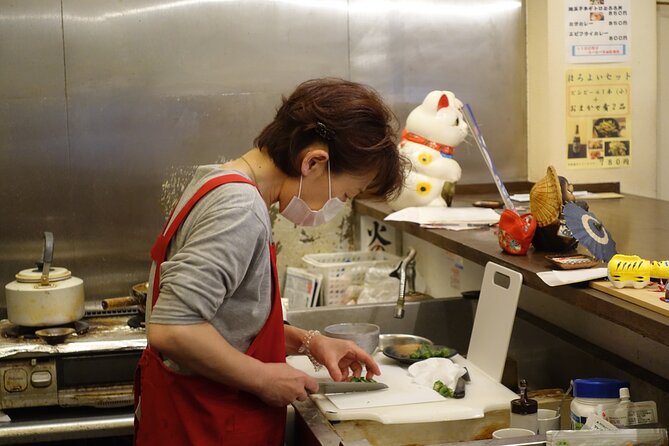
The matcha portion adds a useful skill instead of serving only as a short tasting. You learn how to make authentic matcha at home, which gives the drink a place in your daily life after Osaka.
That is a smart addition to the cooking class. You leave with two food-related skills: preparing a Japanese dish and making matcha. The matcha lesson also gives the experience a calmer change of pace after the cooking and meal preparation.
The supplied details do not specify the exact tools, amount of matcha, or preparation method used. You should therefore think of this as an introduction rather than an advanced tea ceremony course. If you are looking for formal tea ceremony etiquette, this is not described as that kind of activity. It is a practical matcha lesson attached to a cooking and dining session.
Adding sake to the meal
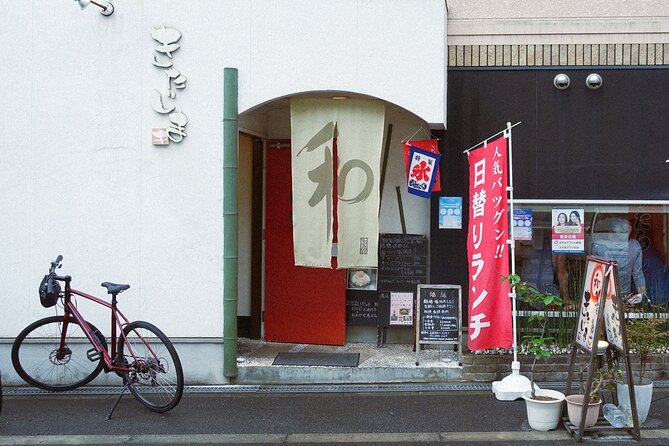
You can upgrade the class to include a sake tasting. This option makes sense if you want to connect the food with a traditional Japanese drink and are comfortable adding an alcoholic tasting to the evening.
The sake option is not required for the main cooking experience. That keeps the base price lower and lets you decide if the tasting fits your interests and budget. If you are traveling with children or do not drink alcohol, the standard class remains the more straightforward choice.
The available information does not specify the sake selection, number of pours, or tasting format. Consider it an add-on rather than a full sake seminar. Its value comes from pairing the drink with the meal and giving you another point of conversation with the host.
Ikuko and Takumi give the class its character
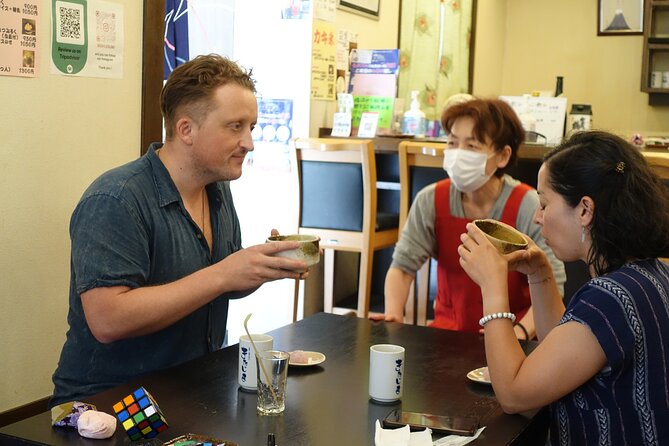
The hosts are central to the experience. Ikuko is described as warm, cheerful, and eager to interact, while Takumi helps translate and support the class.
That family involvement changes the tone. You are not entering a polished cooking studio with a rotating team of instructors. You are visiting a cafe-based class where the hosts cook with you and share food in a more direct way.
This can be a major benefit if you enjoy conversation and personal contact. It also means the experience may feel less formal than a professional culinary school. Limited English communication could require patience, but demonstrations and Takumi’s translation help bridge the gap.
The strongest praise focuses on hospitality. People leave feeling welcomed, not processed through a standard activity. That matters in a short class because the human connection becomes part of what you remember.
Is $65.69 a fair price?
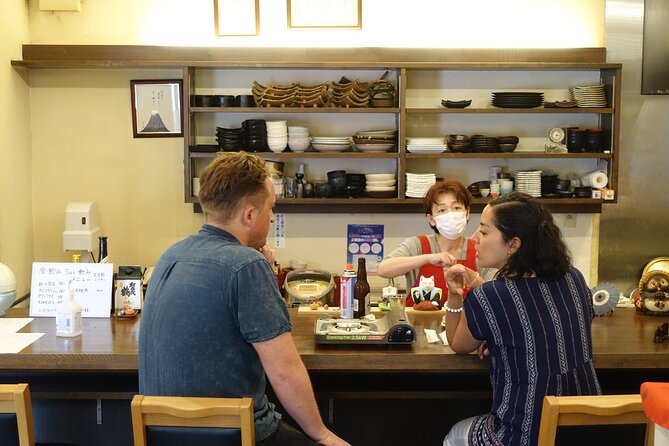
At $65.69 per person, this is not the cheapest way to eat in Osaka. You can find a filling meal for much less, and a quick okonomiyaki dinner will cost only a fraction of the class price.
The comparison is not quite fair, though. Your fee covers instruction, ingredients, the prepared meal, matcha practice, and the chance to ask questions in a small group. You are paying for an activity as well as food.
The price makes the most sense if you value participation and personal attention. It is also easier to justify if you plan to recreate the recipes at home. A restaurant gives you a finished dish. This class gives you techniques, food memories, and a better understanding of how the meal comes together.
The value is weaker if you only want to sample Osaka food quickly. In that case, eat at a local restaurant and spend the difference elsewhere. The class earns its price through the teaching and family setting, not through the amount of food alone.
The optional sake tasting will increase the total cost, though the additional price is not provided. Check that amount before selecting the upgrade.
Who should book this experience?
I would recommend this class to you if you fit one or more of these descriptions:
- You want a hands-on food activity near Osaka Castle.
- You prefer small groups to large cooking demonstrations.
- You enjoy meeting local hosts in a family setting.
- You want to learn recipes you may try at home.
- You are traveling as a family and need an activity suitable for different cooking abilities.
- You would like to combine cooking, a meal, matcha, and optional sake in one short session.
It is also a good choice for a return visit to Osaka. If you have already seen the city’s major sights, a home cooking class gives you a different way to spend an evening.
You may want to skip it if you dislike scheduled activities, do not want to cook, or are looking for a formal Japanese tea ceremony. The class is practical and social. It is not presented as an advanced culinary course or a detailed study of sake.
Timing, group size, and cancellation details
The activity lasts about two hours and has a maximum of 10 people. That small cap is important because the class depends on interaction and hands-on help.
A mobile ticket is provided, and booking confirmation is sent at the time of booking. The meeting point is also the ending point, so you do not need to arrange a separate return transfer.
Free cancellation is available if you cancel at least 24 hours before the start time. Cancellations made less than 24 hours in advance are not refunded, and changes inside that same 24-hour window are not accepted. Cut-off times use Osaka’s local time.
FAQ
How long does the Osaka cooking and matcha class last?
The experience lasts approximately two hours.
Where does the class meet?
It meets at 3-chōme-8-2 Nakamichi, Higashinari Ward, Osaka, 537-0025, Japan. The activity ends back at the same meeting point.
What dishes can I choose to make?
You can choose one option from home-cooked dishes, okonomiyaki, or bento. Past sessions have also included foods such as salmon, dashimaki rolled omelette, and takoyaki, so the exact menu may vary.
Is sake included in the class?
Sake is available as an upgrade. It is not listed as part of the standard class price.
How many people can join the class?
The maximum group size is 10 people.
Can I cancel for a full refund?
Yes, if you cancel at least 24 hours before the experience start time. Cancellations or changes made less than 24 hours before the start time are not accepted for a refund.
Should you book this Osaka cooking class?
Book it if you want a friendly, personal food lesson rather than another restaurant meal. The small group, family hosts, home-style cooking, matcha practice, and convenient location near Osaka Castle make this a well-rounded two-hour activity.
I especially like it for families, food-minded visitors, and anyone hoping to bring a piece of Osaka home. Before paying, confirm the class time, the dish available on your date, and the cost of the sake upgrade. If those details suit your plans, $65.69 buys more than dinner. It buys a chance to cook, ask questions, and share a meal with Ikuko and Takumi in a welcoming setting.
Just added in Osaka
- Osaka: 2-Hour Nightlife District Walking & Local Food Culture★ 5.0 · 199 reviews
- Osaka Dotonbori Daytime Food Tour★ 5.0 · 24 reviews
- Osaka Dotonbori Wonder Cruise★ 4.0 · 28 reviews
- Osaka Food Walking Tour with Market Visit★ 4.5 · 14 reviews
- Cooking Ramen&Gyoza/KatsuCurry/Bento/Okonomiyaki+Store Tour@Osaka★ 5.0 · 138 reviews
- Osaka Private Pop Culture Tour: Historic Tenma to Dotonbori★ 4.5 · 13 reviews
- Osaka Cooking Class and Sake Tasting with Local Supermarket Visit★ 5.0 · 79 reviews
- Osaka Castle and a visit to the longest shopping street in Japan★ 5.0 · 12 reviews
Tea Ceremonies, compared.
Tea Ceremony in a Traditional Tea House in Kiyomizu
Read our review →
World Heritage Kyoto & Nara Uji Authentic Matcha Experience
Read our review →
Browse the lists this tour appears in