
Reviewed · COOKING CLASSES
Private Kyoto Market Tour and Authentic Cooking Class with Aki
Come hungry, leave with new skills. This four-hour Kyoto experience pairs a local market walk with a hands-on cooking class in Aki’s home. You shop for seasonal ingredients at Demachiyanagi Shoutengai, ride a short bus trip to her kitchen, then prepare and eat a Japanese meal together.
I especially like the private format, since Aki can adjust her teaching to beginners, confident home cooks, and families. I also like the chance to see a local neighborhood and home kitchen rather than spending the whole day in a restaurant or formal cooking studio.
The main drawback is the strict booking policy: the experience is non-refundable and cannot be changed after booking. You should also tell Aki about allergies, dietary restrictions, or preferences when you reserve.
In This Review
- Four useful things to know before booking
- Starting at Demachiyanagi Shoutengai at 10:30
- Why the market stop adds real value
- The 10-minute bus ride to Aki’s kitchen
- Cooking familiar Japanese food with a personal guide
- Eating what you helped prepare
- A warm experience shaped by Aki
- Who will get the most from this Kyoto class?
- Is $119 a fair price?
- Booking details worth taking seriously
- Should you book Aki’s Kyoto cooking experience?
- FAQ
- How long does the Kyoto market and cooking experience last?
- What time does the experience start?
- Where does the tour begin?
- Where does the activity end?
- Is hotel pickup and drop-off included?
- Is a vegetarian meal available?
- Can the experience accommodate allergies or dietary restrictions?
- Is the cooking class private?
- Is alcohol included?
- Can I cancel or change my booking?
Four useful things to know before booking
- The market visit lasts about 45 minutes: You shop at Demachiyanagi Shoutengai and select ingredients for the meal with Aki.
- The cooking takes place in Aki’s home: This gives the experience a personal feel, but you should be comfortable entering a private residence.
- The bus transfer is short: Aki’s home is four stops away, about 10 minutes from the market.
- The class suits beginners and experienced cooks: Recipes are supplied in English, and Aki guides you through each stage.
- The meal is included: Non-alcoholic drinks are included, and the tour information also describes one or two glasses of local alcohol as part of the experience.
- Seasonal changes are part of the deal: The menu may change depending on what is available in Kyoto.
Starting at Demachiyanagi Shoutengai at 10:30
Your morning begins at 10:30 a.m. at Demachi Futaba, 236 Seiryūchō, in Kyoto’s Kamigyo Ward. This is the meeting point for both the start and end of the activity, so you do not need to arrange a second pickup location.
The first 45 minutes are spent with Aki at Demachiyanagi Shoutengai, a local neighborhood street market. The value here is not simply seeing Japanese food on display. You learn how ingredients are chosen and which products are useful in everyday home cooking.
That distinction matters. A market tour can easily become a quick photo stop, with a guide naming foods as you pass. Here, the shopping directly supports the next part of the experience. You help choose vegetables and other ingredients that will later appear in your meal.
You might see basic Japanese cooking staples alongside higher-quality regional produce. The exact selection depends on the season, so you should not expect a fixed shopping list or identical menu on every date. That changing menu is a plus if you want food connected to the time of year, though it may be less appealing if you need to know the exact dishes in advance.
Aki also helps bridge the language gap while you interact with shop owners. One especially appealing part of this experience is the chance to get away from Kyoto’s more heavily visited areas and spend time in a neighborhood market with small shops.
More Cooking Classes in Kyoto
- Ramen Cooking Class at Ramen Factory in Kyoto
★ 5.0 · 1,937 reviews - Sushi Making in Kyoto! Same-day bookings welcome!
★ 5.0 · 713 reviews - Kyoto: Ramen Cooking Class at a Ramen Factory with Souvenir
★ 4.9 · 532 reviews
Why the market stop adds real value
Japanese food is often presented to visitors as a finished product: sushi at a counter, noodles in a bowl, or a carefully arranged meal. This tour lets you see some of the decisions that happen before cooking begins.
You learn about ingredients in their original setting, then use them soon afterward. That simple sequence makes the cooking lesson easier to remember. If you later try to recreate the recipes at home, you will have more than a list of instructions. You will also remember what the ingredients looked like, how they were selected, and how Aki explained their use.
I also like that the market stop is short enough to keep the day moving. Forty-five minutes gives you time to look, ask questions, and shop without turning the experience into a long food crawl. The entire tour lasts about four hours, so the market, bus ride, cooking, and meal fit into one manageable half-day.
You should wear comfortable shoes, since the first section involves walking through the market. The supplied details do not describe specific accessibility arrangements, so contact the provider before booking if you have mobility needs.
The 10-minute bus ride to Aki’s kitchen
After shopping, you take a public bus from the market to Aki’s home. Her home is four bus stops away, and the ride takes about 10 minutes.
This is a small but meaningful part of the experience. Instead of moving directly from a tourist meeting point into a commercial classroom, you travel into the area where Aki lives. You get a brief look at an ordinary Kyoto routine, and the change of setting helps the afternoon feel more personal.
The bus ride also means this is not a door-to-door activity. Hotel pickup and drop-off are not included, and you are responsible for reaching the opening meeting point. Since the activity starts at 10:30 a.m., allow enough time to reach Demachi Futaba without rushing.
The tour ends back at the original meeting point. That makes onward planning fairly simple after the meal, but remember that you will return there rather than finish at Aki’s home.
Cooking familiar Japanese food with a personal guide
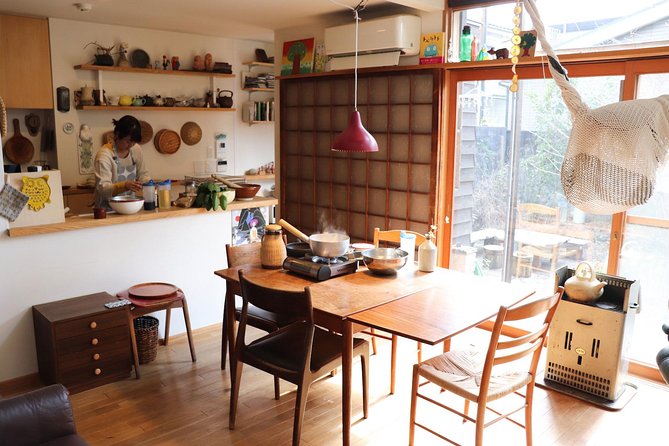
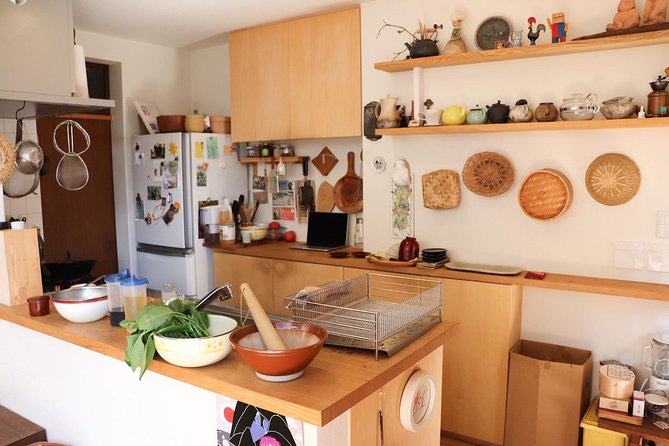
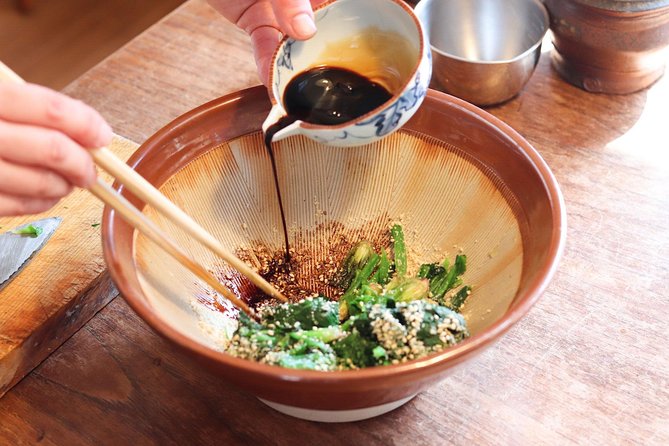
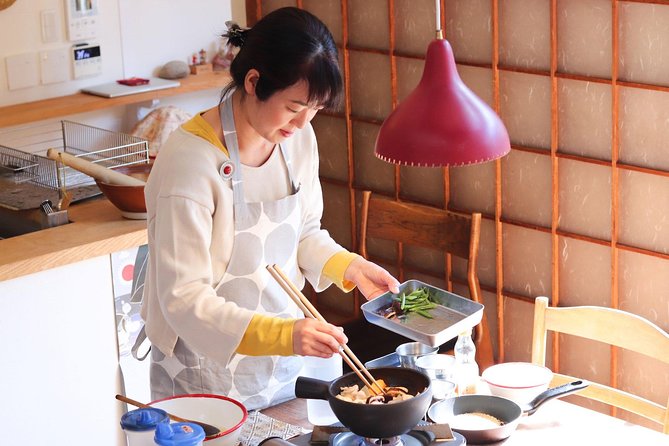
The cooking portion takes place in Aki’s beautiful home kitchen and lasts about an hour before you sit down to eat. Aki provides recipes in English, then walks you through the preparation.
This is not presented as a demonstration where you watch from a distance. You take part in making the food. That hands-on approach is useful for both new cooks and people who already spend time in the kitchen. Beginners can ask basic questions without feeling out of place, while experienced cooks can focus on Japanese methods and ingredients they may not use at home.
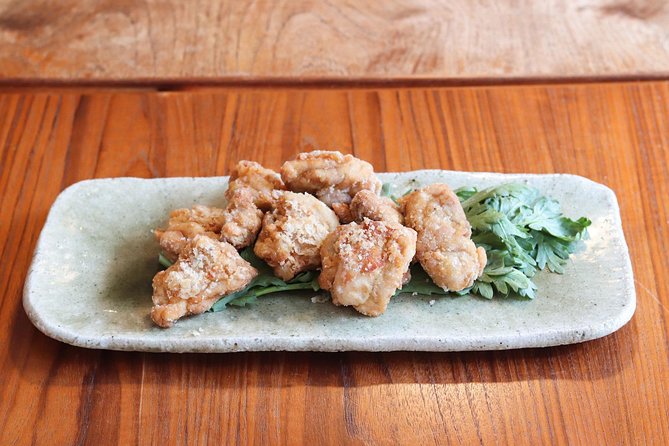
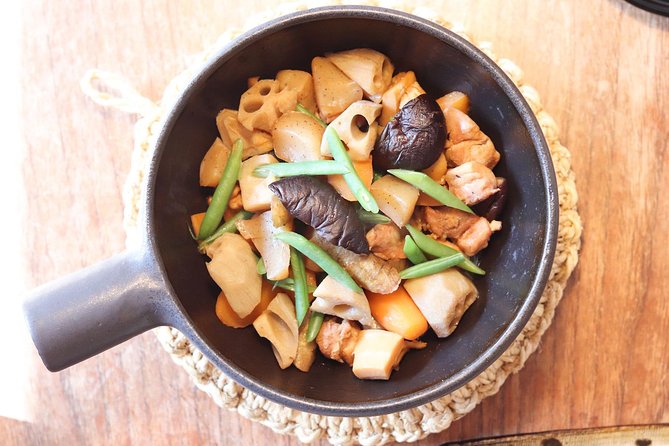
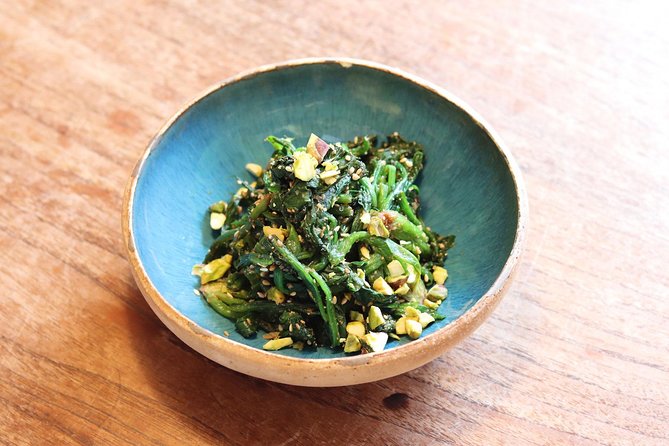
Aki also shares tips for familiar dishes such as miso soup. The experience includes dishes that may not commonly appear on restaurant menus, which gives the lesson a practical home-cooking angle. You are not simply learning how to copy a restaurant plate. You are learning what a Japanese meal can look like in a local home.
The one-hour cooking period is not especially long, so the class will not cover every technique in Japanese cuisine. That is a fair trade for the market visit and shared meal. You get a focused introduction rather than a full culinary course.
The private format is especially helpful here. Only your own group participates, allowing Aki to give direct attention and adjust the pace. A private class can also feel more relaxed for families, couples, or friends who want to ask plenty of questions.
More Markets and Food Halls in Kyoto
- Nishiki Market Brunch Walking Tour (7 Tastings + Brunch)
★ 5.0 · 1,355 reviews - Kimono Tea Ceremony at Kyoto Maikoya, NISHIKI
★ 5.0 · 911 reviews - Kyoto Nishiki Market Food and Culture Walking Tour
★ 5.0 · 412 reviews - Kyoto: Nishiki Market Tea Ceremony with Koto Performance
★ 4.8 · 294 reviews
Eating what you helped prepare
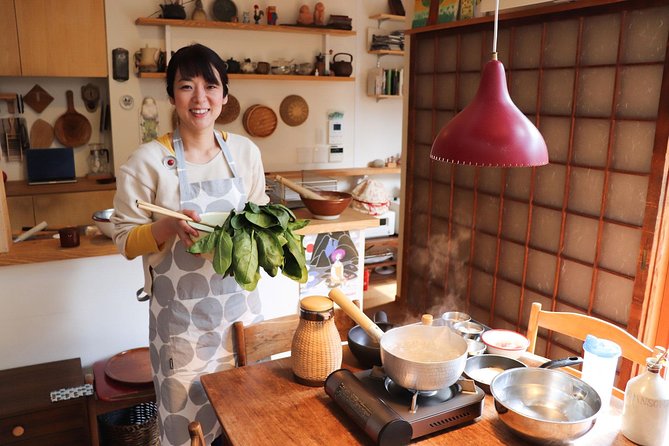
After cooking, you sit down with Aki and eat the meal you made together. This final part is more than a reward for finishing the recipes. It gives you a chance to understand how the dishes work as a complete Japanese meal.
The included food makes the $119 price easier to assess. You are paying for a private market tour, instruction, ingredients, a home meal, drinks, and the time of a personal host. It is not the cheapest way to eat lunch in Kyoto, but it offers much more contact and instruction than an ordinary restaurant meal.
Non-alcoholic beverages are included. The experience description also says that one or two glasses of local alcohol are included, although the listed inclusions specifically mention non-alcoholic beverages. If this matters to you, confirm the current drink arrangement before booking.
The meal is also where dietary planning becomes important. Vegetarian food is available, but you must request it when booking. Allergies, restrictions, and cooking preferences should be provided at that time. Do not wait until the morning of the class, since the market choices and menu depend on advance preparation.
A warm experience shaped by Aki
Aki is the heart of this activity. The strongest praise centers on her warmth, careful preparation, and ability to make people feel comfortable in her home.
That personal connection seems to be the reason this tour is remembered as more than a cooking lesson. You learn about Kyoto life, local food, and home dining while spending time with a host who clearly enjoys sharing her culture. One family particularly valued the way Aki connected with their daughter, while another described the day as one of the best experiences of a long trip through Japan.
Aki also appears to be well organized. That matters in a class that combines market shopping, public transport, recipe instruction, cooking, and dining within four hours. Good timing keeps the activity from feeling scattered.
The English recipes are another practical strength. You can take the instructions home and try the dishes again, although the information provided does not specify whether the recipes are printed or sent digitally. Ask if you want to know how they are delivered.
Who will get the most from this Kyoto class?
I would recommend this experience most strongly to:
- Food-focused visitors who want to understand Japanese ingredients rather than only eat prepared dishes.
- Couples and small families who value private attention and a relaxed setting.
- Beginner cooks who want patient guidance without a large class.
- Experienced home cooks looking for dishes and techniques that may not appear on standard restaurant menus.
- Visitors seeking a local neighborhood away from Kyoto’s most tourist-heavy areas.
- People who enjoy conversation and want cultural exchange alongside the food.
It may be less suitable if you prefer a large professional cooking school, want a fixed menu, or need a fully private vehicle. The short bus transfer is simple, but this is still a participatory outing rather than a polished sightseeing tour with hotel transport.
The setting may also matter. Cooking in Aki’s home gives the class its character, but anyone who prefers a commercial kitchen should consider that before reserving. You are visiting someone’s home, not a purpose-built studio.
Is $119 a fair price?
At $119 per person, this is a mid-to-high-priced food activity, but the private structure improves the value. The fee covers roughly four hours, the market walk, bus transfer during the activity, cooking instruction, ingredients, the meal, non-alcoholic drinks, and personal attention from Aki.
If you only want to learn one or two recipes, a shorter cooking class may cost less. If you want a cheap lunch, Kyoto has many better options. But comparing this only with the price of a meal misses the point. You are also paying for access to a neighborhood market, an English-guided lesson, a home setting, and time with a local host.
The price makes the most sense when you treat the activity as one of your main Kyoto experiences for the day. It gives you food, conversation, a look at ordinary neighborhood life, and recipes you can use later. For a private experience with a perfect overall rating and full recommendation record, the price is reasonable for visitors who value personal contact over sightseeing volume.
Booking details worth taking seriously
Confirmation is sent within 48 hours of booking, subject to availability. The activity is often reserved well ahead of time, with an average booking lead time of about 97 days, so last-minute availability may be limited.
The experience is non-refundable and cannot be changed for any reason. That is the biggest practical risk. Make sure your Kyoto schedule is settled before you pay, and do not book it on a day when another important reservation could disrupt your plans.
You should also submit all food requirements when booking. Vegetarian options are available, but they need advance notice. The menu changes with the season, so a little flexibility will make the experience easier and more enjoyable.
Should you book Aki’s Kyoto cooking experience?
Book it if you want a personal, food-centered morning with real participation. The market visit gives the class a strong sense of place, while Aki’s home kitchen offers the warmth and direct instruction that large cooking schools often lack.
I would be especially quick to choose it for a couple, family, or small group that wants one meaningful Kyoto activity rather than another standard attraction. The strongest reasons to skip it are the non-refundable policy, the lack of hotel pickup, and the fact that the menu changes seasonally.
For most food lovers, the combination of Demachiyanagi Shoutengai, a short local bus ride, hands-on cooking, and a shared home meal makes the $119 worthwhile. Tell Aki your dietary needs early, arrive ready to participate, and keep the rest of your day flexible enough to enjoy the experience at an unhurried pace.
FAQ
How long does the Kyoto market and cooking experience last?
The activity lasts approximately four hours.
What time does the experience start?
The start time is 10:30 a.m.
Where does the tour begin?
It begins at Demachi Futaba, 236 Seiryūchō, Kamigyo Ward, Kyoto, 602-0822, Japan.
Where does the activity end?
The experience ends back at the original meeting point.
Is hotel pickup and drop-off included?
No. Hotel pickup and drop-off are not included.
Is a vegetarian meal available?
Yes. A vegetarian option is available, but you must request it when booking.
Can the experience accommodate allergies or dietary restrictions?
Yes, but you should provide details about allergies, dietary restrictions, and cooking preferences at the time of booking.
Is the cooking class private?
Yes. Only your own group participates in this private activity.
Is alcohol included?
The experience description says that one or two glasses of local alcohol are included. The listed inclusions specifically mention non-alcoholic beverages, so confirm the current drink arrangement if it is important to you.
Can I cancel or change my booking?
No. The experience is non-refundable and cannot be changed for any reason.
Just added in Kyoto
- The “Golden Route” and Ancient Japan by DIAMIR Erlebnisreisen – 14-Day Tour★ 2.0 · 2 reviews
- Japan: Castles & Cuisine by G Adventures – 6-Day Kyoto to Osaka Tour★ 4.5 · 4 reviews
- Cycle Japan by Explore! – 13-Day Kyoto to Tokyo Tour★ 4.7 · 12 reviews
- Cycle Japan by Intrepid Travel – 11-Day Kyoto to Tokyo Tour★ 4.8 · 2 reviews
- Classic Japan by Intrepid Travel – 11-Day Kyoto to Tokyo Tour★ 4.4 · 14 reviews
- Ancient & Modern Japan 14-Day Tour by Exodus Adventure Travels★ 4.4 · 40 reviews
- 5 Day Cultural Adventure of Kyoto, Nara & Osaka by Tourist Journey★ 2.5 · 2 reviews
- 12 Days Kinosaki Onsen Escape: A Journey Through Japan’s Timeless Towns by UME Travel★ 4.8 · 5 reviews
Cooking Classes, compared.
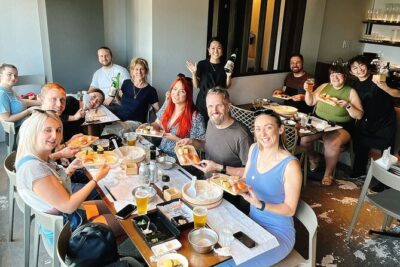
Sushi Making Tokyo Roll and Authentic Japanese Sushi Class
Read our review →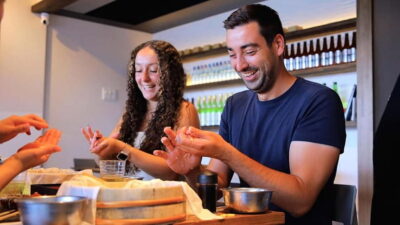
Roll and Authentic Sushi Making Class in Asakusa
Read our review →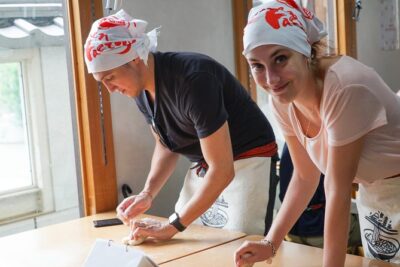
Ramen Cooking Class at Ramen Factory in Kyoto
Read our review →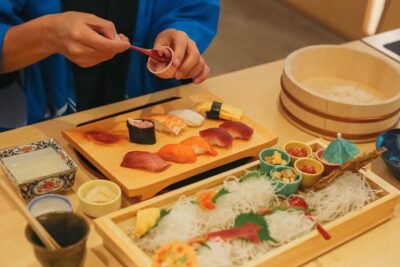
Sushi Making Class in a Happi Coat near a Famous Spot
Read our review →
Sushi Making Osaka Roll and Authentic Japanese Sushi Class
Read our review →
Tokyo Sushi Making Class in Tsukiji with Professional Chef
Read our review →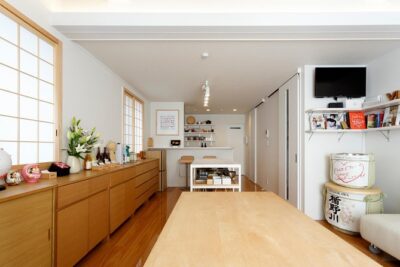
Ramen & Gyoza Cooking Class in Tokyo with Local Supermarket Visit
Read our review →Browse the lists this tour appears in