
Reviewed · TEA CEREMONIES
Samurai Show, Tea Ceremony, Japanese Traditional Activities
Culture gets hands-on here. This Osaka experience brings together a samurai performance, tea ceremony, calligraphy, and traditional Japanese music in one indoor venue near Dotonbori. I like the way you do more than watch: you practice sword movements, try instruments, prepare green tea, and create calligraphy to take home. I also like the friendly staff, including Yui and Miyu, who have been praised for helping visitors understand both the activities and the Japanese language. The main thing to consider is that the basic ticket does not include kimono, samurai armor, or ninja experiences, and the samurai performance may feel more playful than historically serious.
For $44.92 per person, this is a strong choice when you want several Japanese cultural activities without booking separate appointments. The advertised program lasts about two and a half hours, though you may need three hours or more if you take your time or add dress-up options. It suits families, couples, first-time visitors, and anyone with a rainy afternoon in Osaka, but it is less suited to someone seeking a quiet, formal tea ceremony or a museum-level study of samurai history.
In This Review
- Key Points Before You Book
- What You Actually Do During the Osaka Experience
- The Samurai Show: Big Energy and a Chance to Join In
- Traditional Music You Can Try, Not Just Hear
- Tea Ceremony: A Short Lesson in Detail and Courtesy
- Calligraphy and the Small Souvenir You Make Yourself
- Kimono and Samurai Armor: Know What Costs Extra
- Why the $44.92 Price Can Be Good Value
- Timing, Location, and Practical Planning
- Who Will Enjoy This Most?
- A Few Smart Ways to Get More From the Visit
- Should You Book the Samurai Show in Osaka?
- FAQ
- How long does the experience last?
- What activities are included?
- Is samurai armor included in the ticket?
- Can I wear a kimono during the experience?
- Where does the activity start and finish?
- How many people can join?
- Can I cancel for a full refund?
Key Points Before You Book
- Three cultural shows and workshops in one visit: You can see samurai action, traditional music, tea preparation, and calligraphy rather than choosing only one activity.
- Participation is the main attraction: You may practice samurai movements, play Japanese instruments, write calligraphy, and prepare green tea.
- The samurai armor and kimono are not part of the base fare: Dress-up options cost extra, so check the available upgrade before booking.
- Plan for more than the stated 150 minutes: The official duration is about two and a half hours, but a full visit can run three and a half to four hours.
- A good indoor option in Osaka: The venue is near public transportation and close to the Dotonbori area, making it useful on a wet day or between other plans.
- The small group limit helps: A maximum of 20 people gives the staff room to guide visitors through the hands-on stations.
What You Actually Do During the Osaka Experience
The activity begins at Shinsaibashi ARTY Inn, at 2-chōme-17-3 Nishishinsaibashi in Chuo Ward. From there, the program takes place in a large facility near the Dotonbori area. The end point is the same as the starting point, which keeps the logistics simple.
The advertised program runs for about 150 minutes. That time includes the tea ceremony, calligraphy, traditional music, and samurai performance. In practice, the pace may stretch if you stop for photographs, ask questions, take part in every station, or choose a costume option.
The setup appears designed for participation rather than passive viewing. Staff help move you through the activities, explain what to do, and assist with photographs. English interpretation is available throughout the program according to the detailed experience description, which matters because each activity has small customs and techniques that are easy to miss.
The venue has a maximum capacity of 20 people. That is not a private tour, but it is small enough to keep the activities manageable. For families or groups, this size also helps the staff give individual attention instead of sending everyone through at once with little explanation.
More Castles and Historic Sites in Osaka
- Osaka Castle: Museum and Tower Entry Ticket
★ 4.5 · 2,380 reviews - Ultimate Osaka Walking Tour: Castle, Dotonbori & Hidden Gems
★ 5.0 · 862 reviews - Osaka Castle Walking Tour and Castle Tower Admission
★ 5.0 · 561 reviews
The Samurai Show: Big Energy and a Chance to Join In
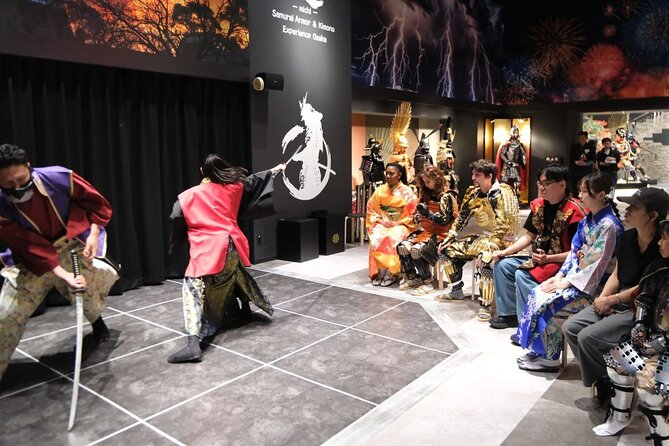
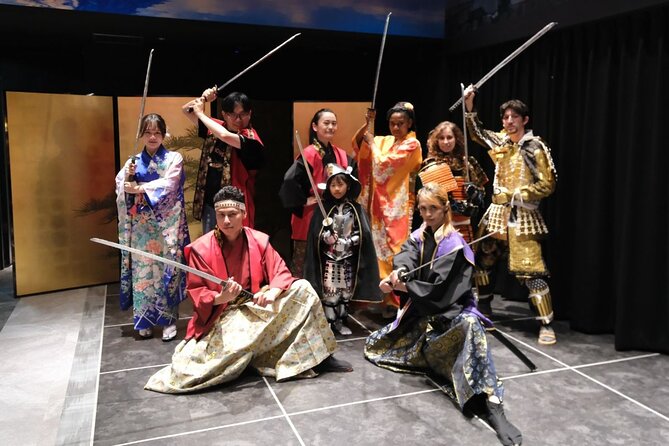
The samurai portion is the most theatrical part of the afternoon. You watch a staged sword performance, then learn some basic movements and take part in a safe practice session. The swords used for participation are not real, so you can enjoy the action without treating it as a serious martial arts class.
Some programs include two different samurai shows. One is a performance, while another may focus more on demonstration and audience participation. The hands-on section is especially popular with children, since the performer brings humor into the lesson and may let you practice against him in a controlled routine.
I would set your expectations correctly. This is entertainment with cultural teaching, not a detailed study of bushido, battlefield tactics, or armor construction. One visitor found the samurai segment less convincing than the tea, music, and calligraphy portions, while still enjoying the overall visit. If you want precise historical interpretation, you may find this part light. If you want a lively introduction with a few laughs and photographs, it works well.
The armor itself is associated with Marutake Industries, known for samurai armor craftsmanship. That does not mean armor rental is included in the standard admission. The basic experience specifically excludes samurai armor, kimono, and ninja options. Ask about the available upgrade if dressing up is important to you.
Traditional Music You Can Try, Not Just Hear
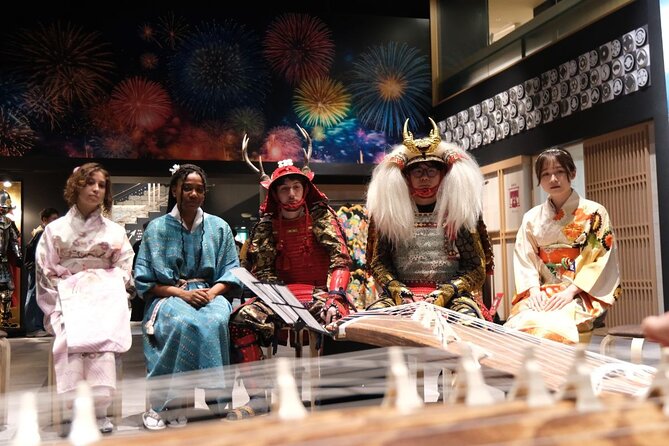
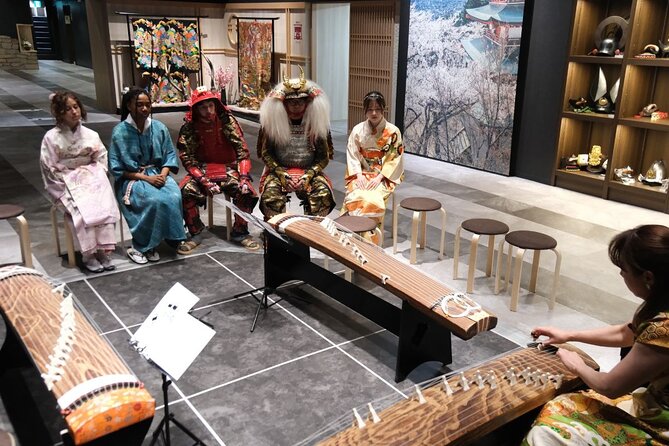
The music section adds a welcome change of pace. You watch performers play traditional Japanese instruments, then get a chance to try some of them yourself. The activities described in the feedback include a Japanese guitar, a Japanese flute, and a complex traditional keyboard-style instrument. Another account mentions trying a harp.
You should not expect to produce concert-quality music in a few minutes. That is part of the fun. The instructors appear used to beginners, and the point is to feel how the instrument works, not to master it. Even a short attempt gives you a better sense of the skill behind the performance.
This section is particularly good for families. Children can handle an instrument, make a sound, and learn a simple technique instead of sitting quietly through a long recital. Adults get the same chance, and the good-natured tone helps if your first attempt sounds rather less Japanese than planned.
The musical demonstrations also add context to the quieter tea and calligraphy activities. You get a broader picture of traditional arts, from movement and performance to precise handwork and ritual.
Tea Ceremony: A Short Lesson in Detail and Courtesy
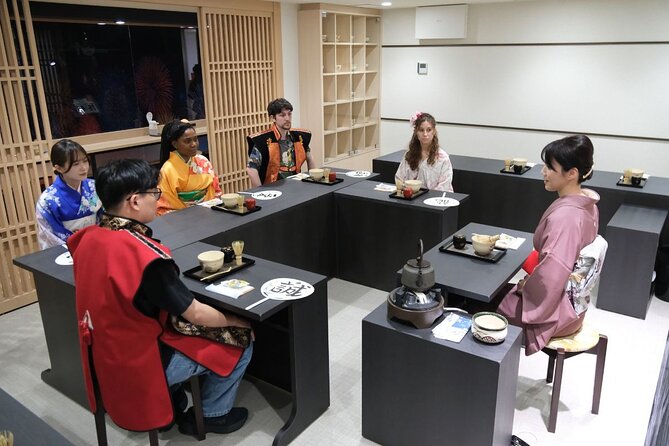
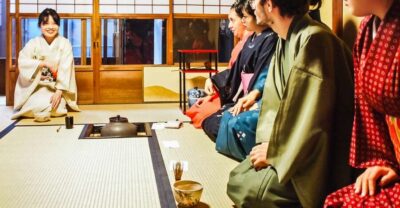
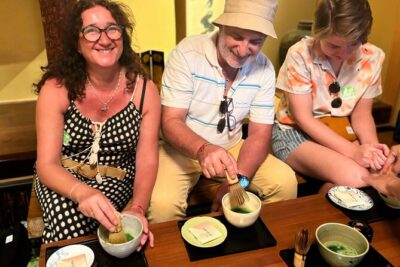
The tea ceremony offers a calmer center to the experience. You learn how green tea is prepared and how to take part correctly, with staff explaining the basic manners and sequence. This is not simply a cup of tea handed to you. You see the care given to each movement and learn why presentation matters.
A short workshop cannot cover every idea behind Japanese tea culture. Still, it gives you useful insight into attention, hospitality, and respect. The value is in learning what to do and why, rather than trying to recreate a full formal ceremony in a large group setting.
The tea portion suits adults who want a quieter cultural activity, but it also works for children when staff keep the lesson practical. If you have never attended a tea ceremony, this offers a friendly first look without requiring a full day or specialist knowledge.
The program may move quickly between demonstrations and participation. If tea is your main interest, ask staff how much time is available and give yourself room to listen. The full visit can take longer than the advertised two and a half hours, especially if you stop to ask questions.
More Tea Ceremonies in Osaka
- Osaka: Tea Ceremony Experience
★ 4.9 · 1,426 reviews - Tea Ceremony Experience in Osaka Doutonbori
★ 5.0 · 754 reviews - Matcha Making Class in Osaka with Authentic Japanese Sweets Set
★ 5.0 · 509 reviews - Osaka: Matcha Making Experience with Japanese Sweets
★ 5.0 · 146 reviews
Calligraphy and the Small Souvenir You Make Yourself
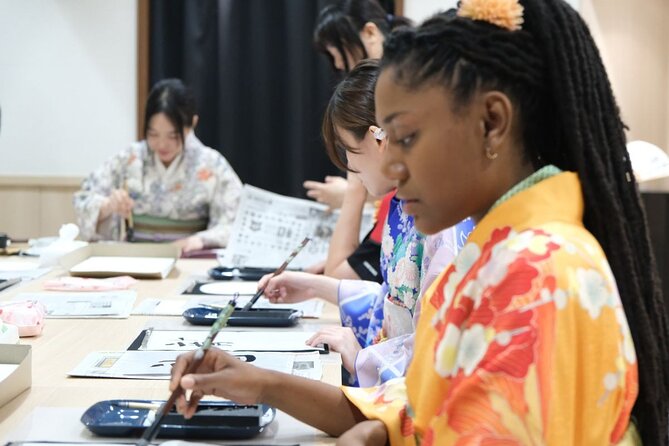
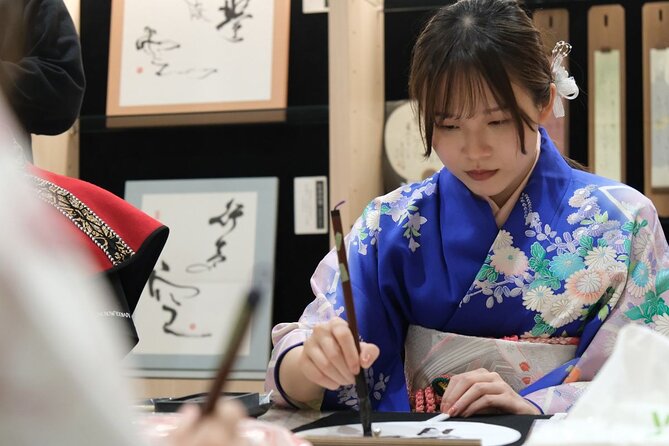
Calligraphy is one of the most rewarding parts because you produce something personal. Staff guide you through the basic technique, and you may create a personalized fan to take home. That gives the activity more staying power than a quick photograph or a souvenir purchased in a shop.
Do not expect a formal lesson in every calligraphic style. The focus is on trying the brush, learning how to control the ink, and understanding the care required for each stroke. A good instructor can make the differences between ordinary writing and calligraphy clear even in a short session.
This is an easy activity for couples and families to enjoy together. You can compare your finished work, ask for help with Japanese characters, and leave with something that connects directly to your time in Osaka. Staff also help visitors who are trying to learn Japanese, which adds value for anyone interested in language as well as culture.
Calligraphy also provides a nice balance to the samurai segment. After the noise and movement of the performance, you slow down and concentrate. I would not rush this station, especially if you want a neat fan to bring home.
Kimono and Samurai Armor: Know What Costs Extra
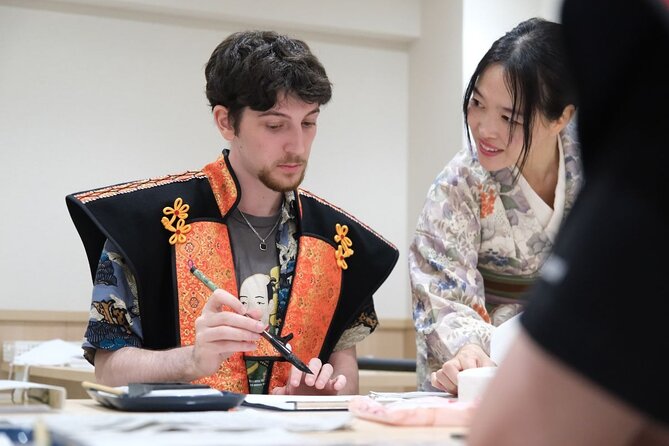
Dress-up can make the visit more memorable, but it is not included in the $44.92 base price. The listed exclusions are clear: samurai armor, kimono, and ninja experiences require an additional payment or separate option.
A detailed account describes a kimono upgrade costing 5,000 yen. The attendants dressed the visitor, helped with photographs, and provided socks and undergarments to keep. Prices and availability can change, so confirm the current charge when booking rather than assuming that figure still applies.
Samurai attire is also available as an option. If you want the classic Osaka holiday photograph, the costume upgrade may be worth considering. If your priority is tea, music, calligraphy, and the show, the standard ticket already provides plenty to do.
Budget extra time for dress-up. Getting changed, taking photographs, and moving through the venue can turn a two and a half hour activity into a half-day outing. That is not a problem if you have room in your schedule, but it matters if you have a timed restaurant booking or evening train.
Why the $44.92 Price Can Be Good Value
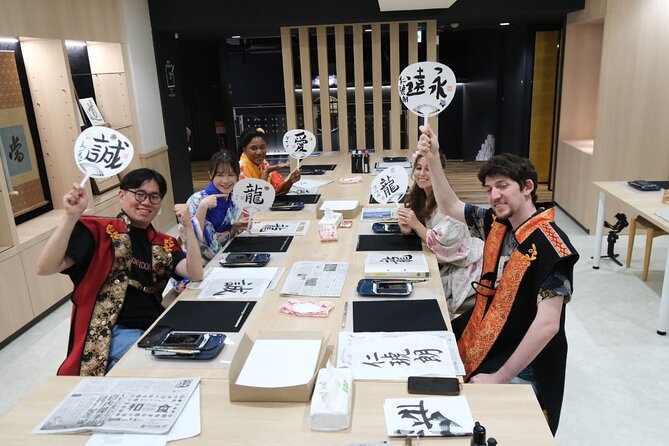
At $44.92 per person, the base ticket gives you several distinct activities in one stop. You are not paying only for a short performance. You receive instruction and participation in tea, calligraphy, music, and samurai activities, with staff support along the way.
The value is strongest if you intend to try everything. Someone who watches only the samurai show and skips the workshops will get less for the money. Someone who plays instruments, practices sword movements, writes calligraphy, and takes part in the tea ceremony is getting a full afternoon of varied activities.
The price also makes sense for families. You avoid arranging several separate cultural appointments, and the program offers different levels of energy. One person can enjoy the music and tea while another prefers samurai practice and photographs.
The extra charges deserve attention. Kimono and armor can change the final cost, and the basic ticket does not include them. I would compare the total price with a dedicated kimono rental or tea ceremony if one of those is your main goal.
Timing, Location, and Practical Planning
The meeting point is Shinsaibashi ARTY Inn, close to public transportation and the Dotonbori area. That makes it easy to combine the activity with shopping, food, and an evening walk through central Osaka.
The activity ends at the same meeting point. You do not need to arrange a separate return transfer, and the central location gives you flexibility afterward. Still, allow extra time if you plan to eat immediately after the program. Several parts of the experience may run beyond the stated 150 minutes.
A mobile ticket keeps entry simple. Confirmation is sent when you book, and the group size is capped at 20 people. Most people can participate, though the information does not provide a detailed accessibility statement, so you should contact the provider if you have specific mobility needs.
The booking terms allow free cancellation up to 24 hours before the start time. Changes or cancellations inside that window are not accepted for a refund. The terms also say the activity requires good weather and may be canceled for poor conditions, with a different date or full refund offered.
That weather rule is worth checking before you commit. The program takes place indoors according to the practical descriptions, and visitors have enjoyed it on rainy days, but the official terms still include a weather condition. If rain is forecast, confirm the current operating policy with 道-michi-.
Who Will Enjoy This Most?
I would recommend this for first-time visitors who want a broad introduction to Japanese culture without spending a full day at multiple museums. You get a sample of performance, ritual, music, language, and hands-on craft in one place.
Families are another strong match. The samurai practice and instruments keep children involved, while the tea ceremony and calligraphy give adults something more thoughtful to enjoy. Staff have been praised for patience with large family groups and for helping visitors of different ages.
It also suits couples and short-stay visitors. If you have only a few hours before a train or flight, this gives you a useful cultural stop near central Osaka. Just do not schedule it too tightly, since the full experience can last three and a half to four hours.
The activity may disappoint you if you want a solemn tea ceremony, an academically detailed history lesson, or a serious sword demonstration. The tone is friendly, theatrical, and sometimes silly. That is a strength for many people, but it is not the same as attending a formal cultural school.
A Few Smart Ways to Get More From the Visit
Arrive ready to take part. The strongest moments come when you pick up the brush, try the instrument, prepare tea, or join the samurai practice instead of remaining in the audience.
Allow at least three hours if you want to enjoy the stations without rushing. Add more time if you plan to rent a kimono or samurai costume, take photographs, or stay for extra performances.
If you are traveling with children, explain that the sword segment is a staged performance with safe practice swords. That keeps the activity fun while setting the right expectations.
Treat the calligraphy fan as more than a quick craft. Ask about the characters, brush movements, and meaning behind what you are writing. The staff are there to help, and the language support can make the lesson more rewarding.
Finally, check the upgrade costs before arrival. The base ticket is already useful, but costumes and other options can affect the final budget.
Should You Book the Samurai Show in Osaka?
Book it if you want active cultural entertainment at a fair price. The mix of samurai action, music, tea, calligraphy, and hands-on practice gives you much more variety than a single performance. Friendly staff, English support, and a central Osaka location make it easy for first-time visitors.
I would choose the standard ticket if you mainly want the workshops and shows. Add kimono or samurai armor only if photographs and dress-up are central to your plans. Give yourself three hours or more, keep your expectations realistic about the theatrical samurai segment, and this should be a fun and useful part of an Osaka itinerary.
FAQ
How long does the experience last?
The advertised duration is approximately two hours and 30 minutes, or about 150 minutes. Allow three hours or more if you want to enjoy every activity, and some full visits have lasted three and a half to four hours.
What activities are included?
The program includes a tea ceremony experience, calligraphy experience, traditional Japanese music, and a samurai performance. Some activities also involve audience participation.
Is samurai armor included in the ticket?
No. Samurai armor is listed as not included. Kimono and ninja experiences are also excluded from the standard ticket.
Can I wear a kimono during the experience?
A kimono option is available separately. One detailed account lists a 5,000 yen kimono upgrade, but you should confirm the current price and availability before booking.
Where does the activity start and finish?
It starts at Shinsaibashi ARTY Inn, 2-chōme-17-3 Nishishinsaibashi, Chuo Ward, Osaka, 542-0086. The activity ends back at the same meeting point.
How many people can join?
The maximum group size is 20 people.
Can I cancel for a full refund?
You can cancel at least 24 hours before the experience start time for a full refund. Cancellations or changes made less than 24 hours before the start time are not accepted for a refund. If the provider cancels because of poor weather, you may receive a different date or a full refund.
More Show in Osaka
- Osaka: Sumo Show & Experience w/ Optional Kimono & Hot Pot
★ 4.5 · 609 reviews - Osaka: Sumo Stage Show with Bento or Snack + Fight & Photo
★ 4.3 · 364 reviews - Osaka: English Stand Up Comedy Show at Osaka Comedy Club
★ 4.7 · 203 reviews - Osaka: UTAGE Japanese Taiko Live Show
★ 4.9 · 167 reviews
Just added in Osaka
- 1.5〜2 Hours Traditional Kintsugi Work Shop in Namba Osaka★ 5.0 · 75 reviews
- The Dark Side of Osaka Walking Tour★ 5.0 · 49 reviews
- Three Types of Ramen Cooking Class in Osaka★ 5.0 · 119 reviews
- Traditional Japanese Music show & Experience Tour in Osaka★ 5.0 · 25 reviews
- Traditional Home cooking Experience in Osaka, Japan★ 5.0 · 14 reviews
- Osaka Street Food Festival :Takoyaki&Okonomiyaki for Families★ 5.0 · 13 reviews
- Sushi and Japnese foods cooking class in Osaka★ 5.0 · 51 reviews
- Guided Photography Tour in Osaka: Capturing Memories★ 4.5 · 20 reviews
Tea Ceremonies, compared.
Tea Ceremony in a Traditional Tea House in Kiyomizu
Read our review →
World Heritage Kyoto & Nara Uji Authentic Matcha Experience
Read our review →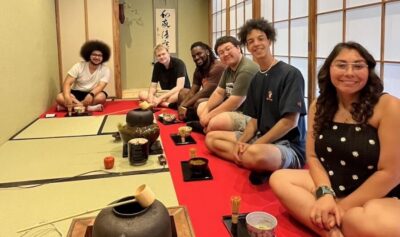

Browse the lists this tour appears in