Reviewed · TEA CEREMONIES
Kyoto: Maiko, Samurai, or Kimono Rental and Tea Ceremony
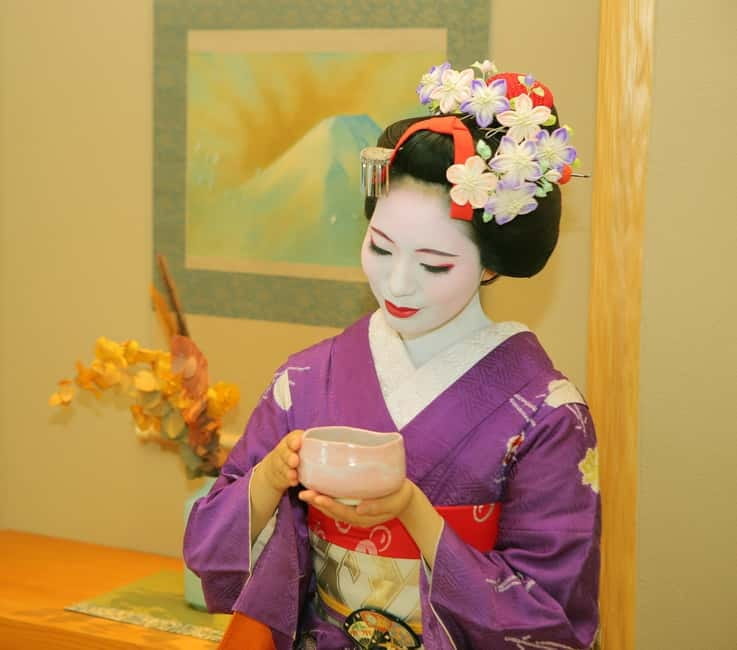
Kyoto gets theatrical here. At Studio Shiki, you choose a maiko, samurai, or kimono look, then walk three minutes to Akebonotei for matcha and sweets. I like the excellent location near Kiyomizu-dera and the easy family format, with children age five and older welcome. The short tea session also works well when young attention spans are in charge.
The main caution is pace. Costume fitting, photos, and the tea ceremony follow a tight schedule, and late arrivals may join halfway or miss a portion. Some people will enjoy the polished, tourist-friendly setup, while others may find it too staged for a serious study of tea culture.
In This Review
- Key points to know before booking
- Dressing up near Kiyomizu-dera
- The three-minute walk to Akebonotei
- Choosing between maiko, samurai, kimono, and yukata
- Matching your appointment to the tea session
- What to do after tea in Higashiyama
- Is $77 a fair price?
- Getting to the studio from Kyoto
- Who will enjoy this experience most?
- Should you book the Studio Shiki tea experience?
- FAQ
- Where does the kimono rental take place?
- Where is the tea ceremony held?
- How long does the activity last?
- What costume options are available?
- What is included in the kimono rental?
- Is hair styling included?
- Is the tea ceremony included?
- How many people can take part?
- Can I keep the kimono after the tea ceremony?
- What happens if I arrive late?
- Can pregnant women take part?
- How do I reach the shop by city bus?
Key points to know before booking
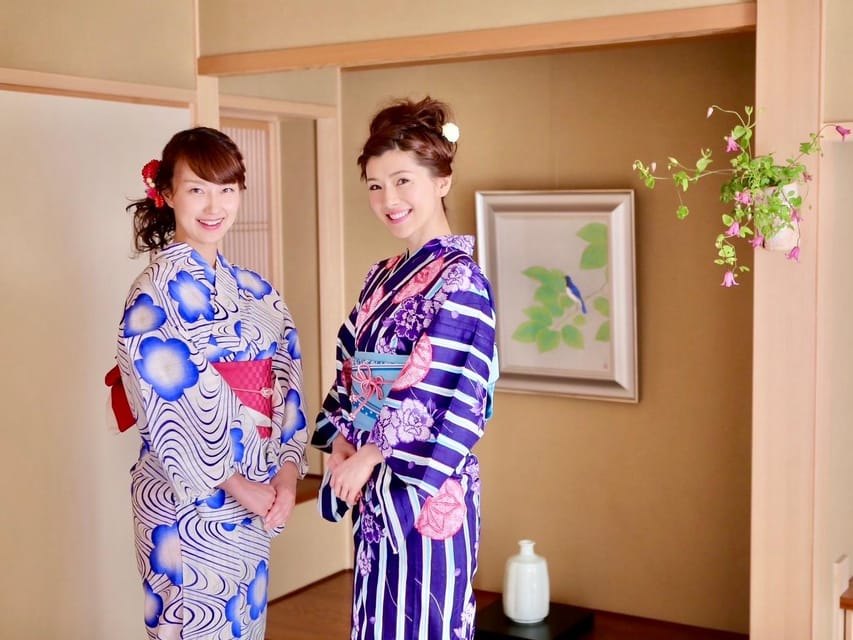
- Three costume choices: Select a maiko outfit, samurai style, or a regular kimono, with a yukata option from June 1 through September 15.
- Two nearby locations: Dress at Studio Shiki, then walk about three minutes to Akebonotei for the matcha experience.
- Kiyomizu-dera at your doorstep: The rental shop is close to Kiyomizu-dera, Yasaka Five-Story Pagoda, Ninenzaka, Sannenzaka, Kodaiji Temple, and Yasaka Shrine.
- Tea and sweets included: The price covers the matcha session and Japanese sweets, as well as the kimono, obi, bag, underwear, and sandals.
- Return time matters: A kimono rental can be enjoyed until 5 p.m., giving you time to explore the surrounding streets after tea.
- Best for small family groups: The activity is for families of up to four people, with participants age five and older.
Dressing up near Kiyomizu-dera
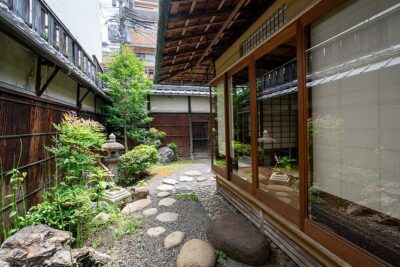
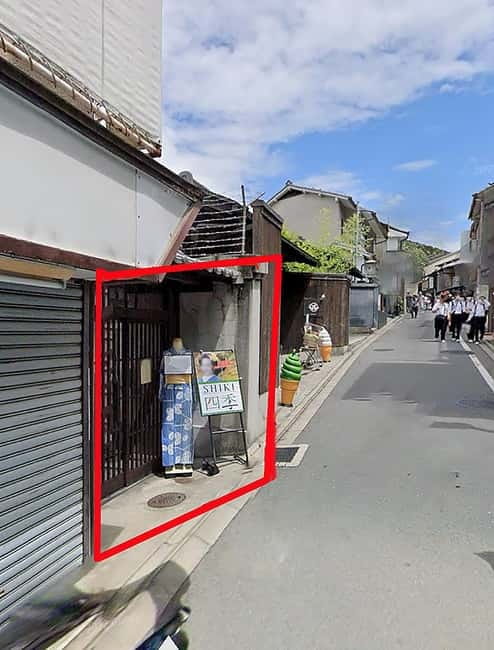
The appeal of this experience begins with the setting. Studio Shiki is close to Kyoto’s eastern sightseeing district, where narrow lanes climb toward Kiyomizu-dera and old-style buildings frame the route. You are not sent to a distant studio on the edge of town. The shop places you in the middle of one of Kyoto’s most useful walking areas.
You start by choosing your style. A maiko transformation gives you the most theatrical appearance, with the visual feel of Kyoto’s famous geisha district. The samurai option offers a bolder, more historical costume. A standard kimono or seasonal yukata is the simpler choice, especially if you want to spend several hours walking around town without feeling overdressed.
The included clothing package is practical. You receive the kimono, obi, underwear, bag, and sandals. That means you do not need to assemble the outfit yourself or bring special clothing for the session. The rental arrangement is designed to get you dressed and out into Kyoto quickly.
Do not confuse the clothing package with a full makeover. Hair styling costs extra, at 1,650 yen according to the available experience details. If you want the complete maiko look, add that fee to your budget. If you are content with the clothing alone, the base price remains easier to judge.
The fitting process is one reason punctuality matters. You need time to select clothing, get changed, and prepare for the walk to the tea parlor. A late arrival can affect not only your own costume time but also the fixed tea appointment that follows.
More Castles and Historic Sites in Kyoto
- Kyoto Samurai Experience
★ 5.0 · 1,294 reviews - Kyoto: Nijo-jo Castle and Ninomaru Palace Guided Tour
★ 4.7 · 1,020 reviews - Kyoto: Kendo and Samurai Experience with Uniform and Gear
★ 4.9 · 815 reviews
The three-minute walk to Akebonotei
Once dressed, you walk about three minutes to Akebonotei, the tea ceremony parlor. That short transfer is a real advantage. You do not have to ride across Kyoto in a costume, and you can move from the rental shop to the tea room without a complicated meeting procedure.
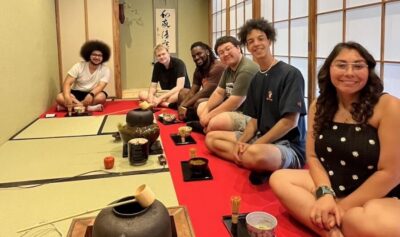
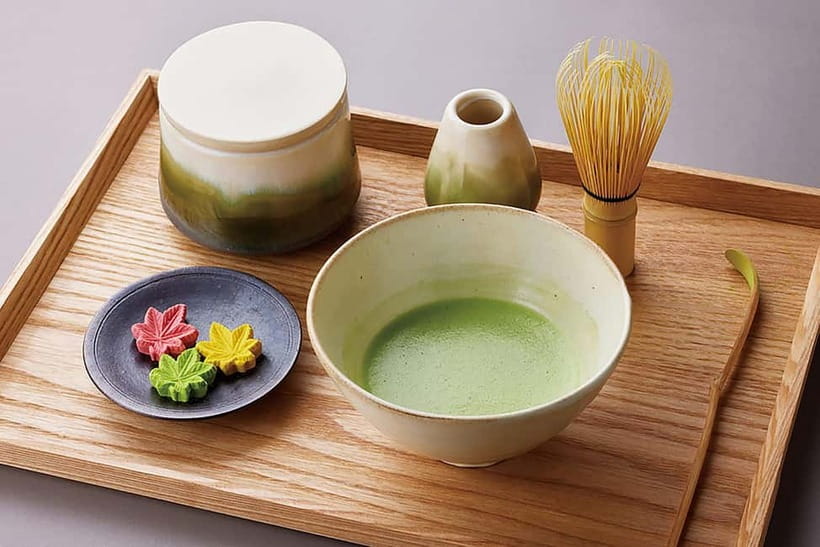
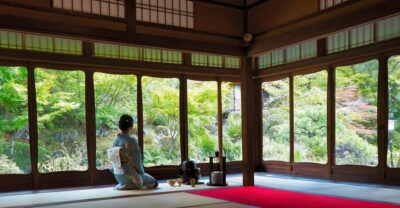
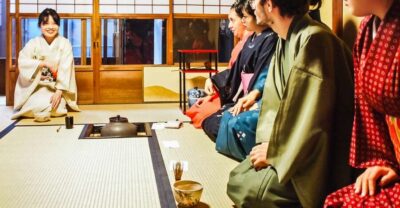
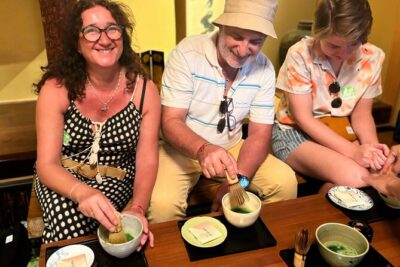
The tea experience is a compact introduction to matcha. You sit in your chosen costume and take part in a prepared tea session with Japanese sweets. The format is shorter than a formal tea ceremony held for dedicated students of the tea arts, but that can be useful if you are visiting with children or fitting the activity between temple stops.
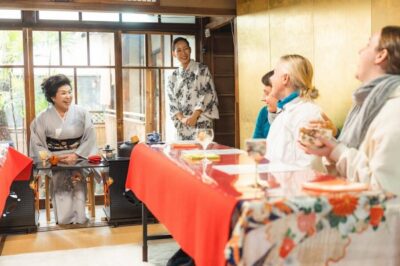
The setting has a tourism-focused feel. It is built to make the ceremony accessible to international visitors and first-time participants, rather than to provide a long, highly formal lesson in tea etiquette. An English-speaking staff member has been praised for explaining the experience clearly, which can make the rituals easier to follow.
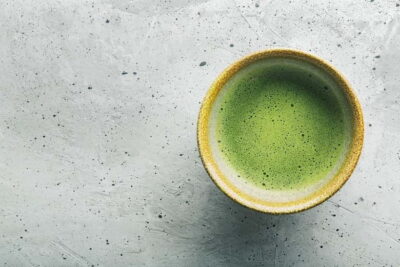
You should expect a demonstration and participation, not an advanced tea lesson. The value is in sitting quietly, handling matcha in a traditional setting, and seeing how the costume changes the mood of the moment. You also receive sweets, which provide a pleasant counterpoint to the slightly bitter tea.
The experience can feel artificial to people seeking a private or deeply local ceremony. The costumes, styled rooms, and short format are clearly arranged for sightseeing. I would treat it as a cultural activity with a theatrical element, not as a substitute for a long tea school session.
Choosing between maiko, samurai, kimono, and yukata
Your choice should match the rest of your Kyoto day. The maiko option is the most memorable for photographs and gives you the strongest connection to Kyoto’s popular image. It may be the best pick if the costume itself is the main reason you are booking.
The samurai style offers a different kind of fun. It works especially well for families who want each person to have a distinct look rather than everyone wearing similar kimono. The available information does not specify the exact pieces or accessories for each costume, so you should confirm the precise selection at the shop.
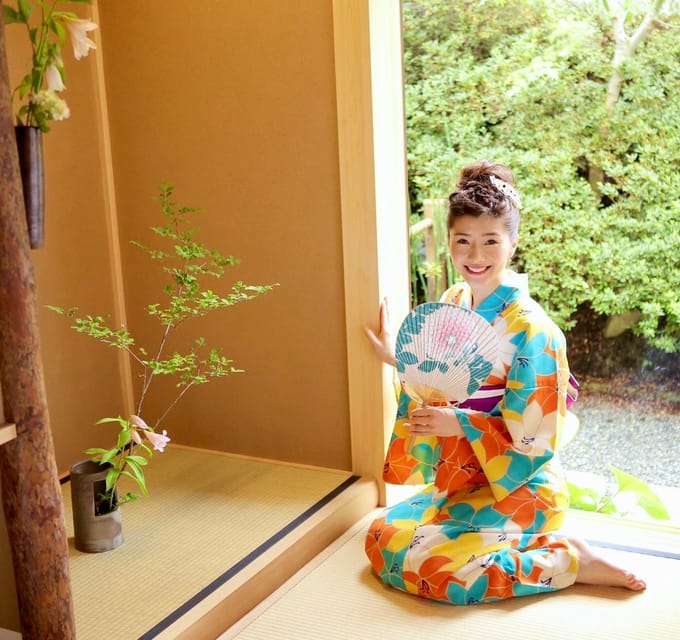
A standard kimono gives you a more restrained appearance. I like this choice for a full afternoon in the Higashiyama district, since it fits the temple lanes and traditional streets without making the whole visit feel like a stage performance.
The yukata plan runs from June 1 through September 15. Yukata are lighter summer garments, so this seasonal option may be more comfortable during warm weather. The experience details do not specify exact fabric choices or seasonal patterns, so treat the plan as a lighter summer rental rather than a guaranteed festival-style package.
Every participant can make a different choice. One family member might choose maiko styling, another samurai clothing, and others standard kimono. That makes this activity flexible for a family of four, though the setup may take longer when everyone needs to select and change clothes.
Matching your appointment to the tea session

The activity offers a clear one-hour schedule. Your kimono appointment comes first, followed by matcha 90 minutes later:
- Kimono at 9 a.m., tea at 10:30 a.m.
- Kimono at 10 a.m., tea at 11:30 a.m.
- Kimono at 11 a.m., tea at 12:30 p.m.
- Kimono at noon, tea at 1:30 p.m.
- Kimono at 1 p.m., tea at 2:30 p.m.
- Kimono at 2 p.m., tea at 3:30 p.m.
- Kimono at 3 p.m., tea at 4:30 p.m.
That 90-minute gap is not spare time to wander far. It allows for dressing, walking to Akebonotei, and getting seated. You should remain in the immediate area after leaving the studio.
The final 3 p.m. costume appointment deserves special attention. The tea session begins at 4:30 p.m., and the kimono rental can be kept until 5 p.m. That leaves little useful time after tea, so choose an earlier slot if you want to explore in costume.
The total activity takes between 150 minutes and three hours, depending on the appointment and the time you spend with the rental. The fixed tea portion helps keep the day organized, but it also means you cannot treat the experience as a casual walk-in activity.
Arrive early. If you are late for the costume appointment or the tea session, you may be asked to join partway through or may lose the chance to participate. Kyoto’s temple district has crowded streets and uphill lanes, so build in extra time for the final walk to the shop.
More Kimono Experiences in Kyoto
- [Kyoto & Nara Day Tour] Sagano Scenic Railway & Nara Park & Fushimi Inari Taisha Thousand Torii Gates & Togetsukyo Bridge & Bamboo Grove & Kimono Forest (Departing from Osaka)
★ 4.9 · 10,942 reviews - Kyoto Geisha Walking Tour: Gion District & Hidden Gems
★ 4.7 · 3,273 reviews - Kyoto: Gion Magical Night Walking Tour with Geisha Trivia
★ 4.9 · 2,393 reviews - Kyoto: Gion Geisha District Walking Tour – Stories of Geisha
★ 4.7 · 2,187 reviews
What to do after tea in Higashiyama
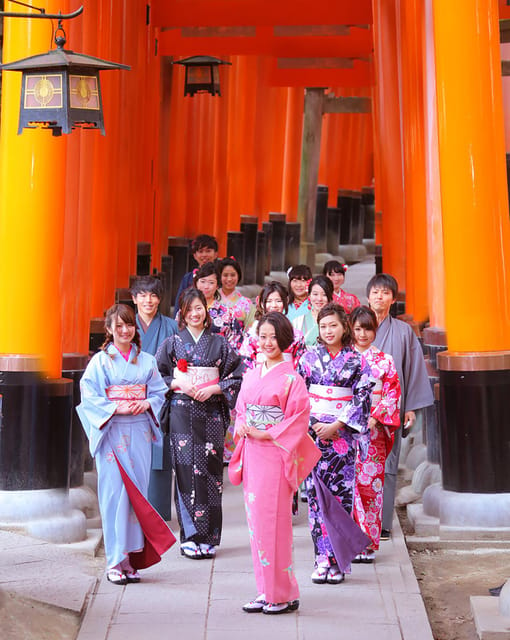
The real strength of this booking is its location. Once the tea session ends, you can continue on foot through one of Kyoto’s best sightseeing zones. The nearby choices include Kiyomizu-dera Temple, Yasaka Five-Story Pagoda, Yasaka Koshindo, Ninenzaka, Sannenzaka, Kodaiji Temple, and Yasaka Shrine.
Kiyomizu-dera is the obvious pairing. Its famous wooden stage and hillside setting make it one of Kyoto’s essential temple visits. The rental shop’s proximity means you can combine the costume session with the temple without losing time on transport.
Ninenzaka and Sannenzaka are ideal for a slower stroll. These sloping lanes are lined with shops, food stops, and cafes, making the included bag useful and giving you plenty of places to pause. Sandals and formal kimono are not made for rushing, so plan a gentle route.
The Yasaka Five-Story Pagoda provides one of the area’s most recognizable views. Yasaka Koshindo adds a smaller, more colorful stop, while Kodaiji Temple offers a quieter change of pace. Yasaka Shrine is another practical addition, especially if you want to finish by heading toward Gion.
You can keep the kimono until 5 p.m., which is where the value improves. The booking is not limited to a few photos inside the studio. An early or midday appointment gives you time to walk, visit temples, stop at cafes, and take pictures around Higashiyama.
Use care on the hills and uneven streets. The activity does not promise specialized footwear beyond sandals, and the information does not describe wardrobe adjustments for long walks. If comfort matters more than photographs, choose a regular kimono or yukata rather than the most elaborate costume.
Is $77 a fair price?
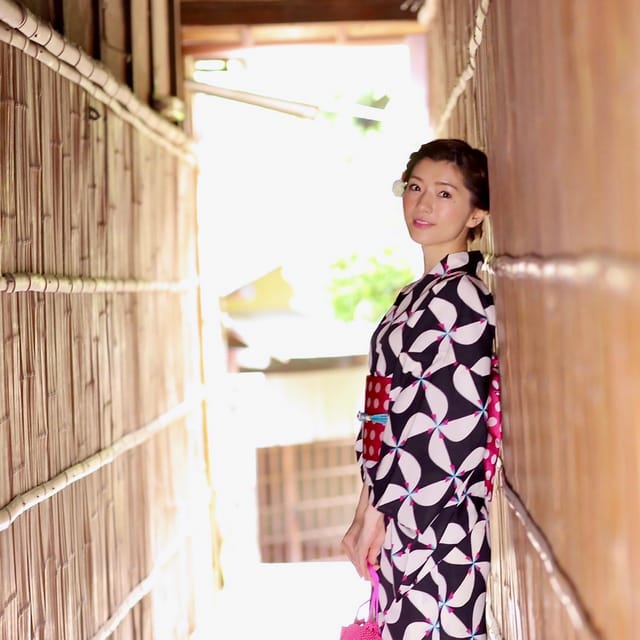
At $77 per person, the price is reasonable if you plan to use the rental for several hours. You are paying for the costume, obi, underwear, bag, sandals, matcha, sweets, and access to a location near major Kyoto sights. The package becomes more useful when you spend the afternoon walking through Higashiyama instead of returning the outfit immediately.
The value is weaker if you only want a brief photo opportunity. The tea ceremony is short, and the overall experience is designed for convenience rather than a long, formal exploration of tea culture. Add the 1,650 yen hair fee if you want hairstyling, and the final cost rises.
Admission fees are not included for anyone who does not take part in the tea ceremony. The package information does not list temple admission prices, so budget separately for Kiyomizu-dera or any other paid site you visit afterward.
Families may find the cost easier to justify because everyone can take part together. The activity allows up to four family members, and children age five and older are permitted. The small-group information lists up to six participants overall, but the family limit is four, so a larger family should confirm the exact arrangement before booking.
The 4.3 rating from 31 ratings suggests a generally positive experience with some sharp disagreement. That split makes sense. People who want a convenient costume outing near Kiyomizu-dera are likely to appreciate it. People hoping for an intimate, highly traditional tea ceremony may feel the format is too commercial.
Getting to the studio from Kyoto
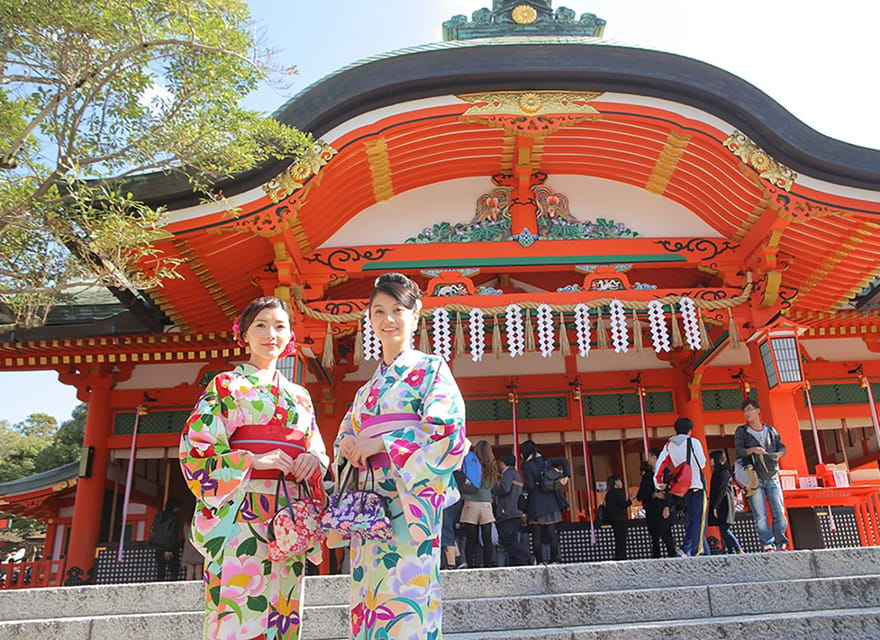
If you come by city bus, the stated route takes about 20 minutes to the Kiyomizu-michi bus stop, followed by a walk of about 10 minutes to the shop. Allow more time if you are carrying bags, traveling with children, or trying to reach a fixed appointment.
The area contains many temples, shops, and cafes, so navigation can take longer than the map suggests. Kiyomizu-michi is not the same as arriving at the studio door. Plan to be at the shop before your booked time, not merely at the bus stop.
The tea parlor is about three minutes from the rental studio. That simple transfer is helpful, but punctuality remains essential at both stages. The schedule does not leave room for a long detour between dressing and tea.
Free cancellation is available up to 24 hours before the appointment for a full refund. You can also reserve and pay later, which helps if your Kyoto schedule is still changing.
Who will enjoy this experience most?
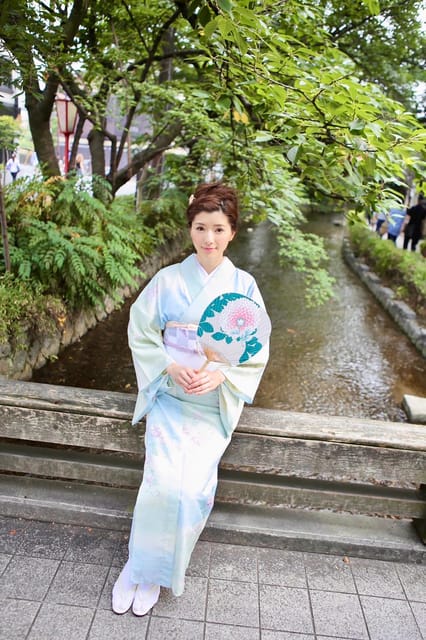
I would recommend this activity to families, first-time Kyoto visitors, and anyone who wants a low-stress introduction to kimono and matcha. It gives you several recognizable Kyoto elements in one compact booking and places you near the city’s most useful eastern temples.
It is also a good choice if you want photographs without arranging a separate costume rental, tea session, and sightseeing route. The rental period until 5 p.m. gives an early or midday booking real flexibility.
I would be more cautious if your priority is serious tea study. The ceremony is short and tourist-oriented, and the rooms are arranged for a steady flow of participants. You may prefer a longer, quieter tea lesson if the ritual itself matters more than the costume and location.
Pregnant women cannot take part, and children under five are not allowed. The activity also requires you to manage a fixed timetable, so it may not suit a family that prefers completely open-ended sightseeing.
Should you book the Studio Shiki tea experience?
Book it if you want costume, matcha, sweets, and Higashiyama sightseeing in one package. Choose a morning or early afternoon appointment, add hair styling only if the full look matters to you, and leave plenty of time to reach the studio.
Skip it if you expect a private, deeply traditional tea ceremony with little theatrical staging. At $77, the experience earns its value from the costume rental and excellent location, not from a long formal lesson. For the right expectations, it is a cheerful and practical way to add a memorable Kyoto afternoon.
FAQ
Where does the kimono rental take place?
The rental takes place at Studio Shiki, also called Maiko Transformation Studio Shiki or Rental Kimono Shiki Sakura.
Where is the tea ceremony held?
The matcha experience takes place at Akebonotei, about a three-minute walk from Studio Shiki.
How long does the activity last?
The stated duration is between 150 minutes and three hours, depending on the appointment and rental timing.
What costume options are available?
You can choose a maiko costume, samurai style, regular kimono, or yukata. The yukata plan is available from June 1 through September 15.
What is included in the kimono rental?
The package includes a kimono, obi, underwear, bag, and sandals.
Is hair styling included?
No. Hair styling is not included and is offered for an additional 1,650 yen.
Is the tea ceremony included?
Yes. The package includes a matcha tea ceremony experience and sweets.
How many people can take part?
The activity is limited to families of up to four people, and children must be at least five years old. The small-group information lists up to six participants overall.
Can I keep the kimono after the tea ceremony?
Yes. If you rent a kimono, you can enjoy it until 5 p.m.
What happens if I arrive late?
If you are late for the kimono rental or tea experience, you may have to join partway through or may not be able to participate.
Can pregnant women take part?
No. Pregnant women are not permitted to participate.
How do I reach the shop by city bus?
The stated route is about a 20-minute bus ride to the Kiyomizu-michi bus stop, followed by about a 10-minute walk to the shop.
More Tea Ceremonies in Kyoto
- Kyoto: Tea Ceremony in a Traditional Tea House in Kiyomizu
★ 4.9 · 3,519 reviews - Kyoto: Tea Ceremony Ju-An at Jotokuji Temple
★ 4.9 · 3,207 reviews - Kyoto: 45-Minute Tea Ceremony Lesson Experience
★ 4.3 · 2,378 reviews - Kyoto: Table-Style Tea Ceremony at a Kyo-Machiya
★ 4.9 · 1,211 reviews
Just added in Kyoto
- The “Golden Route” and Ancient Japan by DIAMIR Erlebnisreisen – 14-Day Tour★ 2.0 · 2 reviews
- Japan: Castles & Cuisine by G Adventures – 6-Day Kyoto to Osaka Tour★ 4.5 · 4 reviews
- Cycle Japan by Explore! – 13-Day Kyoto to Tokyo Tour★ 4.7 · 12 reviews
- Cycle Japan by Intrepid Travel – 11-Day Kyoto to Tokyo Tour★ 4.8 · 2 reviews
- Classic Japan by Intrepid Travel – 11-Day Kyoto to Tokyo Tour★ 4.4 · 14 reviews
- Ancient & Modern Japan 14-Day Tour by Exodus Adventure Travels★ 4.4 · 40 reviews
- 5 Day Cultural Adventure of Kyoto, Nara & Osaka by Tourist Journey★ 2.5 · 2 reviews
- 12 Days Kinosaki Onsen Escape: A Journey Through Japan’s Timeless Towns by UME Travel★ 4.8 · 5 reviews
Tea Ceremonies, compared.
Tea Ceremony in a Traditional Tea House in Kiyomizu
Read our review →
World Heritage Kyoto & Nara Uji Authentic Matcha Experience
Read our review →