
Reviewed · MUSEUMS AND GALLERIES
Kyoto Sword Experience – includes Museum Ticket/Ninja Experience
Samurai training in central Kyoto feels wonderfully different. This two-hour activity combines hakama dressing, basic Iaido movements, a controlled sword exercise, ninja-star throwing, and admission to the Samurai and Ninja Museum. I like the traditional dojo setting, and I also like that the museum visit adds useful cultural context instead of leaving you with only a costume photo. The main thing to consider is that this is a staged, beginner-friendly activity using a blunt replica sword, not a serious martial-arts lesson.
The $83.91 price is fair if you want several activities in one booking and value hands-on fun. It is less attractive if your main goal is extended sword practice. The schedule and group-size information also needs a careful look, since the supplied details list different maximums and past visits were sometimes crowded.
In This Review
- Quick points before you book
- What this Kyoto sword experience really offers
- Dressing in hakama sets the tone
- Learning basic Iaido movements
- The controlled sword fight
- Ninja stars add a lighter finish
- The museum explains what the costume cannot
- How much time you really spend doing things
- Group size is the key practical question
- Is $83.91 good value?
- Who will enjoy this most?
- Practical advice for a smoother visit
- Should you book the Kyoto Sword Experience?
- FAQ
- How long does the Kyoto Sword Experience last?
- Is a real samurai sword used?
- Are museum tickets included?
- Can children join the experience?
- Where does the activity start and end?
- Is transportation included?
- How large is the group?
- Can I cancel for a full refund?
Quick points before you book
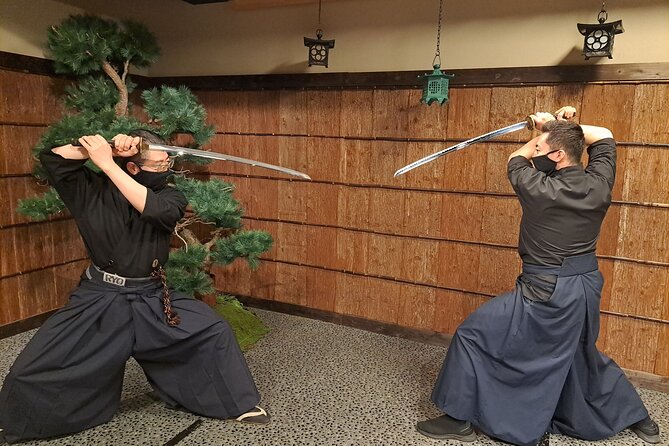
- You wear a traditional hakama: Dressing as a samurai is part of the experience, not an optional add-on, and makes the photographs more memorable.
- The sword is a safe replica: Current rules do not permit an activity using a real sword or sharp blade, so expect basic movements with blunt equipment.
- The session mixes several short activities: Allow about two hours for dressing, instruction, sword practice, museum time, ninja stars, and photographs.
- The museum is part of the price: You receive admission and a history tour, giving the sword lesson more context.
- Children under seven cannot enter the dojo: Children must also be accompanied by an adult.
- Group size matters: The advertised information is inconsistent, so confirm the current size before paying if personal instruction is important to you.
What this Kyoto sword experience really offers
This is best understood as a cultural activity with a martial-arts theme. You are not signing up for a long Iaido course or a professional cutting workshop. Instead, you get a short introduction to samurai posture, sword handling, costume, museum displays, and ninja-style entertainment.
That mix is the reason I can see the appeal. A museum alone can leave you looking at armor behind glass. Here, you put on the clothing, hold a sword, copy basic movements, and take part in a few guided activities. The lesson gives you a physical sense of the discipline involved, even if the instruction remains simple.
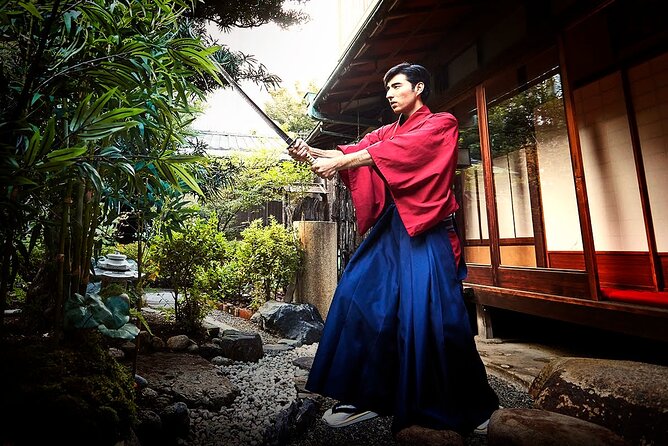
The setting is a traditional dojo at the Samurai and Ninja Museum. That atmosphere helps. The wooden practice space, formal clothing, and instructor-led movements give the session more shape than an ordinary dress-up stop.
Still, keep your expectations in check. The sword training is designed for beginners and for safe group participation. One especially useful current detail is that the activity does not use a real katana or sharp blade. Older promotional images or past descriptions may suggest bamboo or tatami cutting with a real sword, but that is not what you should expect from the current version.
More Castles and Historic Sites in Kyoto
- Kyoto Samurai Experience
★ 5.0 · 1,294 reviews - Kyoto: Nijo-jo Castle and Ninomaru Palace Guided Tour
★ 4.7 · 1,020 reviews - Kyoto: Kendo and Samurai Experience with Uniform and Gear
★ 4.9 · 815 reviews
Dressing in hakama sets the tone
The experience begins with traditional samurai hakama. This is one of the strongest parts for families and first-time visitors because it immediately changes the mood. You are no longer simply walking into a museum. You are preparing for a short role-play session with a cultural purpose.
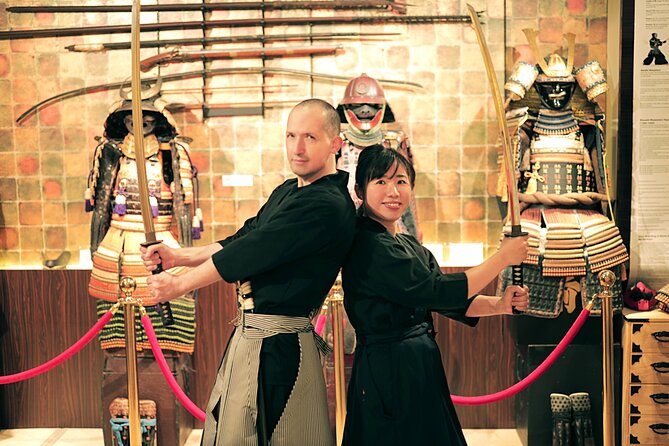
The clothing also creates good photo opportunities. Depending on the setup and available equipment, you may be able to pose in samurai armor, helmets, or related costumes. The photographs are a major part of the fun, especially for families, couples, and groups of friends who want something different from the usual Kyoto temple picture.
There are practical limits. Costumes are shared equipment, and one past account raised concerns about condition and fit during an unusually crowded period. That does not mean every session has the same problem, but it is worth remembering that this is a popular commercial attraction, not a private costume studio.
If you arrive late, you may miss the opening instructions and dressing sequence. One late arrival was still handled kindly by the instructor, but arriving on time is the safer choice. You will get more from the session if you hear the explanation before picking up the sword.
Learning basic Iaido movements
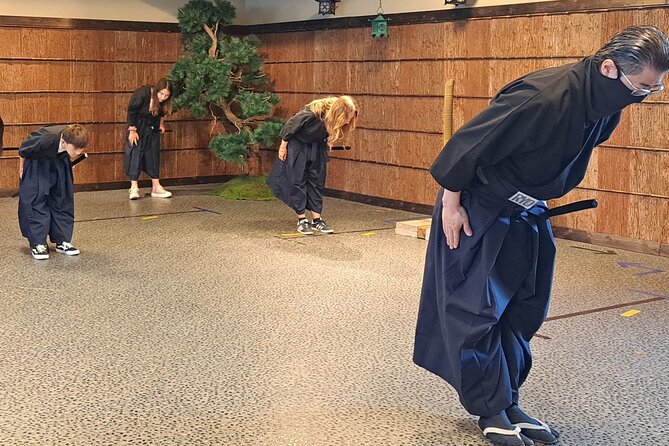
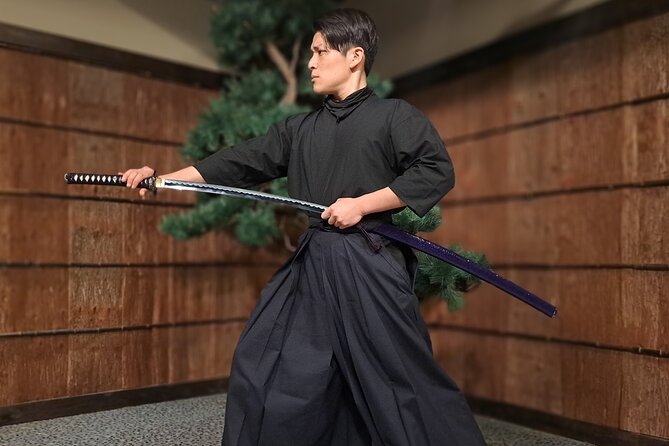
After dressing, the instructor introduces basic Iaido techniques with a replica sword. You learn how to hold it, how to position your body, and how to make controlled movements. The emphasis is on precision, posture, and concentration rather than speed.
This part is simple, but it is not meaningless. Even a brief lesson shows why Japanese sword arts are built around careful movement. You will probably spend more time watching and repeating a few set actions than learning a wide range of techniques.
The quality of the instructor has a large effect on the experience. Ken and Nobu have both been praised for keeping the activity lively and clear, while Riku and Riu have also been associated with strong instruction and museum guiding. One instructor, Takto, was specifically praised for being helpful during a more intense sword activity, though the current format should be understood as a safe replica-sword session.
A good instructor can make basic material enjoyable. A rushed or distracted instructor can make the same material feel thin. That is one reason group size matters so much here.
The controlled sword fight
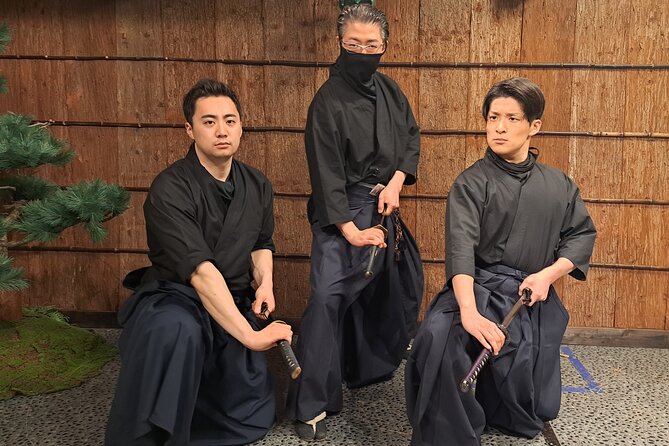
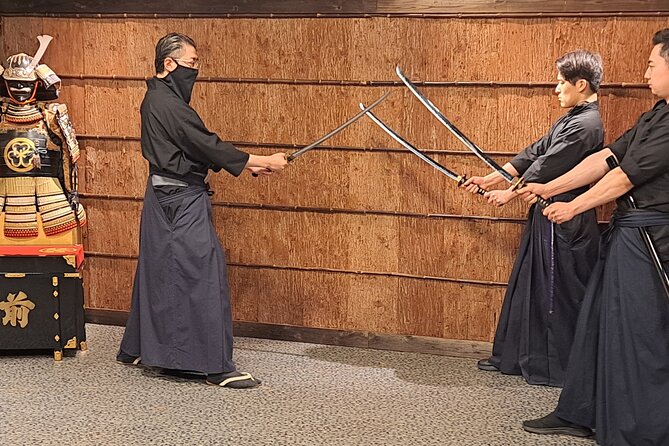
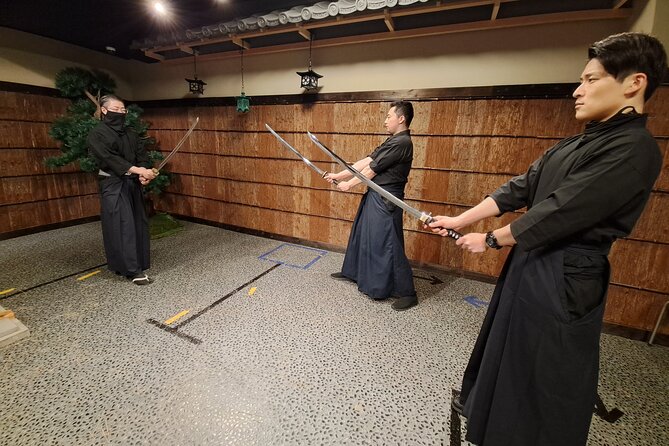
The next stage may include a simple sword fight using safe replica swords. This is not a free-for-all. It takes place under direction, with an emphasis on control and safety.
The activity is aimed at the feeling of samurai combat rather than realistic fighting. You will practice a few movements and may face another participant in a short, supervised exchange. It is entertaining, but do not expect a long bout or a technical lesson.
For children, the age rule is firm at the dojo: children under seven are not allowed to enter the venue. Older children may participate under the stated conditions, and children must be accompanied by an adult. Families should check the booking details carefully because one past visitor expected a child-focused experience and found the age information unclear.
If someone in your party does not want to participate, the format can still work. A young child who is too small for the dojo may be able to watch from the side, as one family found. Confirm this directly before booking if it is essential to your plans.
More Museums and Galleries in Kyoto
- teamLab Biovortex Kyoto ticket
★ 4.8 · 3,186 reviews - Kyoto: Tea Museum Tickets and Matcha Grinding Experience
★ 4.9 · 739 reviews - Skip the lines Basic Ticket at SAMURAI NINJA MUSEUM KYOTO
★ 4.5 · 632 reviews - Kyoto : Geiko Maiko Dance of Kyoto & Visits of Gion Museum
★ 4.6 · 415 reviews
Ninja stars add a lighter finish
The ninja-star activity provides a change of pace. After the more formal sword movements, throwing a ninja star feels playful and easy to understand. It is a good feature for people who might find the sword lesson a little stiff or short.
Do not treat it as a major ninja-training course. It is a brief activity, included to give the session another hands-on moment. The amount of time you receive can depend on the group and the way the staff moves people through the venue.
There have been past scheduling problems where this part did not happen. Other accounts describe the sequence as spread across different spaces, with participants needing to ask staff where to go next. The operator says that earlier scheduling and group-size problems were corrected, but the practical lesson remains: if you have not yet done the ninja stars, ask before leaving.
The museum explains what the costume cannot
The free Samurai and Ninja Museum visit is important because it gives substance to the experience. You see artifacts and displays connected with samurai and ninja culture, and a guide explains how these figures shaped Japanese history and popular imagination.
The museum is not presented as a giant national collection. Past descriptions refer to a small display area with models and posters, while other sessions included artifacts and a guided historical tour. I would approach it as a compact introduction, not as a replacement for Kyoto’s larger cultural museums.
The guide makes a difference. Nobu and Riu have been singled out for keeping the tour engaging, and the best version of the visit should help you understand what you have just acted out in the dojo. Without that context, the sword lesson risks becoming only a themed photo stop.
The route may involve more than one building. One account describes the sword activity first, followed by a short walk to the museum and then an upstairs ninja-star area. The starting point is the Samurai Ninja Museum at 109 Horinouechō, in Nakagyo Ward, near public transportation. Since the activity ends back at the meeting point, allow a little extra time to follow staff between areas.
How much time you really spend doing things
The advertised duration is about two hours. The operator has described a typical breakdown of roughly 10 minutes for dressing, 20 to 30 minutes of training, about 15 minutes for a sword activity, 30 minutes for the historical tour, 15 minutes for ninja stars, and 15 minutes for photographs.
That sounds reasonable as a total visit, but it does not mean two hours of continuous sword practice. You will spend time changing, listening, watching other people, moving between spaces, and waiting for your turn.
This distinction matters. If your dream is to practice Iaido for an hour, you will be disappointed. If you want a varied cultural outing with several short activities, the length makes more sense.
Some past sessions were reported as far shorter or more rushed, particularly when people arrived early and were placed into a separate arrangement before the main group began. The operator attributed the worst crowding and schedule problems to a past information-technology error and unusually heavy spring demand. Conditions may now be better, but I would still arrive at the correct meeting point on time and ask staff to explain the full sequence.
Group size is the key practical question
The supplied information gives several different limits: one section says a maximum of 22 people, another says a maximum of four, and the operator has also described current sessions as averaging eight or nine people, with some evening sessions around five or six. That is too much variation to ignore.
Smaller groups should mean more turns, clearer instruction, and less standing around. Larger groups can still be fun, but the activity begins to feel like a demonstration with brief individual participation.
Several poor experiences were tied to groups of more than 20, missing equipment, long waits, and too few staff members helping with costumes. The operator says the previous scheduling fault was fixed and that sessions are now limited to 10 people, but the details provided here do not fully match that claim.
My advice is straightforward: ask for the expected group size before booking, especially during busy Kyoto periods. If the answer is vague and individual practice matters to you, consider another activity.
Is $83.91 good value?
At $83.91 per person, the package is not cheap for a two-hour activity, but it includes several separate elements: costume use, sword instruction, a controlled sword activity, ninja stars, a museum ticket, and a guided history presentation.
I think the value is strongest when you will use every part. A family or group of friends can spread the cost across photographs, hands-on activities, and cultural information. The convenient central location also saves you from traveling to a separate attraction.
The value drops if you care mainly about sword work. The training is basic, the replica sword is blunt, and your personal practice time may be limited by the group. You are paying for the full theatrical and cultural package, not for specialist martial-arts coaching.
The high rating of 4.6 from 149 ratings and a 90 percent recommendation rate suggest that the activity usually delivers an enjoyable outing. Still, the lower ratings point to real risks: crowding, rushed instruction, confusing directions, and a mismatch between old sword-cutting images and the current safe format.
Who will enjoy this most?
I would recommend it to:
- Families with children old enough for the dojo
- First-time visitors who want a hands-on Kyoto activity
- Couples and friends who enjoy costumes and photographs
- People curious about samurai and ninja culture but short on time
- Visitors who prefer a central attraction with several activities in one stop
I would be more cautious if you are:
- Looking for advanced sword instruction
- Expecting to use a real katana
- Hoping to cut bamboo or tatami mats
- Uncomfortable with shared costumes or group activities
- Very sensitive to waiting or schedule changes
The experience works best when you treat it as cultural entertainment with a short lesson. It is not a historical reenactment in the strict sense, and it is not a substitute for formal Iaido training.
Practical advice for a smoother visit
The meeting point is the Samurai Ninja Museum at 109 Horinouechō, Nakagyo Ward, Kyoto. Transportation to and from the attraction is not included, but the location is near public transportation.
Arrive on time. A late start can mean missing the dressing and safety briefing, even if staff do their best to help you catch up. Wear something comfortable beneath the hakama, since you will be changing into traditional clothing and moving through several activities.
Keep your phone ready for photographs, but listen closely during the safety instructions. The sword is blunt, but it is still a long object used in a group setting. Children need adult supervision, and children under seven cannot enter the dojo.
The activity offers multiple start times, which helps fit it around temple visits and meals. It also uses a mobile ticket, and confirmation is sent at booking. Free cancellation is available up to 24 hours before the scheduled start, while later cancellations and changes are not accepted.
One accessibility note is important: the elevator is scheduled to be out of service from January 24 through February 19, 2026. Since some parts of the activity require stairs, check the current arrangements if this affects anyone in your party.
Should you book the Kyoto Sword Experience?
Book it if you want a lively, photo-friendly introduction to samurai culture, with a little instruction and several short activities in one central Kyoto visit. The hakama dressing, dojo setting, museum tour, and ninja stars create a good family or group outing, and the best instructors make even basic movements fun.
Skip it if you expect real sword handling, serious Iaido training, or an extended one-to-one lesson. Before paying, confirm the current group size and ask specifically about the replica-sword format. With realistic expectations, this can be a memorable two hours. With expectations set by older cutting photographs, it may feel overpriced.
FAQ
How long does the Kyoto Sword Experience last?
The advertised duration is approximately two hours. The visit can include dressing, sword instruction, a controlled sword activity, a museum tour, ninja-star throwing, and photographs.
Is a real samurai sword used?
No. The current activity uses a blunt, safe replica sword and does not involve a real sword or sharp blade.
Are museum tickets included?
Yes. Admission to the Samurai and Ninja Museum and a samurai history tour are included.
Can children join the experience?
Children under seven are not allowed to enter the samurai dojo. Children who participate must be accompanied by an adult.
Where does the activity start and end?
It starts at the Samurai Ninja Museum, 109 Horinouechō, Nakagyo Ward, Kyoto. It ends back at the meeting point.
Is transportation included?
No. Transportation to and from the attractions is not included, though the meeting point is near public transportation.
How large is the group?
The supplied details list different limits, including four, 22, and a stated current target of about 10 people. Confirm the expected group size before booking if this is important to you.
Can I cancel for a full refund?
Yes, if you cancel at least 24 hours before the scheduled start time. Cancellations or changes made less than 24 hours before the activity are not accepted for a refund.
Just added in Kyoto
- The “Golden Route” and Ancient Japan by DIAMIR Erlebnisreisen – 14-Day Tour★ 2.0 · 2 reviews
- Japan: Castles & Cuisine by G Adventures – 6-Day Kyoto to Osaka Tour★ 4.5 · 4 reviews
- Cycle Japan by Explore! – 13-Day Kyoto to Tokyo Tour★ 4.7 · 12 reviews
- Cycle Japan by Intrepid Travel – 11-Day Kyoto to Tokyo Tour★ 4.8 · 2 reviews
- Classic Japan by Intrepid Travel – 11-Day Kyoto to Tokyo Tour★ 4.4 · 14 reviews
- Ancient & Modern Japan 14-Day Tour by Exodus Adventure Travels★ 4.4 · 40 reviews
- 5 Day Cultural Adventure of Kyoto, Nara & Osaka by Tourist Journey★ 2.5 · 2 reviews
- 12 Days Kinosaki Onsen Escape: A Journey Through Japan’s Timeless Towns by UME Travel★ 4.8 · 5 reviews
Museums and Galleries, compared.

teamLab Borderless Tickets: MORI Building DIGITAL ART MUSEUM
Read our review →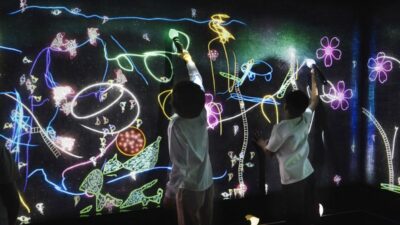

teamLab Planets TOKYO Digital Art Museum Entry Ticket
Read our review →



Browse the lists this tour appears in