
Reviewed · COOKING CLASSES
Nishiki Market Food Tour with Cooking Class
Kyoto tastes better with a guide. This private Nishiki Market tour pairs a local English-speaking guide with a hands-on donburi cooking class, giving you more than a quick walk through the city’s famous food arcade. I especially like the chance to ask questions at stalls and have your guide help translate, followed by cooking with ingredients chosen during the market visit. The only real caution is pace: the market portion can feel brief if you want lots of tastings or time for private shopping.
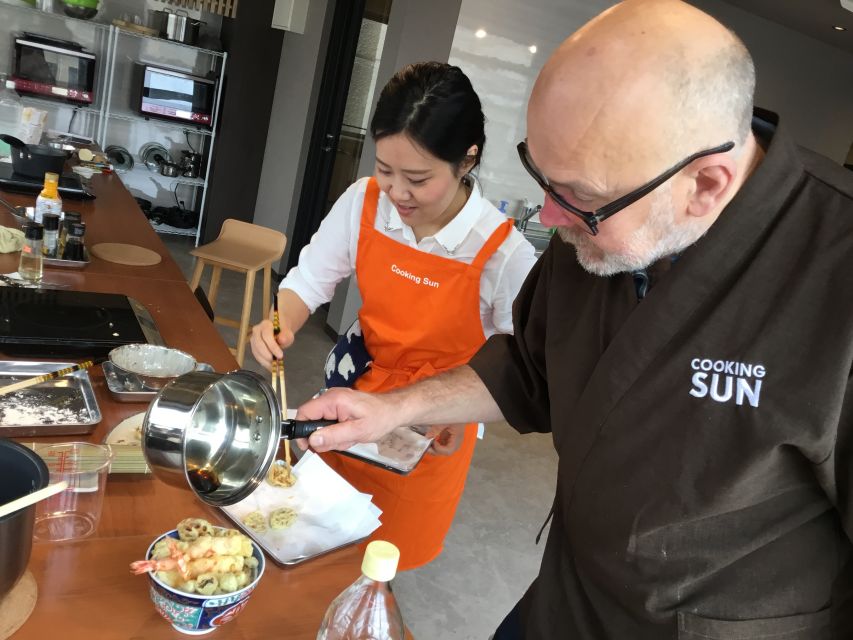
I also like the personal choice built into the meal. You can prepare kaisen-don with seafood, ten-don with tempura, or oyako-don with chicken and egg, and past participants have been able to request changes such as tofu instead of chicken. The class is private, so you can ask plenty of questions rather than trying to keep up with a large group.
The experience costs $109 per person and lasts 150 minutes. That is fair value if you want a guided market introduction plus a full cooking lesson, especially since ingredients, recipe, sample tastings, and the taxi from the market to the studio are included. It is less attractive if your main goal is simply to browse Nishiki Market at leisure or eat your way through every stall.
In This Review
- Key points at a glance
- Why Nishiki Market needs a guide
- Pickles, samples, and small discoveries
- Choosing your donburi meal
- A practical cooking class, not a cooking demonstration
- What the 150-minute schedule feels like
- Is $109 per person good value?
- Who should book this experience?
- Should you book the Nishiki Market Food Tour?
- FAQ
- Where does the Nishiki Market tour begin?
- How long does the experience last?
- Is the tour private?
- Is the tour conducted in English?
- Which donburi dishes can I choose?
- Are the cooking ingredients included?
- Is a recipe included?
- Is transportation to the cooking studio included?
- Can I cancel for a full refund?
Key points at a glance
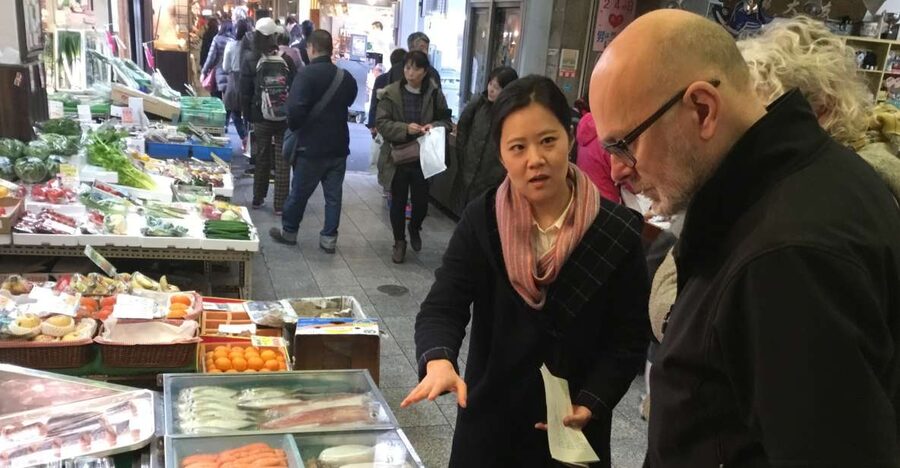
- Nishiki Market from the western entrance: Start at the market’s western side, where your guide gives an introduction before leading you through the food arcade.
- Three donburi choices: Cook seafood, tempura, or chicken and egg rice bowls using ingredients connected to the market visit.
- Private English-language format: Ask questions freely, set your own pace, and request help speaking with shop staff.
- Market tastings included: Sample food during the walk and try Japanese pickles, with extra foods available if you choose to buy them yourself.
- Cooking in a dedicated studio: Spend about an hour preparing and eating your meal in a clean, well-stocked kitchen classroom.
- Good for families and keen cooks: The class offers clear instruction, practical sauce and presentation tips, and enough flexibility for different tastes.
Why Nishiki Market needs a guide
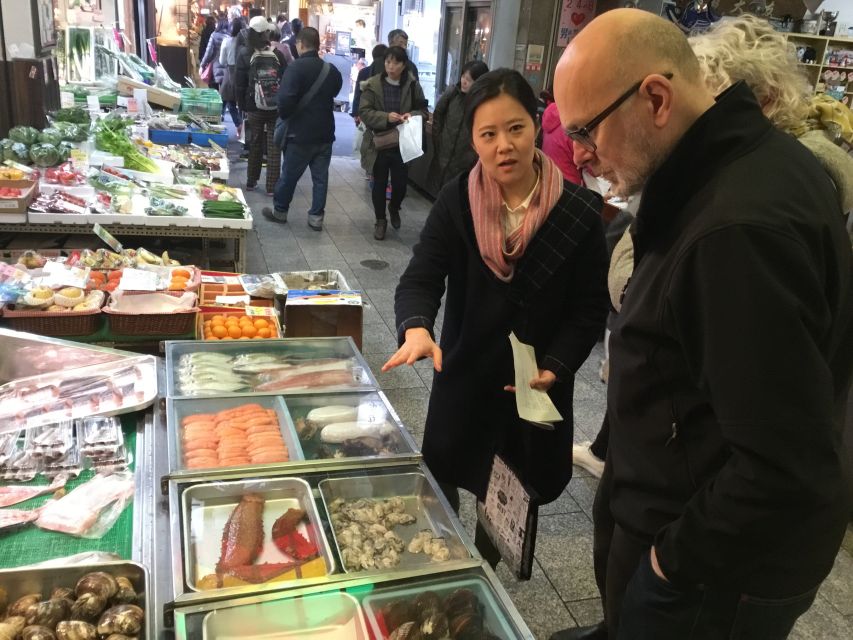
Nishiki Market is easy to enter but not always easy to understand. You can walk through much of it in about 15 minutes, yet that quick stroll tells you little about what you are seeing. Shop signs may be unfamiliar, some foods look similar, and the market’s etiquette is not always obvious to first-time visitors.
This is where the tour earns its keep. Your local Japanese guide explains the market’s customs, points out notable shops, and helps you ask questions about foods you may never have encountered before. If a stallholder has useful information but limited English, your guide can help with the conversation.
One practical lesson is especially useful: you should not eat while walking through the market. Food is generally meant to be eaten near the stall where you bought it, rather than carried around as you browse. That small bit of etiquette can save you from an awkward mistake.
The guide also helps separate long-established food shops from newer, more tourist-focused stalls. That distinction matters at Nishiki, where popular snacks and photo-friendly displays can draw attention away from the market’s everyday food culture. The guide can point you toward shops known for pickles, spices, meat, seafood, and other local products, giving you a clearer idea of where to return later.
I would treat this part as an introduction, not a full shopping expedition. You may have time to taste samples and ask questions, but the one-hour market visit is not designed for a long personal shopping list. If you want to buy gifts or ingredients for your own kitchen, plan to return after the class or ask the guide which stalls deserve another look.
More Cooking Classes in Kyoto
- Ramen Cooking Class at Ramen Factory in Kyoto
★ 5.0 · 1,937 reviews - Sushi Making in Kyoto! Same-day bookings welcome!
★ 5.0 · 713 reviews - Kyoto: Ramen Cooking Class at a Ramen Factory with Souvenir
★ 4.9 · 532 reviews
Pickles, samples, and small discoveries
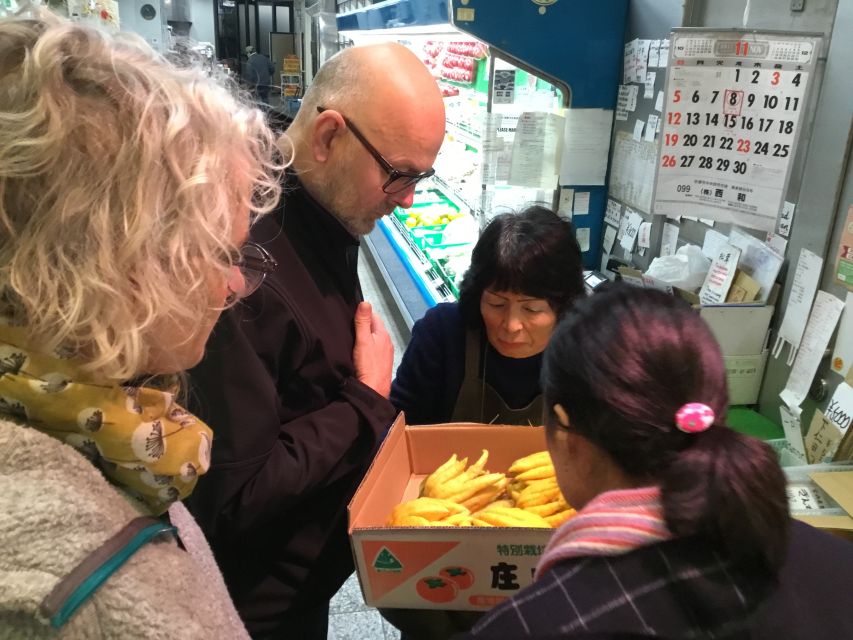
The included tastings add flavor to the walk without turning it into a full meal. Japanese pickles are a key part of the Nishiki experience, and trying several types helps you understand how texture, salt, acidity, and vegetables work alongside rice and other dishes.
You may also sample other foods as you move through the market. The exact selection can vary, but the point is not to pile up snacks. It is to give you a taste of foods you might otherwise pass without recognizing.
The guide can explain how products are used, what sauces or seasonings pair with them, and why particular shops are known for certain offerings. This is more useful than being handed a series of bites with no context. You leave with a better sense of what to buy later and how to use it.
Some people will wish there were more time for tasting. One participant found the market explanation and sampling lighter than expected, especially in a crowded setting. That is a fair warning. Nishiki Market can be busy, and stopping at every interesting stall is not realistic during a fixed 150-minute activity.
The best approach is to arrive ready to listen and taste, then keep a note of shops you want to revisit. This tour gives you a map of the market’s food culture, not an all-you-can-eat crawl.
Choosing your donburi meal
After the market visit, you travel by taxi to the cooking studio. The taxi cost is included, which removes the need to work out the next leg of the route while carrying purchases or trying to keep the group together.
The class centers on donburi, a Japanese bowl meal served over rice. You choose from three main options:
- Kaisen-don: A seafood bowl, generally the choice for anyone interested in fresh fish and sashimi-style ingredients.
- Ten-don: A tempura bowl, suitable if you prefer crisp cooked seafood or vegetables.
- Oyako-don: A chicken and egg bowl, a comforting option and one that is often approachable for children.
The group does not have to choose the same dish. Different people can prepare different bowls, which makes the class more useful for families or couples with different preferences. Special requests may also be possible. A tofu substitution was accommodated for one participant, though you should raise any request when booking or at the start rather than assume every change can be made.
The ingredients for the donburi are included in the tour price. That makes the cost easier to judge, since you are not paying $109 and then adding a separate market bill for the basic cooking ingredients. You may still want to buy extra food during the market walk, but those personal purchases are not covered.
One small note on quality: the ingredients were generally well received, though one person found the fatty tuna disappointing. Seafood can vary, and you should not expect a restaurant tasting menu with luxury-grade fish at this price. The value comes from learning, choosing, preparing, and eating the food yourself.
A practical cooking class, not a cooking demonstration
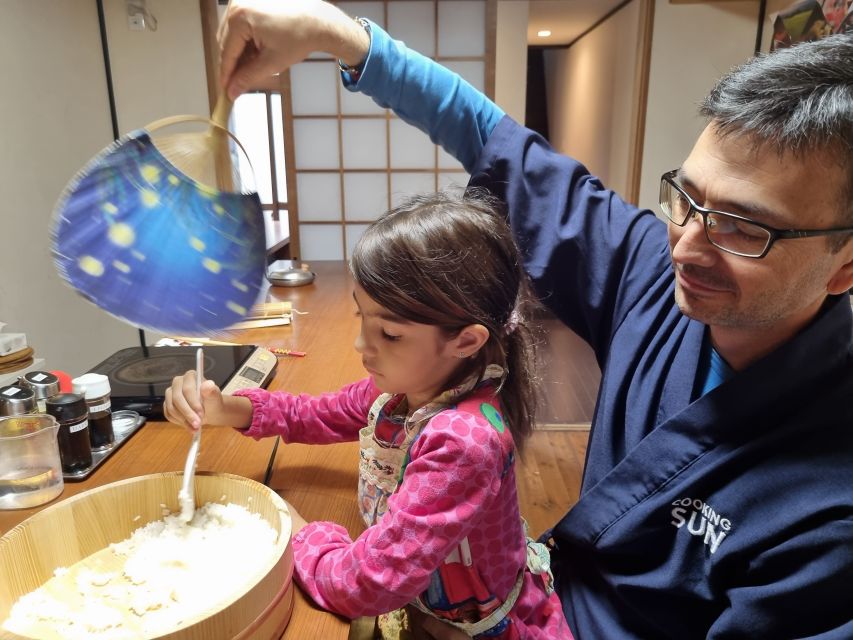
The cooking portion lasts about an hour, including preparation and eating. You do not simply watch an instructor cook while standing at the edge of the room. You take part in the steps, which gives the class more lasting value.
The instructors explain how to prepare the dish, how to use different sauces, and how to make the finished bowl look appealing as well as taste good. One especially useful feature is the attention to brands and seasoning choices. These are the details that help you repeat a dish at home rather than remember only that it was delicious in Kyoto.
The class also covers dashi, the Japanese stock that forms the base of many dishes. One participant left eager to make dashi at home, which says a lot about the practical nature of the instruction. The recipe is included, so you have something concrete to use after your holiday.
The studio has been described as clean, cozy, and well stocked. It is intended for cooking classes, so the surroundings are better suited to instruction than a restaurant kitchen would be. You can focus on the food without feeling rushed through a public dining room.
The teachers receive particularly strong praise for their friendly manner and clear English. Chie, also referred to as Chei in one account, has been praised for combining market knowledge with warm, attentive instruction. Momo and Mio have also been singled out for pleasant, clear teaching. Names and staffing may vary, but the consistent strength is the personal attention.
Families should take note. The class has worked well with children because there are several tasks and three different dishes in play. It keeps the group involved instead of asking younger participants to sit quietly through a long lecture.
More Food Tours in Kyoto
- Kyoto Night Foodie Tour in Gion (9+ dishes + 6 Sake tastings)
★ 5.0 · 1,762 reviews - Kyoto: Gion Food Tour 13 Dishes at 4 Eateries
★ 5.0 · 408 reviews - Kyoto Foodie Night Tour
★ 5.0 · 376 reviews - Kyoto: Gion & Pontocho Food Tour with 13 Dishes
★ 4.9 · 235 reviews
What the 150-minute schedule feels like
The tour begins at the western entrance of Nishiki Market. After a short briefing, you spend roughly one hour walking through the market. The remaining hour is used for travel to the studio, cooking, and eating, with the taxi ride included in the overall arrangement.
The timing is compact. You get a useful introduction to the market and a proper meal, but there is not much spare time. If you stop often for photos, ask extended questions at every stall, or shop for souvenirs, the schedule may feel tight.
The private format helps. You are not locked into a large group’s pace, and you can ask to spend more time on foods that interest you. Still, private does not mean unlimited. The experience has a fixed duration and a cooking class waiting at the other end.
I would book it early in your Kyoto stay if possible. That way, you can return to Nishiki Market later with a better idea of what to buy. The tour is most useful when you treat it as both a meal and an orientation.
Starting times vary, so you need to check availability when choosing a date. The meeting point is specifically the western side entrance, not simply Nishiki Market in general. Give yourself enough time to find that entrance, since a late arrival would cut into the market portion.
Is $109 per person good value?
At $109, this is not a cheap market walk. The price makes more sense when you count the separate parts: a private English-language guide, market tastings, ingredients, a recipe, taxi transport to the studio, a cooking lesson, and the meal you prepare.
A standard market tour may cost less, but it will not normally include a private kitchen class and a meal built around your own choices. A cooking class alone might provide more time at the stove, but it would not show you where the ingredients come from or how Nishiki Market works.
The strongest value is for people who want skills and context. If you cook at home, the sauce advice, dashi instruction, ingredient explanations, and recipe can continue paying off after the trip. If you simply want to eat, the value is weaker because you are paying for participation rather than a restaurant meal.
The price also covers the basic ingredients, which protects you from surprise costs. Personal snacks or shopping are extra, and you should budget for those if you want to bring home pickles, seasonings, or other market goods.
Sake tasting is optional, with three different types available to taste. The supplied details do not specify an additional charge, so check the current booking terms if that matters to you. Since the activity includes food and cooking, the sake option is best viewed as a small extra rather than the main reason to book.
Who should book this experience?
I would recommend it to first-time Kyoto visitors who want a friendly introduction to Japanese food without spending a full day in a formal class. It suits couples, families, and private groups who value the ability to ask questions and make small adjustments to the meal.
It is also a strong choice for keen home cooks. You get more than a recipe. You learn how ingredients are selected, how sauces are used, how dashi fits into Japanese cooking, and how to present the finished bowl neatly.
Families may appreciate the private setting and the option for different people to cook different dishes. The activity has also worked well with children, provided they enjoy participating in simple cooking tasks.
I would hesitate if you want a slow, unstructured market morning. Nishiki Market itself rewards wandering, and this tour gives you only about an hour there. I would also look elsewhere if your top priority is a high-end seafood tasting, since ingredient quality can vary.
You should also make any dietary preferences or substitutions clear before the class. A tofu substitution has been accommodated, but the available choices are centered on seafood, tempura, and chicken with egg.
Should you book the Nishiki Market Food Tour?
Book it if you want Nishiki Market explained rather than merely photographed. The combination of food samples, etiquette tips, stall recommendations, translation help, and a private cooking lesson gives the experience a clear purpose.
The best part is the connection between market and meal. You see ingredients, learn how they fit into Japanese cooking, then prepare a bowl with your own hands. That makes the visit more memorable than a quick snack stop.
Skip it if you want hours of independent shopping or a long list of tastings. For everyone else, $109 is a reasonable price for a private, English-language introduction to Kyoto food, especially when the included taxi, ingredients, recipe, and meal are factored in.
FAQ
Where does the Nishiki Market tour begin?
The meeting point is at the western side entrance of Nishiki Market.
How long does the experience last?
The experience lasts 150 minutes, or two and a half hours.
Is the tour private?
Yes. It is offered as a private group experience, allowing you to ask questions and move at your own pace.
Is the tour conducted in English?
Yes. English instruction and guiding are provided.
Which donburi dishes can I choose?
You can choose kaisen-don with seafood, ten-don with tempura, or oyako-don with chicken and egg.
Are the cooking ingredients included?
Yes. The ingredients used for the donburi cooking class are included in the tour fee.
Is a recipe included?
Yes. You receive a recipe for the dish prepared during the class.
Is transportation to the cooking studio included?
Yes. The taxi cost from Nishiki Market to the cooking studio is included.
Can I cancel for a full refund?
Yes. You can cancel up to 24 hours in advance for a full refund. You can also reserve now and pay later, subject to the current booking terms.
More Markets and Food Halls in Kyoto
- Nishiki Market Brunch Walking Tour (7 Tastings + Brunch)
★ 5.0 · 1,355 reviews - Kimono Tea Ceremony at Kyoto Maikoya, NISHIKI
★ 5.0 · 911 reviews - Kyoto Nishiki Market Food and Culture Walking Tour
★ 5.0 · 412 reviews - Kyoto: Nishiki Market Tea Ceremony with Koto Performance
★ 4.8 · 294 reviews
Just added in Kyoto
- The “Golden Route” and Ancient Japan by DIAMIR Erlebnisreisen – 14-Day Tour★ 2.0 · 2 reviews
- Japan: Castles & Cuisine by G Adventures – 6-Day Kyoto to Osaka Tour★ 4.5 · 4 reviews
- Cycle Japan by Explore! – 13-Day Kyoto to Tokyo Tour★ 4.7 · 12 reviews
- Cycle Japan by Intrepid Travel – 11-Day Kyoto to Tokyo Tour★ 4.8 · 2 reviews
- Classic Japan by Intrepid Travel – 11-Day Kyoto to Tokyo Tour★ 4.4 · 14 reviews
- Ancient & Modern Japan 14-Day Tour by Exodus Adventure Travels★ 4.4 · 40 reviews
- 5 Day Cultural Adventure of Kyoto, Nara & Osaka by Tourist Journey★ 2.5 · 2 reviews
- 12 Days Kinosaki Onsen Escape: A Journey Through Japan’s Timeless Towns by UME Travel★ 4.8 · 5 reviews
Cooking Classes, compared.
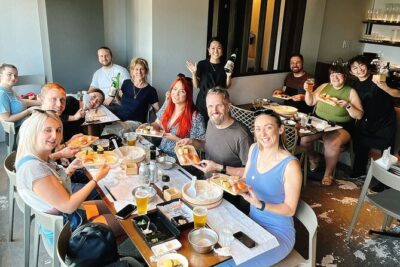
Sushi Making Tokyo Roll and Authentic Japanese Sushi Class
Read our review →
Roll and Authentic Sushi Making Class in Asakusa
Read our review →
Ramen Cooking Class at Ramen Factory in Kyoto
Read our review →
Sushi Making Class in a Happi Coat near a Famous Spot
Read our review →
Sushi Making Osaka Roll and Authentic Japanese Sushi Class
Read our review →
Tokyo Sushi Making Class in Tsukiji with Professional Chef
Read our review →
Ramen & Gyoza Cooking Class in Tokyo with Local Supermarket Visit
Read our review →Browse the lists this tour appears in