
Reviewed · COOKING CLASSES
Bento Box Cooking Class
Come hungry, leave with recipes. This Kyoto cooking class turns a familiar lunch box into a hands-on lesson in Japanese food, from rolled omelets and tempura to sushi, miso soup, and teriyaki chicken. I like the clear demonstrations from Japanese chefs, and I like that you prepare a real meal rather than a token sample. The recipes also go home with you, which gives the class value long after your Kyoto visit.
I also like the compact morning schedule. You begin at 9:30 a.m., finish after roughly three hours, and end at the same cooking studio in central Kyoto. The main consideration is the price, $71.35 per person, which is fair for the instruction, ingredients, apron, and lunch, but higher than the cost of simply eating a bento from a shop. You should book it for the skills and cultural context, not just the meal.
In This Review
- What makes this Kyoto class worth your morning
- Understanding the bento before you cook
- Starting at 9:30 a.m. in Shimogyo Ward
- Watching the chefs before taking over
- Preparing the bento menu
- The final lunch is part of the lesson
- How much value do you get for $71.35?
- Who will enjoy this class most?
- Dietary needs, access, and booking details
- Practical tips for a better morning
- Should you book the Bento Box Cooking Class?
- FAQ
- Where does the bento box cooking class take place?
- What time does the class start?
- How long does the cooking class last?
- Is lunch included?
- Are cooking ingredients provided?
- Is an apron provided?
- Is the cooking instruction in English?
- Can the menu change?
- How many people can join the class?
- Can I cancel for a full refund?
What makes this Kyoto class worth your morning
- A full bento meal, not just a single recipe: You prepare several dishes, then eat them together as lunch.
- Hands-on instruction from English-speaking chefs: Demonstrations come first, followed by personal help as you cook.
- Seasonal menus change every three months: The dishes may vary depending on the best available ingredients.
- Useful take-home recipes: You receive copies of the recipes so you can try the food again at home.
- A small advertised group: The activity lists a maximum of eight people, though some class descriptions refer to larger sessions with several instructors.
- A practical Kyoto location: Cooking Sun is at 679 Funayacho, Shimogyo Ward, near public transportation.
Understanding the bento before you cook
The class begins with the story behind the bento box. That short introduction matters because bento is not simply food packed into a box. It is a way of arranging a varied meal so that separate flavors, textures, and colors work together in a neat portion.
The word bento has an interesting connection to convenience. The history presented in class reaches back to the 13th century, when the Song Dynasty used the word as slang for anything convenient. Over time, Japan made the idea its own, creating boxed meals for schoolchildren, office workers, train passengers, picnics, and ordinary days at home.
This background helps you see why a bento can involve so many small preparations. A box may look tidy and simple when it reaches you, but each section can require a different technique. That is part of the lesson: Japanese home cooking often depends on careful preparation, balance, and presentation.
More Cooking Classes in Kyoto
- Ramen Cooking Class at Ramen Factory in Kyoto
★ 5.0 · 1,937 reviews - Sushi Making in Kyoto! Same-day bookings welcome!
★ 5.0 · 713 reviews - Kyoto: Ramen Cooking Class at a Ramen Factory with Souvenir
★ 4.9 · 532 reviews
Starting at 9:30 a.m. in Shimogyo Ward
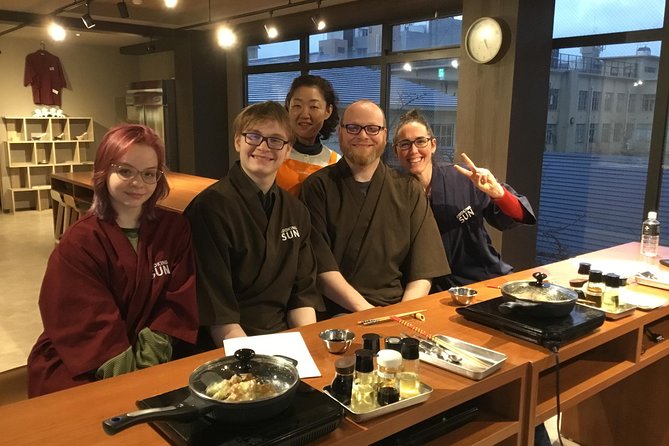
Your class begins at Cooking Sun, located at 679 Funayacho in Kyoto’s Shimogyo Ward. The listed start time is 9:30 a.m., and the activity ends back at the cooking studio after about three to three and a half hours.
The location is near public transportation, but hotel pickup and drop-off are not included. You need to make your own way there, so allow enough time to find the studio and settle in before the lesson begins. A morning class also has a practical advantage: it leaves much of the afternoon open for temples, markets, museums, or a slow walk through Kyoto.
The timing does create one small problem. You will be cooking for quite a while before sitting down to eat. One useful tip is to have a light breakfast first. Arriving very hungry may sound like a good plan, but several hours of preparation can feel long when lunch is waiting at the end.
Watching the chefs before taking over
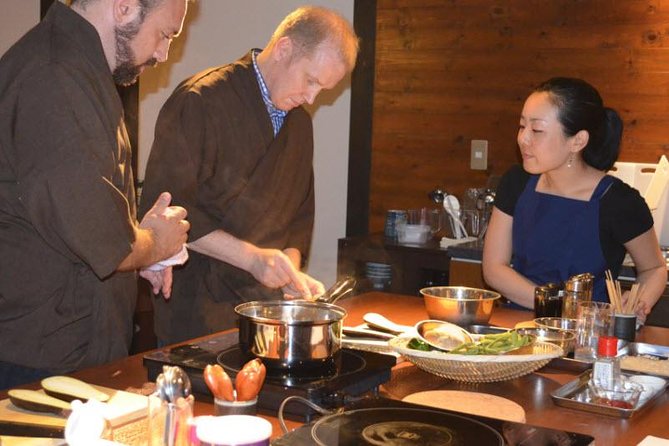
The instructors first demonstrate the methods used for the dishes. This is not a lecture-heavy class. The best part is the balance between watching and doing, with time to ask questions and receive hands-on help.
The chefs speak English, and the class is designed for people who may not know Japanese cooking techniques. The instructions are clear enough for beginners, while people who already cook Asian food can still pick up new details. One particularly useful tip concerns making dashi, the basic stock used in many Japanese dishes, along with guidance on when to use different types of soy sauce.
The class also gives you a closer look at the work behind foods that often appear effortless. Rolled egg, sushi, tempura, and a decorated bento all require timing and practice. Your instructor can show you how to approach the technical steps, then let you try them yourself instead of doing everything behind the scenes.
That hands-on balance is important. Some cooking classes prepare too much in advance, leaving you to stir one pot or assemble a finished dish. Here, the food is well organized and prepared so you can make many items without the session becoming chaotic. The result is a better sense of how the meal comes together.
Preparing the bento menu
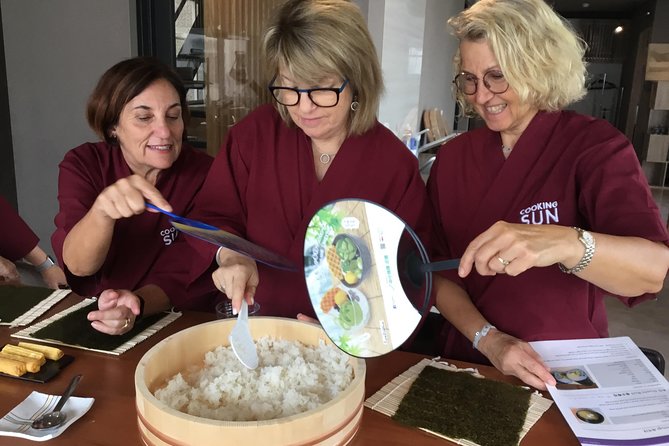
The exact menu can change every three months with the seasons. The listed examples include miso soup, tempura vegetables, and egg rolls, while class participants also describe making teriyaki chicken, spinach with sesame, tempura shrimp, sushi rolls, and rolled omelet.
That variety is one of the strongest reasons to choose this class. You are not learning one narrow dish. You are working across several parts of Japanese cooking:
- Miso soup: A simple dish that introduces familiar Japanese flavors and the role of soup in a meal.
- Rolled egg: A school-lunch favorite and a useful lesson in shaping and layering.
- Teriyaki chicken: A practical recipe with clear value for home cooking.
- Tempura vegetables and shrimp: A chance to practice a more technical frying method.
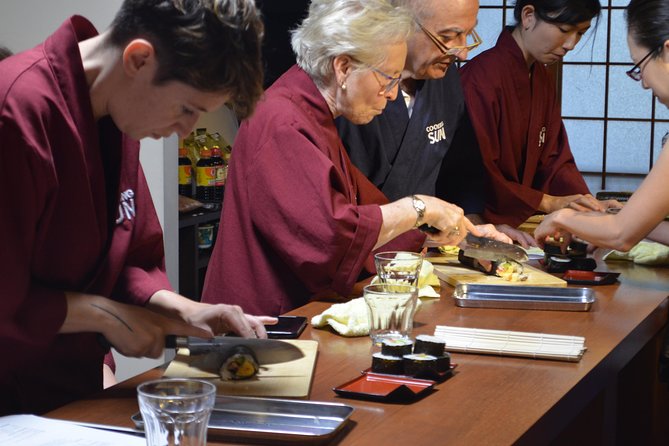
- Sushi roll: A fun preparation that depends on careful rolling and neat portions.
- Spinach with sesame: A lighter side dish that helps balance the richer and fried items.
The class is not only about making attractive food. It also teaches why the dishes belong together. A bento needs contrast, so a meal may include soft egg, crisp tempura, savory chicken, fresh greens, rice, and soup. You begin to understand the thought that goes into a box that can look modest but contain a surprising amount of work.
One detail worth knowing is that some chopping is done in advance. That keeps the class moving and lets you focus on cooking and assembly, but it also means you will not perform every single step from raw ingredients to finished meal. For most people, this is a sensible trade. You get to cover more dishes in three hours rather than spend the entire session cutting vegetables.
A completely different kind of day out:
- PERFECT KYOTO 1-Day Bus Tour
★ 5.0 · 13,518 reviews - [Kyoto & Nara Day Tour] Sagano Scenic Railway & Nara Park & Fushimi Inari Taisha Thousand Torii Gates & Togetsukyo Bridge & Bamboo Grove & Kimono Forest (Departing from Osaka)
★ 4.9 · 10,942 reviews - Kyoto: Fushimi Inari, Kinkakuji, Bamboo Grove 1 Day Bus Tour
★ 4.8 · 4,316 reviews - Kyoto: Tea Ceremony in a Traditional Tea House in Kiyomizu
★ 4.9 · 3,519 reviews
The final lunch is part of the lesson
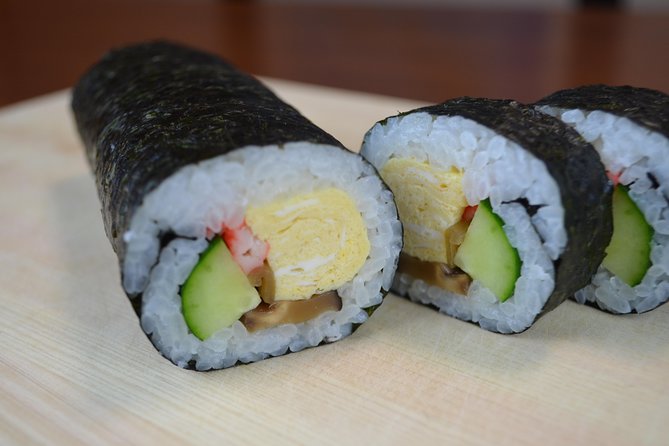
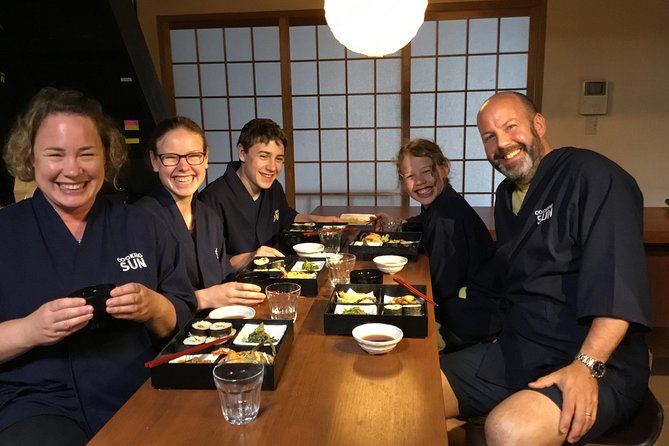
Once the cooking is done, you put away the knife and apron and sit down to eat the bento you prepared. Lunch is included, along with all cooking ingredients, the apron, and an English-speaking instructor.
This is more satisfying than sampling a small bite after each demonstration. You see the complete result of your work and compare the different textures and flavors in one meal. The portions can be generous, so do not plan on a large lunch immediately afterward.
The shared meal also gives the class a relaxed finish. You have spent the morning working beside other food lovers, and the final table time lets you enjoy the results without rushing off after the last recipe. For couples, families, and friends, this creates a pleasant break from sightseeing.
The presentation is another small reward. A bento is meant to look appealing as well as taste good, and arranging your own box makes that clear. Even if your first attempt is not perfectly tidy, you will understand why Japanese lunch boxes require patience and attention.
How much value do you get for $71.35?
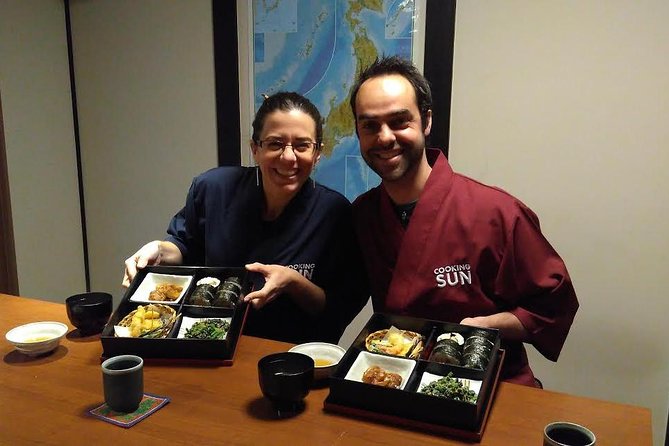
At $71.35 per person, this is not a budget lunch. You could buy a prepared bento for much less. The value comes from the instruction, the range of recipes, the ingredients, the meal, and the chance to repeat the experience at home.
The class covers several dishes in one session, including techniques that can be harder to learn from a recipe alone. Tempura frying, sushi rolling, and layered egg are easier to understand when a chef demonstrates the movement and corrects your approach. You also receive the recipes afterward, so the class keeps paying off if you actually use them.
The price looks strongest for people who enjoy cooking or want a food-focused activity during a Kyoto visit. It is also a good choice if you want a break from shrine and temple sightseeing. For someone who only wants to eat Japanese food, the cost may feel high because the meal is the end product of the activity, not its only purpose.
Group discounts are listed, which may help families or groups of friends. The booking information gives a maximum of eight people per booking and an activity maximum of eight participants. Some class descriptions refer to sessions with 12 people and three chefs, so group size may vary by date. If a very small class matters to you, confirm the arrangement before booking.
Who will enjoy this class most?
This experience suits beginners especially well. The chefs demonstrate each task, explain the food and its place in Japanese cooking, and provide help while you work. You do not need to arrive with advanced knife skills or sushi experience.
It also works for confident home cooks. People who already prepare Asian dishes can still learn new methods, especially around dashi, soy sauce, rolled egg, tempura, and presentation. The menu gives you several separate skills rather than repeating one basic recipe.
Families with older children and teenagers should find the format appealing, provided everyone is comfortable taking part in food preparation. One family description calls the class a successful shared activity, and a parent who attended with a teenage daughter found it a high point of the Japan trip.
Couples and friends get a good mix of learning and conversation. You can work side by side, then eat the results together. It is also a sensible choice for anyone who wants a structured morning instead of another unplanned wander through the city.
You may want to skip it if you dislike group activities, have very limited time in Kyoto, or mainly want a quick meal. The class takes roughly three hours, and the experience depends on your willingness to cook, not simply watch.
Dietary needs, access, and booking details
You should advise the provider of specific dietary requirements when booking. The staff have been careful and helpful with food allergies, but you should still explain your needs in advance rather than waiting until the class begins.
Service animals are allowed, and the studio is near public transportation. Hotel transportation is not included. Confirmation is provided at booking, and free cancellation is available when you cancel at least 24 hours before the local start time. Changes or cancellations inside that window are not accepted for a refund.
The activity has a five-star rating from 171 ratings and a 99 percent recommendation rate. Those figures point to a consistently well-run class, with the strongest praise directed at the friendly instructors, clear explanations, hands-on supervision, and tasty food.
Practical tips for a better morning
Arrive with a light breakfast already eaten. You will not sit down to the finished meal until the cooking is complete, and the session can make you very hungry.
Bring curiosity rather than perfectionism. The point is to learn several techniques, not to produce a box that looks like it came from a department-store food hall. Ask questions, especially if you want to recreate the dishes at home.
Pay close attention to the demonstrations for the rolled egg, tempura, and sushi. These are the parts most likely to benefit from seeing the hand movements in person.
Keep the recipe sheets somewhere safe in your luggage. They are one of the best reasons to take the class, since they give you a way to continue the food experience after returning home.
Plan your day around the 9:30 a.m. start and approximately three-hour duration. Since the class returns to the same meeting point, you can continue sightseeing from there, but do not schedule an attraction with a tight admission time immediately afterward.
Should you book the Bento Box Cooking Class?
I would book this class if you want to understand Japanese food by making it yourself. The combination of several dishes, clear English instruction, seasonal ingredients, a full lunch, and take-home recipes gives the experience real substance.
The $71.35 price is easier to justify for food lovers, families, couples, and home cooks than for someone seeking a cheap meal. You should also be comfortable with a group setting and a morning of active preparation.
Book it when you want a useful Kyoto memory rather than another photograph. You will leave with a full stomach, a better sense of how much work goes into a bento, and recipes you can try on friends and family at home.
FAQ
Where does the bento box cooking class take place?
The class takes place at Cooking Sun, 679 Funayacho, Shimogyo Ward, Kyoto, 600-8466, Japan.
What time does the class start?
The listed start time is 9:30 a.m.
How long does the cooking class last?
The class lasts approximately three to three and a half hours.
Is lunch included?
Yes. You eat the bento you prepare during the class, and lunch is included in the experience.
Are cooking ingredients provided?
Yes. All ingredients needed for the cooking session are included.
Is an apron provided?
Yes. An apron is included.
Is the cooking instruction in English?
Yes. The class includes an English-speaking cooking instructor.
Can the menu change?
Yes. The menu may change every three months to use the best available seasonal ingredients.
How many people can join the class?
The activity information lists a maximum of eight people per booking and a maximum of eight participants.
Can I cancel for a full refund?
Yes, if you cancel at least 24 hours before the experience start time. Cancellations made less than 24 hours before the start are not refunded.
Just added in Kyoto
- The “Golden Route” and Ancient Japan by DIAMIR Erlebnisreisen – 14-Day Tour★ 2.0 · 2 reviews
- Japan: Castles & Cuisine by G Adventures – 6-Day Kyoto to Osaka Tour★ 4.5 · 4 reviews
- Cycle Japan by Explore! – 13-Day Kyoto to Tokyo Tour★ 4.7 · 12 reviews
- Cycle Japan by Intrepid Travel – 11-Day Kyoto to Tokyo Tour★ 4.8 · 2 reviews
- Classic Japan by Intrepid Travel – 11-Day Kyoto to Tokyo Tour★ 4.4 · 14 reviews
- Ancient & Modern Japan 14-Day Tour by Exodus Adventure Travels★ 4.4 · 40 reviews
- 5 Day Cultural Adventure of Kyoto, Nara & Osaka by Tourist Journey★ 2.5 · 2 reviews
- 12 Days Kinosaki Onsen Escape: A Journey Through Japan’s Timeless Towns by UME Travel★ 4.8 · 5 reviews
Cooking Classes, compared.
Sushi Making Tokyo Roll and Authentic Japanese Sushi Class
Read our review →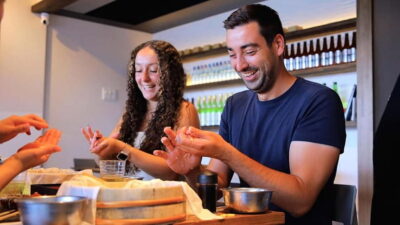
Roll and Authentic Sushi Making Class in Asakusa
Read our review →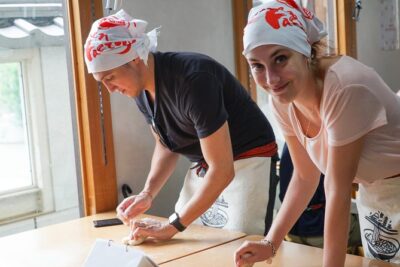
Ramen Cooking Class at Ramen Factory in Kyoto
Read our review →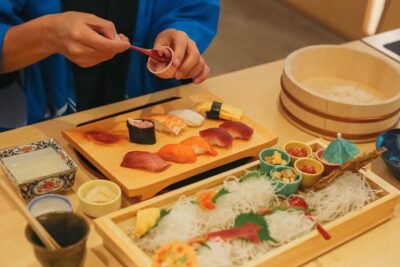
Sushi Making Class in a Happi Coat near a Famous Spot
Read our review →
Sushi Making Osaka Roll and Authentic Japanese Sushi Class
Read our review →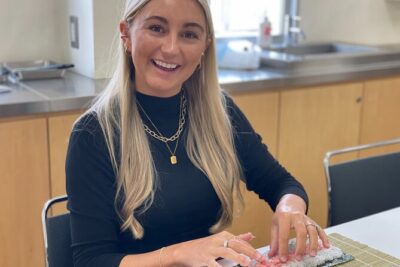
Tokyo Sushi Making Class in Tsukiji with Professional Chef
Read our review →
Ramen & Gyoza Cooking Class in Tokyo with Local Supermarket Visit
Read our review →Browse the lists this tour appears in